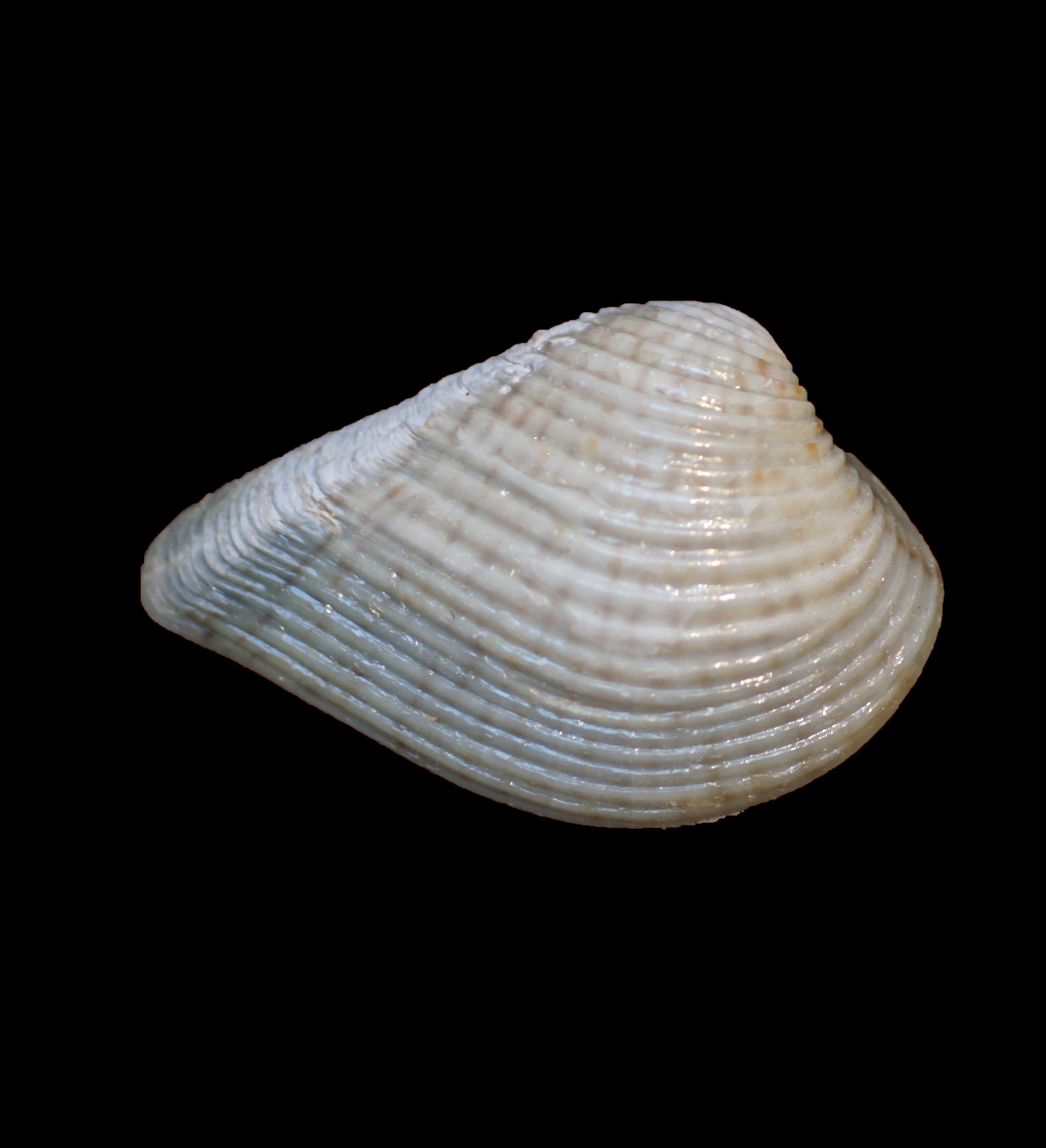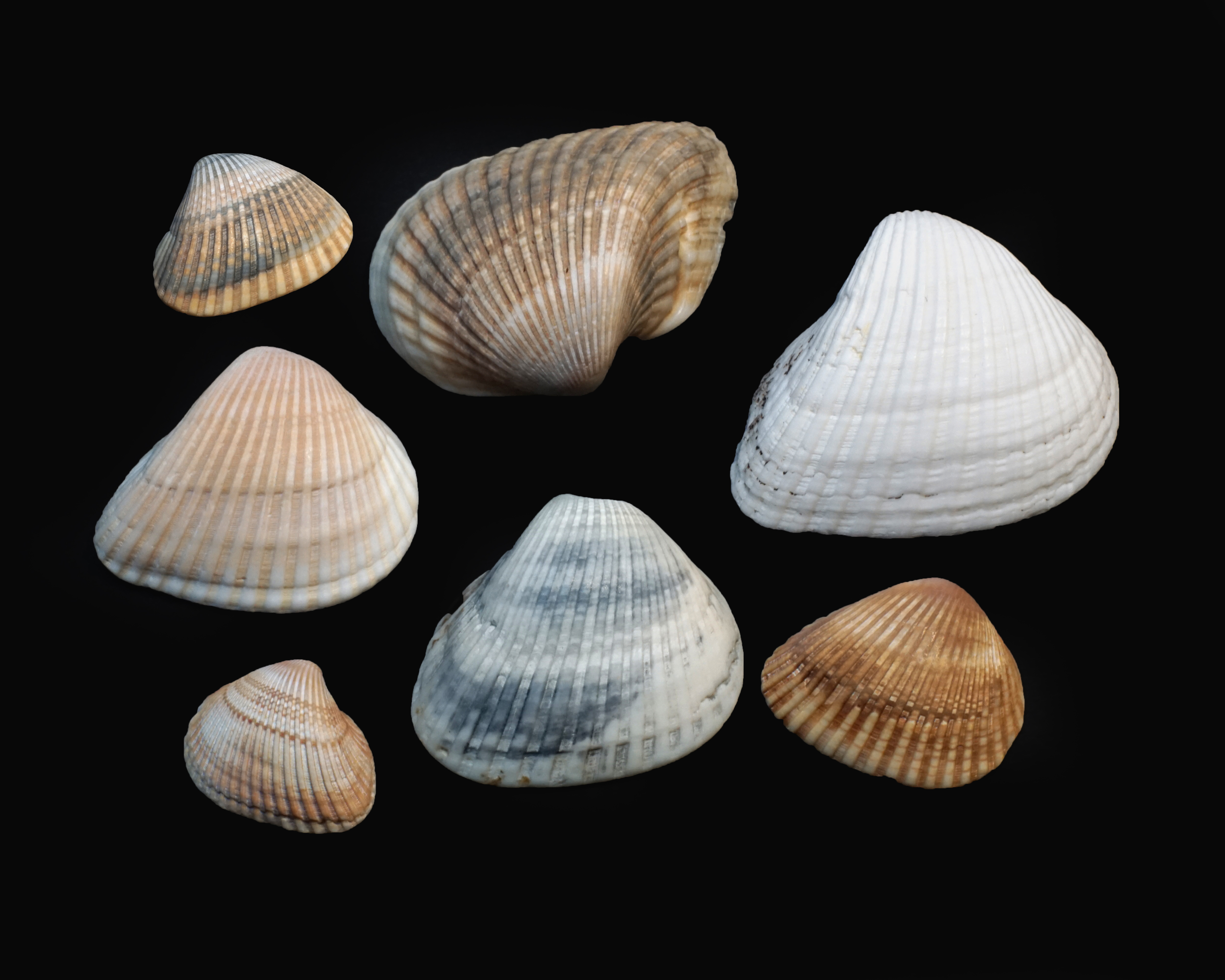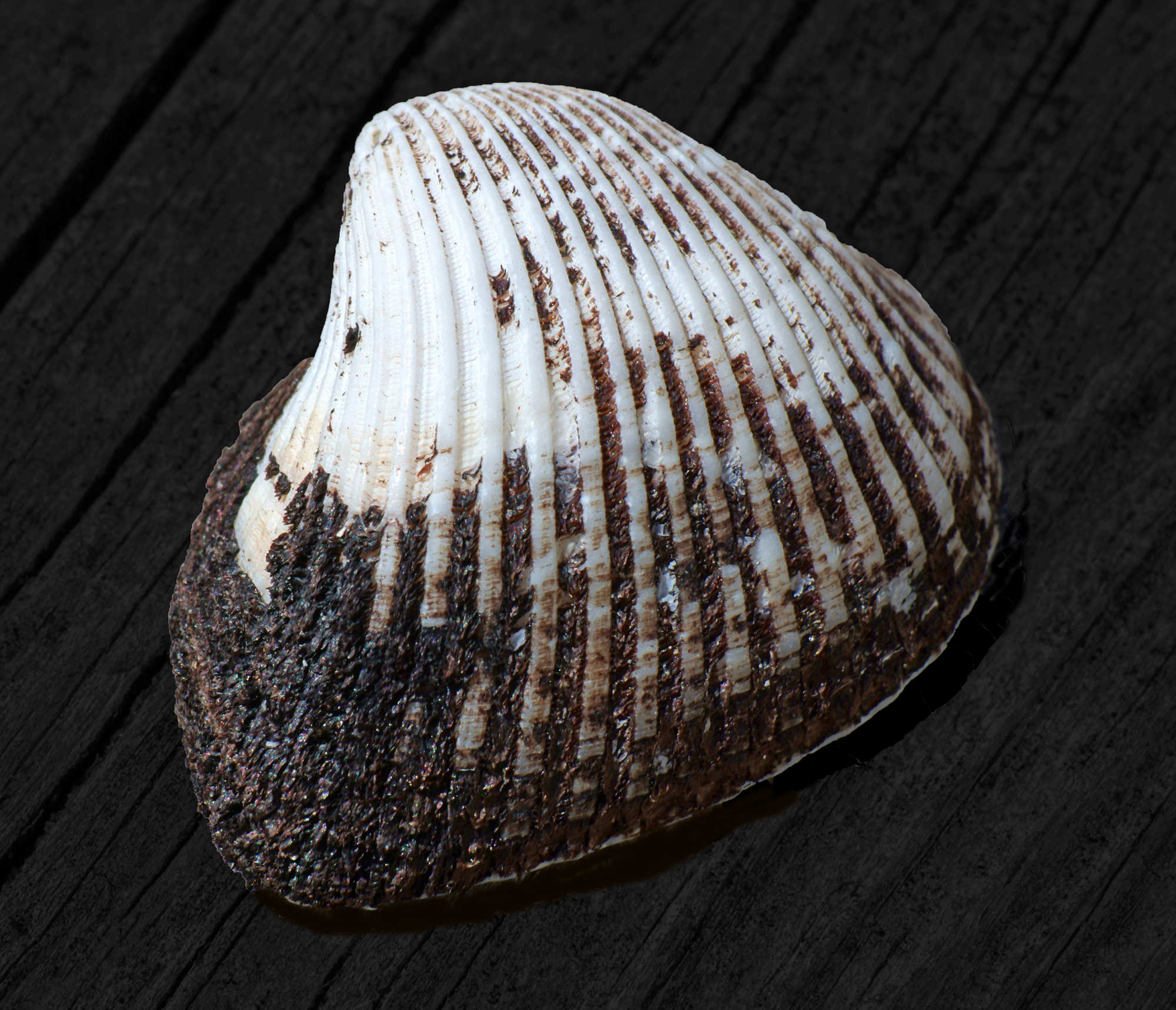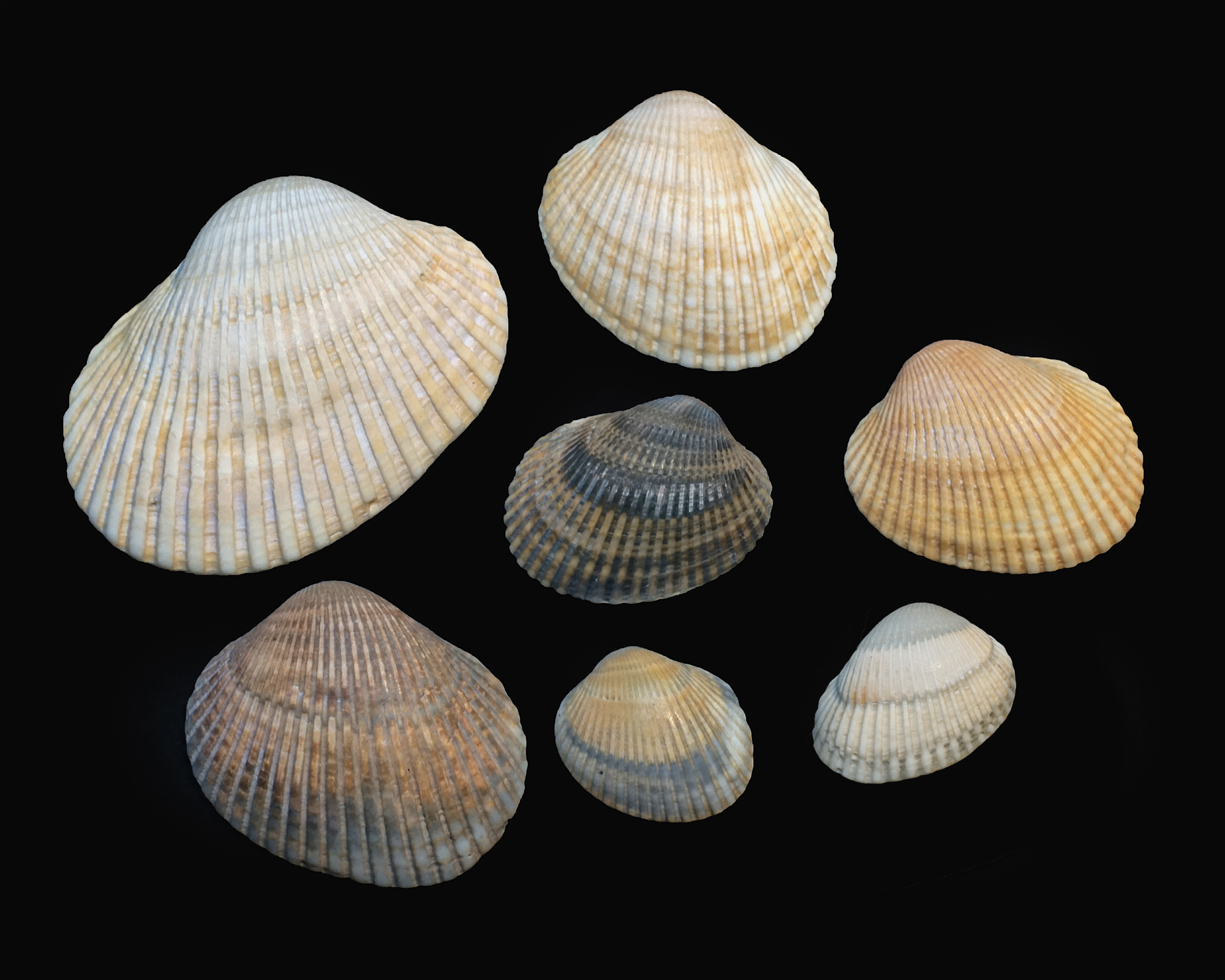
Clamshell Identification and Facts (From Coquinas, Oysters to Tellins and more)

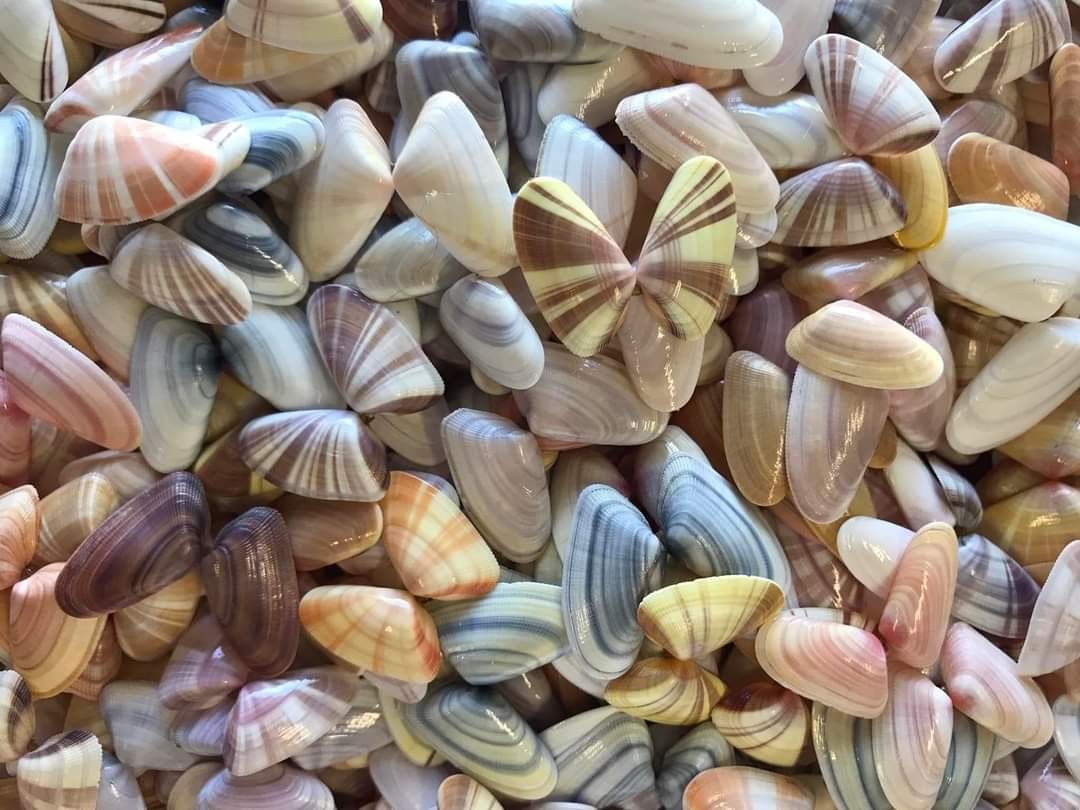
Coquina Clamshell Collage: Source

Brief Intro

The word “clam” can be used to cover all bivalves, including scallops, oysters, arks, and cockles, to name a few. Did you know that there are more than 15,000 species of clams around the globe? Amazing, right? Clams and other bivalves first appeared in the fossil record as tiny creatures as early as the Cambrian Period over 500 million years ago. Beginning around the Devonian Time Period approximately 400 mya through to the Mesazoic Era, they gradually developed into abundant forms. Follow along to learn interesting facts about clams and to help you identify those clamshells you couldn’t resist picking up from the sandy seashore.

Eleven Clamshell Identifications from my Collection in the following order:

  1. Coquinas
  2. Disc Dosinia
  3. Atlantic Surf
  4. Eastern Oyster
  5. Jewel Box Oyster
  6. Atlantic Thorny Oyster
  7. Digitate Thorny Oyster
  8. Jingle Shell Oyster
  9. Atlantic Kitten Paw
  10. Tampa Tellin
  11. Speckled Tellin

For addional Fossillady clam ID including Arks, Angel Wing, Cardita and Lucines click HERE
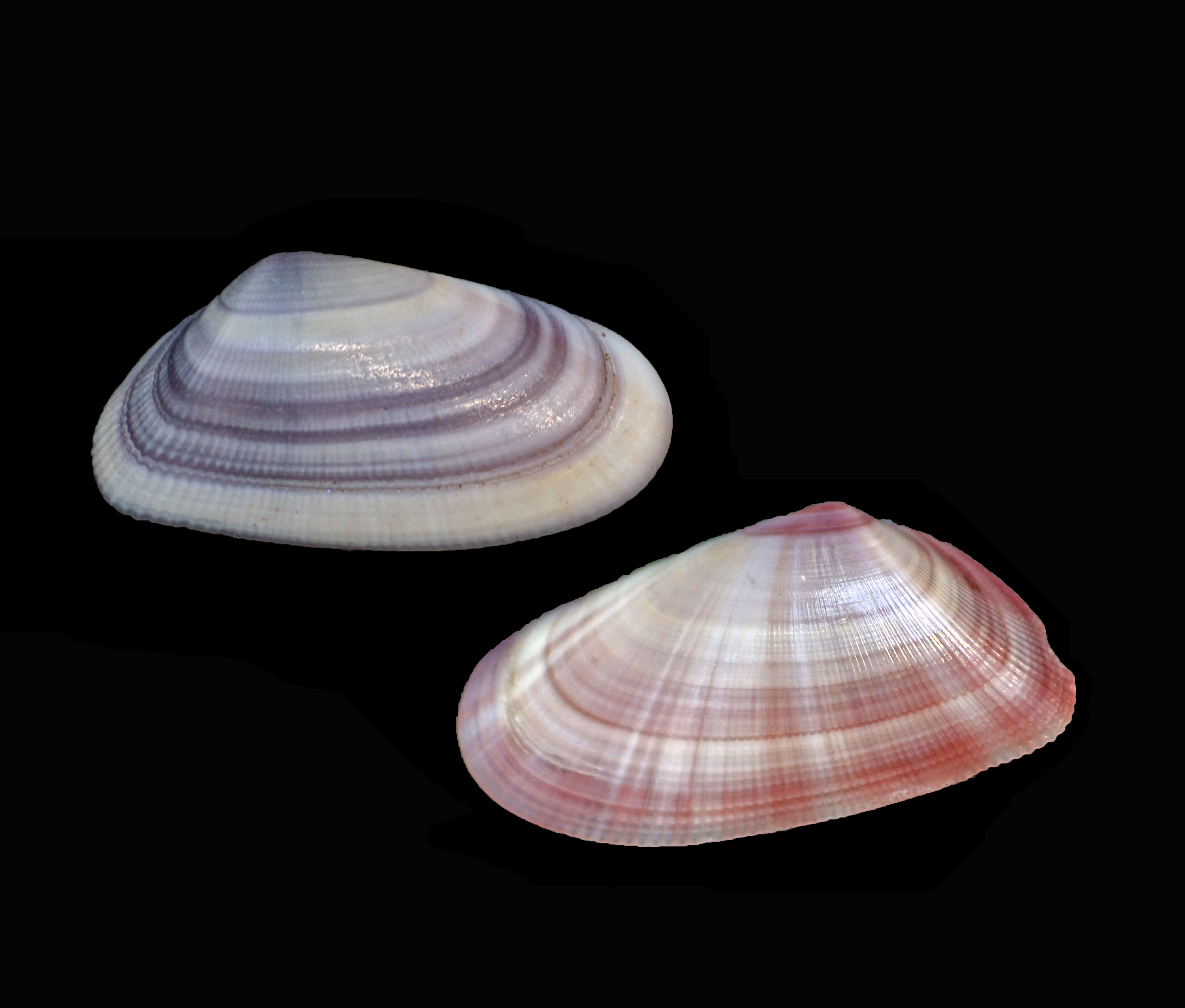
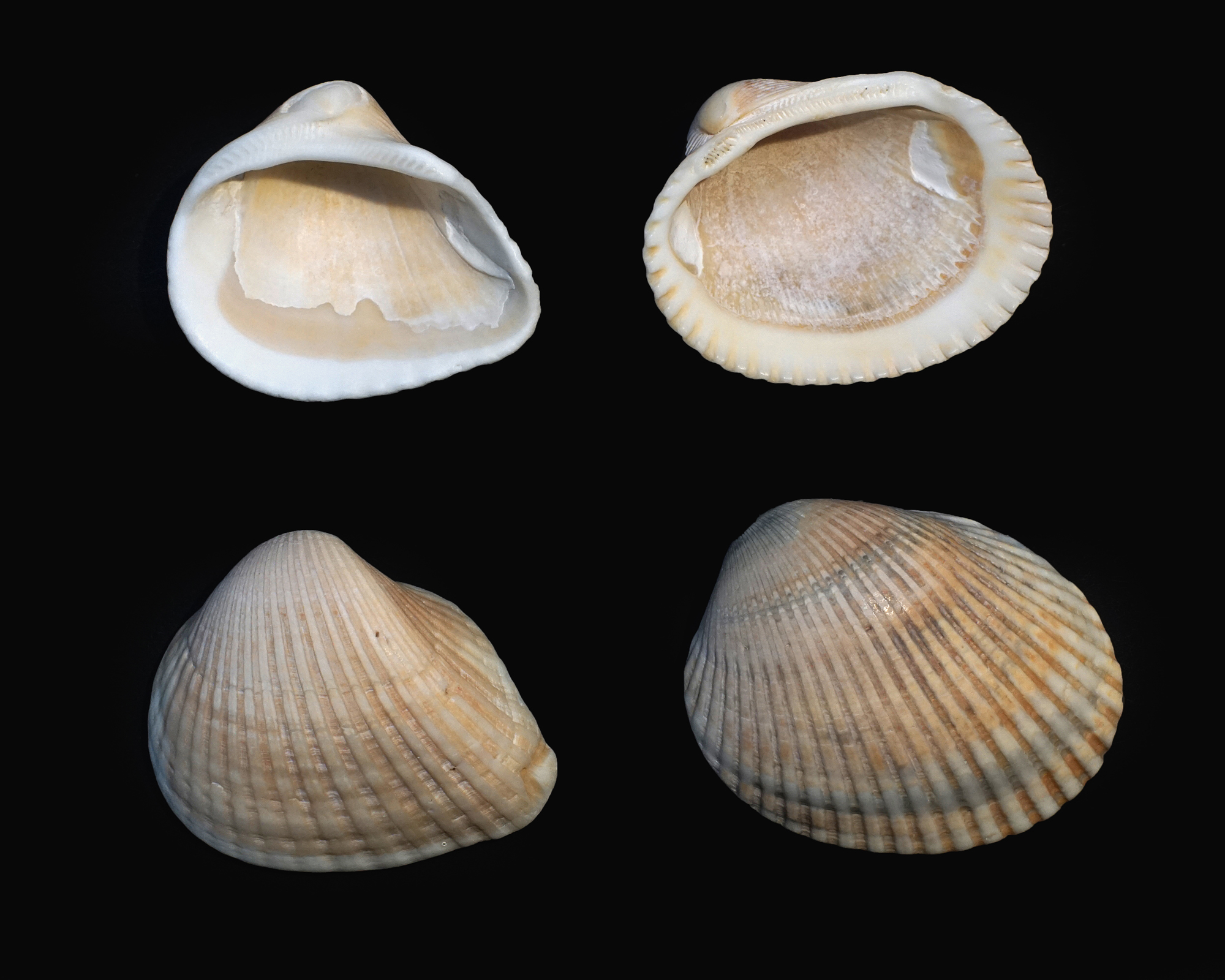
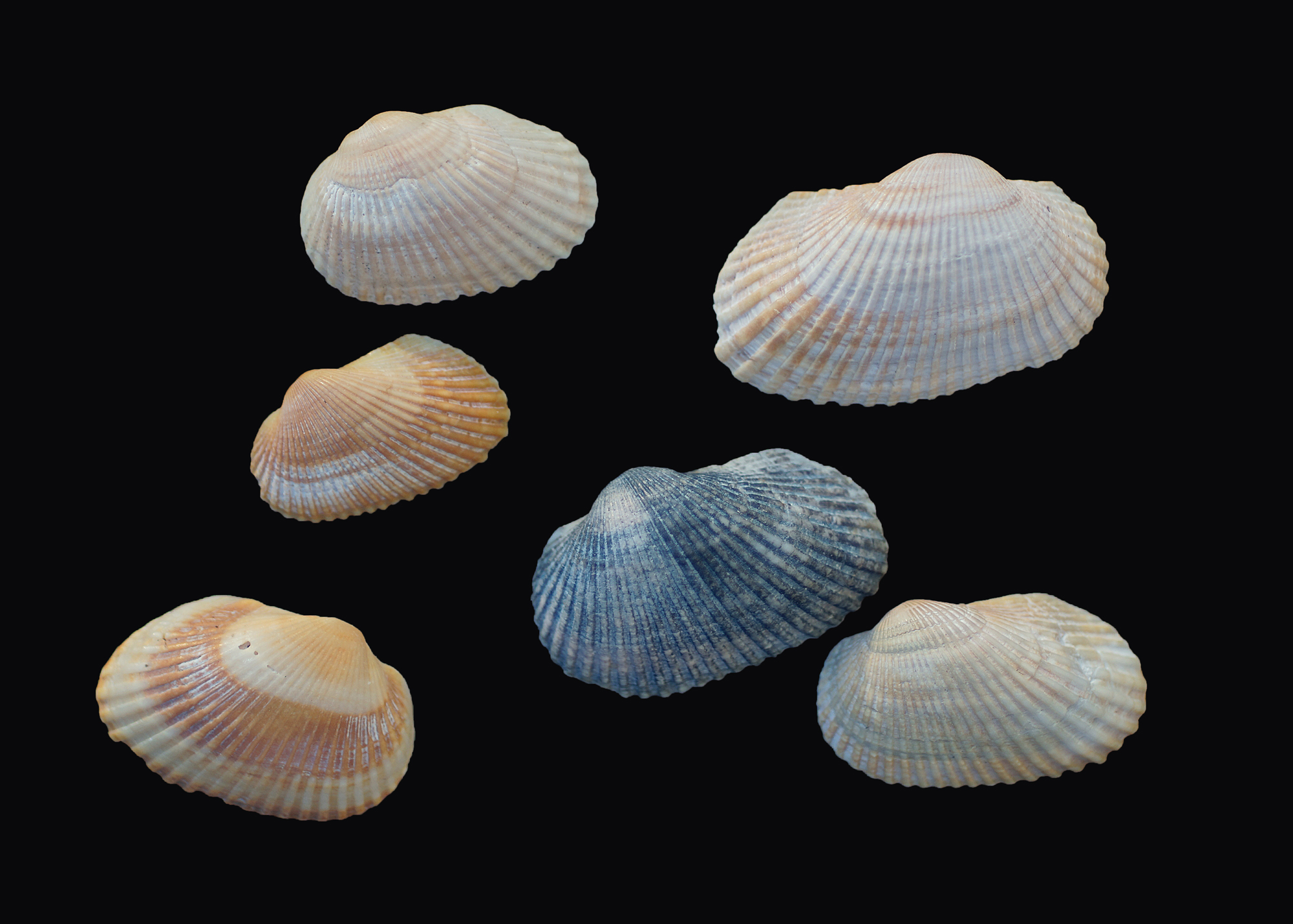
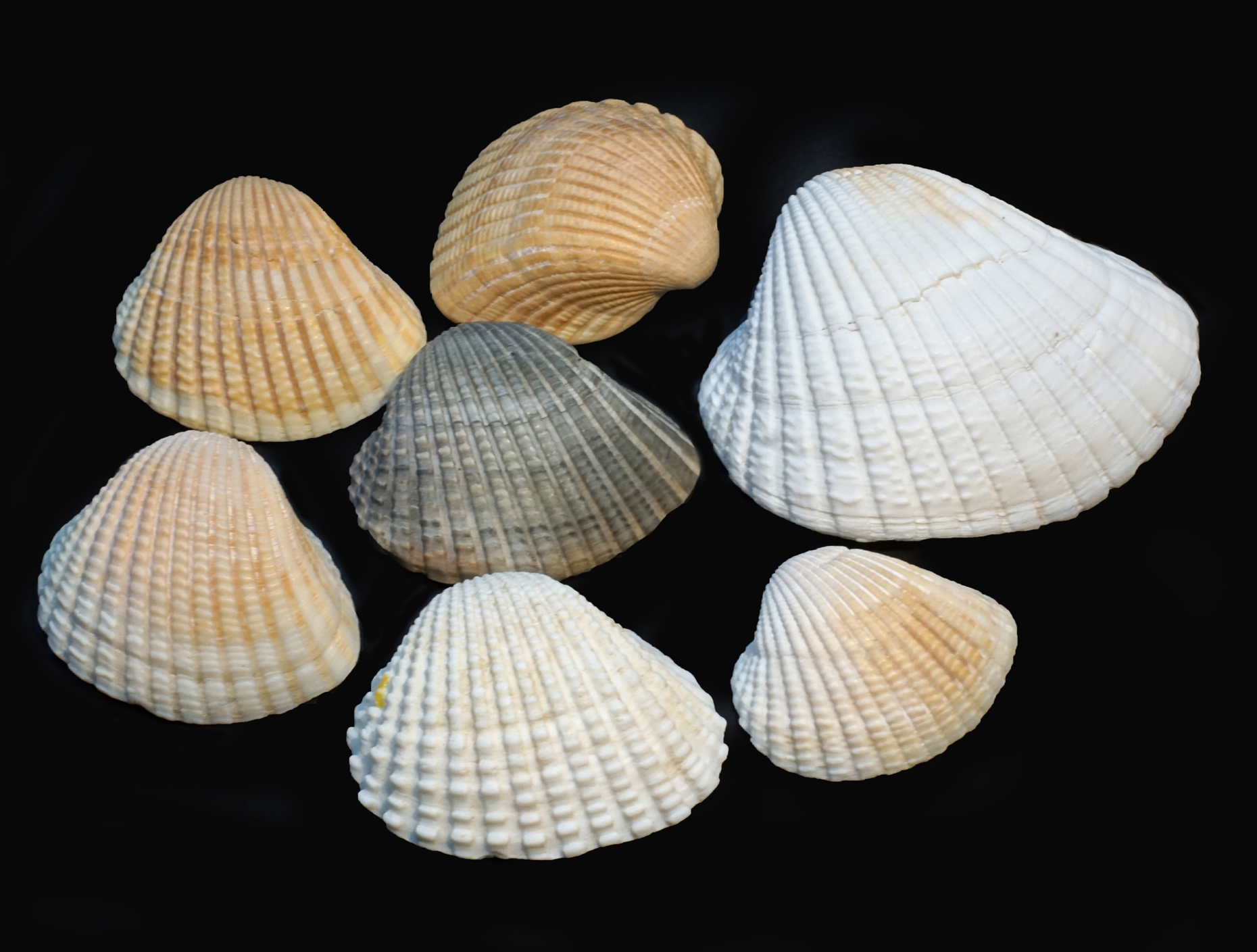
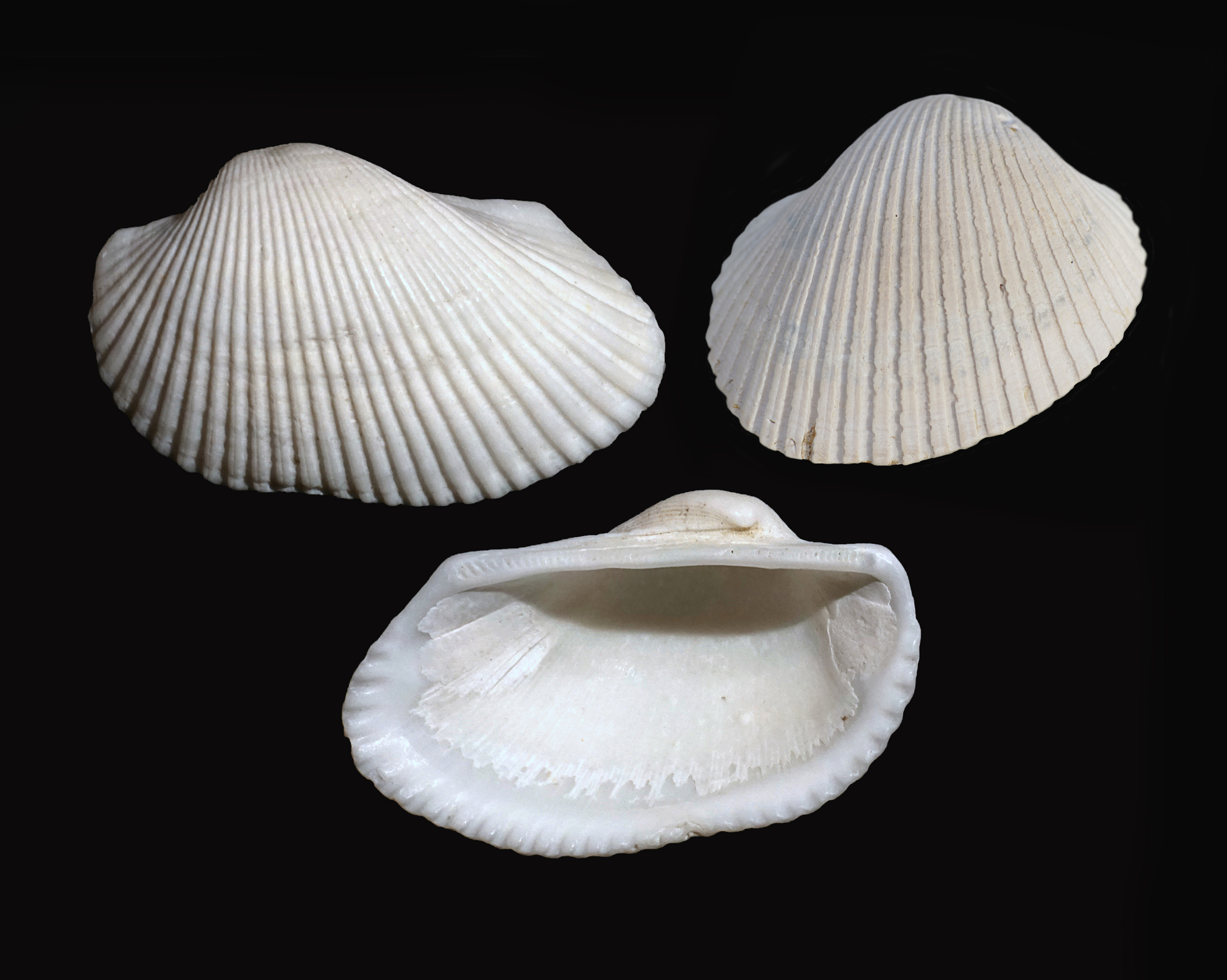
Coquina Clamshells

1. Coquina Clam

Coquina Clamshells (Donax variabilis) are inspiring with their display of variable colors of the rainbow. The colors can range from yellowish-brown to blue, lavender to green to pink and typically exhibit a plaid pattern. Their shells are asymmetrical from their pointed beak, slightly elongated and inflated. These are little clams that create the activity you see at the tide line of the surf. With the aid of a fleshy foot, they dart about and can bury under the sand in a twinkling. Apparently, they are sensitive to light and rush to get back into darkness under the sand. They are great in soup, and desired in crafting for their beauty.

  • Size: Up to 3/4 inches
  • Habitat: Sandy shallow subtitle zones
  • Range: Virginia to both coasts of Florida and Texas
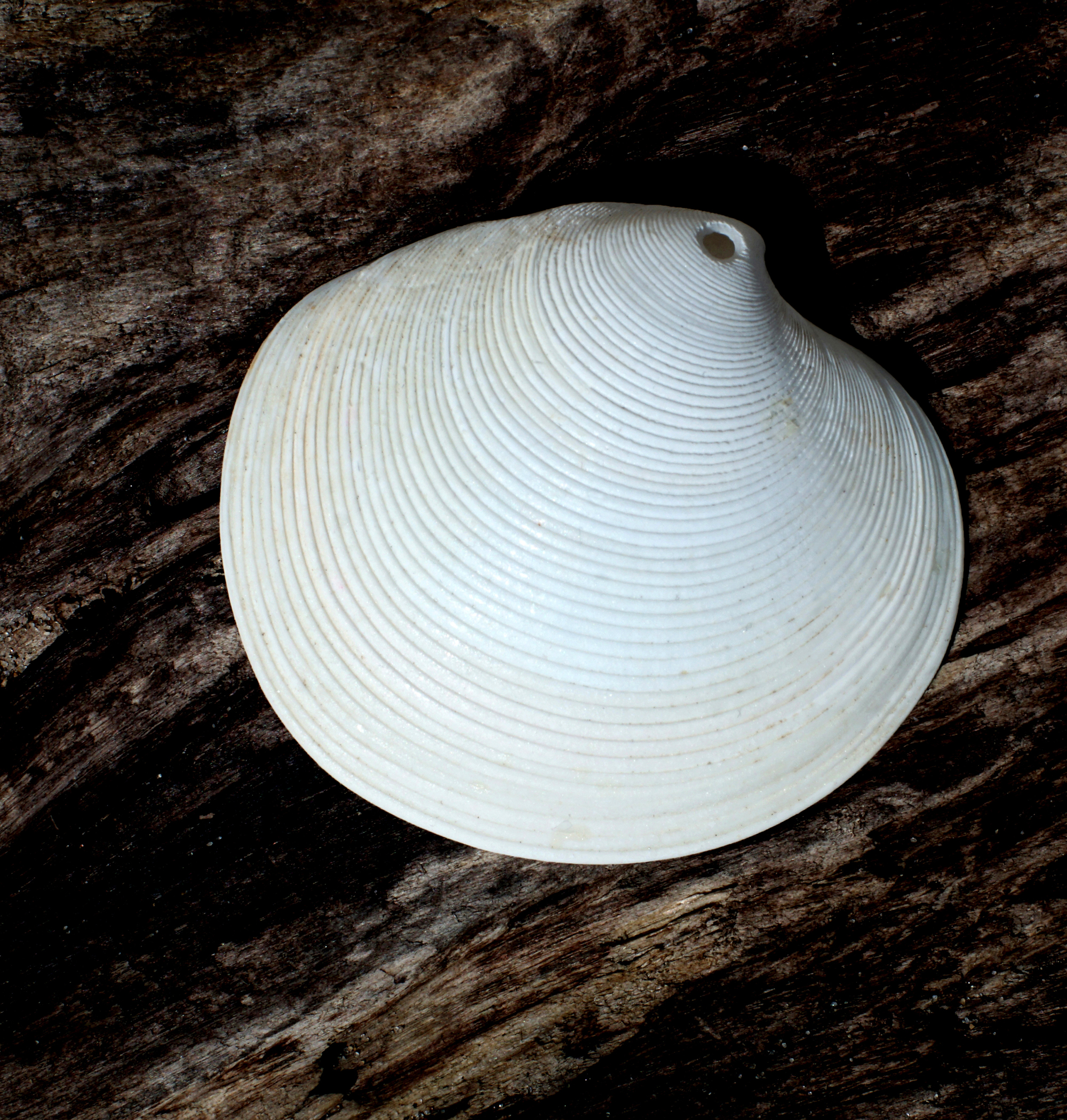
Disc Dosinia Clamshell

2. Disc Dosinia Clam

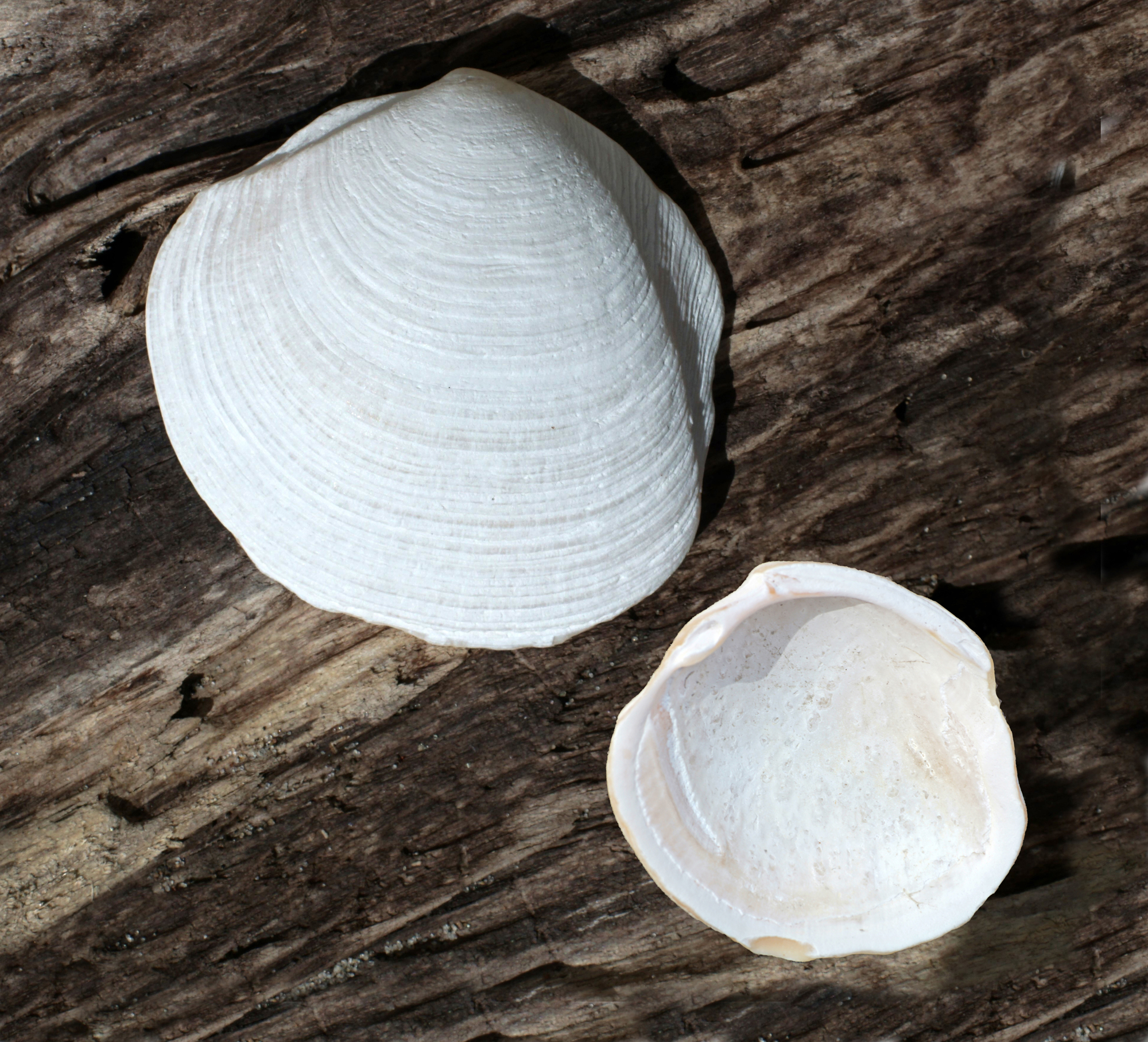
The Disc Dosinia clam (Dosinia discus) displays an exterior valve yellowish-white in color with a pure white interior. The valves are moderately thin and quite circular in outline with a small dominant beak. A distinct feature of Disc Dosinia is the fairly even concentric ridges of about 20 to 25 per inch. Another species, Elegant Dosinia, has about 50 ridges to the inch.

  • Size: Average 2 inches, up to 3 inches
  • Habitat: Just offshore in moderately shallow water and paired valves are often commonly found
  • Range: Virginia to Florida, east to the Gulf States and south to the Bahamas
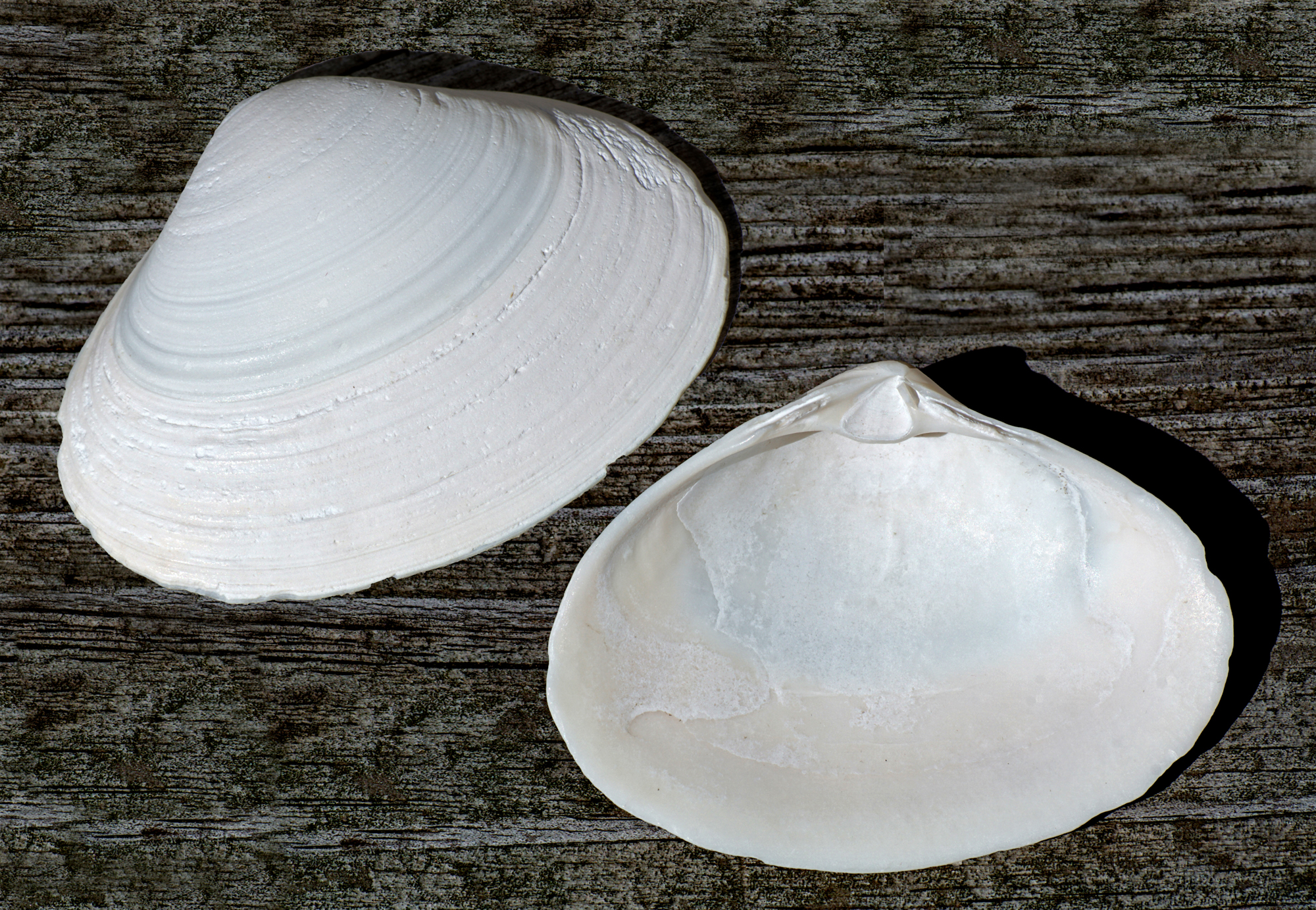
Atlantic Surf Clamshells

3. Atlantic Surf Clam

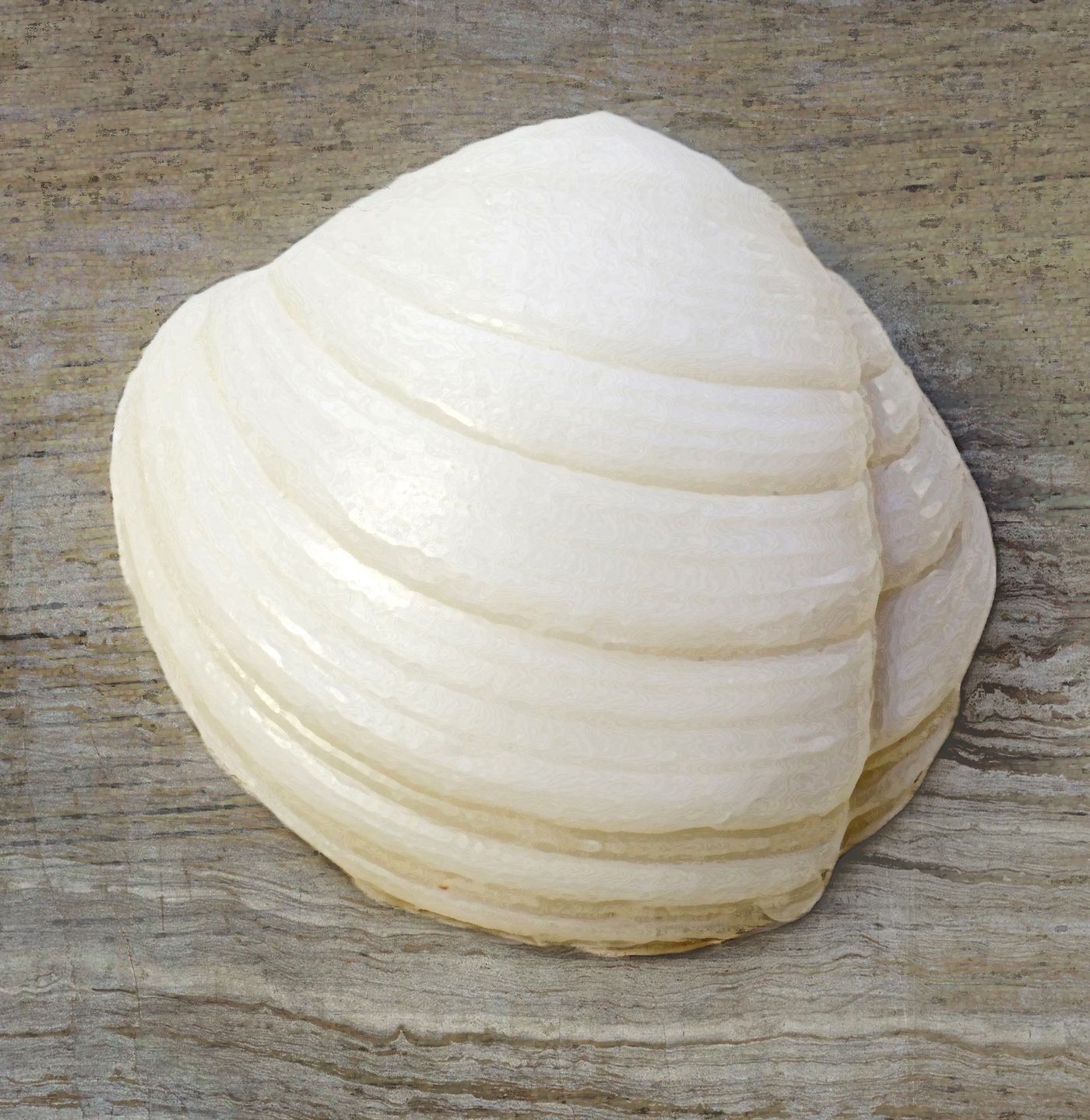
The Atlantic Surf Clams (Spisula solidissima), are also known as Hen ClamBar ClamSkimmer Clam, or Sea Clam. They prefer the surf environment on sandy shores feeding on minute plant and animal life that washes back and forth in the waves. After severe storms, beaches are sometimes covered with thousands of these clams! Beachgoers will often pick-up one of their large empty shells to dig with in the sand or take home as a decorative dish. Atlantic Surf Clam valves’ outer surfaces are colored white to yellowish-white, sometimes with added gray. Their interior valves are white with a slight iridescence. The shells are sturdy and triangular-shaped displaying thin concentric growth lines over their exterior shell. They grow fast and large and are prized by humans for their sweet flavor. U.S. wild-caught Atlantic Surf Clam is a smart seafood choice because it is sustainably managed and responsibly harvested under U.S. regulations. They can live up to 35 years.

  • Size: Up to 3 inches
  • Habitat: Warm coastal water near shore, typically in surf waters
  • Range: Predominantly from Nova Scotia, Canada to North Carolina and as far south as Florida to portions of the Gulf States
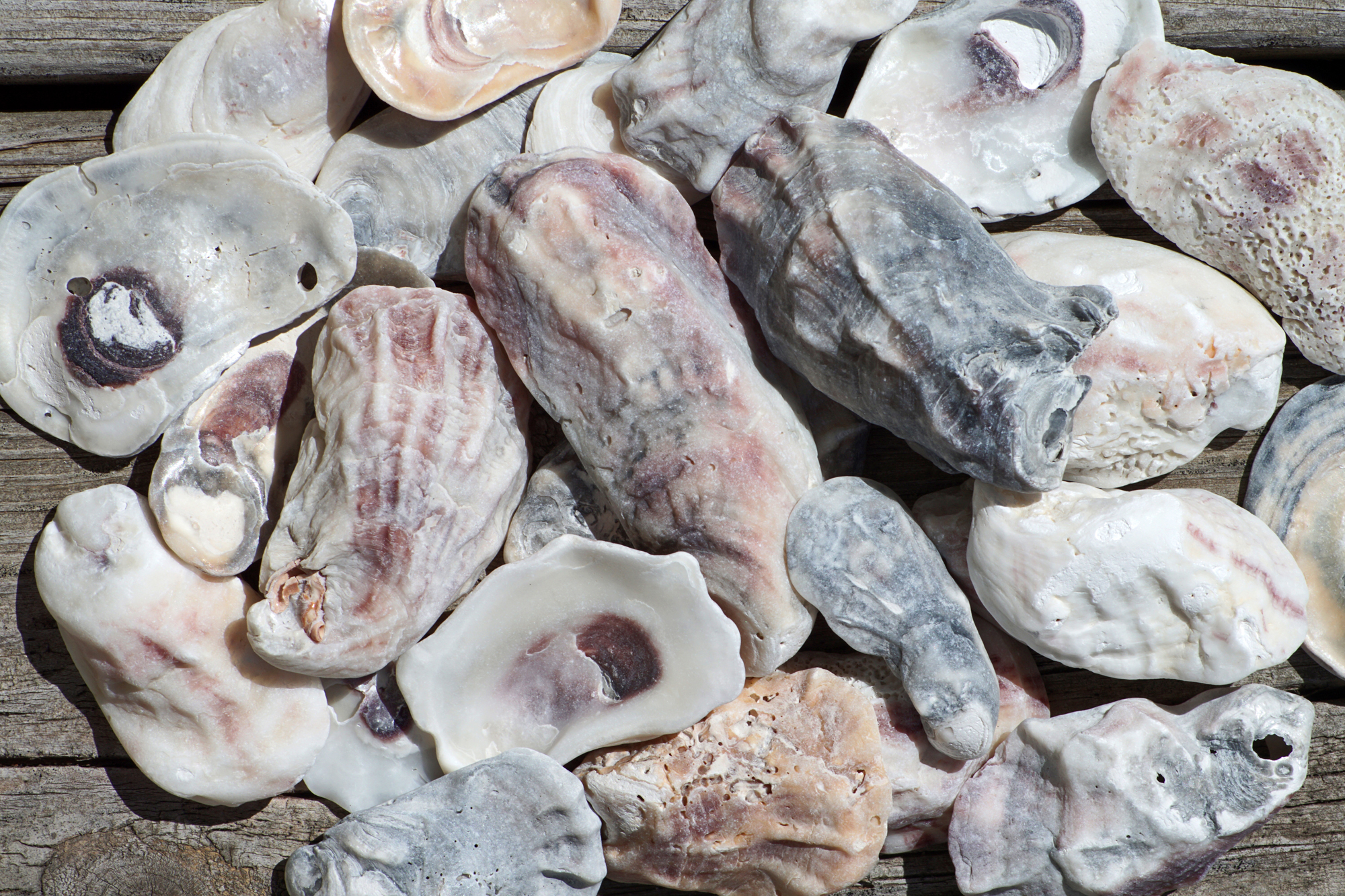
Eastern Oyster Clamshell Collage

4. Eastern Oyster

The Eastern Oyster (Crassostrea virginica) can go by several names, including, Wellfleet OysterAtlantic Oyster, Virginia Oyster, or American Oyster. Their shell is heavy and possesses a teardrop-oval shape that varies greatly. Sometimes they have scaly concentric layers over their outer surface, and sometimes with irregular concentric rings, and yet sometimes with irregular vertical ribs. It’s interesting to note that they can grow to any shape necessary. The Eastern Oyster shell varies in color from white to gray to tan, or with pinkish markings. The right or top shell is flat with a purple muscle scar on the interior, while the bottom shell is cupped with a dark muscle scar.
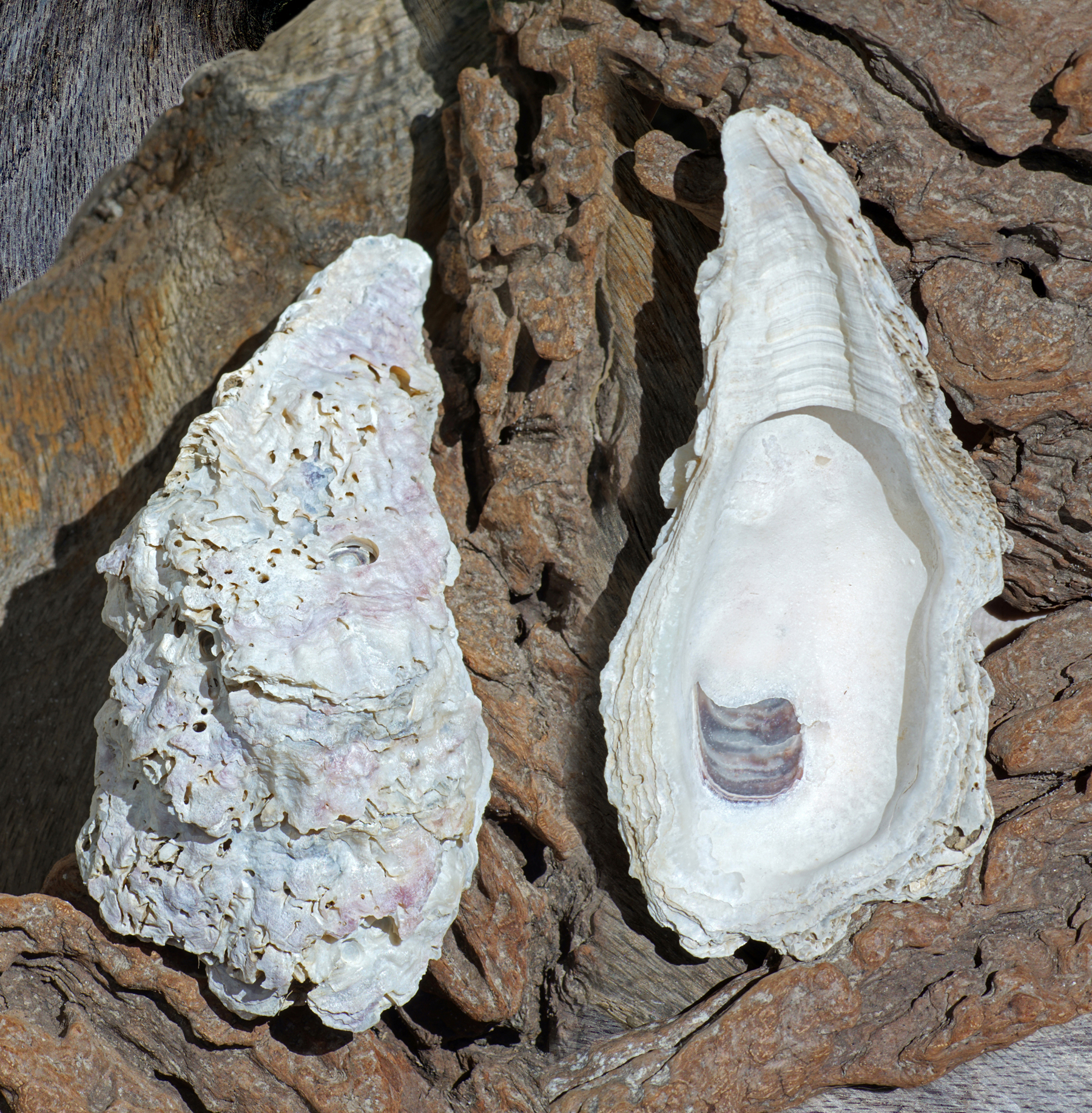
Eastern Oyster Shell (Exterior/Interior)

Eastern Oysters are very popular commercially. Today, less than 1% of the original oyster population that lived during 17th-century when the origianl colonists arrived is thought to remain in the Chesapeake Bay and its tributaries. The Eastern Oyster is the state shellfish of Connecticut, and its shell is the state shell of Virginia and Mississippi, and the shell in its cabochon form (polished) is the state gem of Louisana.

  • Eastern Oyster Quick Facts
  • Eastern Oysters exhibit fast growth and reproductive rates.
  • They originally mature as males, then later develop female reproductive capabilities.
  • An adult oyster can filter up to 50 gallons of water in one day.
  • Oysters can live out of the water during cooler months for extended periods.
  • These oysters often attach to one another, forming dense reefs that provide habitat for many fish and invertebrates.
  • They are sought after for their creamy white meat and firm texture with a mild, sweet flavor.
  • Size: Average 3–5 inches, Up to 8 inches
  • Range: Brackish and saltwater from shallow bays 8 to 35 feet deep, often concentrated in oyster beds or rocks
  • Habitat: From Nova Scotia, Canada, south to Florida, east to the Gulf of Mexico and further south as far as Venezuela
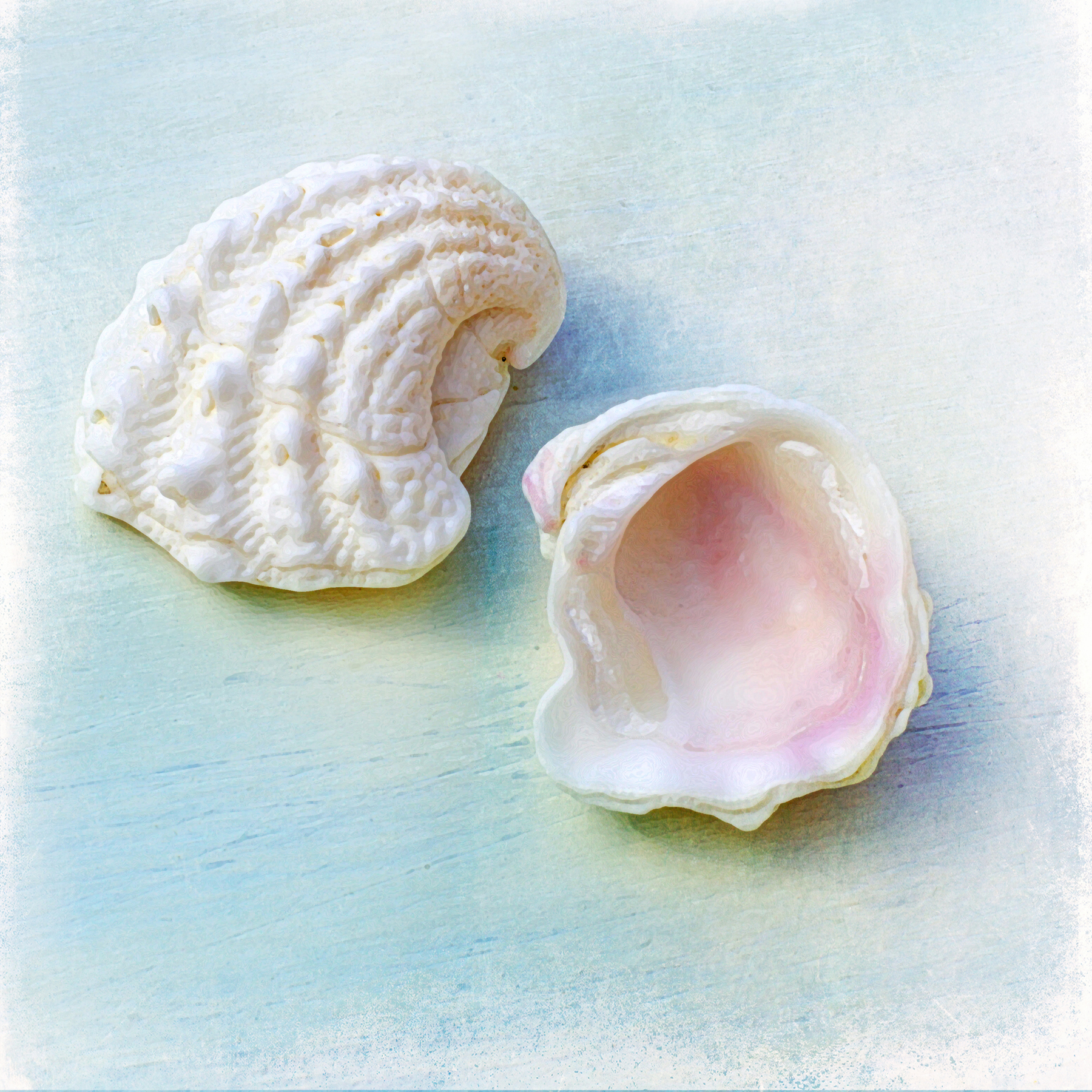
Spiny Jewel Box Oyster Shells Photo

5. Spiny Jewel Box Oyster

The Spiny Jewel Box Oyster (Arcinell acornuta) possesses a thick, strongly curved shell with knobs or longer spikes along 7–9 rows of spines. Fresh specimens have extended spikes and resemble the thorny oyster described below. The spikes become worn down by the surf and sand like the pair in my example, or the spikes can break off entirely. They can dipsly a variety of colors including white, yellow, pink, purple, orange and even sometimes green, often with combinations of these shades, making them look like colorful jewels on the beach. Their colors vary by species and can include bright hues like magenta and deeper tones, with some even showing iridescent effects, creating diverse and beautiful shells. This bivalve animal attaches itself to an offshore rock or substrate. This answers the question why beachcombers rarely find these beautiful bivalves in their full glory with both valves attached. Also, because they cement themselves to objects, their shells can be irregular and variable in shape.

  • Size: Up to 2 inches
  • Habitat: Attached to rock, coral or shells in warm shallow water (sometimes in deep water) and exposed to air during low tide. Later in life, they become detached
  • Range: North Carolina to Florida and the Gulf of Mexico
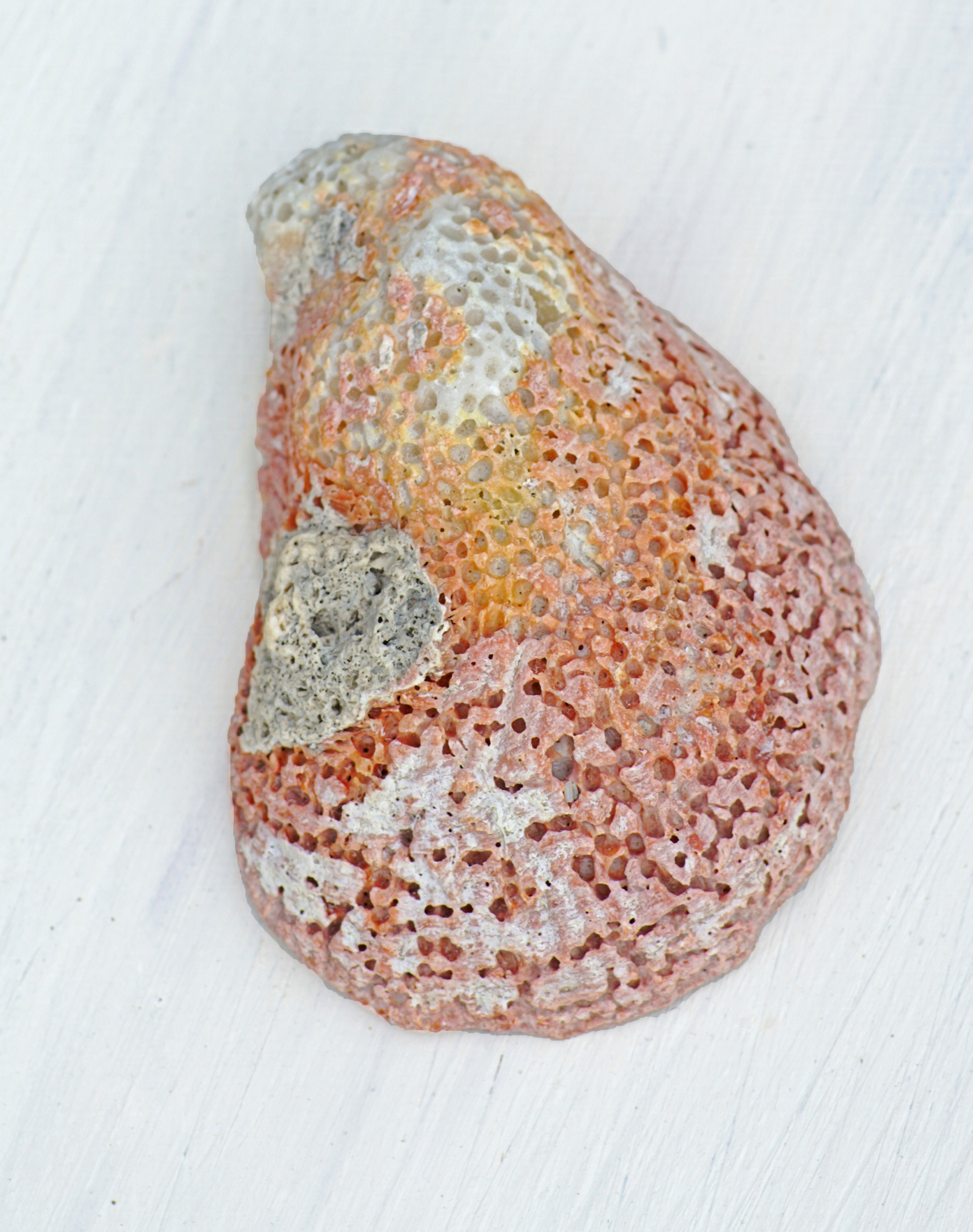
Atlantic Thorny Oyster Shell

6. Atlantic Thorny Oyster

Atlantic Thorny Oyster (Spondylus americanus) shells normally show the telltale protruding thorns or spines, but after the animal dies and washes-up on the beaches, it typically loses its thorns due to wind and surf, which is likely what happened to my sample shown above. Thorny oysters possess a thick shell with a vibrant spectrum of colors, including bright orange, deep red, rich purple, yellow, pink, cream, and white, often with combinations or banding. They can be circular, oval, or irregular in shape. While they often have a generally round outline, their shape is highly adaptable, allowing them to conform to the crevices or surfaces whereever they attach.
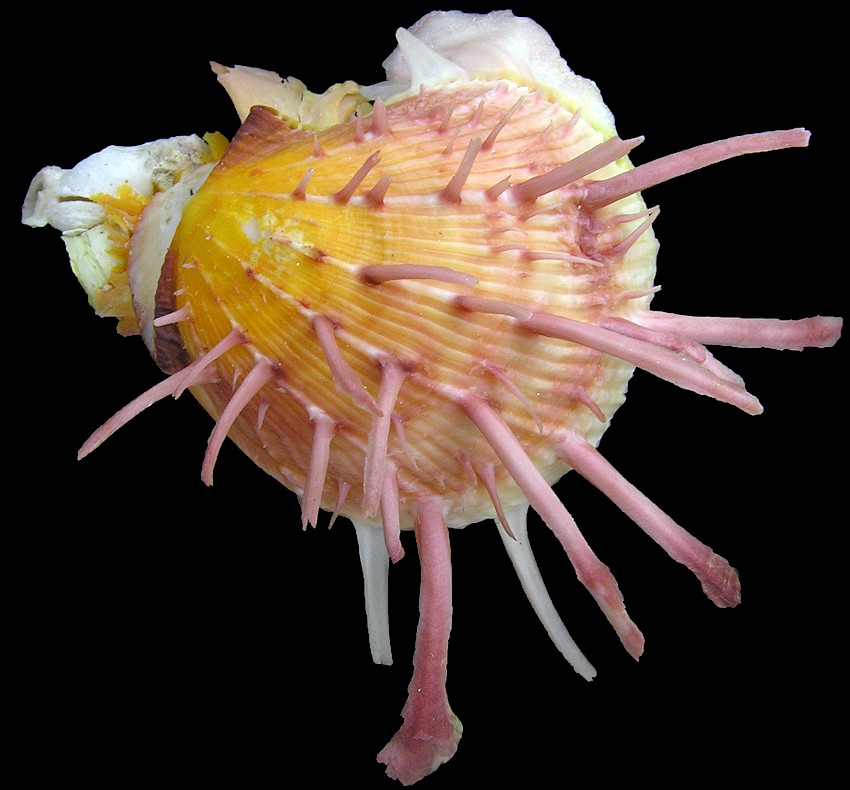
Atlantic Thorny Oyster with Spines: Source
  • Size: Up to 5 inches  
  • Habitat: Deepwater reefs, especially in areas with high sedimentation. It is often lodged in a crevice or concealed under an overhang
  • Range: North Carolina and Texas southwards to Venezuela and Brazil
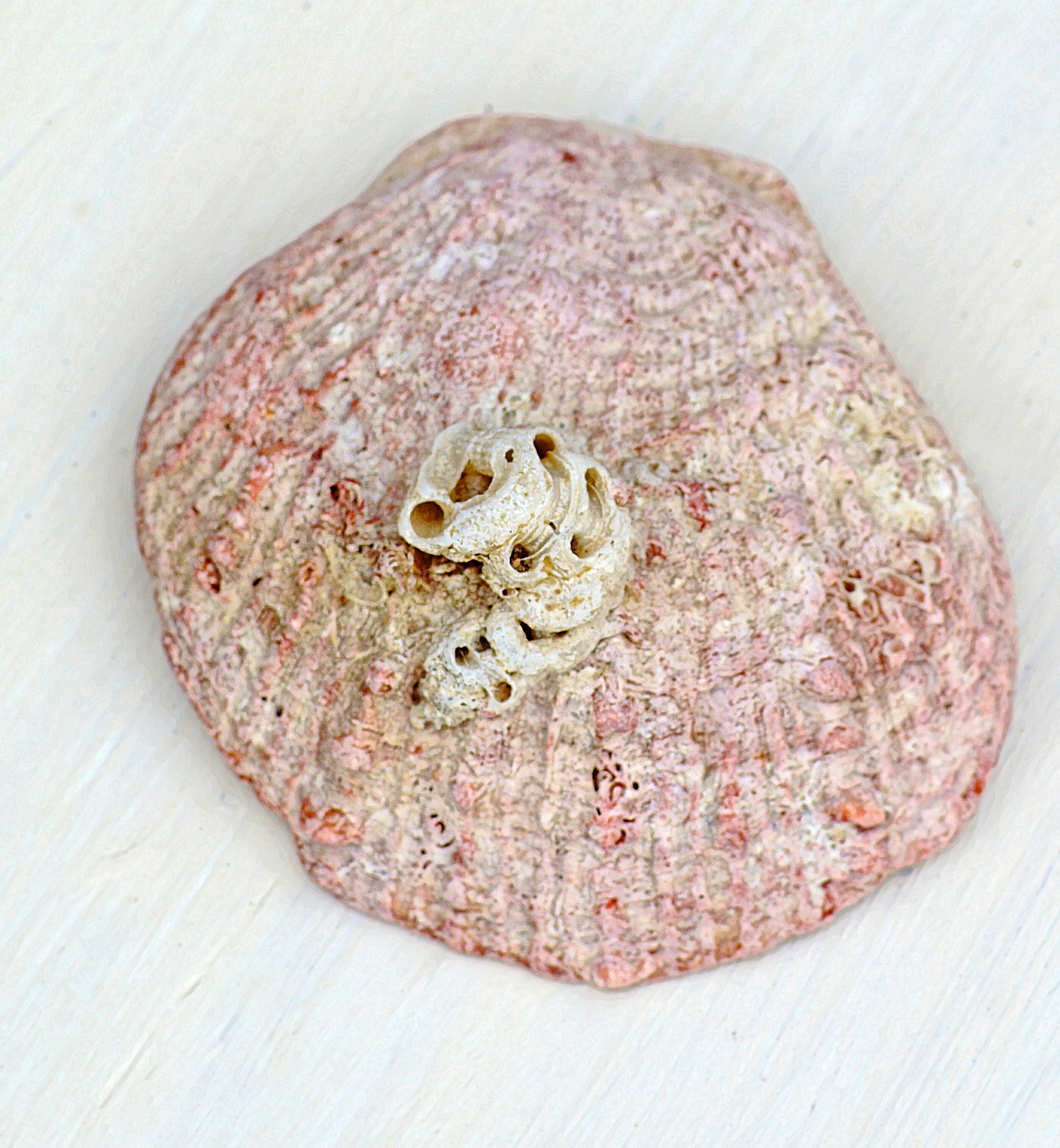
Digitate Thorny Oyster Shell with Tubeworm Casing Burrow

7. Digitate Thorny Oyster

Digitate Thorny Oyster (Spondylu stenuis) is often mistaken for the Atlantic Thorny Oyster (Spondylus americanus). There are many species of Thorny Oysters from the genus “Spondylus” that vary considerably in appearance and range. They are also known as Spiny Oysters. However, they are not true oysters, yet they share some habits such as cementing themselves to rocks or other hard surfaces almost always with their lower valve. They are actually more closely related to scallops. Also, the two halves of their shells are joined with a ball-and-socket hinge rather than with a toothed hinge, which is more common in other bivalves.
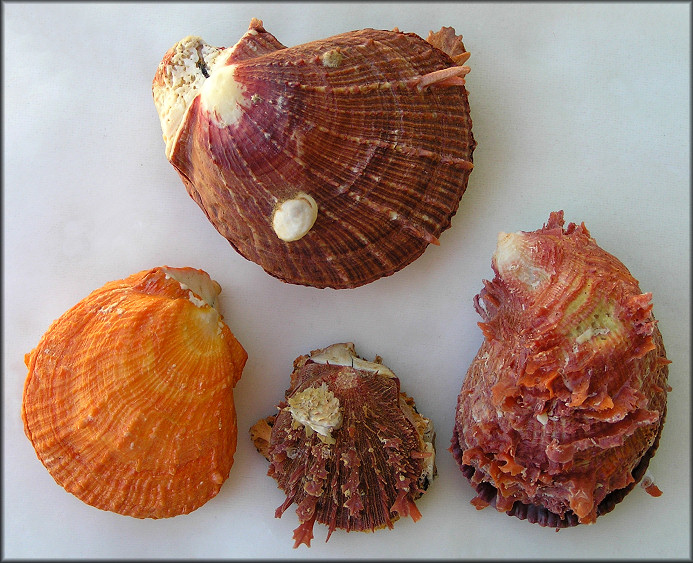
Digitate Thorny Oyster: Source

The Digitate Thorny Oyster displays a thick lumpy shell most often with thorns, although they have fewer than most spiny oysters and are generally thicker, shorter and flatter rather than pointy. Their spines often break off or are lost after the animal dies, frequently appearing as “naked” or smooth shells on beaches. Some varieties are whitish, pink, reddish or orange. Interior is whitish with a wide darker band around the perimeter. Note: The example above of the Digitate Thorny Oyster has a tubeworm casing attached to it.

….

  • Size: Average 3 inches, up to 5 inches
  • Habitat: Attach to coral reefs or rocky reefs depending on species in shallows or in deeper waters
  • Range: North Carolina around Florida to Texas, southwards to Venezuela and Brazil
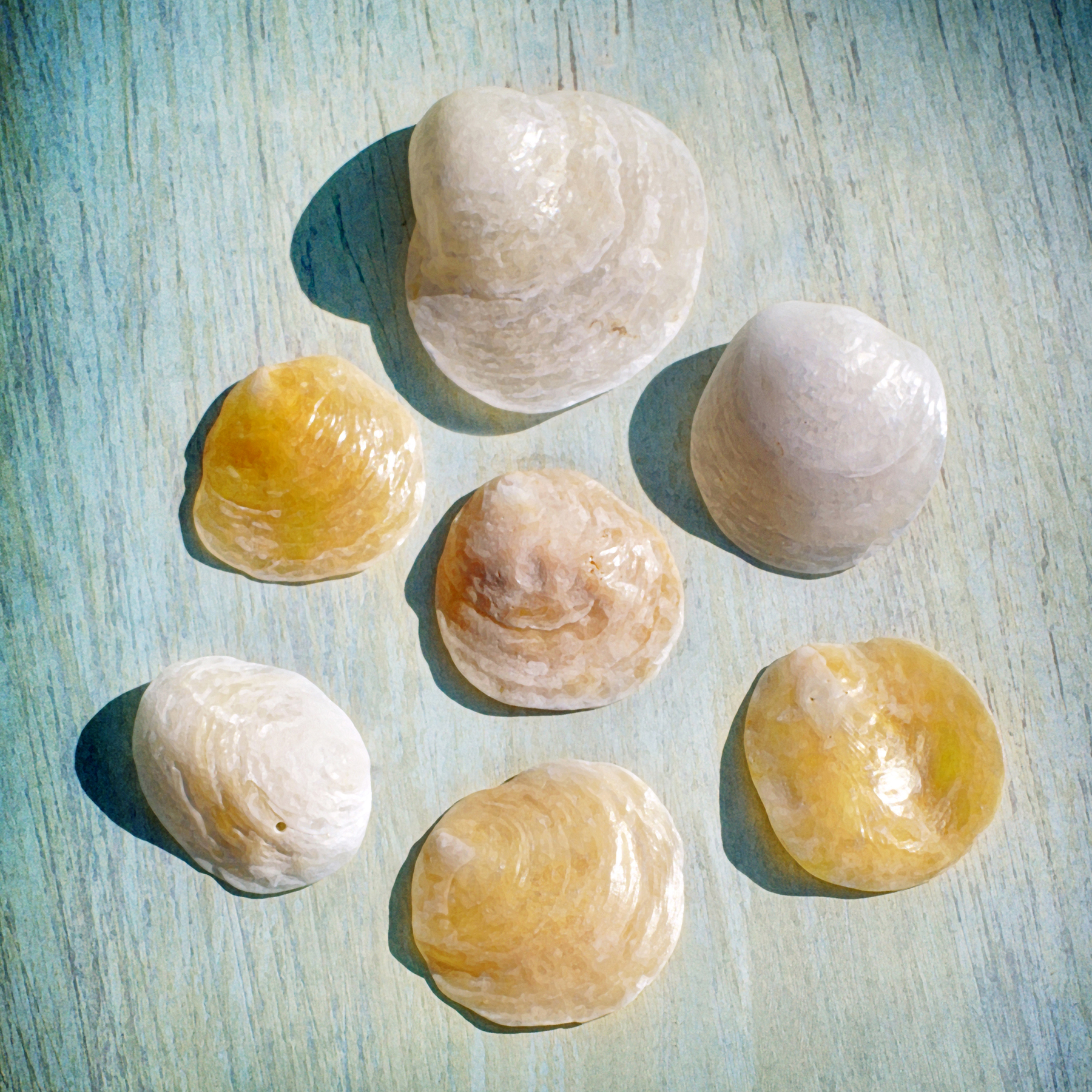
Jingle Shell Oyster Shells

8. Jingle Shell Oyster

The Jingle Shell Oyster (Anomia simplex) also known as Mermaid’s Toenail and Saddle Oyster, is a bivalve with thin, translucent, irregular shaped, pearly valves. The exterior valve is curved, usually yellow, silver, whitish or orange, and the interior valve is flat and whitish with a hole at the apex. It has a fleshy appendage (byssus) which passes through the hole to anchor itself upon rocks, seaweeds, or old shells. Consequently, usually only the upper valve washes ashore. Jingle Shells are often attached to submerged objects so thickly that one grows on top of another. Consequently, oyster dredges will bring them up in quantity. People use them for crafting and they make lovely wind chimes that create a sweet sound.

  • Size: Up to 2 inches
  • Habitat: Shallow waters, beaches, oyster beds, and mollusk shells.
  • Range: Nova Scotia, Canada to Florida, Texas and the West Indies
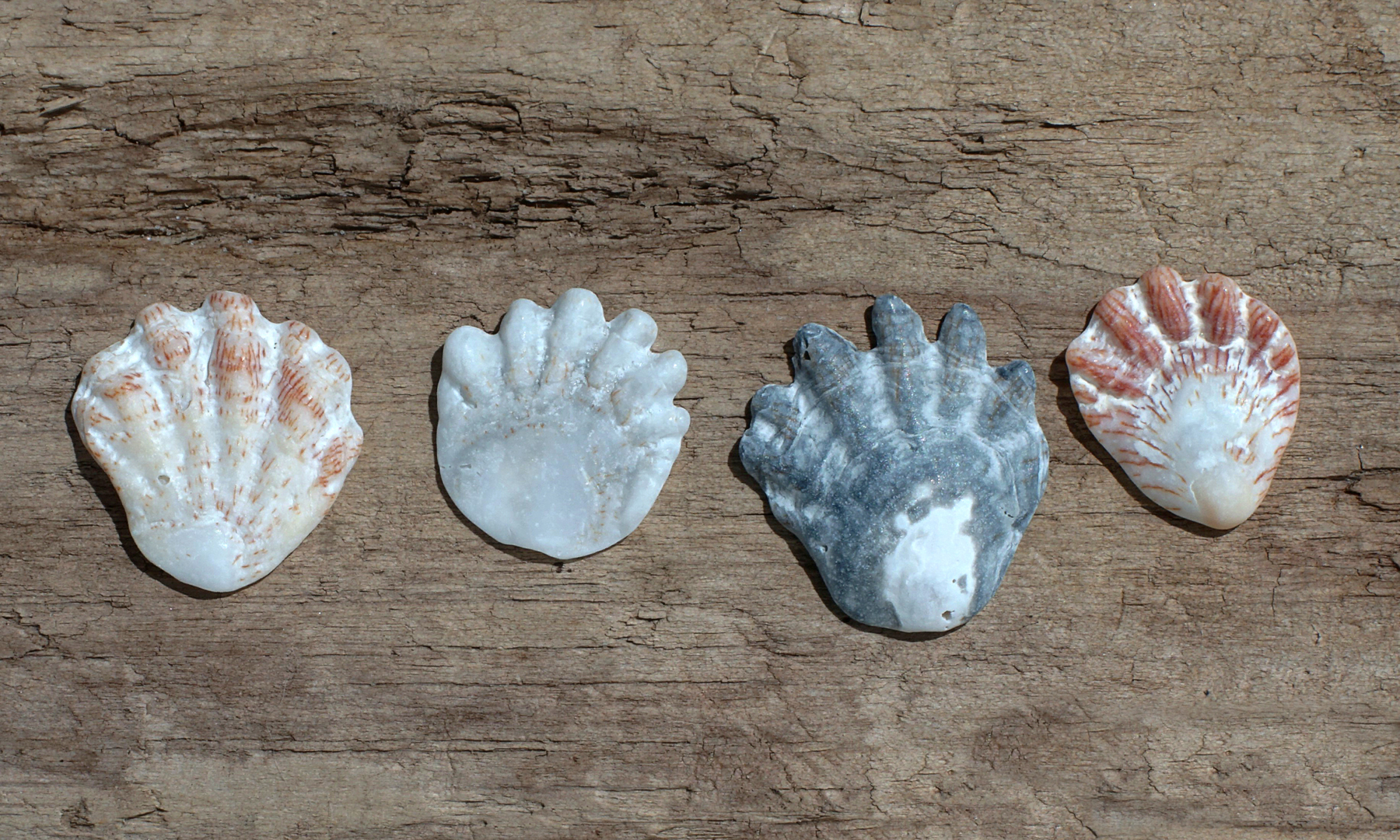
Atlantic Kitten Paw Clamshells

9. Atlantic Kitten Paw Clam

Atlantic Kitten Paws (Plicatula gibbosa) are related to oysters and sometimes are called Cat’s Paw. Still, I prefer the former as they are tiny little seashells no bigger than a penny and too cute to be associated with the mighty hunter. Their valves vary in color and are almost flat, but tough, with a bumpy texture and show an irregular triangular shape resembling their name. They typically attach themselves to rocks using the left valve, so it’s more common for seashell hunters to find the right valve onshore.

  • Size: Up to 1 inch
  • Habitat: Offshore in sandy substrate up to 300 ft (91m) depth
  • Range: From North Carolina to Florida, east to Louisiana and as far south as the West Indies
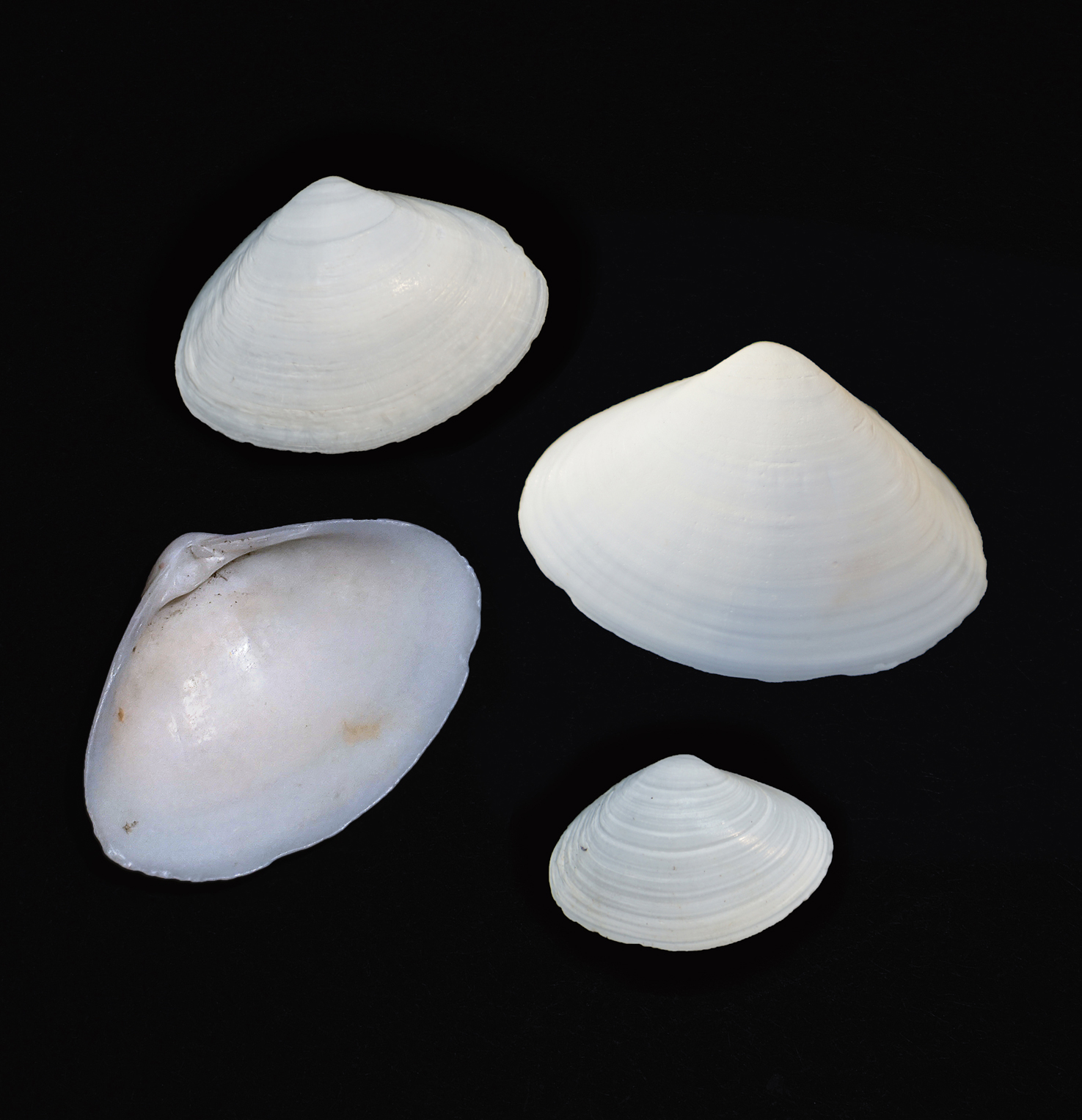
Tampa Tellin Clamshells

10. Tampa Tellin Clam

Tampa Tellin (Tampaella tampaensis) clamshells are colored opaque white (sometimes tinged pinkish-orange) with a shiny white interior. They display slightly inflated, oblong-shaped valves with very thin concentric ridges on the exterior. The valve is fairly symmetrical from its somewhat pointed beak. The valves are relatively thin and compressed. The hinge is not strong, and shells washed up on the beach are often broken. In general, Tellin clamshells belong to a family which is often considered the aristocracy of bivalves. Of several hundred species, scores are found along both U.S. coasts, especially in the warmer waters of the Atlantic and Gulf coasts. Some Tellins are rose-colored and attractive with banded patterns, very desirable to collectors, but most are white to creamy colored.

  • Size: Average 1/2 inch up to 4 inches
  • Habitat: Shallow sand and grassy inland bays and lagoons
  • Range: Florida to Panama and Texas
Speckled Tellin Clamshell

11. Speckled Tellin Clam

Speckled Tellin (Tellina listeri) also known as Interrupted Tellin, has an exterior valve that is shiny, creamy-white with purplish-brown rays or speckling. The interior is white with the colors showing through. The shell is moderately thin, long and oval. The valve has strong concentric lines and a crease extending from the beak to the edge. It is not edible.

  • Size: Up to 2 inches
  • Habitat: Moderately shallow water, but buries itself deeper in the mud and sand than most bivalves
  • Range: North Carolina to Florida and Brazil
Clamshell ID and Interesting Facts (From Arks, Angel Wings, Cardita, to Lucine Clams)

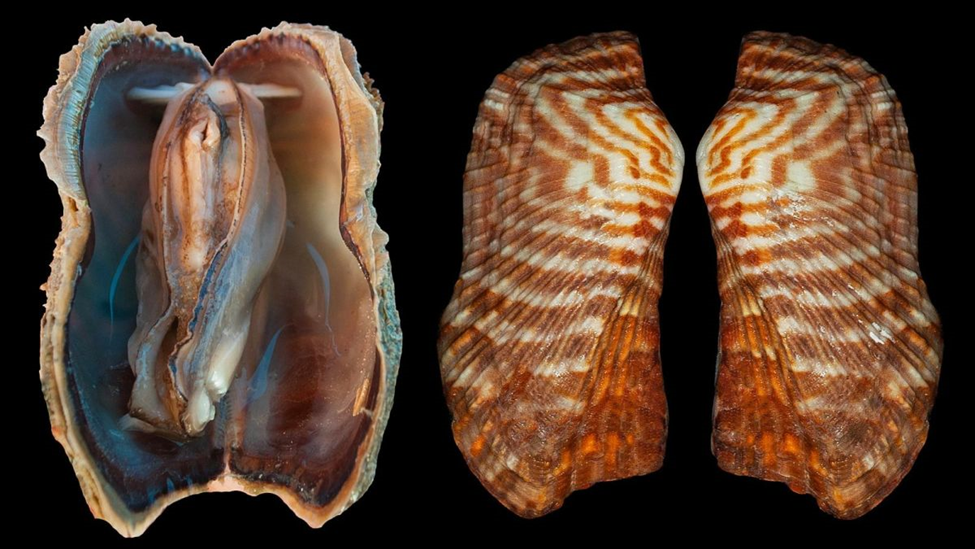
Zebra Ark Outer Shell and Interior: Source

Brief Intro

The word “clam” can be used to cover all bivalves, including scallops, oysters, arks, and cockles, to name a few. Did you know that there are more than 15,000 species of clams around the globe? Amazing, right? Clams and other bivalves first appeared in the fossil record as tiny creatures as early as the Cambrian Period over 500 million years ago. By the Devonian Period around 400 mya and through the Mesazoic Era, they gradually developed into the abundant forms. Follow along to learn interesting facts and help identify those clamshells you couldn’t resist picking up from the beach.

Twelve Atlantic Clamshell Identifications and Interesting Facts from my Collection in the following order:

  1. Ponderous Ark
  2. Blood Ark
  3. Transverse Ark
  4. Incongruous Ark
  5. Cut-Ribbed Ark
  6. Zebra Ark
  7. Broad-Ribbed Cardita
  8. Angel Wings
  9. Buttercup Lucine
  10. Chalky Buttercup Lucine
  11. Florida Lucine
  12. Pennsylvania Lucine

For additional Fossillady clam ID including Coquina, Various Oysters Tellins and more, click HERE.

Ponderous Ark Clamshell Collection

1. Ponderous Ark Clam

Ponderous Ark (Eontia ponderosa) clam displays a very thick triangular shell with 27 to 31 strong, flat radiating ribs and a large beak that turns back to the rear of the shell. These arks have a dark, velvety skin worn to white after beaching, and the calcareous shell can later stain to rust or gray. Their robust shells make them and their relatives, such as the Blood Arks, among the most common beach finds where other bivalve shells are otherwise pulverized in high-energy wave zones. Ponderous Ark and its relatives are a family of small to large-sized edible saltwater clams.

Ponderous Ark Clamshell with Periostracum Covering
  • Camouflaging Layer over Arks: The Periostracum The shells of many ark species have a thick layer of a dark brown velvety covering called the “periostracum”. The photo shows the covering layered over the shell which has partly been worn away. It serves as a protective camouflage. After beaching, the periostracum begins to wear off and, in time, can completely disappear.
  • Size: Up to 3 inches
  • Habitat: A sand dweller in shallow shores
  • Range: Virginia to Key West and the Gulf of Mexico
Blood Ark Clamshell Collection

2. Blood Ark Clam

Blood Ark (Anadara ovalis) derives its name from its uncommon red blood; most mollusks have clear blood. Like their close relative, the Ponderous Arks, Blood Arks have very thick shells, only to a slightly lesser degree. After the outer layer “periostracum” wears off, the shells may appear white, gray, or rust-colored. The interior is typically creamy white. Each valve typically has approximately 35 deep, flat radiating ribs.

  • Size: 2 1/2 inches
  • Habitat: Sandy shallows
  • Range: Cape Cod, Massachusetts, to Florida and east to Texas
Comparison: Ponderous Ark Shells (left) and Blood Ark Shells (Right)

Comparison: At first glance, it’s hard to tell apart the Blood Ark from the Ponderous Ark. The Ponderous Ark (left) has a more triangular-shaped shell with an inflated high crease from the beak, whereas the Blood Ark (right) has a more elongated oval shape (observe the comparison photo). Also, the hinge line of the Blood Ark is slightly longer and straighter.

Transverse Ark Clamshells

3. Transverse Ark Clam

Transverse Arks (Anadara transversa) are fairly sturdy, elongated oval and small bivalves. Their valves are somewhat inflated, bearing a relatively long straight hinge line. They display squarish ribs and are usually colored white once the periostracum covering wears off after beaching. Like many seashells, they can stain rust or gray after prolonged exposure to the sun and air. They are commonly found on Florida shores.

  • Size: Up to 1 1/4 inches
  • Habitat: Gulf and bay sandy bottoms or hard substrates
  • Range: Massachusetts to Florida, east to parts of the Gulf of Mexico and south to the West Indies
Incongruous Ark Clamshell Collection

4. Incongruous Ark Clam

The desirable Incongruous Ark (Scapharca brasiliana), formerly (Anadara brasiliana) possesses a sturdy shell distinguished by obvious beading on its strong radial ribs. The shells grow in a triangular shape with well-inflated valves and a strong beak turned back. The color is white with the brown, furry covering (periostracum) while alive and may discolor after being beached by the sun.

  • Size: Up to 3 inches
  • Habitat: Gulf and bay sandy bottoms
  • Range: North Carolina to Brazil
Cut-Ribbed Ark Clamshells

5. Cut-Ribbed Ark Clam

Cut-Ribbed Ark (Anadara floridana), otherwise known as (Anadara secticostata) possess fairly inflated shells with an elongated, slightly uneven oval shape. Their hinge is long and quite straight. Usually the shell is colored white, but like other arks, they are susceptible to staining rust after beaching. The valve consists of 30–38 radial ribs flattened on top with a groove down the center of each rib and concentric ridges between the ribs.

  • Size: Up to 4 1/2 inches
  • Habitat: Offshore sands, but closer to shore in Southern Florida
  • Range: North Carolina, Florida and the Gulf of Mexico to Texas and Westward
Zebra Ark Clamshells

6. Zebra Ark Clam (Turkey Wing Ark)

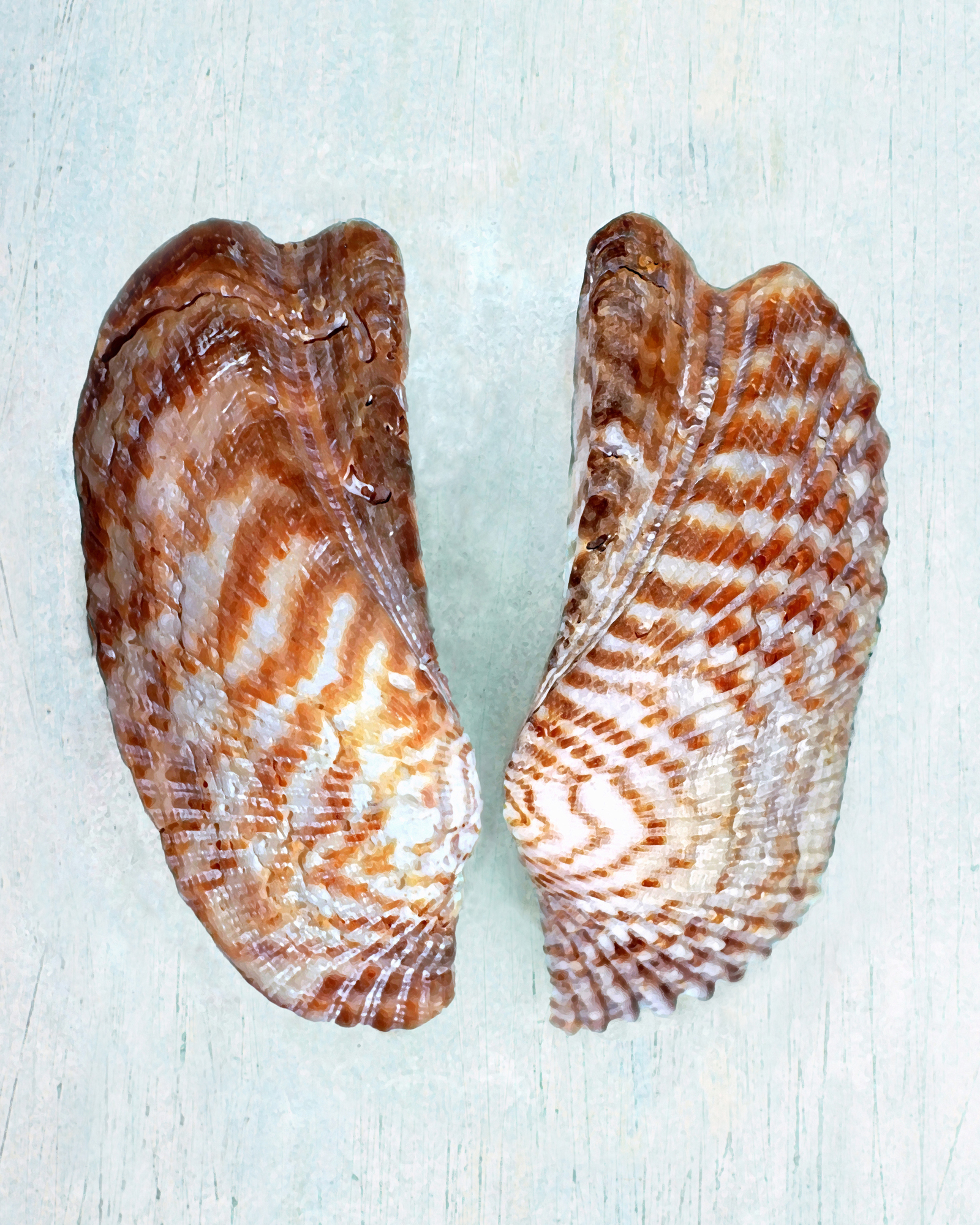
Zebra Arks or Turkey Wing Arks (Arca zebra) possess an unusually elongated oval shape with a long straight hinge. The surface of the valve is uneven with rough-textured ribs. Still, their most distinguishing mark is the attractive zigzag alternating brown and white stripes resembling a zebra or, noticeably, a turkey wing.

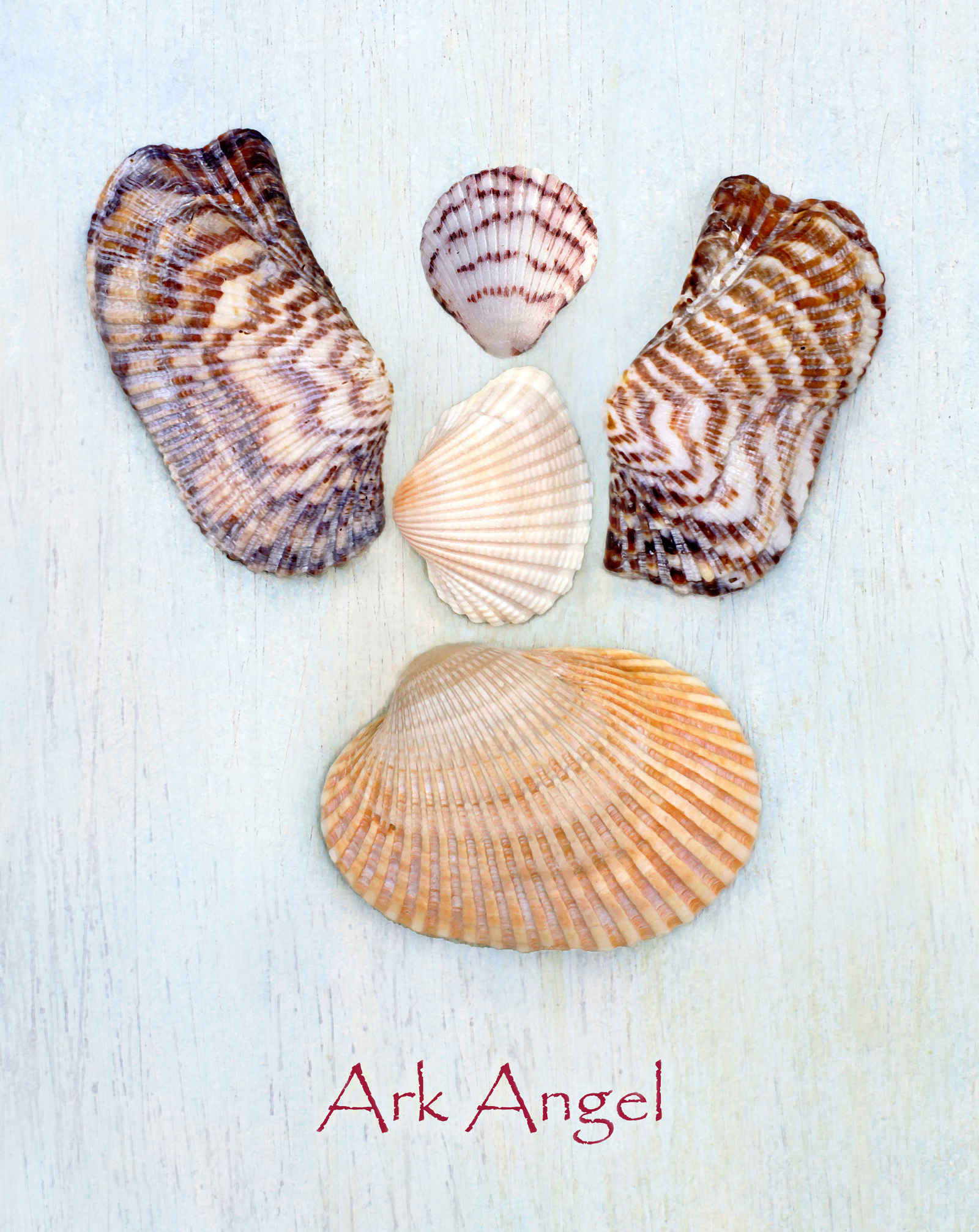
Just for Fun – Various Ark Shells (Ark Angel) My Photosite Image

This ark shell has also been called “Noah’s Ark” because of its shape when the valves are connected. Like many ark shells in general, living examples are covered with a thick and bristly “carpet” or periostracum that wears away after the animal has died and after bleaching by the sun.

  • Size: Up to 3 1/2 inches
  • Habitat: The mollusk attaches itself by its byssus (threadlike filaments) to rocks and other solid objects in shallow water
  • Range: North Carolina to the West Indies, and also on Bermuda’s shores, as well as in the Mediterranean
Broad-Ribbed Cardita Clamshell Collage

7. Broad-Ribbed Cardita Clam

Broad-Ribbed Cardita (Carditamera floridana) is also known as the Bird Wing clam. The exterior shell is covered with white and purple or chestnut blotches with a white interior. The shell is oval, small and thick, with 20 strong raised and beaded radial ribs. Jewelry makers and crafters love this little shell which washes ashore commonly on Florida beaches.

  • Size: Up to 1 1/2 inches
  • Habitat: Attaches itself to the substrate by means of its byssus (threadlike filaments) in sand or mud 3 to 25 feet deep
  • Range: Florida east to Texas and Mexico
Angel Wing Clamshells

8. Angel Wings Clam

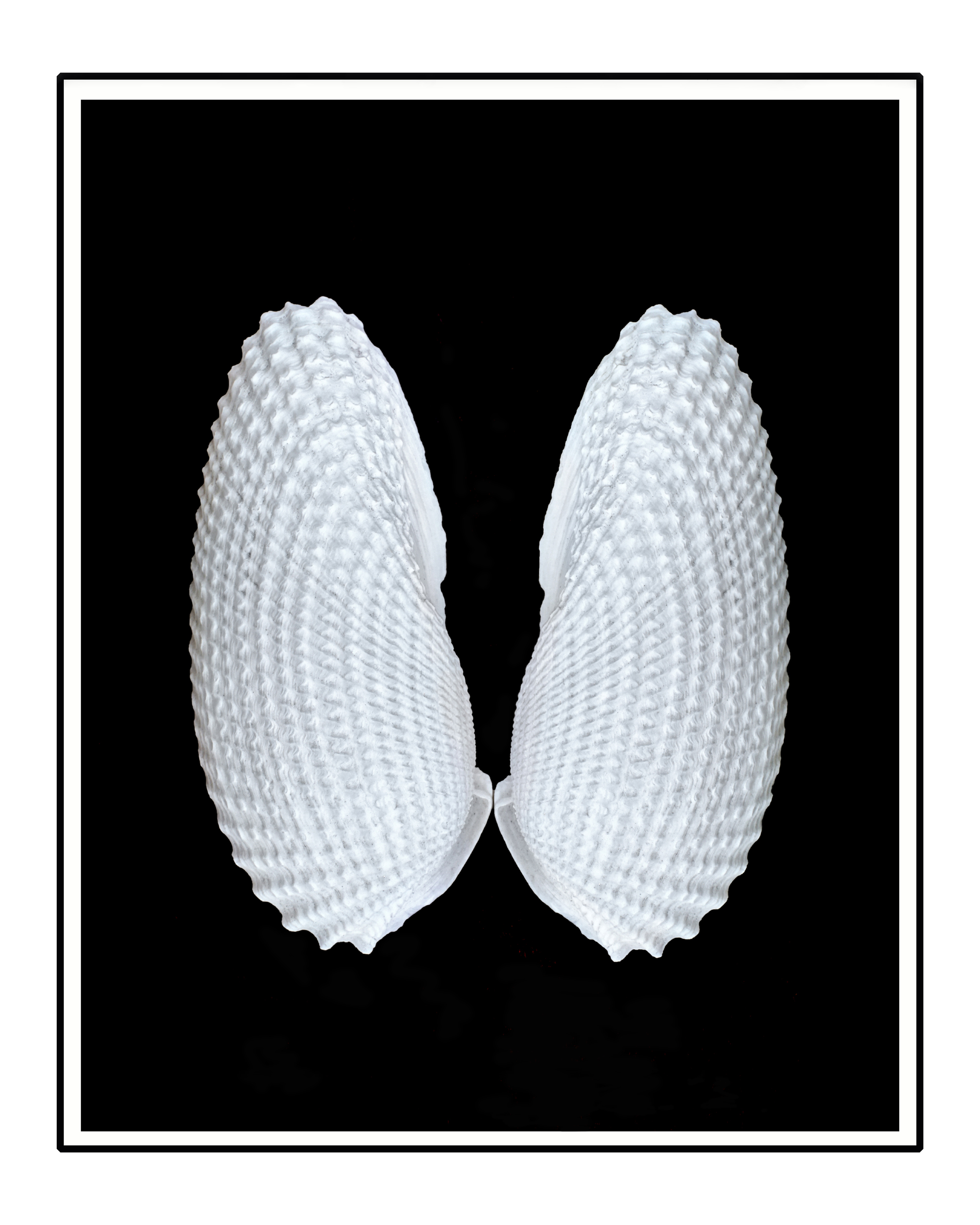
Angel Wing clams (Cyrtopleura costata) display lovely elongated, wing-like valves with 26 radiating ribs finely sculptured, intercepted with a series of concentric growth rings parallel with the margin. Angel Wings are typically white and sometimes tinged pinkish. The muscles on their hinges are relatively weak, so it’s uncommon to find the left and right valves connected. Also, their valves are rather thin and brittle, so they’re often found damaged from rough seas. Interestingly, Angel Wing shells will glow if exposed to ultraviolet light. They living animal can extend a long siphon that protrudes from the burrow used to circulate water and draw in food particles with enough strength to bore into clay, wood and even shale.

  • Size: Up to 7 inches
  • Habitat: Shallow water burrowing up to three feet deep in mud, clay or peat
  • Range: Cape Cod to Florida and the Gulf of Mexico, east to Central America and as far south as Brazil
Buttercup Lucine Clamshells

9. Buttercup Lucine Clam

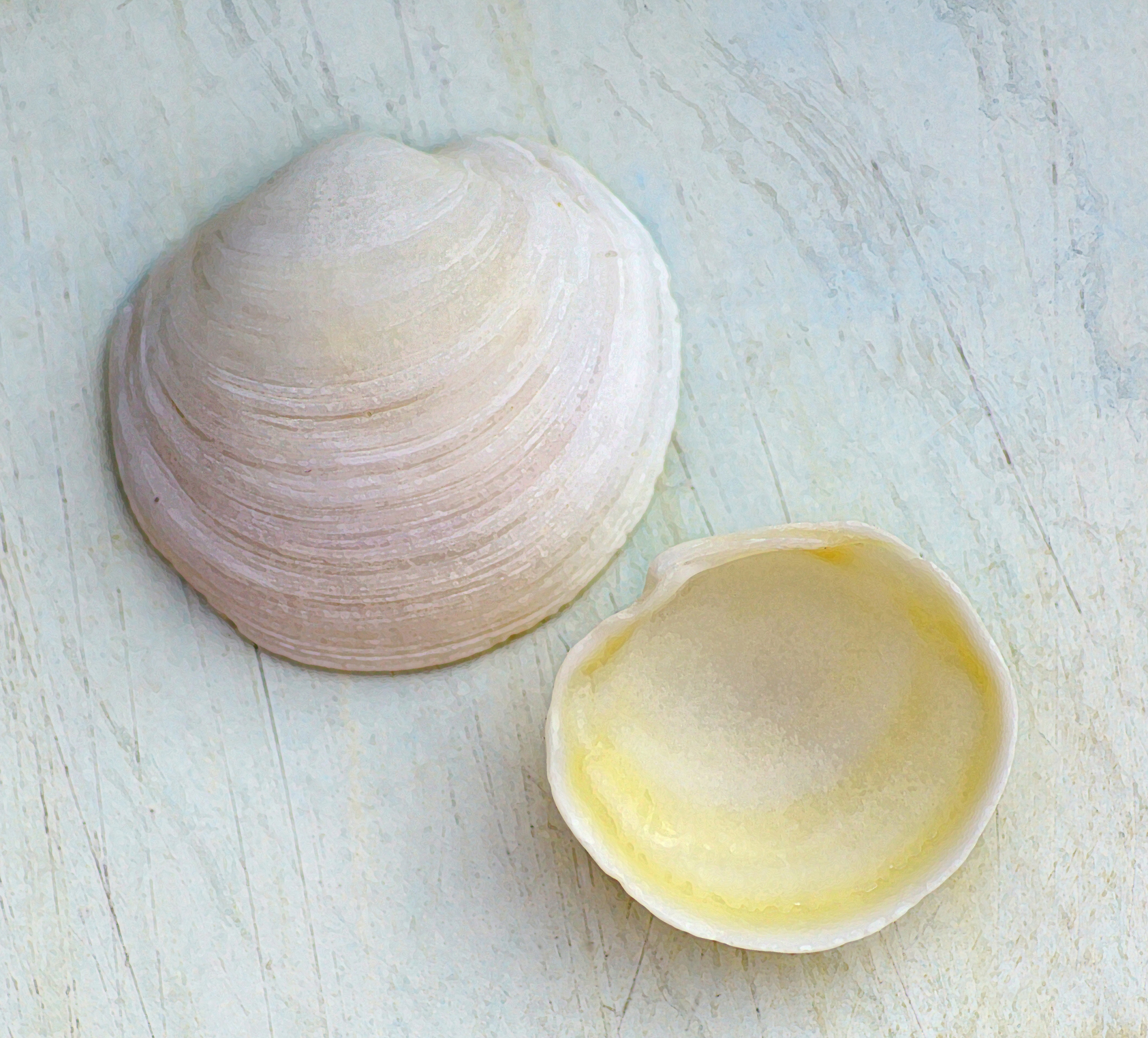
The Buttercup Lucine or Lucina (Anodontia alba) is a circular, bowl-shaped, small bivalve with a fairly sturdy white outer shell and creamy to butter yellow interior. The exterior has numerous fine concentric lines and a somewhat wide hinge plate. Lucines are common in warm waters on both the Atlantic and Pacific Coasts of North America. They are not edible. Did you know the Lucines are named for Lucina, an aspect of the Roman Goddess, Juno, who represented light and childbirth?

  • Size: Up to 2 inches
  • Habitat: Deep to shallow water
  • Range: North Carolina to Florida and the West Indies, as well as the U.S. Pacific Coast
Chalky Buttercup Lucine Clamshells

10. Chalky Buttercup Lucine Clam

The Chalky Buttercup Lucine (Anodonitia philipiana) clamshell is slightly thicker and also larger than the Buttercup Lucine (Anodontia alba). The valve color is white with white to pale yellow interior and possesses numerous concentric lines with a dominant furrow.

  • Size: Up to 2 1/2 inches
  • Habitat: Deep water, but can reach the beach when tidal flow washes it up
  • Range: North Carolina to Florida and the Gulf states, as well as south to the West Indies
Florida Lucine Clamshells

11. Florida Lucine Clam

The Florida Lucine or Lucina (Pseudomiltha floridana) displays weak growth lines but has a sturdy shell. Both its exterior and interior valve colors are white. The shell is fairly inflated and very round with a beak that turns forward which is small, but prominent. They have been called the Face Shell because they are used for the faces of shell dolls. They are not edible.

  • Size: Up to 1 1/2 inches
  • Habitat: Moderate shallow water
  • Range: Florida to Texas and the U.S. Pacific Coast
Pennsylvania Lucine Clamshell

12. Pennsylvania Lucine Clam

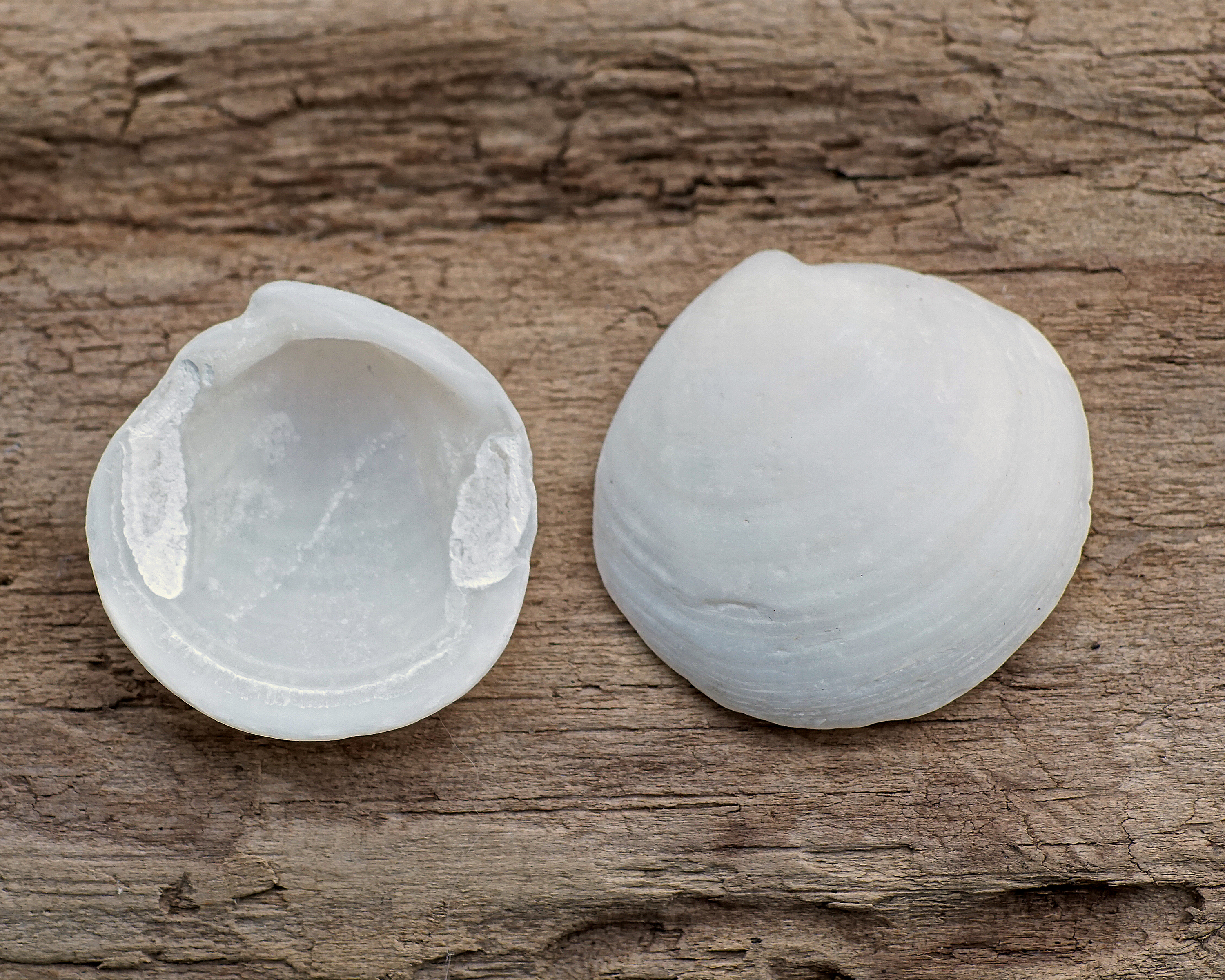
The Pennsylvania Lucine or Lucina (Linga pennsylvanica) shell is off-white with distinct concentric ridges and a distinct diagonal furrow about the posterior region. The interior is the same color as the exterior. The shell is sturdy, heart-shaped and inflated with a beak inclined forward. Beach-worn specimens are smooth and shiny. They are not edible.

  • Size: Up to 2 inches
  • Habitat: Shallow water
  • Range: North Carolina to Florida and the West Indies, as well as the U.S. Pacific Coast

Identifying Fossils (Crinoids, Bryozoans, Corals and More) Discovered on Lake Michigan Beaches

Lake Michigan Beach Fossil Hunting
I Found a Fossil on the Beach and Wondered

You’re enjoying a walk on the beach and something catches your eye lying in the sand. It’s not driftwood or beach glass or even a pretty rock. You suspect you have found something that was once a living creature and you can’t let it go. Has that ever happened to you? A deep sense of wonder and childlike imagination may drive you to find out what you picked up from our freshwater or saltwater sandy-shores. My own sense of wonder led to learn about the fossilized creatures I have found on the beaches of Lake Michigan, including what they looked like when they were alive and how and when they lived. I was also curious to know how they showed up so prevalent along our freshwater beaches. Taking things a step further, I drew illustrations of their living beings included in my article.

  • Fossil Facts in the following order:
  • Crinoids
  • Bryozans
  • Brachiopods
  • Clams
  • Petoskey Stones
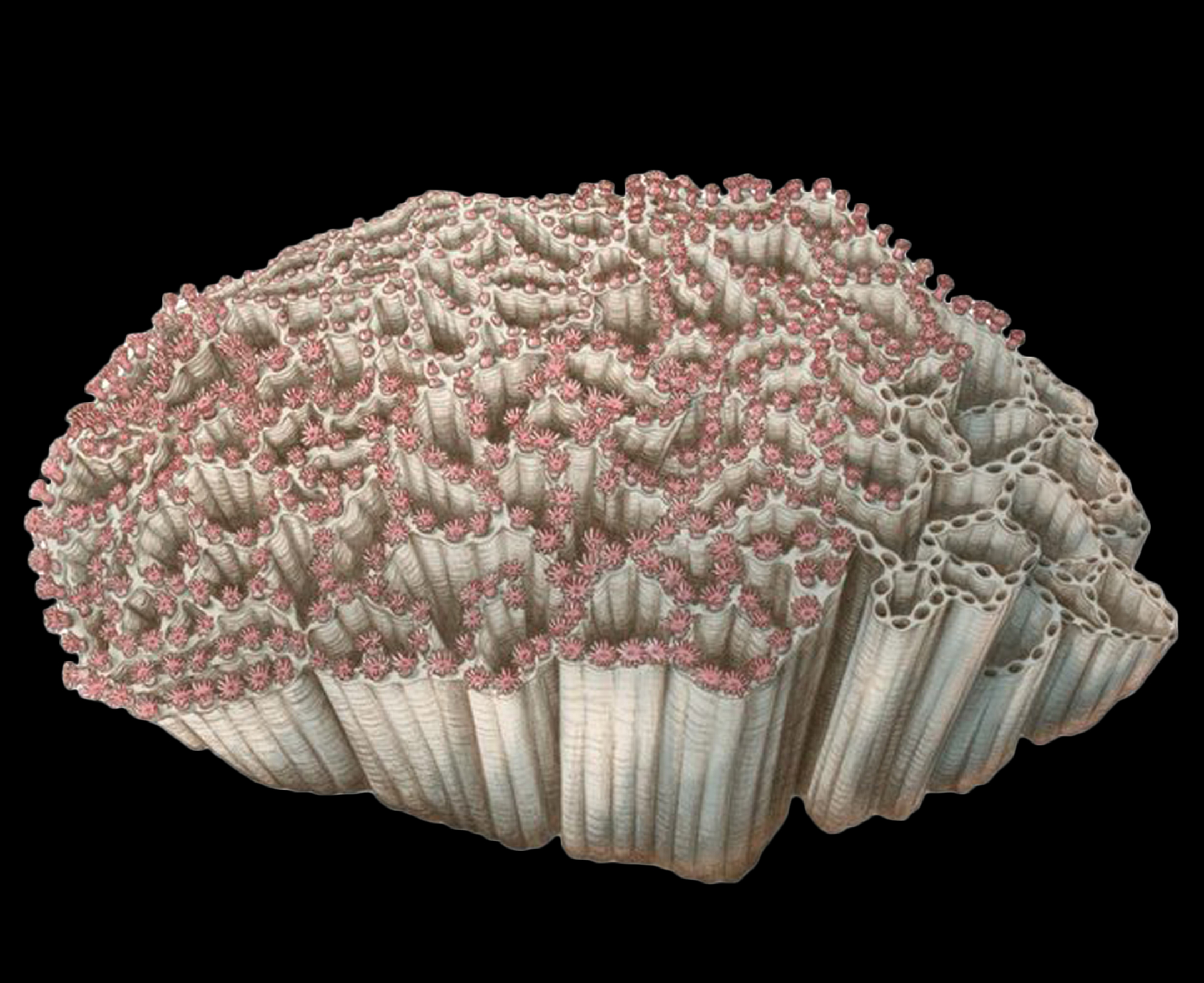
  • Favosites Honeycomb Corals
  • Horn Corals
  • Chain Coral Halysites
  • Stromatolites

    NOTE: The following fossil descriptions are individually included articles in my fossillady site under “Categories” with additional info, illustrations or photos. I decided it would be expedient for Lake Michigan beach fossil-hunters to present them here together in a single article.

    Crinoid Fossil Stems and Tiny Crioid Fossil Pieces

    Crinoid Fossils

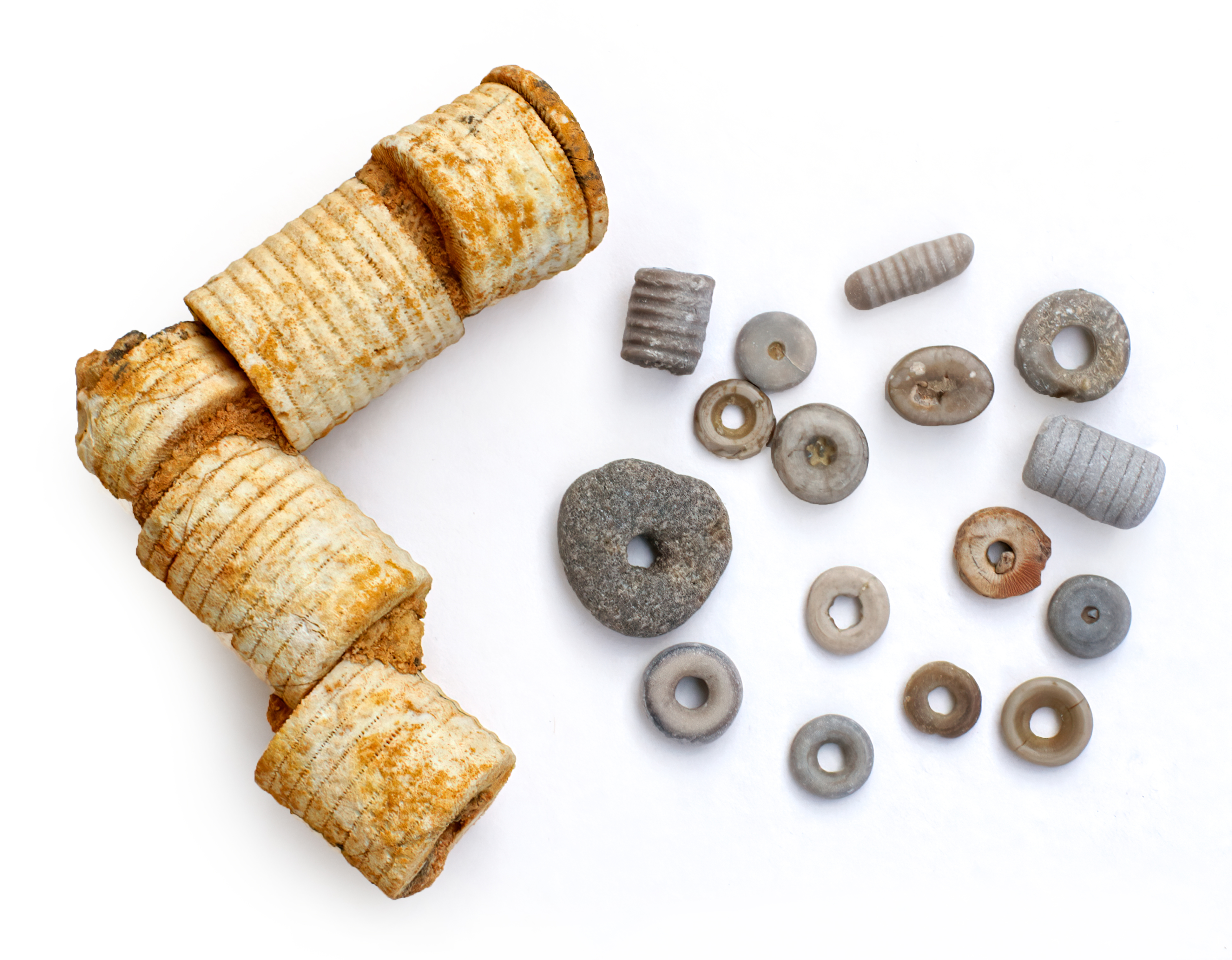
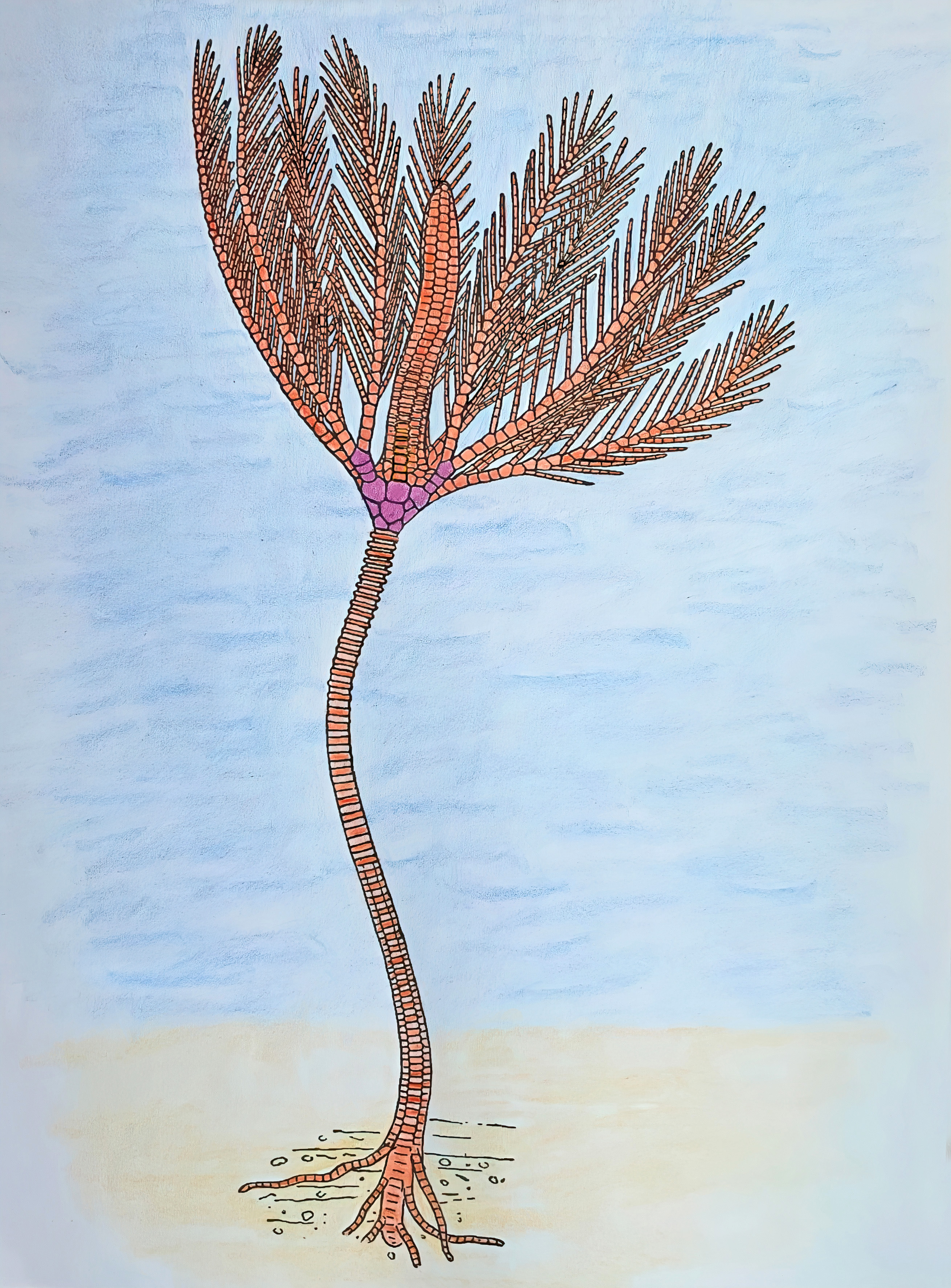
    Crinoid fossils are some of the most common fossils found along Lake Michigan beaches. They’re often referred to as “Indian Beads” because Native Americans are known to have strung together their broken off cheerio-shaped pieces in order to make necklaces. They’ve also been referred to as Lucky Stones because spotting one of the tiny pieces requires a bit of luck! Crinoid animals were sessile creatures—in other words, they remained attached to the sea floor by means of a long single stem. Attached atop of their stem was an intricate cup-like structure from where numerous branching arms grew outwards, much like a plant or tree. The frame works of crinoids were constructed from each individual circular section (shown above) which were stacked one on top of another. The hole in the center of each section contained soft tissue supplying nutrients throughout the animal. Some varieties were known to have towered several meters high off the seafloor. Their entire structure resulted in the living organisms’ beautifully colored and flower-like appearance, which granted them another common name “sea lilies”.

    Crinoid “Sea Lily” Illustration Drawing

    Sea lily crinoids captured tiny food particles passing by in ocean currents with their feathery network of fingers that functioned like traps. Crinoids invertebrate animals fit into the phylum of Echinoderm, meaning spiny skin. They are cousins to starfish, sea urchins, and feather stars.

    “Sea lily” crinoids lengthy history dates far back to the Ordovician Period around 500 million years ago, although the fossil record reveals their heyday occurred during the Mississippian Period around 345 mya. Today, there are far few species, but they lack the long meandering stems common in Paleozoic varieties and live in colder, deep ocean depths. For more photos and drawing of crinoids go to another fossillady article specifically about theme HERE.

    How Are Saltwater Ocean Fossils Found as Far North as Michigan? During their Paleozoic lifetimes, much more of the world’s continents were covered under warm, shallow, saltwater seas, including the Great Lakes regions. When thousands of Paleozoic ocean species died, including crinoids, they became buried in sediment and under certain conditions, fossilized.

    Millions of years later, around ten thousand years ago, the giant glaciers sculpted deep basins, forming the Great Lakes. In the process, they also dug into the deep layers of sediment where crinoid remains and their counterparts lay buried and were thusly released. Since then, the perpetual wave action of the big lakes has continued to deposit them on our beaches where we have the privilege of finding them!

    Extinct Bryozoan Fossil “Fenestella” Found on Lake Michigan Beach

    Bryozoan Fossils

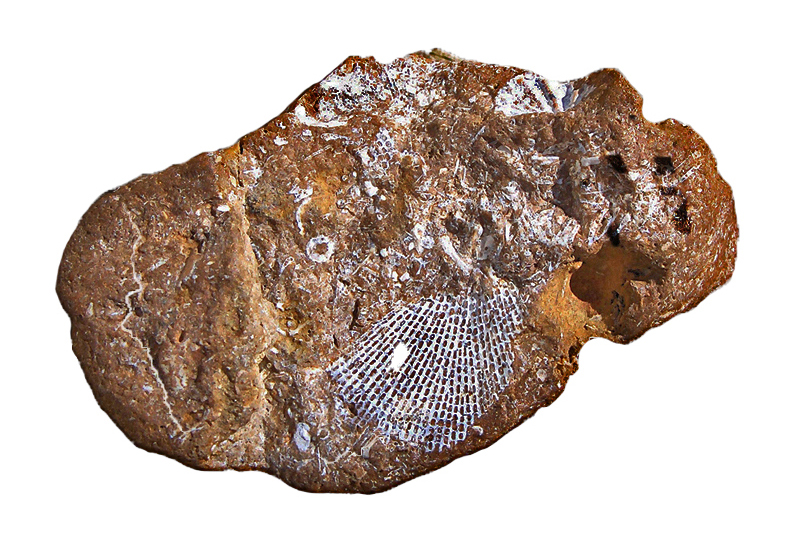
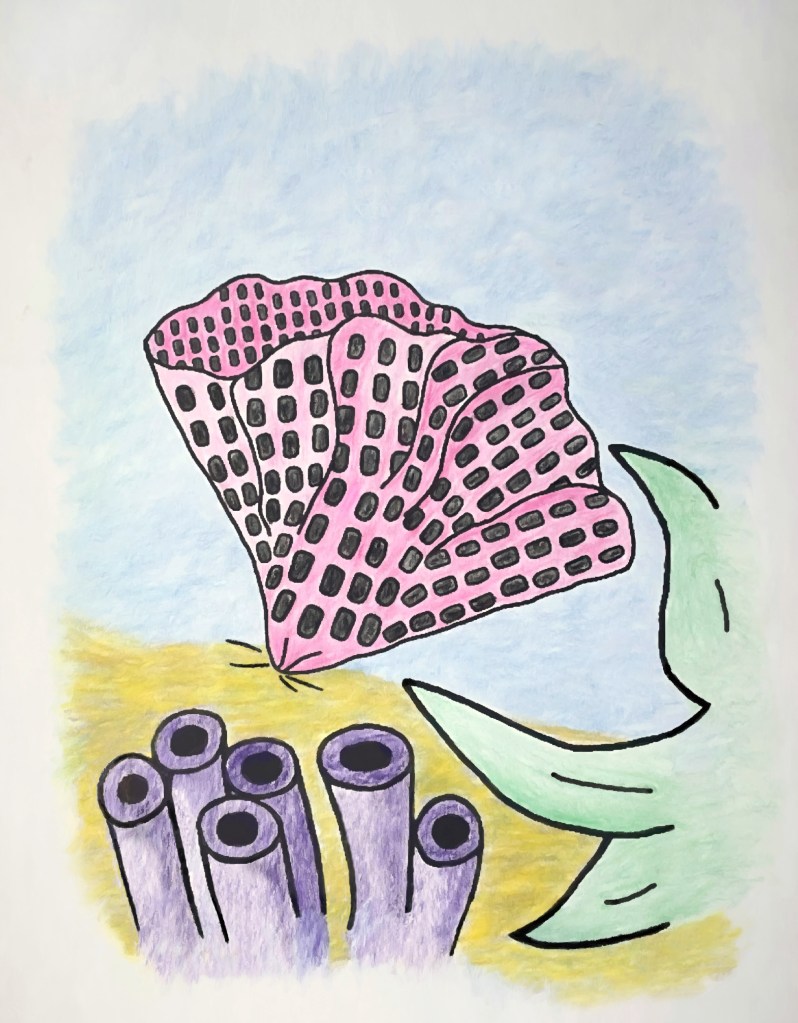
    Bryozoans earn the common name, lace corals, due to their delicately threaded appearance, but they were not true corals. Instead, they were moss-like invertebrate animals. My sample belongs to the family of extinct “Fenestellida” known for their fan-shaped, mesh-like constructs and the genus “Fenestella”. They lived in tight colonies sculpted by hard, limy, branching structures. The colony consisted of thousands of individual animals called “zooids”. Each individual zooid lived inside its own limy tube called a zooecium. The zooecium were the size of sewing needles. A single zooid began the colony. A modern day bryozoan colony has been observed growing from a single zooid to 38,000 in just five months. Each additional zooid is a clone of the very first.

    Bryozoan “Fenestella” Extinct Fossil Drawing

    Interesting how bryozoans feed. Each zooid has an opening through which the animal can extend its “lophophore” a ring of tentacles that captured microscopic plankton passing by in the oceanic currents. If one zooid receives food, it nourishes the neighboring zooids joined by strands of protoplasm. If only we humans could be more like them, ensuring everyone on the planet is fed!

    Their incredible fossil record dates back 500 million years ago (mya), with 15,000 known species. Today there are approximately 3,500 living species. For more information and photos about bryozoans you can go to the fossillady article specifically about them HERE.

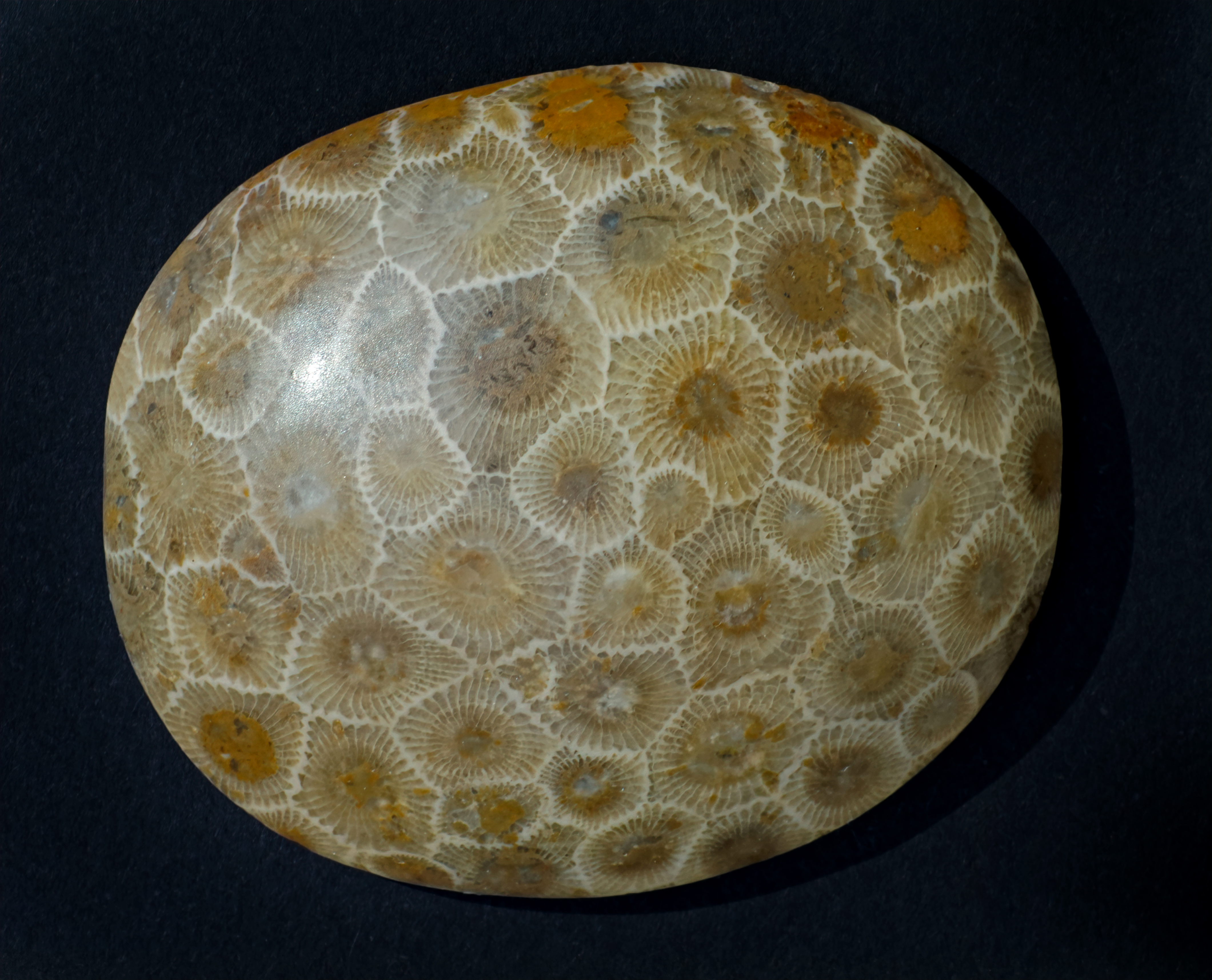
    Polished Petoskey Stone (Hexagonaria, percarinata) Coral Fossil, Michigan

    Petoskey Stone Coral Fossils

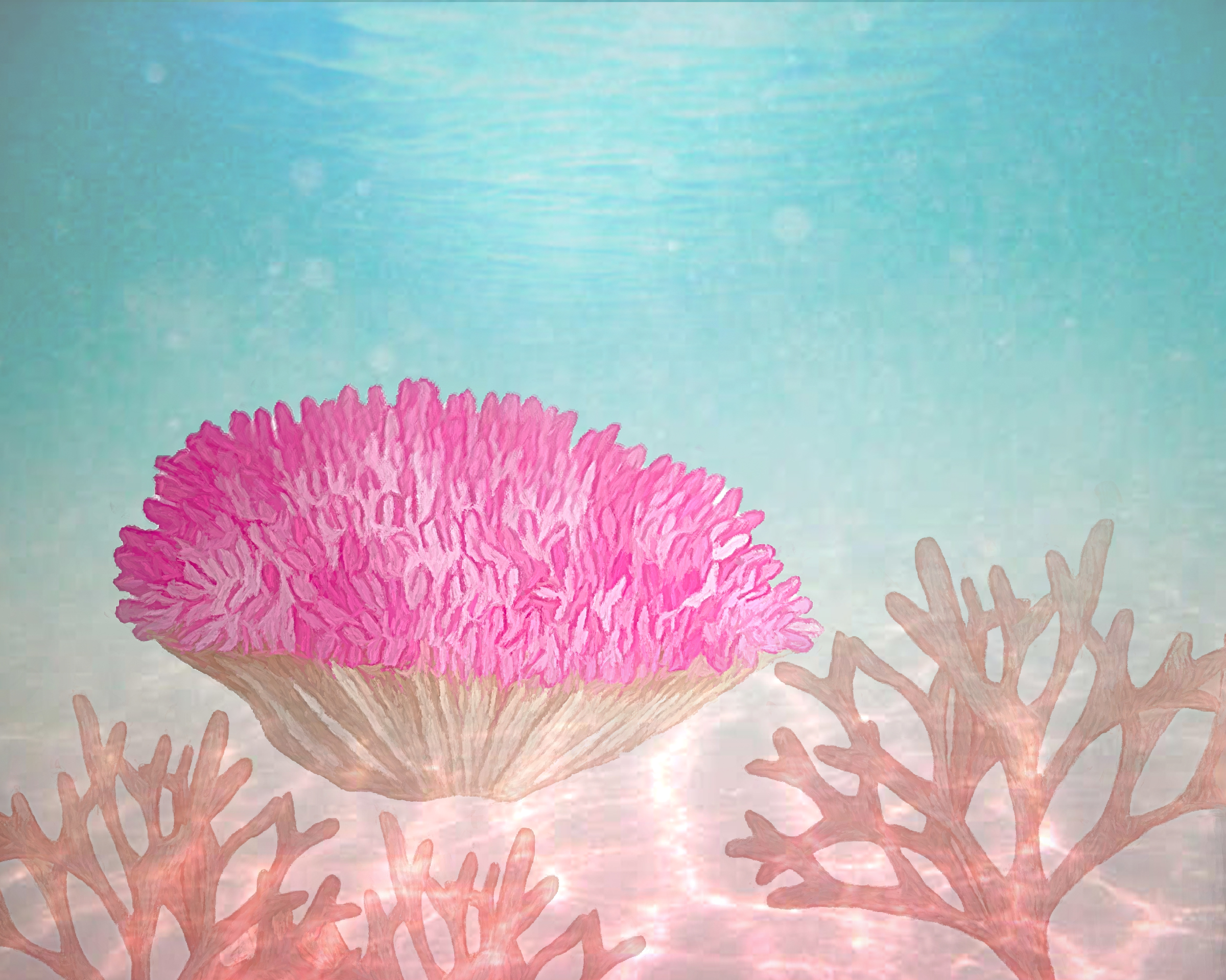
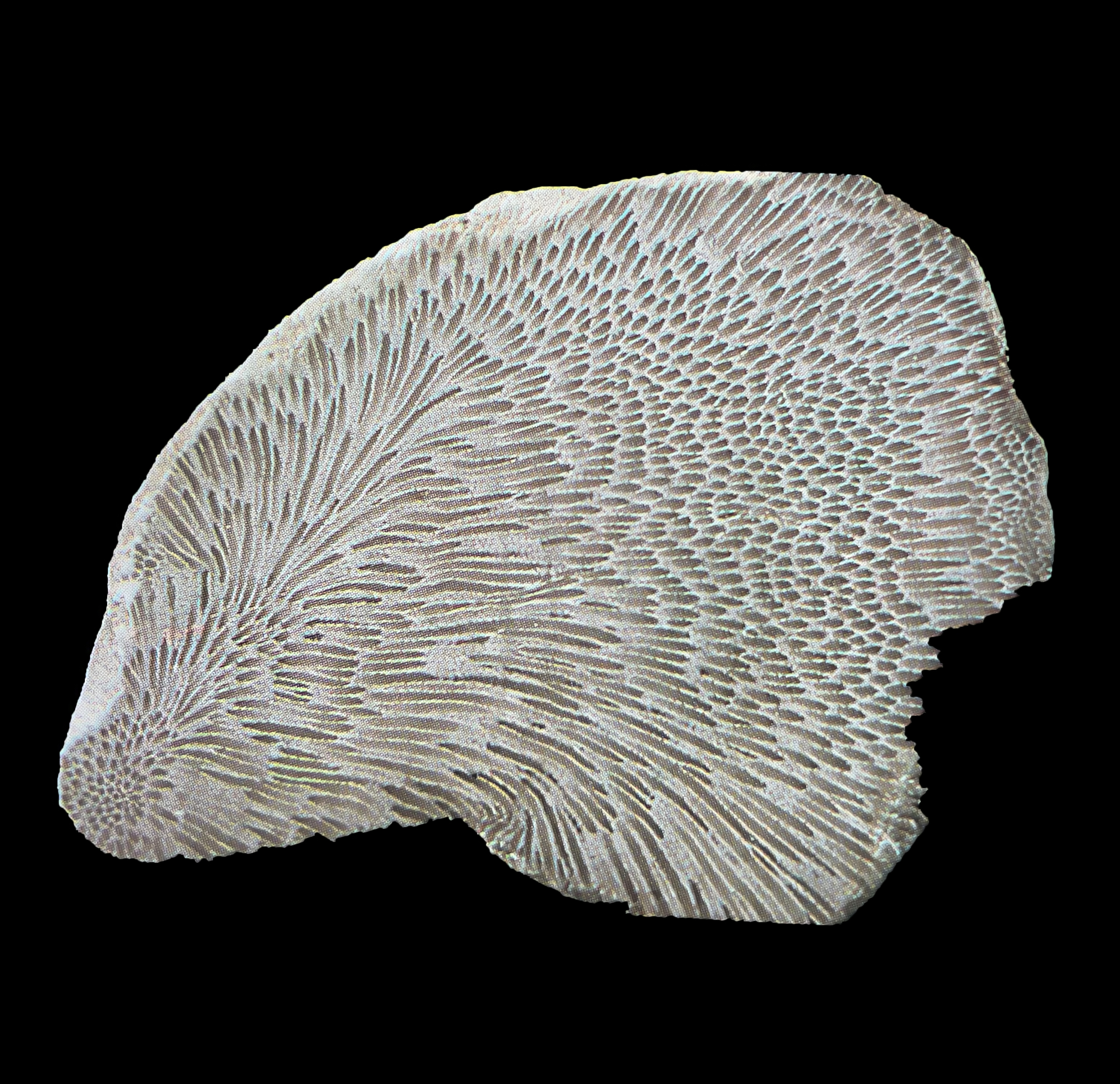
    Petoskey Stones “Hexagonaria, percarinata” flourished in mass colonies during the Paleozoic time slot when Michigan and all of the Americas were covered under shallow, saltwater seas. The ancient seascape must have been lit up with a quiltwork of colors created by their vast colonies. Sadly, they became extinct at the end of the Permian Period mass extinction approximately 250 million years ago.

    The name “Petoskey” originated from an Ottawa fur-trader chief named, Petosegay. A northern Michigan city was named after him, later, the name was modified to Petoskey. Because the coral fossils are so abundant near the city of Petoskey and surrounding region, Governor George Romney signed a bill in 1965 making the Petoskey Stone the official state stone and fossil.

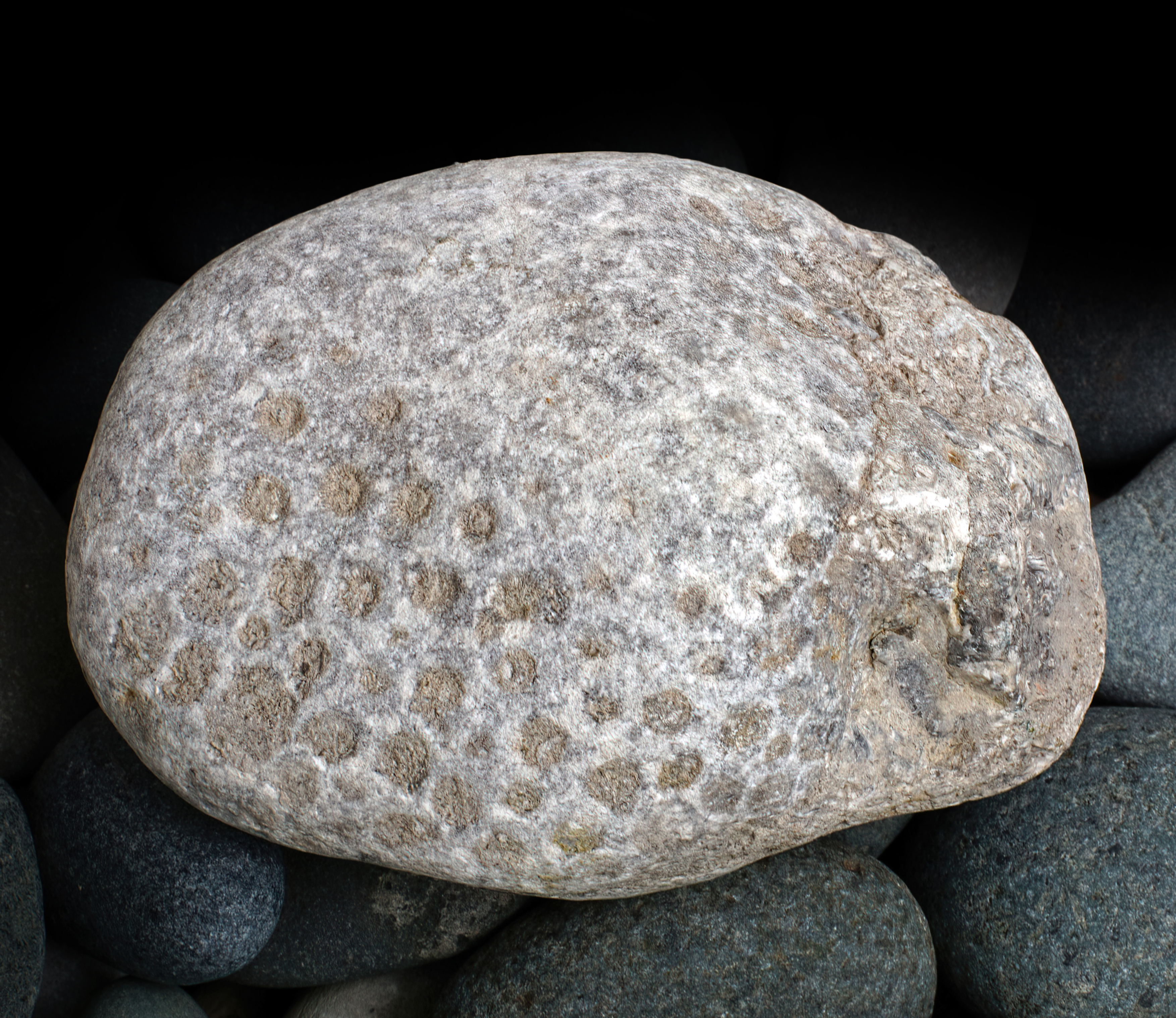
    Petoskey Stone found on Southwestern Lake Michigan Beach
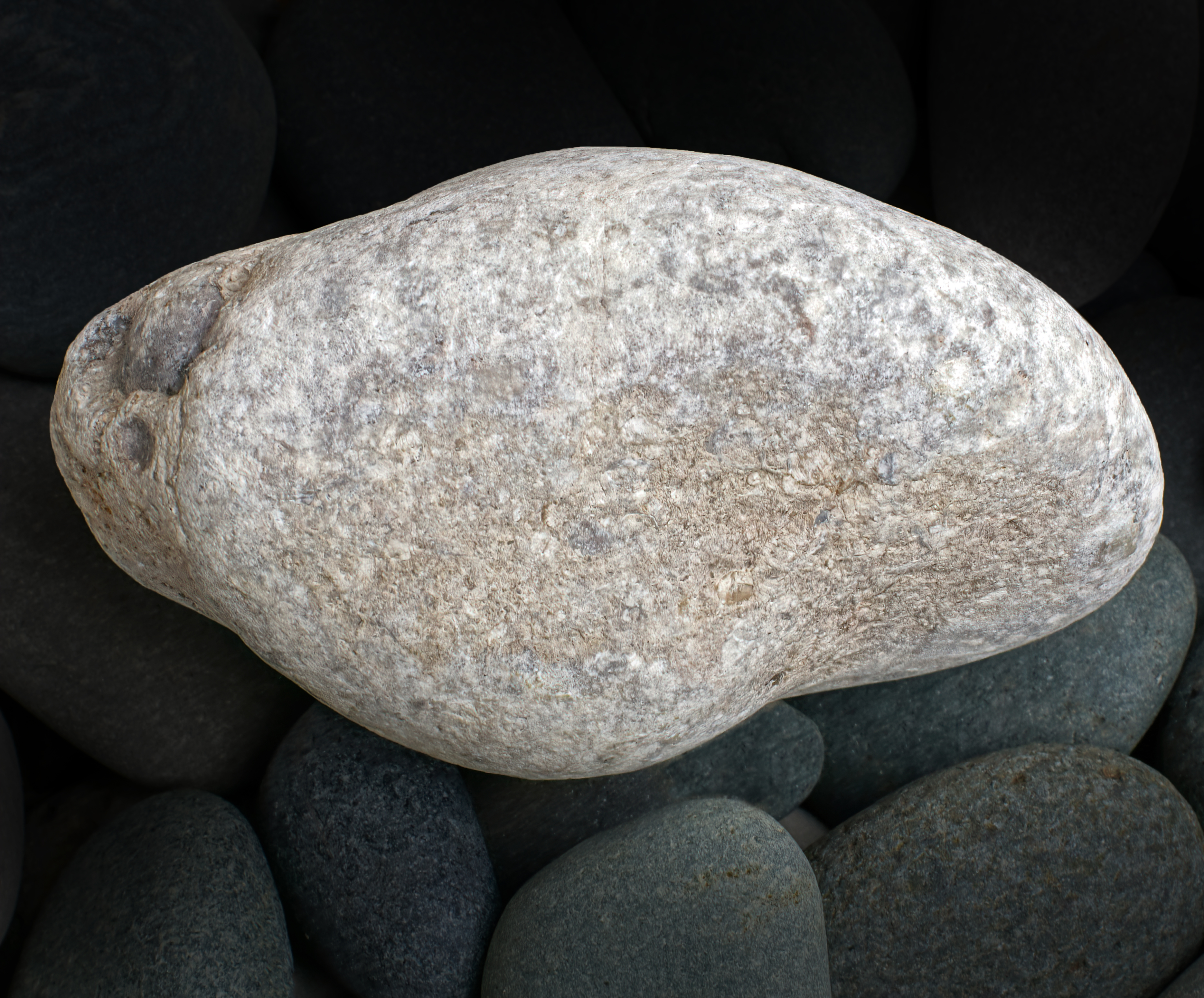
    Petoskey Stone (Side View) Lake Michigan

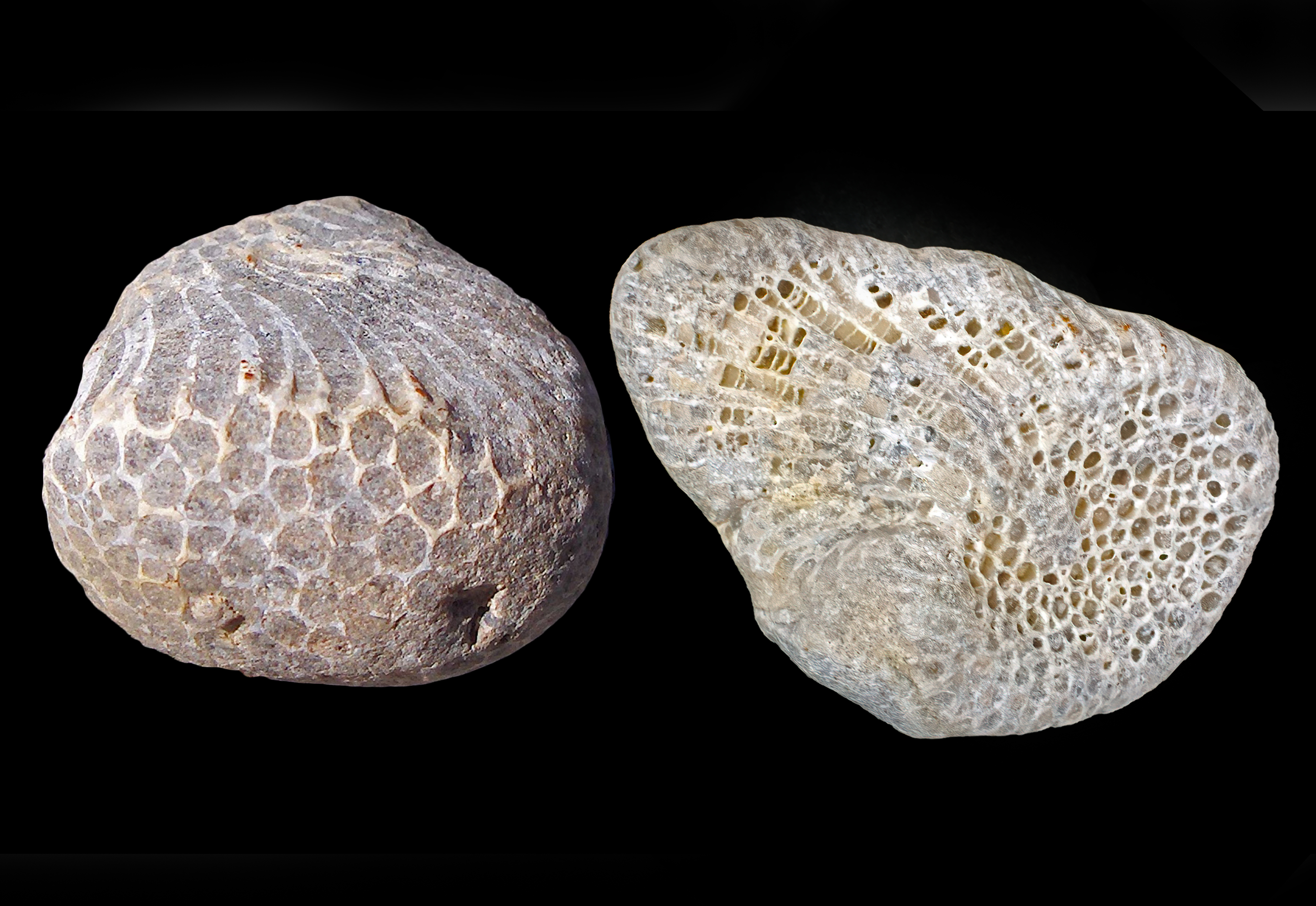
    I found the above Petoskey Stone on Oval Beach in Southwestern Michigan. This sample is rough and raw and unpolished. It’s smoothness and wear is a good example demonstrating Lake Michigan’s natural polishing process produced by perpetual winds, waves, and sand movement. It’s a fairly large sample at least the size of a man’s fist. The sideview of it, shown right, reveals the stem where the coral attached to the ancient seafloor. It’s kind of rare to see this because so many of these coral fossils are sanded down and polished for their intricate beauty and sold as gifts and keepsakes.

    Each individual coral hexagon structure called, corrallite, is visible in most Petoskey Stone fossils. Corallites held a single animal (polyp) which opened a mouth to expose tentacles. The tentacles took in food and were also used to sting other organism or even neighboring coral tentacles that came too close. Calcite, silica, and other minerals replaced the original corallite exoskeleton. For addition fossillady photos and information specifically about Petosky Stones click HERE.

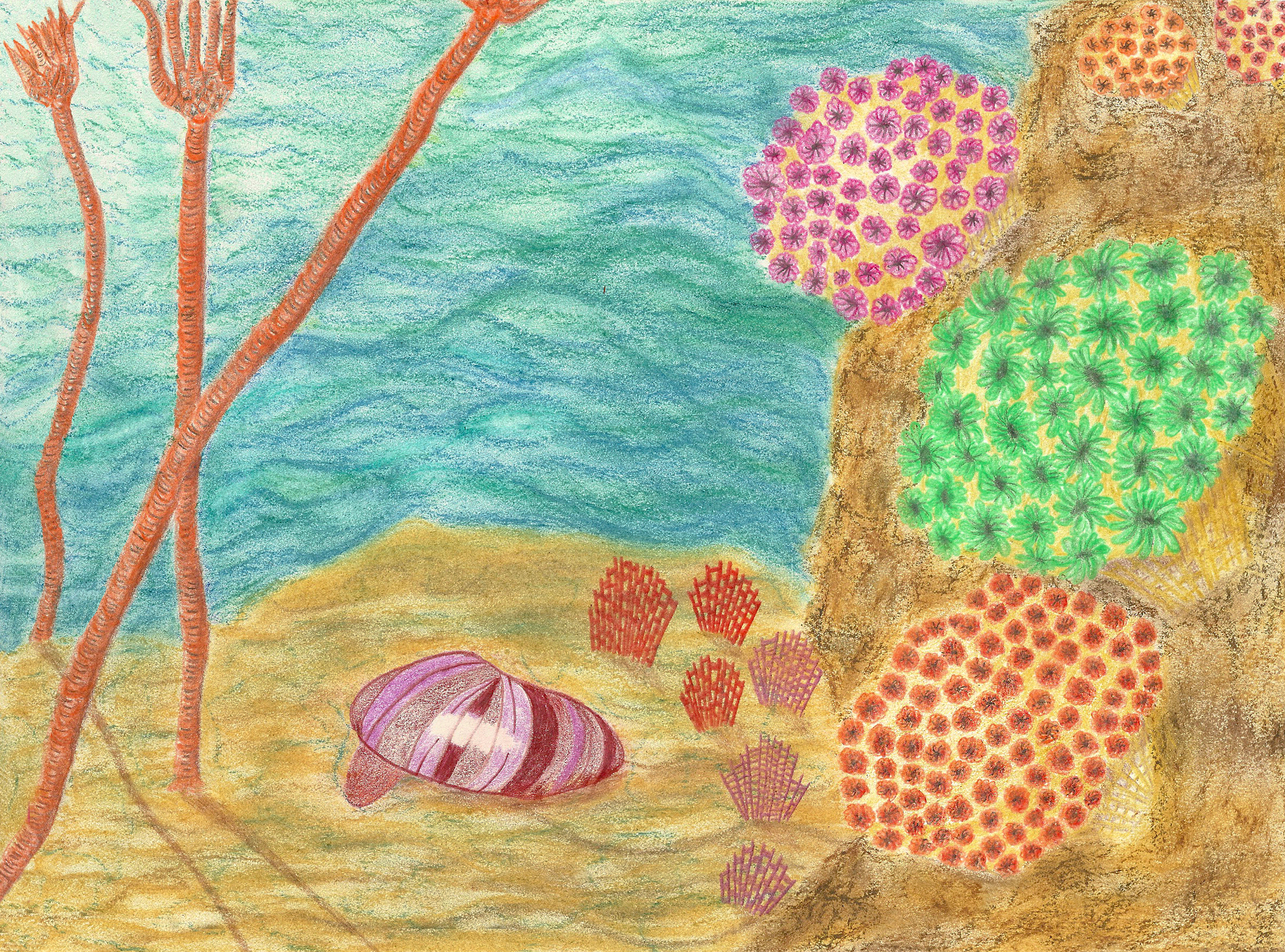
    Drawing of Extinct Hexagonaria, percarinata “Petoskey Stone” Living on Cliffside
    Favosites “Honeycomb” Coral Fossils “Charlevoix Stones” found on SW Michigan Beach

    Favosites “Honeycomb” Coral Fossils

    Favosites fossils are fairly common to find if you live in Northern Michigan, particularly near Charlevoix, but they are more rare to find in Southwestern Michigan where I found the above samples on the beach. Favosites is a genus of corals that belonged to the extinct order of “tabulate” colony corals. Gathered together they created colorful reefs thriving in warm, shallow seas during the same time period as the “Petoskey Stone” extinct corals, which I described above. The favosites can easily be identified by the honeycomb patterns enfolding their exterior fossil remains. These where the casings supporting their individual living coral polyps that could retract inside or stretch out, as with all coral species. Consequently, they are often referred to as, “Honeycomb Corals”, but they are also called “Charlevoix Stones” due to their dominant appearance in that region of Michigan.

    Drawing of Favosites Coral “Honeycomb Coral” with polyps out!
    Favosite Fossil

    The tabulae (horizontal internal layers) of favosites were built outward as the organism grew. These layers can clearly be seen in the fossil photos provided. The walls between each corallite (cup housing for the individual animal polyps) were pierced by pores known as mural pores which allowed a transfer of nutrients between polyps. For more photos and information specifically about favosites in another fossillady article go HERE.

    Brachiopod Fossil found on Lake Michigan Beach

    Brachiopod Fossils

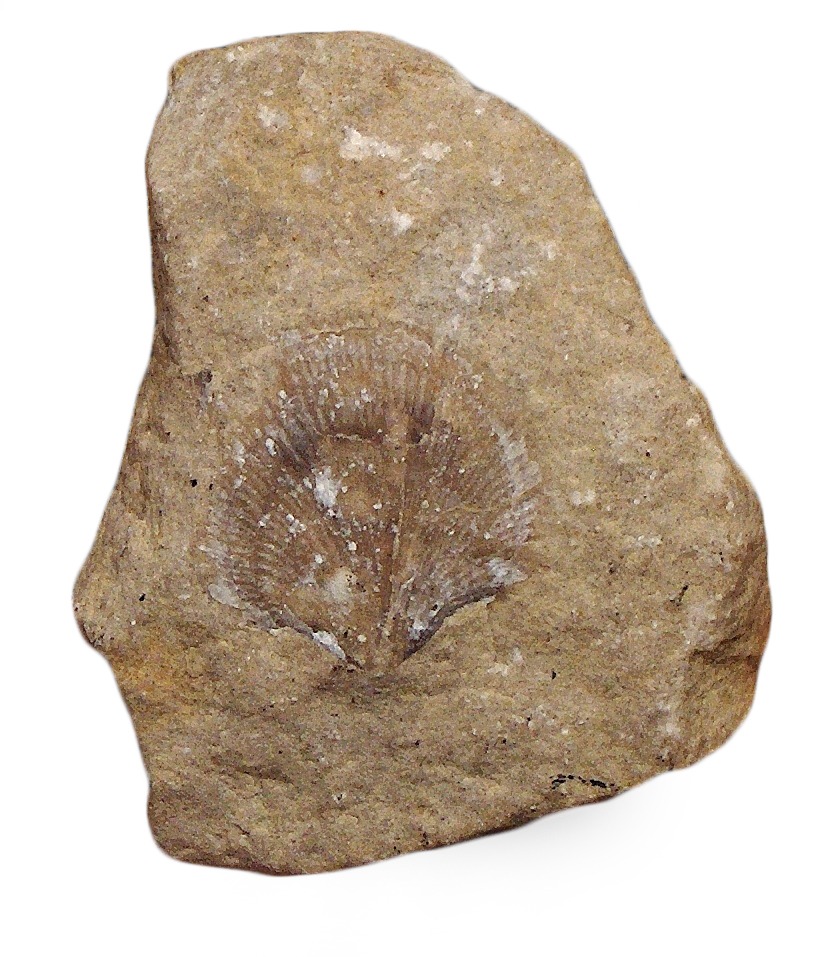
    No other organisms typify the Age of Invertebrates more than brachiopods. They were the most abundant animals during the Paleozoic Era, except for maybe trilobites. Due to their abundance, paleontologists use them to date rocks and other fossils found in the same rock strata. Countless billions accumulated on the ocean floor with over 30,000 forms. Today there are far fewer species, only around 300, which live mostly in cold, deep ocean environments.

    Brachiopods look similar to clams but are very different inside. Also, clams (pelecypods) have uneven-shaped shells, but both top and bottom halves are identical. Brachiopod possess symmetrical shells, left to right, but the bottom shell is smaller. Brachiopods are commonly called “lampshells” due to some species displaying a similar shape as a Roman oil lamp.

    Varied Shapes of Brachiopods Drawing (sample page from fossillady coloring book)

    Brachiopods live in communities attached to objects by a muscular foot called a “pedicle”. They strain water in and out of their shells, filtering microorganisms with a crown of feathery tentacles called “lophophores”. They come in a variety of interesting shapes as demonstrated in this image included in my fossil coloring book available for sale! More interesting information about brachiopods by fossillady described HERE!

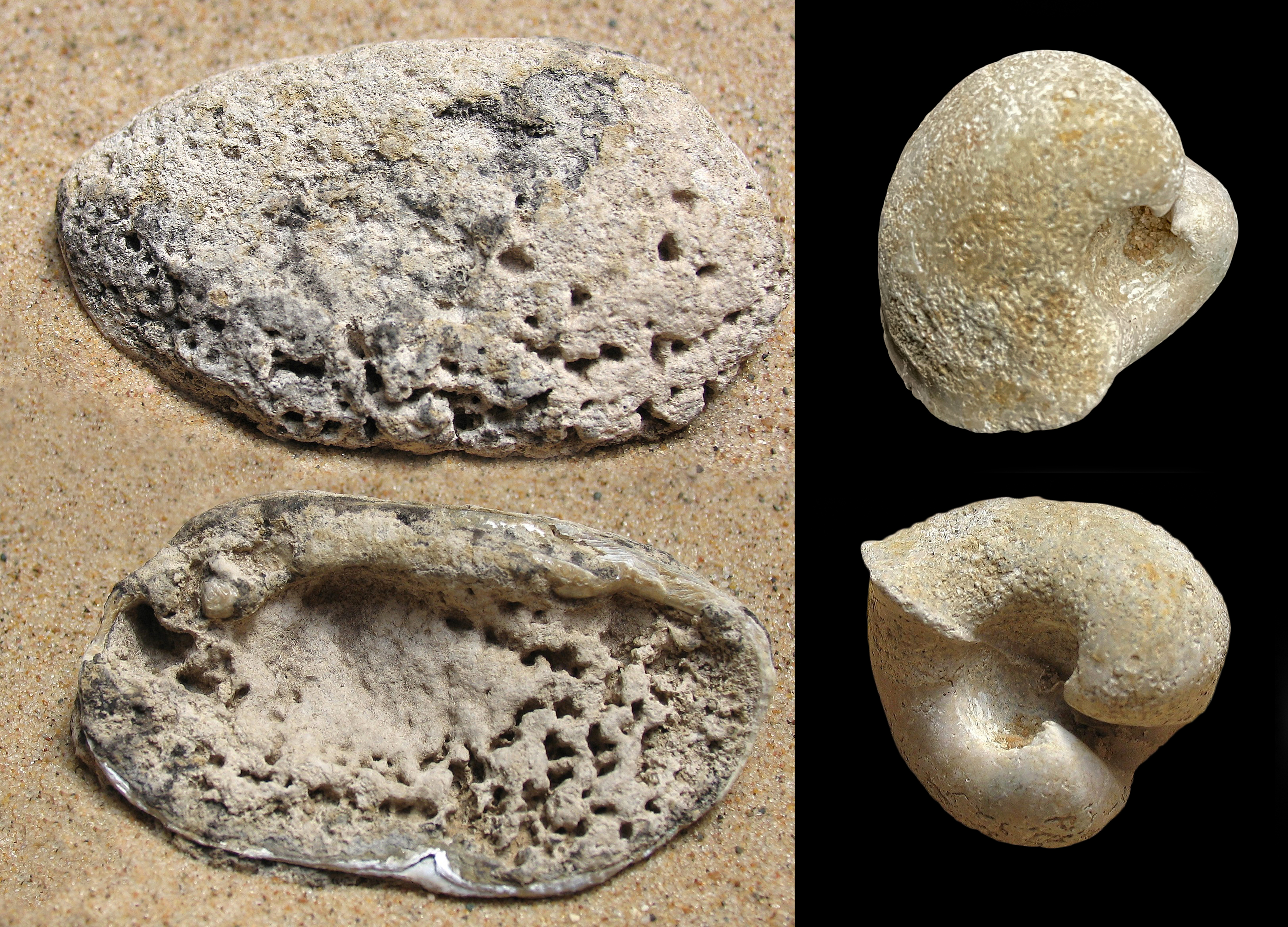
    Clam Fossils found on Lake Michigan beach

    Clam Shell Fossils

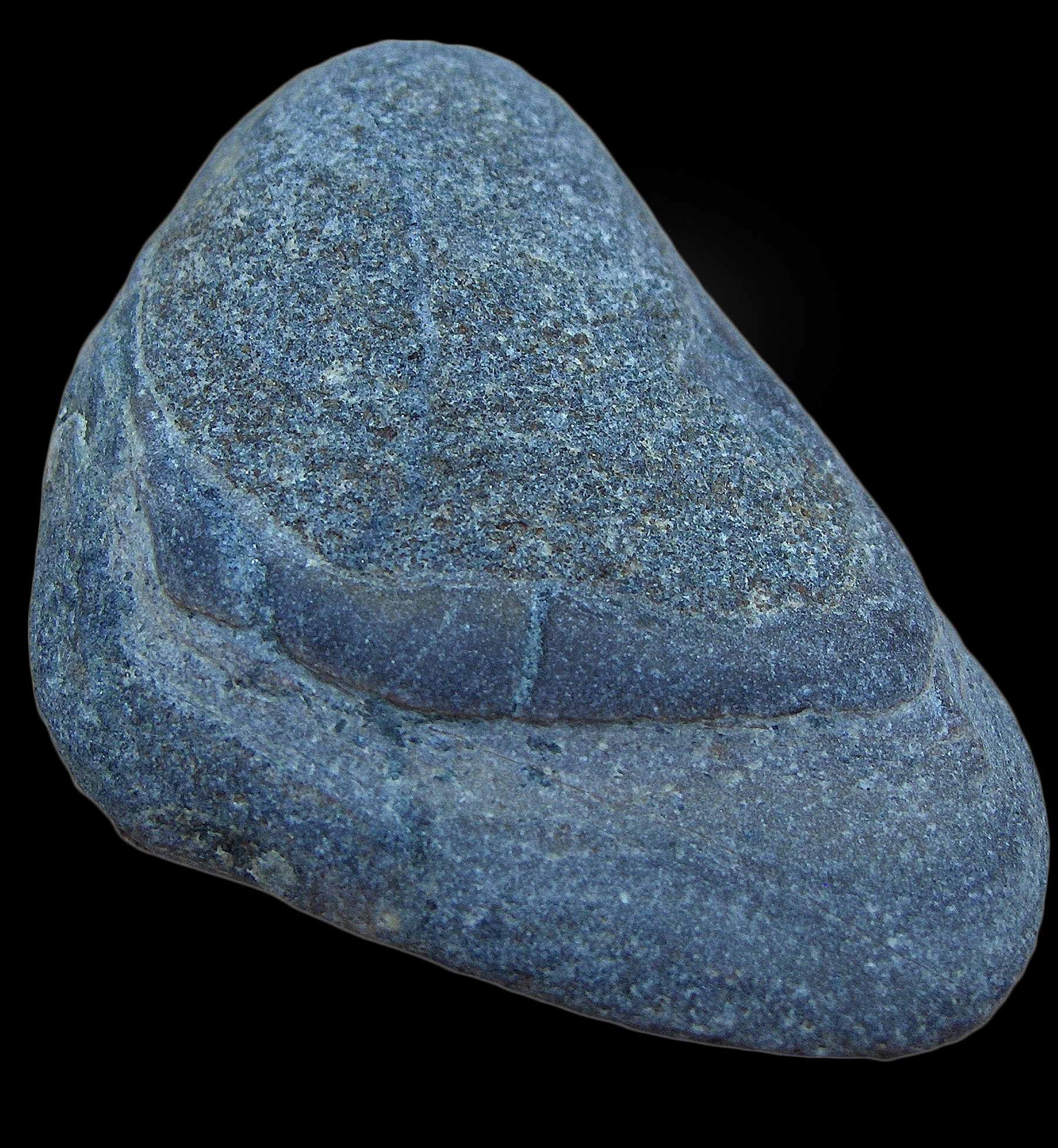
    I found these clam fossils on the shore of Oval Beach in Southwestern Michigan. The sample above left clearly reveals hardened muddy sediment that has completely encrusted the clam shell inside and out. The samples above right and below (dark grey) are examples of mold casts of the animal’s shells, where sediment and minerals permeated inside the shell after the animal died. Their smooth surfaces are the telltale demonstration of Lake Michigan’s sand, wind and water movement acting as a polisher.

    Clam” can be a term that covers all bivalves. Some clams bury themselves in sand and breathe by extending a tube to the water’s surface. Bivalve oysters and mussels attach themselves to hard objects, and scallops can free swim by flapping their valves together. All types lack a head and usually have no eyes, although scallops are a notable exception. With the use of two adductor muscles, clams can open and close their shells tightly. Very fittingly, the word “clam” gives rise to the metaphor “to clam up,” meaning to stop speaking or listening.

    Bivalves have occupied Earth as early as the Cambrian Period 510 million years ago, but they were particularly abundant during the Devonian Period around 400 million years ago. Their fossils are discovered in all marine ecosystems and most commonly in near shore environments. In 2007, off the coast of Iceland, a clam was discovered that was estimated to be about 507 years old. It was declared the world’s oldest living creature by researchers at Bangor University in North Wales. For more in-depth information about extinct clam species click HERE.

    Horn Corals found on Lake Michigan Beach

    Horn Coral Fossils

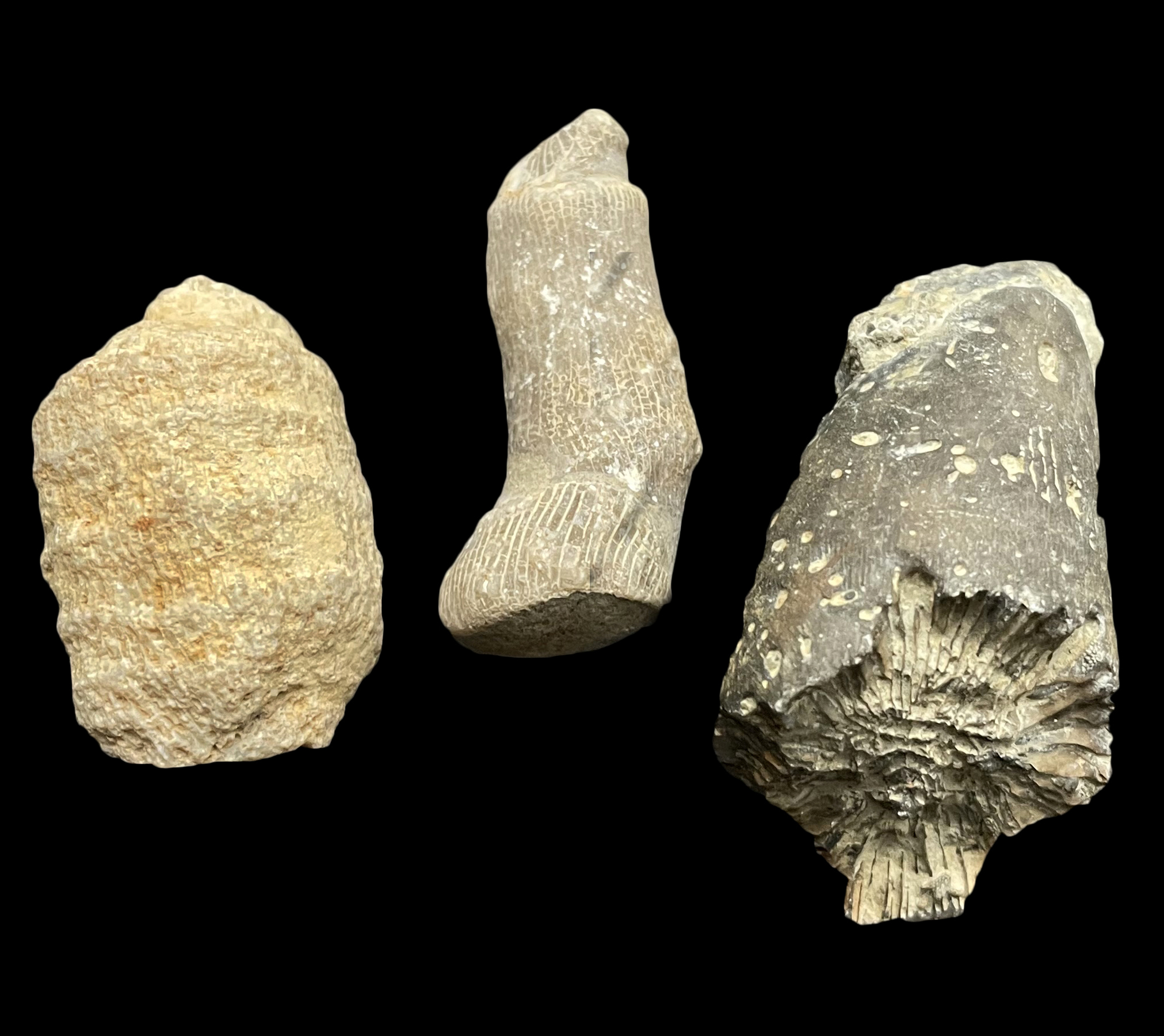
    It’s always exciting to find these curious horn coral fossils when combing the beach for something interesting to discover. Horn corals are a genus of corals that belonged to the extinct order of “rugose” corals which appeared as early as 450 million years ago until about 250 mya. That’s an astounding 200 million years living on Earth. Their name derives from their unique horn-shaped chamber with its wrinkled (or rugose) wall. When viewed from its widest opening, it looks like a pinwheel from where the coral polyps once poked out in order to sift microorganisms passing by in the ocean currents. Some species grew two meters high off the seafloor. They were mostly solitary animals, with a few exceptions that grew in mass colonies. For more information and photos about horn corals you can visit another fossillady article specifically about them HERE.

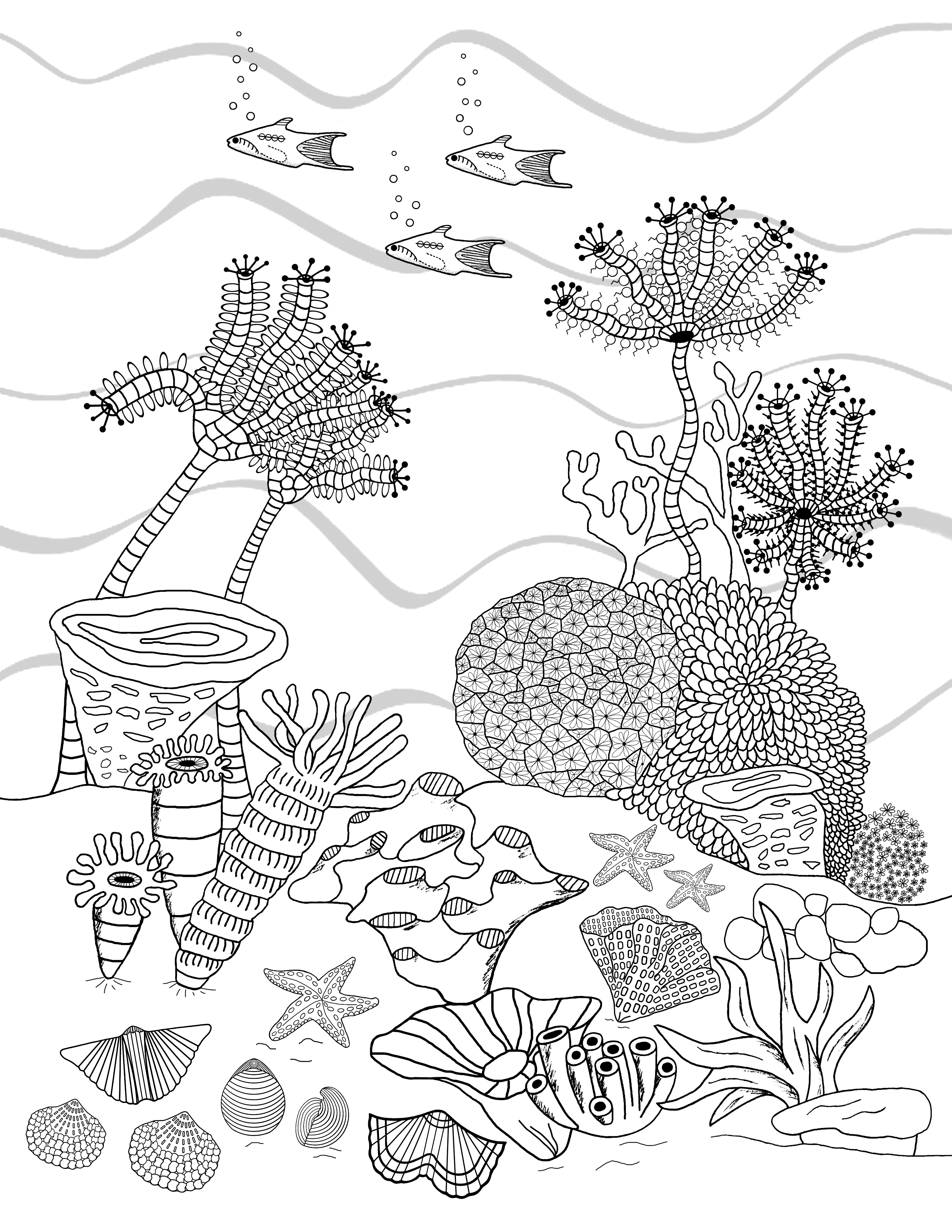
    Fossillady Coloring Book Drawing of Paleozoic Coral Reef

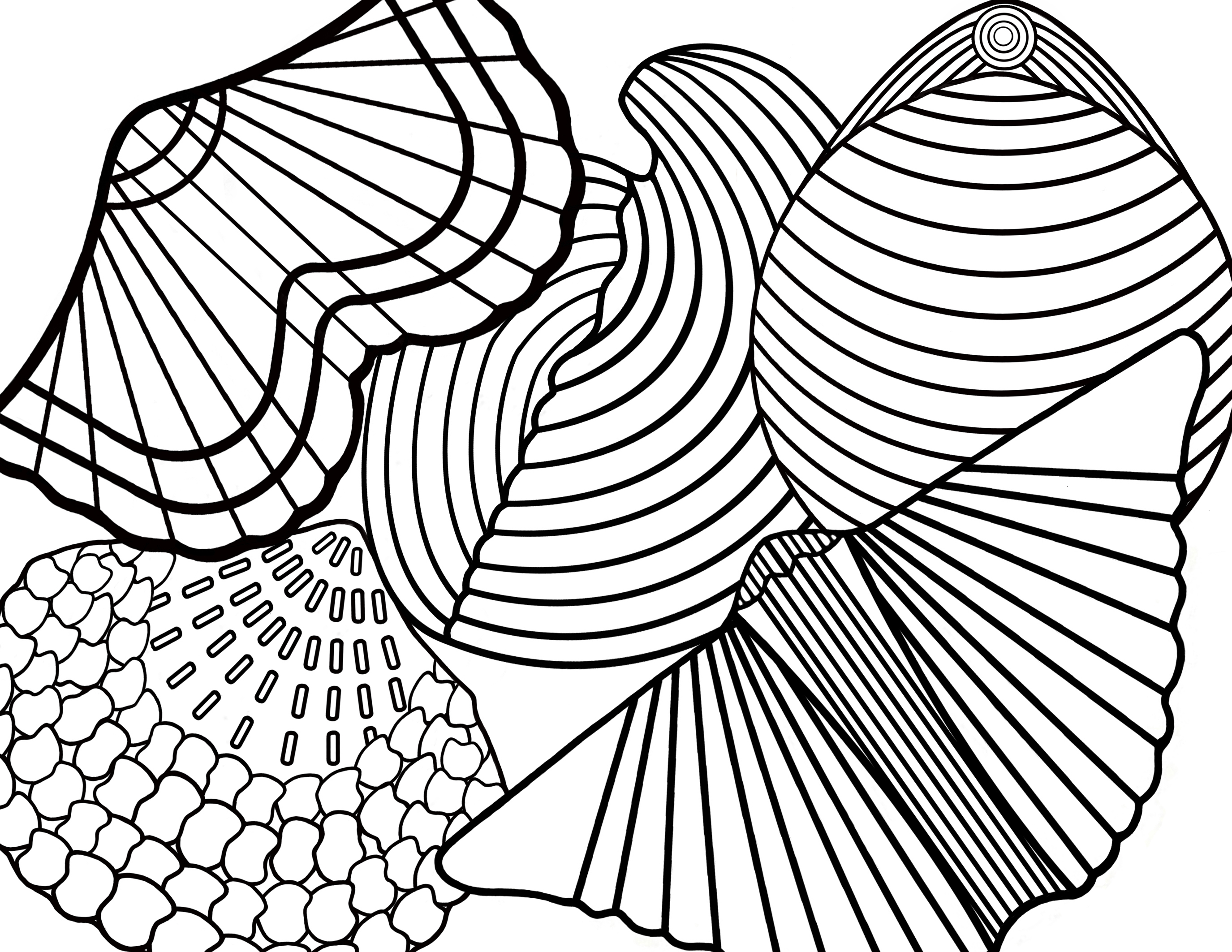
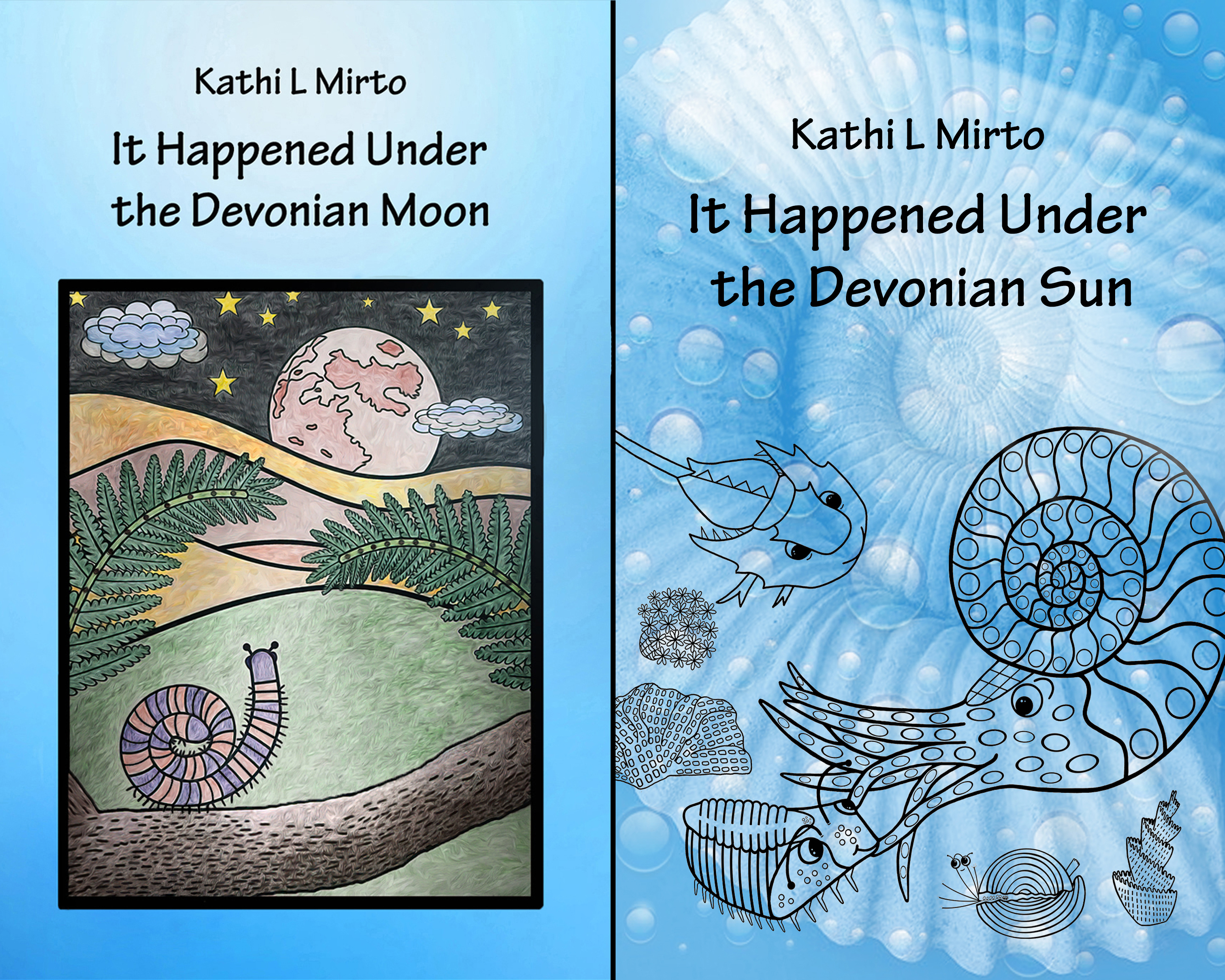
    This is a page from my coloring book I illustrated featuring a Paleozoic coral reef vista. It includes horn corals and the other extinct invertebrate animals which I have outlined in this article. See if you can identify them. For purchase of the coloring book or my two fiction books centered on Paleozoic insights that educate as they entertain, you can go to Amazon or IngramSpark.

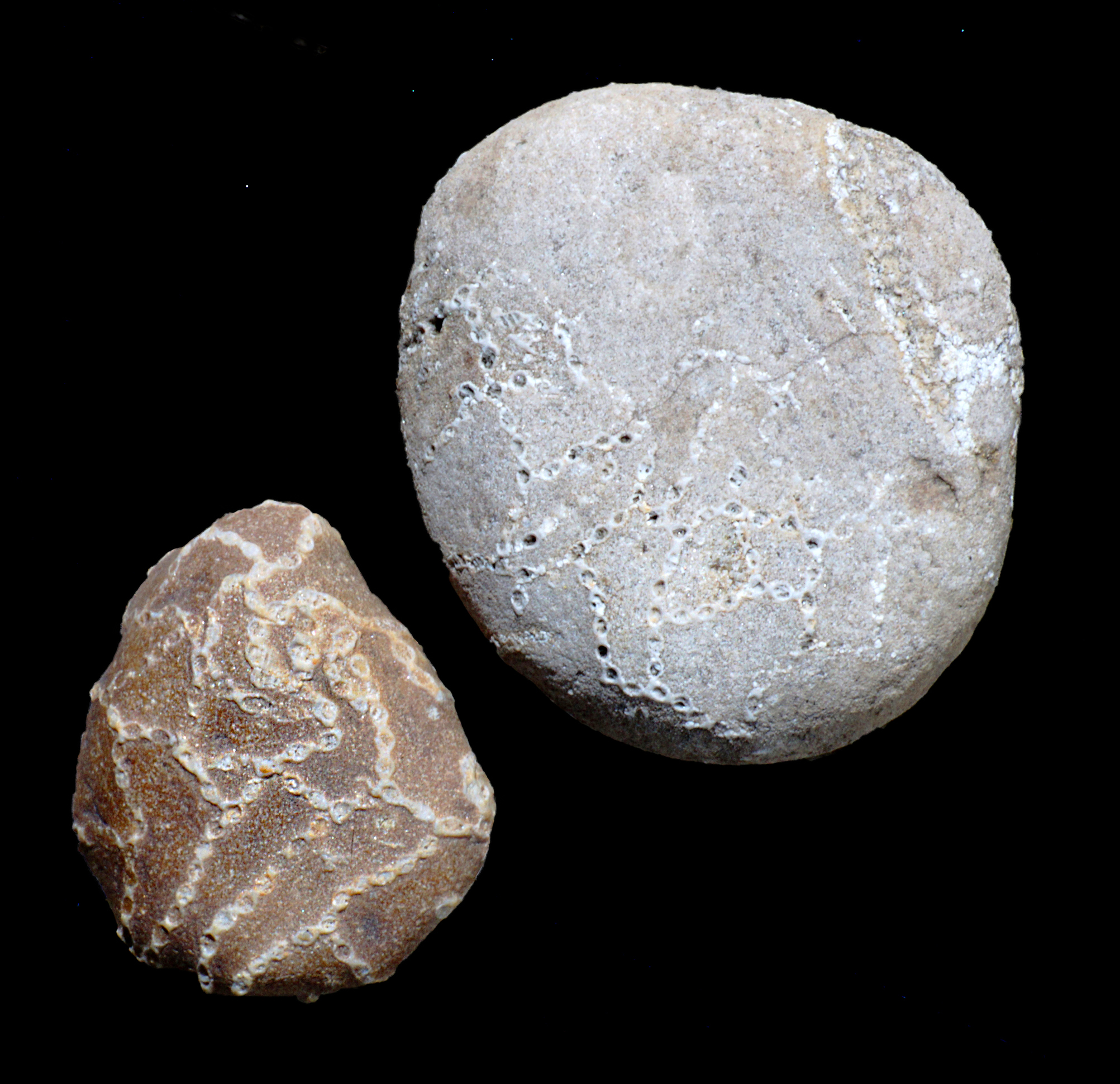
    Hayisites “Chain Coral” Fossils found on Lake Michigan Beach

    Chain Coral Fossils

    The trail of chains in these beach-smoothed fossil stones is another occasional fun and interesting find from our Michigan beaches. “Chain Coral” is a common name given to the genus “Halysites” coral from the order “Tabulate” colony corals. Halysites survived from the Ordovician Period (starting around 480 mya) through the Silurian Period (ending around 416 mya). As with most coral polyps, they possessed stinging cells, but the polyps were mainly used to grasp plankton floating by in the ocean currents. As their coral polyps continued to multiply, they added more links to the chain, sometimes building large limestone reefs.

    Halysites “Chain Coral” with polyps out
    Stromatolite Fossil Stone found on Lake Michigan Beach

    Stromatolite Fossils

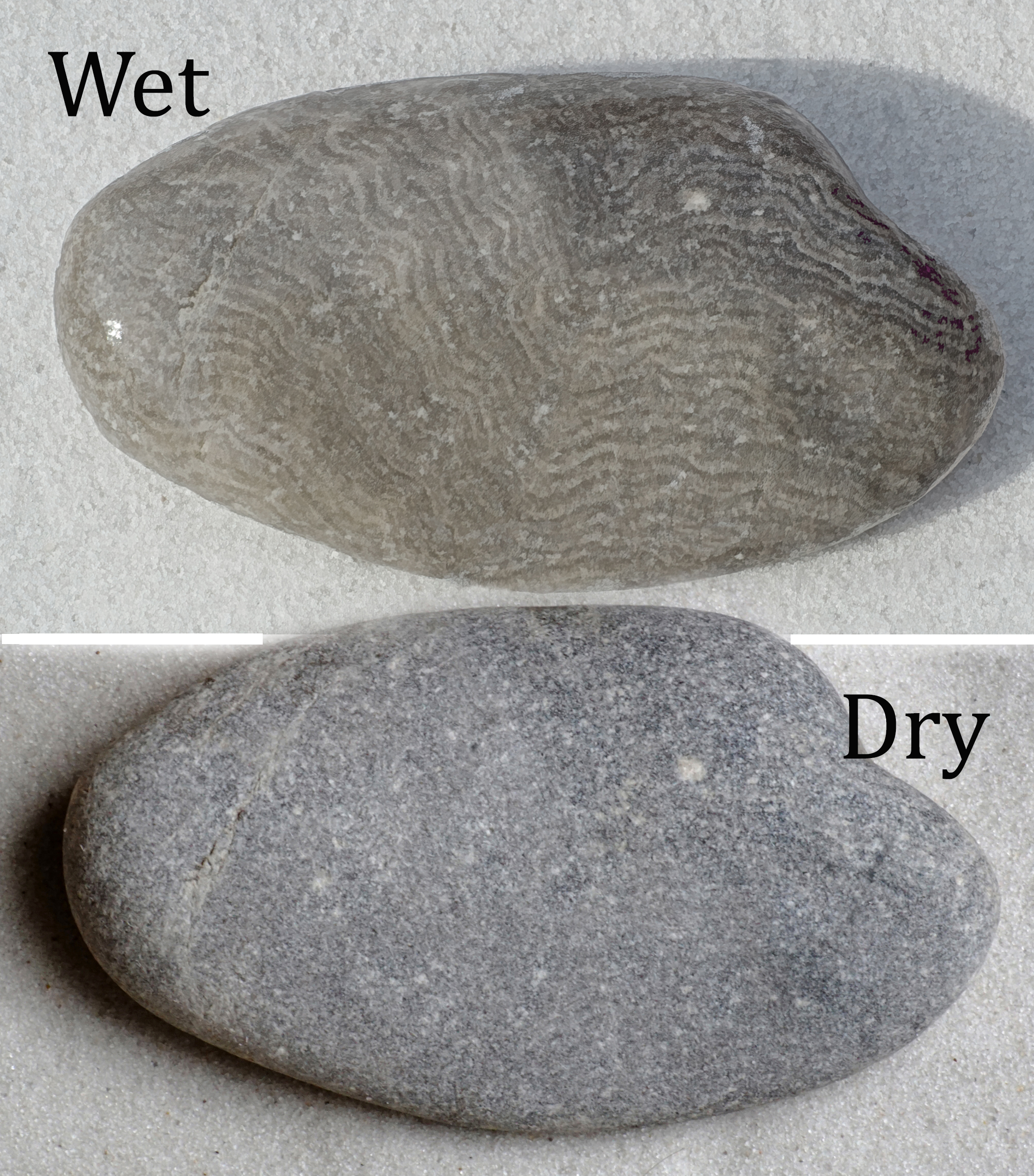
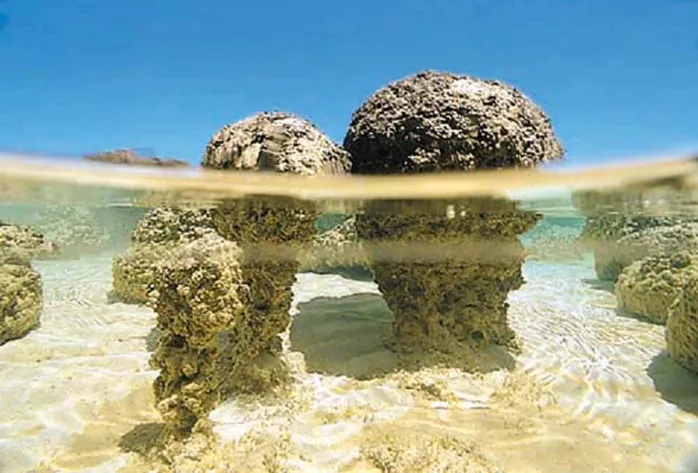
    You’re combing the beach and pick up a common looking smooth stone and admire its sleek texture. You wet the stone and suddenly layers of striations are revealed. That’s what happend with this fossil stone that I found on the beach. It turned out to be a stromatolite fossil and I learned that they are the oldest of all fossils, dating as far back as 3.5 billion years. Their heyday was long before the Cambrian creatures evolved (stromatolites actually paved the way for their existence). Stromatolites were simple cyanobacteria capable of photosynthesis. Their structures grew solid, layered, and varied, some of which looked like giant mushrooms reaching eight feet tall. Through photosynthesis, they changed Earth’s atmosphere from carbon-dioxide-rich to oxygen-rich. Before 1956, scientists believed they were extinct until living stromatolites were discovered in Shark Bay of Australia. Since then, there have been many more stromatolite discoveries around the globe. For more photos and information about stromatolites you can go to this fossillady article specifically about them HERE.

    The stromatolites forming today in the shallow waters of Shark Bay, Australia are built by colonies of microbes. Credit: University of Wisconsin-Madison

    For purchase of the coloring book illustrated by myself or my two fiction books featuring Paleozoic insights that educate as they entertain geared toward middle grade kids to adults, you can go to Amazon or IngramSpark.

    All rights reserved © Fossillady 2026