Earth’s Original Land Tree Plant

Was the “Calamite” the first tree-like plant to grow on land? Many scientists believe so. It possibly grew up to 100 feet (30 meters) tall, towering above the sparse landscape during its lengthy lifespan. Its earliest beginnings were approximately 400 million years ago during the Devonian Time Period. But this tree-like species trived particularly during the tropical coal swamps of the carboniferous era before it went extinct.
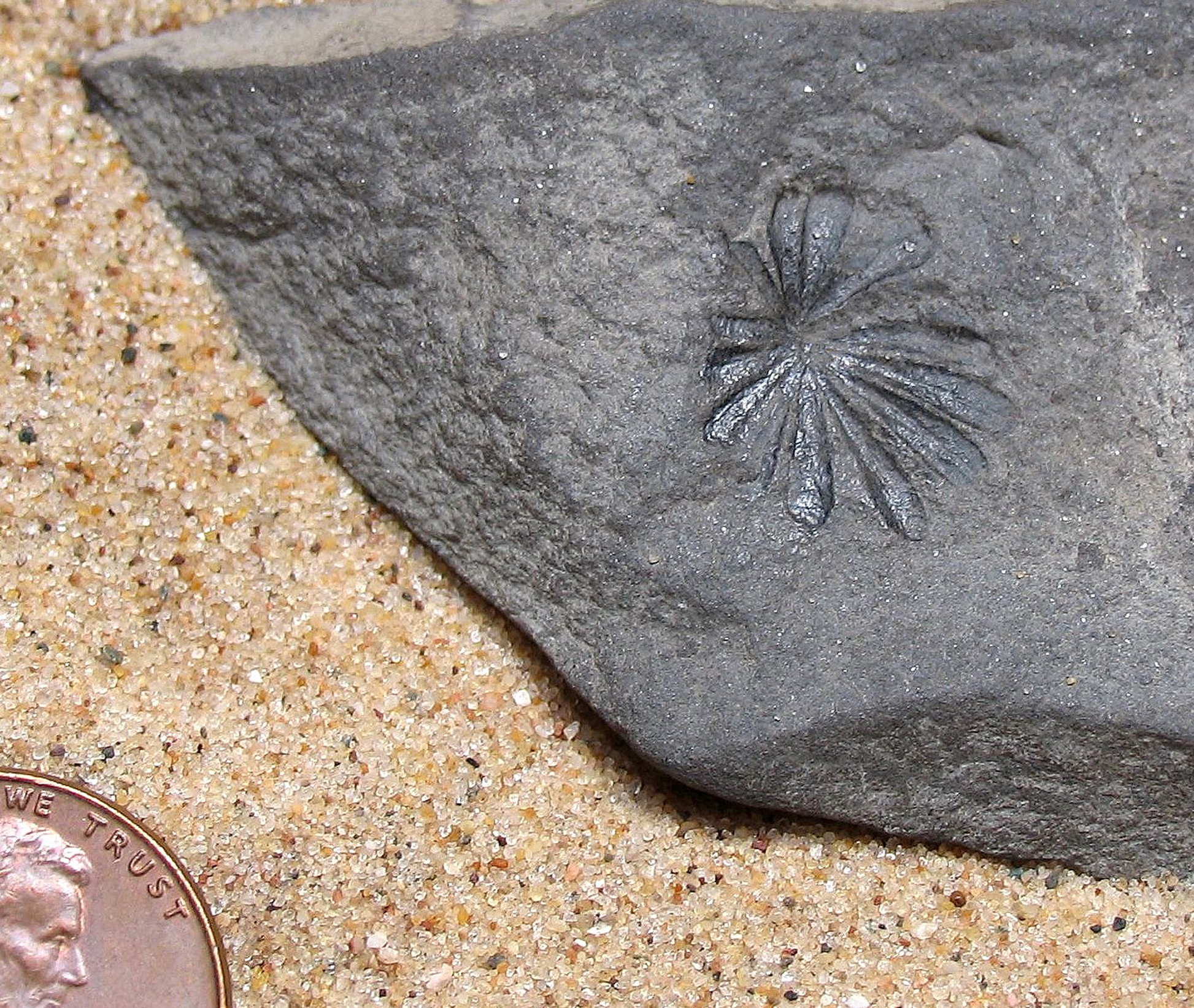
Devonian to Carboniferous Age Calamite Tree Leaf Imprint “Annularia” Trace Fossil

The trunk was a woody hollow tube, lacking true bark. There were various species that resembled modern day bamboo with segments and ribbing. The leaves were primitive and needle like, arranged in whorls around a stem.
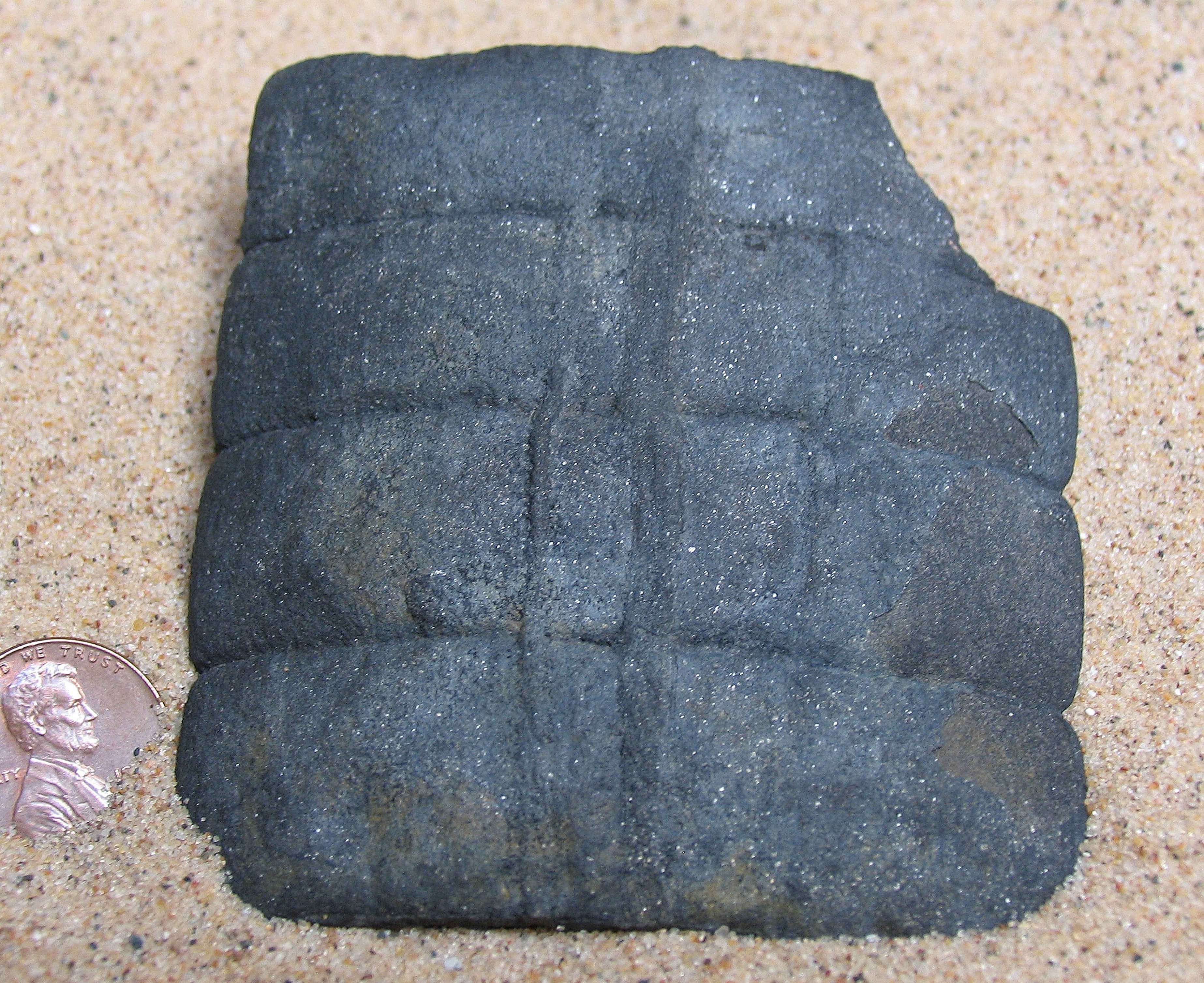
Trace Fossil Imprint of Devonian to Carboniferous Age Calamite Tree Stem

The Calamite thrived in the hot swamp tropics of the past, particularly during the Pennsylvanian Period around 300 mya. Many of their fossils have been found worldwide including, USA, China, Canada, South America and Europe.
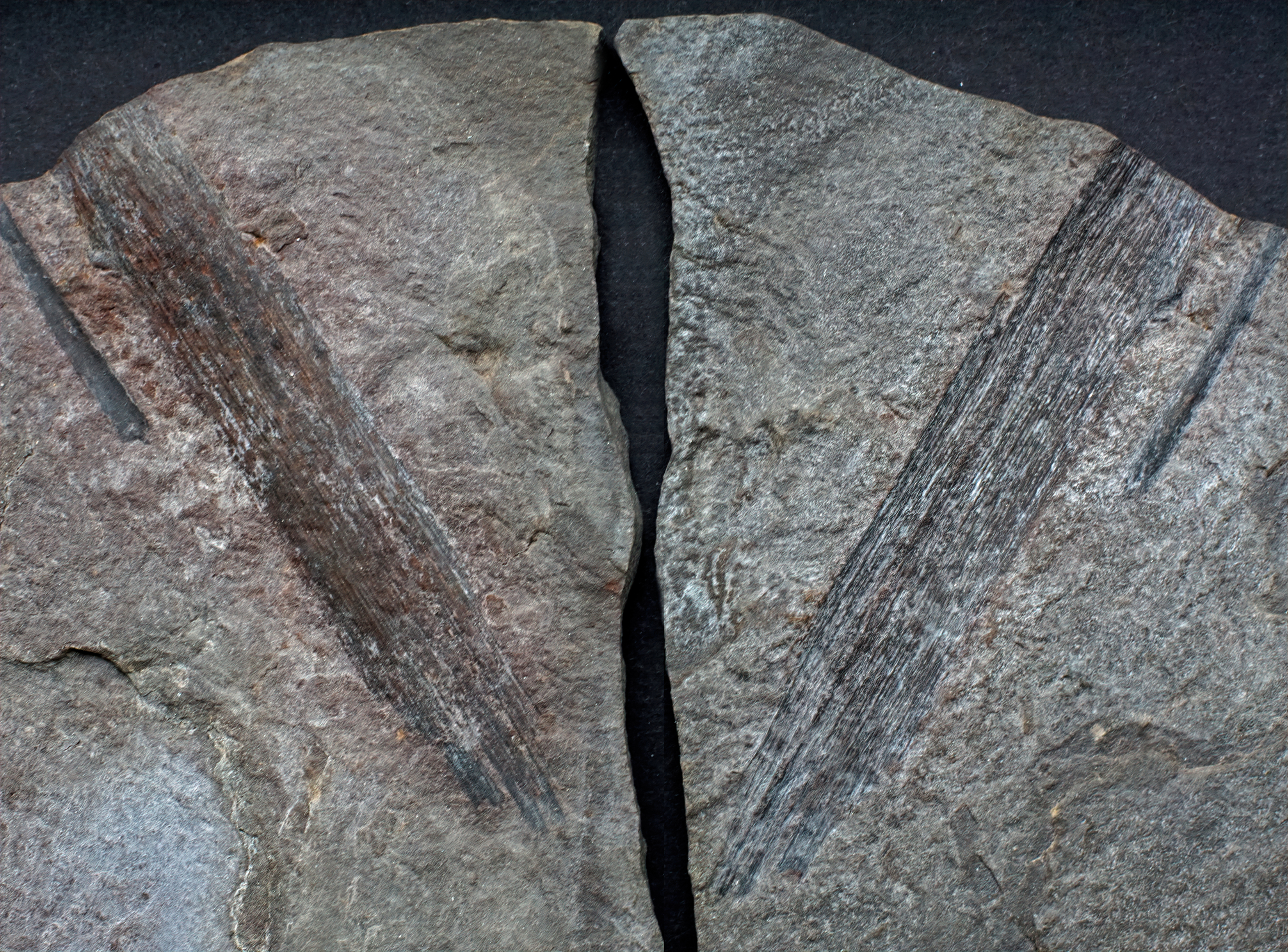
Internal and External Imprint Fossil of Calamite Tree Stem, Devonian to Carboniferous Age

The three amazing fossils above were found in Sebastian County, Arkansas in an old coal strip mine in 1993 by Michael A. Whitkanack, who donated them to my classroom. They are actually the imprints of the Calamite’s leaves and stems which scientists refer to as trace fossils.
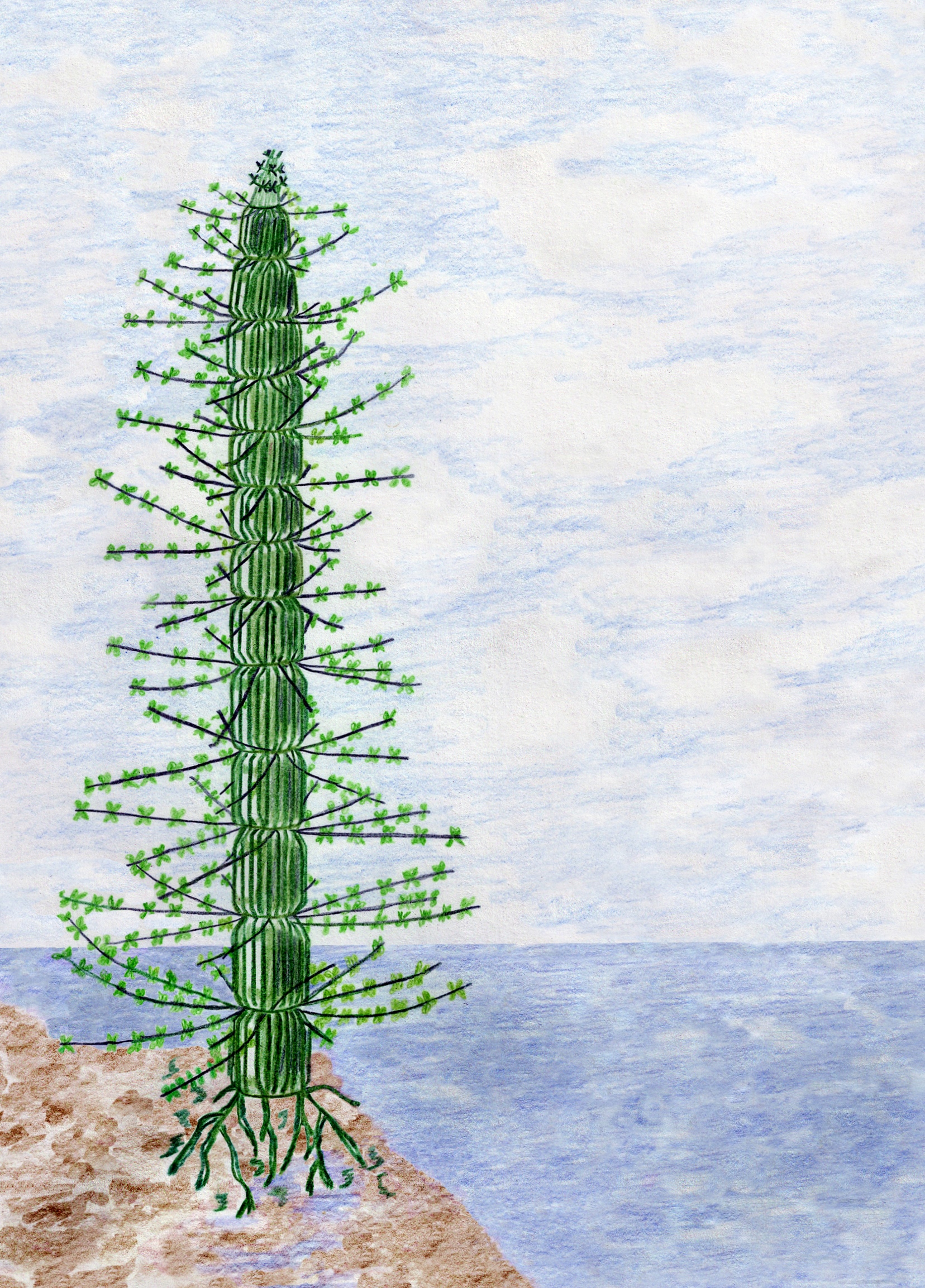
Scan_Pic0012a
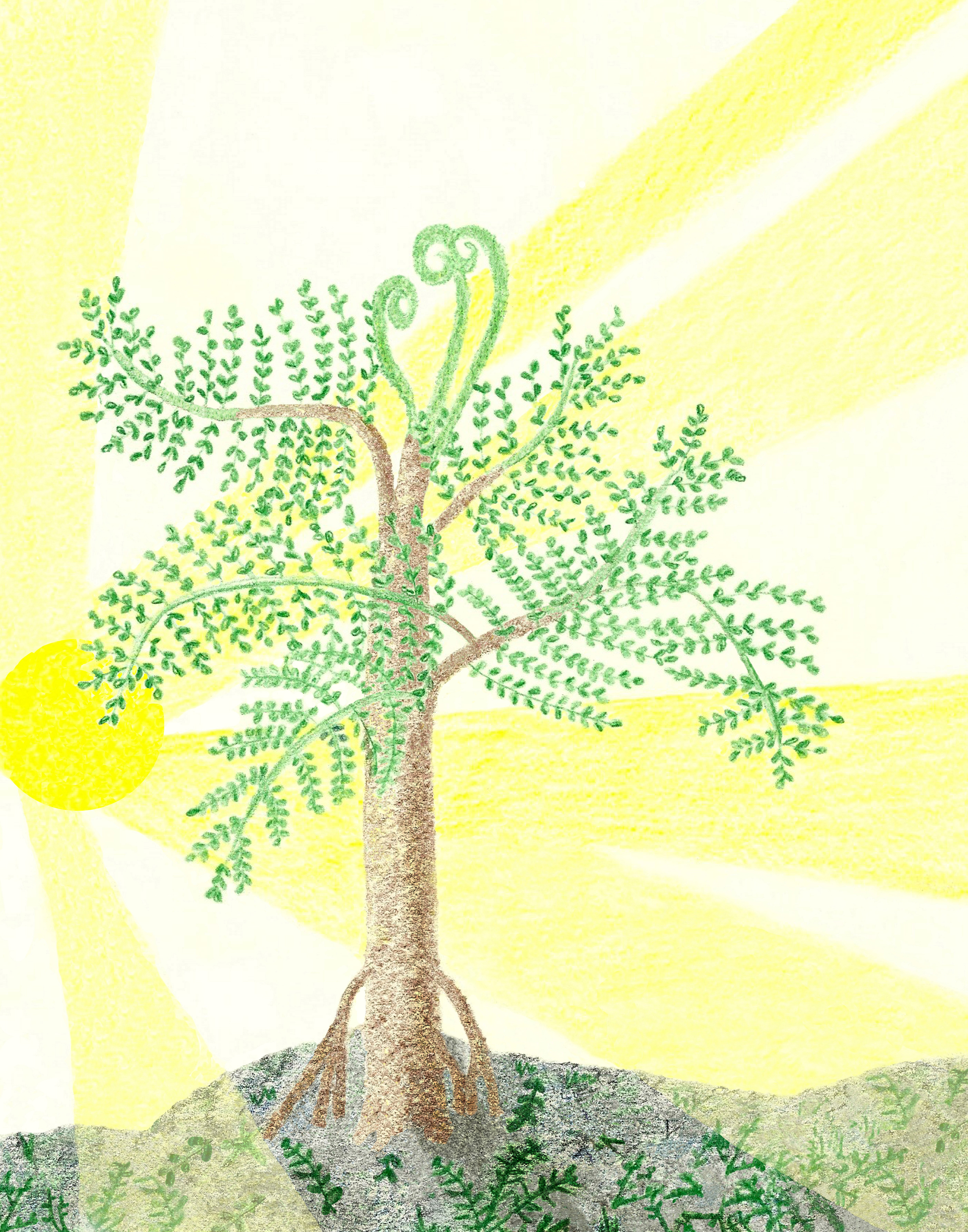
Devonian to Carboniferous Era Calamite Tree (Earth’s First Tree-Like Land Plant) Rendition Drawing

 CLASSIFICATION

Scientific Name: Calamite Common Name: Horsetail / Wiskfern

Kingdom: Plantae

Division: Pteridophyta (Ferns, reproduce by spores)

Class: Sphenopsida or Equisetopsida (means ribbed, vertical jointed stem; bamboo like in appearance)

Order: Equisetales

Family: Calamitaceae

Genus:  (STEM) Calamite (LEAF) Annularia

Special Note: The Calamite may look familiar to some. Their modern descendants are the “horsetails” of today. They grow in open fields and edges of woodlands, but only reach a few feet tall, as seen in the photo below.
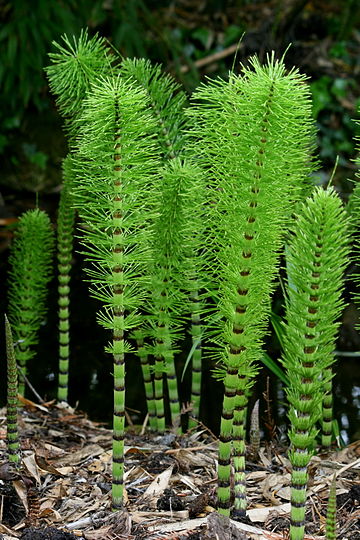
Equisetopsida

The “horsetail” or Equisetum is an amazing living fossil related to the Calamites, the only surviving genus from the entire class of Equisetopsida. For millions of years, the Equisetopsidas were much more diverse and flouished during the late Paleozoic, Permian and Carboniferous forests. Through the millenniums, they decomposed layer by layer, sinking deep and eventually contributing to the coal deposits of today.

All rights reserved © Fossillady 2025

Pecopteris Leaf of Fern Tree

Fern leaves called Pecopteris first appeared during the Devonian Period around 400 million years ago, but grew abundantly in the coal swamps of the Carboniferous and Permian time periods, approximately 359-251 million years ago. These leaves dropped off a medium sized, 35 foot (10 meters) tree called, Psaronius, one of the most common Paleozoic varieties. With its expansive leaves and branches, it resembled modern day palm trees. Impressively, it produced as many as 7000 tiny spores on the underside of its leaves. These fossil samples are preserved in gray coal shale from Pennsylvania as with many Carboniferous leaf fossils.

Devonian to Carboniferous to Permian Era Pecopteris Imprint Fossil Leaf from Fern Tree

If you’ll recall the differences from, Neuropteris leaflets shown on the previous page, the mid-vein stops midway up the leaflet and splits into several fine veins, whereas the mid-vein in Pecopteris extends up to the tip. Neuropteris leaflets are usually more blunt tipped and are attached by a single stem as opposed by the entire base, such as with Pecopteris. Another way to identify Pecopteris is hinted in its name, derived from the Greek word meaning, to comb. Observably, the leaflets along the stems feature an arrangement resembling that of a comb.

Devonian to Carboniferous to Permian Era Pecopteris Imprint Fossil Leaflets from Fern Tree

What makes fern trees so special? The large fronds produced by Pecopteris leaves, which grew upon the ancient Psaronius fern trees, cloaked the forest floor in deep shade together with the Medullosa seed fern trees. Consequently, they protected the ancient creatures below from the strong ultra violet rays of the sun as it was closer to earth and more powerful during the Paleozoic Era. Also, the shedding and decomposing of leaves created more layers of soil for roots to extend deeper and deeper, alleviating the need for trees to grow near water pools. Trees were then able to spread further inland. Yet another benefit was that the leaves fed inland water sources cultivating more fresh water fish varieties. But this fantastic fossil is most special to me because I inherited from my late father-in-law, Joseph Mirto II. It was found in Johnstown, Pennsylvania.

PECOPTERIS LEAF CLASSIFICATION

Kingdom: Plantae

Division: Pteridophtya (meaning vascular plant with transport system for nutrients and fluids)

Class: Filicopsida (Ferns which reproduce with spores)

Order: Marattiales (primitive ferns)

Family: Marattiaceae

Genus: Pecopteris

Scan_Pic0014a
Psaronius Fern Tree Rendition Drawing, Devonian to Carboniferous to Permian Era

PSARNONIUS FERN TREE CLASSIFICATION

Botanical Name: Psaronius Common Name: Fern Tree

Kingdom: Plantae

Division: Tracheophyta (meaning vascular plant with transport system for nutrients and fluids)

Class: Marattiopsida (distinguished by massive roots and largest fronds of all seed fern trees)

Order: Marattiales (primitive ferns)

Family: Psaronlaceae

Genus: Psaronius Species: magnificus

All rights reserved © Fossillady 2025