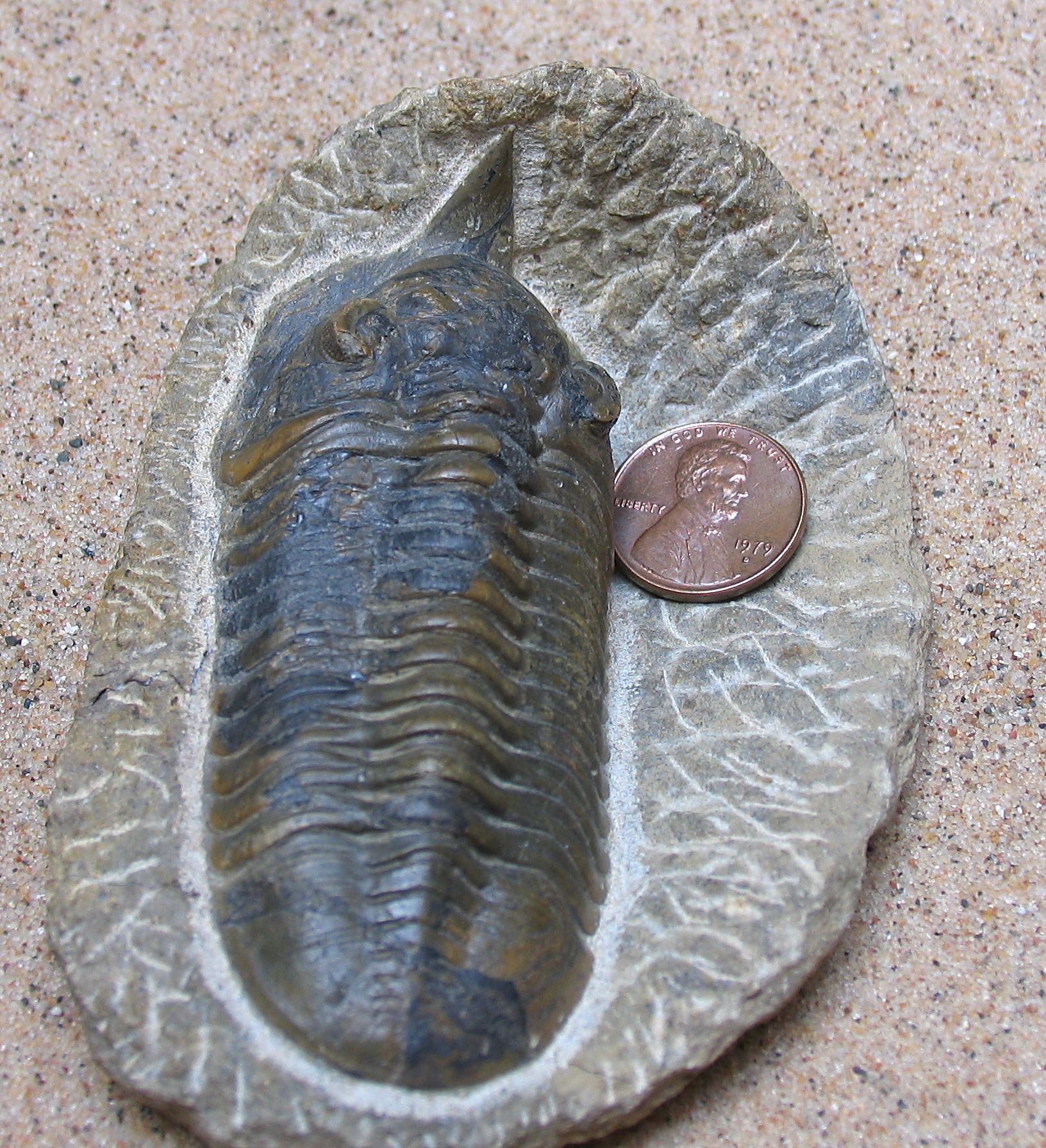
Most trilobites grew to only about 3 inches (7.6 cm) long, while a few reached almost 3 feet (1 meter) long. This Calymene, celebra fossil fits nicely into a man’s palm. In life, it was a scavenger finding food on the ocean floor where it could easily burrow underneath the sand to hide from predators. Many of their fossils are often found rolled up in a defensive position. They were able to bend because their chiton exoskeletons were fitted with overlapping sections. Think of roly-poly bugs, or pill bugs, as some call them; it’s the same idea.
Lifestyle of Trilobites
Trilobites developed several different life styles; some moved over the seabed as predators or scavengers, while others were filter feeders, yet some swam along the ocean strata feeding on plankton. Most were sluggish swimmers, while some later varieties were designed precisely for speed and swam in the mid-ocean, pelagic zones where more predators existed.
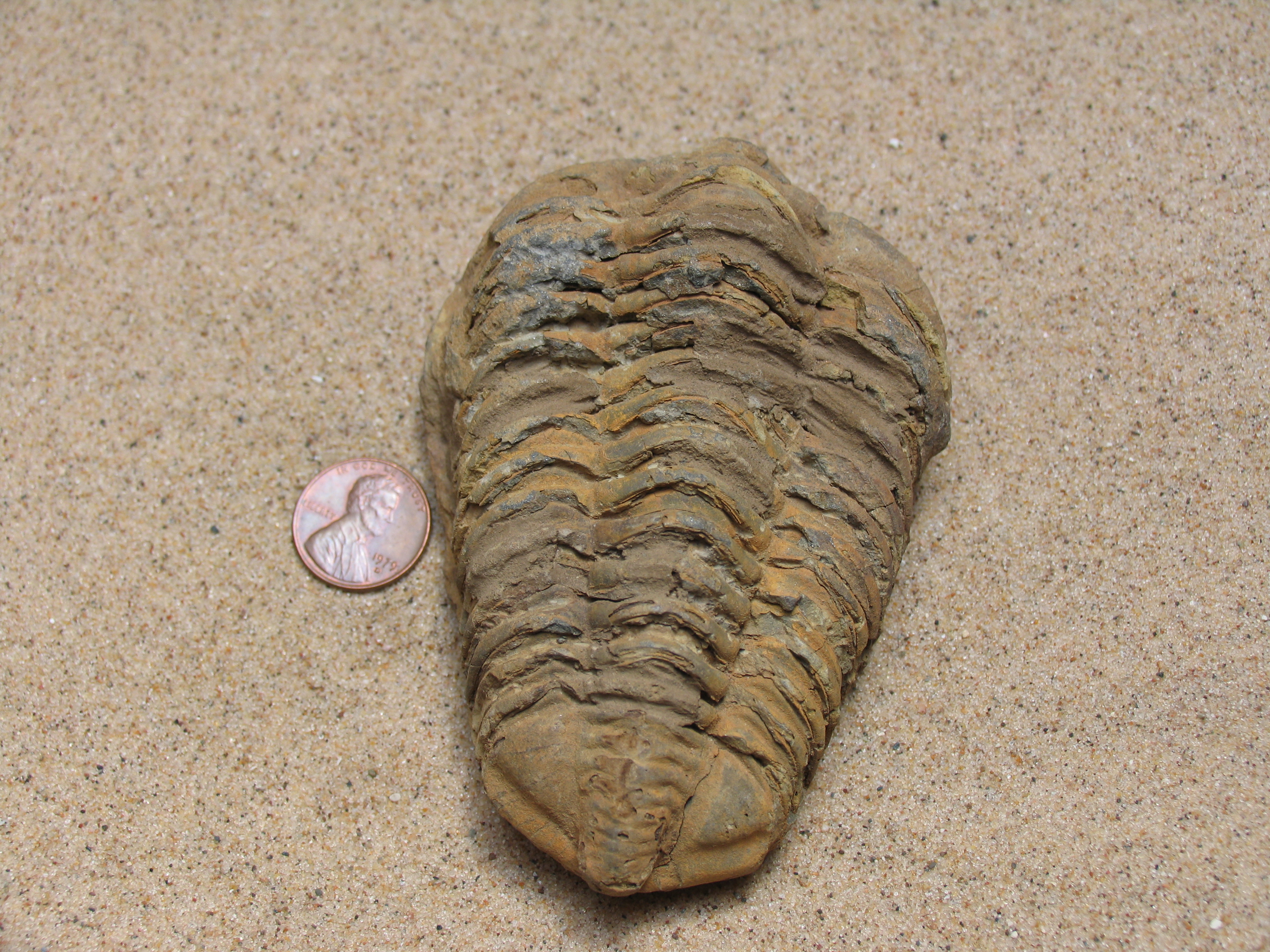
This little Calymene trilobite crawled on the ocean floor over 400 million years ago during the Devonian time period. His species had smaller eyes than many other trilobite species and was probably a sluggish swimmer. A good number of their fossils are found in Michigan and other Midwest states where warm shallow oceans once dominated the continents.
Trilobites have the distinction of possessing a segmented body, multiple jointed limbs and an armored outer shell, placing them in the category of arthropods related to insects and crustaceans. Trilobite means three lobes in Greek, from tri and lobos, named for their three major lengthwise body sections.
All trilobites died out at the end of the Permian mass extinction event, 251 million-years-ago, which removed over 90% of all species on Earth.
Find out about a few giant sized trilobites here in another article I’ve written. (Scroll down to middle of page)
Classification
Kingdom: Animalia
Phylum: Arthropoda (Invertebrate animals with jointed legs, segmented bodies, exoskeletons made up of chiton, a tough fibrous material often mineralized with calcium carbonate)
Class: Trilobota (Means three lobes or body sections. They are one of the earliest and most successful groups of artrhopods to appear in the fossil record with an estimated 22,000 species)
Order: Phacopida (Means lens face, these trilobites lived from the late Cambrian Period to the late Devonian Time Period)
Family: Calymenidae
Genus: Calymene (Small group of trilobites often found rolled up)
Species: celebra
All rights reserved © Fossillady 2025
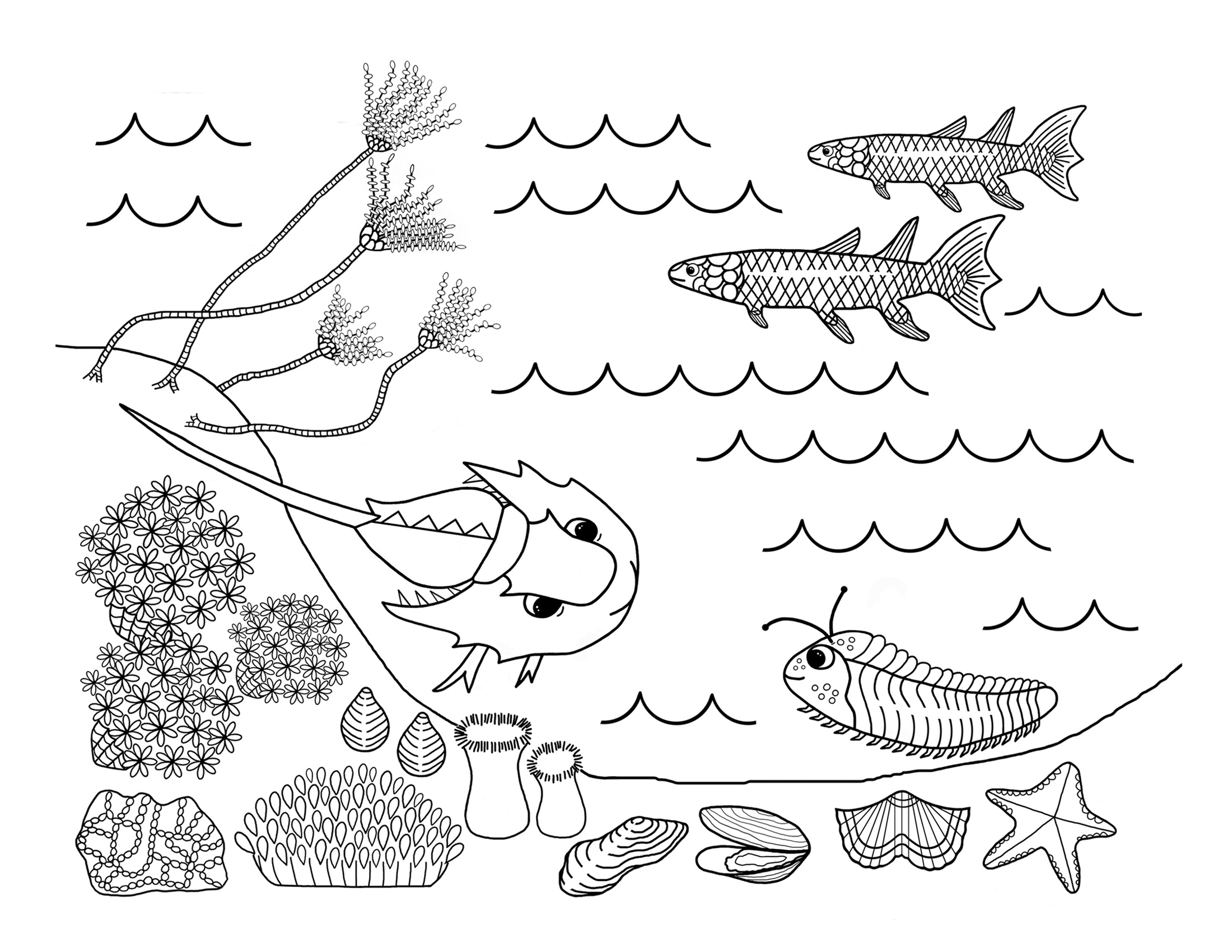
Check out my fiction books featuring factual prehistory insights blended with imaginative storytelling that entertain as they educate. Perfect for young explorers ages 11-15+ or young readers who simply like a good story, available on Amazon.com. Also available, a coloring/activity book featuring scenes from both books along with many of the plants and animals that lived during the amazing Devonian Time Period; fossil photos and descriptions included.

 Fossil Lady