Maze Coral
Source
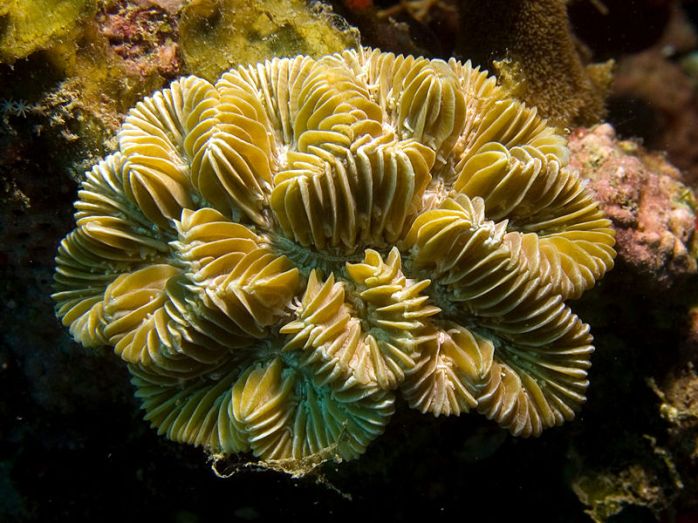
Judging from the title of this article, you may have gathered their can be some confusion when identifying coral fossils and you would be right. All corals are not single organisms, but rather are a colony of individuals we know as polyps (the jelly-like part). The polyps band together and slowly build a calcium carbonate skeleton. Herein lies the physical diversity of corals as each species builds a slightly different style of skeleton.
I was confused by several coral species that I now feel confident about their identities after some head scratching and investigating. Maze Coral and Rose Coral fossil skeletons look very similar at first glance; descriptions below solves the puzzle.
Both species are commonly found in the Bahamas, Caribbean and Florida shores.
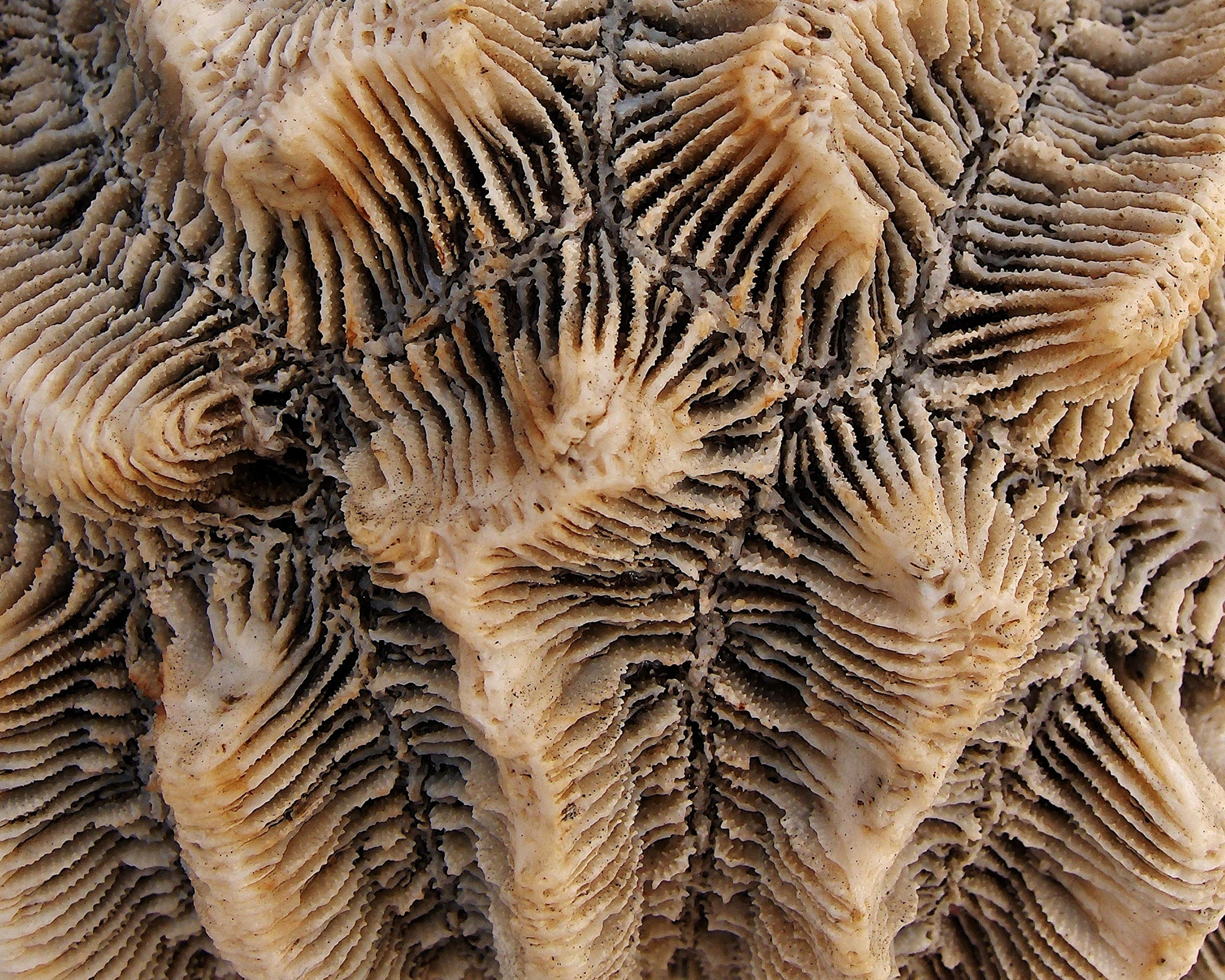
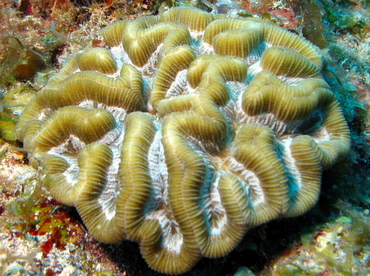
While researching, I realized that maze corals are sometimes lumped together with brain corals, or are even called maze-brain corals. The most distinguishing features from rose corals is that the maze-brain coral grow larger and display deeper ridges with well defined irregular plates less rounded than the rose coral. Also, there is an indentation running along the crest of the walls where the adjoining plates meet. Maze coral colonies form both flat heads and hemispherical (half-sphere) dome plates; colors tend to be brownish or greyish when live.
Maze Coral Habitat: Found in a wide range of habitats across the Caribbean, Gulf of Mexico, Bermuda, the Bahamas and Florida occurring at any depth less than 80 meters (260 feet) in reef-environments.
- Maze Coral Classification
- Kingdom: Animalia
- Phylum: Cnidaria (Animal with stinging cells)
- Class: Anthozoa (Flower like animals)
- Subclass: Hexacorallia (polygonal corals having parts in multiples of 6)
- Order: Scleractinia (Stony Skeleton)
- Family: Meandrininidae (Meandering Colony Corals)
- Genus: Meandrina (forms massive hemispherical heads or have large flat plates and can grow to one meter (3 feet) across)
- Species: M. meandrites
Rose Coral
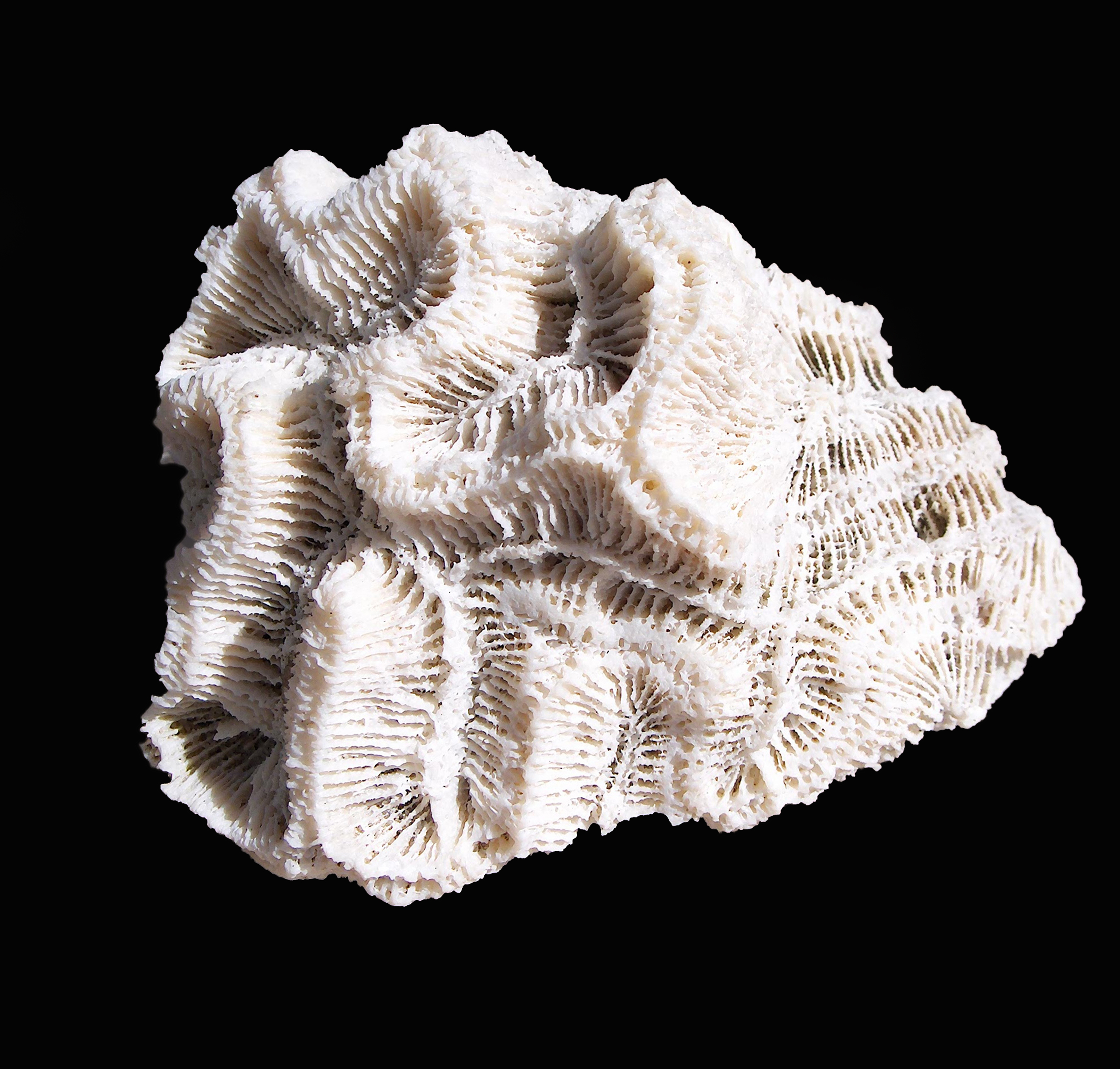
Rose Coral “Manicina, areolata” is a small stony coral often forming elliptical or oval colony heads with wide, winding valleys and rounded fleshy furrows; also, meandering valleys grow atop of smaller, shorter ridges. Colonies are often unattached to the seabed, living on sandy or seagrass bottoms.

Source
Interesting Behavior
Rose corals are one of only a few corals that can be actively mobile. If a small colony of rose corals gets turned upside down, it proceeds to gorge its stomach with water in order to bloat, and then it jets the water out from one side at a time. This causes a back and forth rocking motion until the center of gravity shifts, allowing it to rapidly flip upright. The entire process takes a few hours until it finally flips over in an instant.

Habitat: Rose coral “Manicina, aerolata” is very abundant off the Floridian shores as well as the Bahamas and Caribbean. It prefers shallow, productive, near shore habitats characterized by abundant sediments such as seagrass meadows, or along the fringes of mangrove forests. Larger colonies are more likely to die by smothering in the sediments placing a limit on the size any given colony can grow.
Colors: Yellowish-brown, tan or dark brown, often with the valleys and walls being contrasting colors. Like most corals, the polyps are only extended at night and are often green.
Source
ROSE CORAL CLASSIFICATION
- Kingdom: Animalia
- Phylum: Cnidaria (Animals with stinging cells)
- Class: Anthozoa (Flower Animal)
- Order: Scleractinia (Stony Skeleton)
- Family: Faviidae (generally spherical shape and grooved surface which resembles a brain)
Genus: Manicina - Species: M. areolata
Note: The genus, Manicina, includes over 10 species, but Manicina, areolata is the only species that survives today. The heyday for Manicina was during the Miocene and Pliocene epochs between (24 million to 1.6 million years ago). About one million years ago, approximately half the species of reef corals living in the Caribbean became extinct.
Both Maze Coral and Rose Coral are considered threatened species, though their specific status and risk factors differ.
For more interesting facts, photos and identification of Florida, Gulf and Atlantic Coast Corals to “Categories” sidebar under “Corals, Forida, Atlantic and Gulf Coasts”
All rights reserved © Fossillady 2026
 Fossil Lady