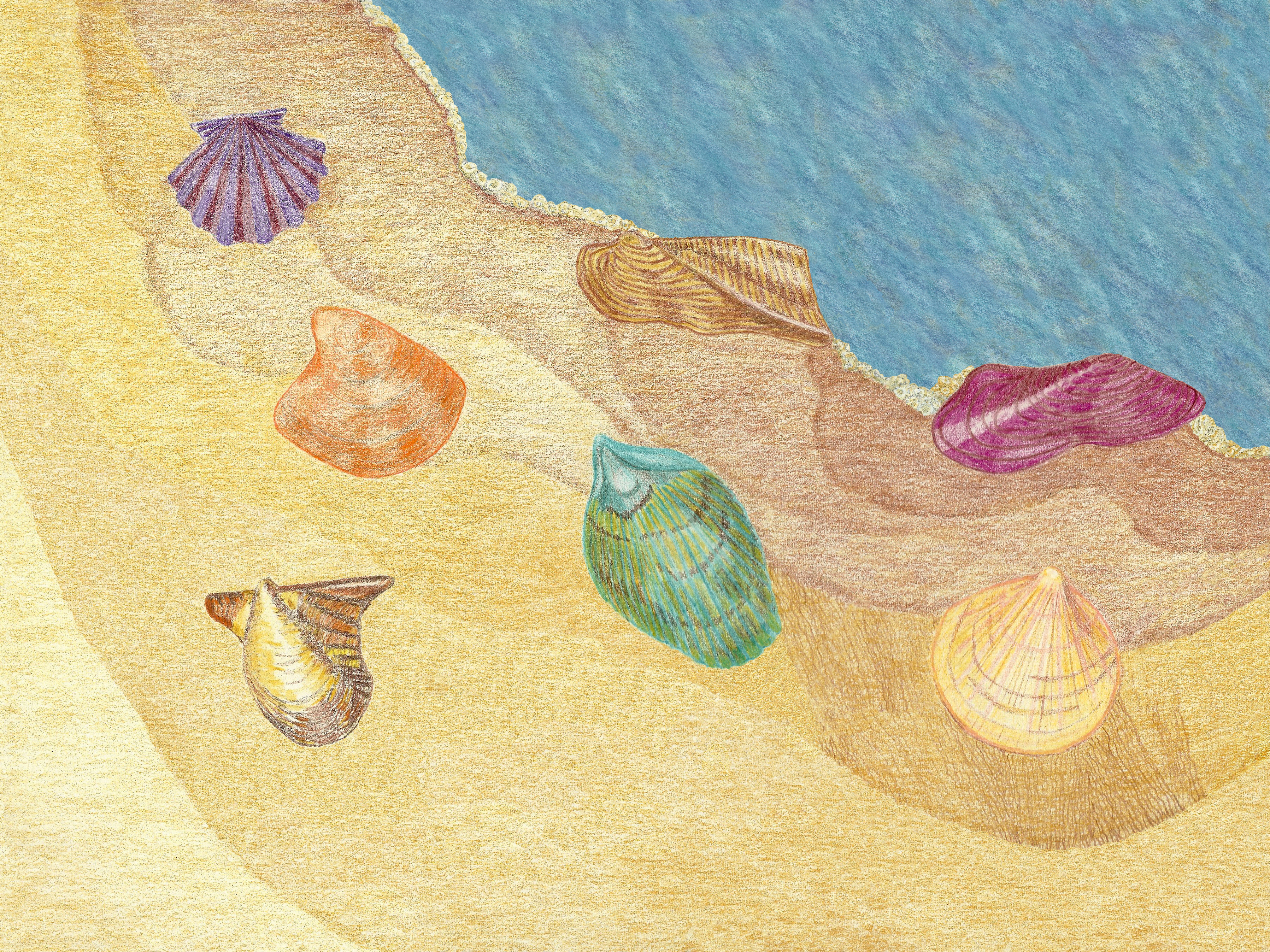
What is a clam and how do they live? “Clam” can be a term that covers all bivalves (pelecypods). Bivalves such as oysters and mussels attach themselves to hard objects, and scallops can free swim by flapping their valves together. Some clams bury themselves in sand and breathe by extending a tube to the water’s surface. Those varieties usually possess a stronger foot that looks like a tongue which the clam uses for digging and pushing itself along.
Clams feed by filtering plankton with their adapted gills, although the digging varieties use a siphoning tube and more primitive species used special tentacles. Bivalves lack a head or brain and usually have no eyes, although scallops are a notable exception. All bivalves possess a mouth, heart, kidneys, and anus, as well as a circulatory system. Clams haven’t changed much through the timetables surviving multiple earth changes and mass extinctions!
Clam Fossils Identification Colorcoded Matched with Drawing Clam Fossils – Oldest to Recent

Orange Rendering: Ctendonta levata possesses a well developed beak, a smooth surface with fine concentric growth lines and teeth along the hinge plate. Lived from Ordovician to Silurian (505 to 408 million-years-ago) very old.

Deep Pinkish Rendering: Modiolopsis genus possess asymmetrical thin valves crossed by an oblique depression and strong beak. Possible fossil sample below is a mold of the inner shell which has been extremely smoothed by the movement of sand and waves. Lived from Ordovician to Silurian (505 to 408 million-years-ago)
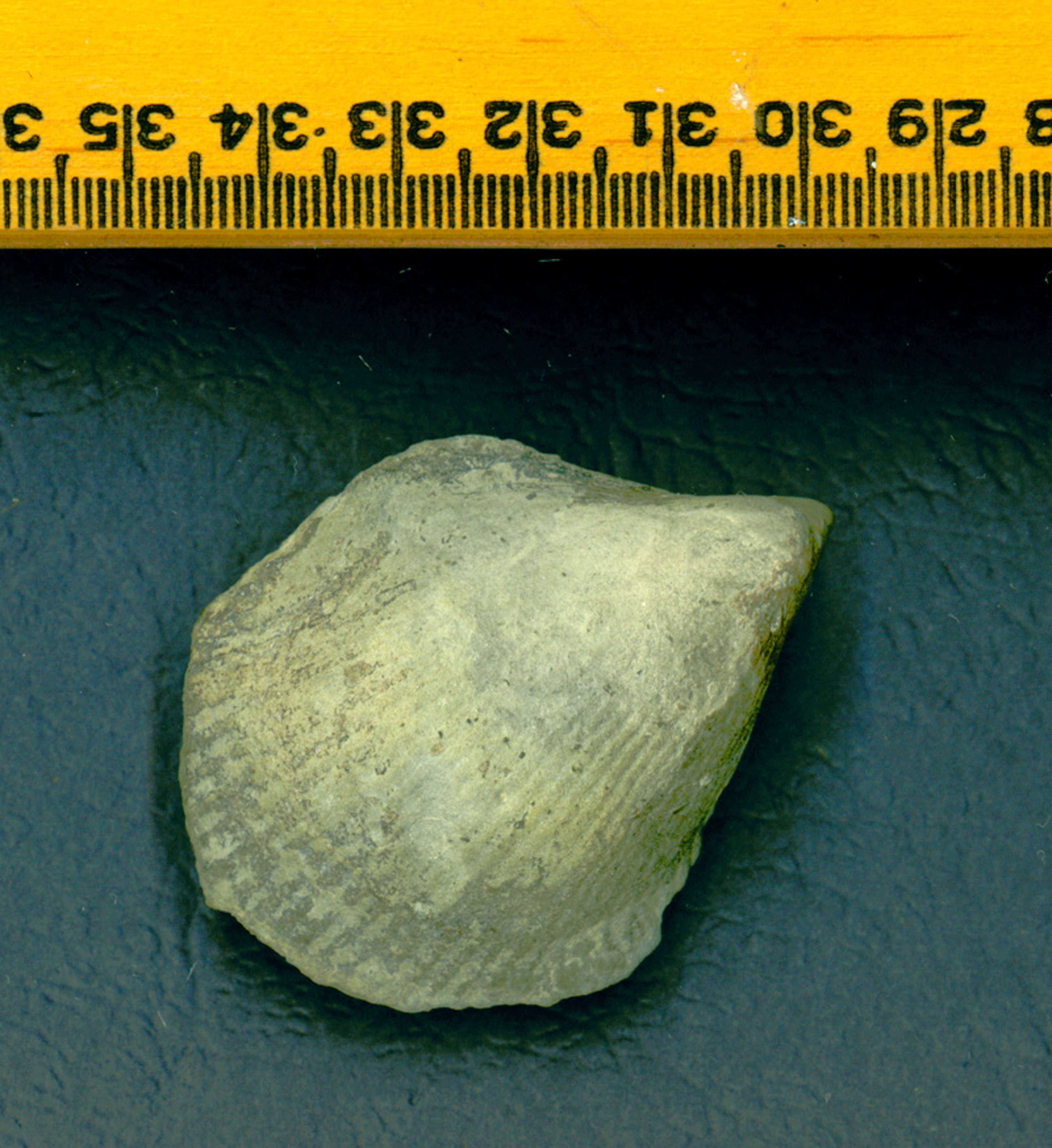
Blue/Green Rendering: Byssonychia genus has a sharp steeply inclined beak near the end of the hinge; usually has strong radial ribs. Mostly Upper Ordovician around 400 million-years-ago.
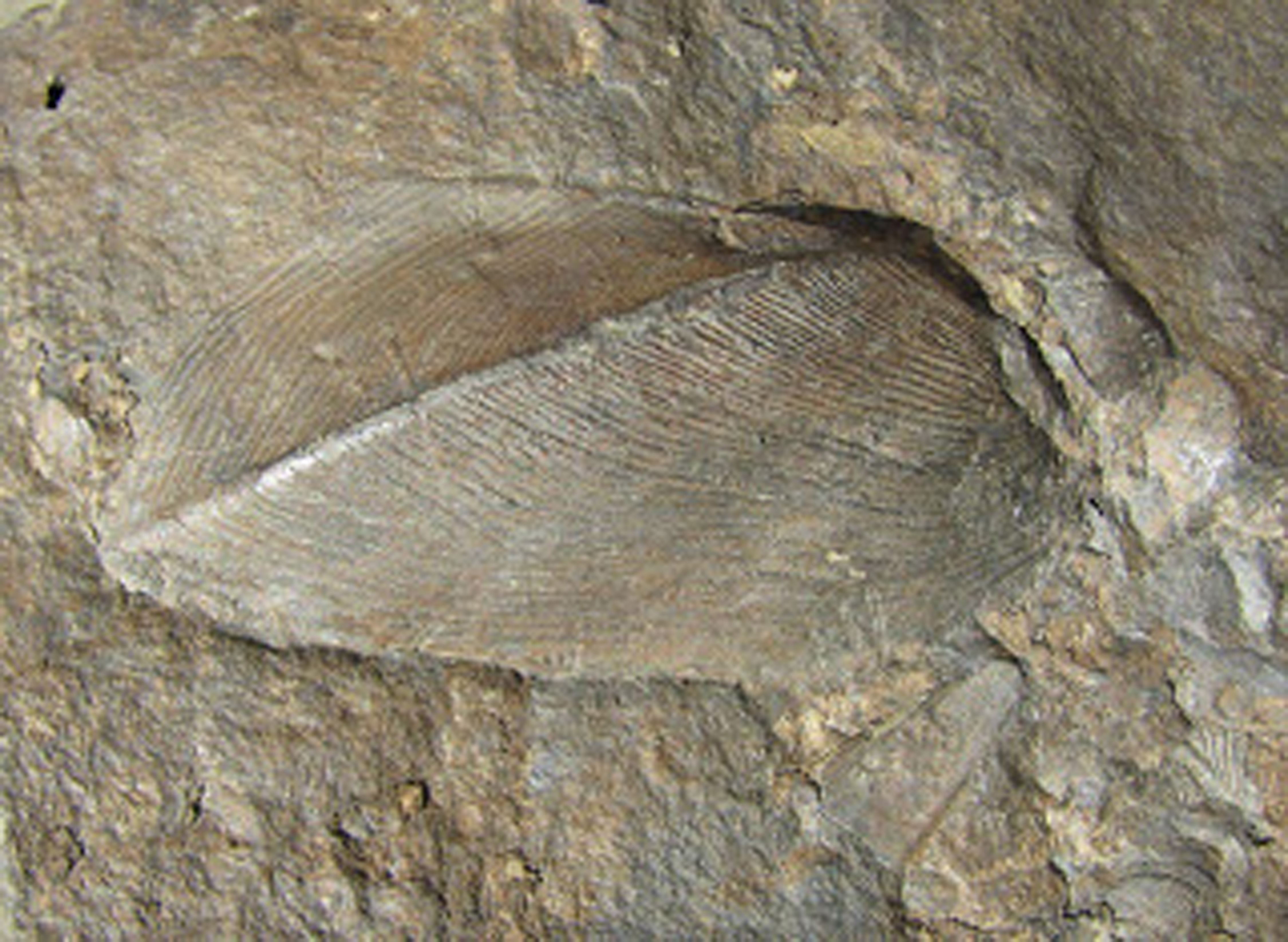
Brown Rendering: Goniophora levata has a lopsided shell with a prominent beak and ridge extending to the rear margin. Silurian to Devonian (438 to 360 million-yeas-ago)
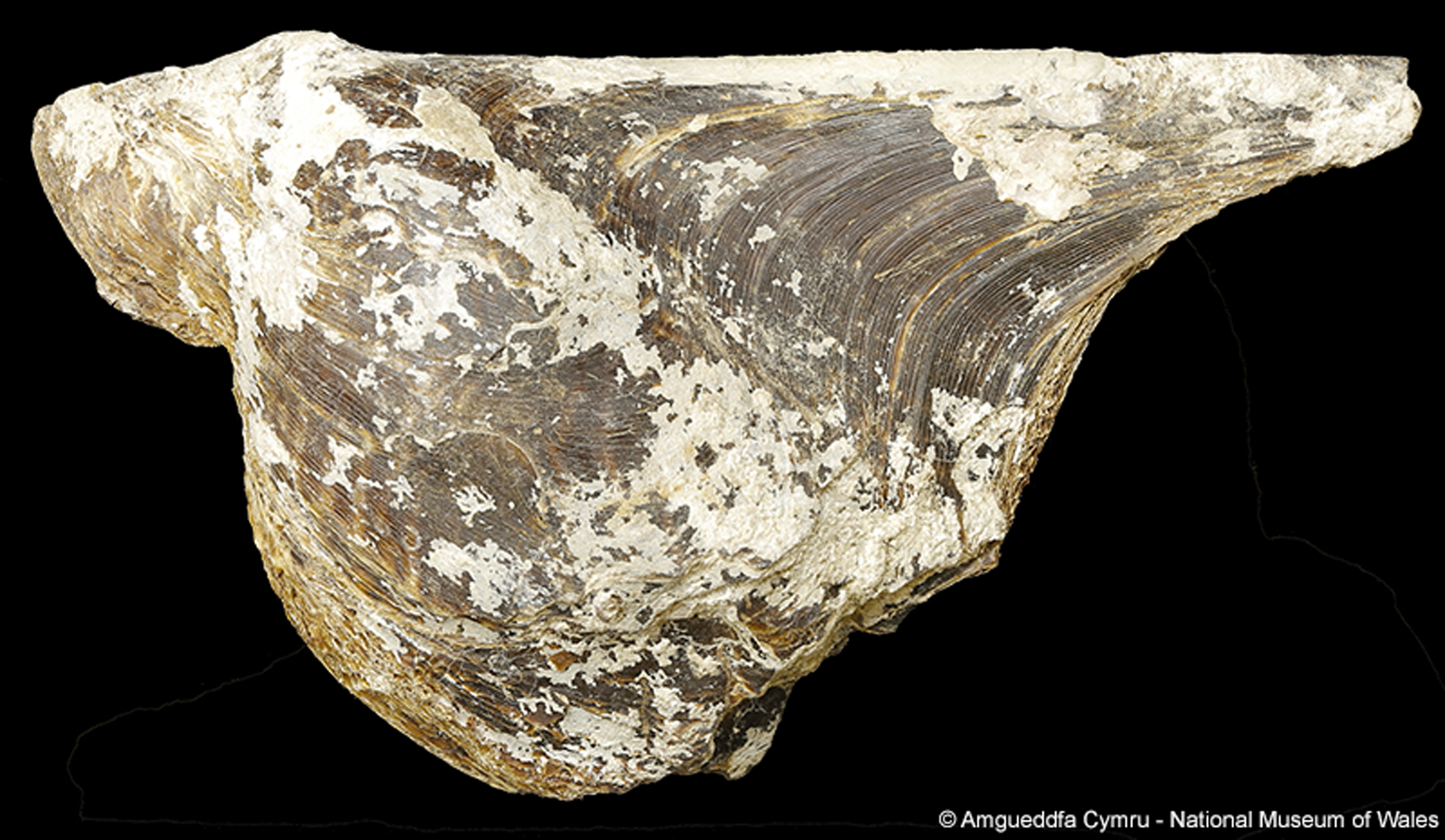
Goldish and Brown Rendering: Pteria colymbus genus has thin inequilaterally shaped valves with a long straight hinge merging into large unequal wings. Jurassic to recent (245 million-yeas-ago to recent)
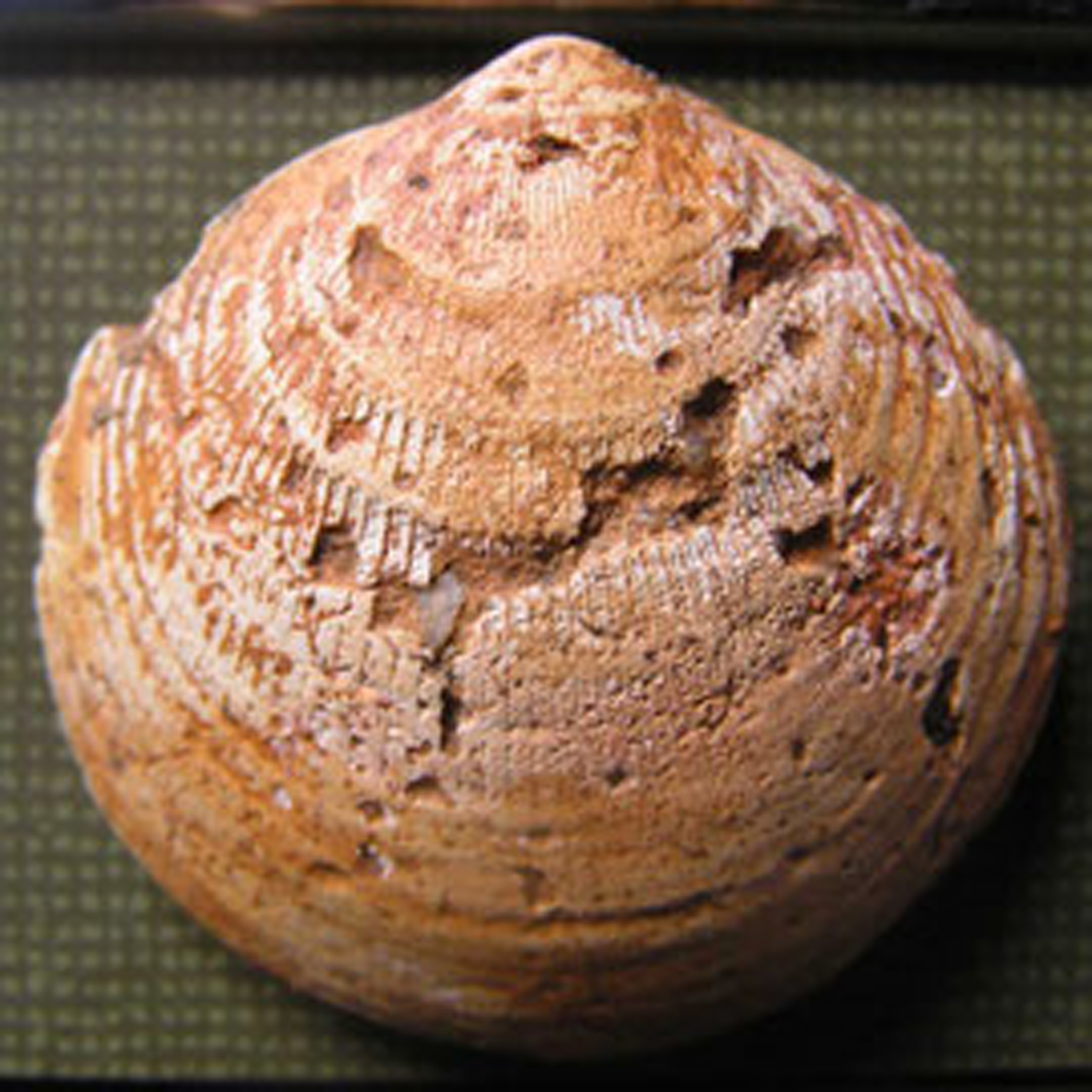
Yellow Rendering: Glycimeris genus has symmetrical circular outline with pointed beak. Cretaceous to Recent (114 mya to recent)
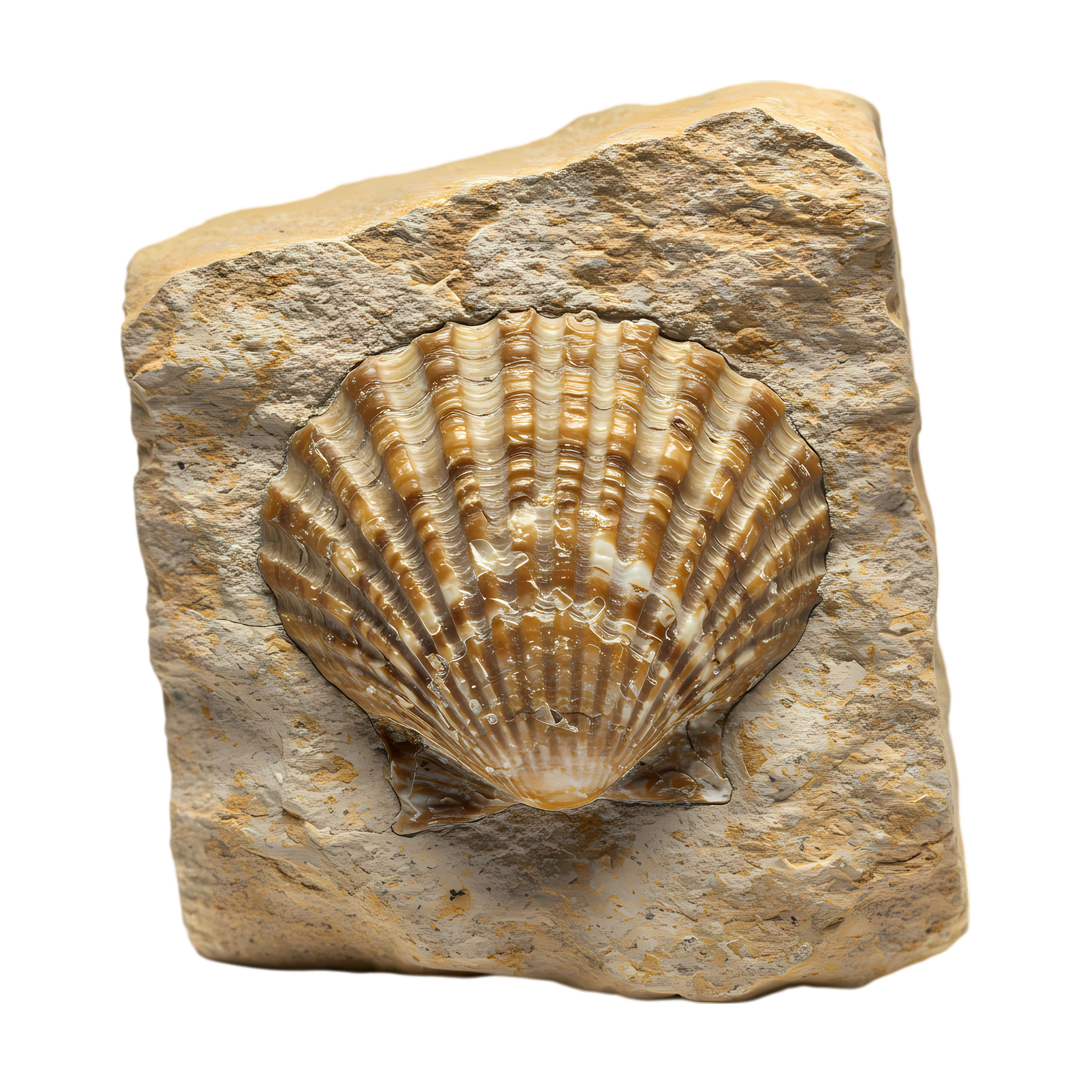
Deep Blue/Purplish Colored Rendering: Pecten is a genus of many well known bivalves otherwise known as scallops. Valves have strong radial ribs and are almost symmetrical except for unequal wings. Mississippian to Recent (360 million-yeas-ago to recent)
Bivalves feed the world. Bivalve oysters, scallops and clams are near the bottom of the food chain which many marine and freshwater species depend on for a food source. But don’t forget about land creatures such as otters, for one, and we humans who especially enjoy a treat of clam chowder, fresh shrimp or oysters on the half shell. The animal secreted calcium carbonate from the ocean to creat a protective shell, they can be beautiful and are used to adorn our homes in creative ways. 
All rights reserved © Fossillady 2026
 Fossil Lady