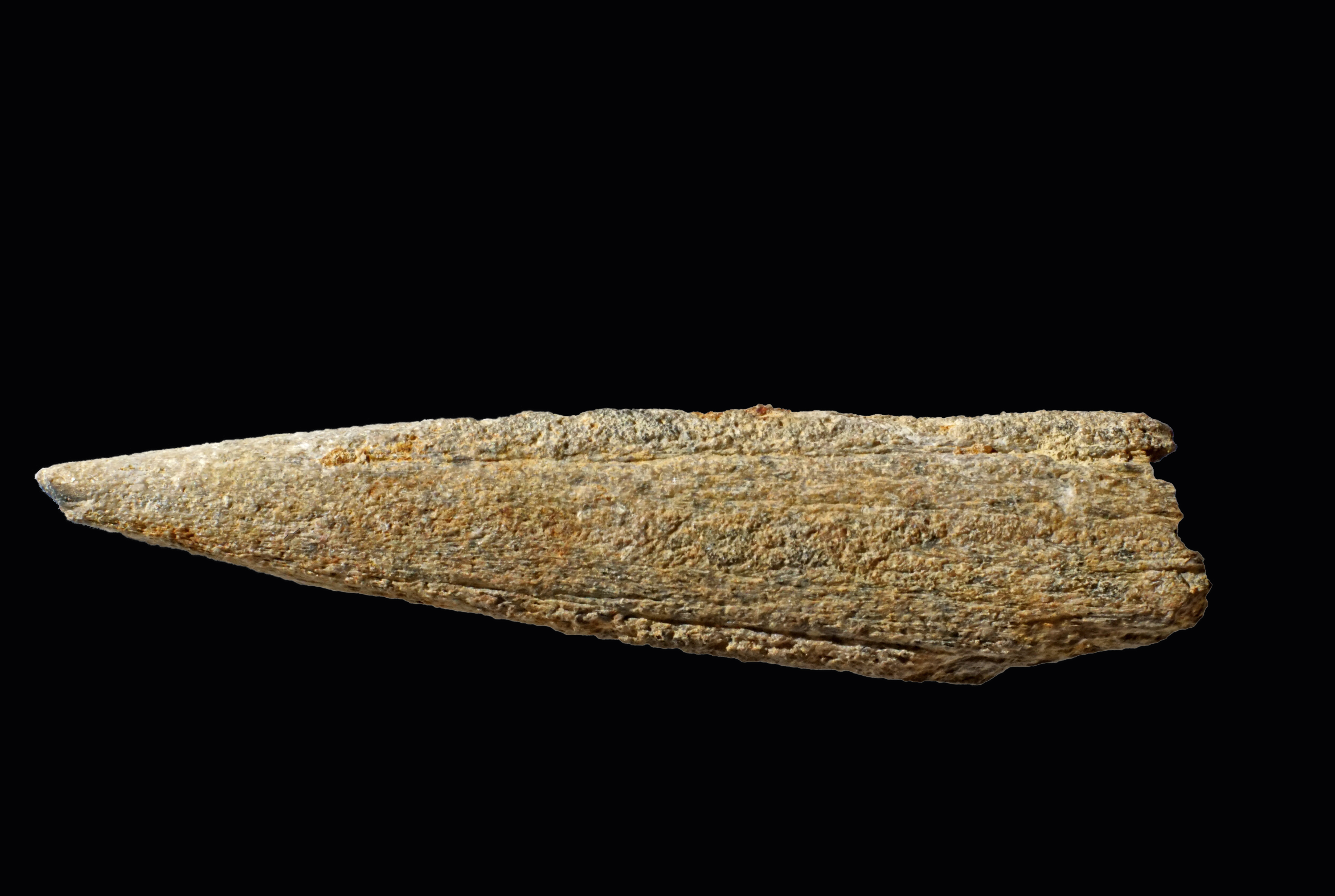
This fossil is the broken-off tip from the bill of a billfish, estimated in age from the Miocene Epoch (23 to 5.3 million-years-ago), possibly belonging to, Xiphiorhynchus, an extinct genus of giant, double-billed swordfish; or possibly belonging to Tetrapturus pfluegeri, living today, commonly called “Longspear Billfish“.
I chose these two related species as possible matches to my billfish fossil because both species were abundant during the Miocene Epoch (fossil age) and because the fossil was discovered along the Eastern Atlantic Coast of United States where both species were and are native.
Not to be confused – while all swordfish are billfish, not all billfish are swordfish. Swordfish (family Xiphiidae) are distinct from other billfish (family Istiophoridae—like marlin and sailfish) because they have a flatter, longer sword and lack teeth and pelvic fins as adults.
Swordfish Facts
Xiphiorhynchus swordfish is an extinct genus of prehistoric swordfishes. Fossil records indicate they were one of the first swordfishes to have evolved during the Eocene Epoch (56 million-years-ago), surviving most abundantly through the Miocene Epoch (23 mya) becoming extinct during the Pliocene Epoch (2.6 mya) when one third of the planets megafauna died out due to cooling climate changes.

Xiphiorhynchus swordfish was a large genus reaching 5 meters (16 feet) long or more, comparable to the Great White Sharks of today. Unlike the “one and only” true living swordfish today, Xiphias gladius (shown below) whose smaller in comparison, averaging about 3 meters (10 feet) long, the extinct Xiphiorhynchus had not one, but two equal length swords. During the genus’ reign, they would have been top predators and likely have achieved great speed and predatory skills, reminiscent of the many varieties of modern-day billfishes.
- Xiphiorhynchus swordfish were highly migratory as the modern-day swordfish and would have been spotted along the Eastern Atlantic Coast of America through to the Gulf of Mexico down to Peru and as far south as Antarctica.
- Swordfish are named after their long pointed, flat bills resembling a sword.


Two Billfish Species
Tetrapturus pfuegeri commonly named “Longbill Spearfish“ is an extant species, (still living) from the family, “Istiophoridae” of billfishes, which includes about 10 species native to the Atlantic Ocean. It reaches a length of around 2.5 meters (8 feet) with a maximum weight of 58 kilograms (128 lbs). It is quite a fascinating looking billish species.
One of the largest and probably best known billfish today is the Atlantic Blue Marlin, “Makaira nigricans” which averages 3 meters (10 feet) long and can weigh up to over 1000 pounds, females are the largest. The Blue Marlin fossil record dates back from about the middle of the Miocene Epoch around 11 million-years-ago and reveals they were discovered along the east coast of the United States. The Blue Marlin could be another possible match to this fossil.
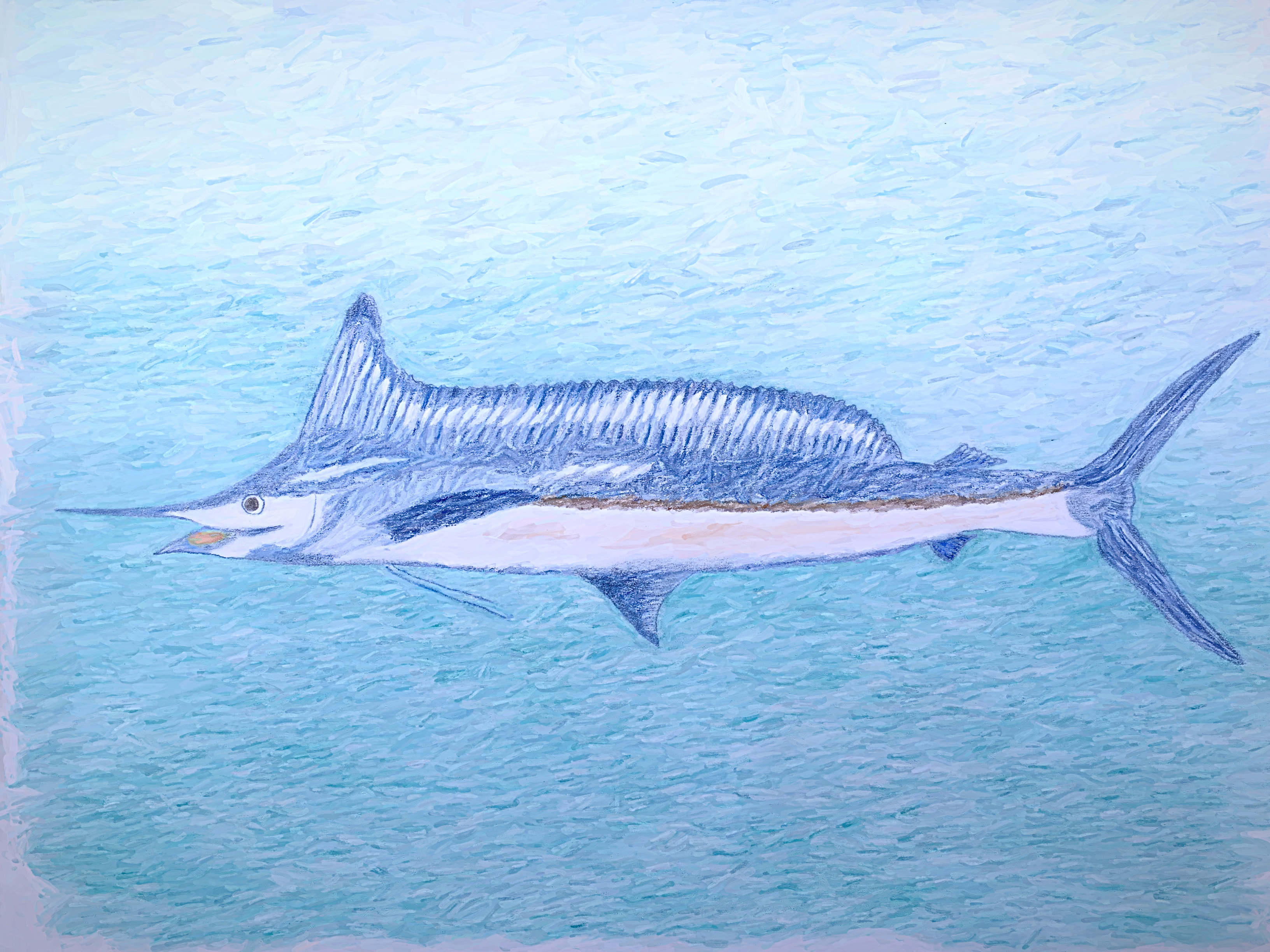
Marlin Facts Continue . . .
Marlins are oceanic species, chiefly found in offshore waters. They are highly migratory and are some of the fastest fish in the sea, reaching 110 km/h (68 mph) in short bursts. A marlin is not a swordfish, but a billfish. Two differences between a marlin and swordfish is that marlins have a more elongated body and a longer, sloping, dorsal fin. Also, marlins have a rounder, spear-shaped bill while swordfish have a flatter, broader “sword” and a shorter dorsal fin.
- Marlin’s common name is thought to be derived from its resemblance to a sailor’s marlinspike, an iron hand tool that tapers to a point and is used to separate strands of rope.
- Marlins are popular sporting fish in tropical seas, consequently, the Atlantic Blue Marlin and the White Marlin are endangered owing to overfishing.
- Females can live up to 36 years
All rights reserved © Fossillady 2025
 Fossil Lady