Get me outta here!

Fossil Lady

Eager to share my fascination with fossils, rocks, corals and seashells!

Menu

Skip to content
  • Home

Author Archives

Fossilladyhttps://fossillady.wordpress.comThis is where I combine my photography and writing to share my fascination with fossils, beach stones, seashells and corals.
Fossillady's avatar

What is a Petoskey Stone?

February 28, 1212 by Fossillady
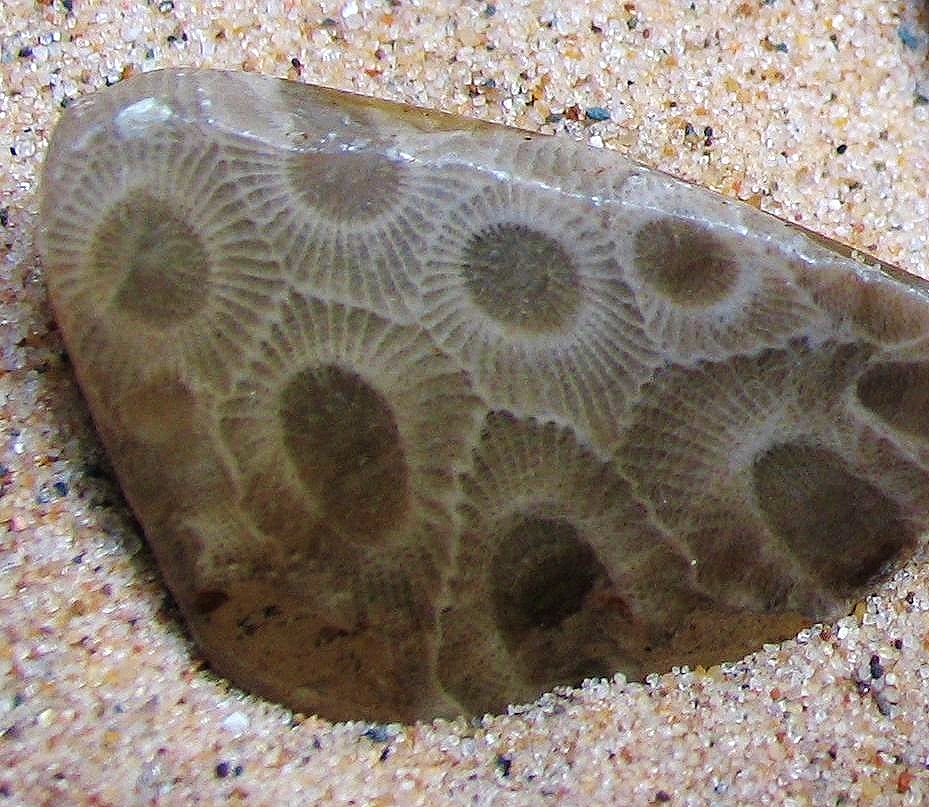
Polished Petoskey Stone Coral Fossil (Hexagonaria, percarinata)

Simply put, a Petoskey Stone is an extinct fossilized coral. Why is it called, “Petoskey Stone”? Because they are found in abundance in and around Lake Michigan shores, particularly near the northern Michigan city of Petoskey! The name “Petoskey” is the English adaptation of an Ottawa Indian Chief Petosegay, which is said to mean “The Rising Sun”!

They are also called “lucky stones” by many because finding these ancient coral fossils, remnants of prehistoric reefs, feels like discovering a special piece of history!

How could the remains of coral, which lived in tropical warm ocean waters, possibly find its way to the cool regions of Michigan? To explain – during the prehistoric Devonian Time Period around 416 to 369 million years ago, the landscapes of North America lay nearer to the equator and when Earth’s climate was tropical with little to zero polar icecaps. Consequently, risen, warm, shallow seas covered a large portion of the North American continent, including Michigan where the Petoskey stone “Hexagonaria, percainata” coral thrived. Eventually, the coral faced mass extinction and the coral remains were buried under deep layers of sediment. Many millions of years afterwards, around 15,000 years ago, the great glaciers retreated northward forming the Great Lakes while simultaneously digging deep into those forgotten layers of earth. Ultimately this freed the coral fossils from earth trappings and the glaciers deposited them where we can now enjoy the good fortune of discovering their mysteries.
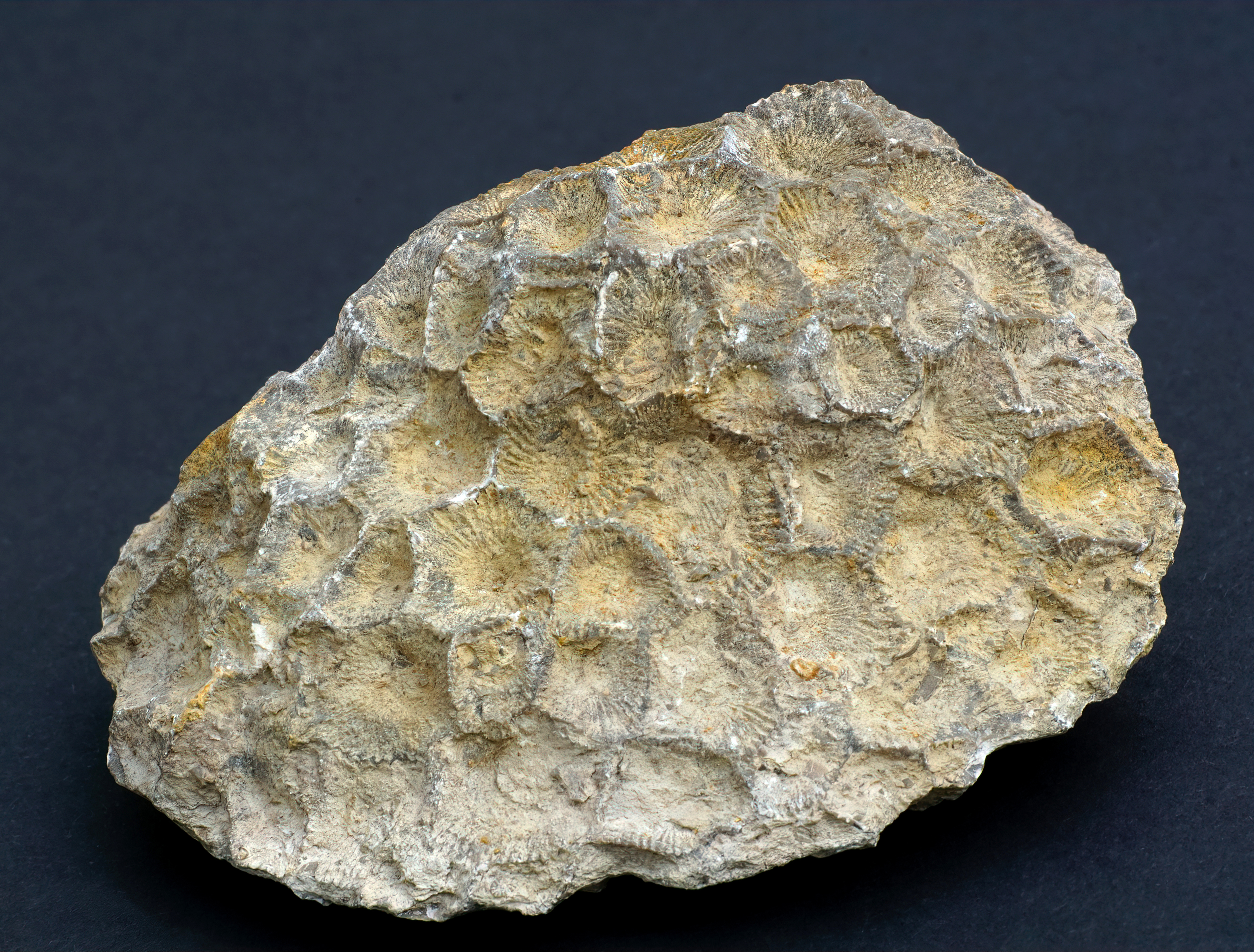
Rough unpolished Petoskey Stone Coral Fossil (Hexagonaria, percarinata)

Petoskey Stone fossils originate from mass coral colonies of Hexagonaria, percarinata. Each hexagonal corallite, visible in the stone, held a single animal possessed of many tentacles. The tentacles siphoned food particles floating by in ocean currents and fed the food to a mouth held in the center of the corallite. The tentacles were also used to sting other organism or corallites that came too close. Calcite, silica and other minerals replaced the original exoskeleton over many millions of years.
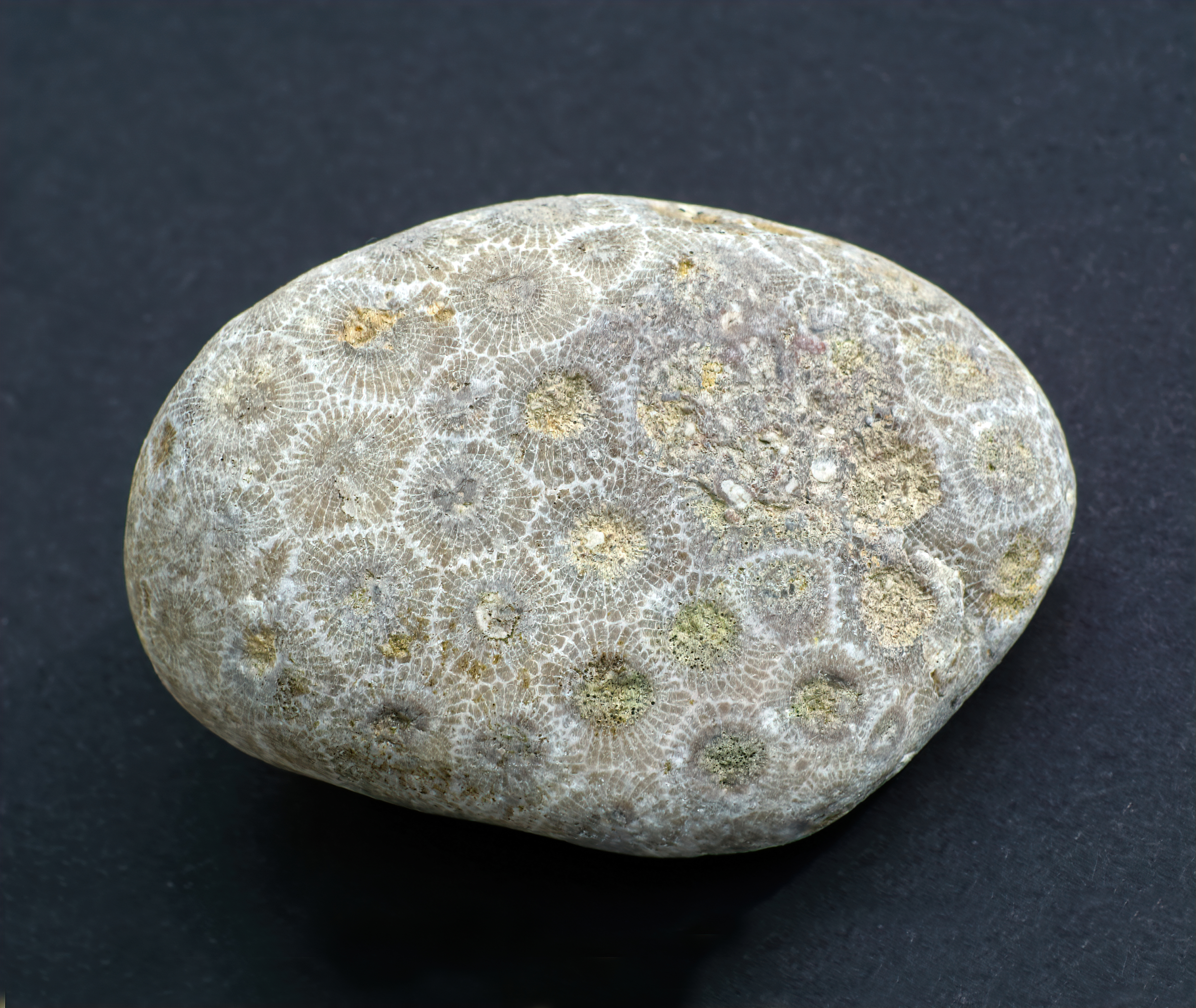
Corallites detail of Petoskey Stone Coral Fossil (Hexagonaria, percarinata) found on Lake Michigan Beach

PETOSKEY STONE CLASSIFICATION

Common Name: Petoskey Stone or Lucky Stone

Scientific Name: Hexagonaria, percarinata

Kingdom: Animalia

Phylum: Cnidardia (means to sting)

Class: Anthozoa (ie coral, sea pens, sea anemones)

Subclass: Zoantharia (true corals)

Order: Rugosa (means wrinkled wall)

Family: Hexagonaria (means six sides)

Species: percarinata
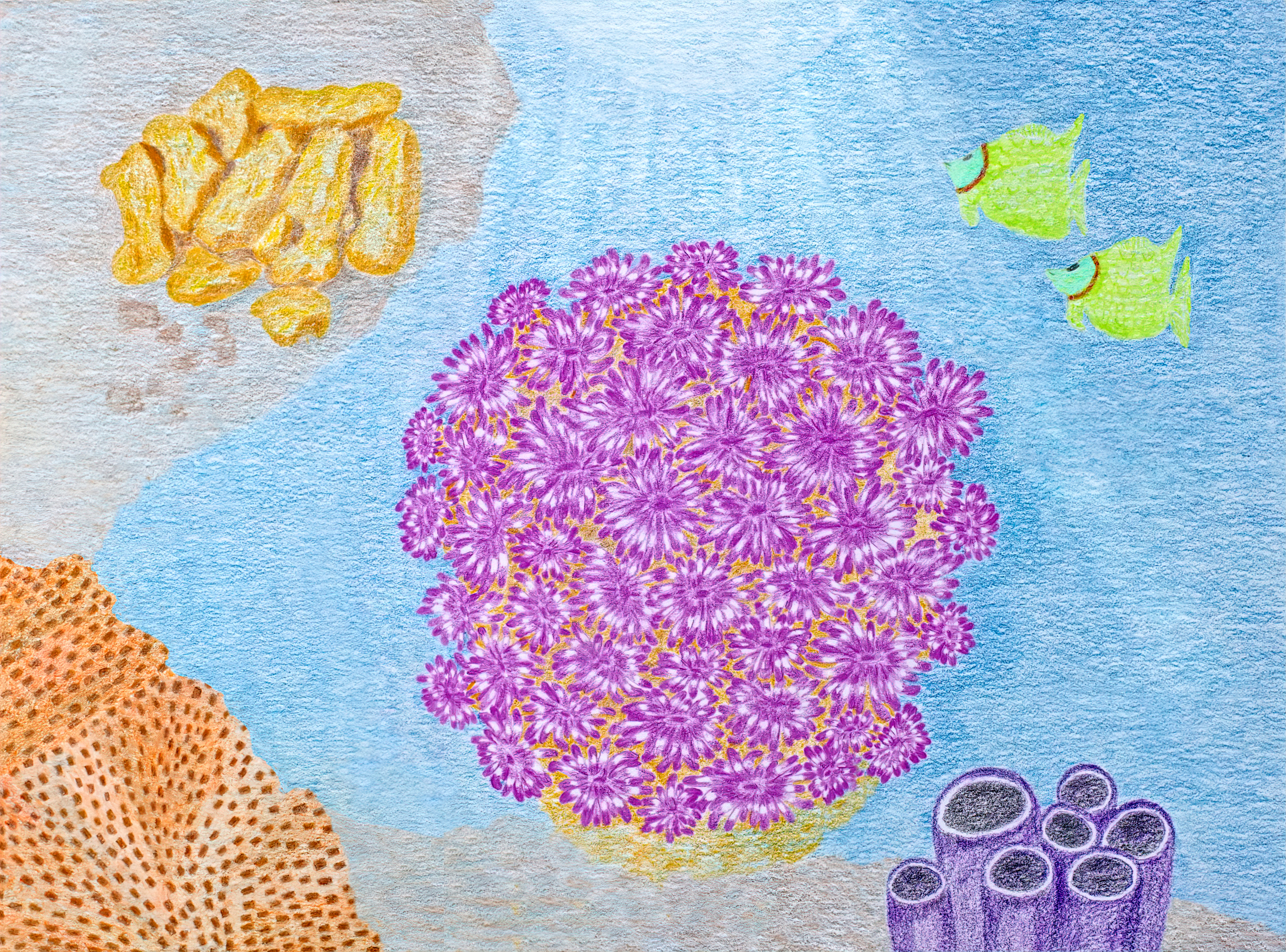
Petoskey Stone Coral (Hexagonaria, percarinata) Rendering Drawing of Living Sample

All rights reserved © Fossillady 2026

Share this:

  • Share on Pinterest (Opens in new window) Pinterest
  • Share on Facebook (Opens in new window) Facebook
  • Email a link to a friend (Opens in new window) Email
  • Share on Reddit (Opens in new window) Reddit
  • Share on X (Opens in new window) X
  • More
  • Print (Opens in new window) Print
  • Share on LinkedIn (Opens in new window) LinkedIn
Like Loading...
Coral Fossils Extinct Devonian coralDevonian Time PeriodExtinct Michigan fossilsHexagonaria percarinata informationMichigan Fossil Informationpercarinata fossil informationPetoskey Coral ArtPetoskey Stone ClassificationPetoskey Stone DrawingPetoskey Stone RenderingPetoskey StonesRugose Coral

Post navigation

Newer posts →

Category of Fossil Facts

  • Algae Fossils
  • Ammonite Fossils
  • Beach Stones and Rocks
  • Brachiopod Fossils
  • Bryozoan Fossils
  • Cephalopod Nautiloid Fossils
  • Coral Fossils Extinct
  • Coral Star and Starlet Florida, Atlantic and Gulf Coasts
  • Corals Florida Atlantic and Gulf Coasts
  • Crinoids Fossils
  • Fish Fossils
  • Horseshoe Crabs
  • Lake Michigan Fossil Finds
  • Millipede Fossils
  • Oysters Fossils
  • Porpoise Fossils
  • Seashell Clamshell Fossils
  • Seashell Clamshells
  • Seashell Univalves
  • Shark Teeth Fossils
  • Shark Teeth Megalodon Vs. Great White
  • Sponges Fossils
  • Stromatolite Fossils
  • Tree Fossils
  • Trilobite Fossils
  • Tube Worms Fossils
  • Turtle Fossils
Advertisements
Advertisements
Advertisements
Follow Fossil Lady on WordPress.com
Blog at WordPress.com.
Privacy & Cookies: This site uses cookies. By continuing to use this website, you agree to their use.
To find out more, including how to control cookies, see here: Cookie Policy
  • Subscribe Subscribed
    • Fossil Lady
    • Join 146 other subscribers
    • Already have a WordPress.com account? Log in now.
    • Fossil Lady
    • Subscribe Subscribed
    • Sign up
    • Log in
    • Report this content
    • View site in Reader
    • Manage subscriptions
    • Collapse this bar
 

Loading Comments...
 

    %d