
Porpoise Fossil Location Discoveries
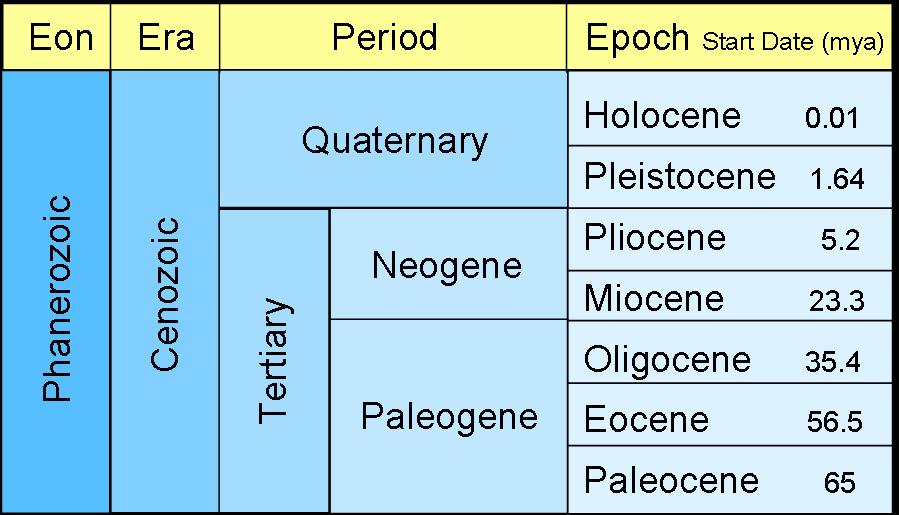
The Calvert Formation located within the Atlantic Coastal Plain region of Maryland, Virginia, and Delaware is best known for forming the fossil-rich Calvert Cliffs along the western shore of the Chesapeake Bay in Maryland. The lower Calvert Formation and the Calvert Cliffs of Maryland, middle-Miocene aged, are rich with porpoise fossils, including squalodonts (primitive shark-toothed porpoises). Modern-day type porpoise fossils, also, are consistently present there, indicating an environment of estuaries and rivers as ocean levels fluctuated along the coastal regions. Articulated (entire body) skeletons of porpoises are not uncommon throughout the Calvert Formation.
The Pungo River Formation in Beaufort County, North Carolina, also, has unearthed many porpoise fossils, including the river porpoises. Pertaining to my porpoise rib fossils, with the lack of enough related evidence, the above unearthing location or species are assumed without precision. Follow along for an overview of interesting porpoise evolution and facts.
Porpoise Evolution
Cetaceans (whales, dolphins, and porpoises) are an order of mammals that originated about 50 million years ago in the Eocene epoch. Even though all modern cetaceans are fully aquatic mammals, early cetaceans were amphibious, and their ancestors were terrestrial artiodactyls (an order of mammals that comprises the even-toed ungulates (hooved mammals). Hippos are thought to be the closest living relatives of cetaceans.
Cetacean species are divided into two groups:
(1) Baleen whales – these are the “great whales” and as their name suggests, they all have baleen plates that are used to filter food consisting of plankton and small species of fish.
(2) Toothed whales – are a suborder called odontocetes and include all species of dolphin and porpoise which eat larger prey, including at times, other marine mammals.
As a general rule of thumb, baleen whales are larger and slower than toothed whales. Additionally, all baleen whales have two blowholes, whereas toothed whales have only one.

Porpoise Vs Dolphin
Porpoises and dolphins have many similarities, for example, both are highly intelligent and use echolocation, but there are several differences, as a dolphin is not a porpoise and a porpoise is not a dolphin.
- Porpoises are quite smaller than dolphins
- Porpoises don’t have a pronounced beak that most dolphins possess
- Porpoise teeth are spade-shaped whereas dolphin teeth are cone-shaped
- Porpoises have a triangular dorsal fin and dolphins have a curved dorsal fin (except for those species that don’t have a dorsal fin)
- Porpoise body form is slightly more chunky than the leaner, more slender dolphin body form
- Porpoises are not vocal like the talkative dolphins
- Porpoises are more closely related to narwhals and belugas
- Porpoises belong to the Phocoenidae family. There are only six species of porpoises in the entire world. Oceanic dolphins, however, belong to the large Delphinidae family, which consists of at least 36 species worldwide! River dolphins belong to the Iniidae family with one living genus and four extinct genera
The Six Species of Extant Porpoises
- Harbor porpoise, Phocoena phocoena, has a worldwide distribution including both eastern and western U.S. and Canada coasts within the temperate to arctic regions.
- Dall’s porpoises, Phocoenoides dalliand, northwestern U.S. coast to China
- Vaquita porpoise, Phocoena sinus, small range, Gulf of California in Mexico
- Finless porpoise, Neophocaena phocaenoides, wide range of Indo-Pacific regions
- Spectacled porpoise, Phocoena dioptrica, southern Atlantic to Indo-Pacific, sub-Antarctic regions
- Burmeister’s porpoise, Phocoena spinipinnis, both coasts of South America, mid to southern regions
Scroll to Fossillady Categories “Cenozoic Fish Fossil” for information about four fish fossil species!
- Hypural Tuna Fishtail Bone Fossil
- Knightia Fish Fossil
- Dermal Denticle Ray-Fish Fossil
- Billfish Bill Fossil
All rights reserved © Fossillady 2026
 Fossil Lady