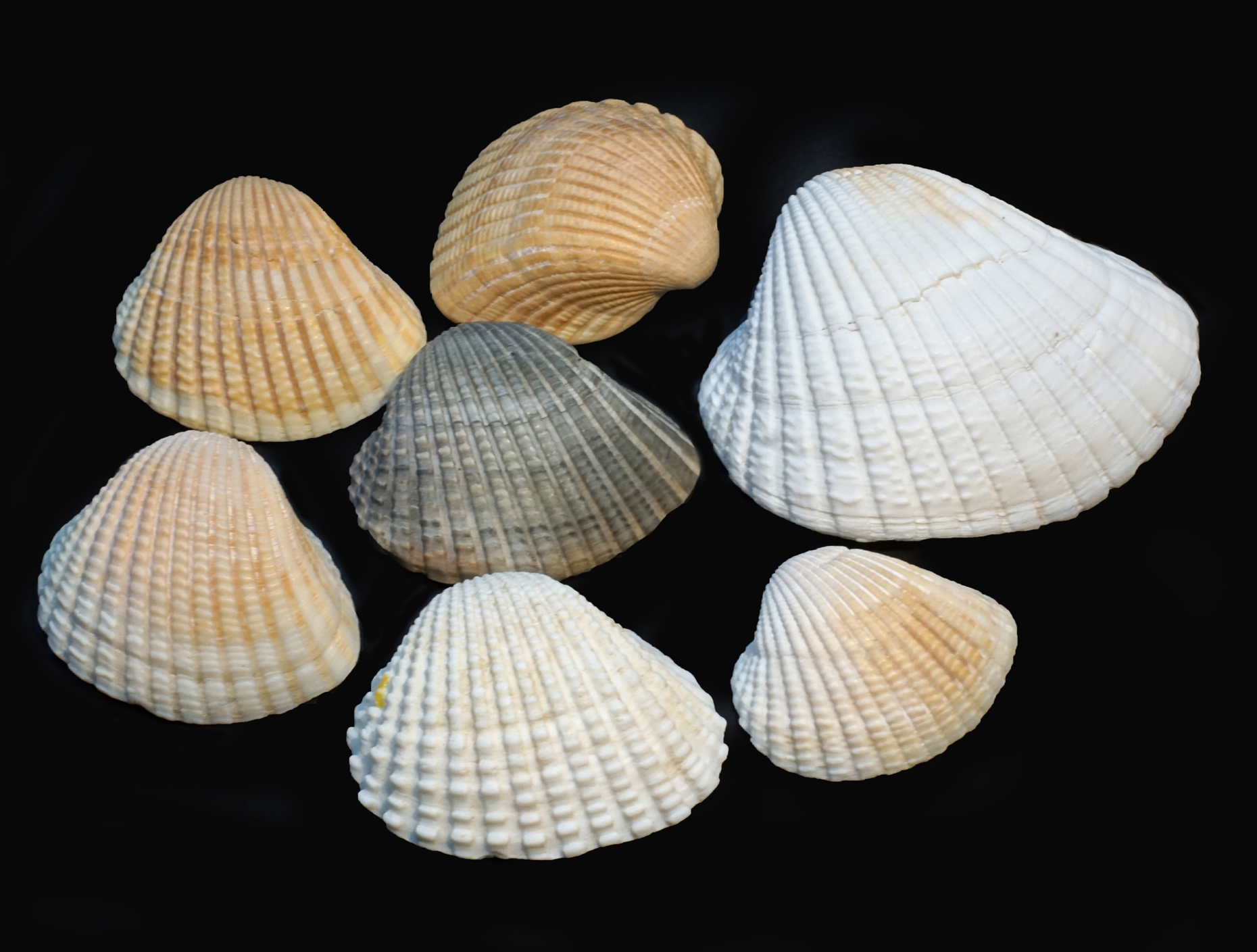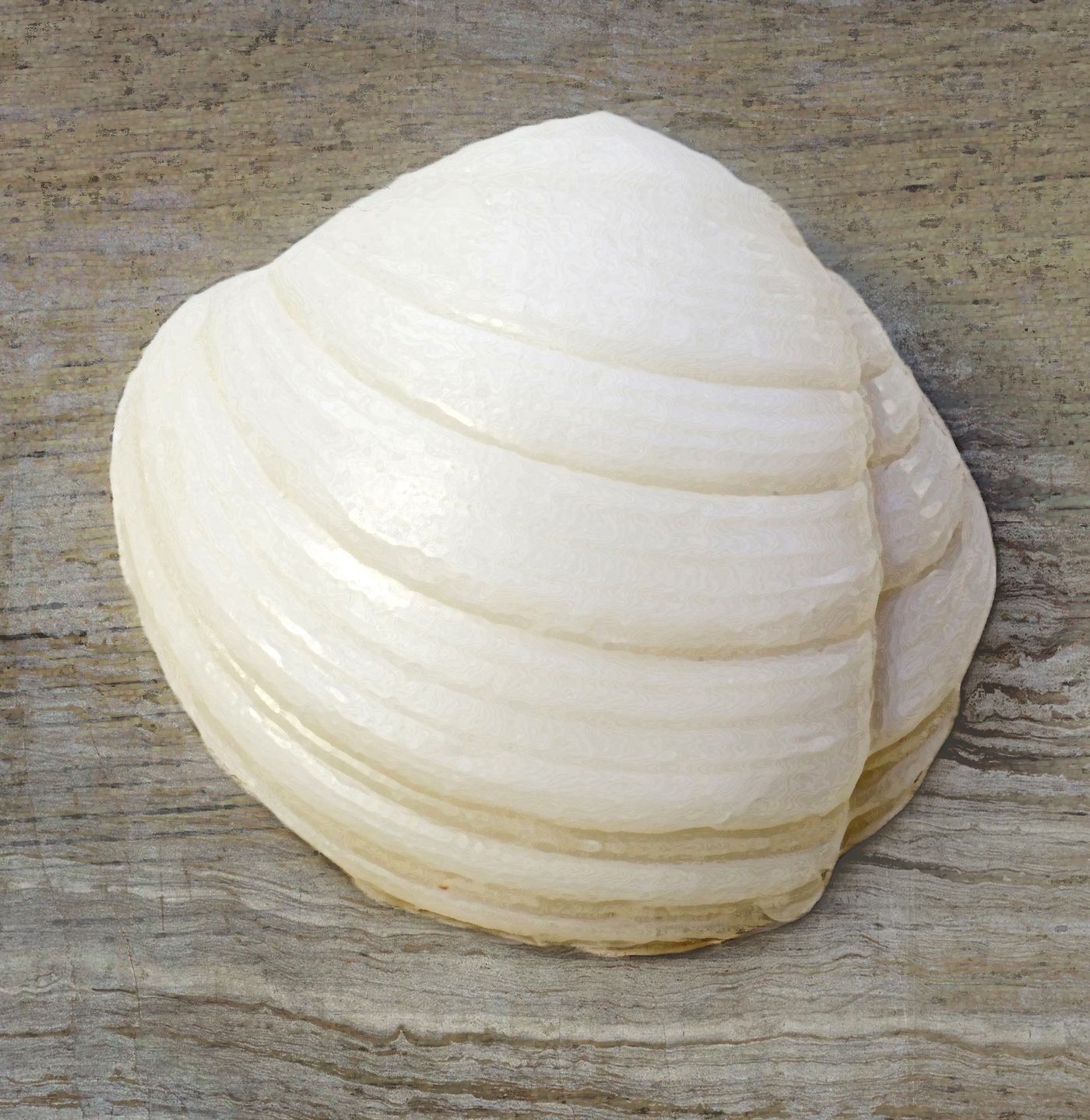
Clamshell Identification and Facts (From Cockles, Scallops to Venus Clams)

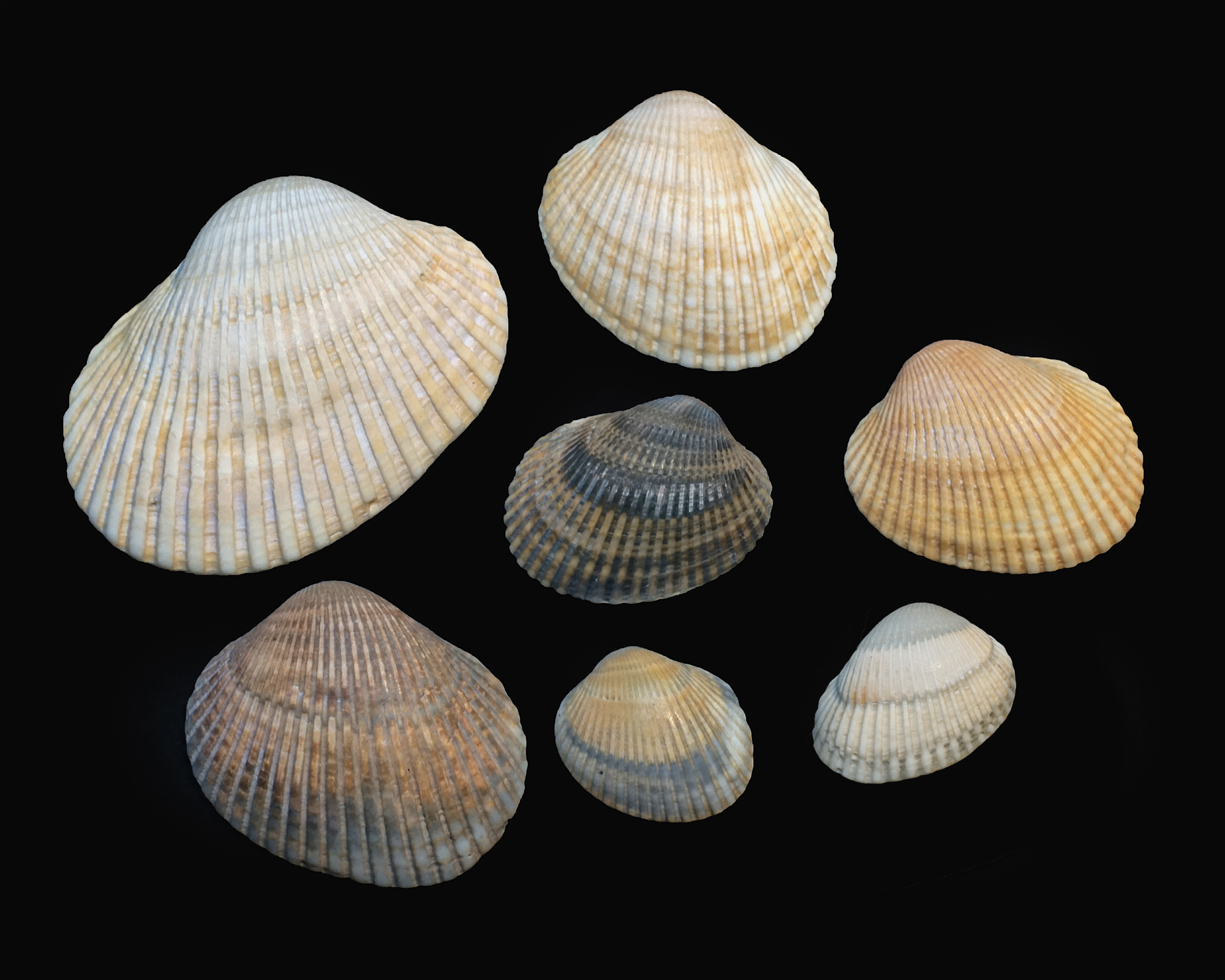
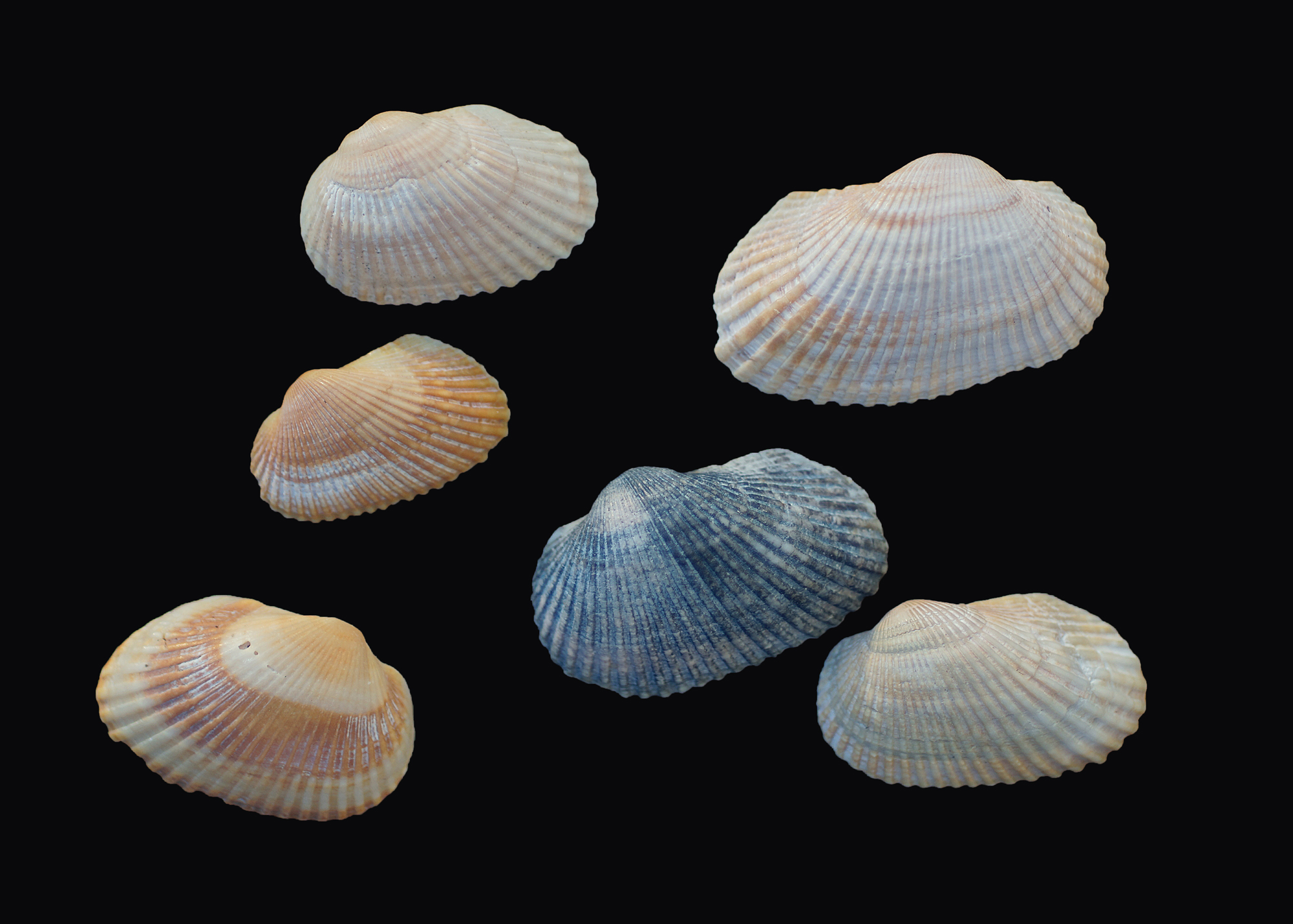
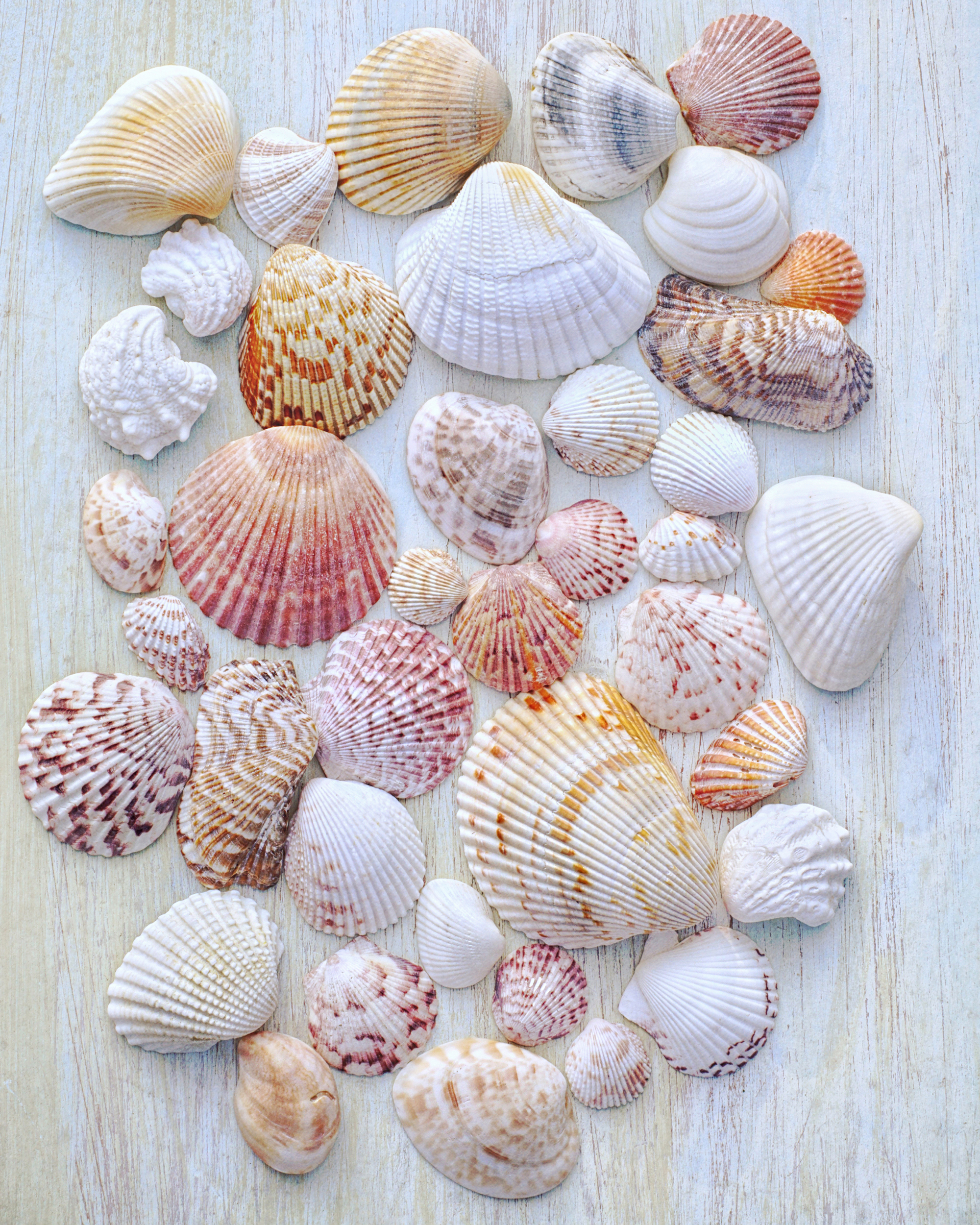
Clamshell Collage

Why Should We Care About Clams?

Clams have been a part of Earth’s ecosystem for at least 500 million years as one of the first-ever complex organisms. They feed the world! Furthermore, they leave behind their hardened calcium carbonate shells on the ocean-floor which after millions of years break apart, get buried under layers of sediment and finally, heat and pressure cement together with other sediments to form limestone, the building blocks of many a fine city building! Besides, their shells are amazing and beautiful. Humans have found countless uses for them from ancient times up to the present!

Identifying Your Clams: “Clam” can be a term that covers all bivalves, such as scallops, oysters, arks or cockles, to name a few. When identifying bivalves, look for color, size, shape, number of ribs, and the wings or ears that project at the hinge. I hope my article will help you identify something you couldn’t resist picking up from the sandy seashore!

Fifteen Clamshell ID, Photos and Facts in the following order:

  1. Atlantic Giant Cockle (Great Heart Cockle)
  2. Yellow Prickly Cockle
  3. Florida Prickly Cockle
  4. Egg Shell Cockle
  5. Bay Scallop
  6. Zigzag Scallop
  7. Lion’s Paw Scallop
  8. Calico Scallop
  9. Calico (Checkerboard Clam)
  10. Sunray Venus
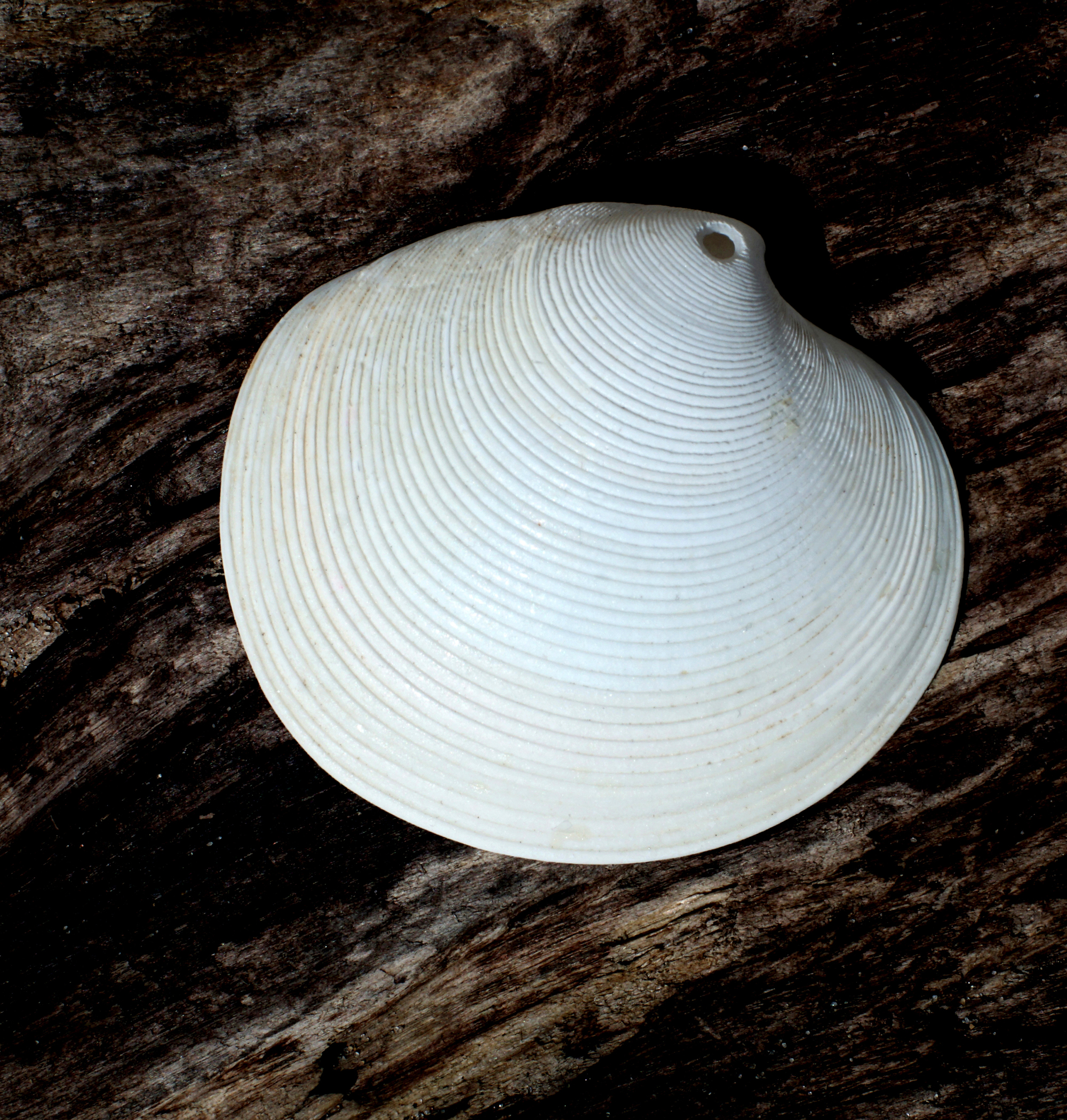
  11. Cross Barred Venus
  12. Lady-in-Waiting Venus
  13. Princess Venus
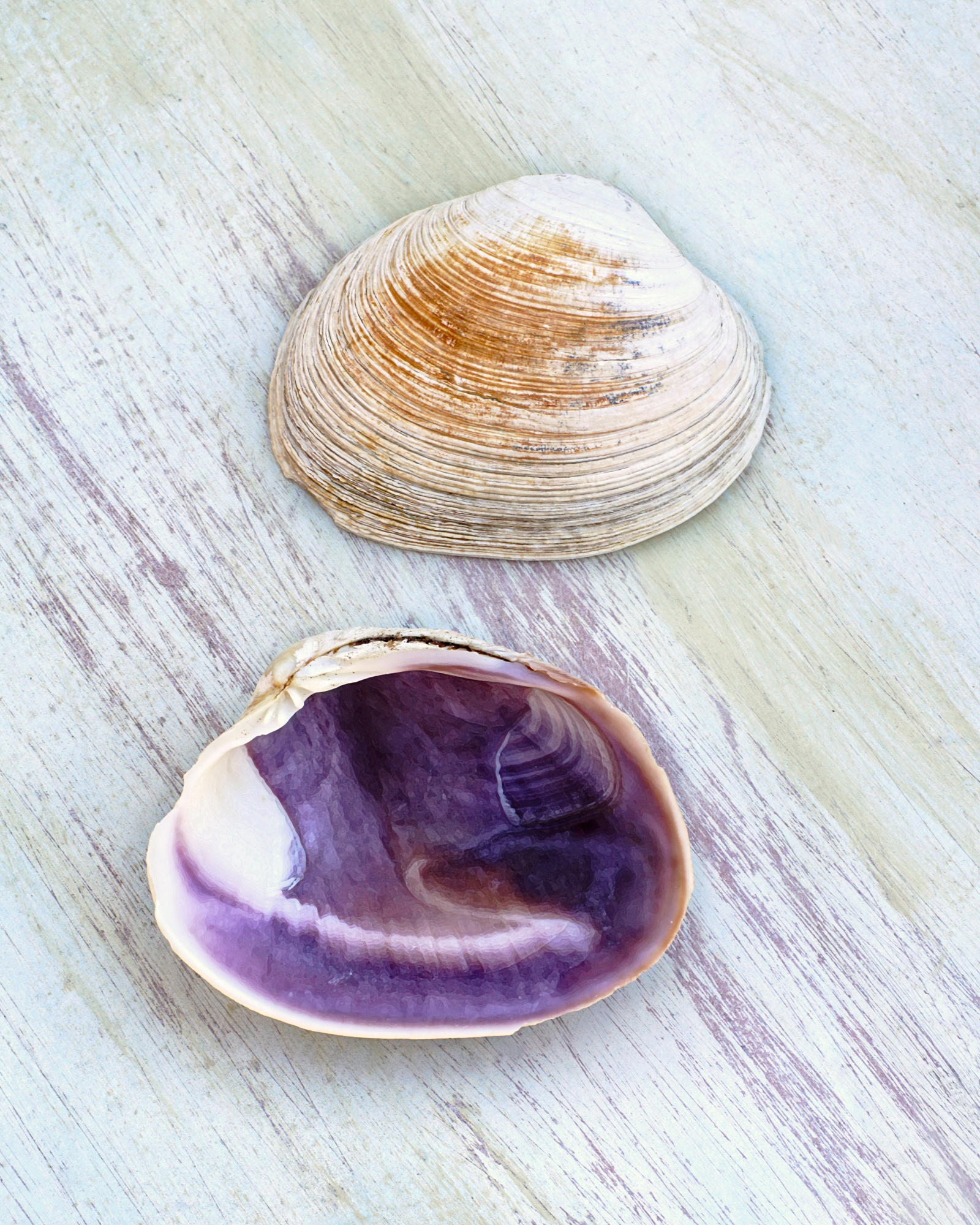
  14. Northern Quahog Venus (Hard-shell Clam)
  15. Southern Quahog Venus (Hard-shell Clam)
  • For additional clam info including various Arks, Angel Wings, Cardita to various Lucinas go HERE
  • For additional clam info including Coquinas, Tellins, Various Oysters and more go HERE
  • Otherwise, scroll to Categories click “Clam Seashells” and everything is there.
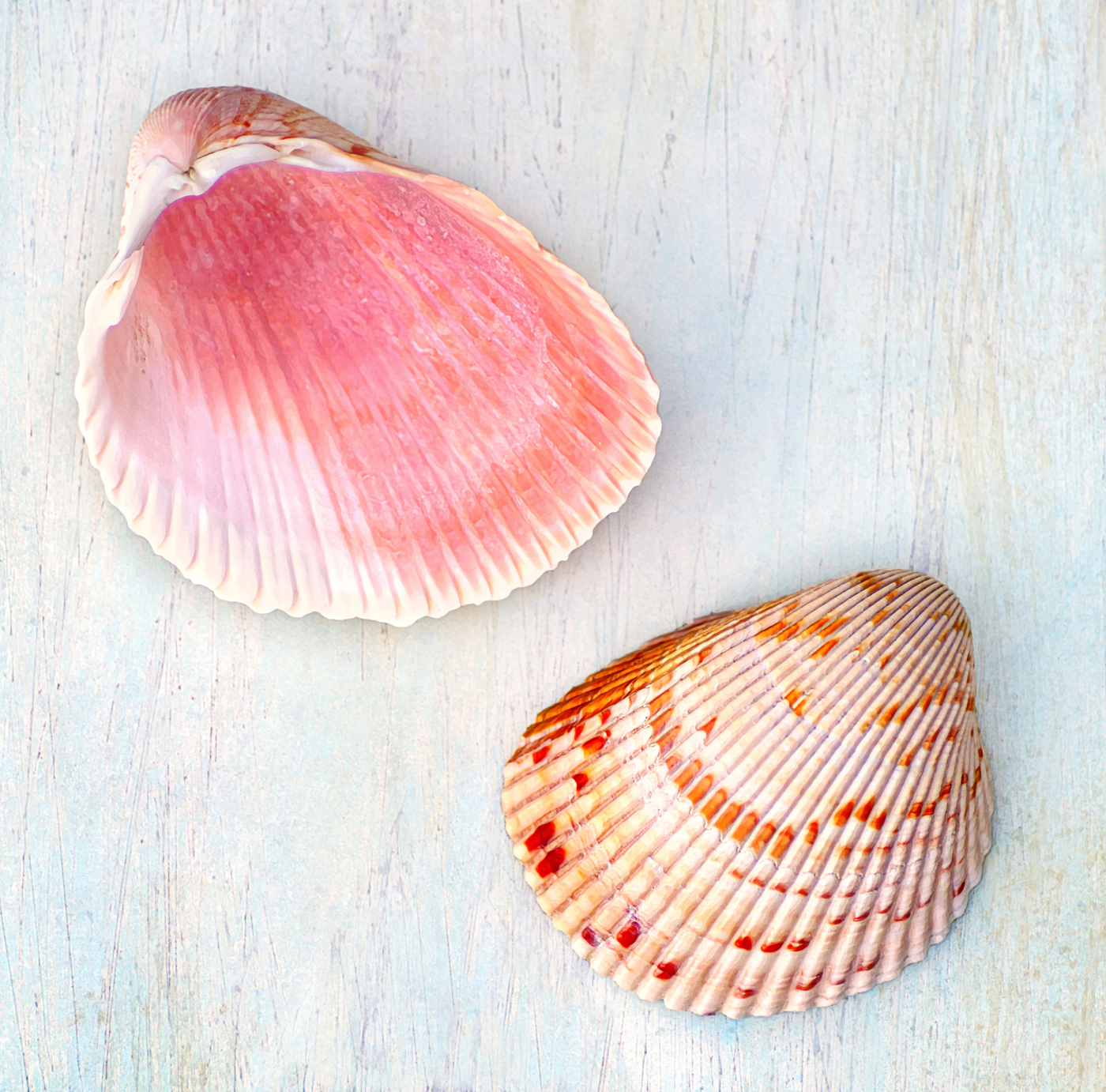
Atlantic Giant Cockle “Great Heart Cockle” Clamshells

1. Atlantic Giant Cockle (Great Heart Cockle)

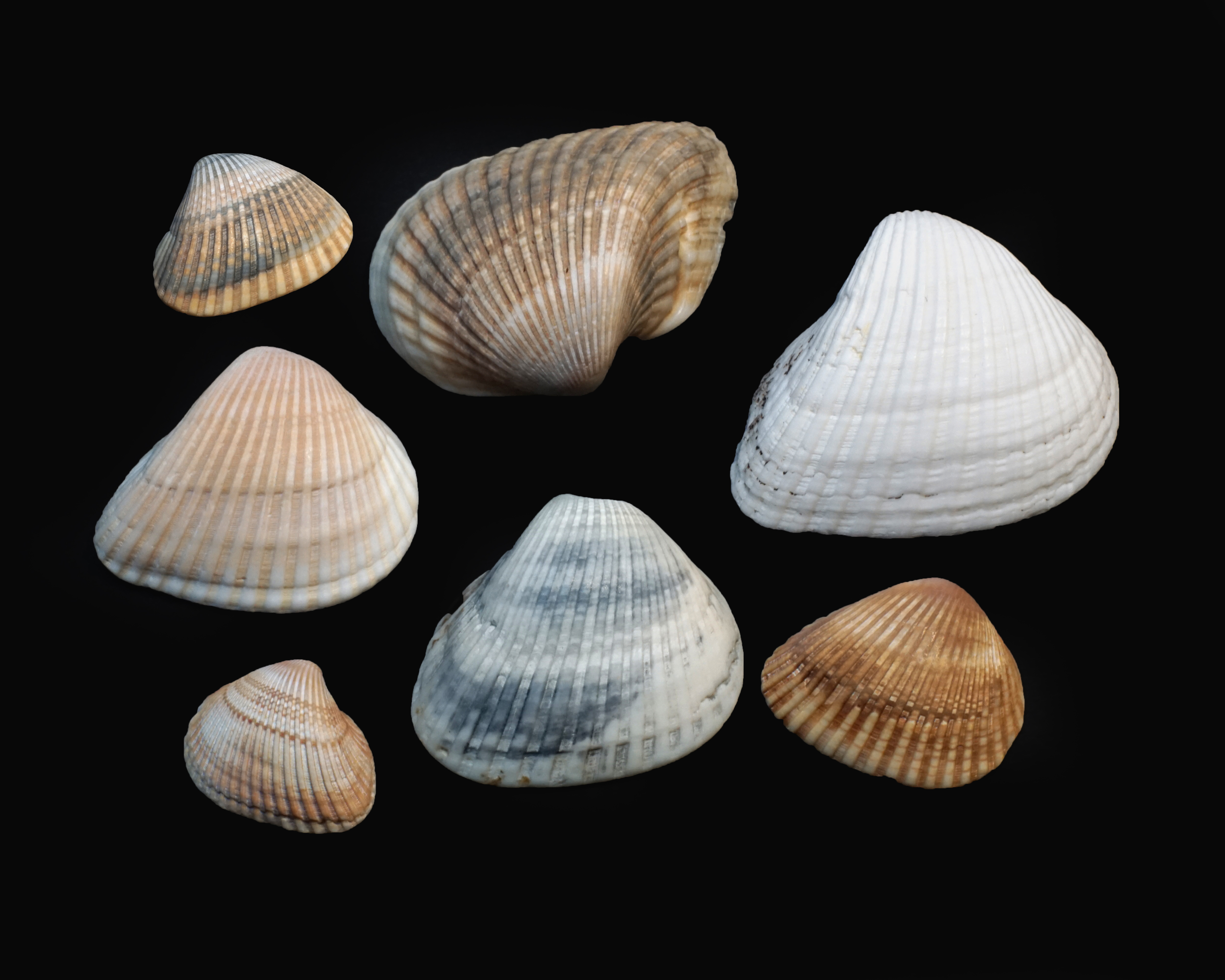
The Atlantic Giant Cockle, also known as the Great Heart Cockle (Dinocardium robustum) is a very beautiful bivalve. Its shell is well-inflated, sturdy and large. It displays 32 to 36 radiating ribs and is commonly colored tan with reddish-brown patches on its outer shell exhibiting a deep pinkish interior. In general, Cockles or Heart Shells of the U.S. Atlantic coast are close relatives to the edible cockles of Europe, but there are approximately 250 species worldwide. They are taller than they are wide.

Atlantic Giant Cockles use a strong foot to burrow into the sand or propel themselves across the sea bottom by pushing off and even jumping several inches. They require light to aid photosynthesis for their symbiotic algae. They are desired by shell collectors for their sturdy, attractive heart-shaped shells when both valves are clamped together. (See photo)
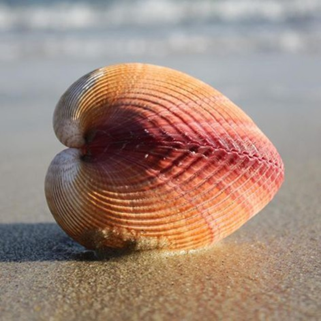
The Atlantic Giant Cockle or Great Heart Cockle is also known by some as Van Hyning’s Cockle, especially if you live in the state of Florida. In 1914, the Florida Museum of Natural History’s first director, Thompson Van Hyning, attempted to document Florida’s varied animal life. Today the museum houses a collection of 3 million mollusks including clams, snails, squids and octopuses.

  • Size: Up to 2 inches
  • Habitat: Moderate shallow water in sand, mudflats, seagrass beds and rubble near reefs; intertidal zones to 65 ft (20 m)
  • Range: Native from North Carolina to Florida to the West Indies, Brazil and Texas
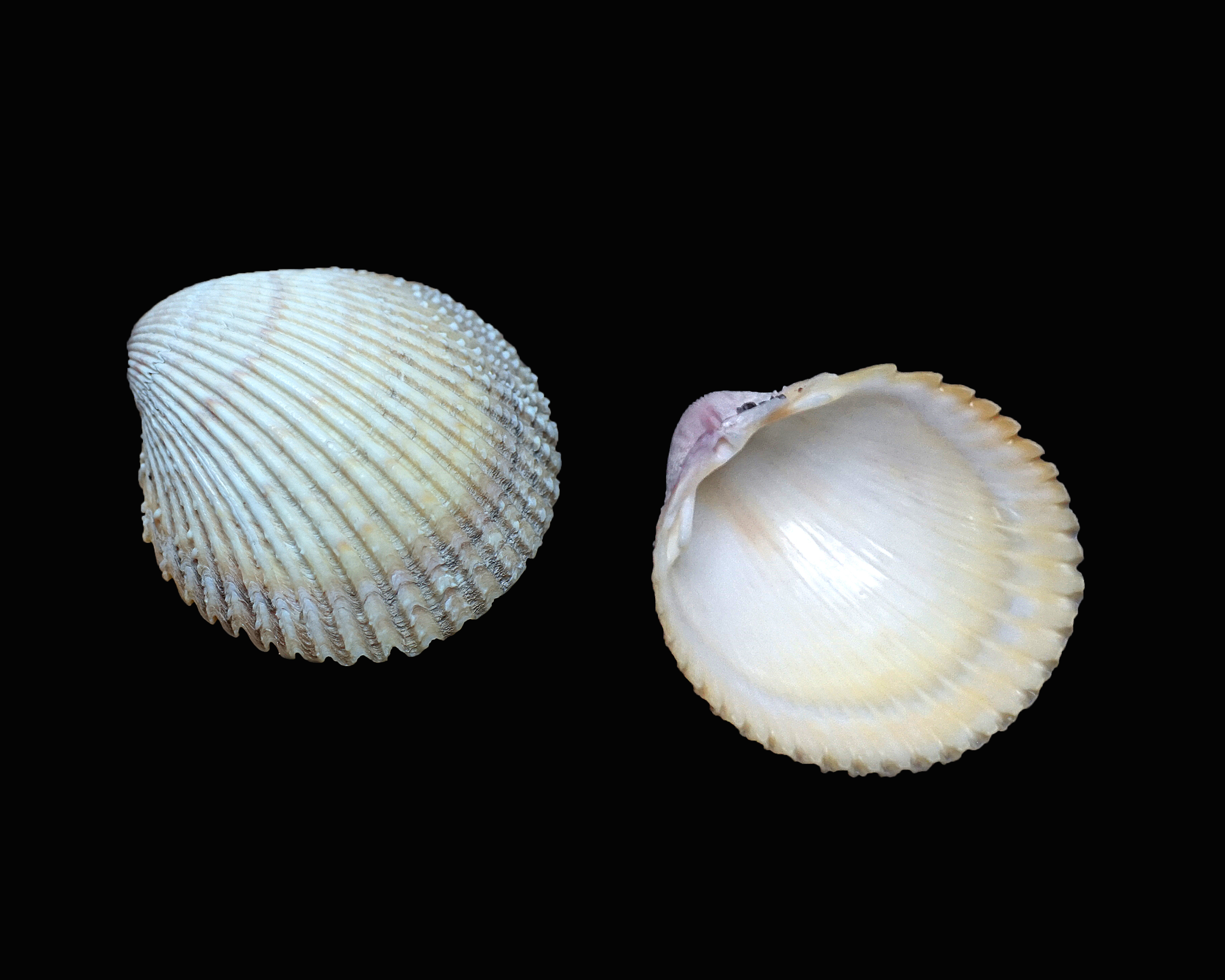
Yellow Prickly Cockle Seashells

2. Yellow Prickly Cockle

The Yellow Prickly Cockle or Yellow Cockle (Trachycardium muricatum) is a small, cherry round cockle displaying 20 to 40 radiating ribs over its shell’s exterior. The ribs near the beak area are smooth; those farther out from the beak display small spines. The outer shell is yellowish-white with a delicate white to yellow-tinted interior.

  • Size: Up to 2 inches
  • Habitat: Moderate shallow water, sandy or muddy botooms to depth of 35 ft (11m)
  • Range: Native from North Carolina to Florida to the West Indies, Brazil and Texas
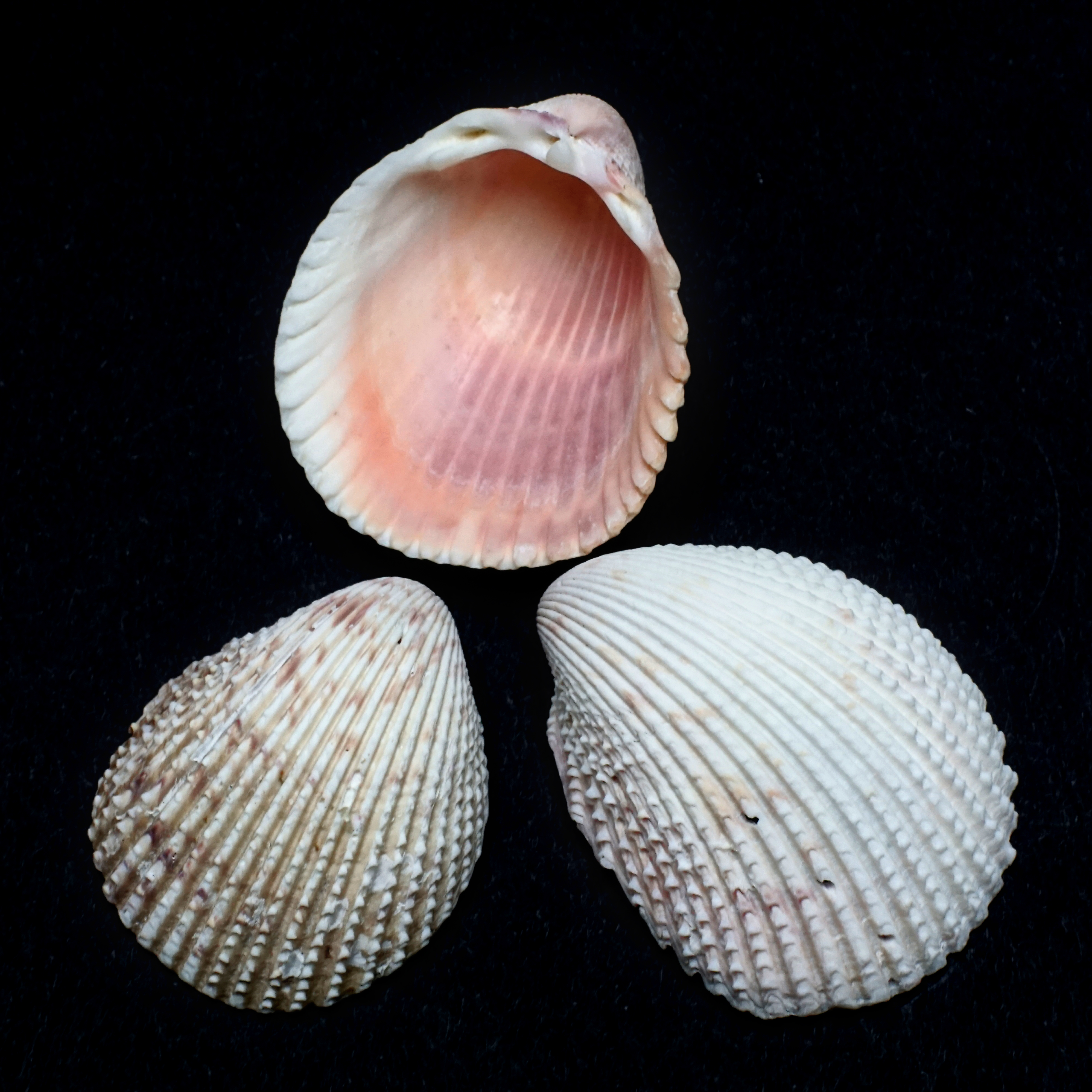
Florida Prickly Cockle Seashells

3. Florida Prickly Cockle

The Florida Prickly Cockle (Trachyardium egmontianum) shell is well-inflated, medium size possessing a white to tannish to light-brown exterior with a salmon, pinkish color or sometimes purple interior. The 27 to 31 radial ribs on the outer shell are more scoop-shaped compared to the Yellow Prickly Cockle’s.

  • Size: Up to 3 inches
  • Habitat: Gulfs and bays, sand-mud bottoms, seagrass beds in shallow waters to depths 50 ft (15 m)
  • Range: North Carolina to Florida, and Texas
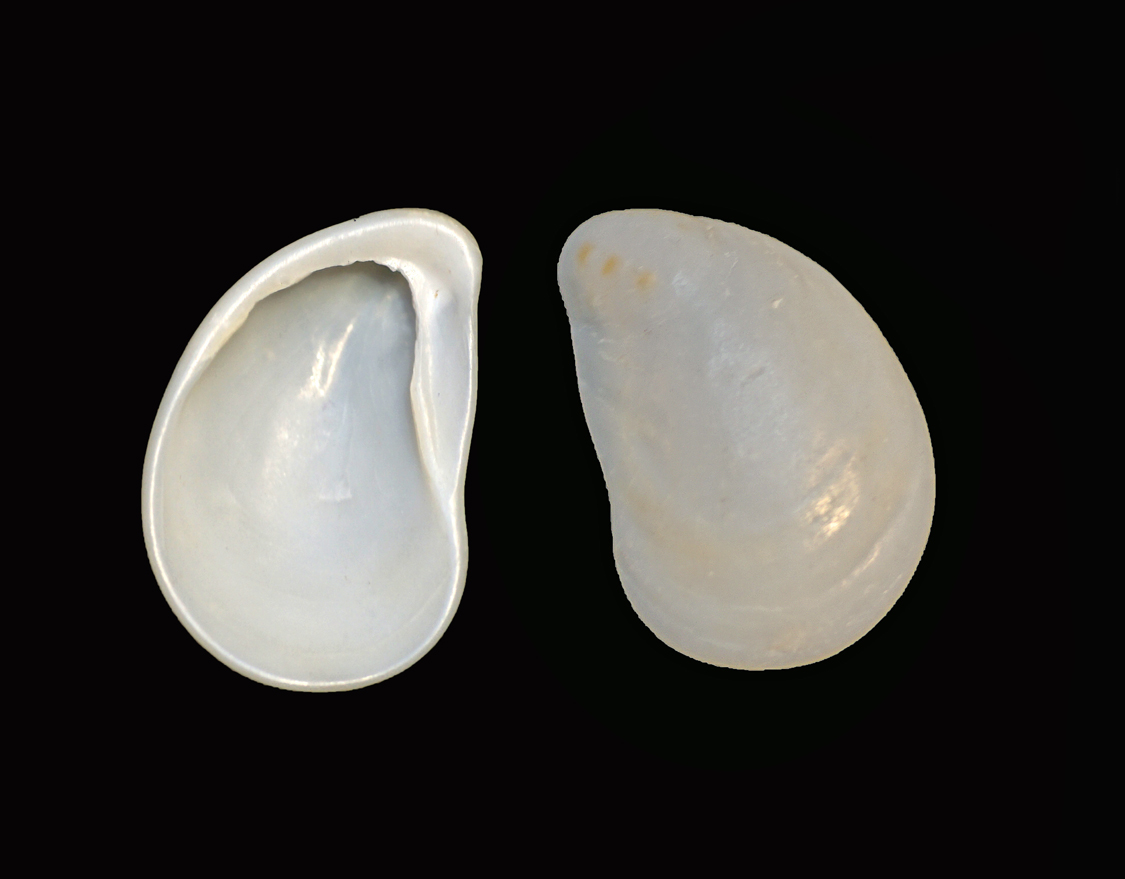
Egg Shell Cockle Seashells

4. Eggshell Cockle

The Egg (or Eggshell) Cockle (Laevicardium laevigatum) shells at first glance may be mistaken for an egg by their elongated oval shape and smooth surface. The shell is rather thin and inflated. Its fine radial ribs are delicately etched and undetectable by touch which gives the shell’s surface a smooth and polished appearance. The color is off-white, often tinged with brownish-orange, yellow or a hint of purple; the interior is white and sometimes slightly tinged with pink. A fun note about this mollusk is that it has the ability to jump rather well. A shell collector reported that a live specimen he captured in his boat even leaped to its freedom.

  • Size: Up to 3 inches
  • Habitat: Shallow water in sand or mud, seagrass beds where to feed to depths of 500 ft (155 m)
  • Range: North Carolina to Florida and as far south as Brazil
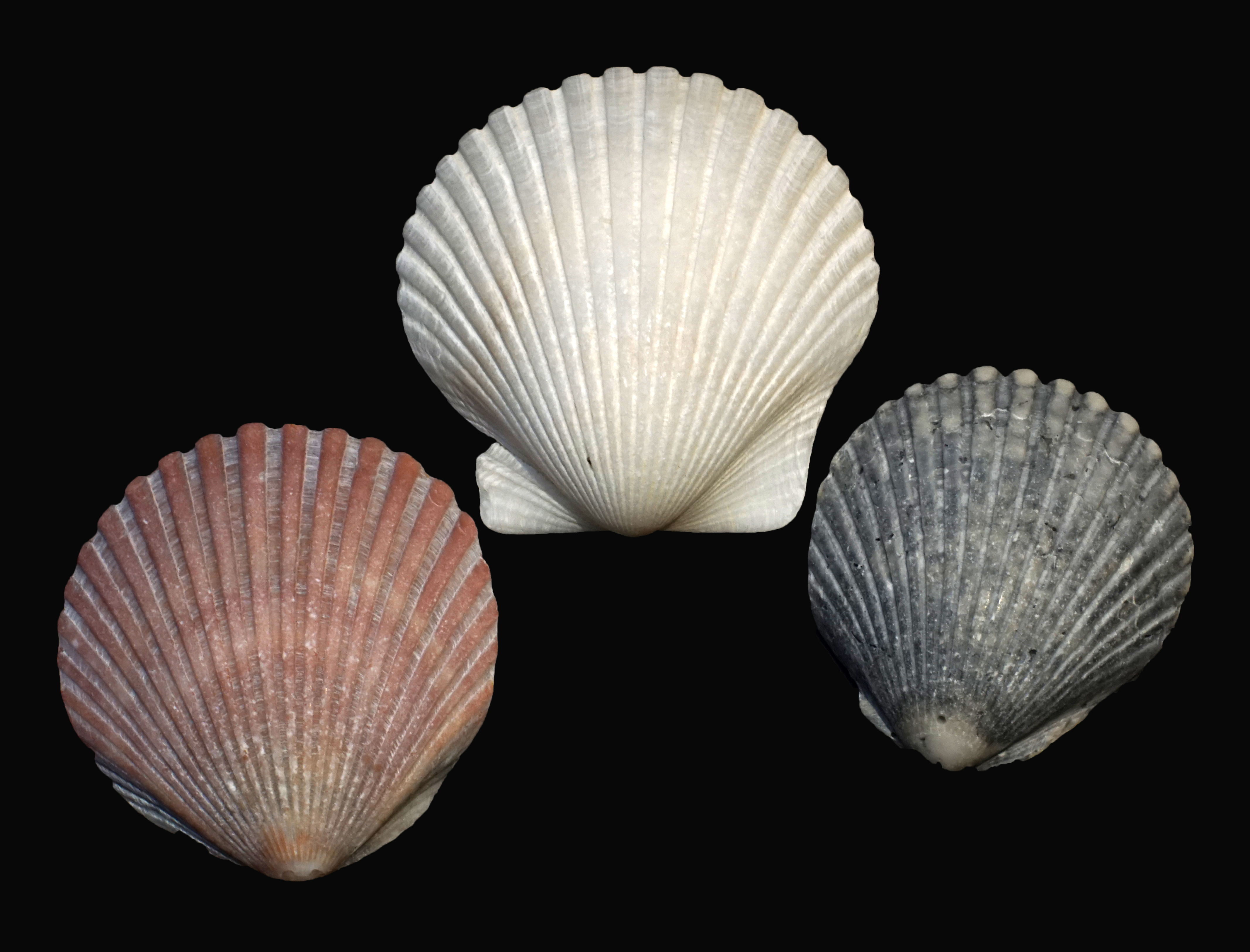
Bay Scallop Seashells

5. Bay Scallops

Bay Scallops (Argopecten irradians) possess a fan-shaped exterior shell with a color ranging from bluish gray or purplish to yellow, white, brown or reddish-brown. The lower valve is commonly white and flatter. The interior of their valves are whitish, but often purplish near the hinge. They have inflated upper valves with 19 to 21 ribs which are squarish compared to “Calico Scallops” and may be banded. The wings are fairly even, but may be worn off.

When Bay Scallops are young, they attach themselves to objects such as eelgrass. This helps them avoid bottom-feeding predators, such as sea stars. As Bay Scallops grow, they drop to the sediment surface and move on to tidal flats to feed at high tide. Bay Scallops are the most common edible shellfish.

  • Size: Up to 4 inches
  • Habitat: Subtidal zones, eelgrass beds, sandy and muddy bottoms and offshore in shallow waters of bays and harbors to 30 ft (10 m) depths
  • Range: Maine to Florida and the Gulf of Mexico
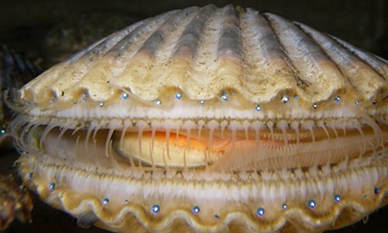
Chesapeake Bay Scallop: Source

Scallops otherwise known as “pectens” have rows of tiny eyes along the edge of the mantle making them unique among bivalves. In general, the name, “scallop,” aptly describes the fluted edges of the animal’s circular fan-shaped shell.

Scallops move freely using jet-propulsion by flapping their valves with their large-strong hinge-muscle. Scallops lack the stretchy foot for digging, unique from most bivalves. Scallops are more common along the Atlantic Coasts than the Pacific. Early Native Americans used scallop shells in their ceremonial dances and some tribes used them as ornaments.
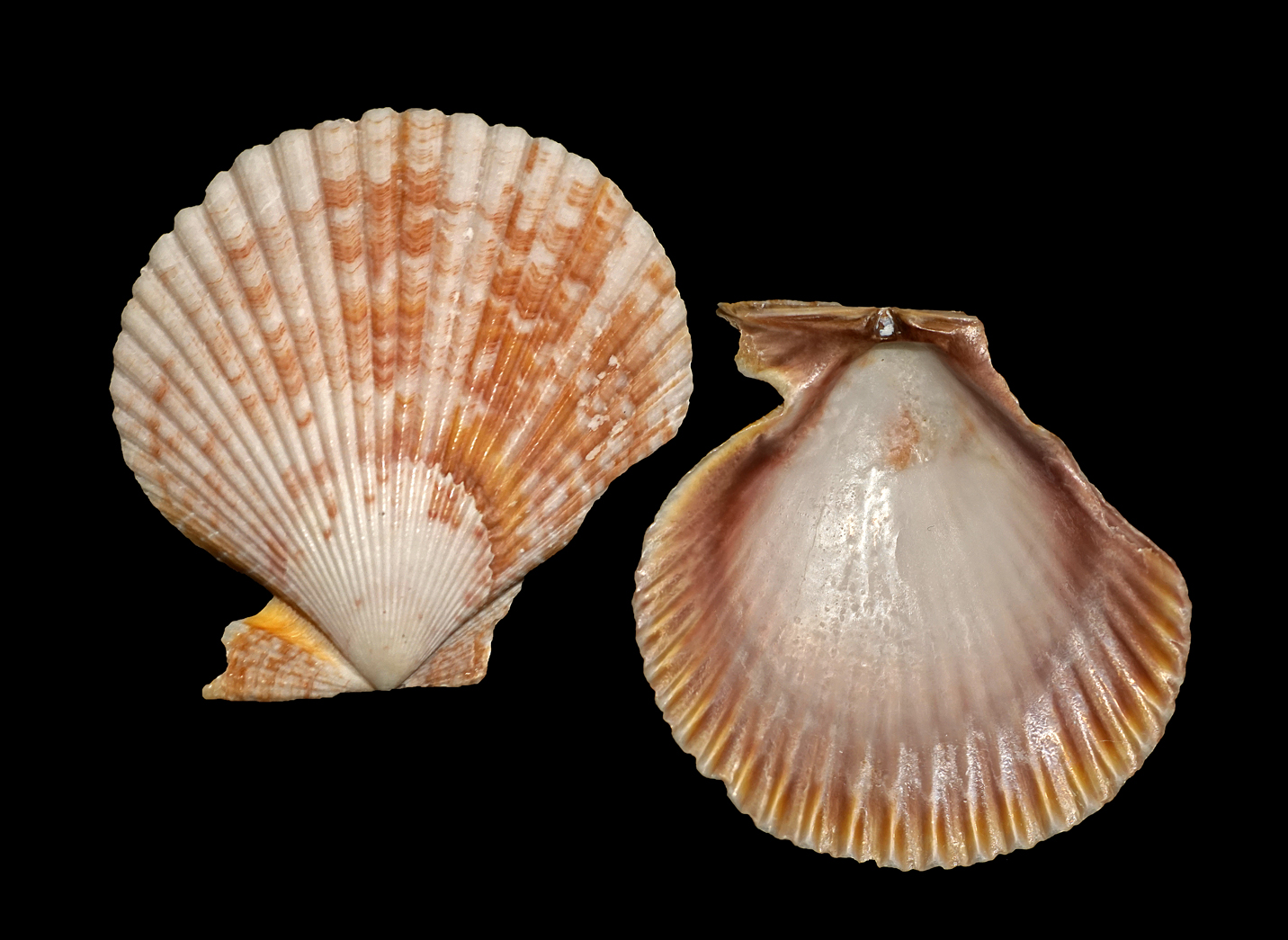
Zigzag Scallop Clamshells

6. Zigzag Scallop

Zigzag Scallops (Euvola ziczac) display varying colored shells, rounded ribs that range from white to orange, yellow, gray and purple. The lower valve is somewhat cup-shaped, whereas the upper valve is fairly flat. The ear/wings are uneven. Their outers shells exhibit a zigzag pattern (enlarge above photo to see) of tiny or distinct stripes which gives the name. Zigzag scallops also move in a zigzag pattern when jetting. The interior valve is whitish and purple-brown halfway to the outer edge.

  • Size: Up to 4 inches
  • Habitat: Shallow waters near the shore and form beds in sandy or gravel substrates to depths of 150 ft (500 m)
  • Range: North Carolina, throughout the Gulf of Mexico and the Caribbean and as far south as Brazil.
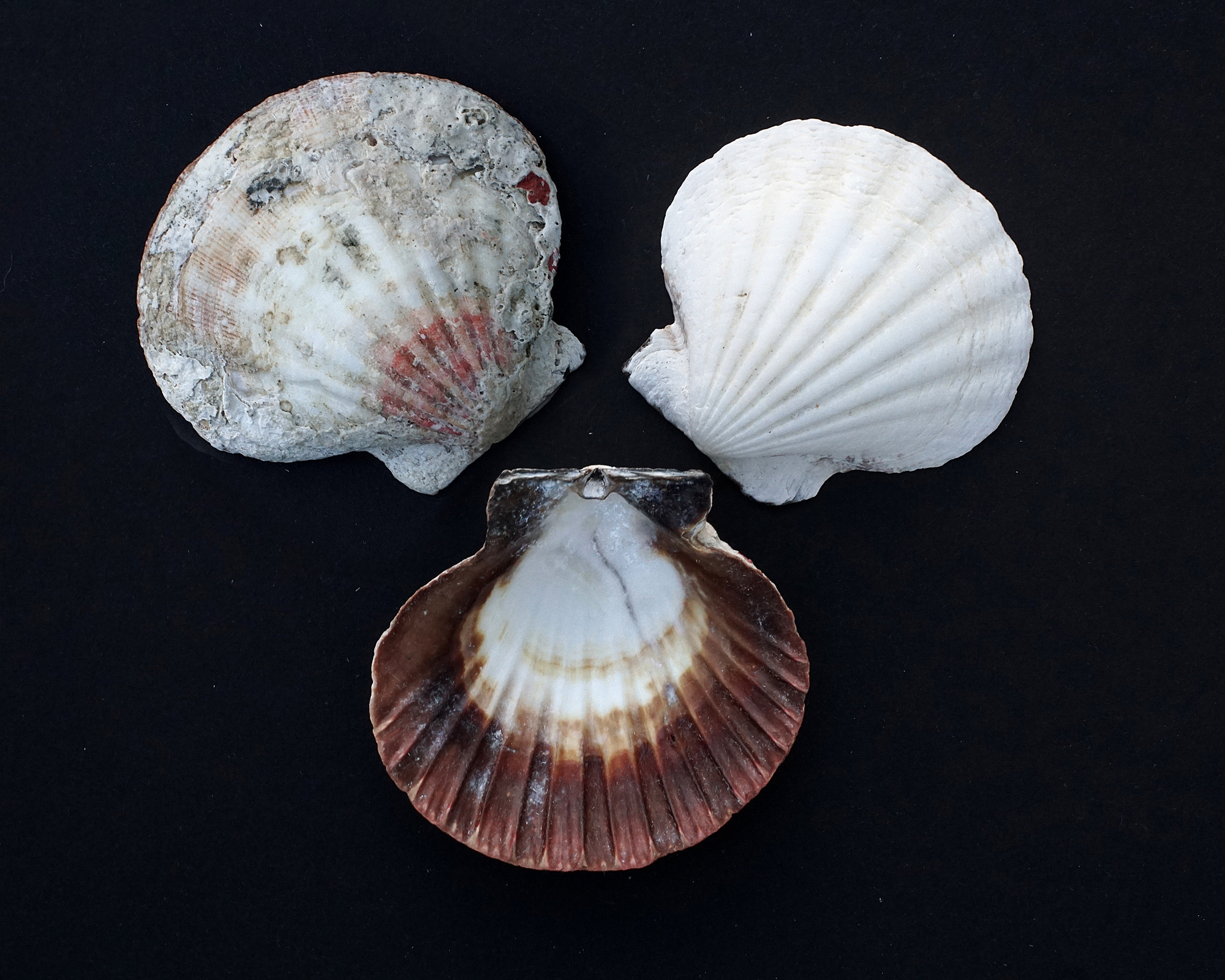
Lion’s Paw Scallop Seashells

7. Lion’s Paw Scallop

Lions Paw Scallops (Nodipecten nodosus) formerly (Lyropecten nodosus) shells do not have the tendency to develop nodes on the ribs like other similar speciesThe shells can be colored white, brown, reddish and sometimes mauve to purplish showing some spots. Lion’s Paw shells display 9 to 10 broad radiating deep ribs with additional fine lines. Look for the wide copper interior banding around the perimeter.

  • Size: Up to 4 inches
  • Habitat: Fairly shallow water moderately exposed to sheltered reef systems, attached to corals and loose rubble; often located in deeper offshore areas, clinging to rocky substrates, crevices, or adjacent to rubble; depths to 500 ft (150 m) 
  • Range: Atlantic coast of North America, ranging from North Carolina to Florida, the West Indies, including Brazil and Bermuda.
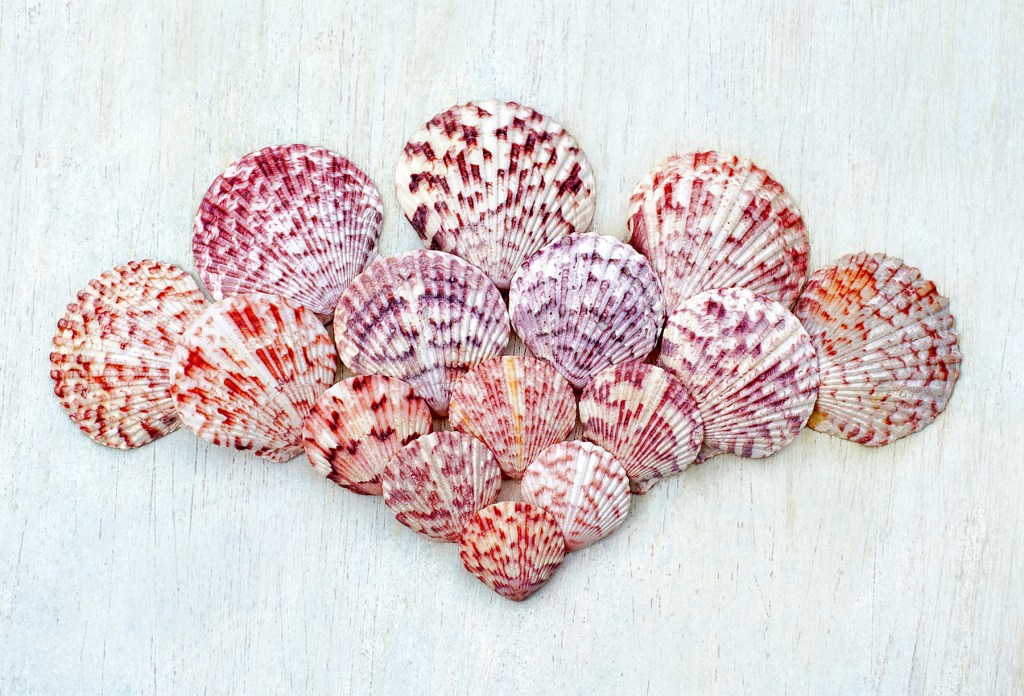
Calico Scallop Shells My Photo Site Image

8. Calico Scallops

The pretty Calico Scallop seashells (Argopecten gibbus) are a favorite among collectors who strive to get the greatest variety of shadings. Some collectors have a hundred Calicos, all of different color combinations. Their mottled purple, orange, pink or even brown-hued shells commonly wash ashore, providing beachgoers with colorful treasures. They’re often found with their wings/ears broken off. The shells display 19 to 21 roundish ribs over their fairly dome-shaped valves.

A quick note about various seashells colors: Some shells turn a variety of colors after they die. These colors depend on the shells’ afterlife environment. Black shells were likely darkened by iron sulfide if buried in sulfurous muck. Pink, rust or brown are colors most shells turn after decades of exposure to air and sun.

  • Size: Up to 3 inches
  • Habitat: Although closely related to bay scallops, calico scallops live in deeper, offshore waters and are found on sandy or shelly sea-bottoms, 9 to 400 meters (30 to 1,200 feet)
  • Range: Native from the coast of North Carolina to Florida, the Gulf of Mexico and the West Indies
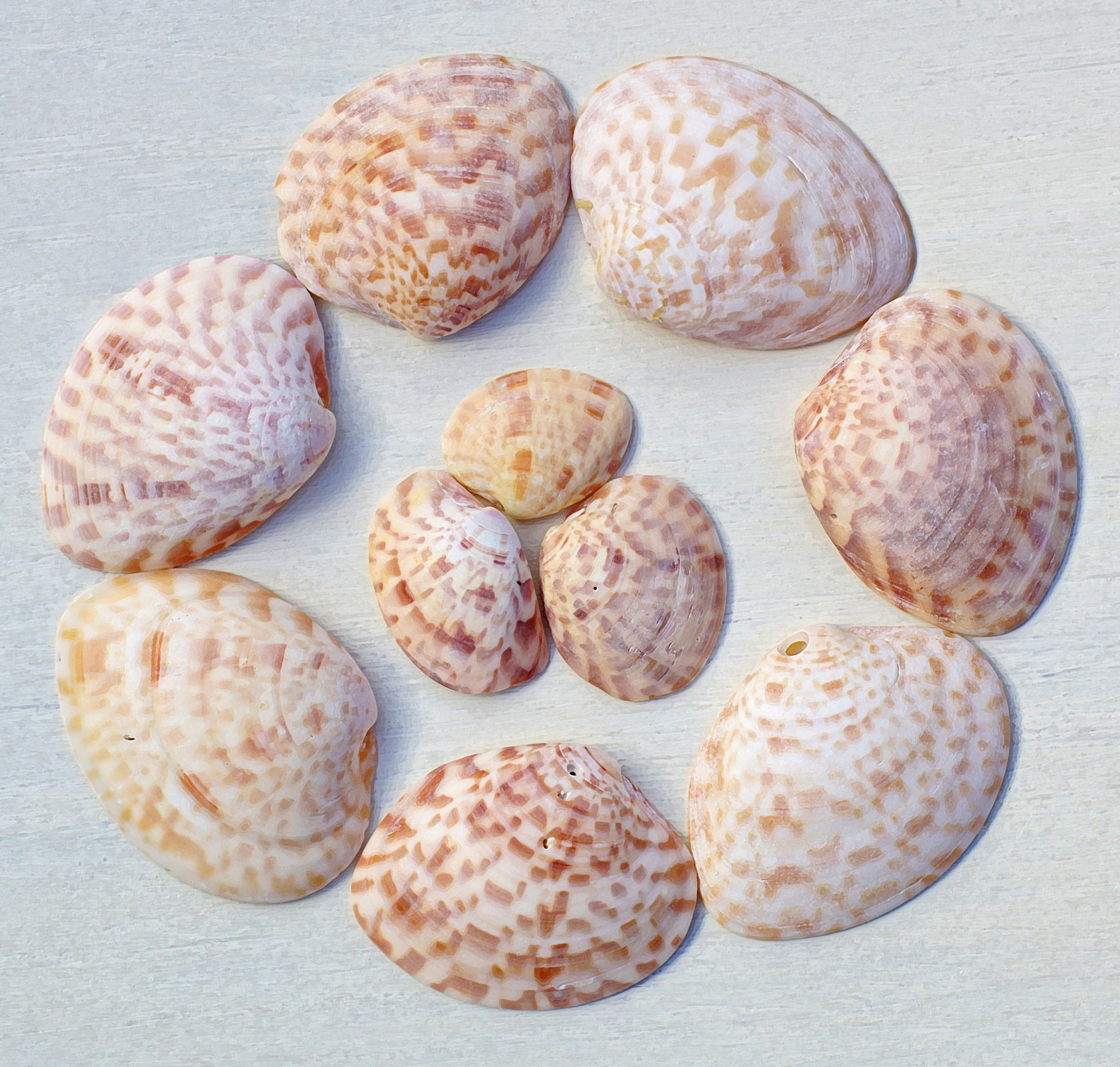
Calico Clam or Checkerboard Clam Seashells

9. Calico Clam (Checkerboard Clam)

Calico Clamshells (Macrocallista maculata) are another popular shell among collectors. They are also referred to as Checkerboard Clamshells or Spotted Clamshells. The shell has an exterior of creamy white with a checkerboard pattern of brownish-red. The interior is polished white with splashes of yellow or faint lavender. It has a moderately strong shell that is oval with very fine radial lines. They are edible.

  • Size: Up to 2 1/2 inches
  • Habitat: Shallow sandy coarse-sand bottom waters, off-shore seagrass bed to depths 60 ft (18 m)
  • Range: North Carolina, Florida to the West Indies, Bermuda to Brazil
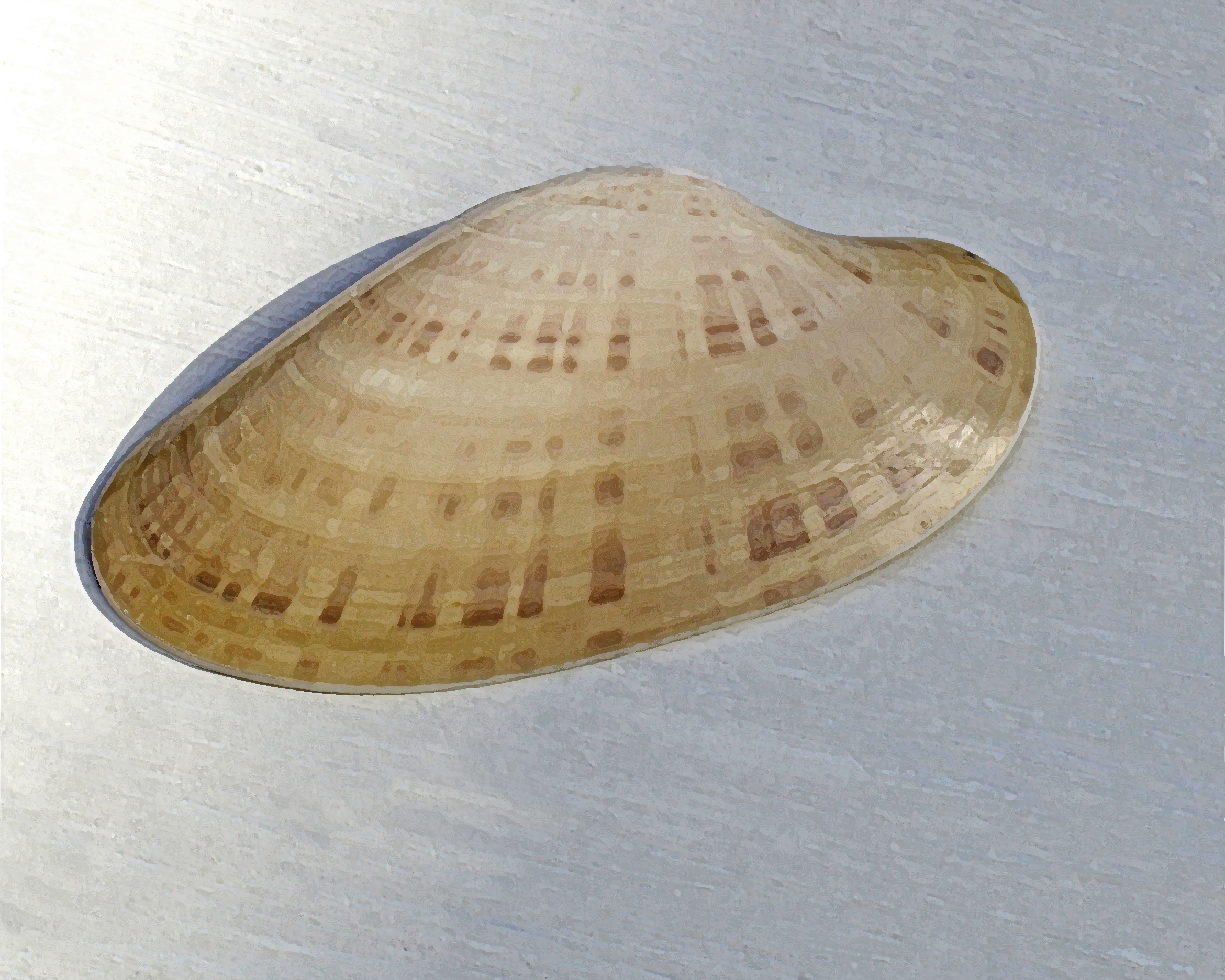
Sunray Venus Seashell

10. Sunray Venus Clam

Sunray Venus (Macrocallista nimbosa) has also been called the Giant Callista. Its outer valve is violet gray to tanish with darker streaks radiating out from the hinge. The interior is dull white with a tinge of red over the central area. Fresher specimens are more pinkish. It has an elongated oval-shaped shell with a glossy, smooth surface. Native Americans used the Sunray Venus shell as eating utensils. The Venus Shell is named for the Goddess Venus and is noted for its graceful lines and beauty of color and sculpture. They are edible.

  • Size: Average is 3 inches, but can grow up to 4 inches
  • Habitat: Sandy-mud ocean bottoms in shallow water intertidal zones to depths 180 ft (55 m)
  • Range: Native to Florida’s West Coast, St. Petersburg to Marco, the beginning of the Everglades Islands and found as far north as North Carolina and west to Texas
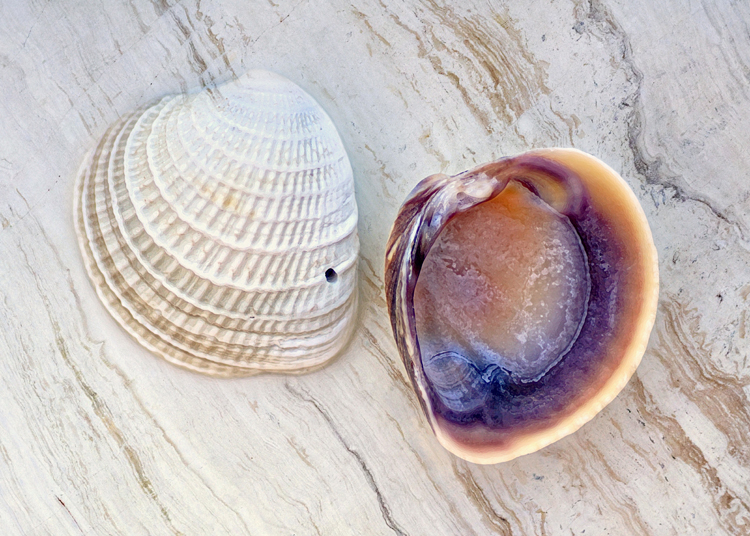
Cross Barred Venus Seashells

11. Cross Barred Venus Clam

The Cross Barred Venus (Chione cancellata) is a small, roundish triangular clam with a shell marked by distinct radiating and crossover lines, giving it a miniature lattice-work appearance. The slightly inflated shell is whitish often with brown markings. The inner surface of the shell displays a deep purple color. Gather enough of these living clams and you can make a delicious chowder.
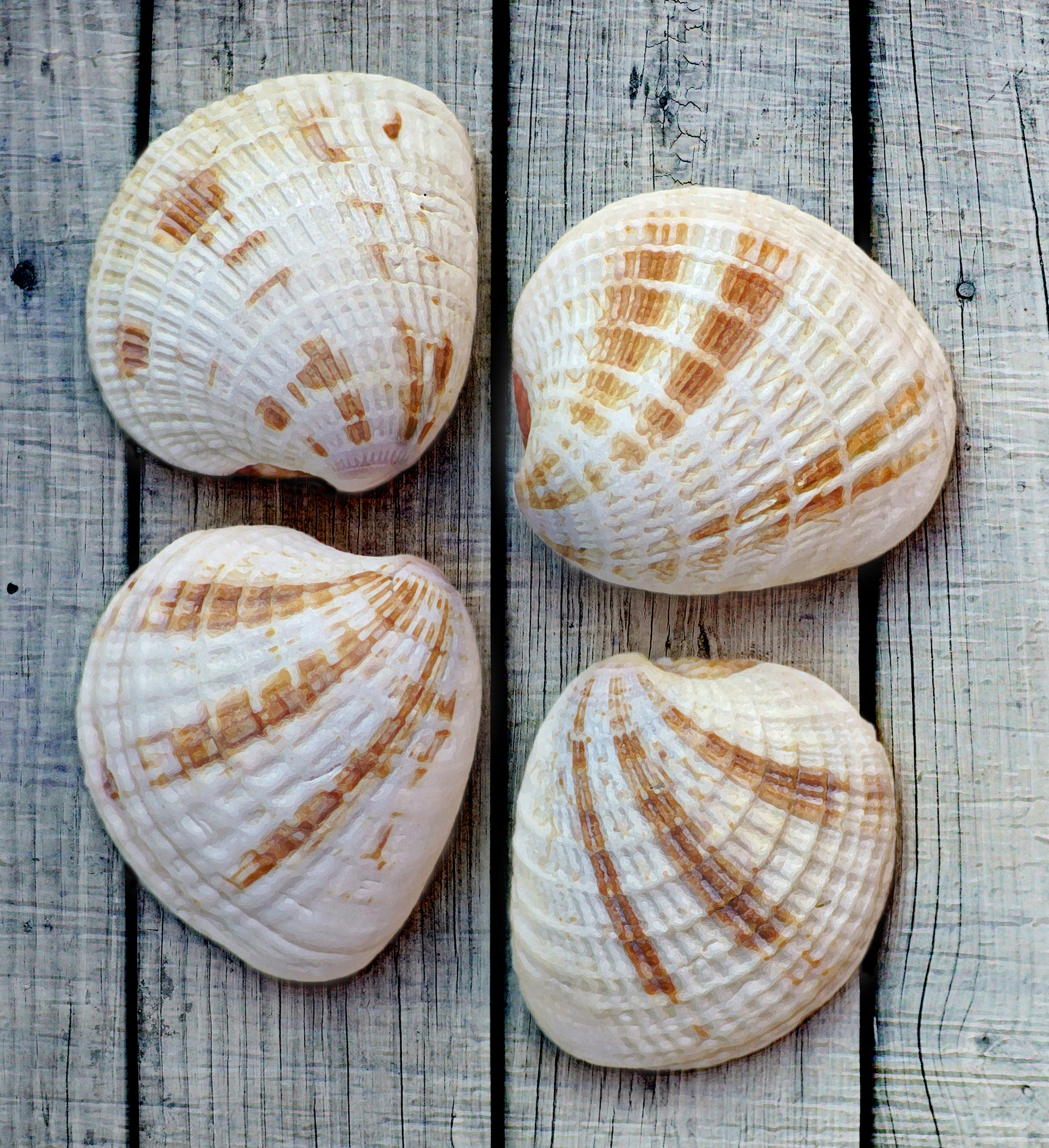
Cross Barred Venus Seashells

  • Size: Up to 2 1/2 inches
  • Habitat: More abundant in vegetative areas of shallow bays, often living in dense groups to filter-feed on plankton. 
  • Range: North Carolina to Florida, south to the West Indies and east to parts of the Gulf of Mexico
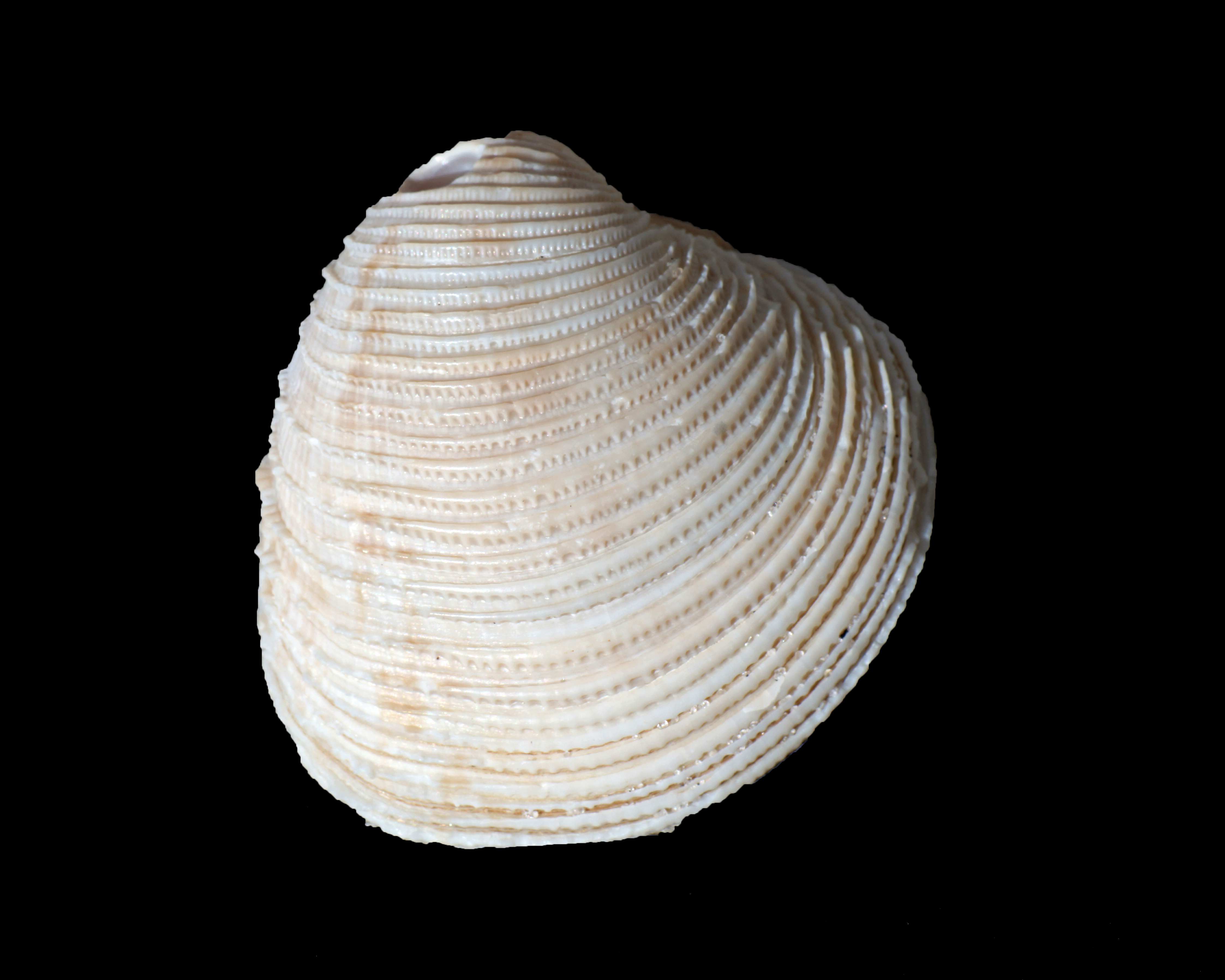
Lady-in-Waiting Venus Clam Seashell

12. Lady-In-Waiting Venus Clam

Lady-in-Waiting Venus Clam  (Puberella intapurpurea), formerly (Chione intapurpurea), displays a triangular, concave sturdy shell with distinct concentric ridges and vertical beads or ridges giving it a cross-hatched look. The lower margin or edge of the shell is serrated similar to teeth, notably visible from the interior. They have a prominent inward beak and are colored a pale yellow to off-white, sometimes with brown patches or freckles. If only I knew how this pretty little Venus clam got its name. In human culture, a “lady-in-waiting” is a female companion or personal assistant to a royal or noblewoman of high rank.

  • Size: Up to 1 1/2 inches
  • Habitat: Sandy bottom shallow water withing intertidal zones to depths of 280 ft (85 m)
  • Range: North Carolina to Florida, as far south as Brazil and east to Texas’ Gulf Coast
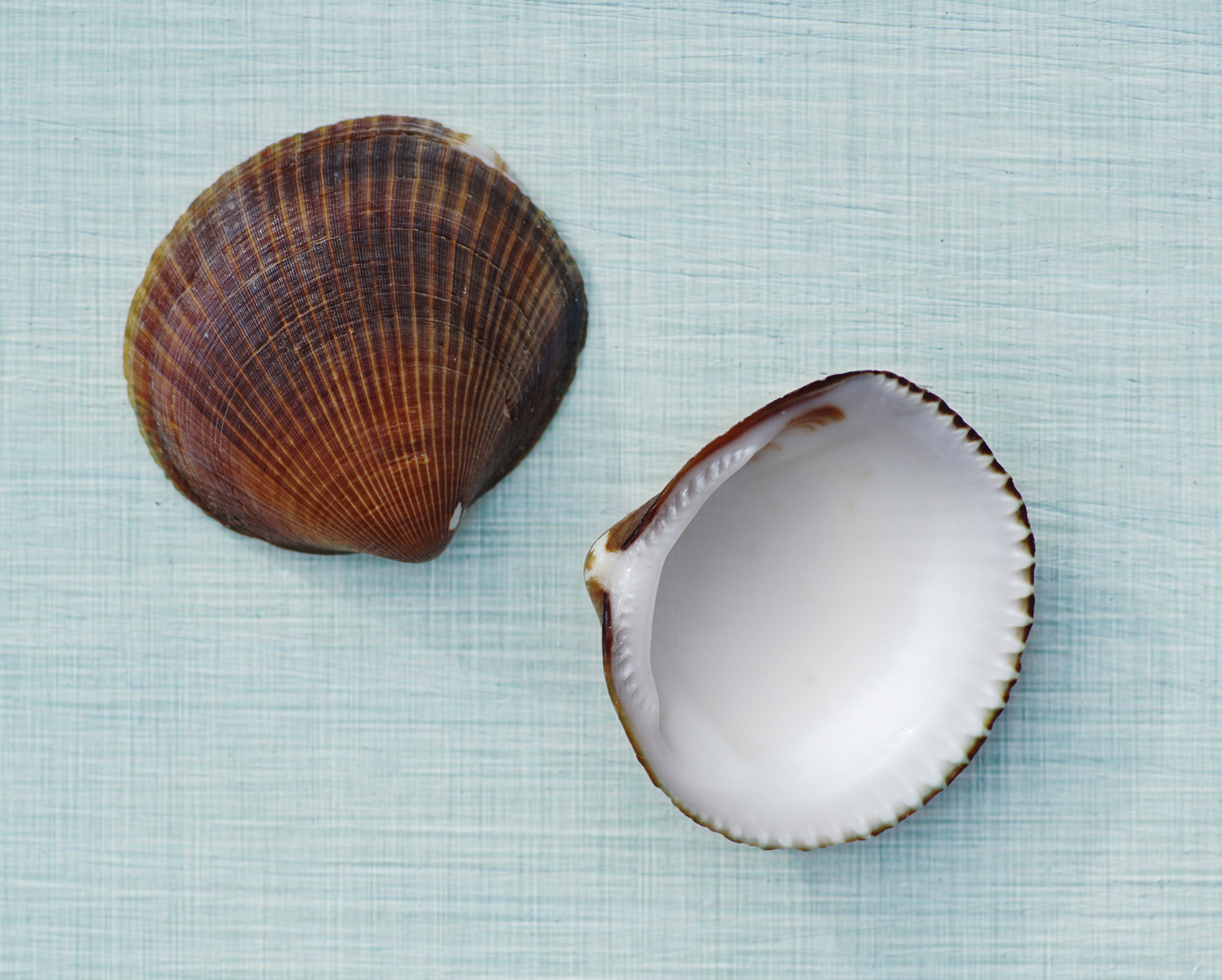
Princess Venus Clam Seashells

13. Princess Venus Clam

The Princess Venus Clam (Periglypt alisteri) displays a heart-shaped shell with numerous fine concentric rings and fin distinct radial ribs over its exterior. It has a fairly inflated sturdy shell with a distinct serrated edge reminiscent of fine teeth, observed from the interior. I love this little seashell for its deep brown exterior color contrasted with its striking white interior. It is often accompanied with purplish stains.

  • Size: Up to 2 inches
  • Habitat: Buries in gravel, coral rubble, sand and mud in mid-intertidal zones to depths around 3 ft (1 m)
  • Range: Florida to the Caribbean
Northern Quahog Shells (Hard-Shell Clam) My Photosite Image

14. Northern Quahog Venus Clam

The Northern Quahog (Mercenaria mercenaria)—pronounced “co-hog”—is a large, thick, sturdy-shelled clam, also known as a type of Venus Clam or hard-shelled clam. It’s often round to oval in shape and may be very plain or decorated with ridges of thin concentric, colorful lines or rays. The Northern Quahog is more colorful than its southern cousin, with a beautiful interior decorated with deep purple swirls.

The Northern Quahog was prized by Native Americans and was an important part of their diets. They used the shells to painstakingly make the colorful beads for “wampum” belts which served to bind treaties. The Native Americans also called the smaller ones “Littleneck” or “Cherrystone” clams. The Latin name “Mercenaria” is derived from a word that means wages and was given to the quahog due to the Native American use of wampum as money, trade and jewelry. The name “quahog” comes from the Native American name “poquauhock,” meaning horse fish.

  • Size: Up to 6 inches
  • Habitat: Offshore burrowing in sand, mud, or shell hash bottoms in shallow wate ranging from the high-tide line to about 60 ft (18 m) depth. 
  • Range: Nova Scotia, Canada to Florida and east to Texas
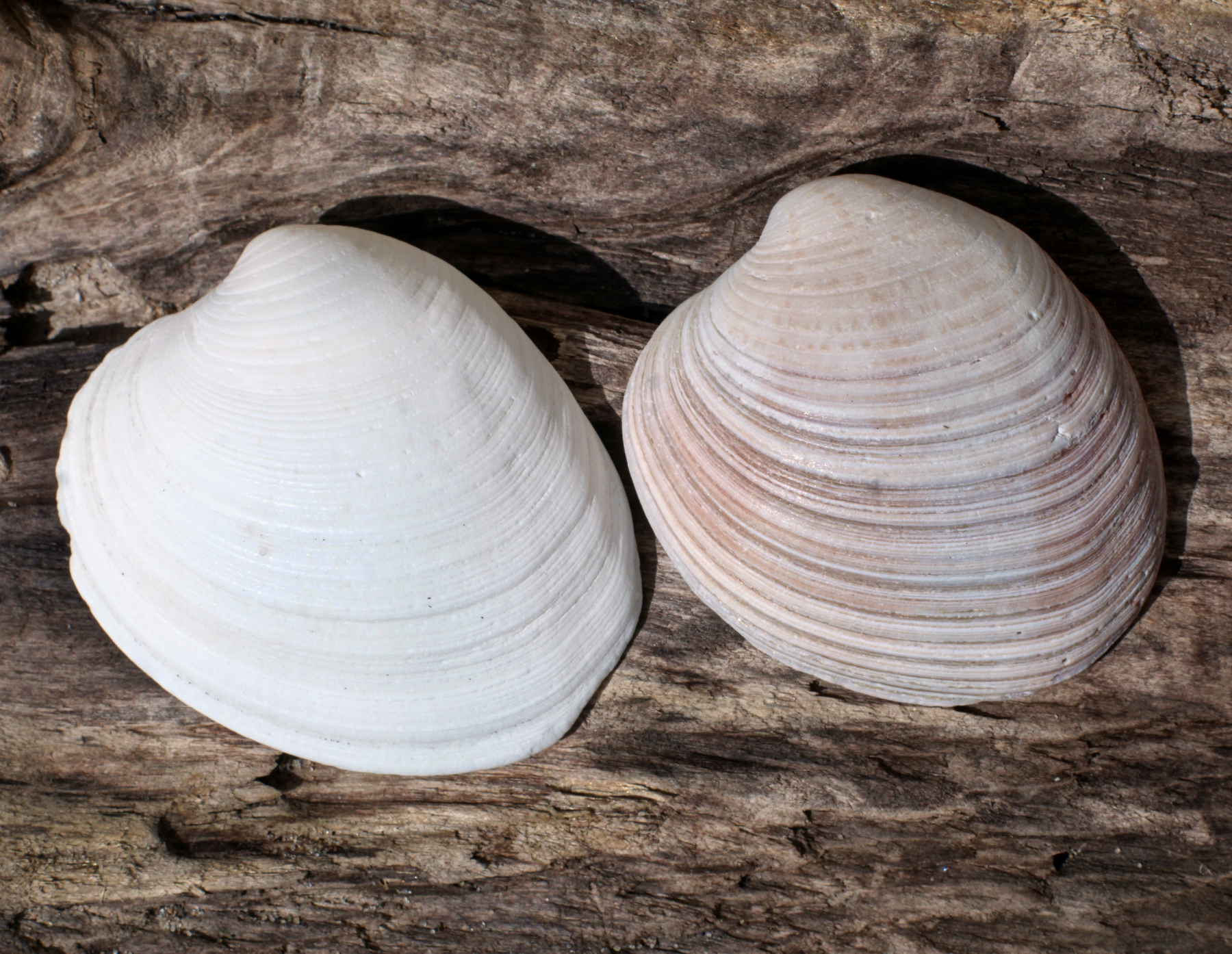
Southern Quahog Clamshells (Hard-Shell Clam)

15. Southern Quahog Venus Clam

The Southern Quahog (Mercenaria campechiensis)—pronounced “co-hog”—is a type of Venus Clam also known as hard-shell clams. Their shells are large, thick, sturdy and inflated displaying concentric ridges over their entire surface. The beak of the Southern Quahog shell grows inward toward the anterior. Their outer shells are grayish to brown to white. Their interior shell is chalky white, and lacks the purple characteristic of its cousin, the Northern Quahog, but can have hints of purple. They possess two muscle scars on the interior surface of each valve.
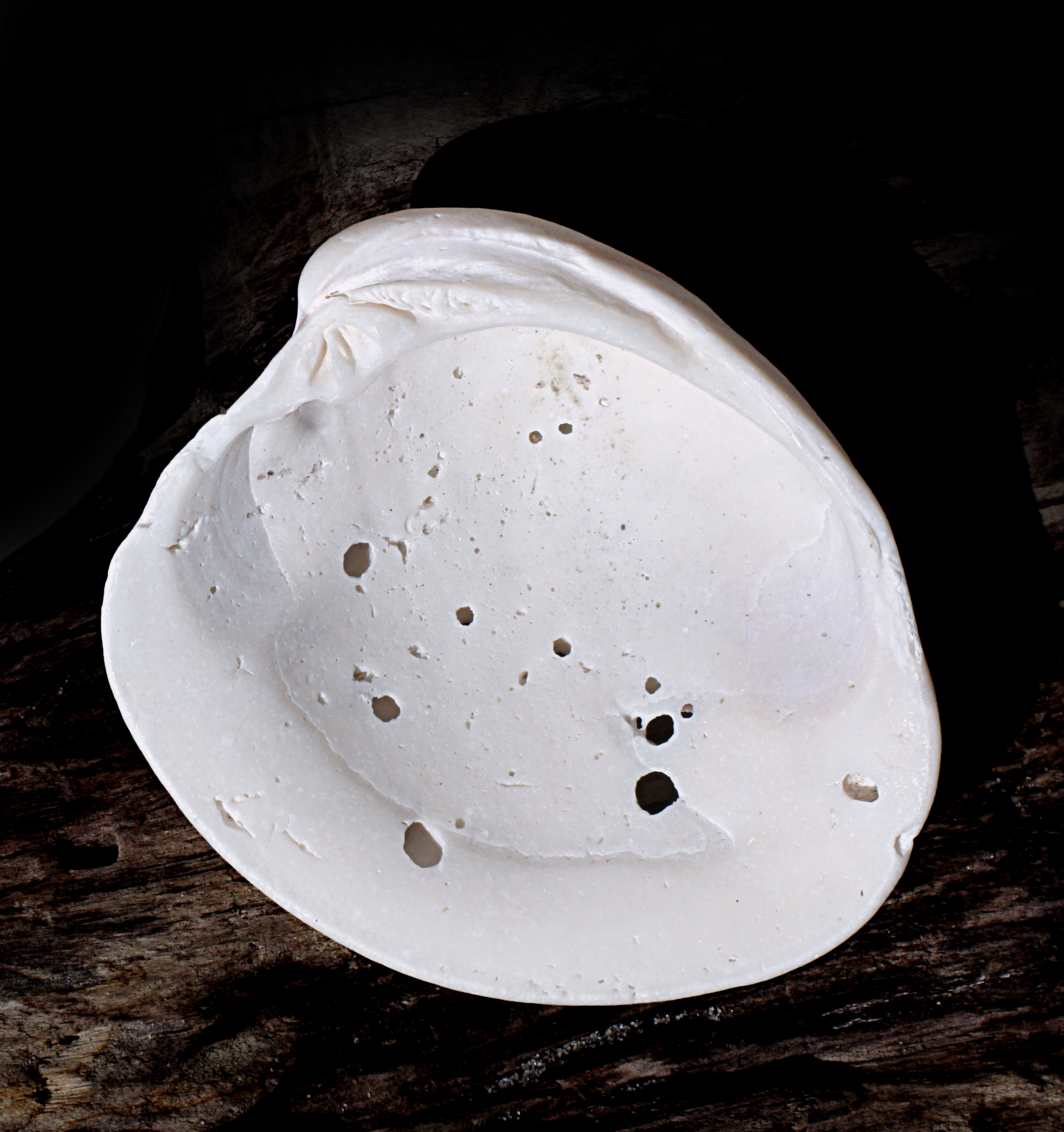
Southern Quahog Clamshell Interior

Quahogs are extremely efficient filter feeders, and large quahogs can filter about a gallon of water per hour. Quahogs are prized as food for humans and constitute one of Rhode Island’s most important fisheries.

  • Size: Up to 7 inches and slightly larger than their cousins, the Northern Quahog
  • Habitat: Burrows offshore in intertidal zones under sand, mud or shell hash bottoms to a water depth of 120 ft (36 m), and may also be found in salt marshes
  • Range: Cape Cod, Canada to Florida, as far south as Cuba and west to the Gulf of Mexico and the Mexican Coastline

All rights reserved © Fossillady 2026
Clamshell Identification and Facts (From Coquinas, Oysters to Tellins and more)

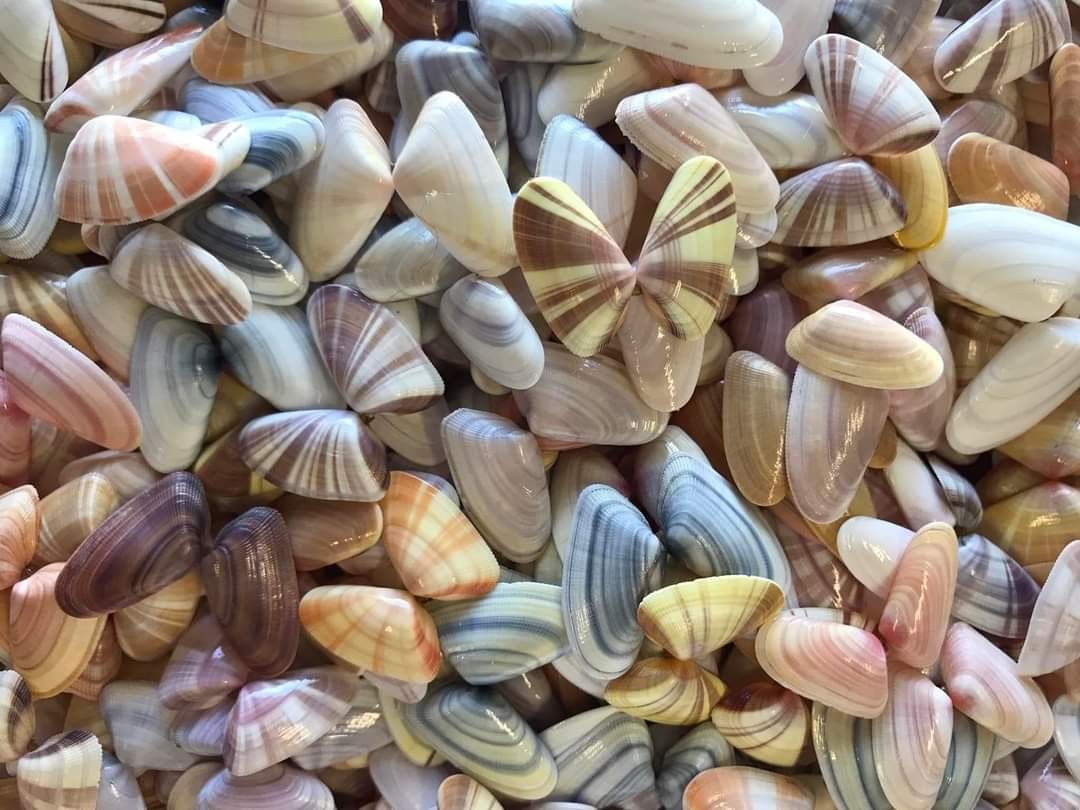
Coquina Clamshell Collage: Source

Brief Intro – The word “clam” can be used to cover all bivalves, including scallops, oysters, arks, and cockles, to name a few. Did you know that there are more than 15,000 species of clams around the globe? Amazing, right? Clams and other bivalves first appeared in the fossil record as tiny creatures as early as the Cambrian Period over 500 million years ago. Beginning around the Devonian Time Period approximately 400 mya through to the Mesazoic Era, they gradually developed into abundant forms. Follow along to learn interesting facts about clams and to help you identify those clamshells you couldn’t resist picking up from the sandy seashore.

Eleven Clamshell ID, Photos and Facts in the following order:

  1. Coquinas
  2. Disc Dosinia
  3. Atlantic Surf
  4. Eastern Oyster
  5. Jewel Box Oyster
  6. Atlantic Thorny Oyster
  7. Digitate Thorny Oyster
  8. Jingle Shell Oyster
  9. Atlantic Kitten Paw
  10. Tampa Tellin
  11. Speckled Tellin
  • For additional clam info including various Arks, Angel Wing, Cardita and Lucines click HERE
  • For additional clam info including various Cockles, Scallops, Venus Clams and Checkerboad Calico click HERE
  • Other wise, scroll to categories, click “Clam Seashells, and everything is there.
Coquina Clamshells

1. Coquina Clam

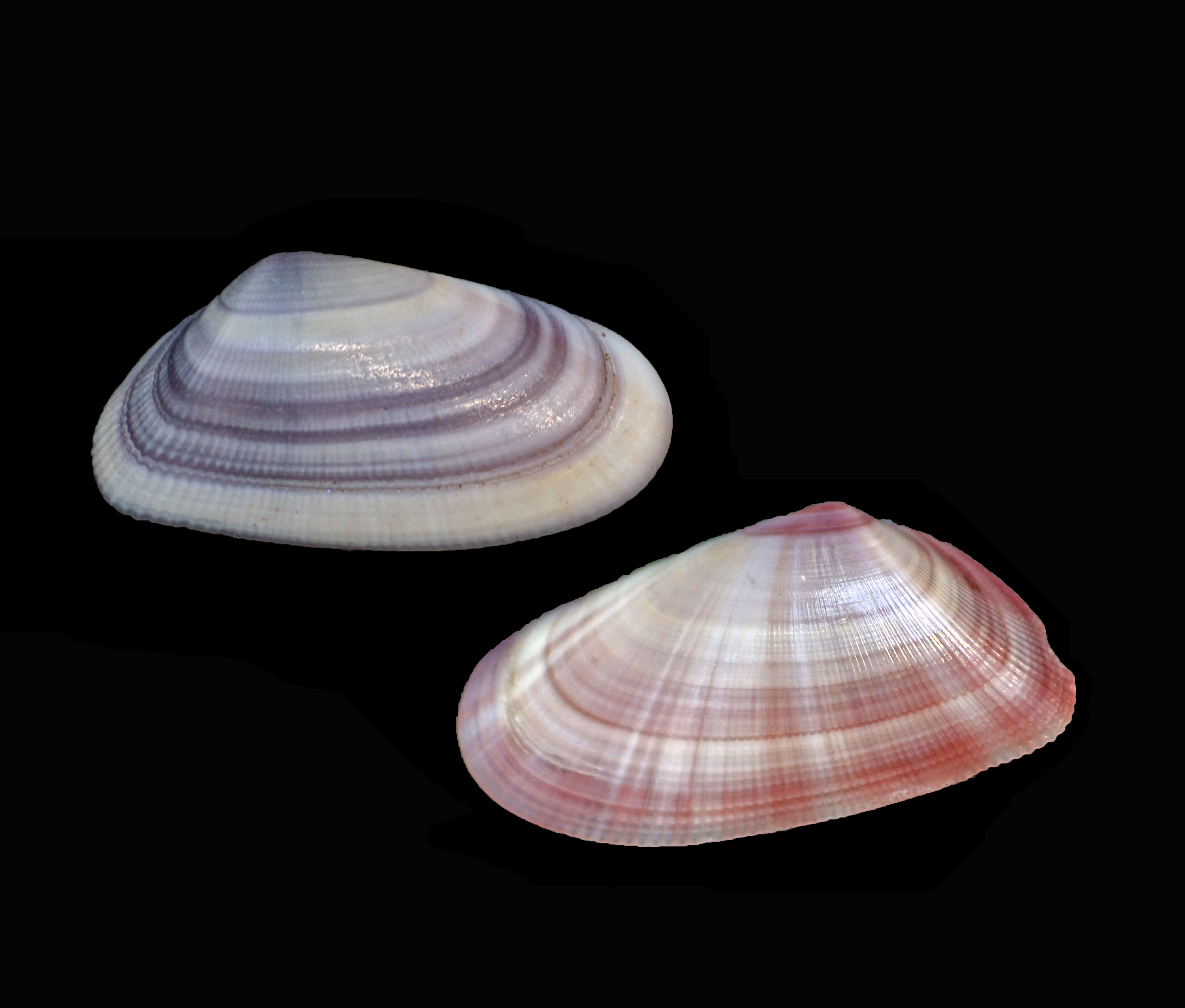
Coquina Clamshells (Donax variabilis) are inspiring with their display of variable colors of the rainbow. The colors can range from yellowish-brown to blue, lavender to green to pink and typically exhibit a plaid pattern. Their shells are asymmetrical from their pointed beak, slightly elongated and inflated. These are little clams that create the activity you see at the tide line of the surf. With the aid of a fleshy foot, they dart about and can bury under the sand in a twinkling. Apparently, they are sensitive to light and rush to get back into darkness under the sand. They are great in soup, and desired in crafting for their beauty.

  • Size: Up to 3/4 inches
  • Habitat: Sandy shallow subtidal or intertidal zones, moving up and down the beach with the ebbing and flowing tides.
  • Range: Virginia to both coasts of Florida and Texas
Disc Dosinia Clamshell

2. Disc Dosinia Clam

The Disc Dosinia clam (Dosinia discus) displays an exterior valve yellowish-white in color with a pure white interior. The valves are moderately thin and quite circular in outline with a small dominant beak. A distinct feature of Disc Dosinia is the fairly even concentric ridges of about 20 to 25 per inch. Another species, Elegant Dosinia, has about 50 ridges to the inch; paired valves are often commonly found.

  • Size: Average 2 inches, up to 3 inches
  • Habitat: Offshore in moderately shallow, sandy to muddy, intertidal zones, typically in depths less than 10 ft (3 m)
  • Range: Virginia to Florida, east to the Gulf States and south to the Bahamas
Atlantic Surf Clamshells

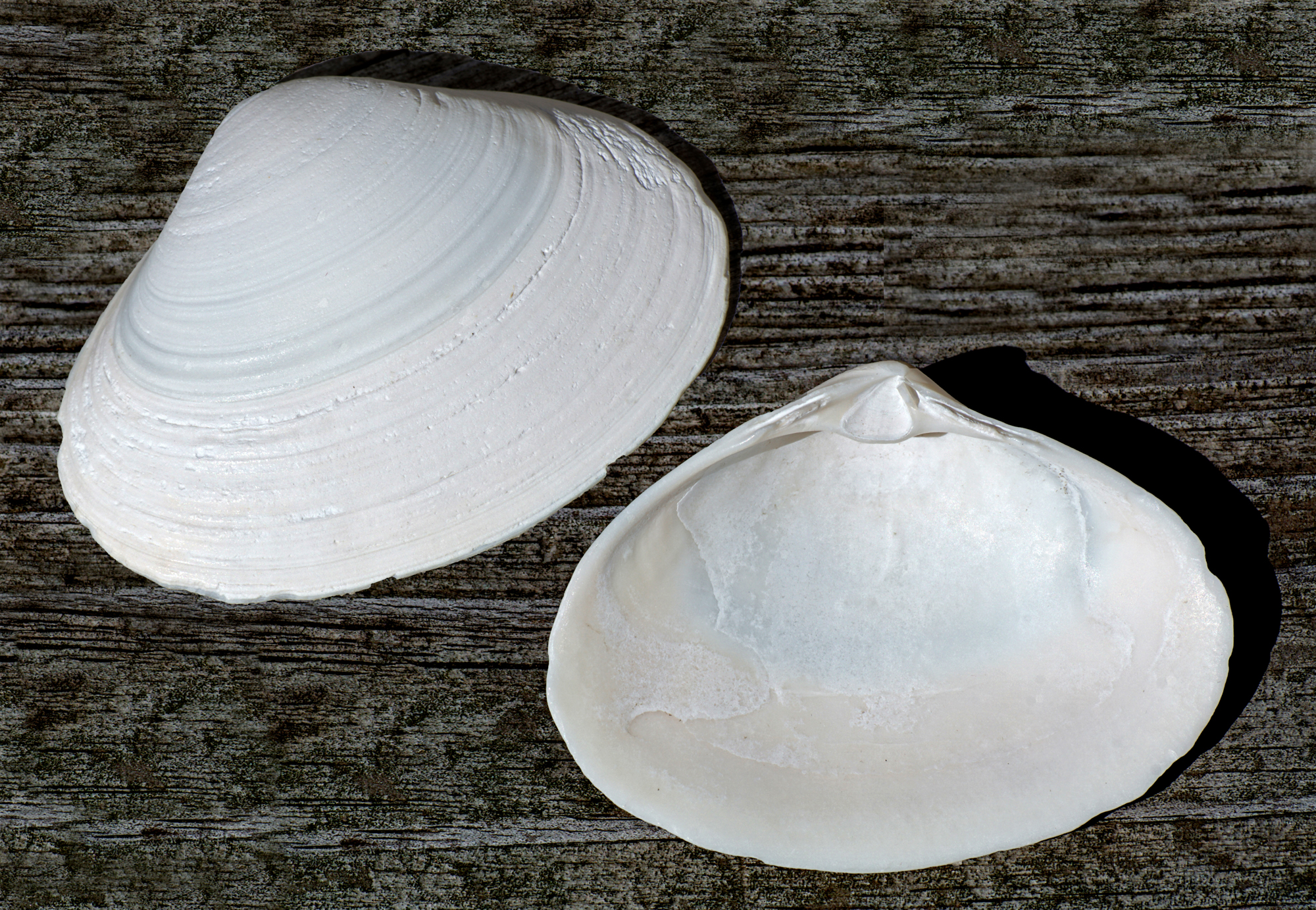
3. Atlantic Surf Clam

The Atlantic Surf Clams (Spisula solidissima), are also known as Hen ClamBar ClamSkimmer Clam, or Sea Clam. They prefer the surf environment on sandy shores feeding on minute plant and animal life that washes back and forth in the waves. After severe storms, beaches are sometimes covered with thousands of these clams! Beachgoers will often pick-up one of their large empty shells to dig with in the sand or take home as a decorative dish. Atlantic Surf Clam valves’ outer surfaces are colored white to yellowish-white, sometimes with added gray. Their interior valves are white with a slight iridescence. The shells are sturdy and triangular-shaped displaying thin concentric growth lines over their exterior shell. They grow fast and large and are prized by humans for their sweet flavor. U.S. wild-caught Atlantic Surf Clam is a smart seafood choice because it is sustainably managed and responsibly harvested under U.S. regulations. They can live up to 35 years.

  • Size: Up to 3 inches
  • Habitat: Warm coastal water near shore, typically in surf waters high-energy, sandy, and gravelly bottoms, prefersn depths 30-160 feet (9-50 m) (up to 100 m) typically burying themselves just below the surface to feed. 
  • Range: Predominantly from Nova Scotia, Canada to North Carolina and as far south as Florida to portions of the Gulf States
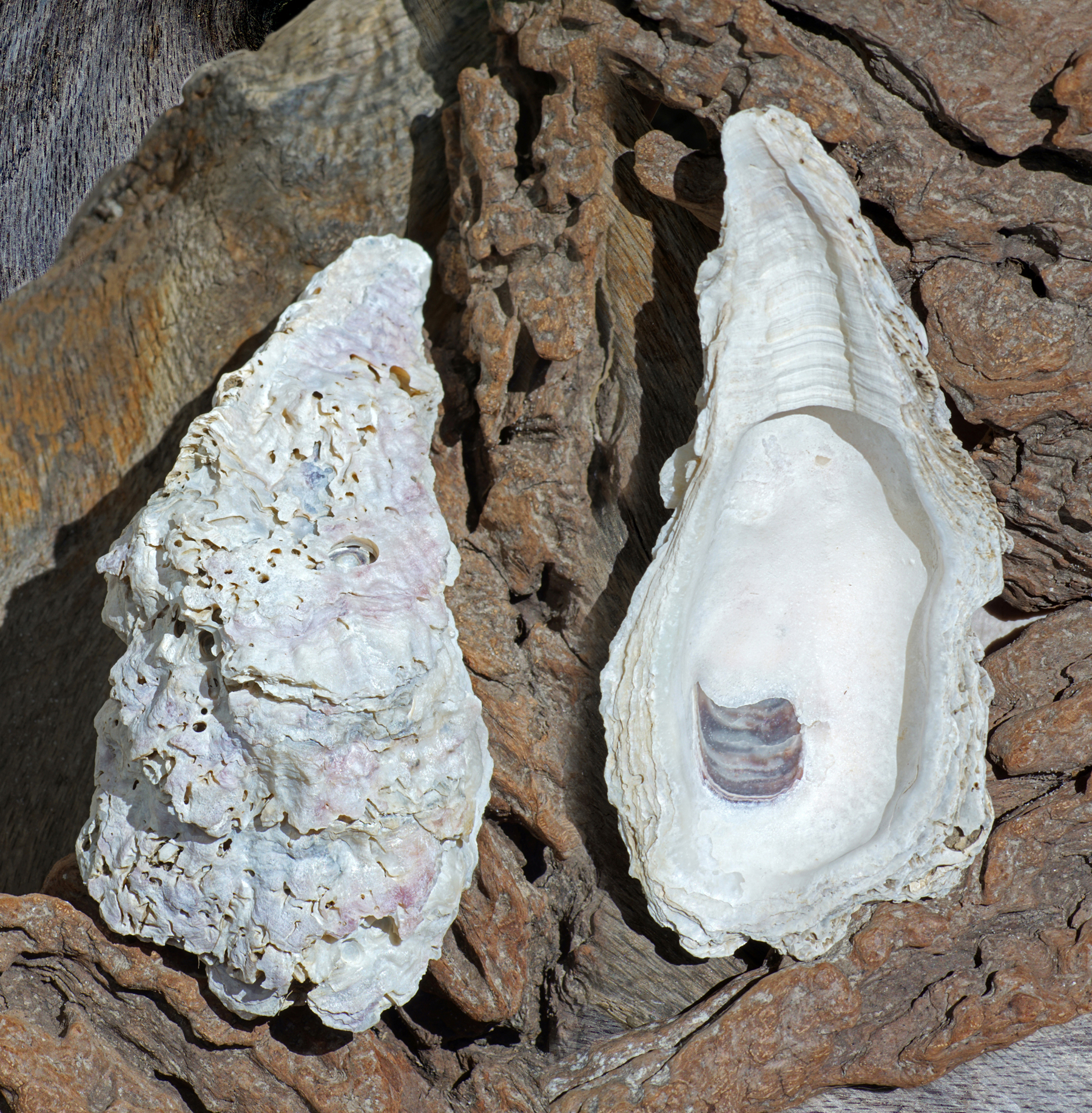
Eastern Oyster Clamshell Collage

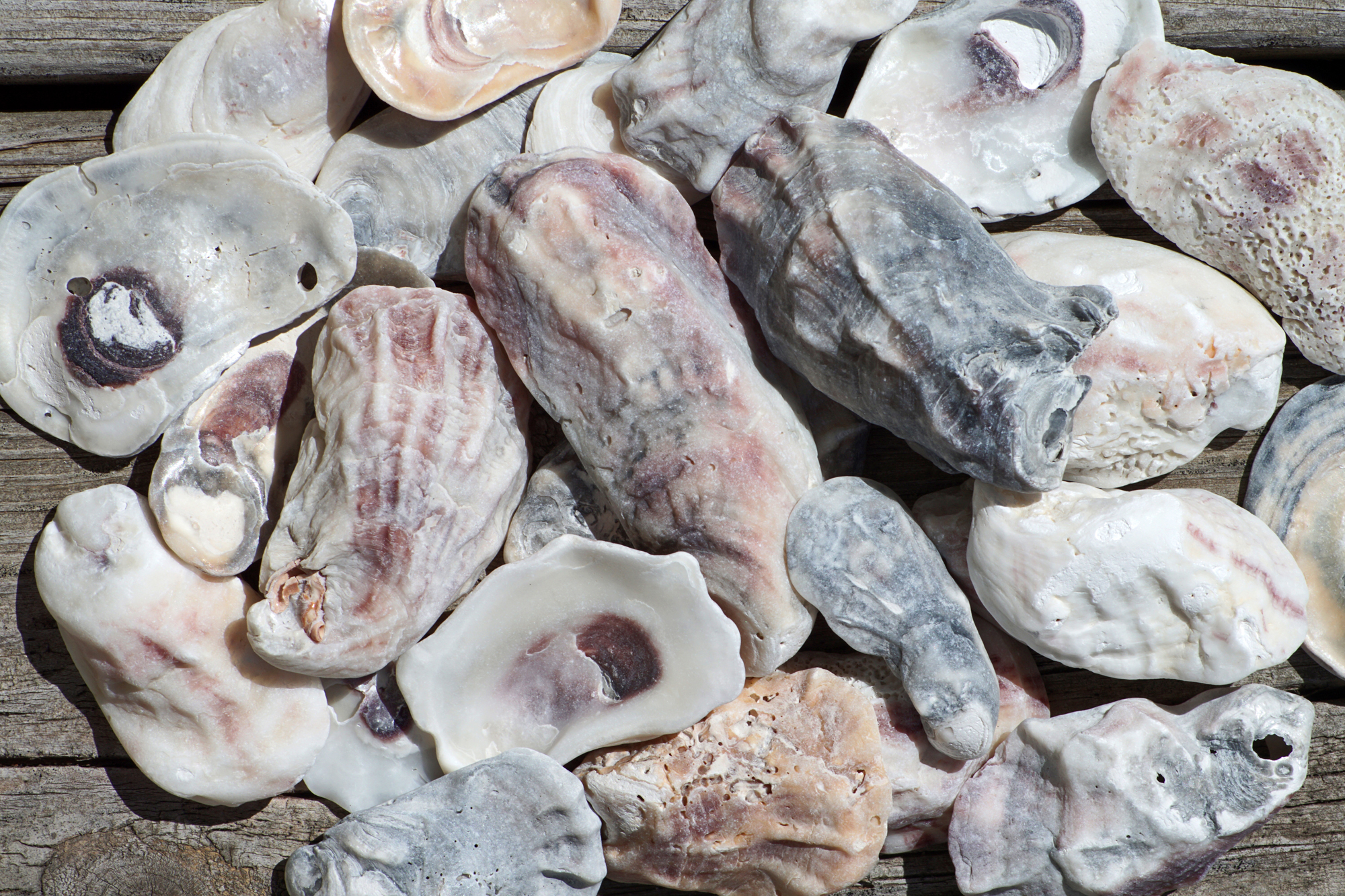
4. Eastern Oyster

The Eastern Oyster (Crassostrea virginica) can go by several names, including, Wellfleet OysterAtlantic Oyster, Virginia Oyster, or American Oyster. Their shell is heavy and possesses a teardrop-oval shape that varies greatly. Sometimes they have scaly concentric layers over their outer surface, and sometimes with irregular concentric rings, and yet sometimes with irregular vertical ribs. It’s interesting to note that they can grow to any shape necessary. The Eastern Oyster shell varies in color from white to gray to tan, or with pinkish markings. The right or top shell is flat with a purple muscle scar on the interior, while the bottom shell is cupped with a dark muscle scar.

Eastern Oyster Shell (Exterior/Interior)

Eastern Oysters are very popular commercially. Today, less than 1% of the original oyster population that lived during 17th-century when the origianl colonists arrived is thought to remain in the Chesapeake Bay and its tributaries. The Eastern Oyster is the state shellfish of Connecticut, and its shell is the state shell of Virginia and Mississippi, and the shell in its cabochon form (polished) is the state gem of Louisana.

  • Eastern Oyster Quick Facts
  • Eastern Oysters exhibit fast growth and reproductive rates.
  • They originally mature as males, then later develop female reproductive capabilities.
  • An adult oyster can filter up to 50 gallons of water in one day.
  • Oysters can live out of the water during cooler months for extended periods.
  • These oysters often attach to one another, forming dense reefs that provide habitat for many fish and invertebrates.
  • They are sought after for their creamy white meat and firm texture with a mild, sweet flavor.
  • Size: Average 3–5 inches, Up to 8 inches
  • Habitat: Brackish and saltwater typically in shallow bays from 8 to 35 feet deep, often concentrated in oyster beds or rock beds.
  • Range: From Nova Scotia, Canada, south to Florida, east to the Gulf of Mexico and further south as far as Venezuela
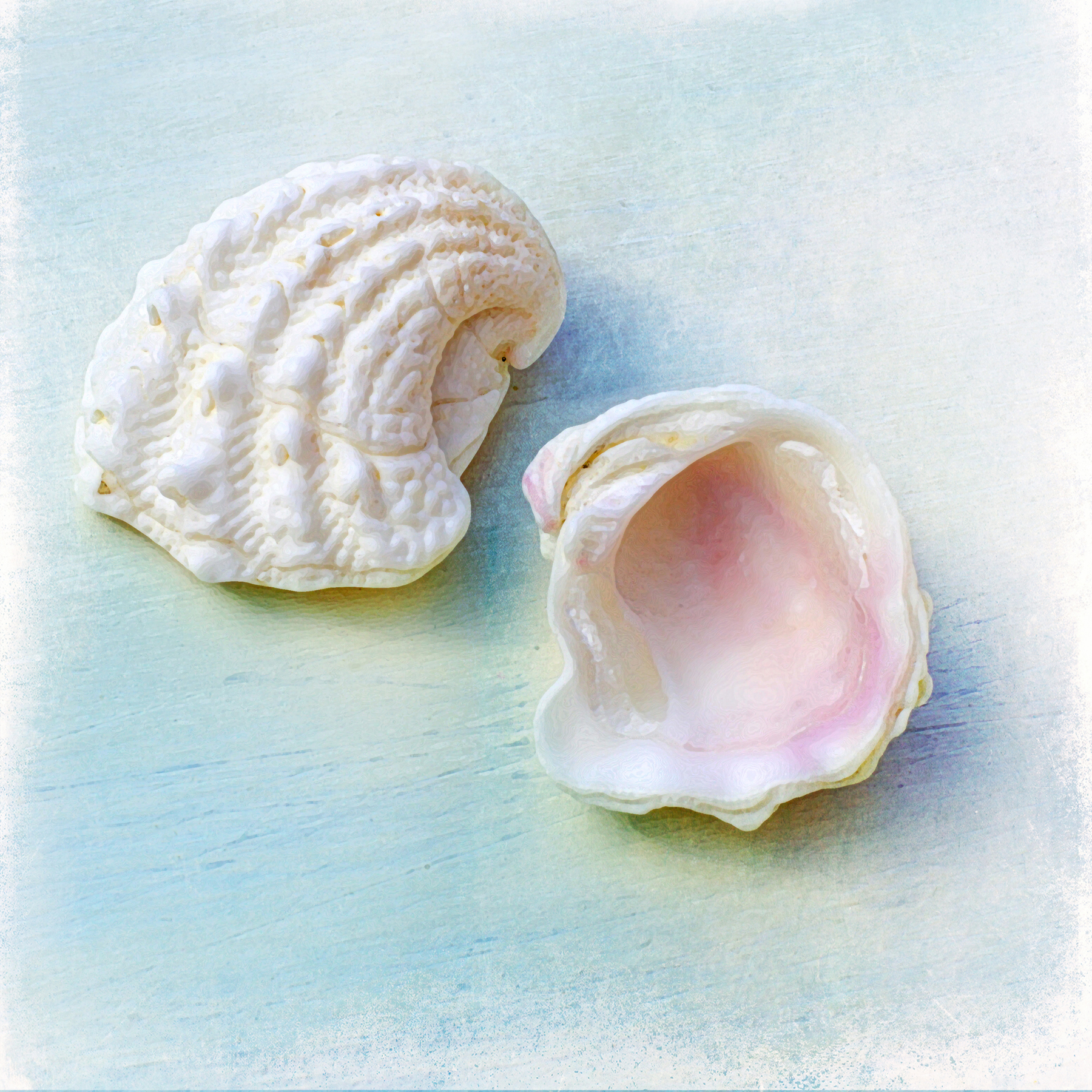
Spiny Jewel Box Oyster Shells Photo

5. Spiny Jewel Box Oyster

The Spiny Jewel Box Oyster (Arcinell acornuta) possesses a thick, strongly curved shell with knobs or longer spikes along 7–9 rows of spines. Fresh specimens have extended spikes and resemble the thorny oyster described below. The spikes become worn down by the surf and sand like the pair in my example, or the spikes can break off entirely. They can dipsly a variety of colors including white, yellow, pink, purple, orange and even sometimes green, often with combinations of these shades, making them look like colorful jewels on the beach. Their colors vary by species and can include bright hues like magenta and deeper tones, with some even showing iridescent effects, creating diverse and beautiful shells. This bivalve animal attaches itself to an offshore rock or substrate. This answers the question why beachcombers rarely find these beautiful bivalves in their full glory with both valves attached. Also, because they cement themselves to objects, their shells can be irregular and variable in shape.

  • Size: Up to 2 inches
  • Habitat: Attached to rock, coral or shells in warm shallow water (sometimes in deep water) and exposed to air during low tide. Later in life, they become detached from rocks.
  • Range: North Carolina to Florida and the Gulf of Mexico
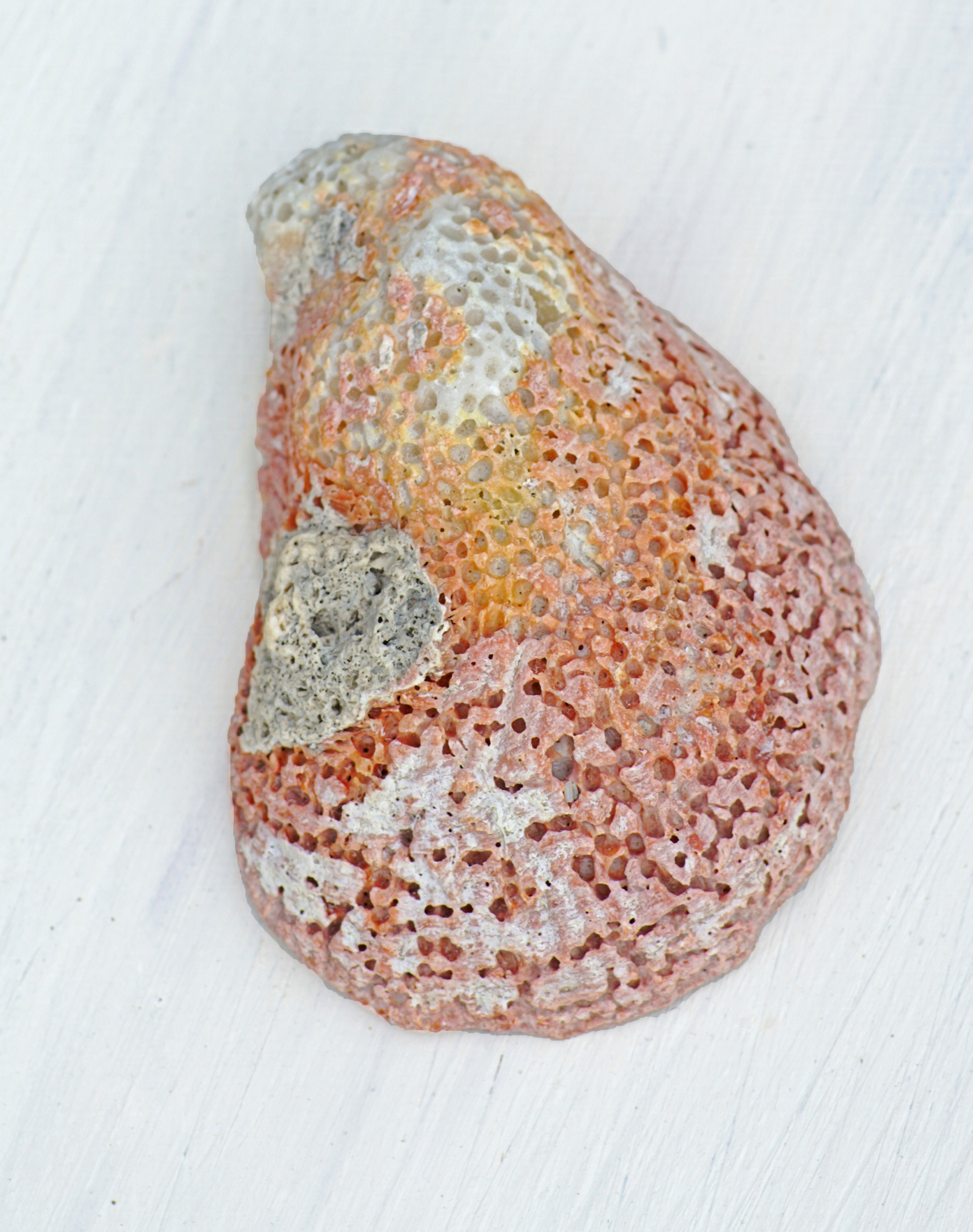
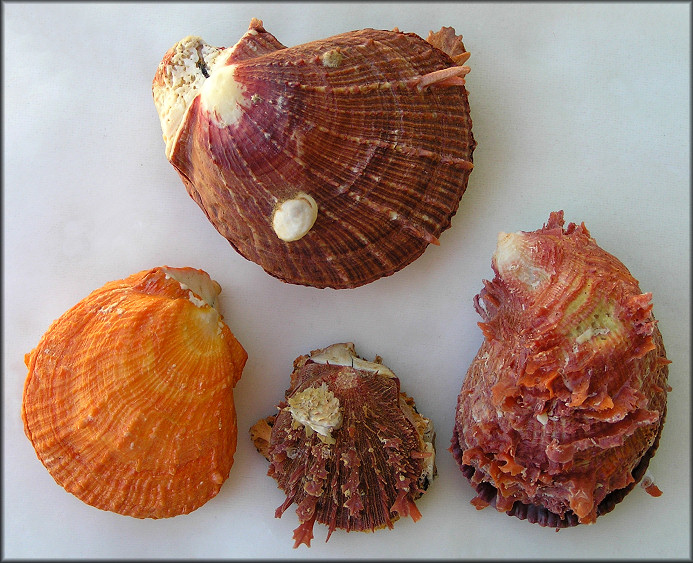
Atlantic Thorny Oyster Shell

6. Atlantic Thorny Oyster

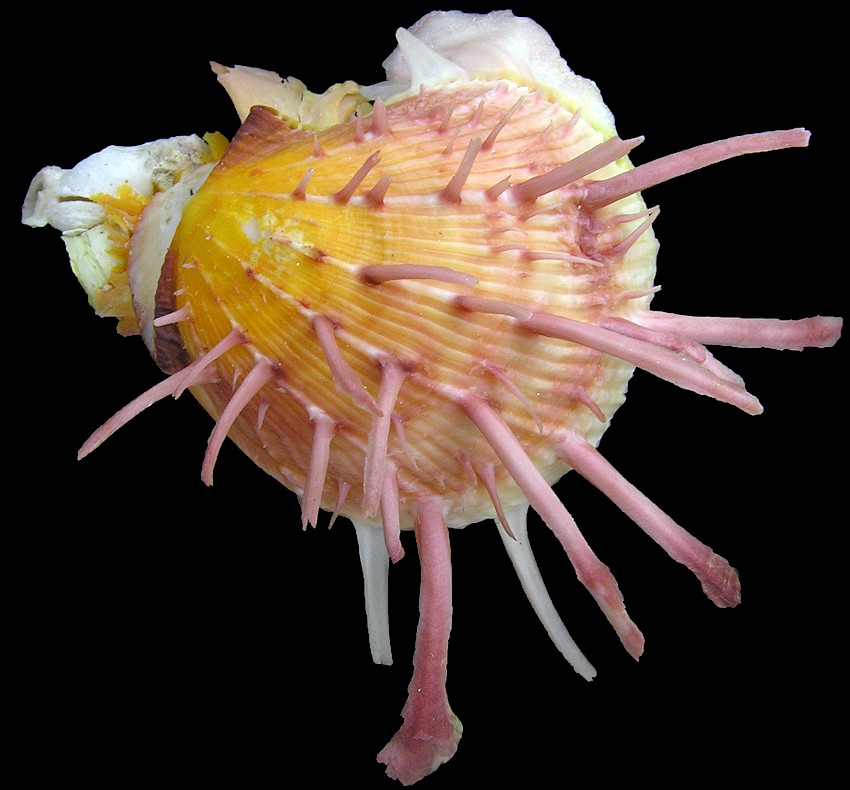
Atlantic Thorny Oyster (Spondylus americanus) shells normally show the telltale protruding thorns or spines, but after the animal dies and washes-up on the beaches, it typically loses its thorns due to wind and surf, which is likely what happened to my sample shown above. Thorny oysters possess a thick shell with a vibrant spectrum of colors, including bright orange, deep red, rich purple, yellow, pink, cream, and white, often with combinations or banding. They can be circular, oval, or irregular in shape. While they often have a generally round outline, their shape is highly adaptable, allowing them to conform to the crevices or surfaces whereever they attach.

Atlantic Thorny Oyster with Spines: Source
  • Size: Up to 5 inches  
  • Habitat: Very deep to shallow water reefs, 30-500 ft (9-140 m) especially in areas with high sedimentation. They are often lodged in a crevice or concealed under an overhang.
  • Range: North Carolina and Texas southwards to Venezuela and Brazil

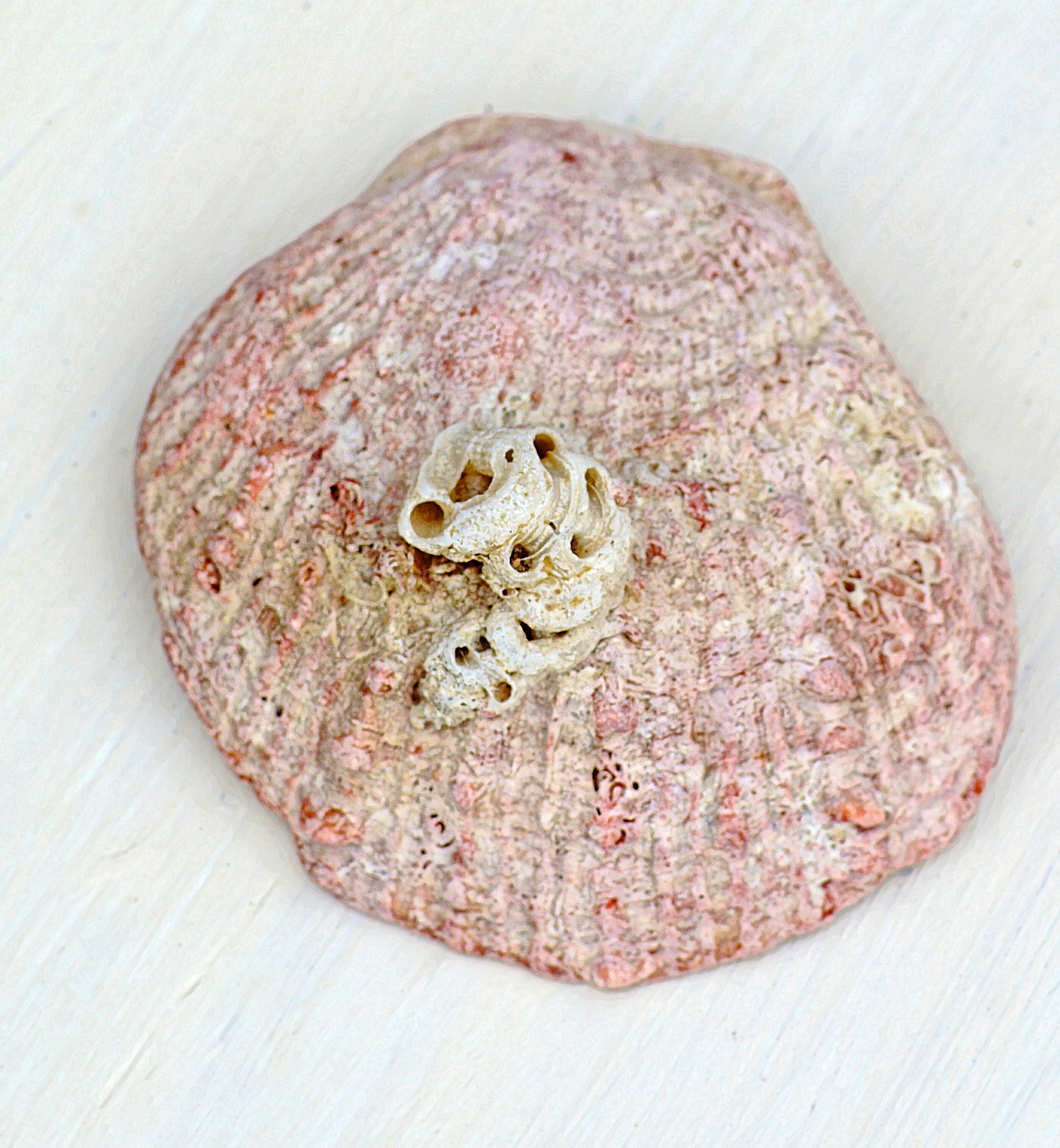
Digitate Thorny Oyster Shell with Tubeworm Casing Burrow

7. Digitate Thorny Oyster

Digitate Thorny Oyster (Spondylu stenuis) is often mistaken for the Atlantic Thorny Oyster (Spondylus americanus). There are many species of Thorny Oysters from the genus “Spondylus” that vary considerably in appearance and range. They are also known as Spiny Oysters. However, they are not true oysters, yet they share some habits such as cementing themselves to rocks or other hard surfaces almost always with their lower valve. They are actually more closely related to scallops. Also, the two halves of their shells are joined with a ball-and-socket hinge rather than with a toothed hinge, which is more common in other bivalves.

Digitate Thorny Oyster: Source

The Digitate Thorny Oyster displays a thick lumpy shell most often with thorns, although they have fewer than most spiny oysters and are generally thicker, shorter and flatter rather than pointy. Their spines often break off or are lost after the animal dies, frequently appearing as “naked” or smooth shells on beaches. Some varieties are whitish, pink, reddish or orange. Interior is whitish with a wide darker band around the perimeter. Note: The example above of the Digitate Thorny Oyster has a tubeworm casing attached to it.

….

  • Size: Average 3 inches, up to 5 inches
  • Habitat: Attach to coral reefs or rocky reefs in shallows or in semi-deep waters to depts of 50 ft (15 m)
  • Range: North Carolina around Florida to Texas, southwards to Venezuela and Brazil
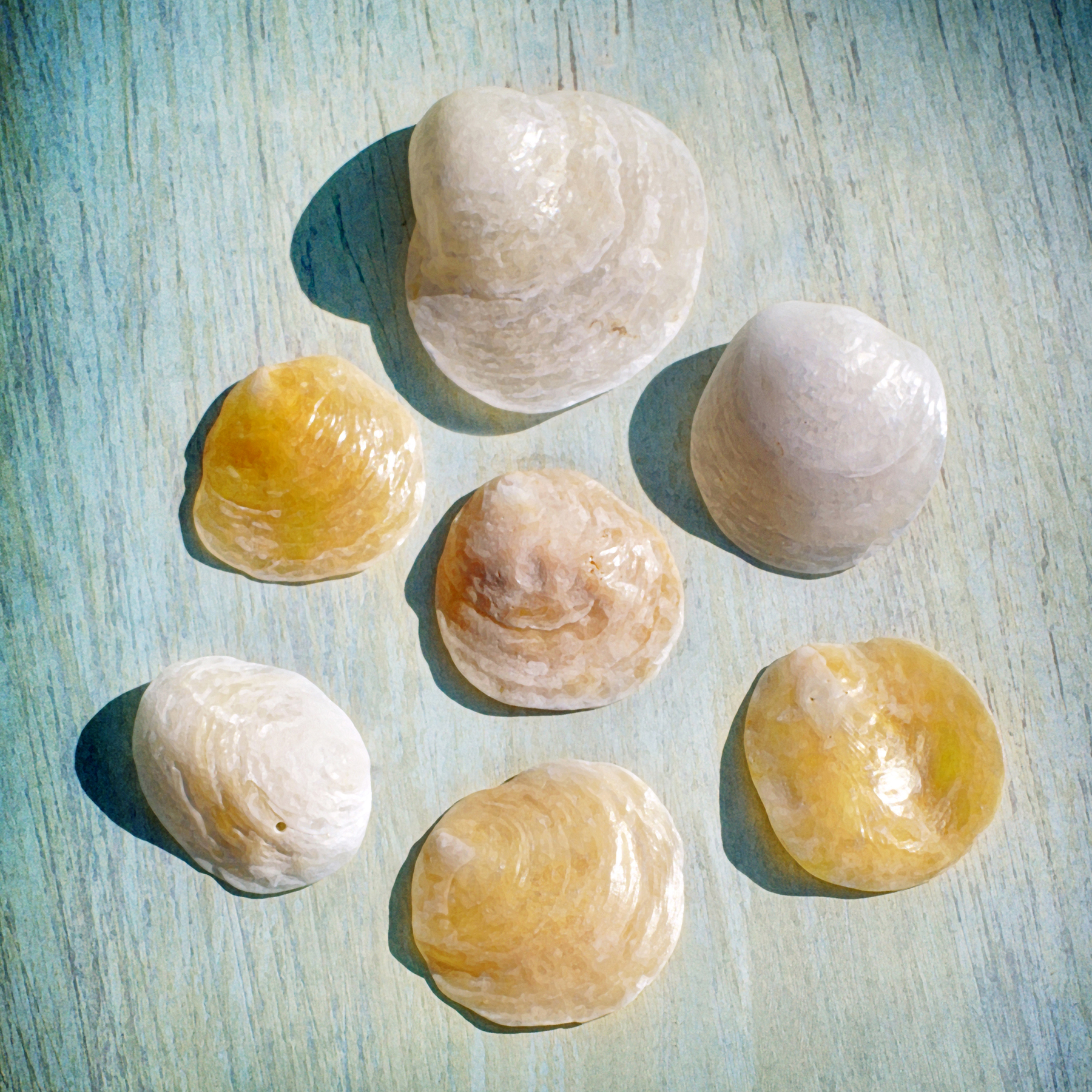
Jingle Shell Oyster Shells

8. Jingle Shell Oyster

The Jingle Shell Oyster (Anomia simplex) also known as Mermaid’s Toenail and Saddle Oyster, is a bivalve with thin, translucent, irregular shaped, pearly valves. The exterior valve is curved, usually yellow, silver, whitish or orange, and the interior valve is flat and whitish with a hole at the apex. It has a fleshy appendage (byssus) which passes through the hole to anchor itself upon rocks, seaweeds, or old shells. Consequently, usually only the upper valve washes ashore. Jingle Shells are often attached to submerged objects so thickly that one grows on top of another. Consequently, oyster dredges will bring them up in quantity. People use them for crafting and they make lovely wind chimes that create a sweet sound.

  • Size: Up to 2 inches
  • Habitat: Shallow waters, beaches, oyster beds, and mollusk shells.
  • Range: Nova Scotia, Canada to Florida, Texas and the West Indies
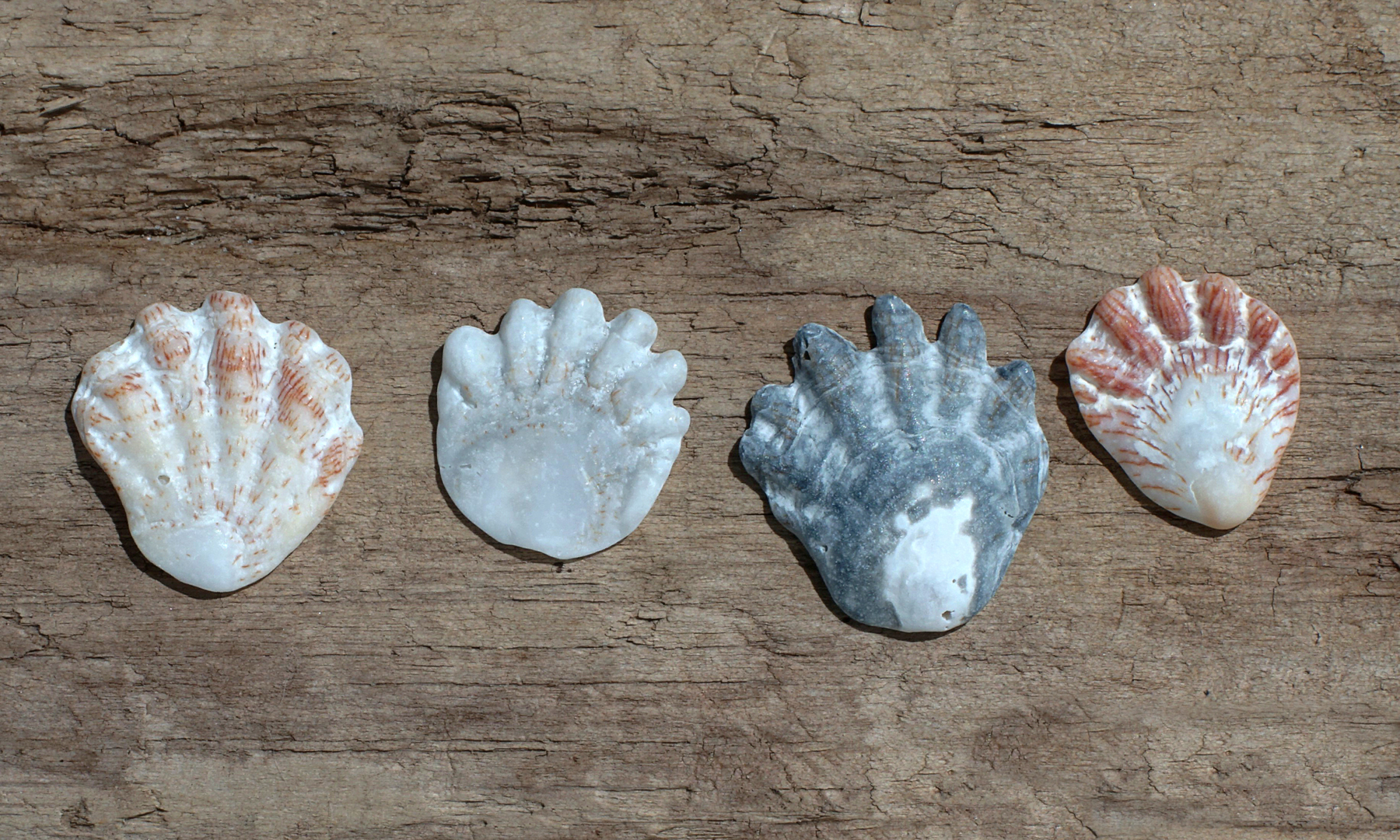
Atlantic Kitten Paw Clamshells

9. Atlantic Kitten Paw Clam

Atlantic Kitten Paws (Plicatula gibbosa) are related to oysters and sometimes are called Cat’s Paw. Still, I prefer the former as they are tiny little seashells no bigger than a penny and too cute to be associated with the mighty hunter. Their valves vary in color and are almost flat, but tough, with a bumpy texture and show an irregular triangular shape resembling their name. They typically attach themselves to rocks using the left valve, so it’s more common for seashell hunters to find the right valve onshore.

  • Size: Up to 1 inch
  • Habitat: Offshore in low-tide sandy substrate often cement themselves to hard surfaces like rocks, oyster reefs, shells, or coral to depths of 300 ft (91 m)
  • Range: From North Carolina to Florida, east to Louisiana and as far south as the West Indies
Tampa Tellin Clamshells

10. Tampa Tellin Clam

Tampa Tellin (Tampaella tampaensis) clamshells are colored opaque white (sometimes tinged pinkish-orange) with a shiny white interior. They display slightly inflated, oblong-shaped valves with very thin concentric ridges on the exterior. The valve is fairly symmetrical from its somewhat pointed beak. The valves are relatively thin and compressed. The hinge is not strong, and shells washed up on the beach are often broken. In general, Tellin clamshells belong to a family which is often considered the aristocracy of bivalves. Of several hundred species, scores are found along both U.S. coasts, especially in the warmer waters of the Atlantic and Gulf coasts. Some Tellins are rose-colored and attractive with banded patterns, very desirable to collectors, but most are white to creamy colored.

  • Size: Average 1/2 inch up to 4 inches
  • Habitat: Shallow sandy or muddy bottoms and grassy inland bays and lagoons often burrying themselves
  • Range: Florida to Panama and Texas
Speckled Tellin Clamshell

11. Speckled Tellin Clam

Speckled Tellin (Tellina listeri) also known as Interrupted Tellin, has an exterior valve that is shiny, creamy-white with purplish-brown rays or speckling. The interior is white with the colors showing through. The shell is moderately thin, long and oval. The valve has strong concentric lines and a crease extending from the beak to the edge. It is not edible.

  • Size: Up to 2 inches
  • Habitat: Typically shallow water, but bury themselves deeper in the mud and sand than most bivalves to possible depths of 50 ft (15 m)
  • Range: North Carolina to Florida and Brazil

All rights reserved © Fossillady 2026
Clamshell ID and Interesting Facts (From Arks, Angel Wings, Cardita, to Lucine Clams)

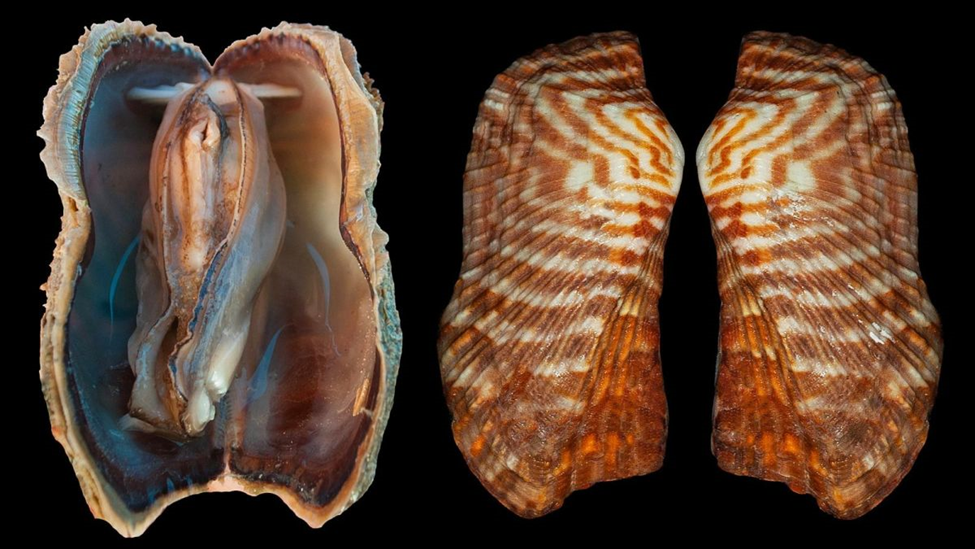
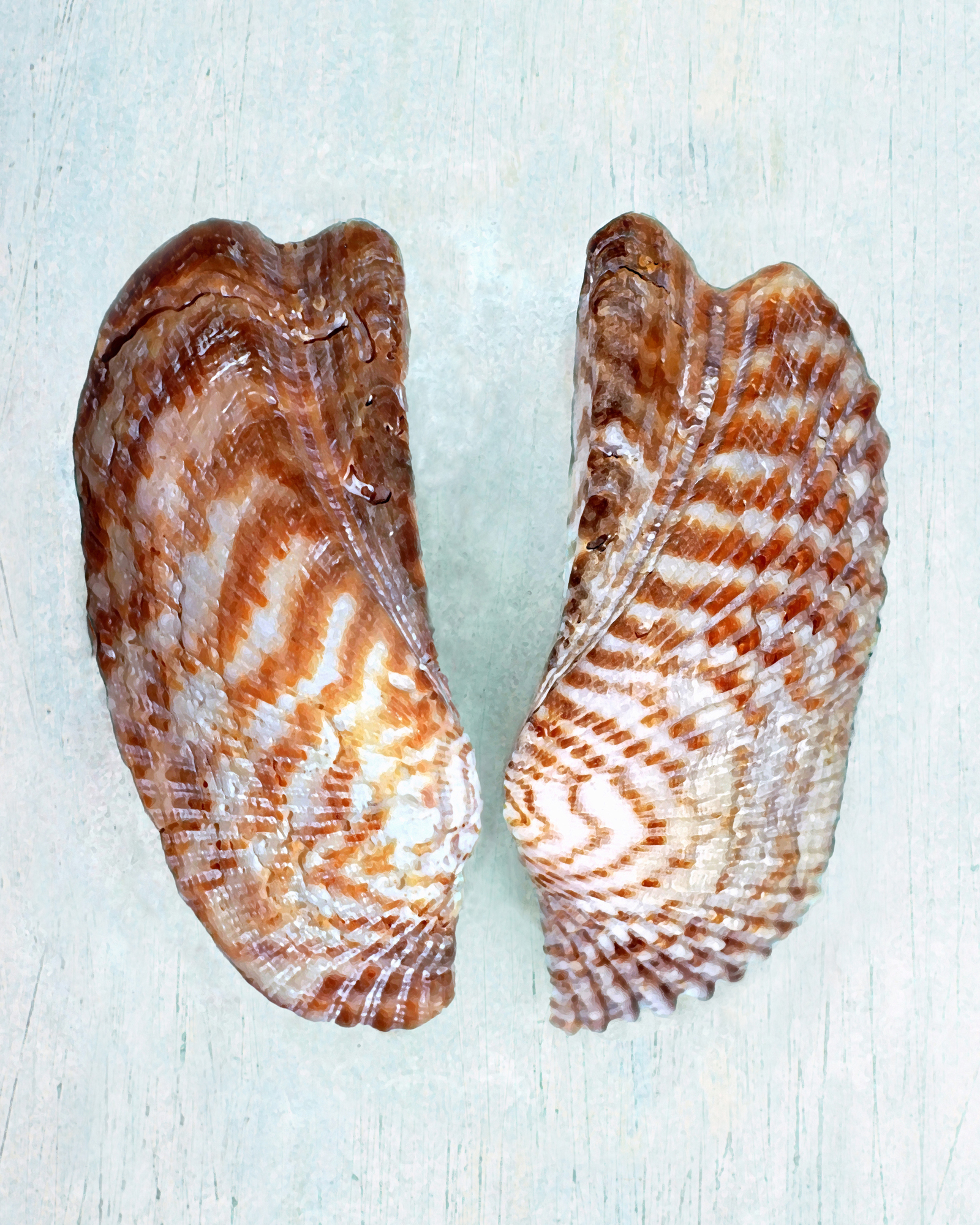
Zebra Ark Outer Shell and Interior: Source

Brief Intro – The word “clam” can be used to cover all bivalves, including scallops, oysters, arks, and cockles, to name a few. Did you know that there are more than 15,000 species of clams around the globe? Amazing, right? Clams and other bivalves first appeared in the fossil record as tiny creatures as early as the Cambrian Period over 500 million years ago. By the Devonian Period around 400 mya and through the Mesazoic Era, they gradually developed into the abundant forms. Follow along to learn interesting facts and help identify those clamshells you couldn’t resist picking up from the beach.

Twelve Atlantic Clamshell Identification Info, Photos and Interesting Facts in the following order:

  1. Ponderous Ark
  2. Blood Ark
  3. Transverse Ark
  4. Incongruous Ark
  5. Cut-Ribbed Ark
  6. Zebra Ark
  7. Broad-Ribbed Cardita
  8. Angel Wings
  9. Buttercup Lucine
  10. Chalky Buttercup Lucine
  11. Florida Lucine
  12. Pennsylvania Lucine
  • For additional clamshell ID and info including various Coquinas, various Oysters and Tellins and more, click HERE
  • For additional clamshell ID and info including various Cockles, Scallops, Venus Clams, Checkerboard Calico, click HERE
  • Otherwise, scroll to Categories, click on “Clam Seashells” and everything is there.

Ponderous Ark Clamshell Collection

1. Ponderous Ark Clam

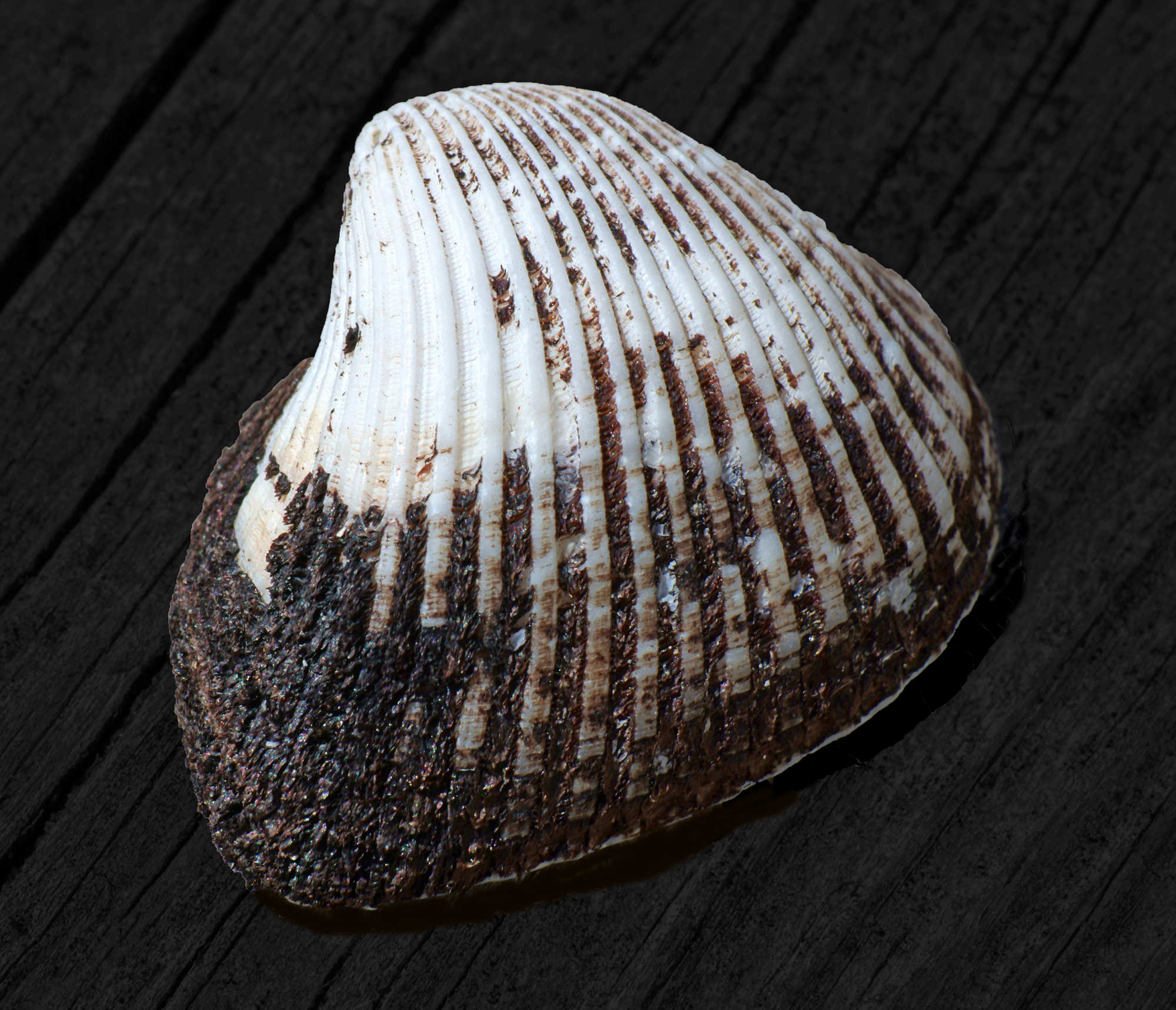
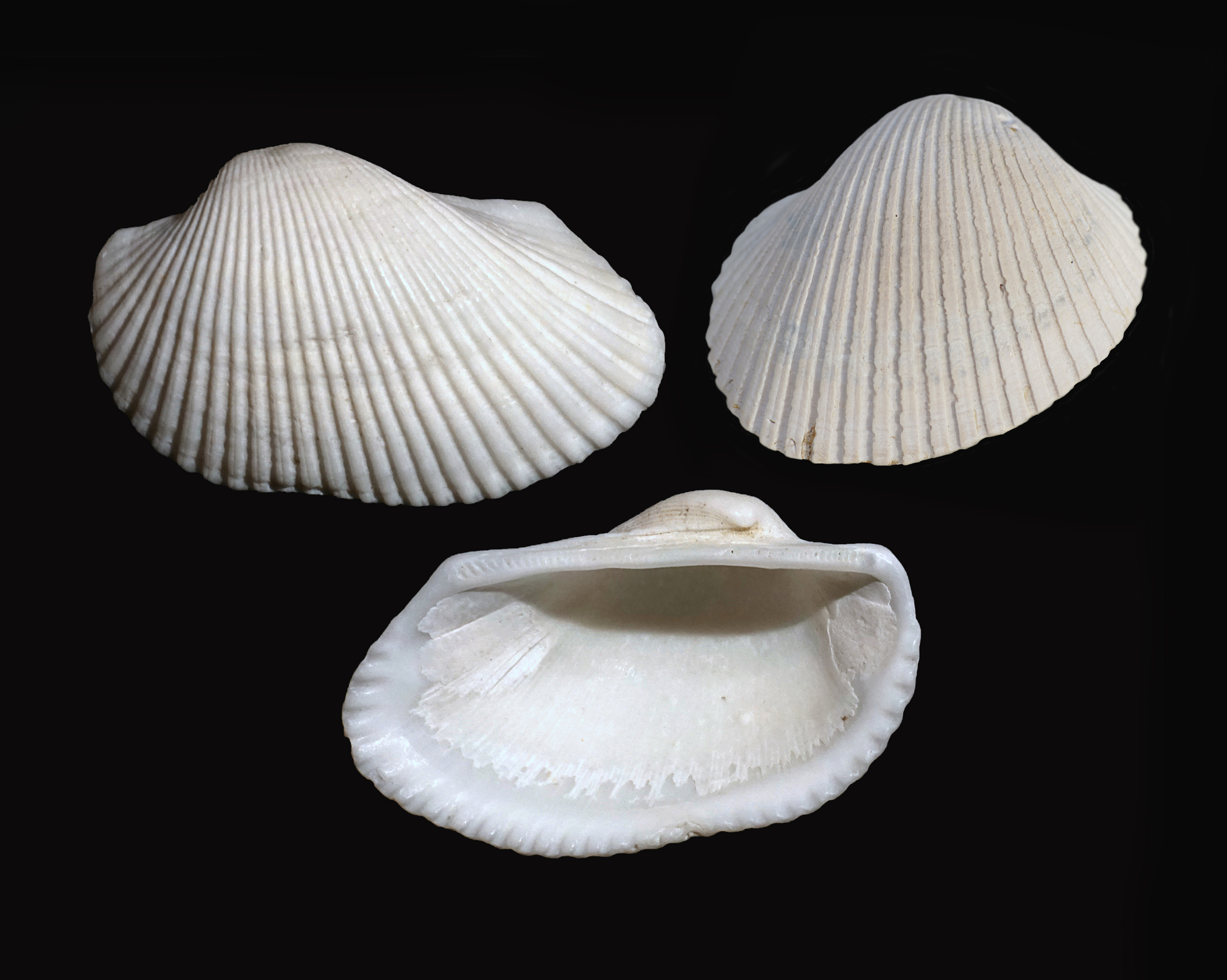
Ponderous Ark (Eontia ponderosa) clam displays a very thick triangular shell with 27 to 31 strong, flat radiating ribs and a large beak that turns back to the rear of the shell. These arks have a dark, velvety skin worn to white after beaching, and the calcareous shell can later stain to rust or gray. Their robust shells make them and their relatives, such as the Blood Arks, among the most common beach finds where other bivalve shells are otherwise pulverized in high-energy wave zones. Ponderous Ark and its relatives are a family of small to large-sized edible saltwater clams.

Ponderous Ark Clamshell with Periostracum Covering
  • Camouflaging Layer over Arks: The Periostracum The shells of many ark species have a thick layer of a dark brown velvety covering called the “periostracum”. The photo shows the covering layered over the shell which has partly been worn away. It serves as a protective camouflage. After beaching, the periostracum begins to wear off and, in time, can completely disappear.
  • Size: Up to 3 inches
  • Habitat: Typically, a sand – silt dweller in shallow shores, often partially buried or attached to substrates in depths to 35 ft (11m)
  • Range: Virginia to Key West to Gulf of Mexico
Blood Ark Clamshell Collection

2. Blood Ark Clam

Blood Ark (Anadara ovalis) derives its name from its uncommon red blood; most mollusks have clear blood. Like their close relative, the Ponderous Arks, Blood Arks have very thick shells, only to a slightly lesser degree. After the outer layer “periostracum” wears off, the shells may appear white, gray, or rust-colored. The interior is typically creamy white. Each valve typically has approximately 35 deep, flat radiating ribs.

  • Size: 2 1/2 inches
  • Habitat: Sandy shallows ommonly found from the low-tide line to depths of 10 ft (3 m); favors brackish water
  • Range: Cape Cod, Massachusetts, to Florida and east to Texas
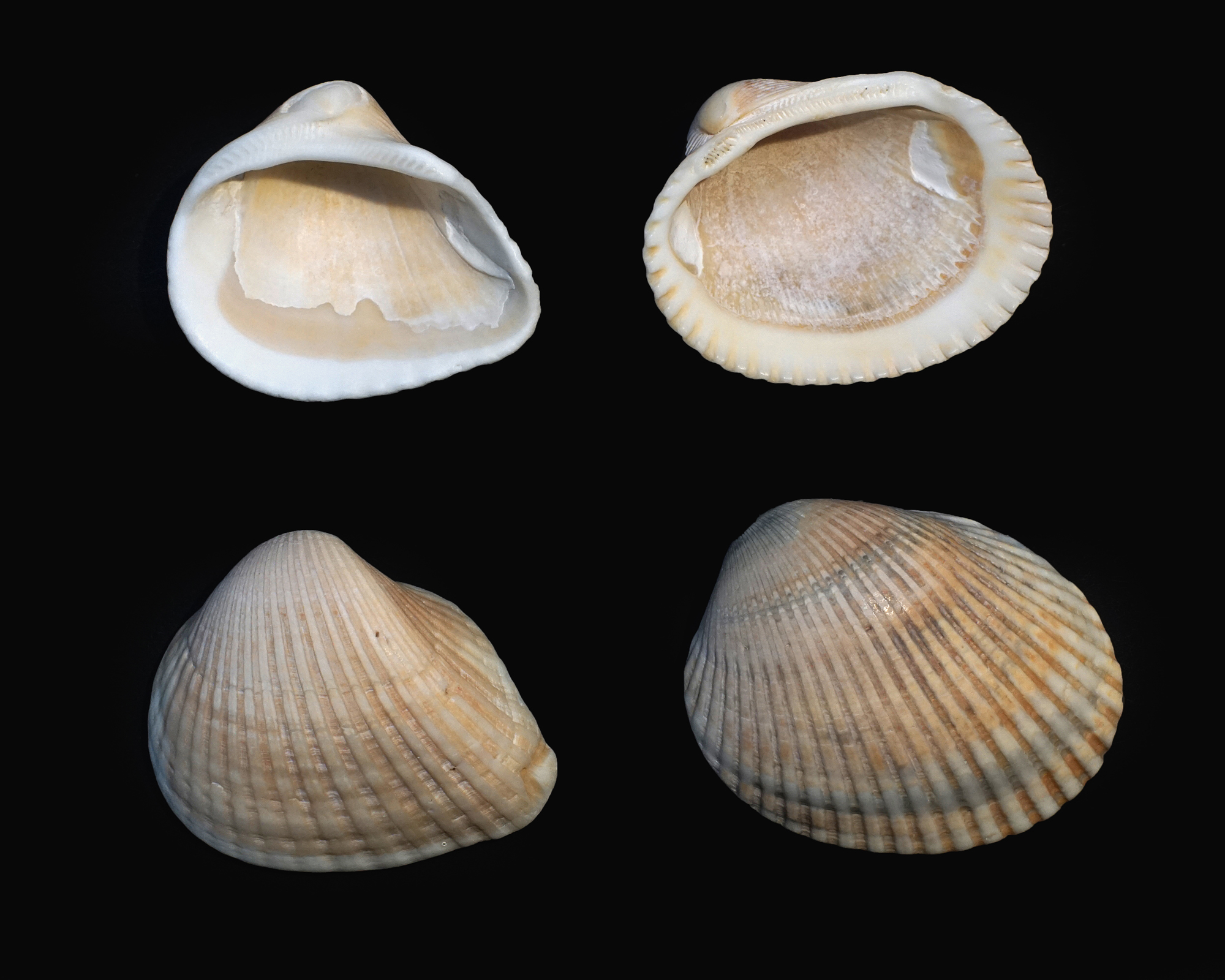
Comparison: Left: Ponderous Ark Shells Right: Blood Ark Shells

Comparison: At first glance, it’s hard to tell apart the Blood Ark from the Ponderous Ark. The Ponderous Ark (left) has a more triangular-shaped shell with an inflated high crease from the beak, whereas the Blood Ark (right) has a more elongated oval shape (observe the comparison photo). Also, the hinge line of the Blood Ark is slightly longer and straighter.

Transverse Ark Clamshells

3. Transverse Ark Clam

Transverse Arks (Anadara transversa) are fairly sturdy, elongated oval and small bivalves. Their valves are somewhat inflated, bearing a relatively long straight hinge line. They display squarish ribs and are usually colored white once the periostracum covering wears off after beaching. Like many seashells, they can stain rust or gray after prolonged exposure to the sun and air. They are commonly found on Florida shores.

  • Size: Up to 1 1/4 inches
  • Habitat: Gulf and bay sandy bottoms or hard substrates in sub-tidal inshore waters
  • Range: Massachusetts to Florida, east to parts of the Gulf of Mexico and south to the West Indies
Incongruous Ark Clamshell Collection

4. Incongruous Ark Clam

The desirable Incongruous Ark (Scapharca brasiliana), formerly (Anadara brasiliana) possesses a sturdy shell distinguished by obvious beading on its strong radial ribs. The shells grow in a triangular shape with well-inflated valves and a strong beak turned back. The color is white with the brown, furry covering (periostracum) while alive and may discolor after being beached by the sun.

  • Size: Up to 3 inches
  • Habitat: Shallow sandy bottoms, intertidal zone down to depths of roughly 148 ft (45 m). 
  • Range: North Carolina to Brazil
Cut-Ribbed Ark Clamshells

5. Cut-Ribbed Ark Clam

Cut-Ribbed Ark (Anadara floridana), otherwise known as (Anadara secticostata) possess fairly inflated shells with an elongated, slightly uneven oval shape. Their hinge is long and quite straight. Usually the shell is colored white, but like other arks, they are susceptible to staining rust after beaching. The valve consists of 30–38 radial ribs flattened on top with a groove down the center of each rib and concentric ridges between the ribs.

  • Size: Up to 4 1/2 inches
  • Habitat: Offshore sand or mud in depths ranging from shallow water down to 300 ft (90 m) 
  • Range: North Carolina, Florida and the Gulf of Mexico to Texas and Westward
Zebra Ark Clamshells

6. Zebra Ark Clam (Turkey Wing Ark)

Zebra Arks or Turkey Wing Arks (Arca zebra) possess an unusually elongated oval shape with a long straight hinge. The surface of the valve is uneven with rough-textured ribs. Still, their most distinguishing mark is the attractive zigzag alternating brown and white stripes resembling a zebra or, noticeably, a turkey wing.

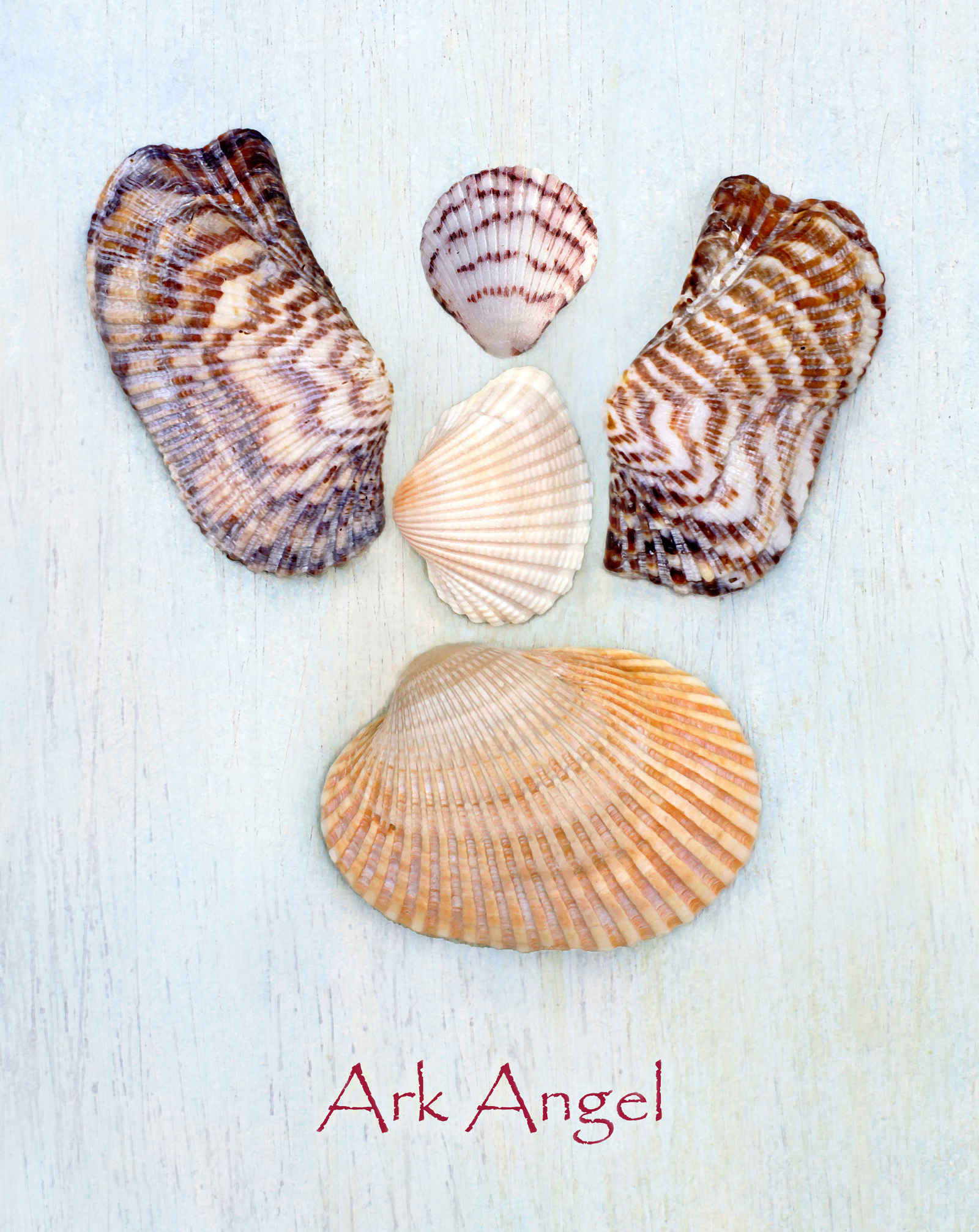
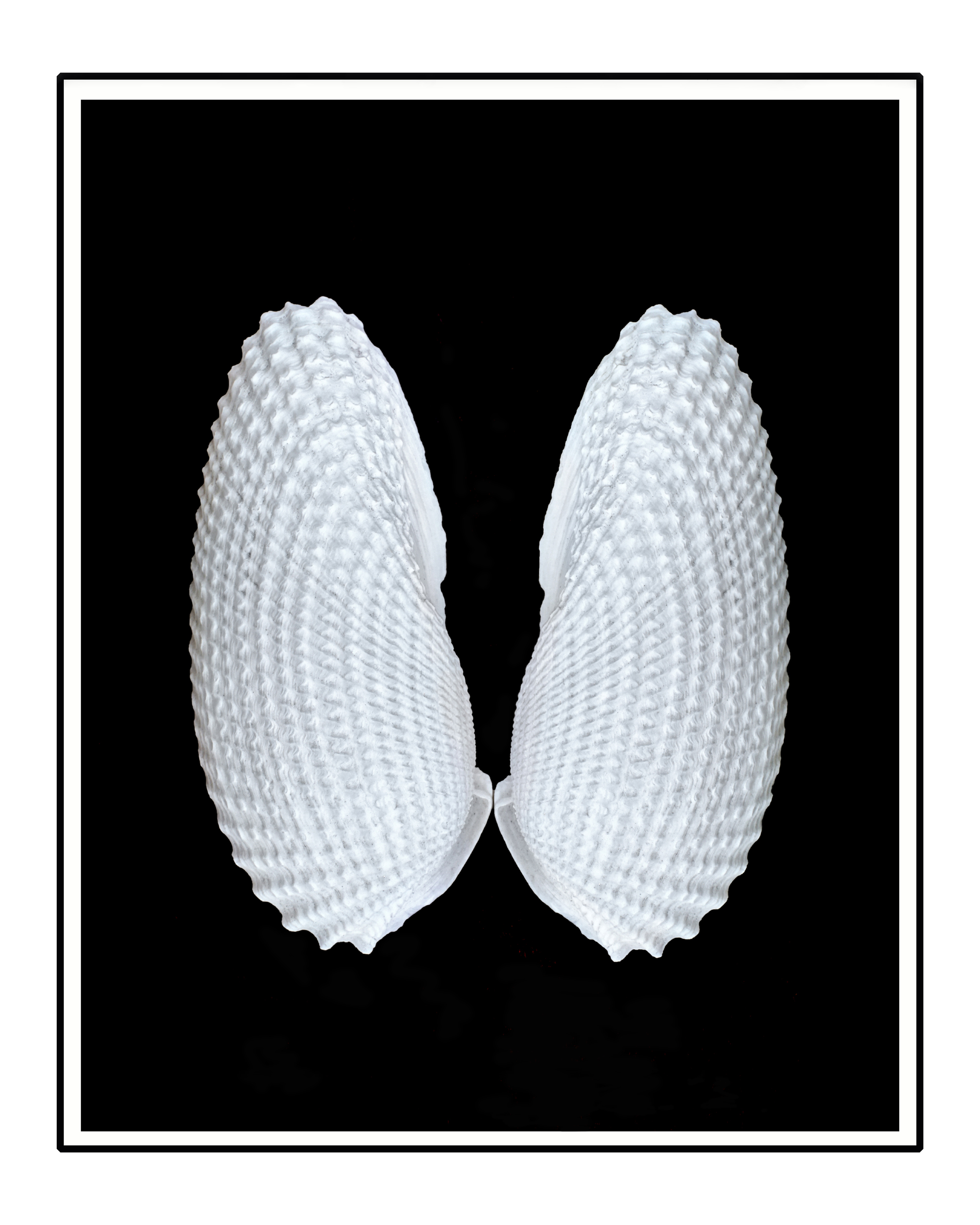
Just for Fun – Various Ark Shells (Ark Angel) My Photosite Image

This ark shell has also been called “Noah’s Ark” because of its shape when the valves are connected. Like many ark shells in general, living examples are covered with a thick and bristly “carpet” or periostracum that wears away after the animal has died and after bleaching by the sun.

  • Size: Up to 3 1/2 inches
  • Habitat: Attaches to rocks, corals and other solid objects using its byssus (threadlike filaments) in shallow water to depths of 65 ft (20 m)
  • Range: North Carolina to the West Indies, and also on Bermuda’s shores, as well as in the Mediterranean
Broad-Ribbed Cardita Clamshell Collage

7. Broad-Ribbed Cardita Clam

Broad-Ribbed Cardita (Carditamera floridana) is also known as the Bird Wing clam. The exterior shell is covered with white and purple or chestnut blotches with a white interior. The shell is oval, small and thick, with 20 strong raised and beaded radial ribs. Jewelry makers and crafters love this little shell which washes ashore commonly on Florida beaches.

  • Size: Up to 1 1/2 inches
  • Habitat: Attaches itself to hard objects or seagrass by means of its byssus (threadlike filaments) in sand, mud 3 to 25 ft deep
  • Range: Florida east to Texas and Mexico
Angel Wing Clamshells

8. Angel Wings Clam

Angel Wing clams (Cyrtopleura costata) display lovely elongated, wing-like valves with 26 radiating ribs finely sculptured, intercepted with a series of concentric growth rings parallel with the margin. Angel Wings are typically white and sometimes tinged pinkish. The muscles on their hinges are relatively weak, so it’s uncommon to find the left and right valves connected. Also, their valves are rather thin and brittle, so they’re often found damaged from rough seas. Interestingly, Angel Wing shells will glow if exposed to ultraviolet light. They living animal can extend a long siphon that protrudes from the burrow used to circulate water and draw in food particles with enough strength to bore into clay, wood and even shale.

  • Size: Up to 7 inches
  • Habitat: Shallow water burrowing up to three feet deep in soft substrate of mud, clay or peat
  • Range: Cape Cod to Florida and the Gulf of Mexico, east to Central America and as far south as Brazil
Buttercup Lucine Clamshells

9. Buttercup Lucine Clam

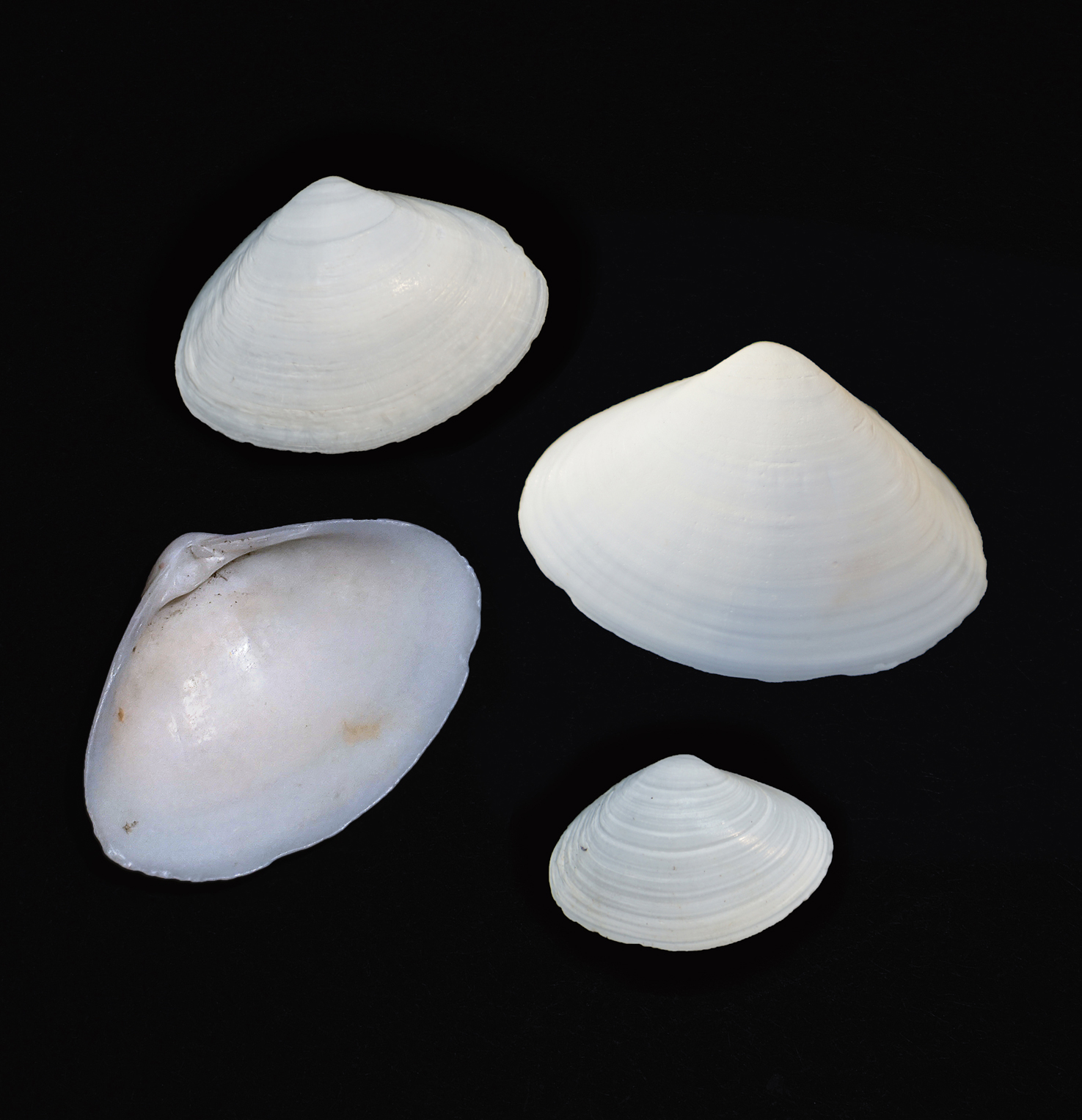
The Buttercup Lucine or Lucina (Anodontia alba) is a circular, bowl-shaped, small bivalve with a fairly sturdy white outer shell and creamy to butter yellow interior. The exterior has numerous fine concentric lines and a somewhat wide hinge plate. Lucines are common in warm waters on both the Atlantic and Pacific Coasts of North America. They are not edible. Did you know the Lucines are named for Lucina, an aspect of the Roman Goddess, Juno, who represented light and childbirth?

  • Size: Up to 2 inches
  • Habitat: Soft sandy or muddy bays and inlets in shallow water to depths from 3-300 ft (90 m)
  • Range: North Carolina to Florida and the West Indies, as well as the U.S. Pacific Coast
Chalky Buttercup Lucine Clamshells

10. Chalky Buttercup Lucine Clam

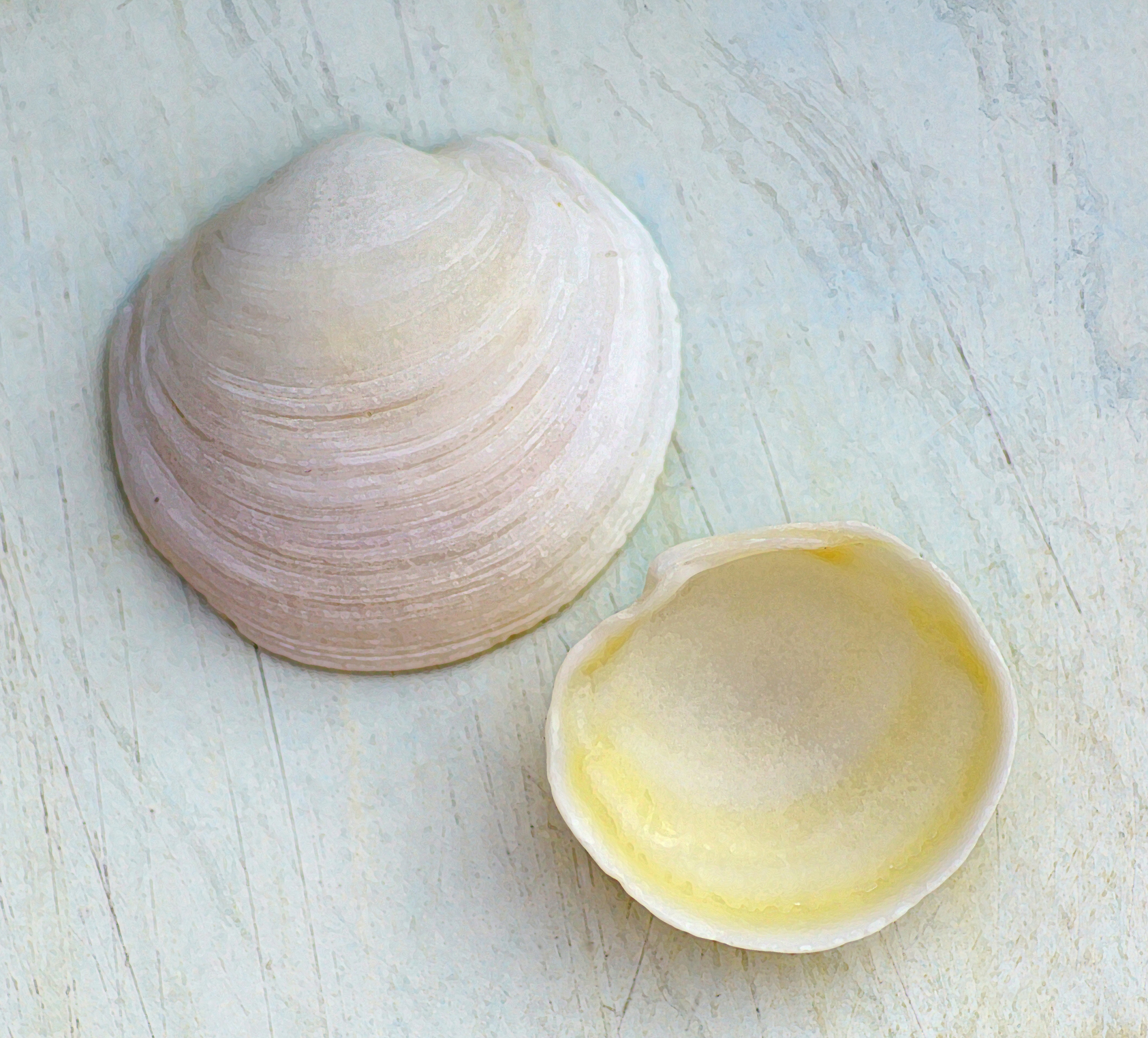
The Chalky Buttercup Lucine (Anodonitia philipiana) clamshell is slightly thicker and also larger than the Buttercup Lucine (Anodontia alba). The valve color is white with white to pale yellow interior and possesses numerous concentric lines with a dominant furrow.

  • Size: Up to 2 1/2 inches
  • Habitat: Soft shallow sand or muddy bottoms and mangroves to about 13 ft (4 m)
  • Range: North Carolina to Florida and the Gulf states, as well as south to the West Indies
Florida Lucine Clamshells

11. Florida Lucine Clam

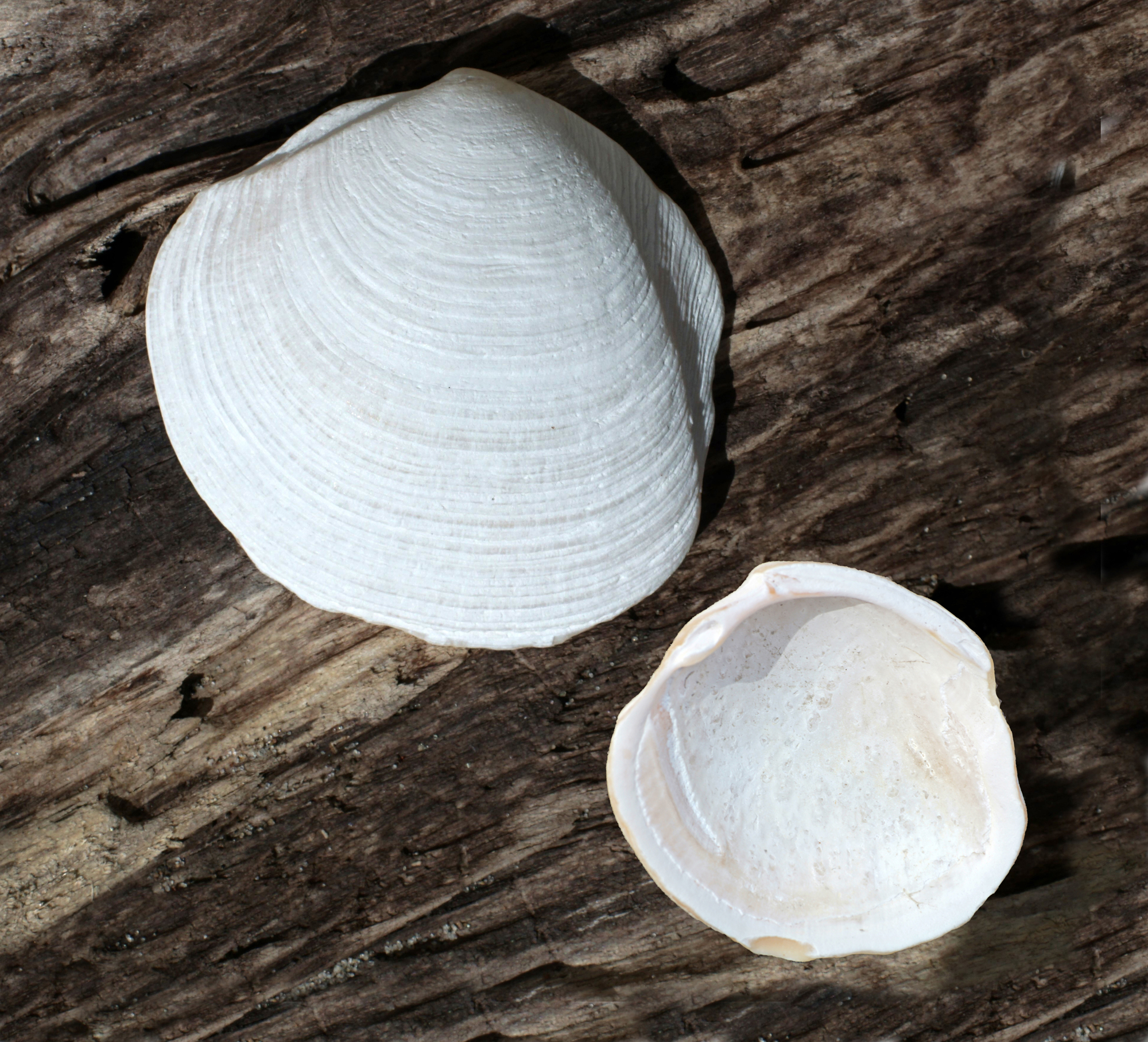
The Florida Lucine or Lucina (Pseudomiltha floridana) displays weak growth lines but has a sturdy shell. Both its exterior and interior valve colors are white. The shell is fairly inflated and very round with a beak that turns forward which is small, but prominent. They have been called the Face Shell because they are used for the faces of shell dolls. They are not edible.

  • Size: Up to 1 1/2 inches
  • Habitat: Moderate shallow water in sand, mud, mangroves or seagrass – intertidal lagoons and bays where they bury
  • Range: Florida to Texas and the U.S. Pacific Coast
Pennsylvania Lucine Clamshell

12. Pennsylvania Lucine Clam

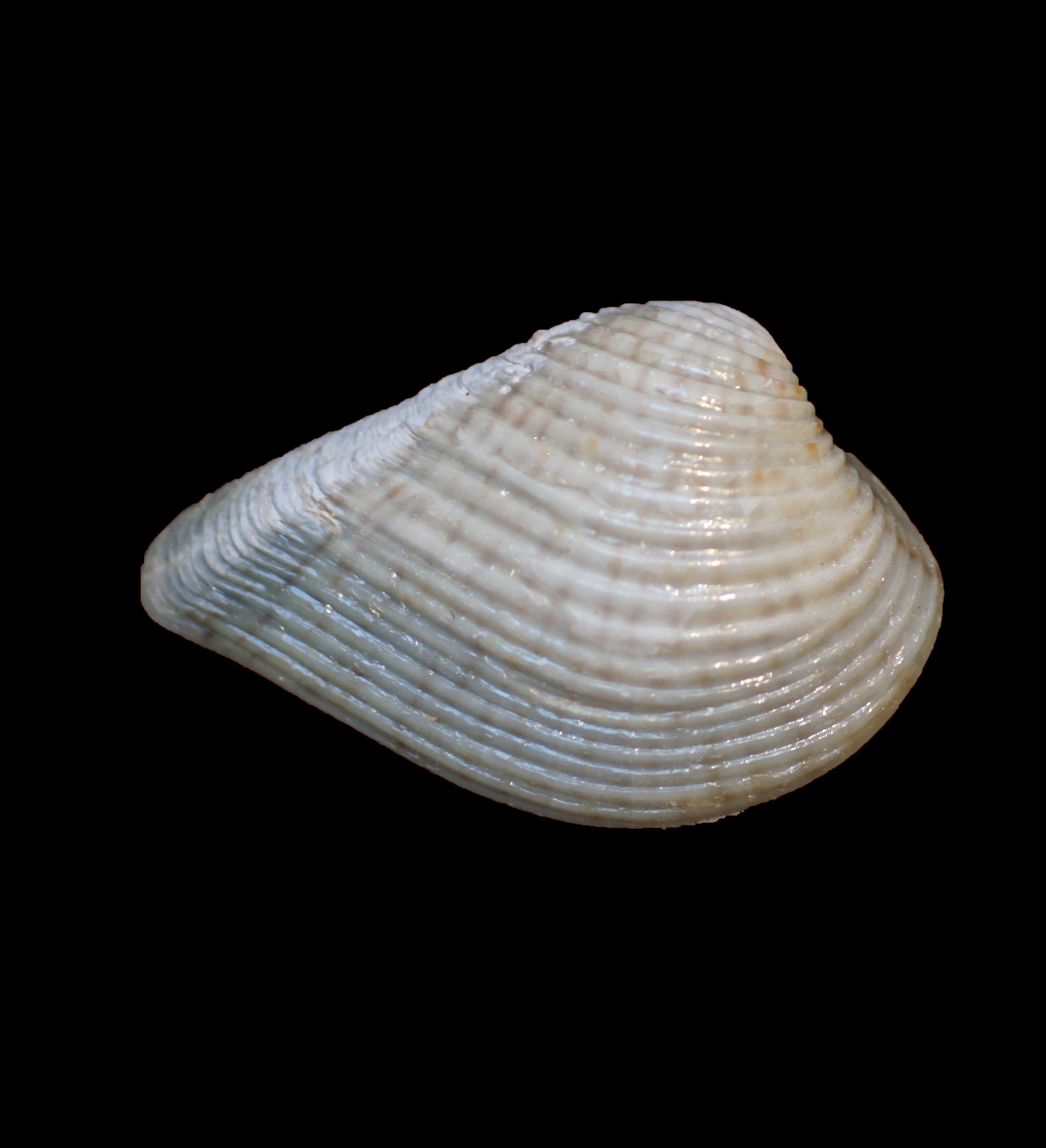
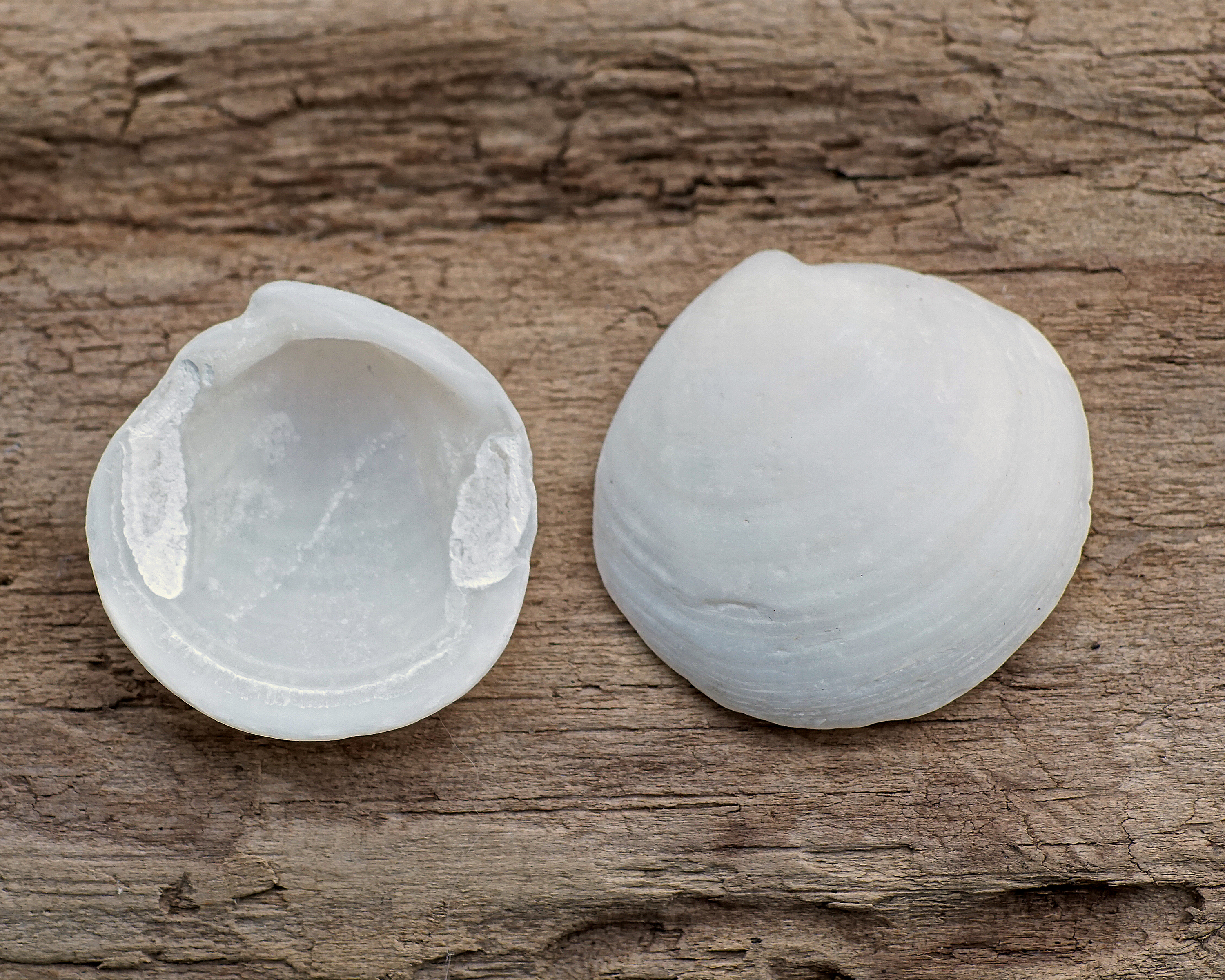
The Pennsylvania Lucine or Lucina (Linga pennsylvanica) shell is off-white with distinct concentric ridges and a distinct diagonal furrow about the posterior region. The interior is the same color as the exterior. The shell is sturdy, heart-shaped and inflated with a beak inclined forward. Beach-worn specimens are smooth and shiny. They are not edible.

  • Size: Up to 2 inches
  • Habitat: Sandy, gravelly, or coral sand habitats in shallow to moderate depths 250+ ft (76 m)
  • Range: North Carolina to Florida and the West Indies, as well as the U.S. Pacific Coast

All rights reserved © Fossillady 2026