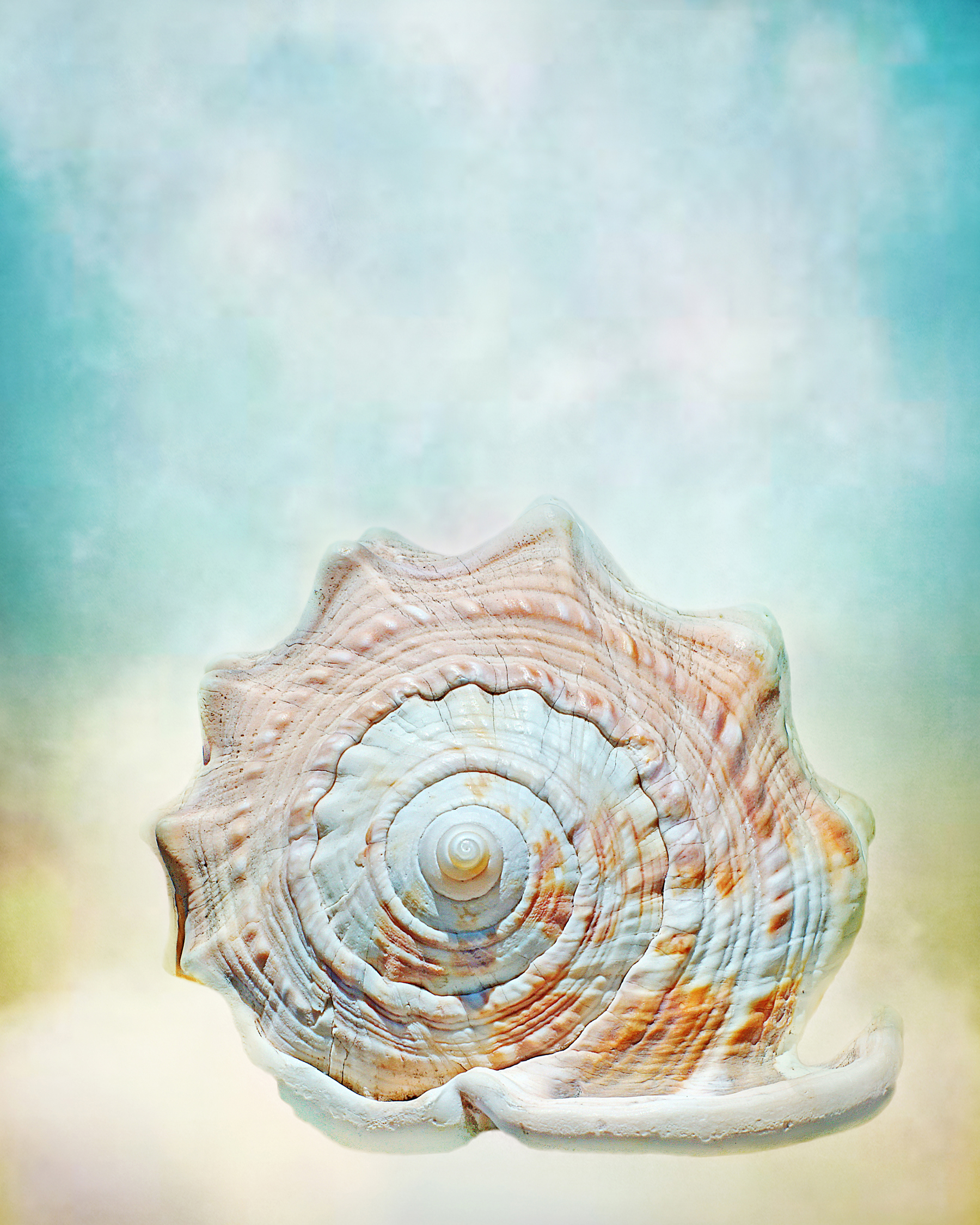
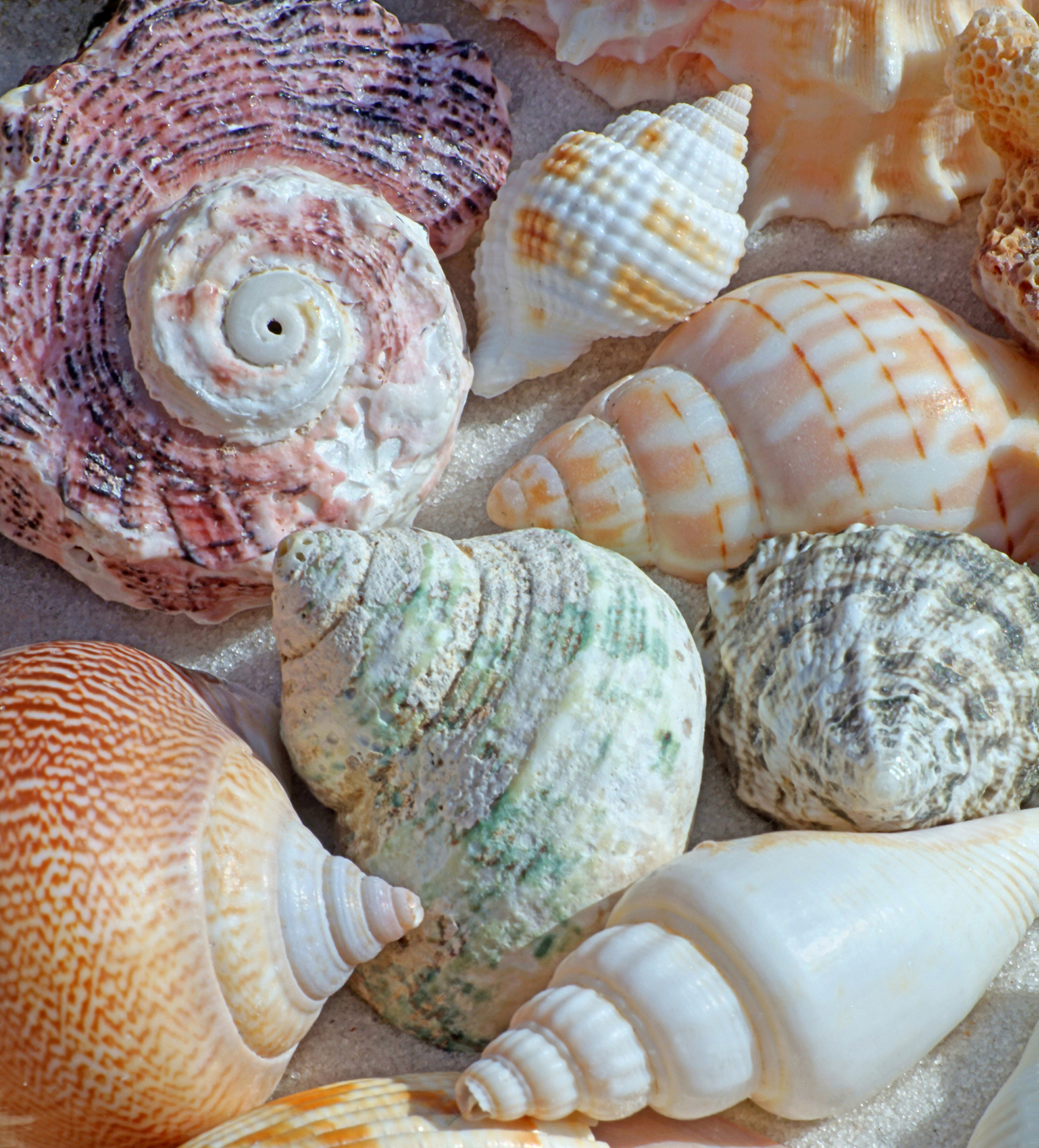
Everybody Loves Seashells – If you have ever walked the beaches along the Atlantic or Pacific coasts, you have likely come across various seashells, lovely and irresistible to pick up! Follow along for interesting facts and identification guidlines for those seashells that filled you with wonder!
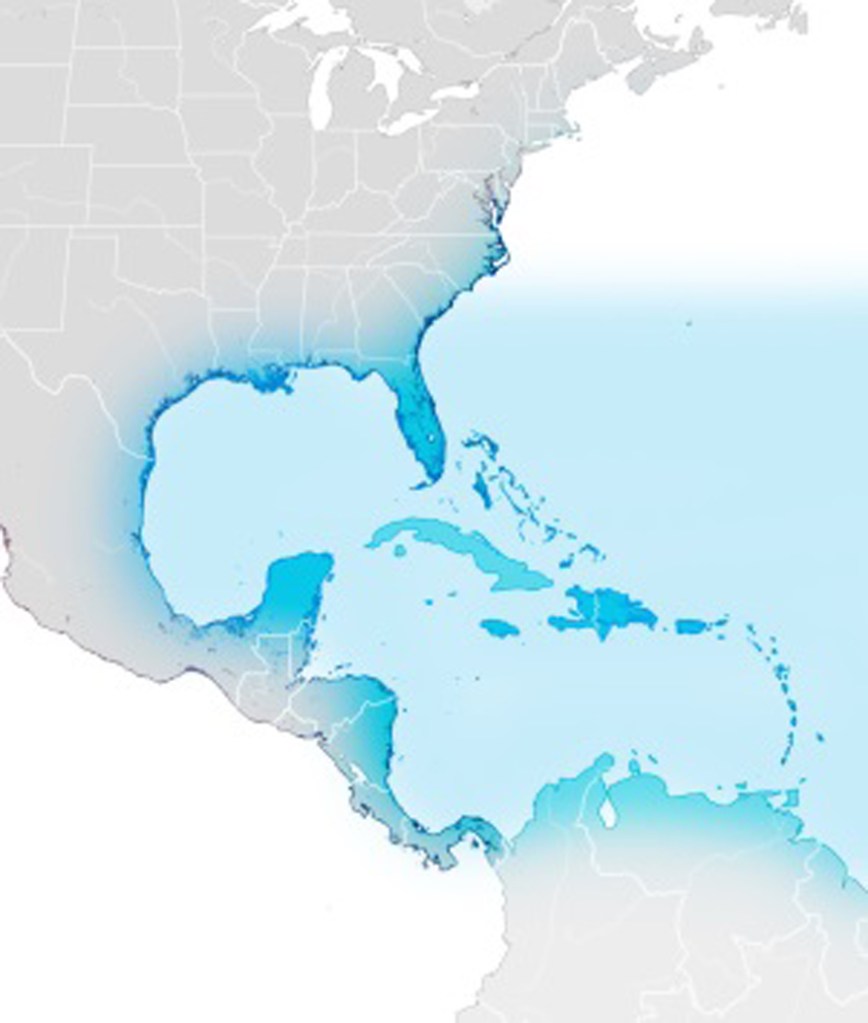
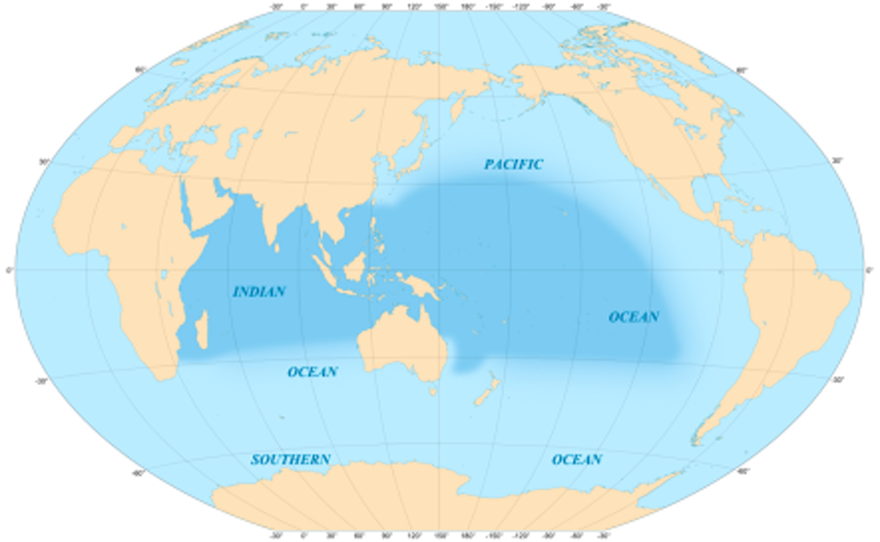
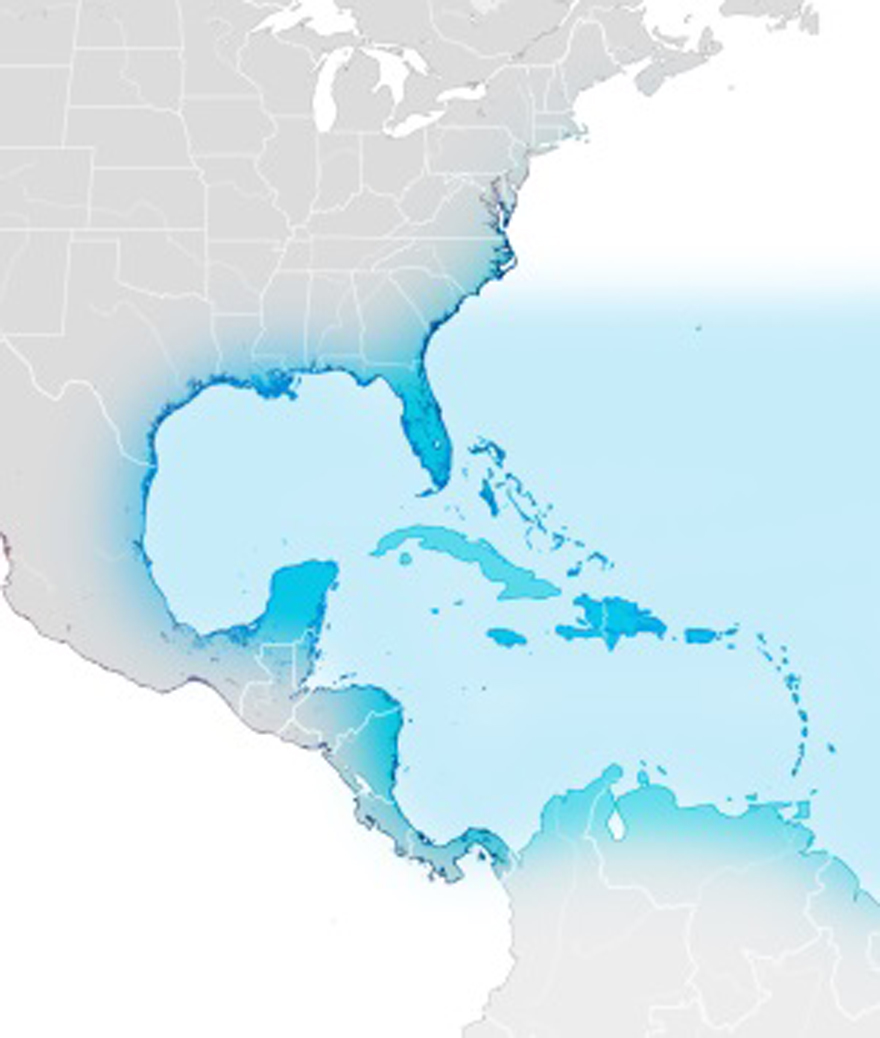
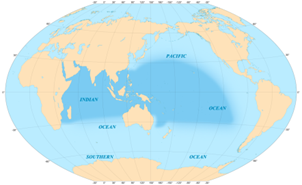
The unvivalve seashells profiled in this photo essay can be found in the subtropical to tropical Atlantic coastal regions bordering the USA, the Caribbean, South America and the Gulf of Mexico or the Indo-Pacific coastal regions bordering India, China, Japan, Australia, Indonesia, South Korea, Russia and the USA.
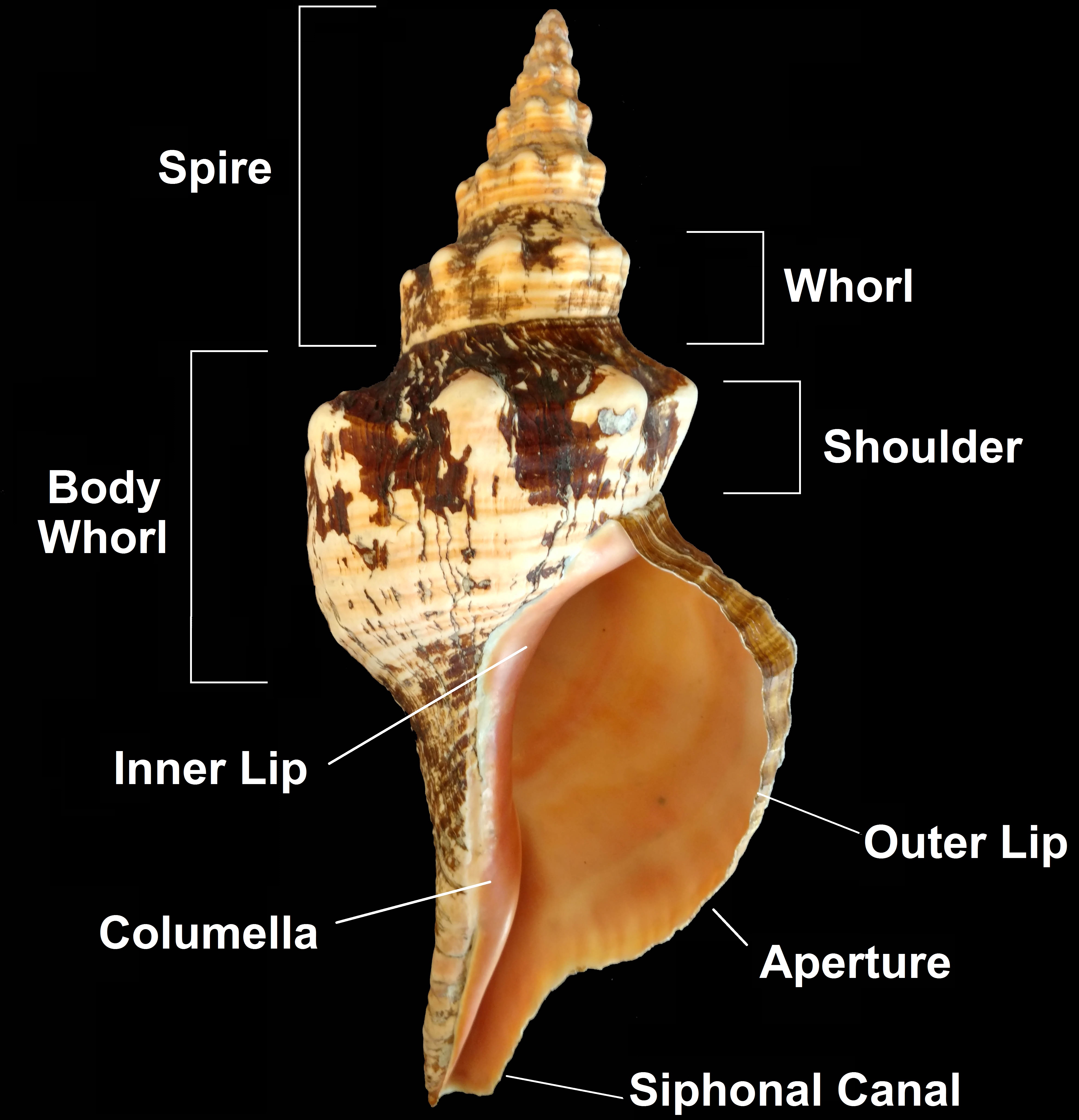
What Is a Univalve? Univalves, otherwise known as gastropods or sea snails, possess valves (shells) characterized by a single shell, typically spiraled. When identifying univalve shells, location is important along with the obvious features such as shape, textures, markings, and color. Size is important as well, but keep in mind that sometimes you may have found a juvenile that hasn’t reached full size.
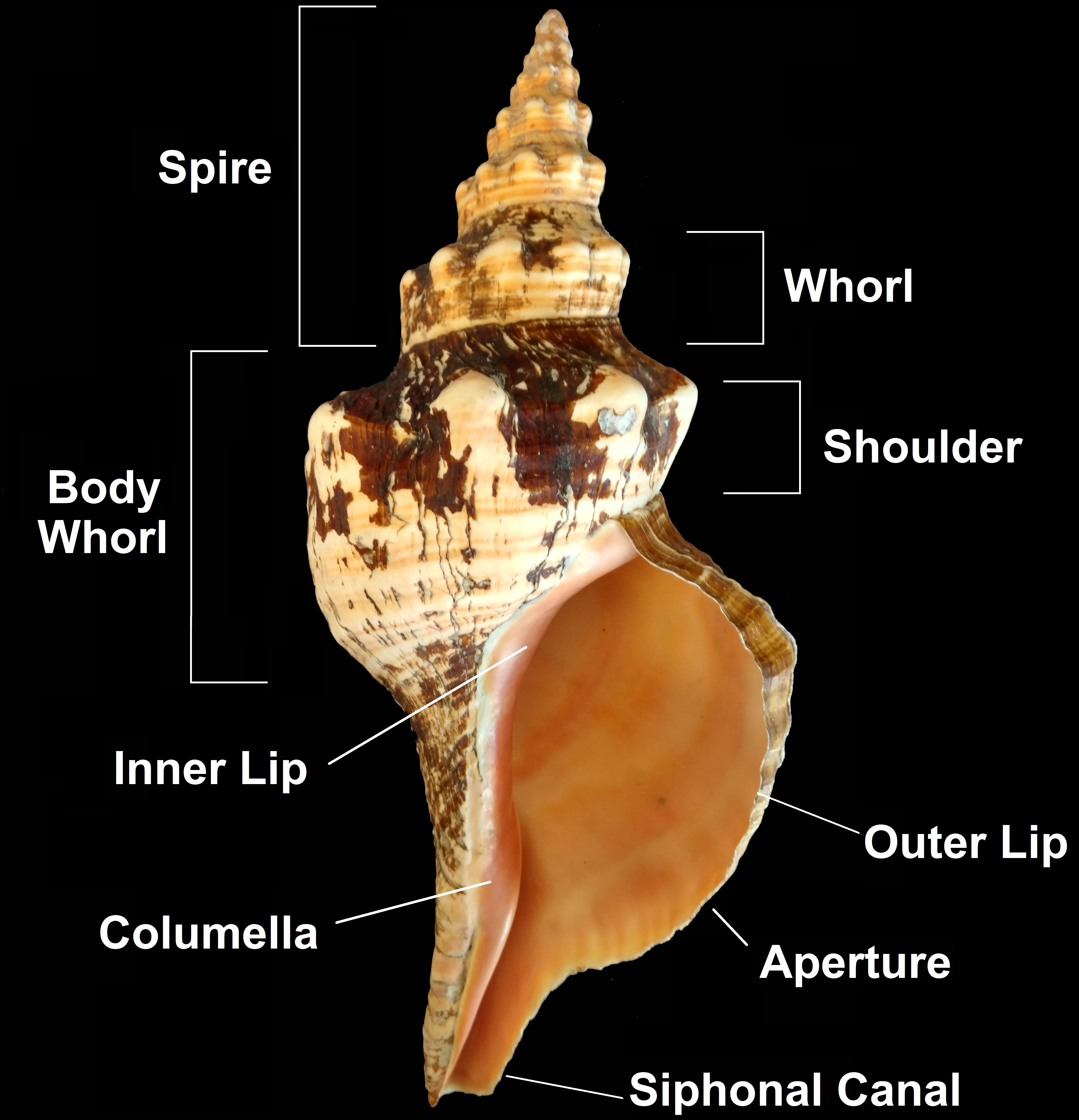
Univalve Identifcation, Photos and Facts included in the following order:
- 1. Queen Conch
- 2. Florida Fighting Conch
- 3. Dog Conch (Yellow Conch)
- 4. Spider Conch
- 5. Queen (Emperor) Helmet
- 6. Cameo Helmet
- 7. Lightening Whelk
- 8. Common Northern Whelk
- 9. Giant Eastern Murex
- 10. Lace Murex
- 11. Apple Murex
- 12. Pink Throat Murex
- 13. Atlantic Oyster Drill
- 14. Florida Rock Snail
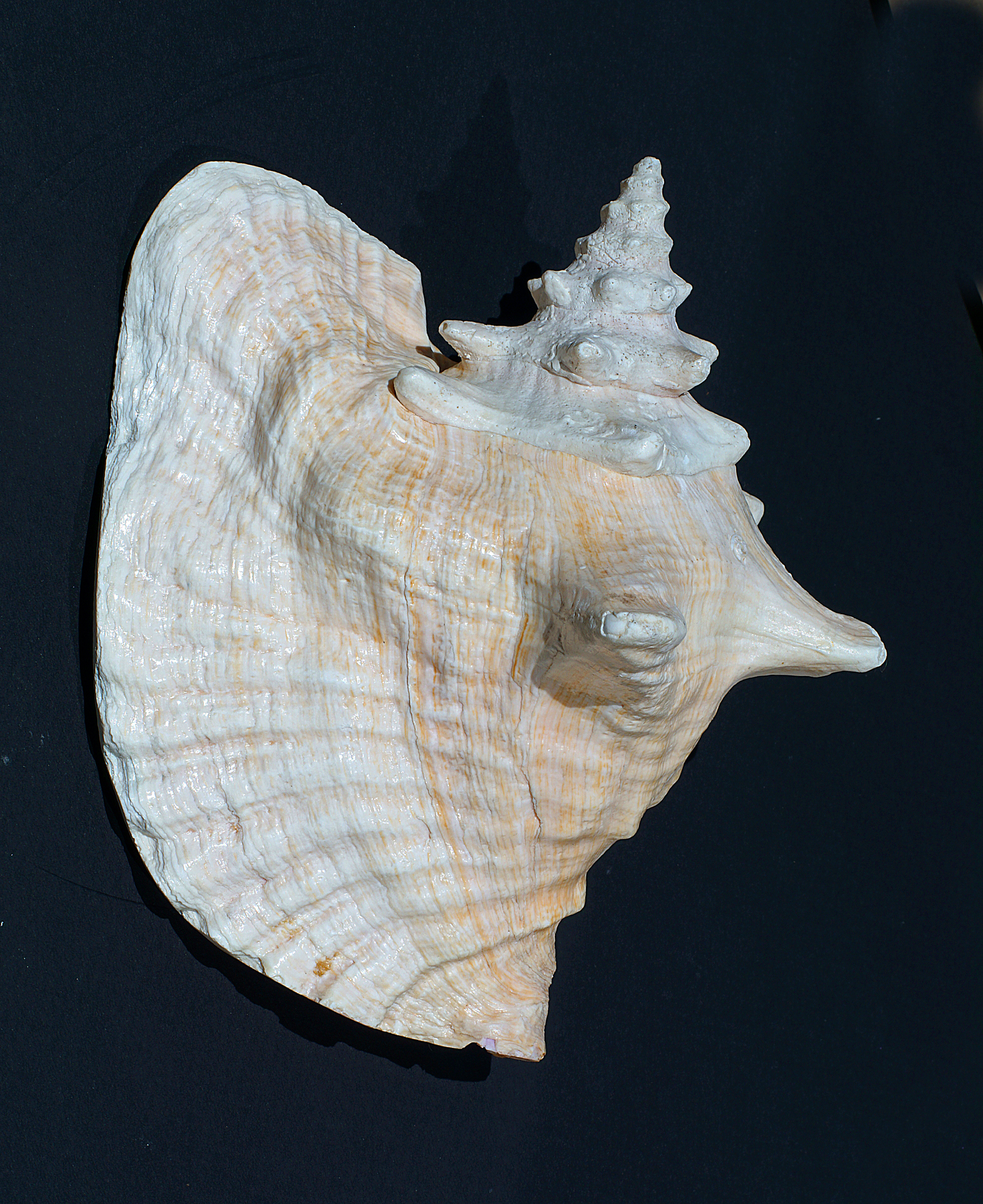
1. Queen Conch (Strombus, gigas)
Queen Conch (pronounced “conk”) possesses a large spiral shell that may bear numerous thick triangular knobs and whorls, a long spire, a sharp apex and a flared lip. The outside is brownish yellow with a bright pink opening and lip. Only as adults, are the lips of the shell thick and flared. But their large size may be the best identifying feature. Much has been written about the Queen Conch shells for their beauty, size, many uses, and popularity. They are the ones you see in the movies of native islanders blowing into in order to call the gods, or little kids putting them up to their ears to listen for the echoes of the ocean.
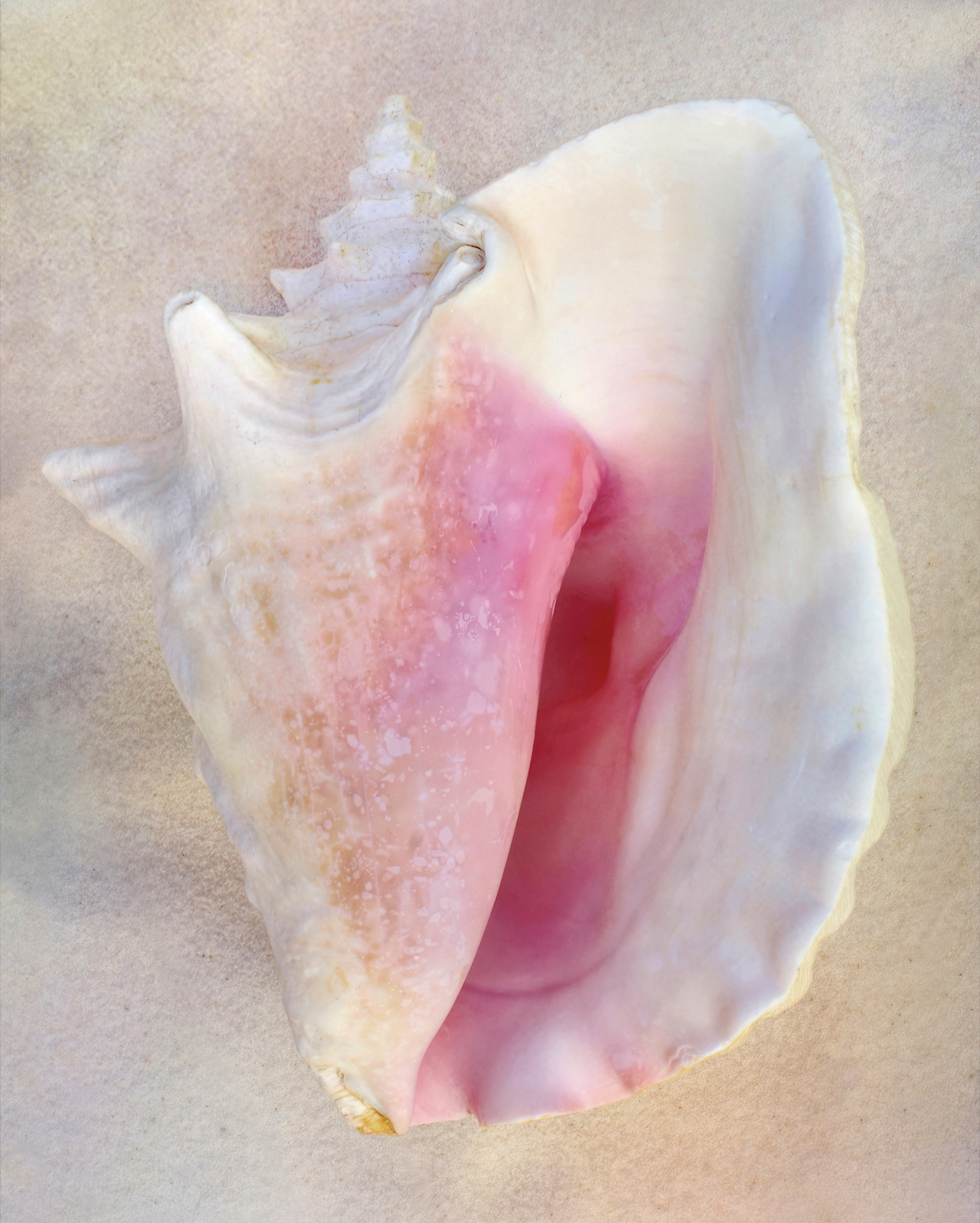
Big, heavy and impressive shells house a tasty animal known as the Queen Conch, which may find itself loved out of existence. They are eagerly collected by shell enthusiasts and fisheries alike, but it is a protected species in the U.S. state of Florida. Whether dead or alive, collectors are warned to keep hands off. Their slow growth rate, occurrence in shallow waters, and late maturation make the Queen Conch particularly susceptible to over-fishing. Queen Conch, as with all sea snails, have a well-developed head with eyes, tentacles, and a mouth; a broad muscular foot for crawling, and a soft body mass that is protected by their shell. They feed on algae and other plant material distinguishing them from the carnivorous whelks or helmet sea snails. They live up to 40 years.
.
- Size: Up to 8-12 in, 15-31 cm
- Range: Atlantic coast from Florida, west throughout the entire Gulf of Mexico zone and greater Caribbean tropical zone, and as far south as Venezuela
- Habitat: Sandy, shallow, warm waters in coral reefs or seagrass beds at depths of 9-115 ft (.3-35 m)
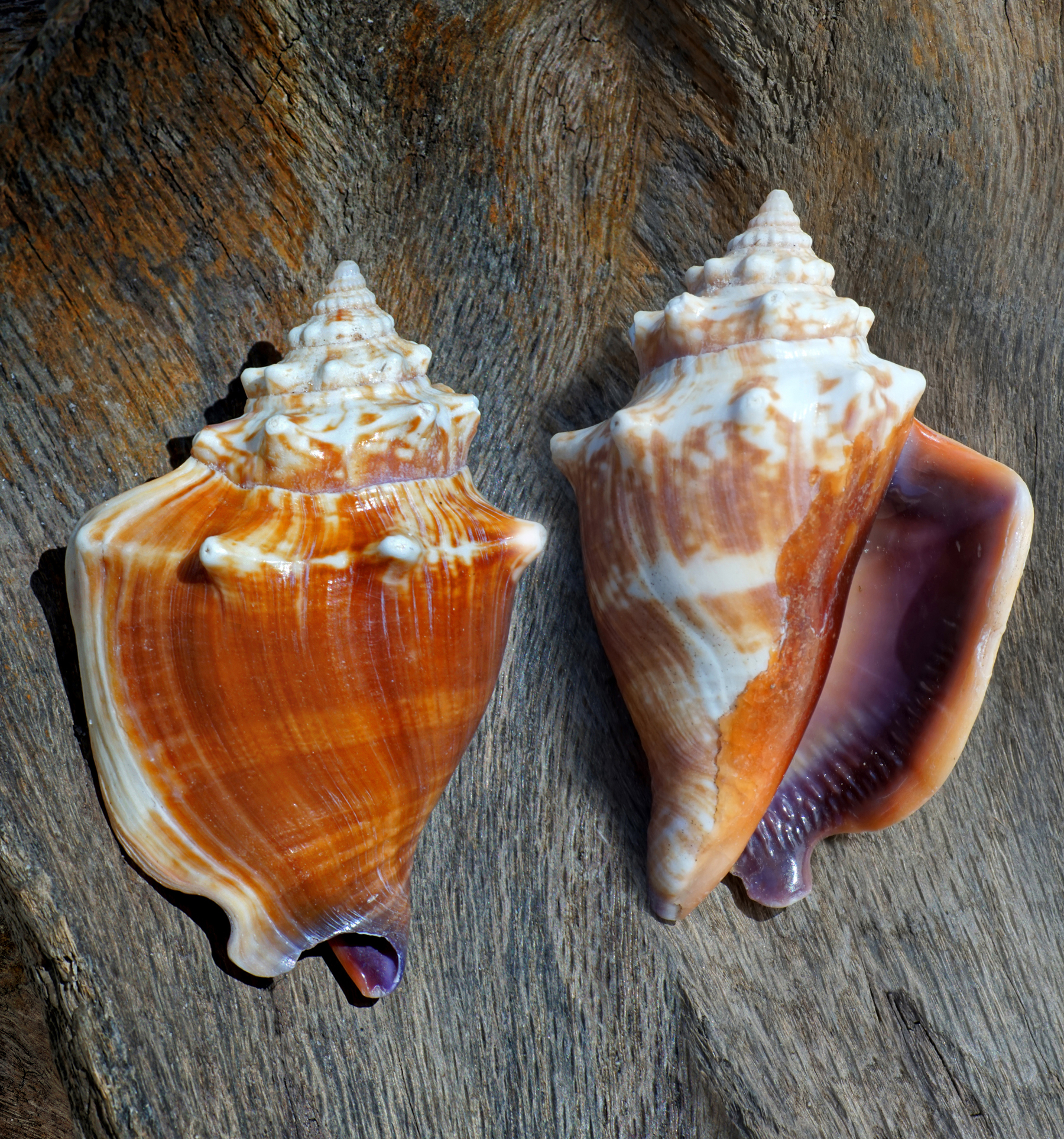
2. Florida Fighting Conch (Strombus alatus)
Florida Fighting Conch shell description – Look for an attractive thick orange-brown fairly small conch with darker brown blotches. The Florida Fighting Conch sometimes shows light tan blotches over creamy white. Knobs may be present on larger whorls. The interior is darker brown with a wide, thick lip bearing a distinct indentation near the posterior end with slight ribs. The snail animal eats algae and tiny marine plants.
They are named for thier aggressive, male territorial battles using their sharp claw-like structure (operculum) to push and stab during fights with rivals during mating. Despite their peaceful nature as herbivores, they also use this claw-like structure to vigorously thrash and escape when threatened or handled.
- Size: Up to 3-4 in (8 to 10cm)
- Habitat: Seagrass beds, sandy and muddy sea bottoms in shallow water; thrive in depths ranging from the intertidal zones down to 180 feet (55 meters)
- Range: North Carolina to Florida, west to Texas
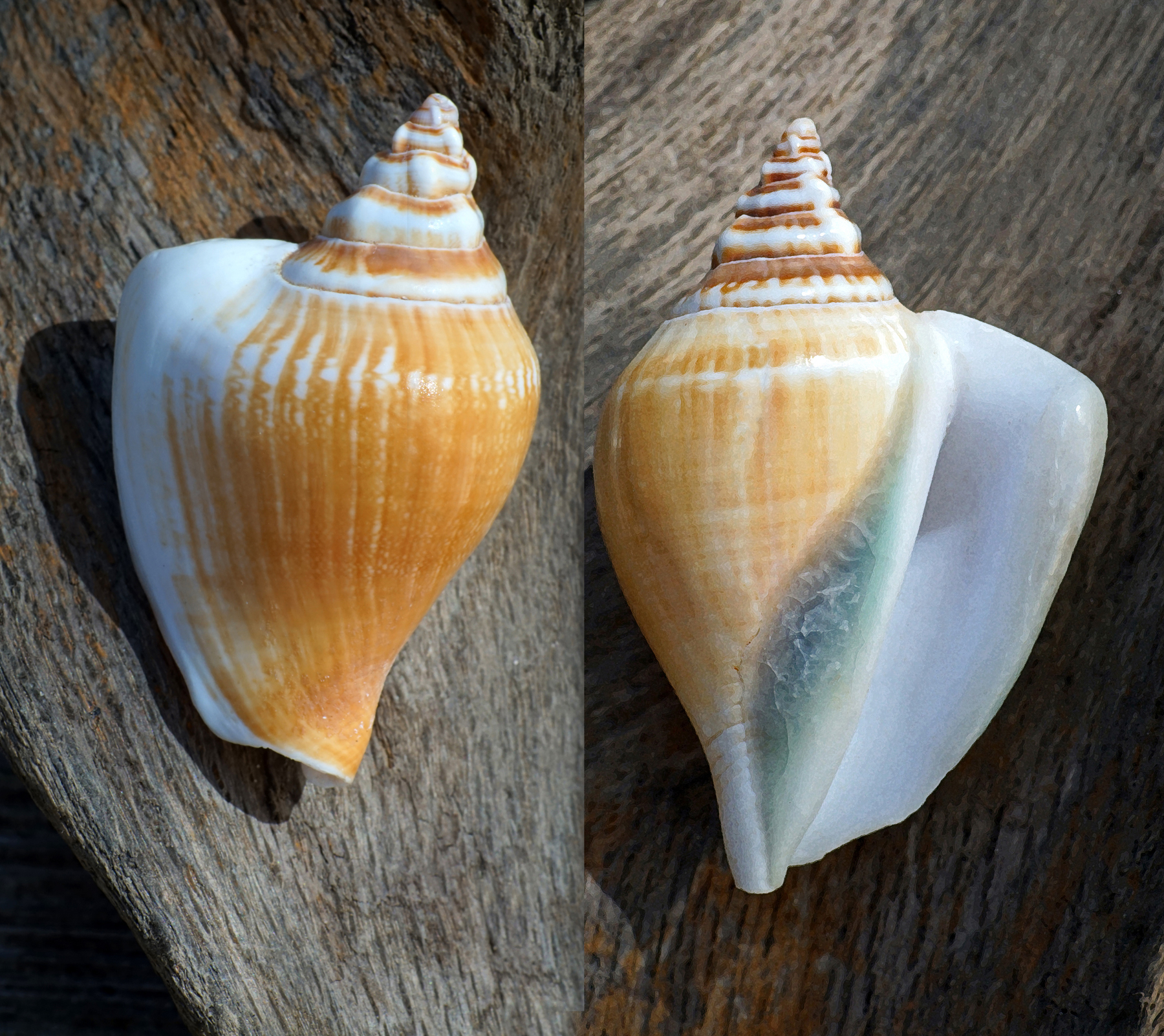
3. Dog Conch or Yellow Conch (Strombus canarium)
Shell Description of the Dog Conch or Yellow Conch is colored golden brown to yellow sometimes with a darker-brown zig-zag pattern. The body is inflated especially at the shoulder, topped with a few spiral grooves and a pointy spire, it has a thick flared outer lip. The interior is white, mature specimens present a metallic gray on the margin of the outer lip.
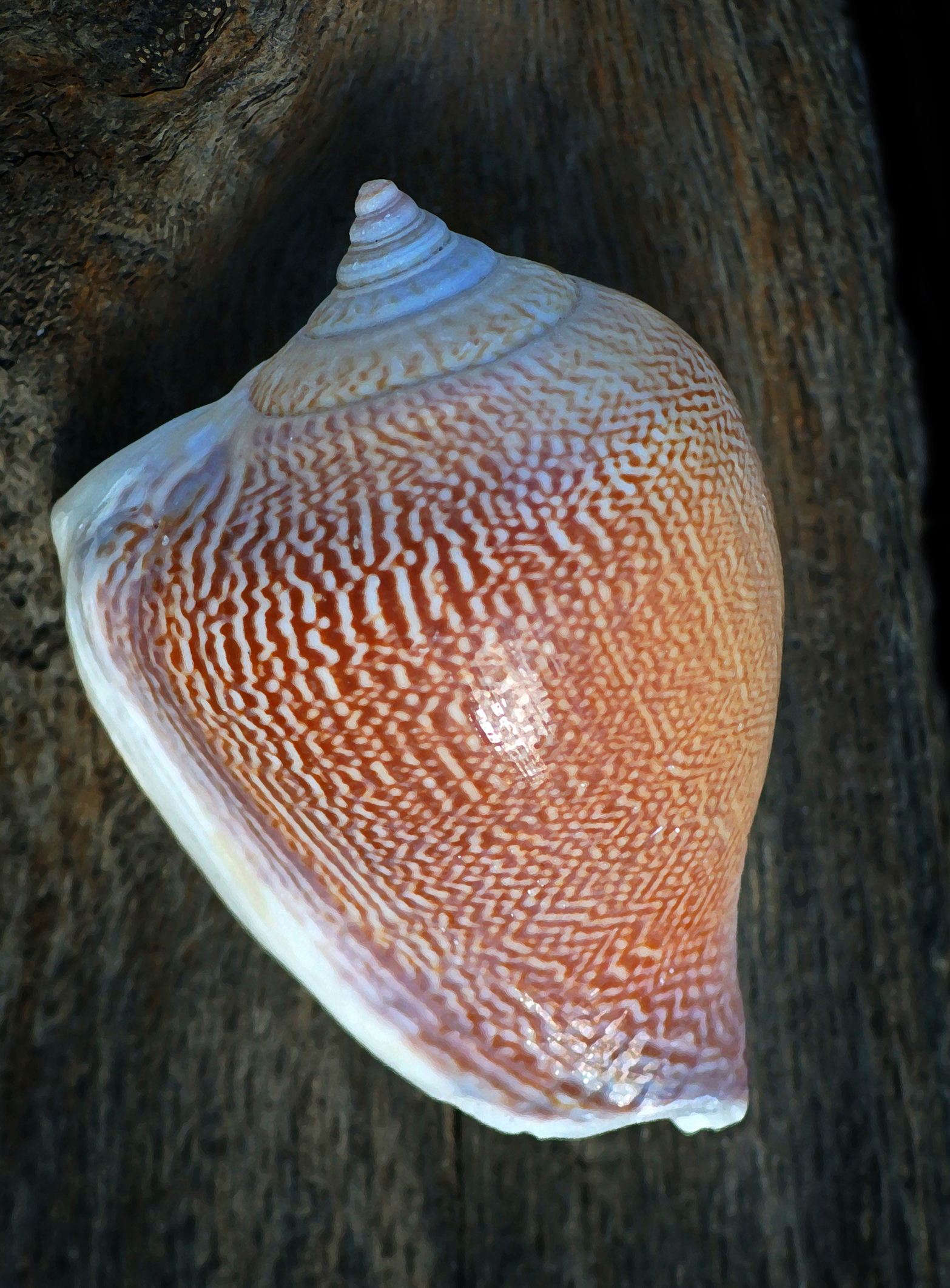
Although the shell is valued as a collectible, the Dog Conch is also used as bait because of its heavy “sinkable” weight for fishing nets. They graze on algae and detritus (gravel, sand, silt). The Dog Conch is commonly fished for human consumption.
- Size: Up to 4 in (10 cm)
- Habitat: Shallow sandy muddy sea bottoms, seagrass beds, mangrove areas, intertidal zones prefer depths of 6 ft (2 m)
- Range: Indo-Pacific from India, Australia, north to Japan
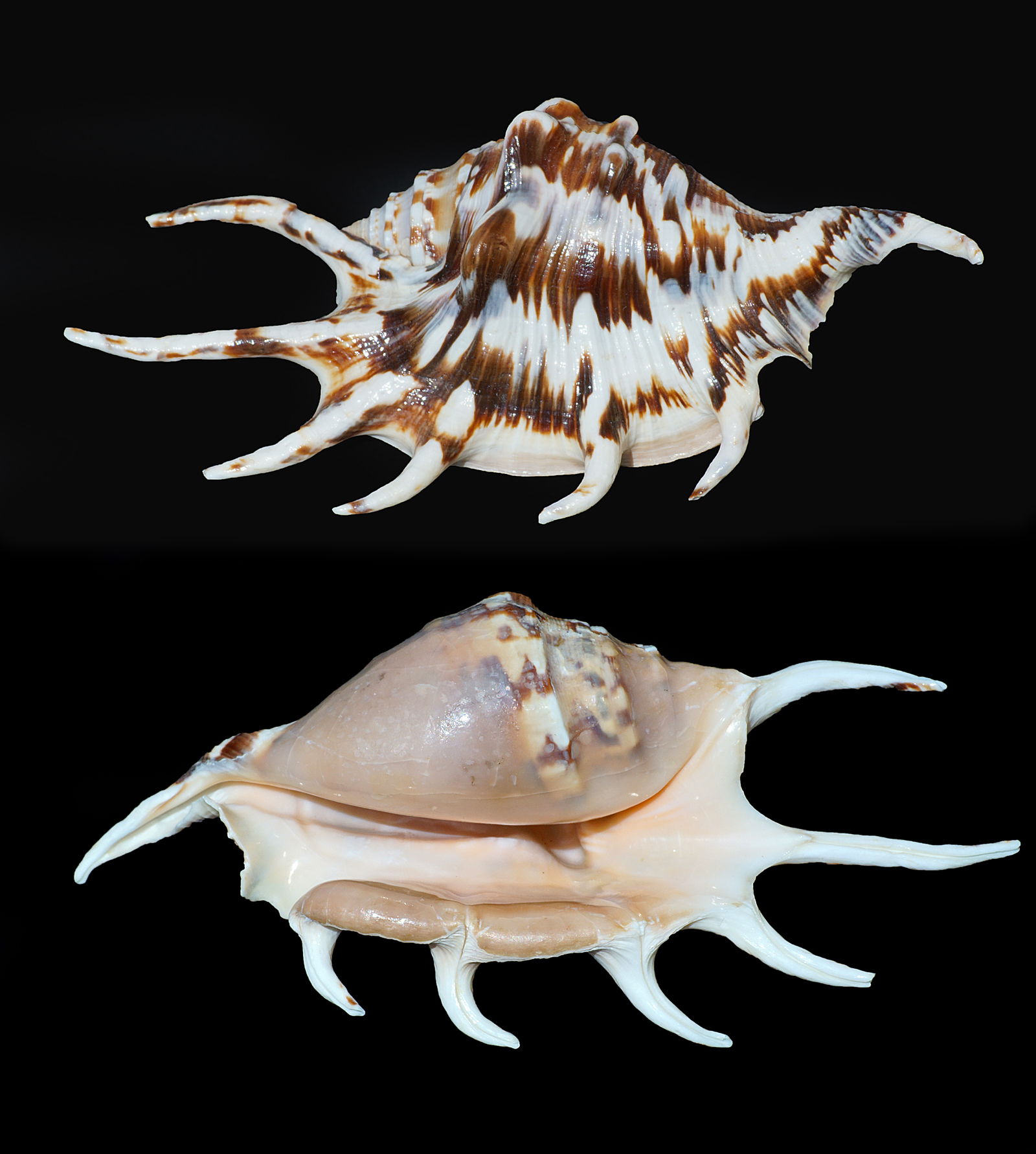
4. Spider Conch (Lambis lambis)
The Spider Conch is in the Strombidae family, the true conchs, and can be described as a very ornamented species displaying mottled brown or purple and white patterns over its exterior shell. The interior shell may be pink, orange or purple. It naturally appears polished. The spider conch shell possesses an extended outer lip decorated further with six or seven spiked digits. Males and females differ with the male showing the three innermost digits shorter and bent towards the posterior, whereas the female demonstrates longer and laterally curved digits. The spikes improve the snail’s stability and prevent it from toppling over as it hops. Juveniles lack the spikes. Like many other sea snails, it has large eyes on long stalks, a thick siphon, and a curved “operculum,” meaning “little lid,” attached to a strong foot. This is used by the animal to hop along the surface and as a trap door concealing it into its shell. It feeds on red algae.
- Size: Up to 11.5 in (29 cm), average 7 in (18 cm)
- Habitat: Mangrove areas, reef flats, and coral-rubble in shallow water from low tide levels to depths of 160 feet (5 meters)
- Range: Widespread in Indo-Pacific from Africa to Australia, including India, Persian Gulf, Southeast Asia, north to Southern Japan
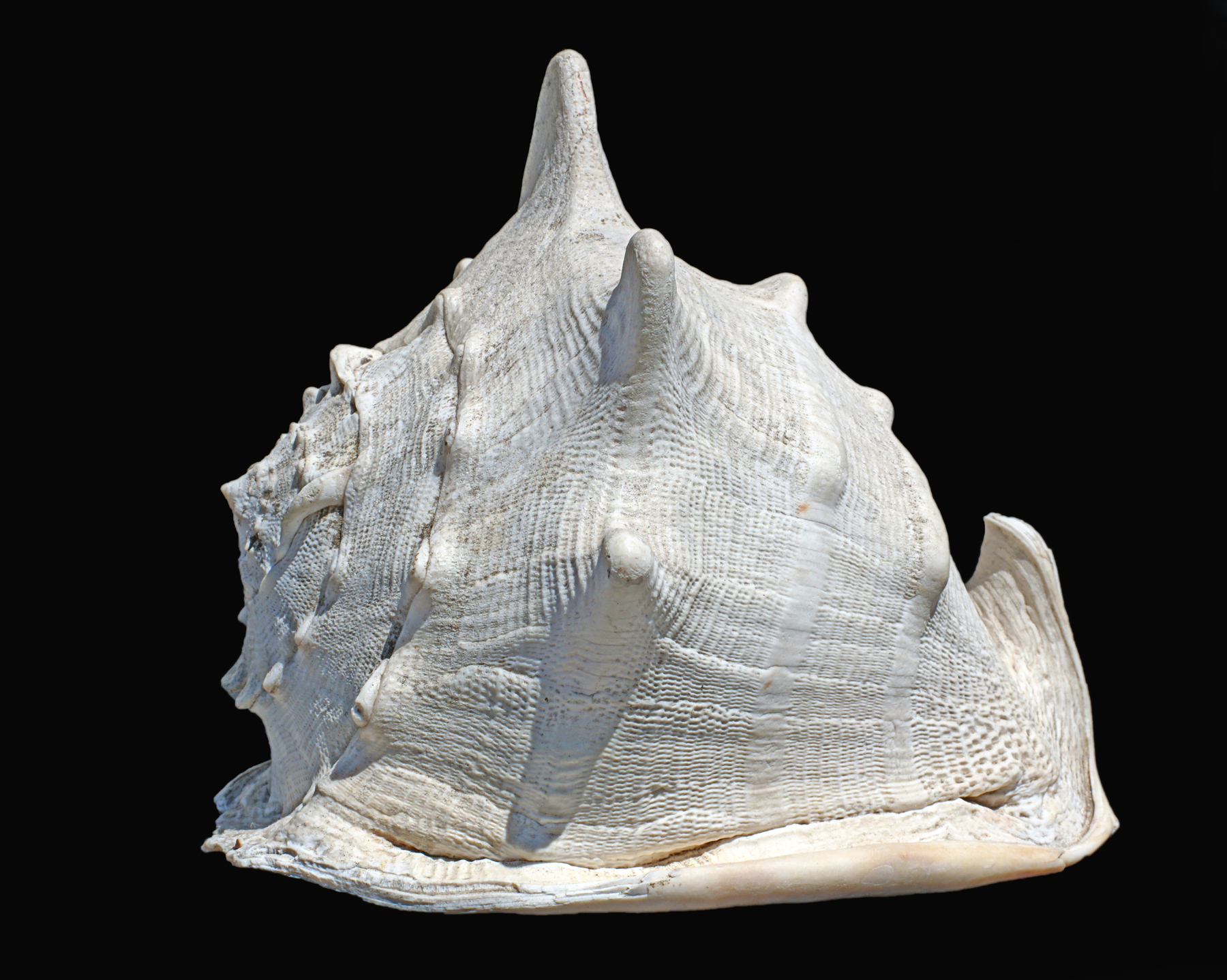
5. Queen or Emperor Helmet (Cassis, madagascarensis)
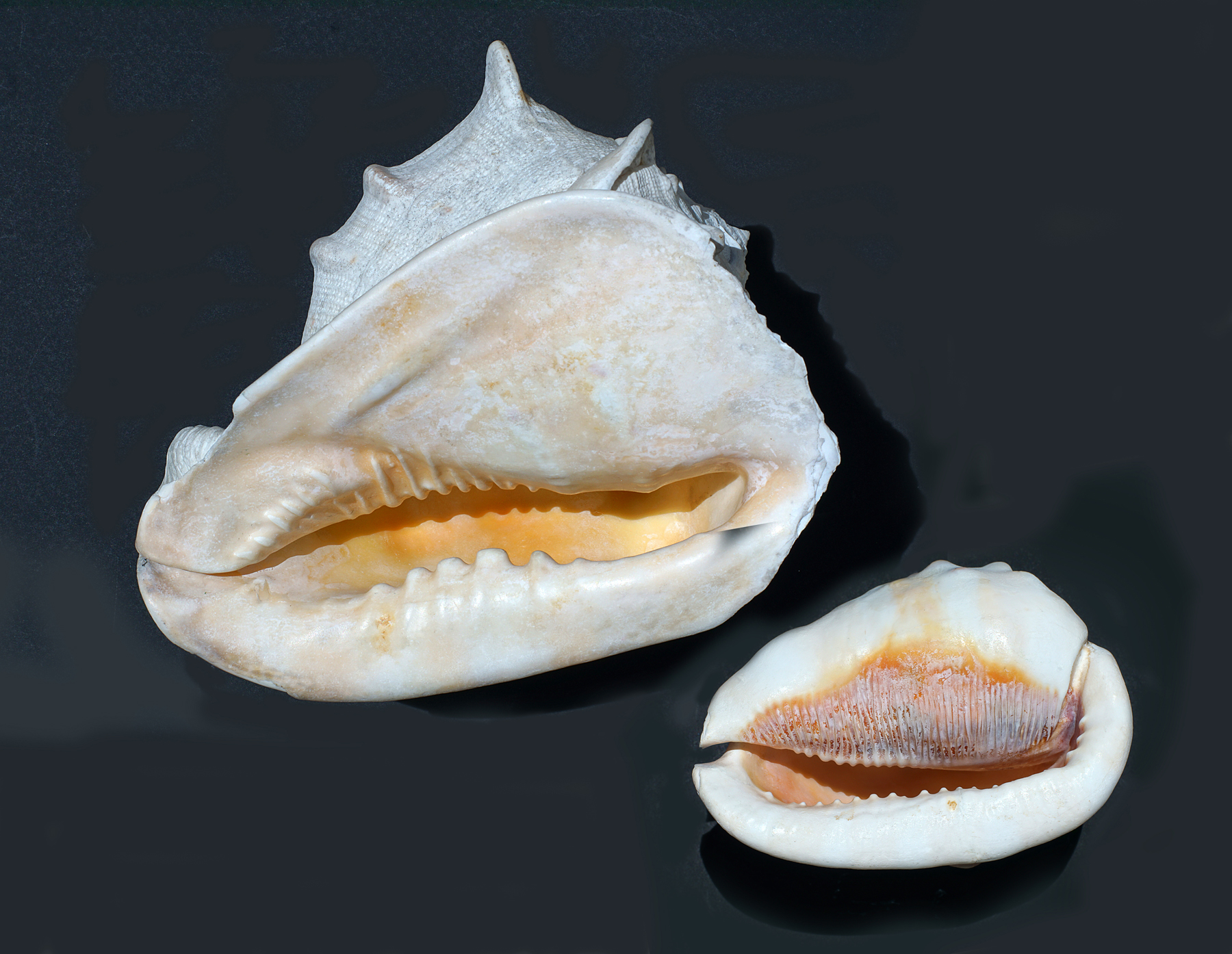
Queen Helmet shell is heavy, large, triangular, thick-lipped and sturdy. Shells may vary from whitish color to light yellowish brown. Their underside is darkerand has a wide opening with markings that resemble teeth (photo below). The Queen Helmet, also known as the Emperor Helmet, is one of the larger sea snail species. However, today they are not easy to find due to over-collecting. Helmet shells are used in making cameos. They feed on sea urchins and sand dollars.
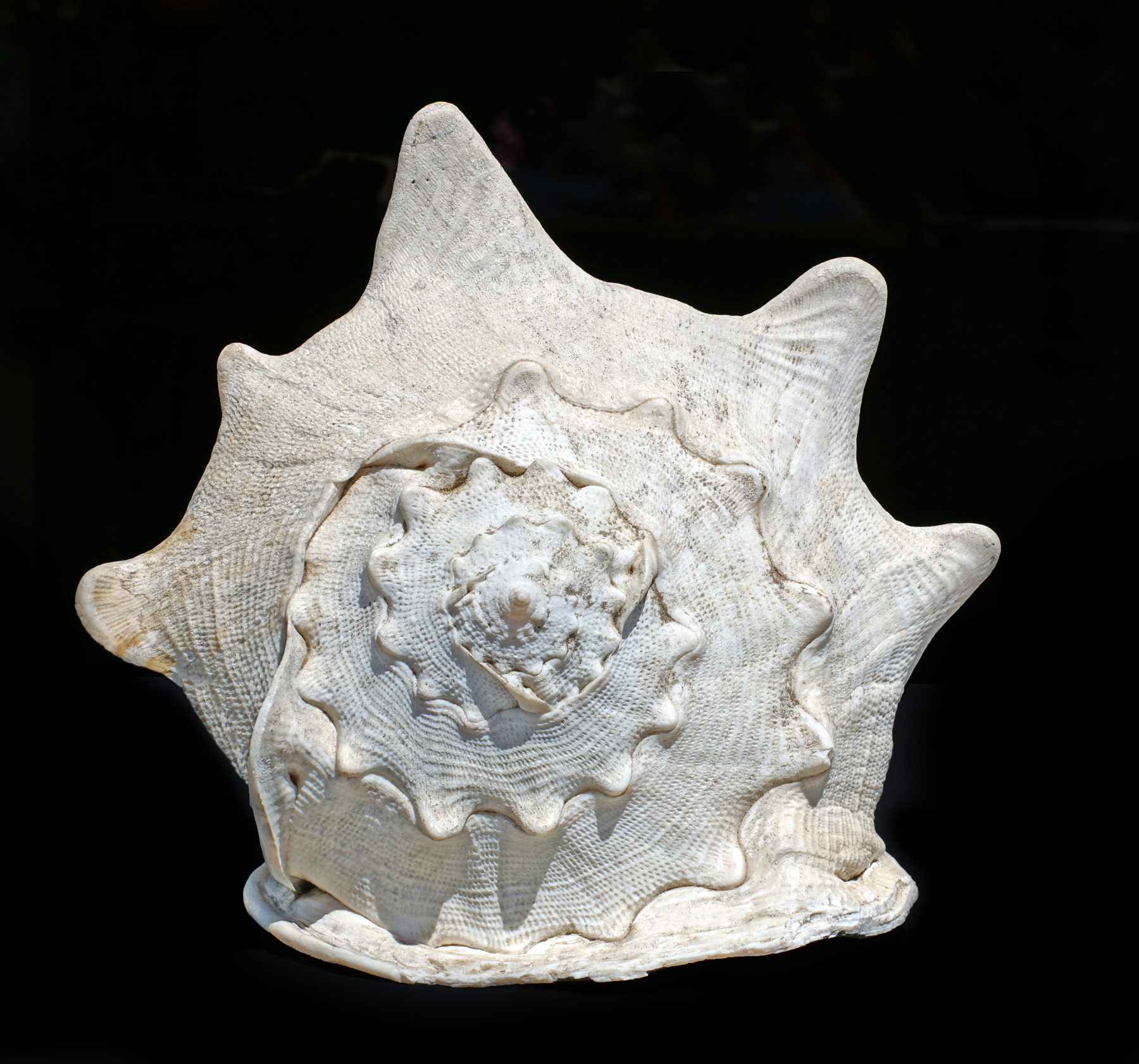
Note: The specific latin species name “madagascarensis” literally means “of Madagascar,” but this was a misunderstanding of the locality by the original author.
- Size: Up to 12-14 inches (30-35cm)
- Habitat: Sandy shallow sea bottom and coral reefs. They are nocturnal predators frequently found at depths from 2 to 30 feet, though they can inhabit deep waters in depths to 600 ft (183 meters)
- Range: Atlantic coast, the Gulf of Mexico, and the Caribbean Sea regions.
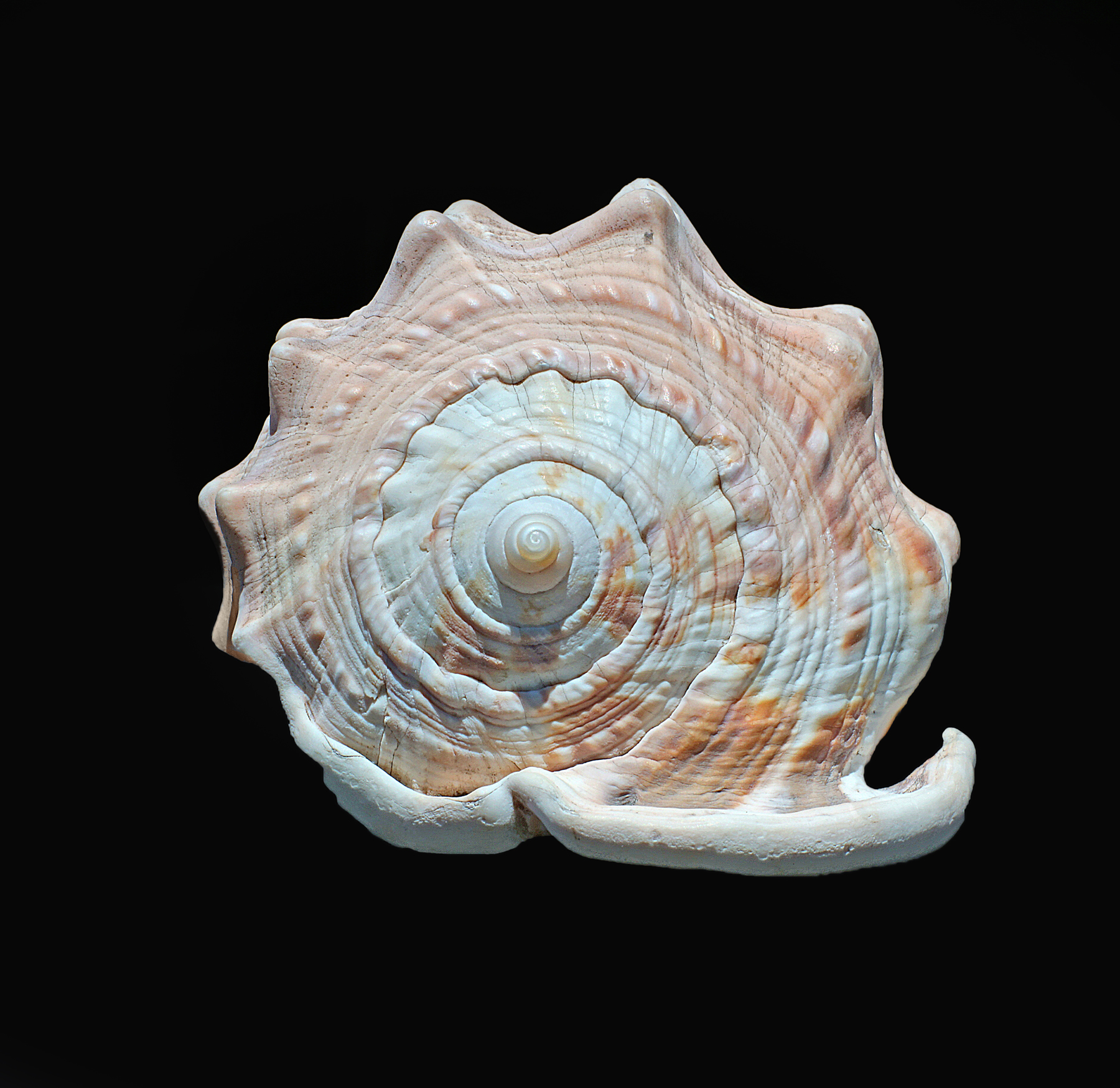
6. Cameo Helmet (Cypraecassis rufa)
The Cameo Helmet, also known as Bull Mouth, Grinning Mouth, or Red Helmet, display thick, heavy shells. Colors may vary from light pinkish to deeper pink with dark striped markings. The helmet snails are distinguished from the conchs by their flipped-up rims along their openings, and short spires. Usually, the knobs along their whorls are blunt. The undersides have markings that resemble teeth and a wide lid bears faint wide stripes.
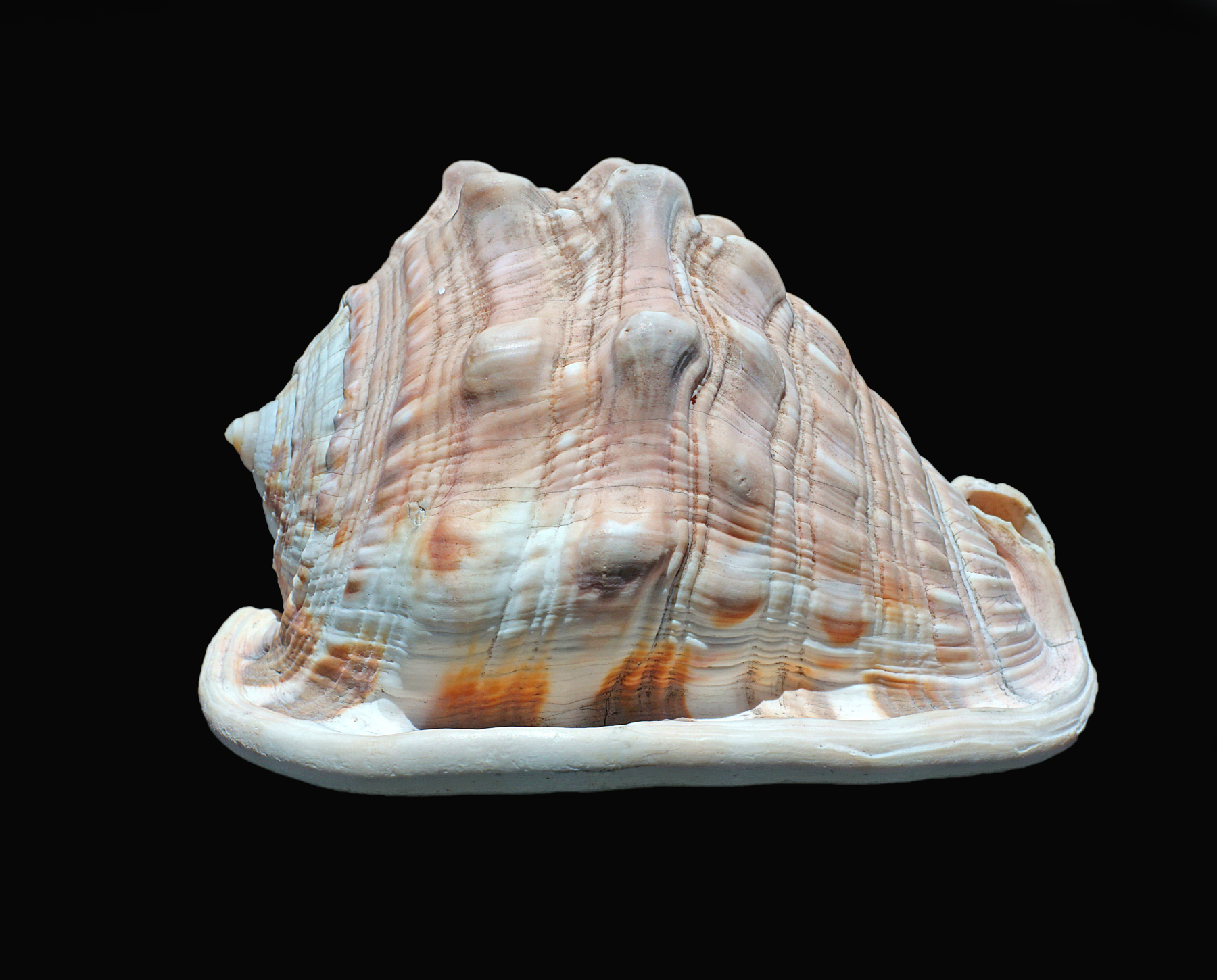
Cameo Helmets are used in making jewelry cameos, hence the common name.They feed on sea urchins and other echinoderms at night..
- Size: Up to 7.5 in, 19 cm
- Habitat: Prefer sandy substrates in tropical shallow coastlines or as deep as 100 ft (30 m)
- Range: Indo-Pacific Southeast Africa coastline to Northern Australia and New Guinea
.
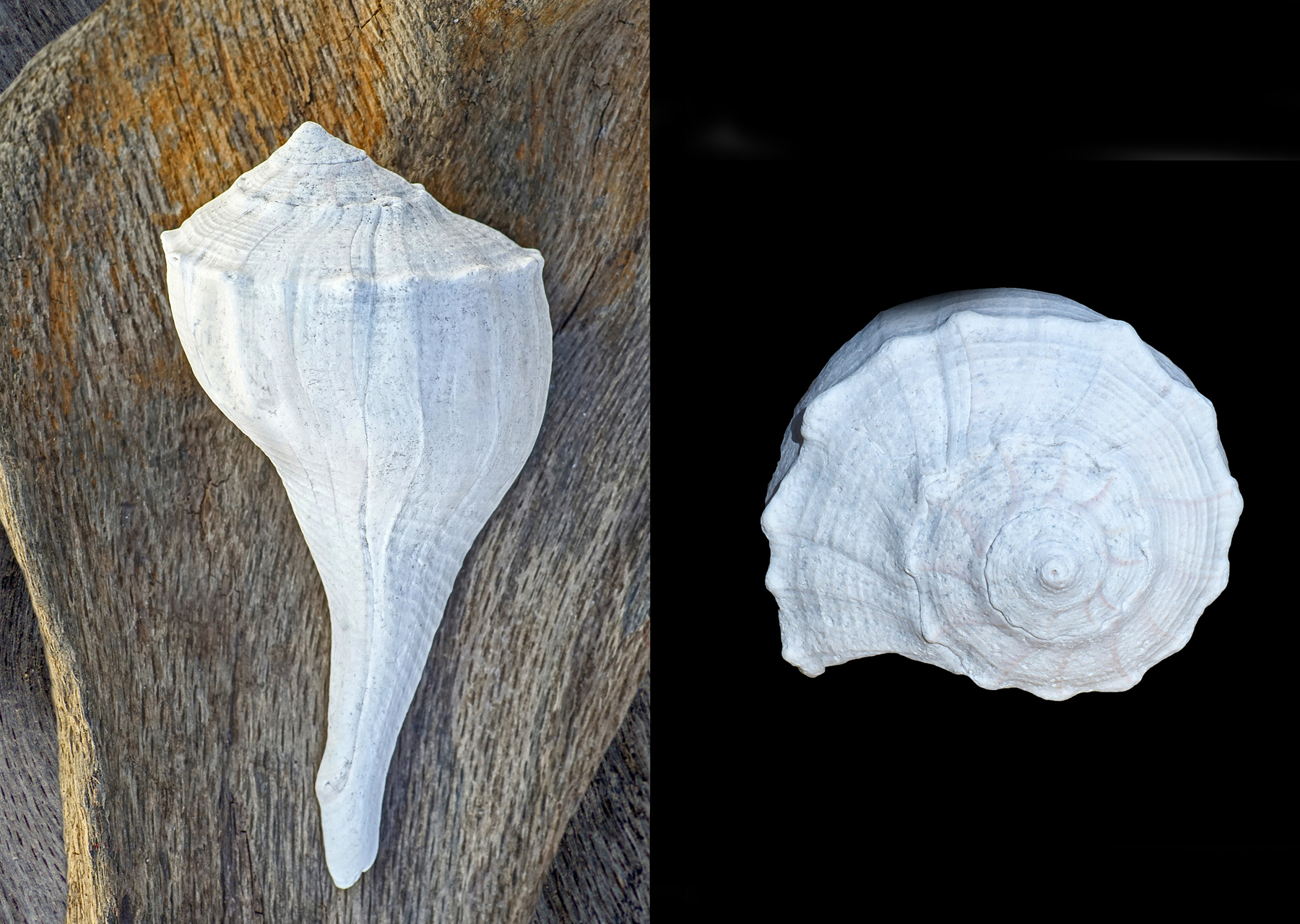
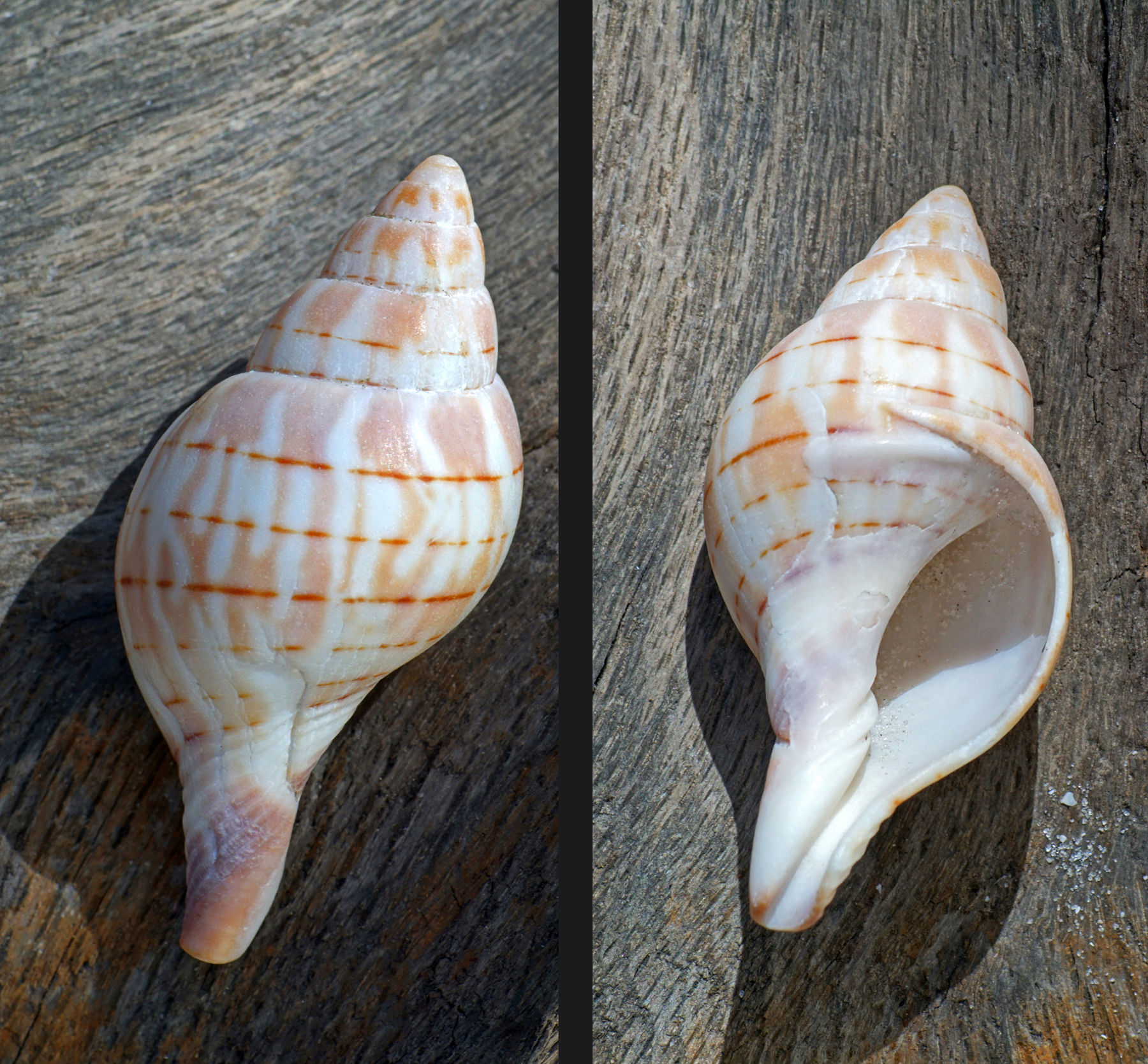
7. Lightening Whelk (Busycon contrarium)
The Lightening Whelk formerly (Sinistrofulgur perversum) is one of the loveliest whelks with a long sleek shell body and spire top with triangular knobs. The underside aperture extends along the entire length of the shell. The juveniles have chestnut brown stripes with a zig-zag pattern reminiscent of lightning bolts, hence the name. Colors fade to white in older, larger shells. The opening is always on the left when holding it so that the spire is at the top. This sets them apart from other univalves. Texas Lightning Whelks are darker brown than Lightning Whelks from other locations.
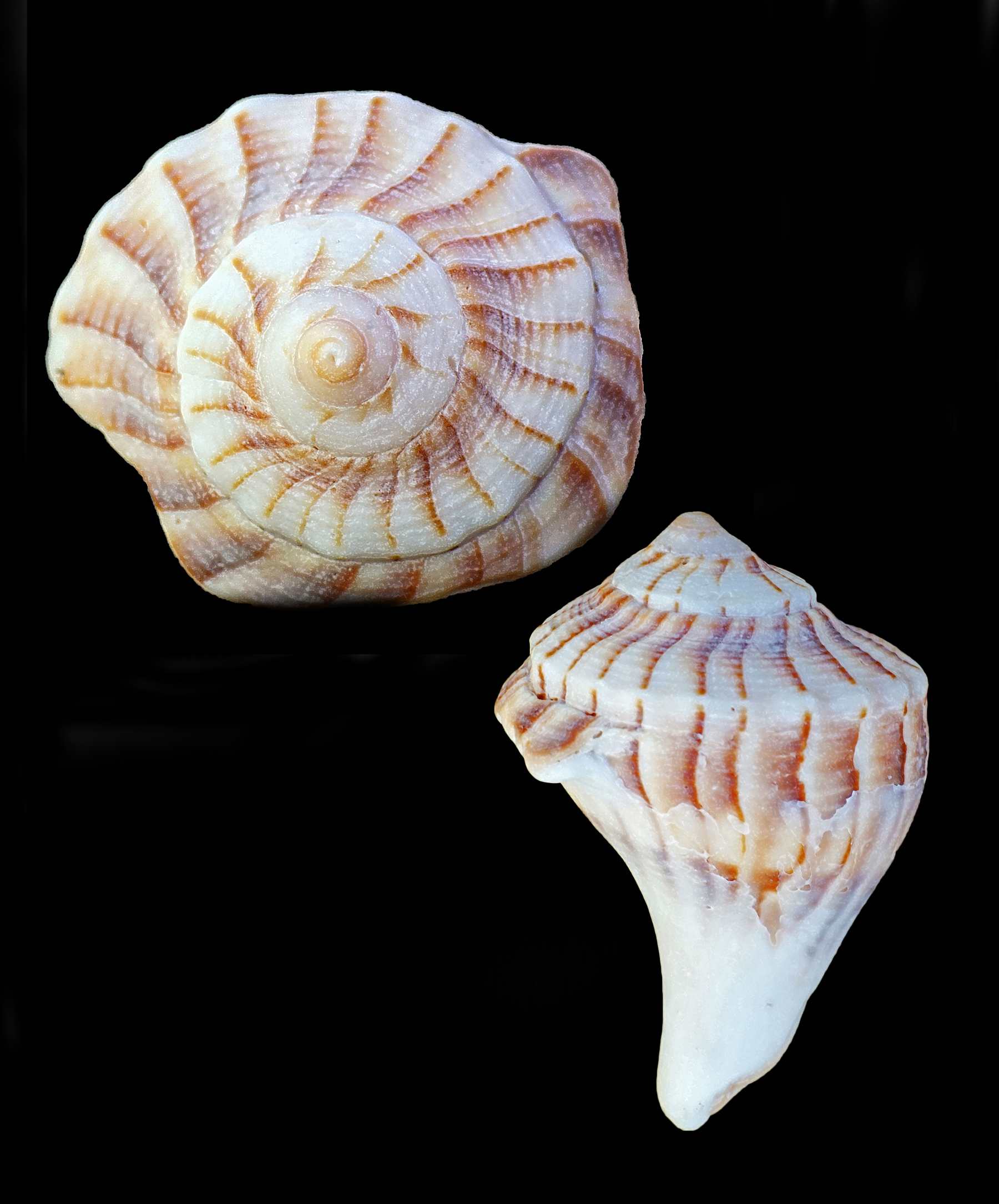
- Interesting Lightening Whelk Info
- The elegant big whelks that wash up on the U.S. Atlantic and Gulf Coast beaches are yet another favorite for collectors. When alive, they are edible, especially on European menus.
- Near the base of their siphon is a taste/smell receptor that can detect and locate food at a considerable distance.
- To feed, the sea snail uses its foot to hold prey while the lip of its shell chips and pries at the bivalve. Once a big enough hole has opened, the snail inserts its foot (a rasping tongue-like structure) to siphon into mostly clams or scavenged carrion.
- Historically, Native Americans used the Knobbed Whelk to make their beaded wampum belts in exchange for trade.
- They have lived on Mother Earth for 30 million years!
- Size: Up to 10-15 in. (25- 38 cm)
- Habitat: Sandy high-saline bottoms in shallow water and tidal zones, often near seagrass beds or in depths of 150 ft (45 m)
- Range: Atlantic coast as far north as Cape Cod, south to Florida, and west to the Gulf of Mexico
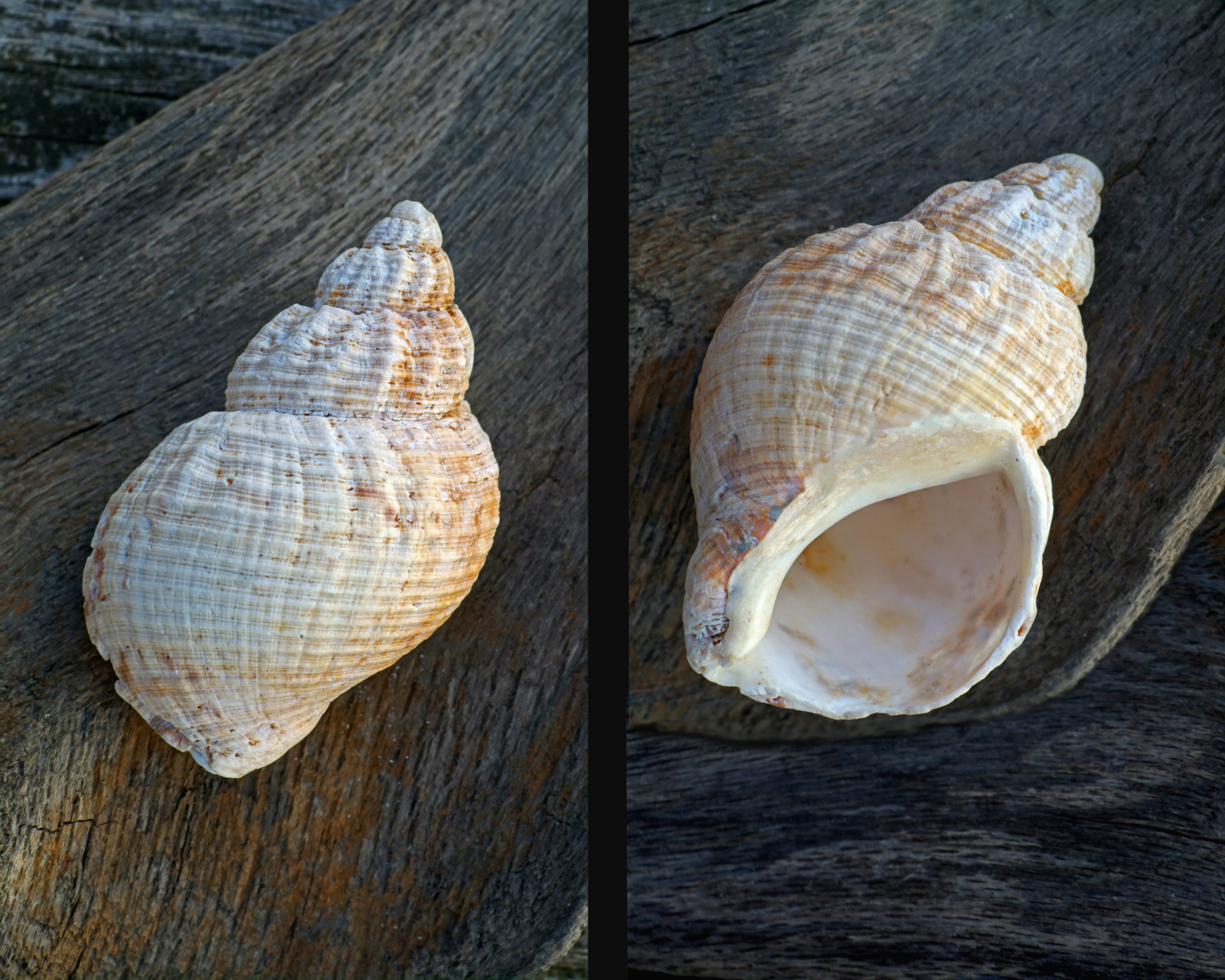
8. Common Northern Whelk (Buccinum undatum)
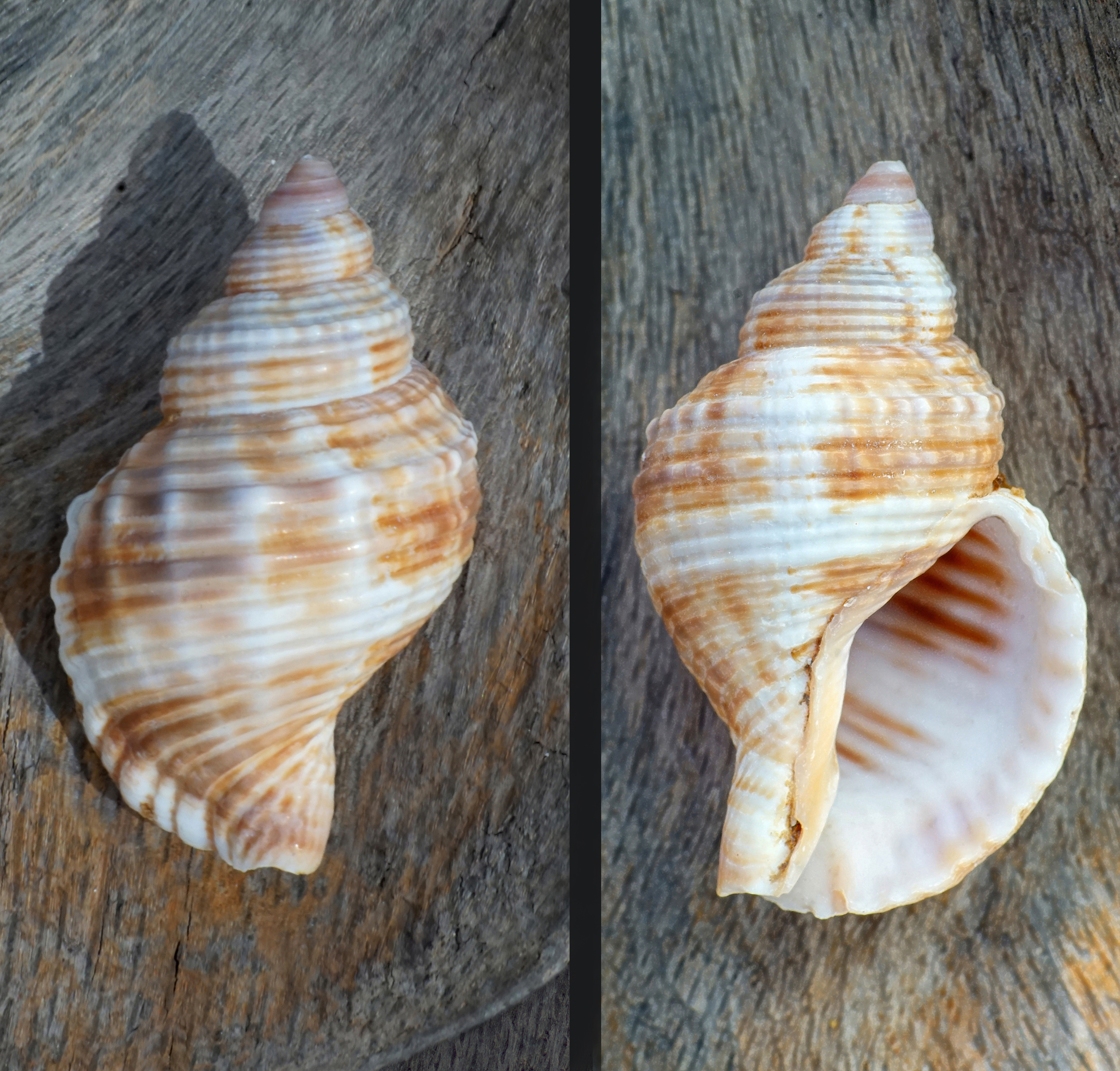
The Common Northern Whelk has a stout pale shell that is white, yellowish, or reddish-brown in tone. In life, the outer shell is covered in a bright, yellowish-brown protective cover called “periostracum” that falls off after the animal dies and washes ashore, as with many other marine bivalves and univalves. The spire contains seven to eight whorls. There are wavy folds crossed by numerous prominent spiral lines giving it a lattice appearance. The opening is white and broad. It does not adapt well to life in the intertidal zones. If exposed to air, it may crawl from out its shell, risking desiccation. They are widely eaten, sometimes referred to by their French name “bulot”.
- Size: Up to 3 in (8 cm)
- Habitat: Offshore, beyond high watermark in continuous submerges zones to depths of 400 ft (1200 meters), but sometimes shallower sandy or muddy sea bottoms
- Range: Prefers colder water widely distributed from North America as far south as New Jersey, west to European Northern Atlantic coastlines as far north as Iceland
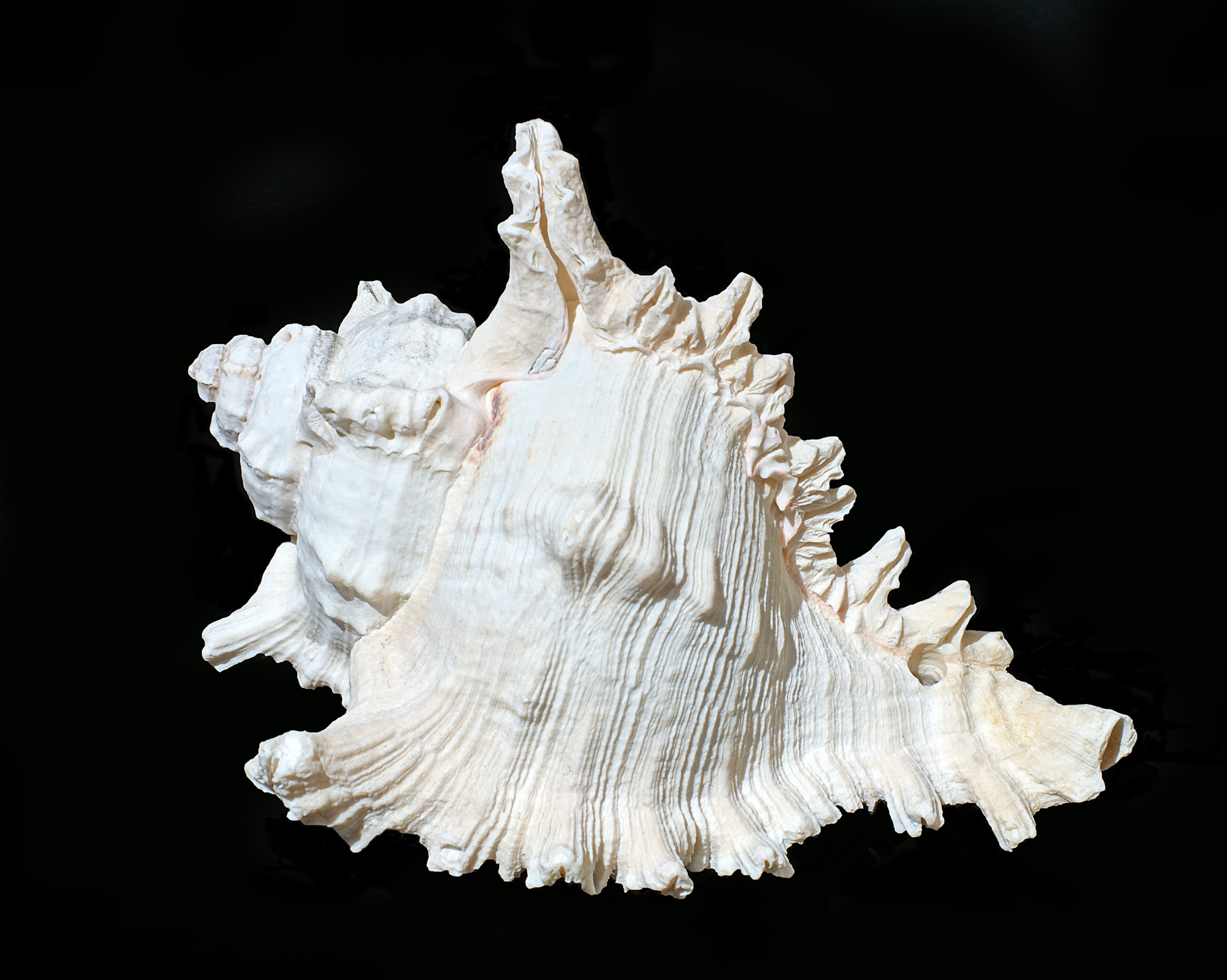
9. Giant Eastern Murex (Hexaplex fulvescens)
As the name suggests, the Giant Eastern Murex are big sea snails—the biggest of the Murexes. They possess several rows of ridges with glorious protruding spines. Their outer shell may be colored whitish, grayish, or pale brown, with narrow ribbing; the aperture is oval with hollow spiny edges.
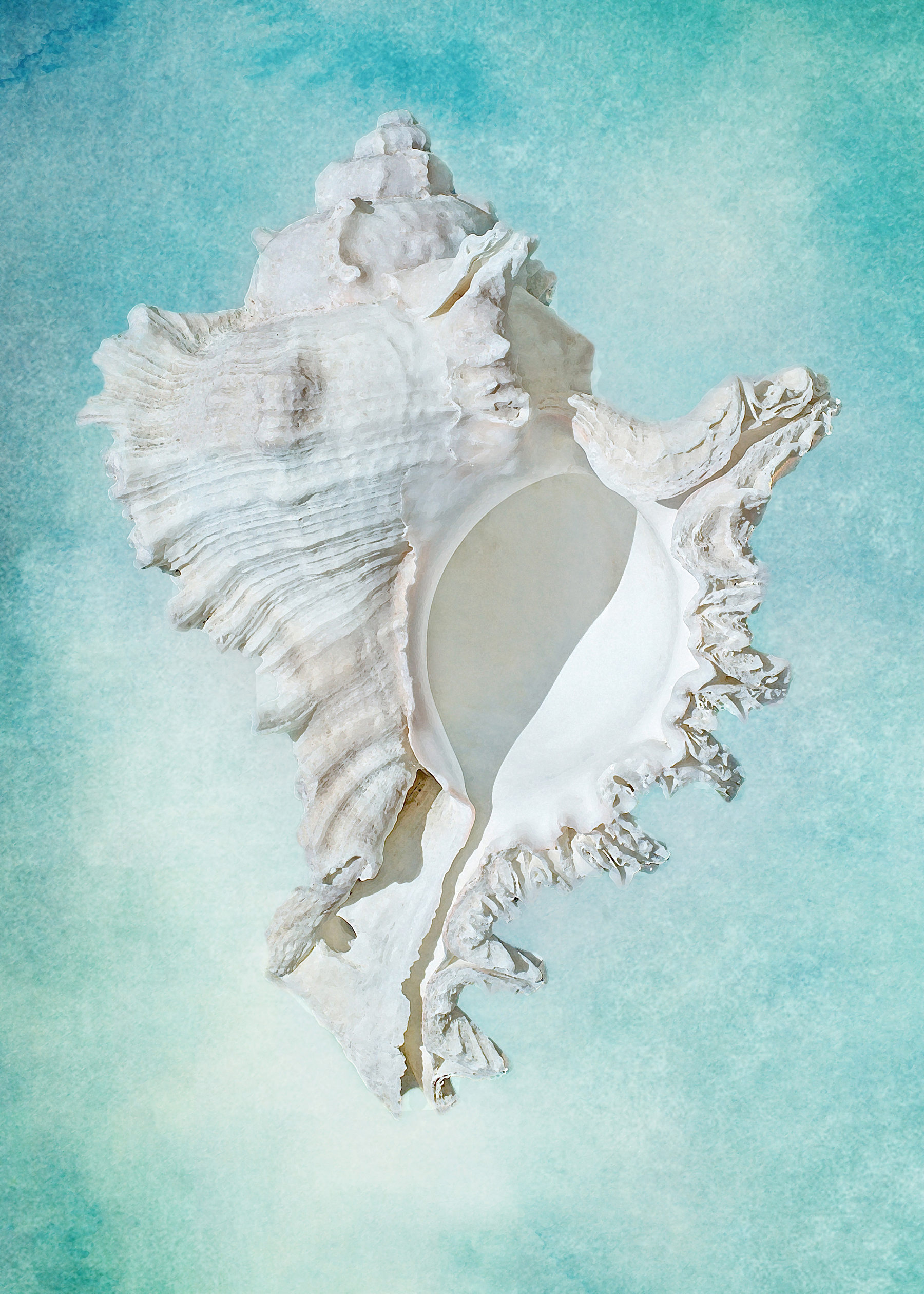
Murex sea snails and their kin include over a thousand species, counting the “Drills” which have become serious pests in oyster beds. This entire group are carnivores that feed mainly on bivalves.
- Size: Up to 9 in (23 cm)
- Habitat: Most commonly living in deeper offshore waters 250 ft (80 meters) in sandy or muddy bottoms. They can also be found in shallower rocky, rubble-filled, or coral beds
- Range: North Carolina to Cape Canaveral, Florida, west to Texas and the Gulf of Mexico
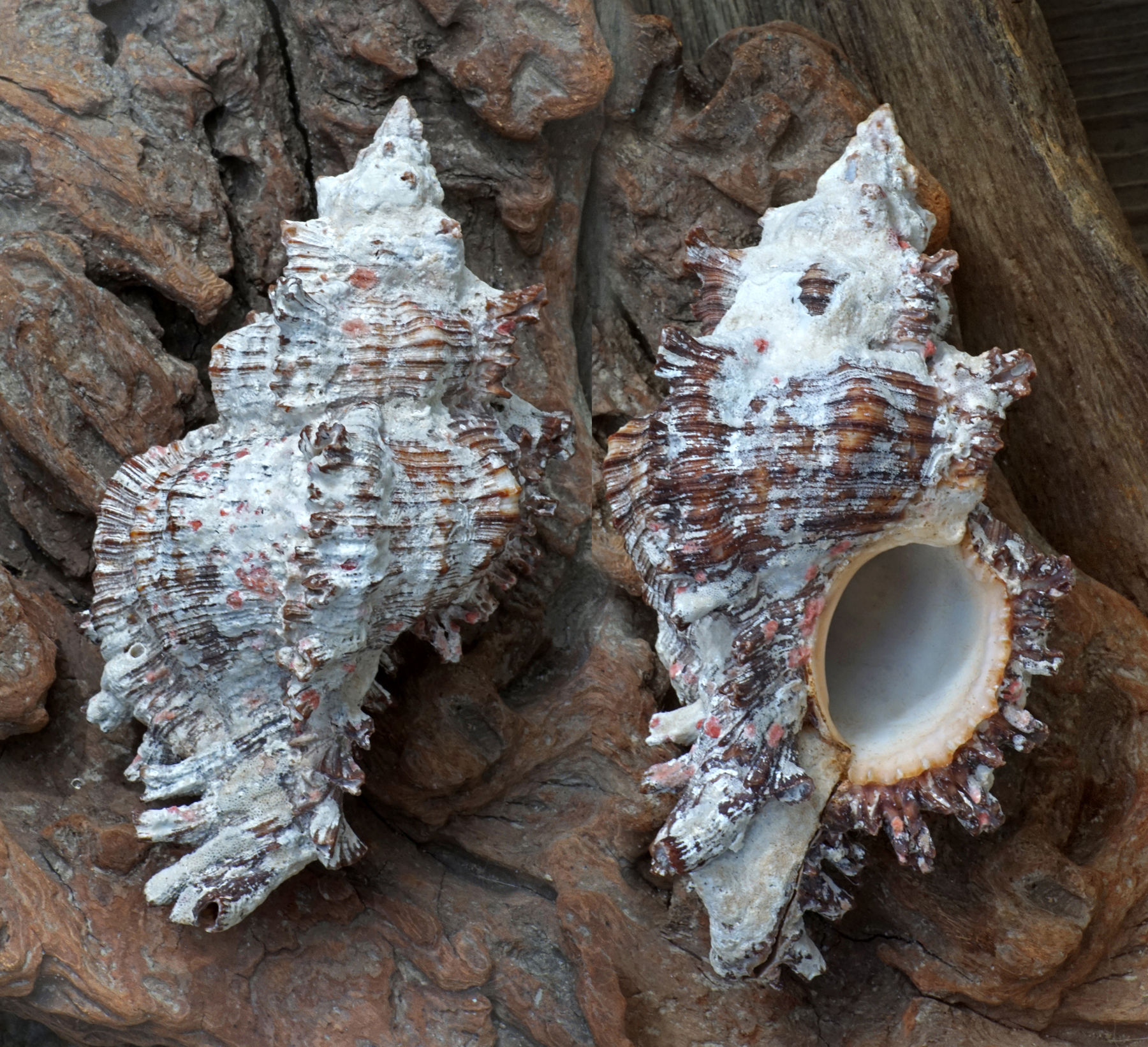
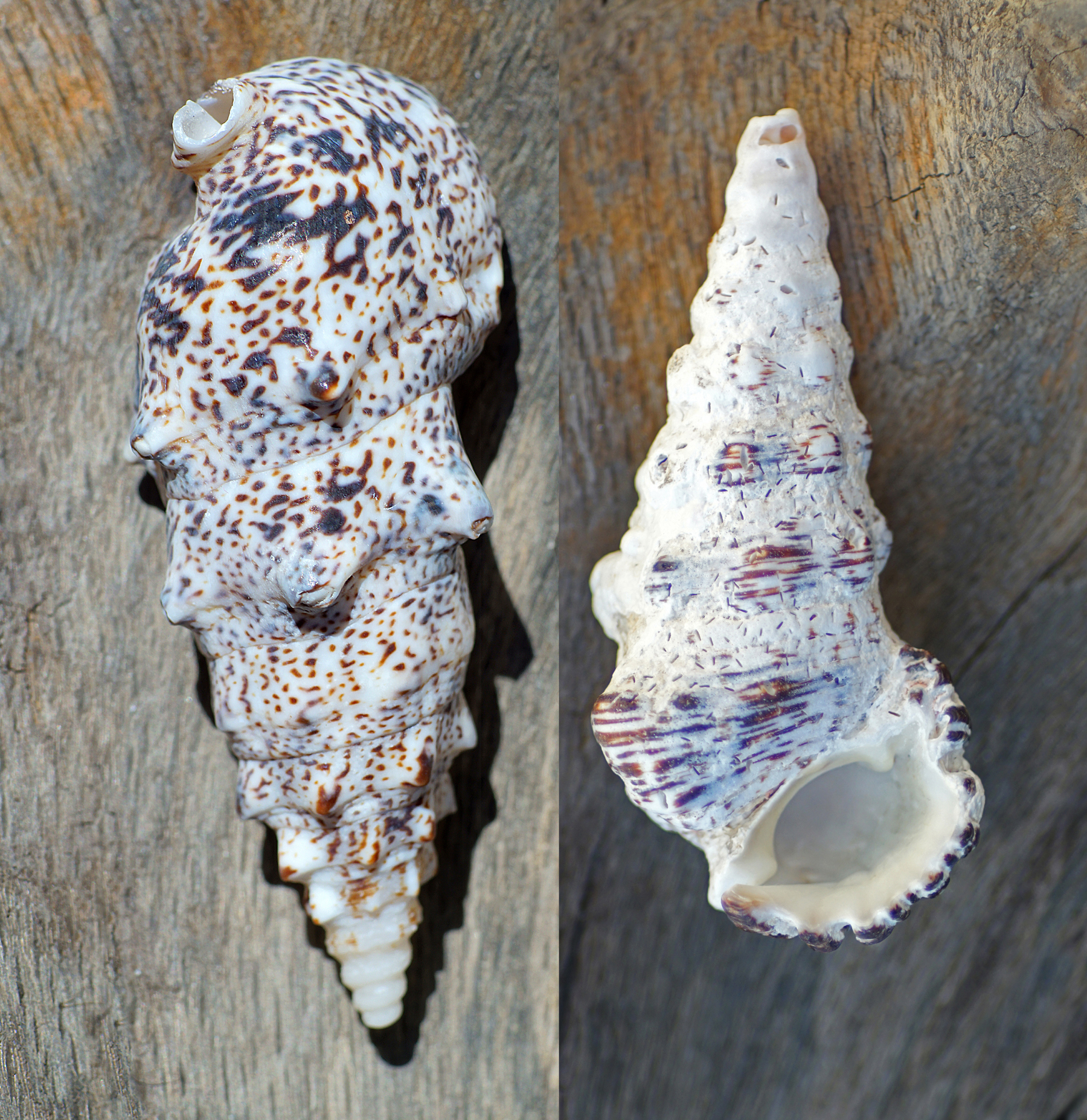
10. Lace Murex (Chicoreus florifer)
The Lace Murex displays a highly ornamental shell with up to seven whorls and 10 decorative hollow spines along the outer rim. The aperture is on the small side. The shell colors are mottled and vary from yellowish, light-brown, or brownish-black in mature specimens, to pink or white in young specimens.
- Size: Up to 10 in (25 cm)
- Habitat: Shallow sand and coral rubble, rocky botoms and seagrass beds, various depts from 3-700 ft (1-196 meters)
- Range: North Carolina, south to Florida, the Caribbean, and the Bahamas; west through the Gulf of Mexico
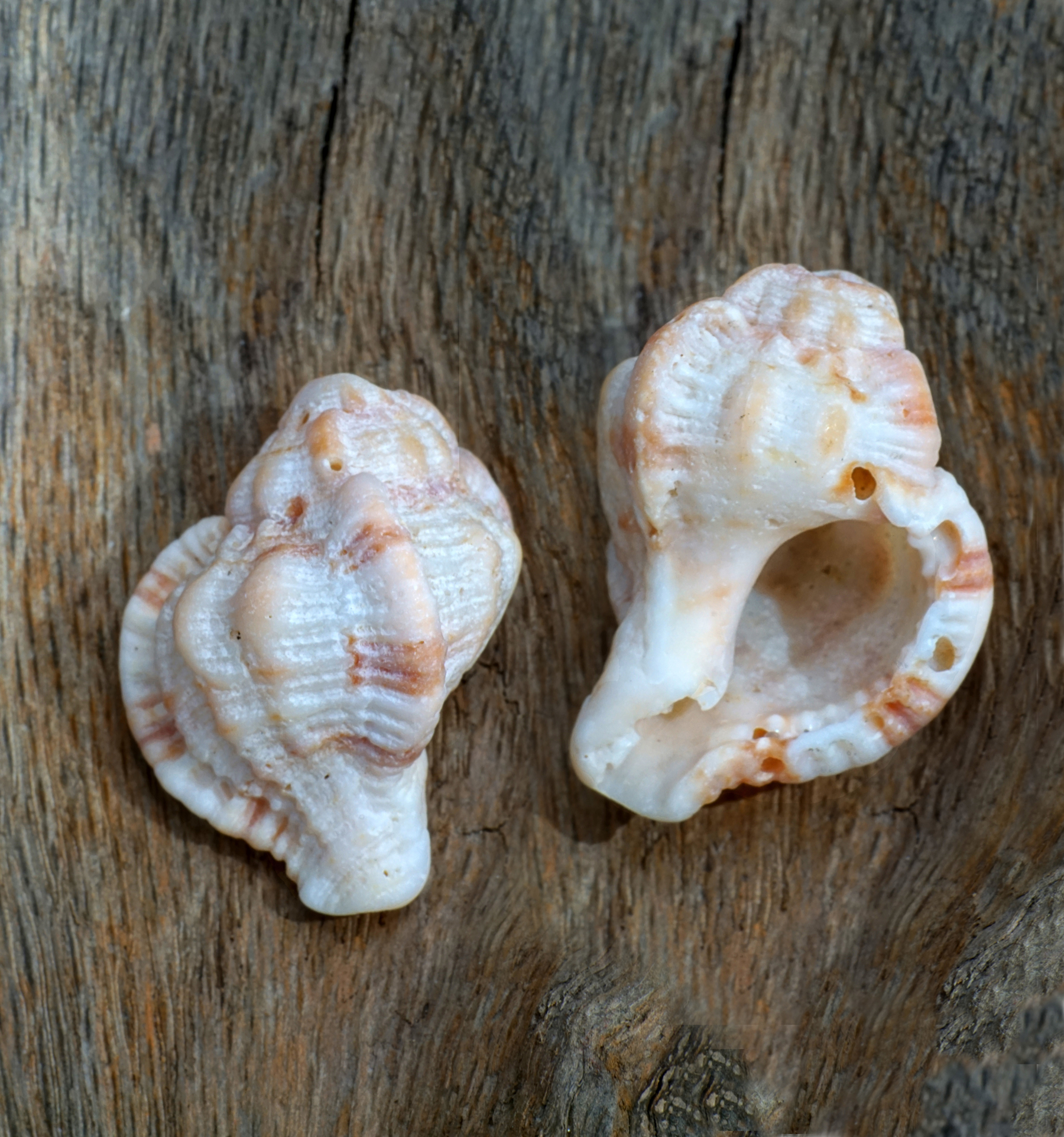
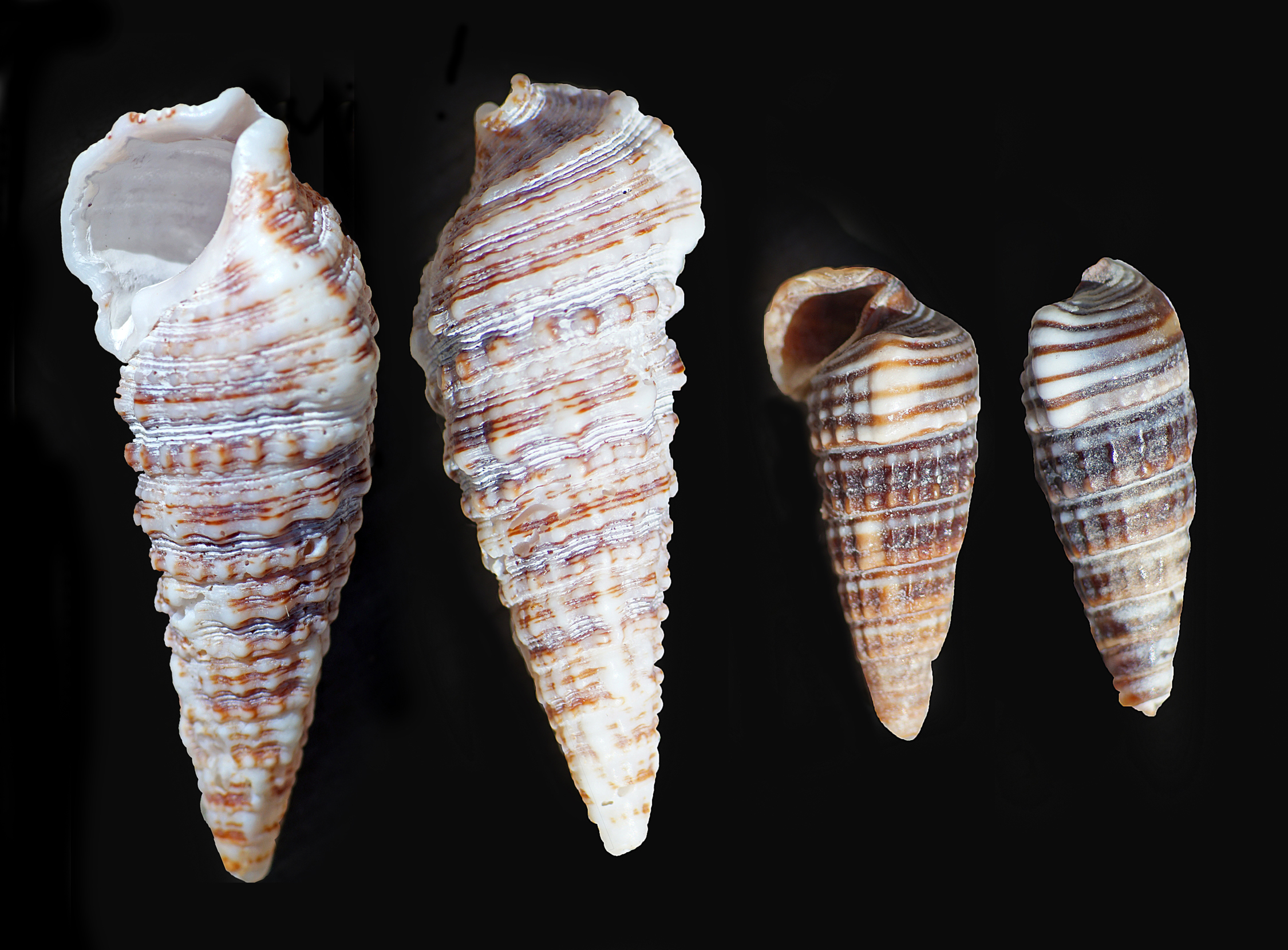
11. Apple Murex (Phyllonotus pomum)
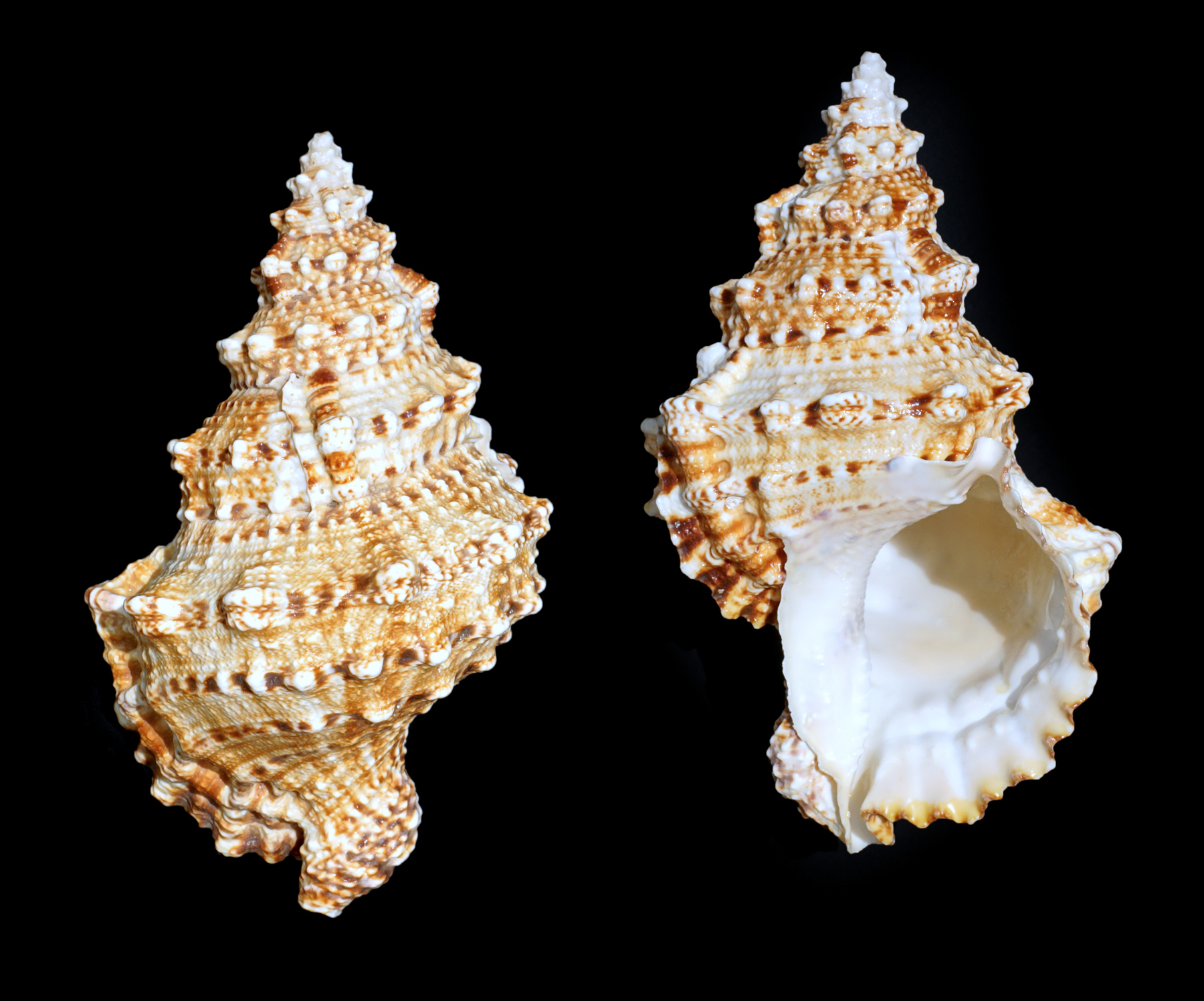
The Apple Murex shell is mostly tan or light brown with darker brown markings and white highlights. The shell is thick and the surface is rough and ridged with wrinkly columns. The aperture is glossy and either white, tan, or peach. The samples from my collection shown above are immature, and the spires are not as pronounced as with an adult size Apple Murex’ also shown from another source; the samples from my collection measures to only about an inch and a half.
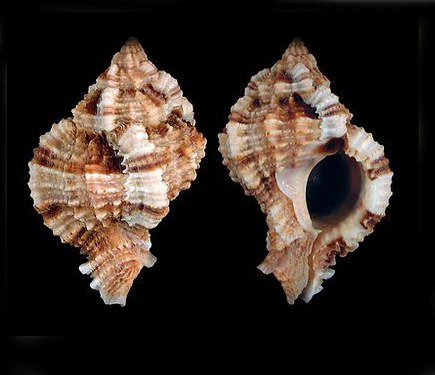
The Lace Murex and Apple Murex are very similar, except the Lace Murex has hollow spines along the outer rim of its aperture or opening, lacking in the Apple Murex. Also, the Lace Murex opening is smaller in relation to the entire size of the shell.
All murex sea snails are carnivorous marine gastropods that feed primarily on bivalves (clams, oysters), other mollusks, and barnacles. They hunt by drilling a hole throught the prey’s shell.
- Size: Up to 5 in (13 cm)
- Habitat: Shallow rocky or sandy bottoms or seagrass beds to deeper waters up to 70 ft (20 meters) burying themselves during low tide
- Range: North Carolina to Florida, as far south as Brazil, west through the Gulf of Mexico
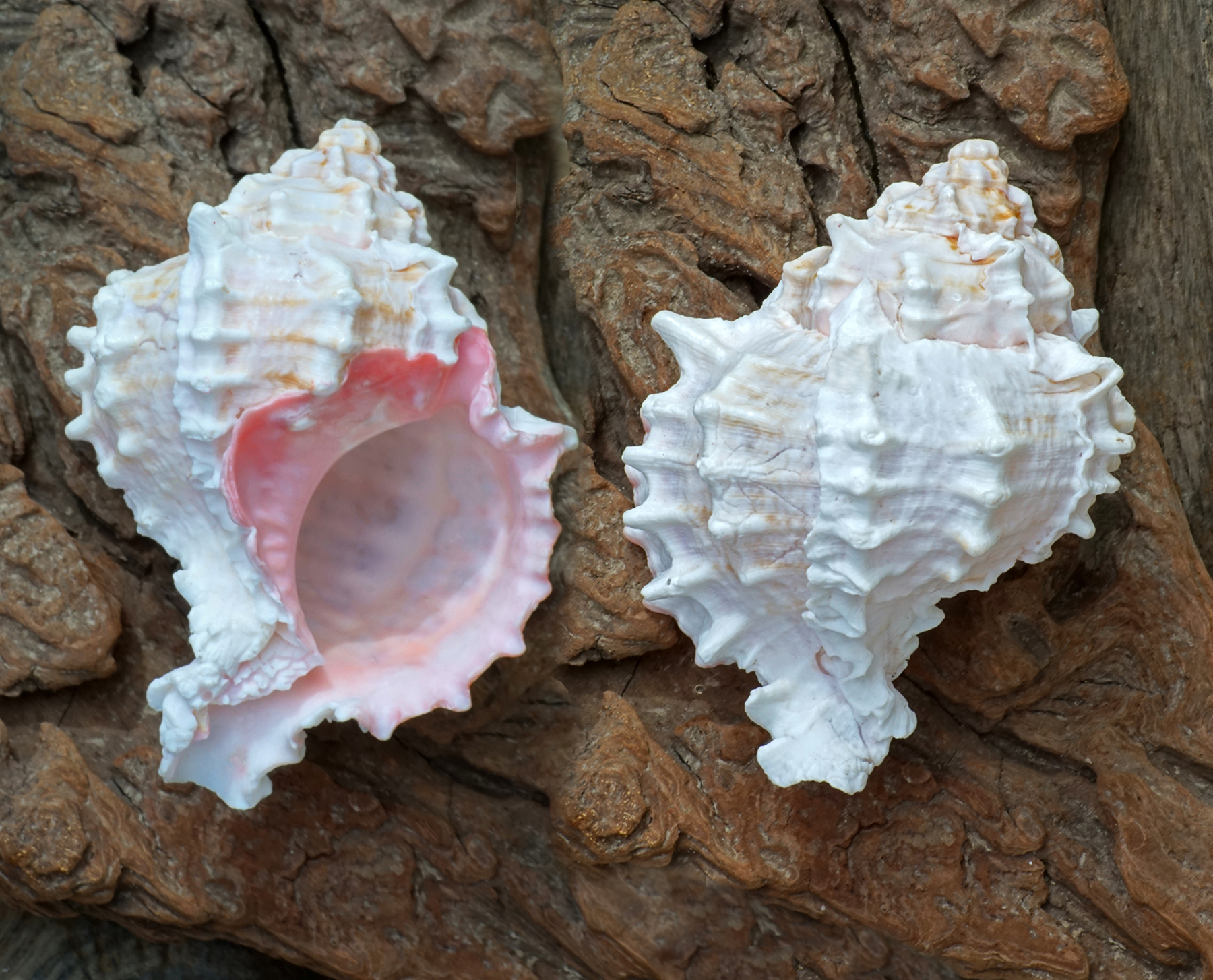
12. Pink Throat Murex (Hexaplex erythrostomus)
The Pink Throat Murex (Pink Mouth Murex) shell reveals a light tan shell with yellowish brown patches and a number of blunt spines along several ridges. The aperture is large and round and bends backward over the outer shell. The interior is usually pink and glossy, but sometimes it’s white depending on its location and especially maturity level, only adults have the deep pink. This is an attractive species of murex desired by collectors.
- Size: 4-6 in (10 -15 cm)
- Habitat: Typically found in intertidal and subtidal zones on shallow sandy or muddy substrates and around rocky/coral areas to dephs of 65 ft (65 m)
- Range: Eastern Pacific Ocean from Baja California, Mexico, down to Peru, and parts of the lower Gulf of Mexico
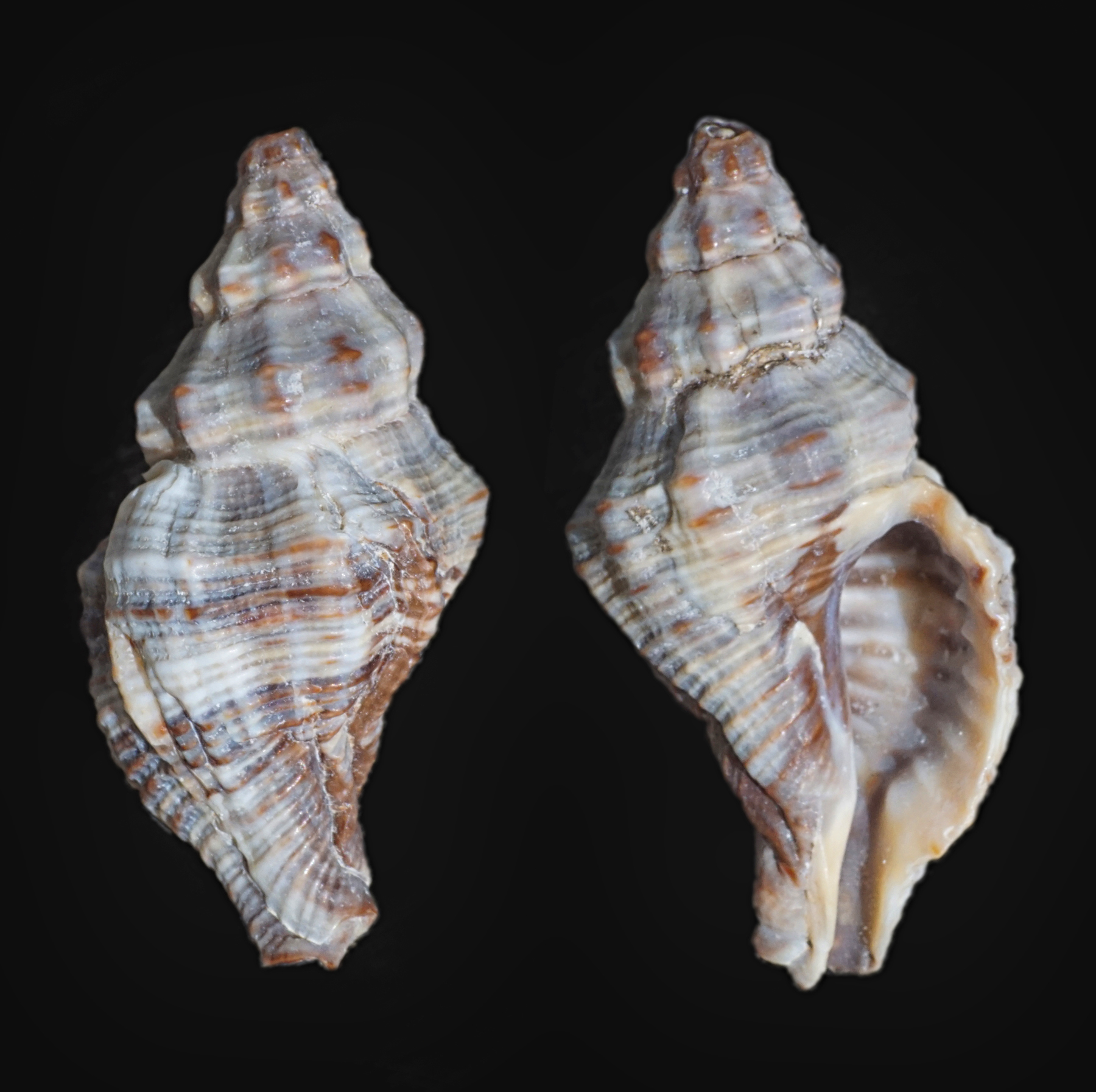
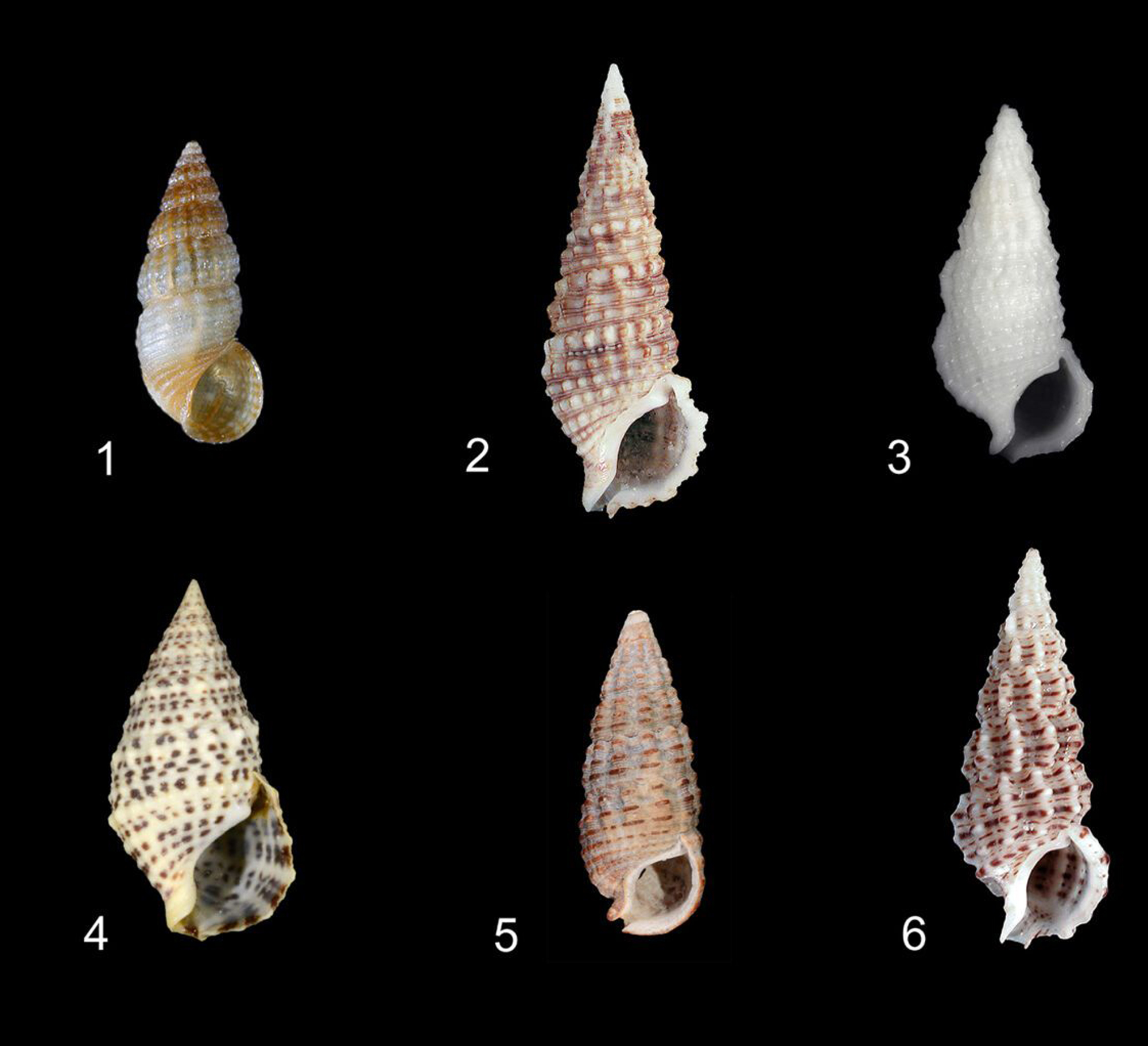
13. Atlantic Oyster Drill (Urosalpinx cinerea)
The Atlantic Oyster Drill has a sturdy, longitudinal ribbed shell with prominent spires. The color is grayish, brownish over dull white, sometimes yellow or light brown. The outer lip is slightly thick inside. A vicious enemy to oysters, it has the ability to bore a hole and suck out the oyster; a serious problem in commercial oyster beds, and it has been accidentally introduced well outside its natural range. Is related to the Murex family – is non-edible.
- Size: 1/2 to 1 in (1.25 to 2.5 cm)
- Habitat: Intertidal rock beds, shallow, high-salinity marine environments, oyster reefs, bays, and estuariesas often hiding in crevices or on shell-covered, muddy, or gravel substrates in depths of 25-120 feet (7-38 meters)
- Range: Nova Scotia to Southern Florida
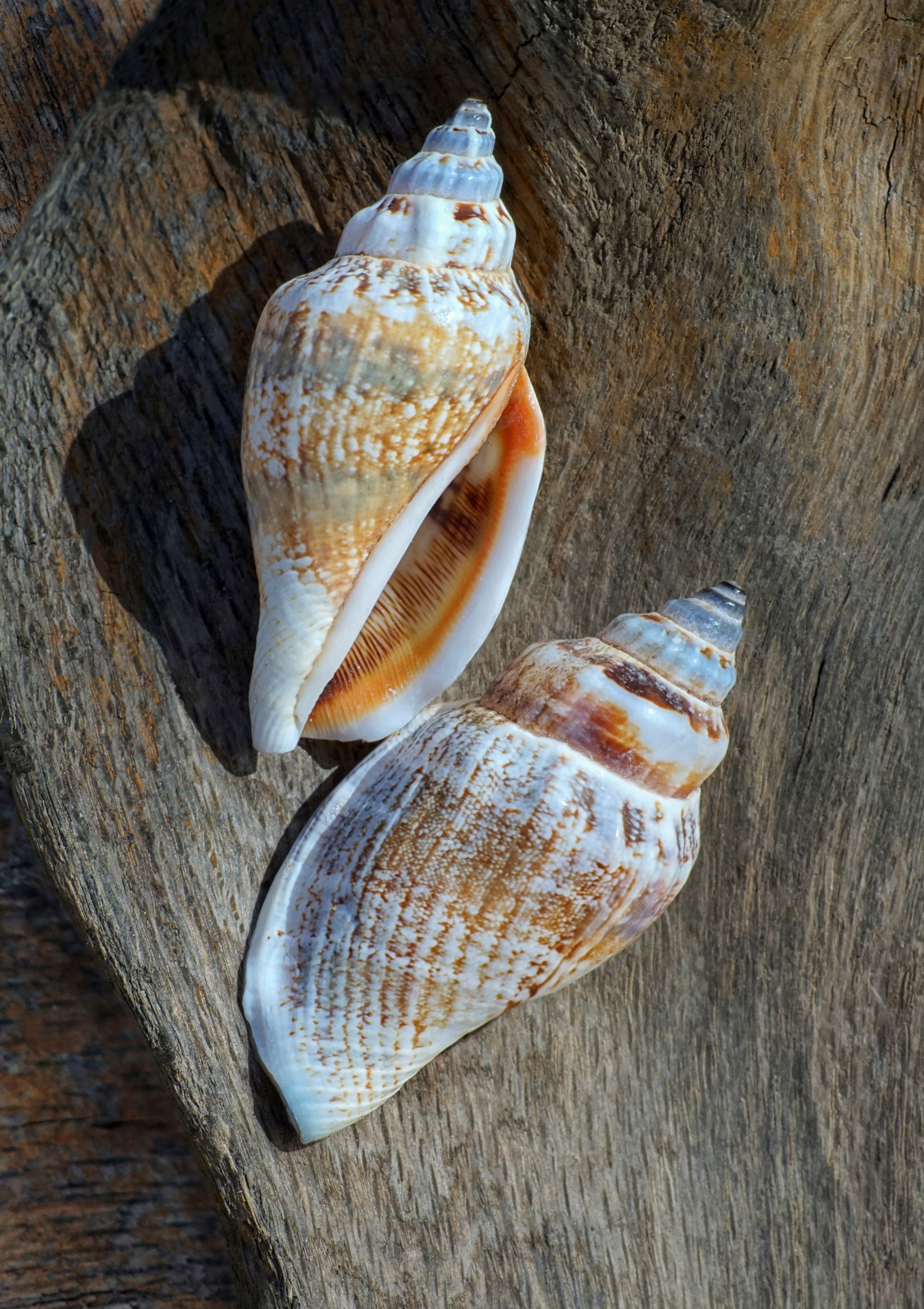
14. Florida Rock Snail (Stramonita haemastoma floridana)
The Florida Rock Snail has a solid elongated shell with a tall spire. It’s sculpted with longitudinal ribs sometimes with nodules on the shoulder and weaker concentric growth lines. Colors variable creamy white with brown, tan, or blue-gray bands sometimes creating a checkered almost plaid-like pattern. The innermost interior is deep brown or purple outlined with orange and often grooved on the outer lip.
- Belongs in the Murex family and may also be called an Oyster Drill, Red-Mouthed Rock Shell, or the Florida Dog Winkle
- Rock Snails are known to feed on oysters and mussels and may be able to attack their prey in groups to maximize feeding efficiency. Their feeding behaviors include chipping away at the shell margins of prey using their teeth (called radula) and acid secretions.
- Size: Up to 4 1/2 in (11 cm)
- Habitat: Shallow, warm marine areas, particular oyster reefs, and seawalls along Floriday’s coastline. They thrive in areas with abundant hard substrates for feeding on oysters and mussels, often found in intertidal zones on rocky shores.
- Range: Widespread on the U.S. Atlantic coast from North Carolina to Florida and Caribbean as far south to Brazil. Also on the European Atlantic coast and the Mediterranean northern tip of Africa.
For more univalve ID and interesting facts including Tritons, Turbans, Cerith and more, click HERE. Otherwise, if you are in the “Categories” section under “Seashells Univalves” simply continue scrolling.
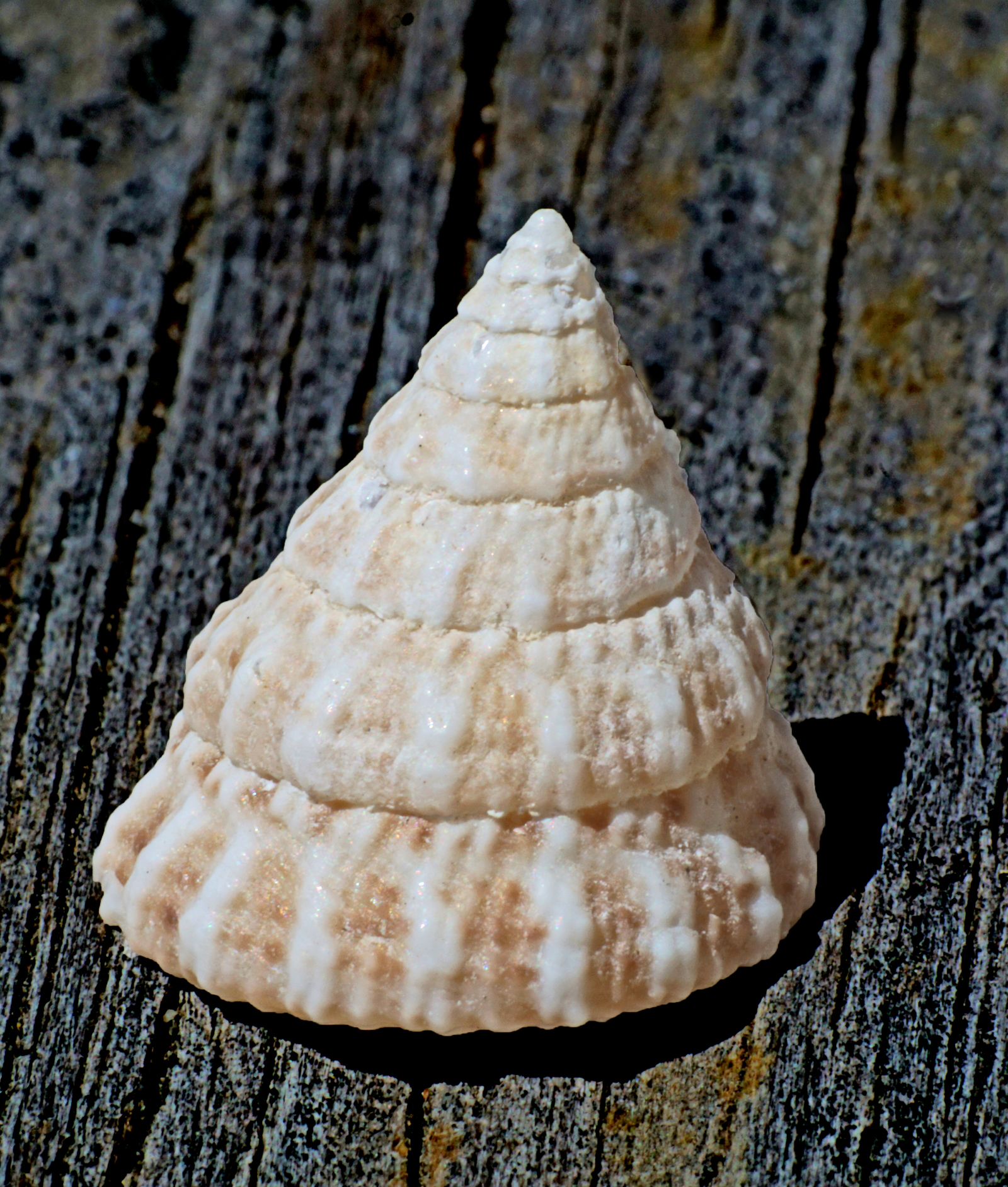
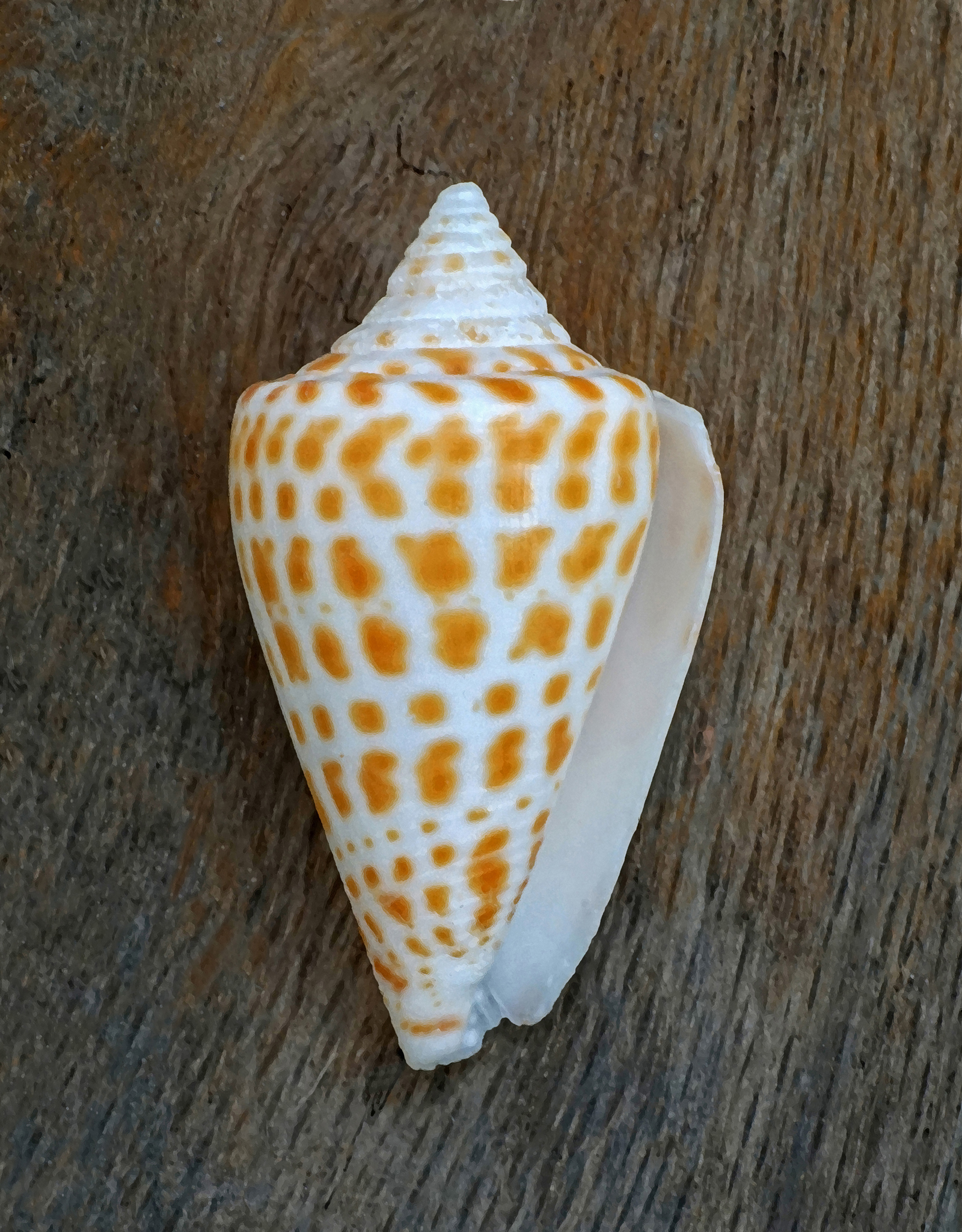
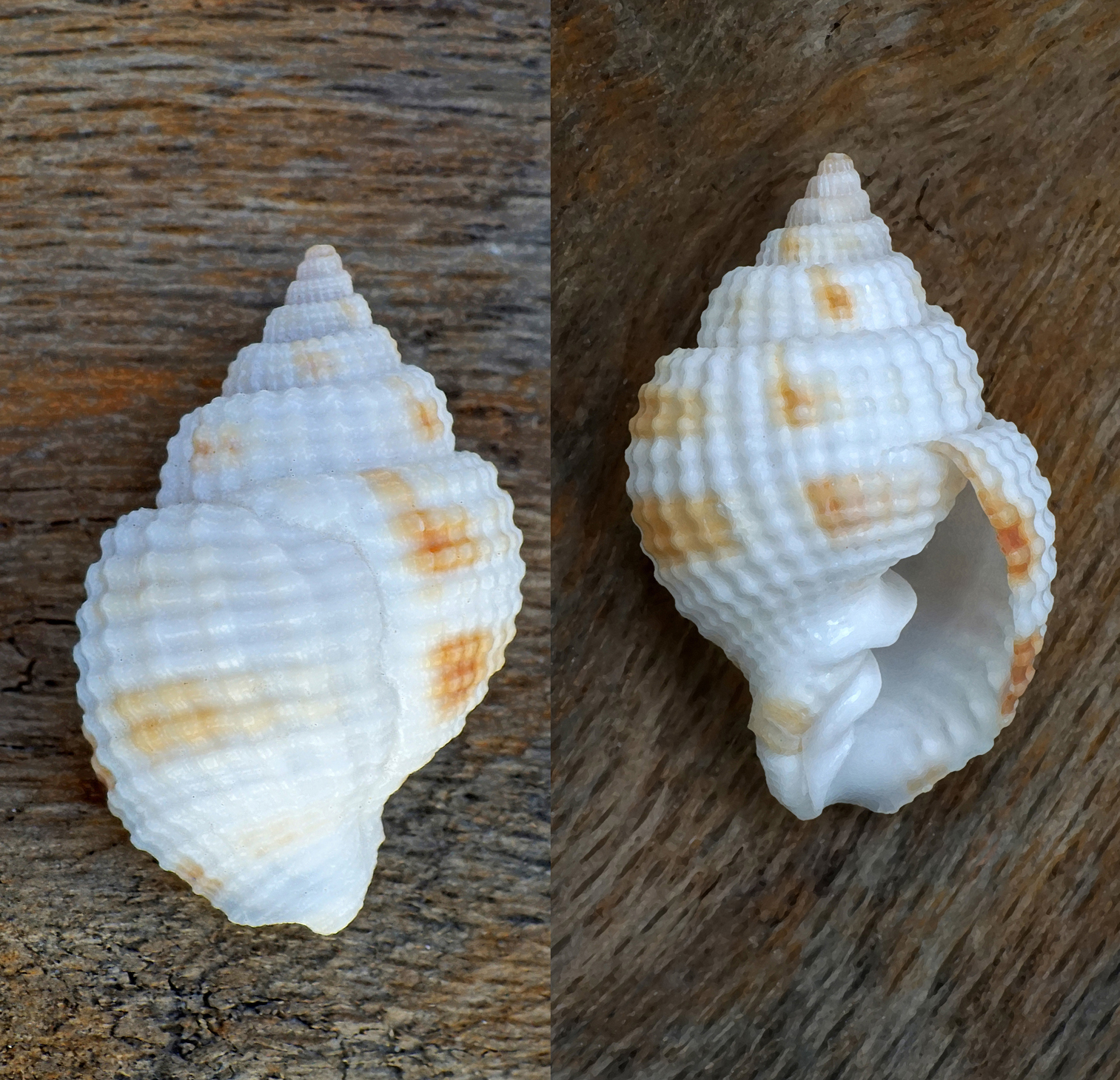
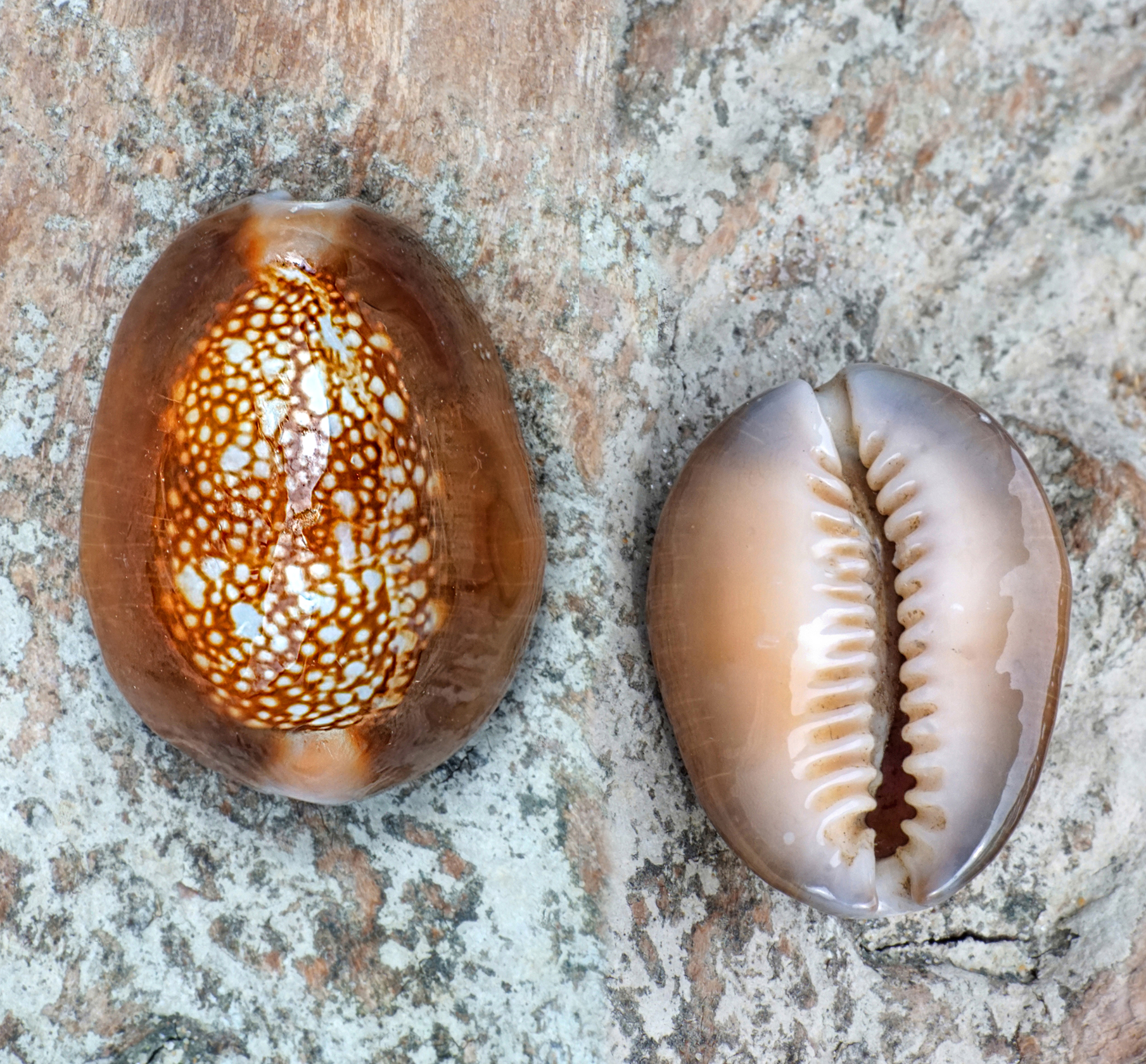
For more univalve ID and interesting facts including Tops, Cones, Cowries, Moons, Olive and more, click HERE. Otherwise, if you are in the “Categories” section under “Seashell Univalves” simply continue scrolling.
All rights reserved © Fossillady 2026

 Fossil Lady