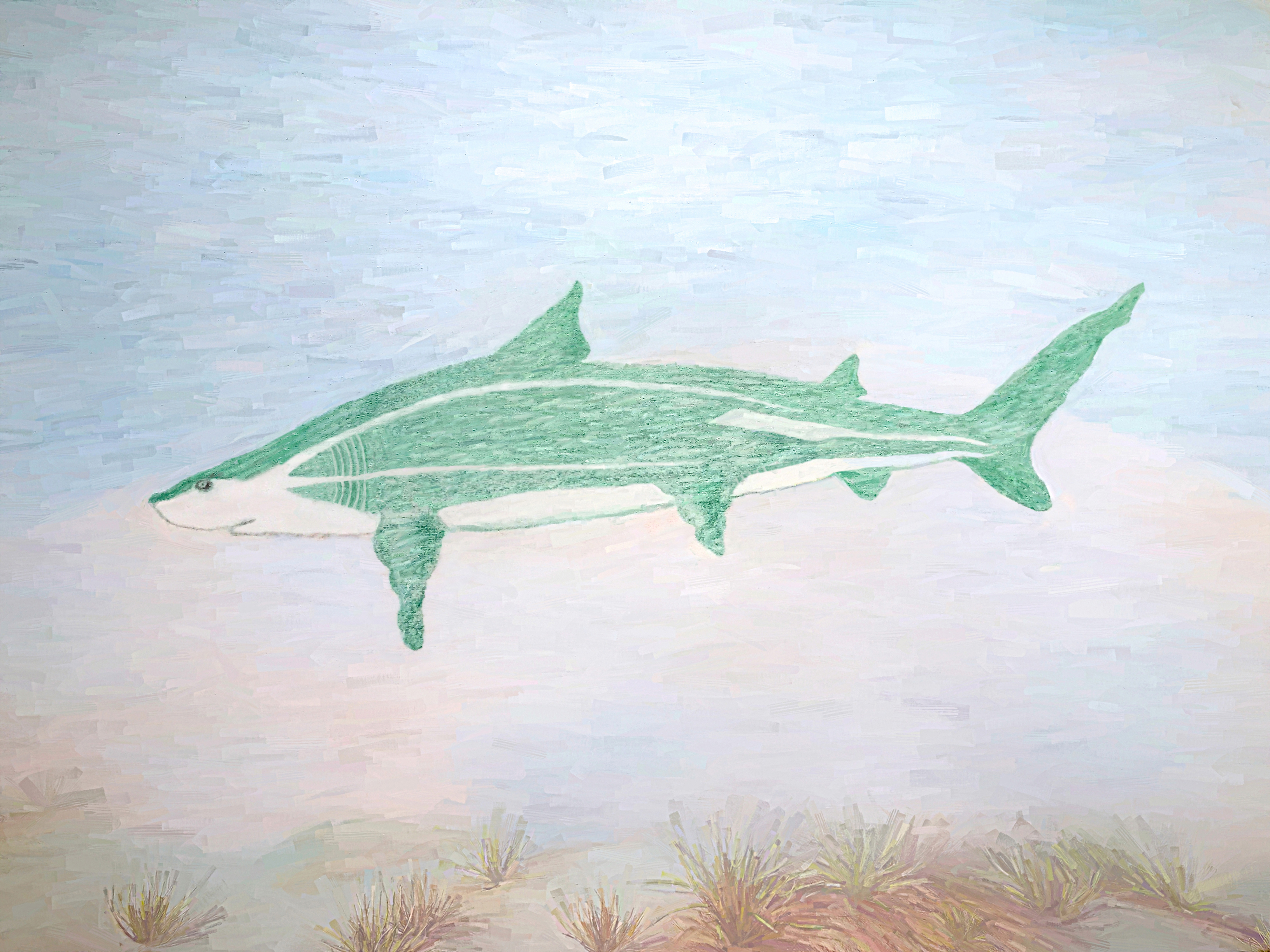
Lemon Shark

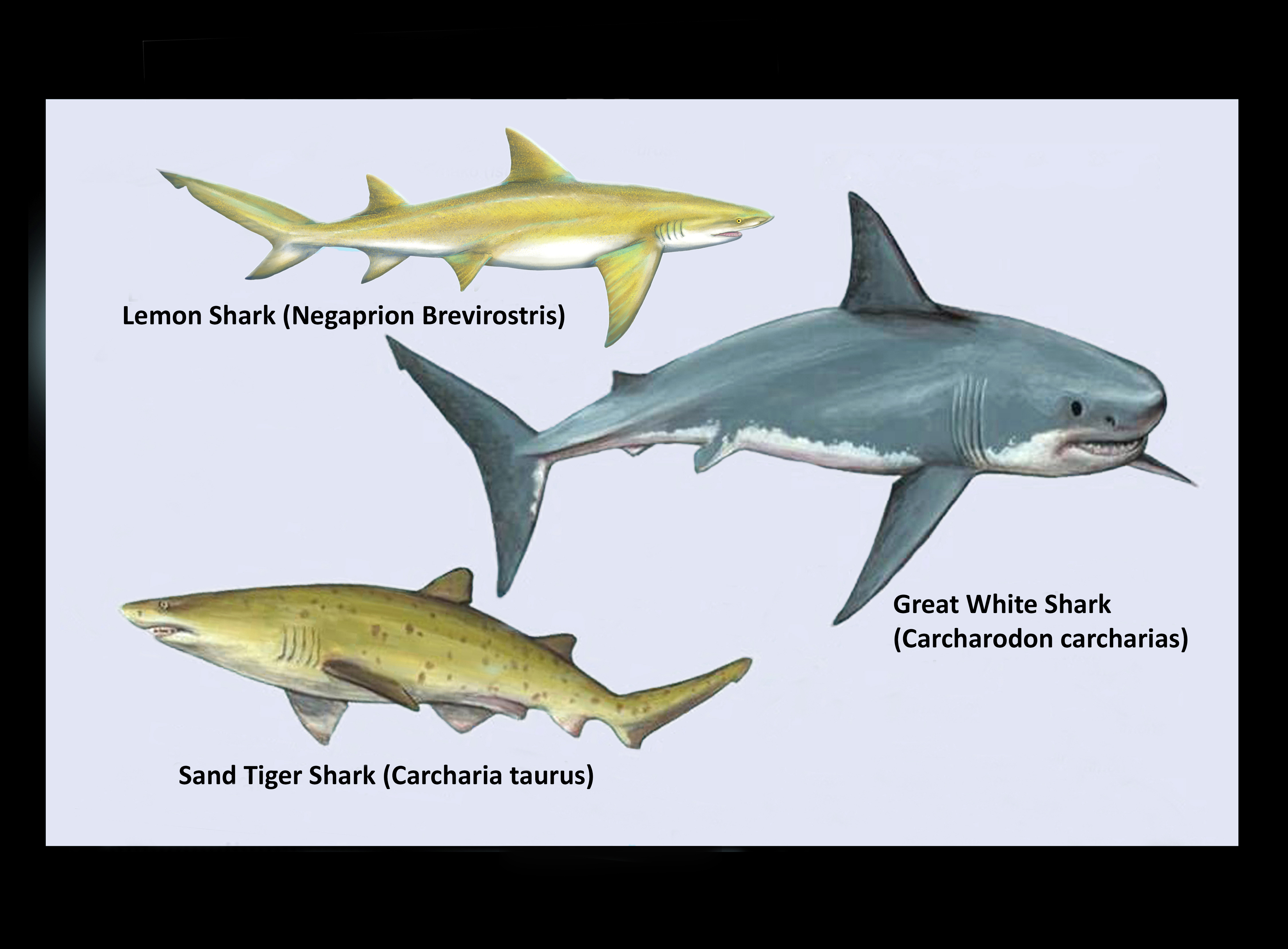
Lemon Shark, Negaprion brevirostris, first appeared in the fossil record approximately 50 millions-years-ago beginning in the Eocene Epoch and are still here today, but are nearing the threatened list!
Named for their yellowish-brown color, which helps to disguise the fish over a yellowish-gray seabed, Lemon Sharks prefer coastal waters, lagoons or mangroves, typically staying close to the water surface. Even though humans reside in these areas, they are of little threat.
They are large, heavy sharks growing to an average length around 10 feet (3 meters). The Lemon Shark has a flattened head with a short, broad snout. Three of their triangular dorsal fins are approximately the same size and shape, which is unusual compared to other sharks.
Lemon sharks are commonly found along the Southeastern Coasts of the United States and the Gulf of Mexico, and can also be found throughout the Caribbean and Southern Brazil. They have also been known to migrate to places as far east as West Africa.
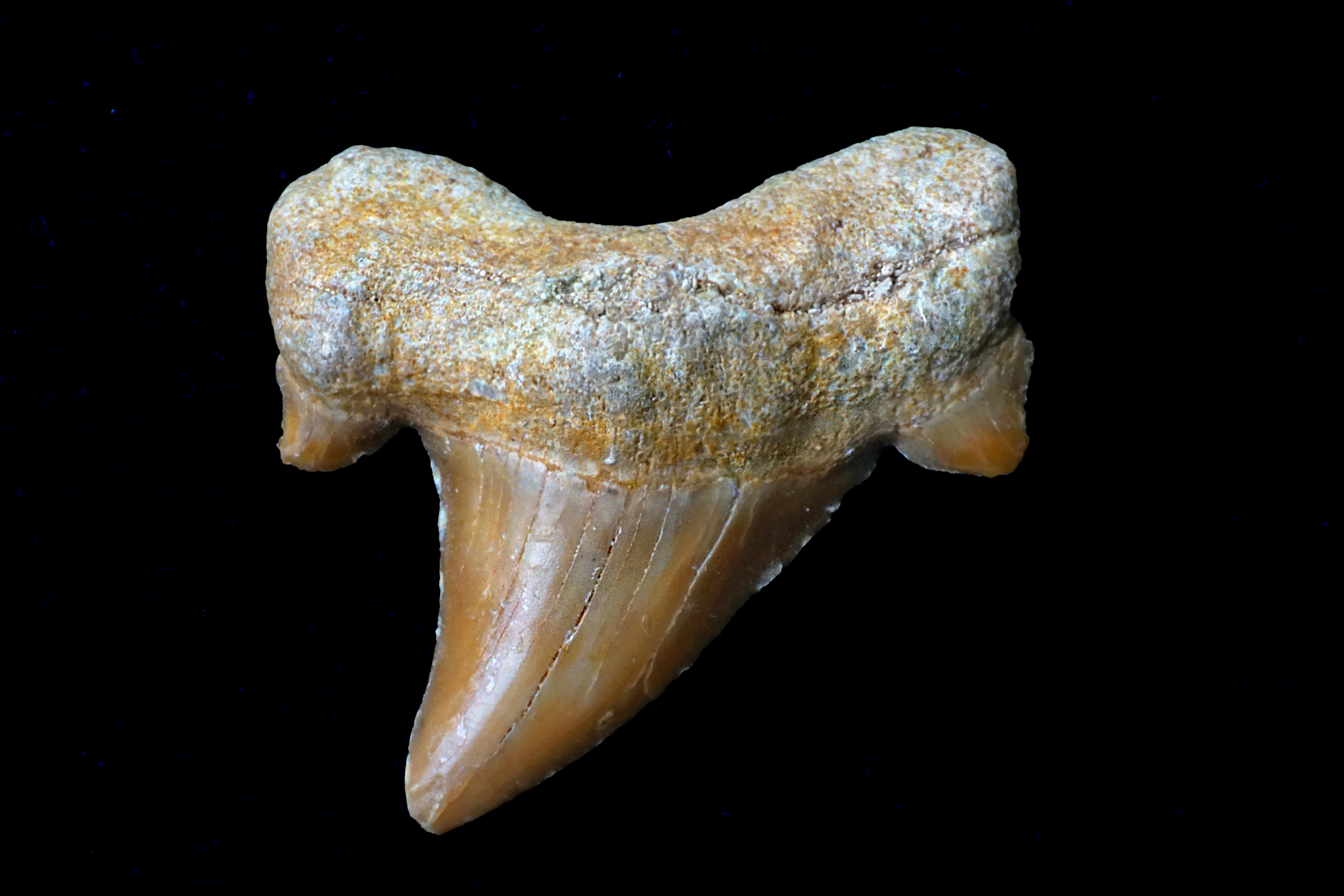
Lemon Shark teeth have fairly large roots which are near straight across the top. The blades are smooth and narrow coming to a sharp point and typically grow out from the root at a 90 degree angle.
- Lemon Sharks can live to near 30 years.
Sand Tiger Shark
Sand Tiger Shark, Carcharia taurus, first appeared in the fossil record during the late Cretaceous Period, around 72 million-years-ago, replacing their predecessor, the extinct Sand Tiger Shark, Carcharias cuspidatus, which appeared more than 45 million years earlier. Like the Lemon Shark, Sand Tiger Sharks are also threatened today.
Sand Tiger sharks inhabit coastal sandy shorelines (hence the name sand tiger shark). They also inhabit shallow bars, estuaries and tropical reefs to a depth of around 627 feet (191 meters). Even though they roam the surf in close proximity to humans, they are of little threat. They are normally quite docile, plus their mouths are not large enough to cause a human fatality.
Sand Tiger sharks dwell in a wide-range of waters including off the east coasts of North and South America, Japan, Australia, Africa, and parts of the Mediterranean. Because they have a worldwide distribution, they have inherited several common names, including; grey nurse shark, spotted ragged-tooth shark or blue-nurse sand tiger. The term “sand tiger shark” actually refers to four different Sand Tiger shark species in the family, Odontaspididae.

Sand Tiger shark, Carcharia taurus, are large and bulky reaching up to approximately 10 feet (3 meters) in length. The head is pointy, while the snout is flattened and the mouth extends beyond the eyes. The Sand Tiger has a light grey-brownish back and pale underside. Adults tend to have reddish-brown scattered spots, mostly on the hind part of the body.
Sand Tiger Sharks usually swim with an opened mouth displaying three rows of protruding, smooth-edged, sharp-pointed teeth that have side cuplets, which once removed from the mouth, may or may not later become worn away. The upper front teeth are separated from the side teeth by small intermediate teeth. The roots are deeply curvaceous.
- Sand Tiger sharks can live up to 40 years.
Other Shark Facts
- Sharks are covered in scales called dermal denticles, which are covered with a layer of enamel, like our teeth. The denticles protect the shark’s skin from injury. They also help water glide over the shark as it swims so it can move quickly and quietly through the ocean.
- Sharks need to keep moving in order to pass water through their gills to receive oxygen.
- The dark color over their topside helps to camouflage them from above while the light color on their bottom side blends with the sunlight to fool their prey below.
- Sharks have electro sensors to help them navigate and find prey, compensating for their poor eyesight.
- Sharks lack bones, their bodies are mostly made up of flexible cartilage which is lighter than bone requiring less energy for them to stay afloat.
- Sharks loose and replace their teeth on a regular basis.
Factors Contributing to Population Declines of Sand Tiger and Lemon Sharks
- Over fishing, particularly, by eastern countries such as China and Japan
- Pollution in estuaries where pups are bred
- Competition with humans for food
- Exploitive Fishing Nets
All rights reserved © Fossillady 2026


 Fossil Lady