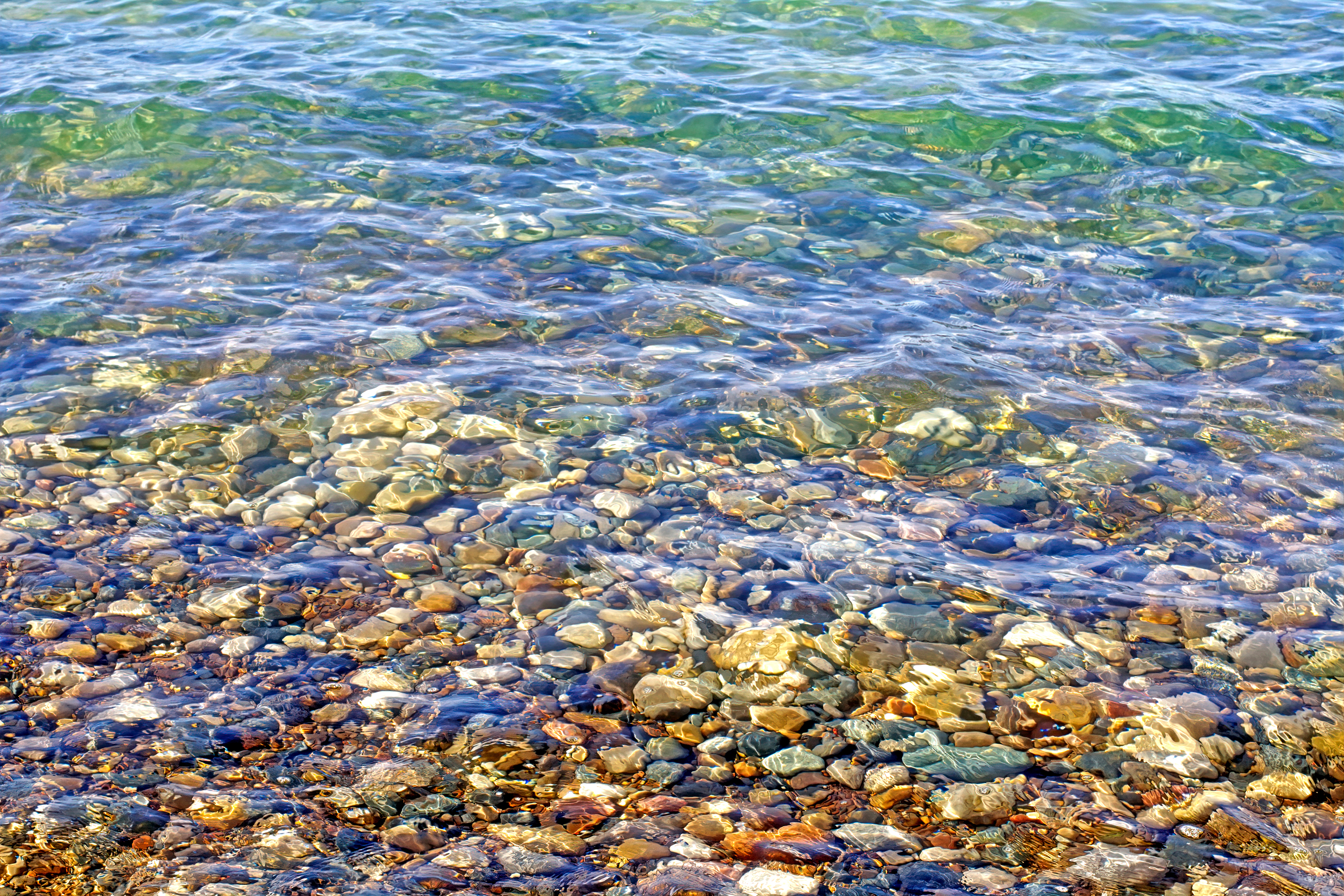
I Found a Rock on the Beach and Wondered A favorite pastime for beachgoers of the Great Lake states is combing the beaches for interesting treasures. Beachcombing can be a very settling and spiritual experience. I have enjoyed collecting many kinds of treasures along the shores of Lake Michigan, but in particular, beach stones. Follow along to learn interesting facts and identifcation of the assorted types of beach stones, both rare and common!
- Rocks Featured in the following order:
- Syenite
- Rhyolite
- Pumice
- Dolomite
- Milky Quartz
- Geode
- Presque Island Serpentine
- Quartzite
- Unakite
- Dolerite (Diabase)
- Pegmatite
- Conglomerate
- Banded Metamorphic
- Quartz Veining
- Wishing Stones/Heart Stones
If there is a specific rock you are looking for that is not included here in this article, you can try my other Lake Michigan beach stone article HERE which features basalts, gabbro, septarian brownstone, limestones, granite, diorite, gneiss, schist, sandstone, silt stone, mudstone, clay stone, geode, chalcedony, and agate.
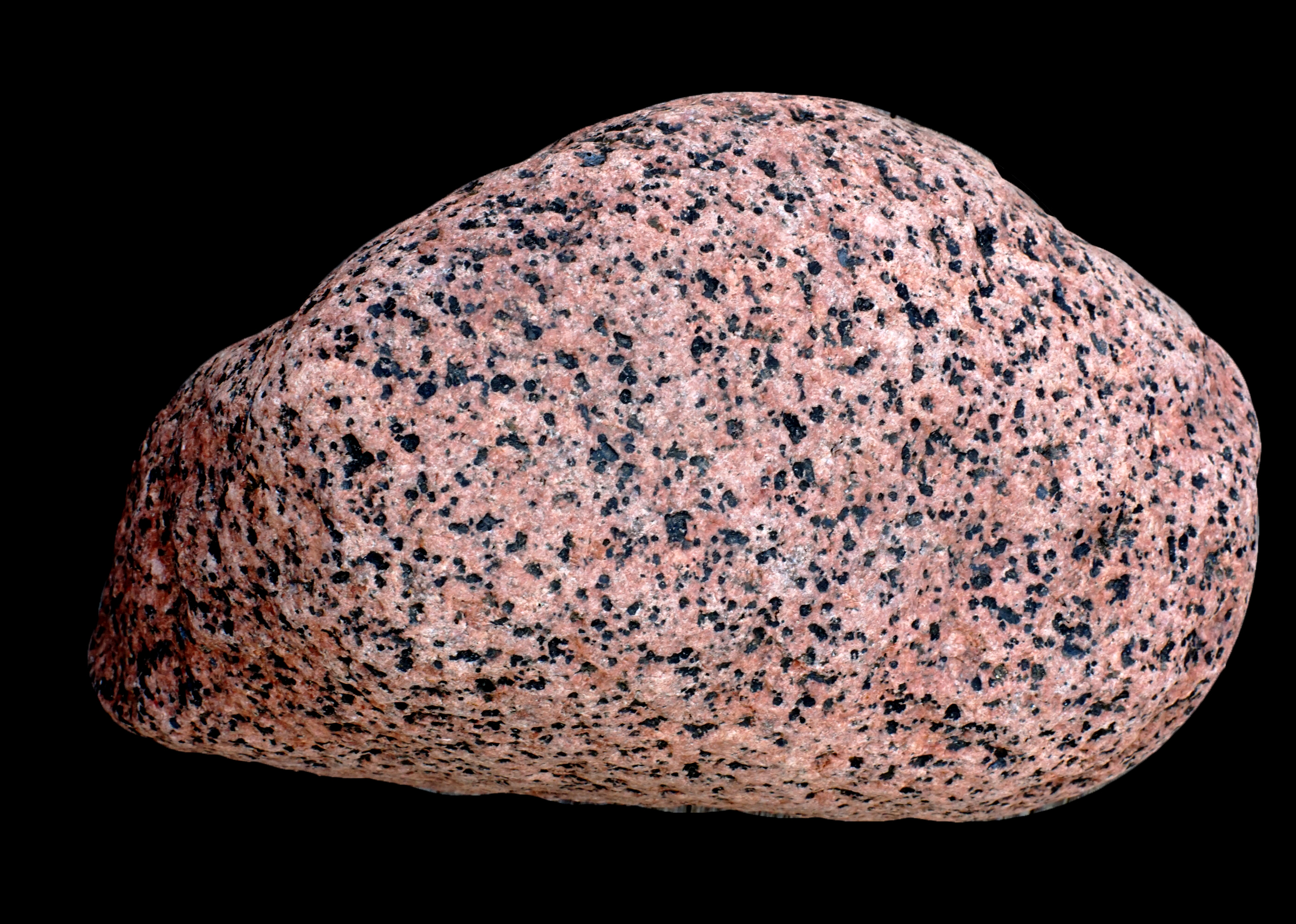
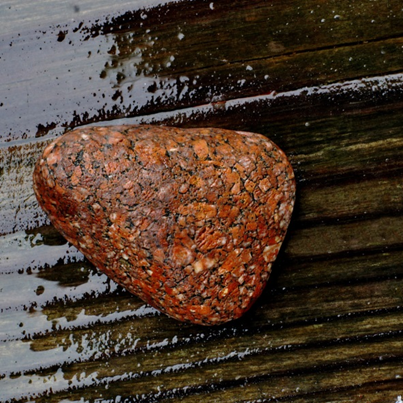
Syenite
Syenite, attractive and colorful, is a medium to coarse grained igneous rock related to granite which solidifies slowly (INTRUSIVE TYPE) within the Earth’s crust in a similar manner as granite. Whereas quartz is an important mineral in granite, it’s lacking in syenite. Careful examination will show that syenite is composed of long prisms of the dark minerals, hornblende or feldspar, rather than the scaly biotite mica, which is another chief component of granite. The pink coloring of syenite is due to the presence of alkali feldspar which predominates in syenite, but this rock type is found in a wide variety of colors depending on certain minerals. Consequently, syenite could be augite syenite, hornblende syenite, mica syenite, or nepheline syenite.
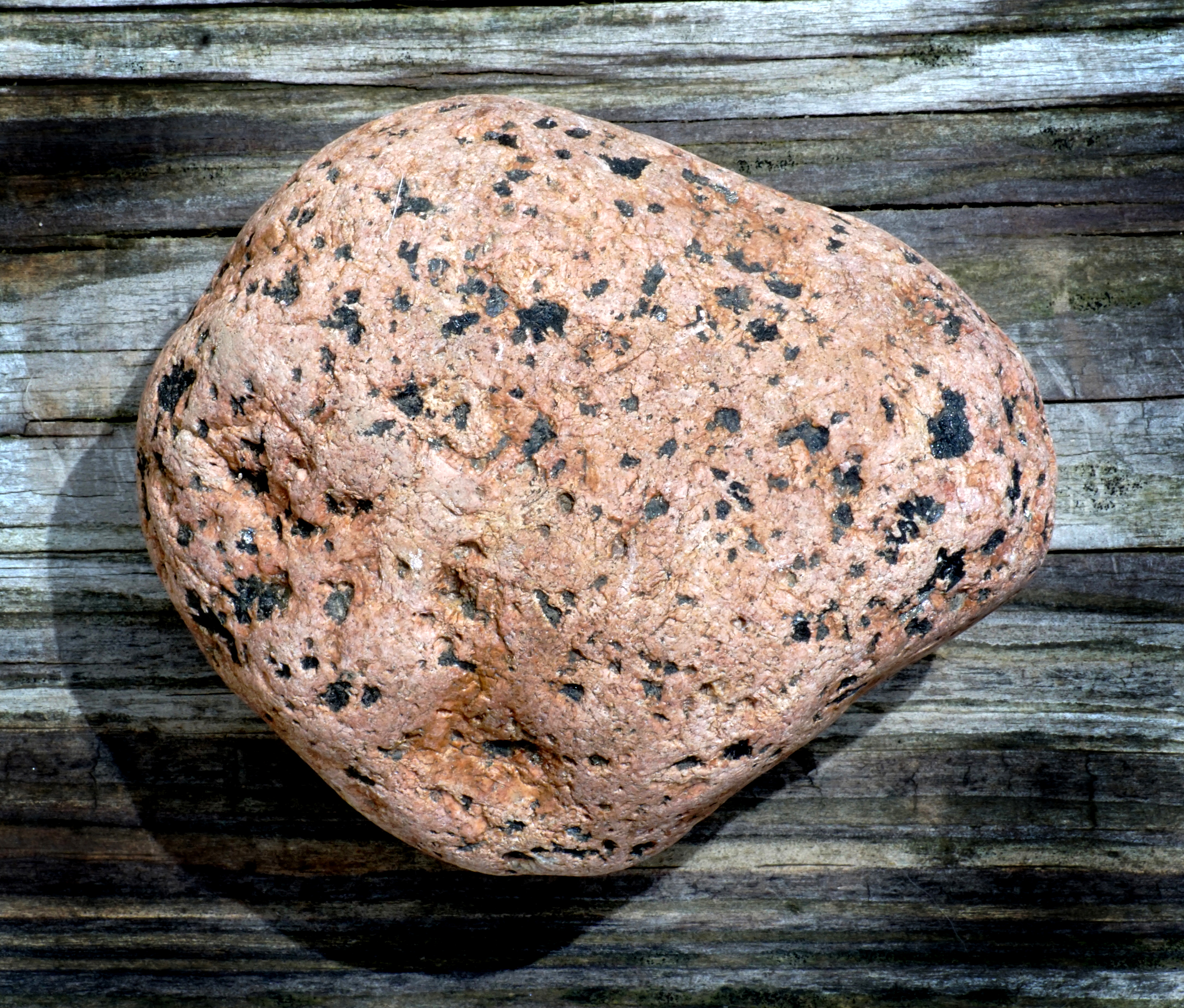
Syenite is not the most common rock found along Lake Michigan beaches so it’s a thrill to find them with their pink and pinkish-orange polk-a-dot patterns! Syenite is occasionally used as a substitute in place of granite for a building material.
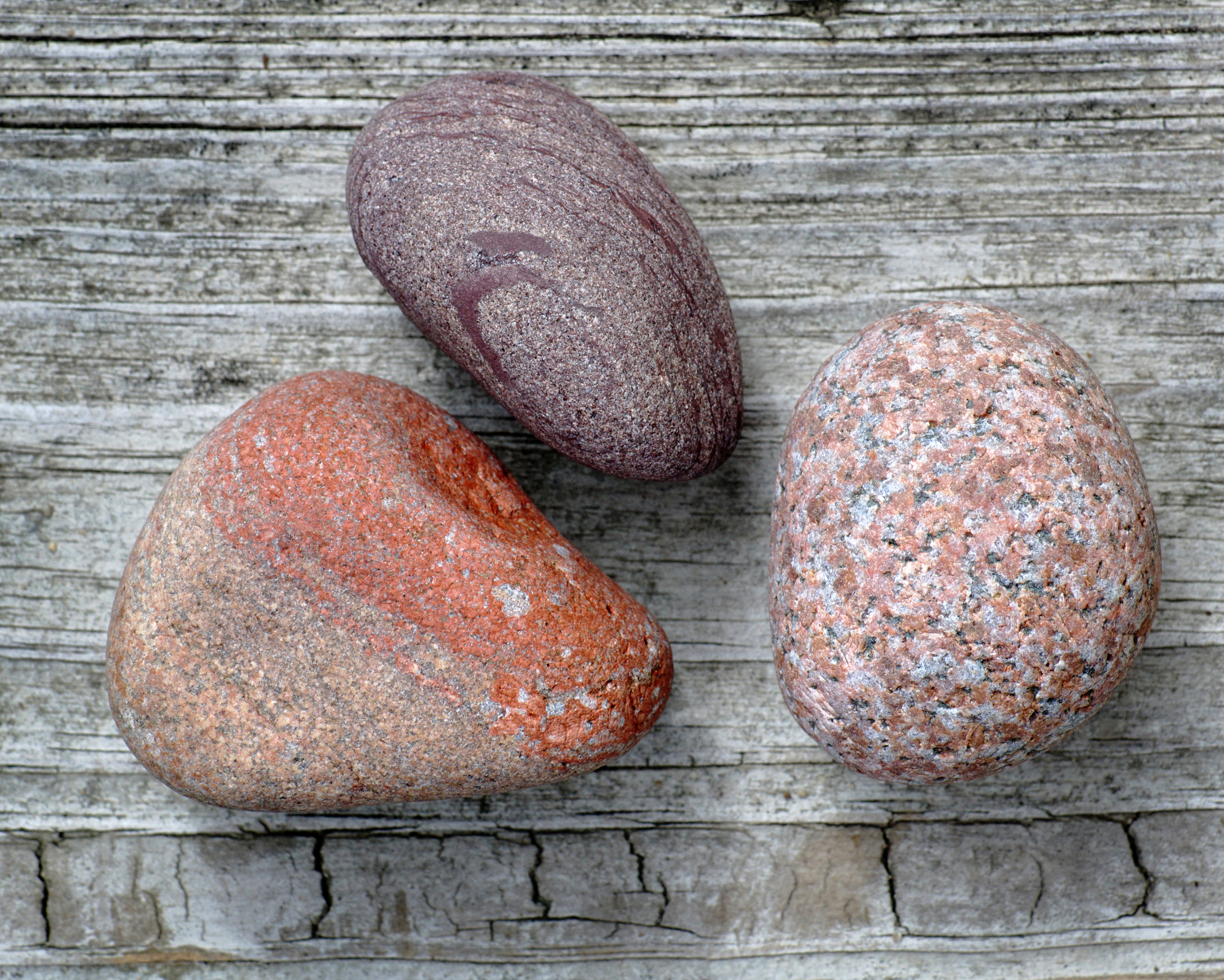
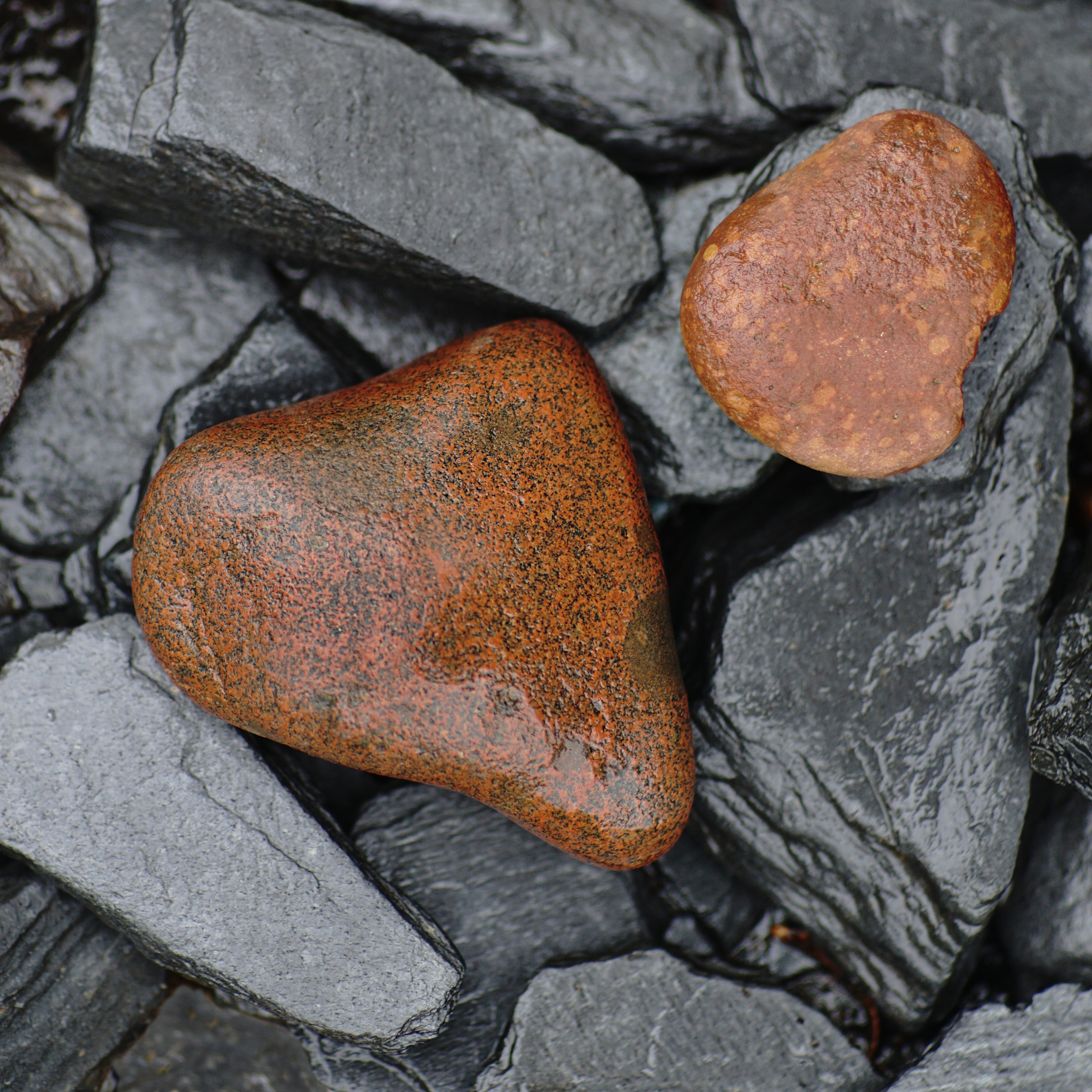
Left Photo -Top and Left: Rhyolite, Right: Granite —— Right Photo: Rhyolite
Rhyolite
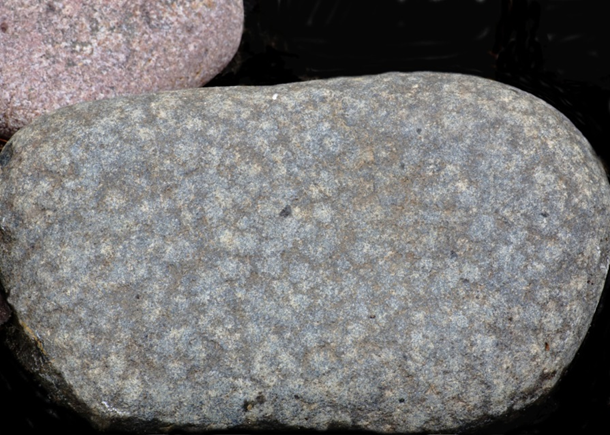
Rhyolite is a felsic (silica-rich) volcanic igneous rock with the same mineral content as granite, only unlike granite, it cools fast (EXTRUSIVE TYPE) as the molten rock nears or settles over the surface of Earth’s crust. When these magmas erupt, a rock with two grain sizes typically forms. The larger crystals that form just beneath the surface cool at a slower pace and are known as phenocrysts. The smaller, undetectable crystals that form at or above the surface cool quicker and are known as ground mass with a micro-crystalline matrix. Rhyolite commonly appears in shades of pink, gray, brown, green, or orange, and frequently shows beautiful banding or mottling from various minerals like quartz and feldspar. While light gray to pink is very common, reddish hues, from light pink to deep purplish-red are also common. Notice the two distinct grain sizes. Rhyolite typically forms in continental volcanic eruptions and is rarely produced at oceanic eruptions. Rhyolites are known from all parts of the Earth and from all geologic ages.
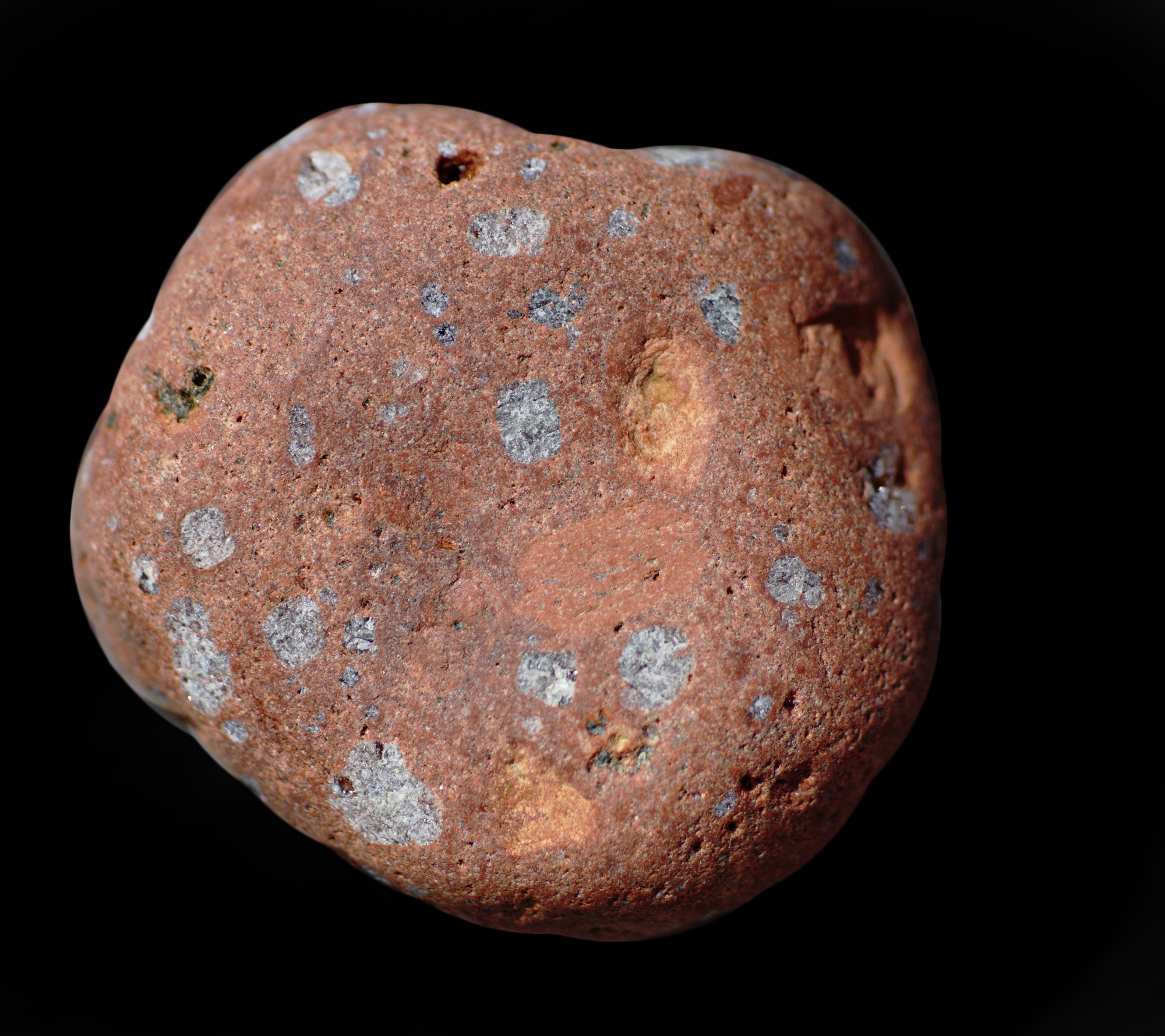
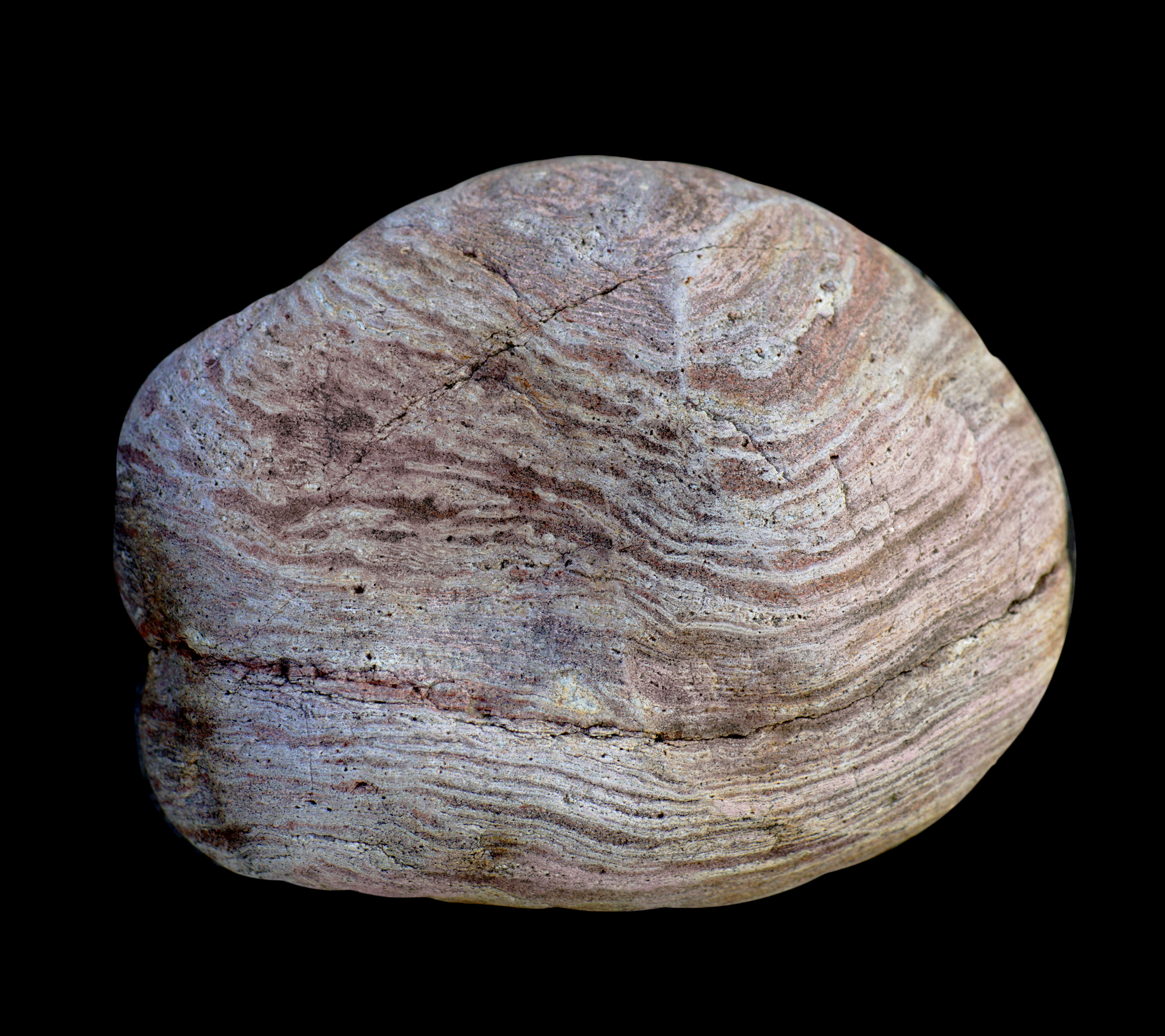
Left: Porphoritic Rhyolite Right: Banded Rhyolite
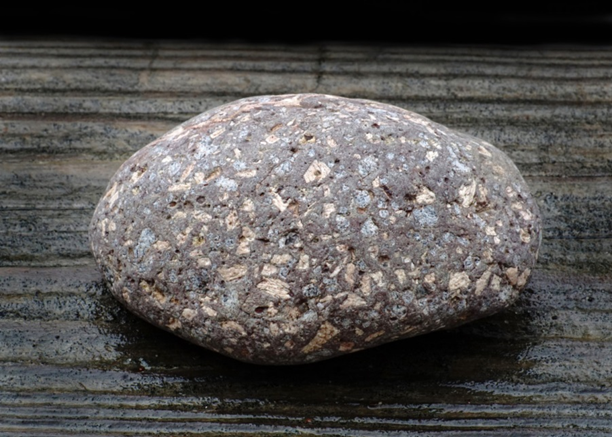
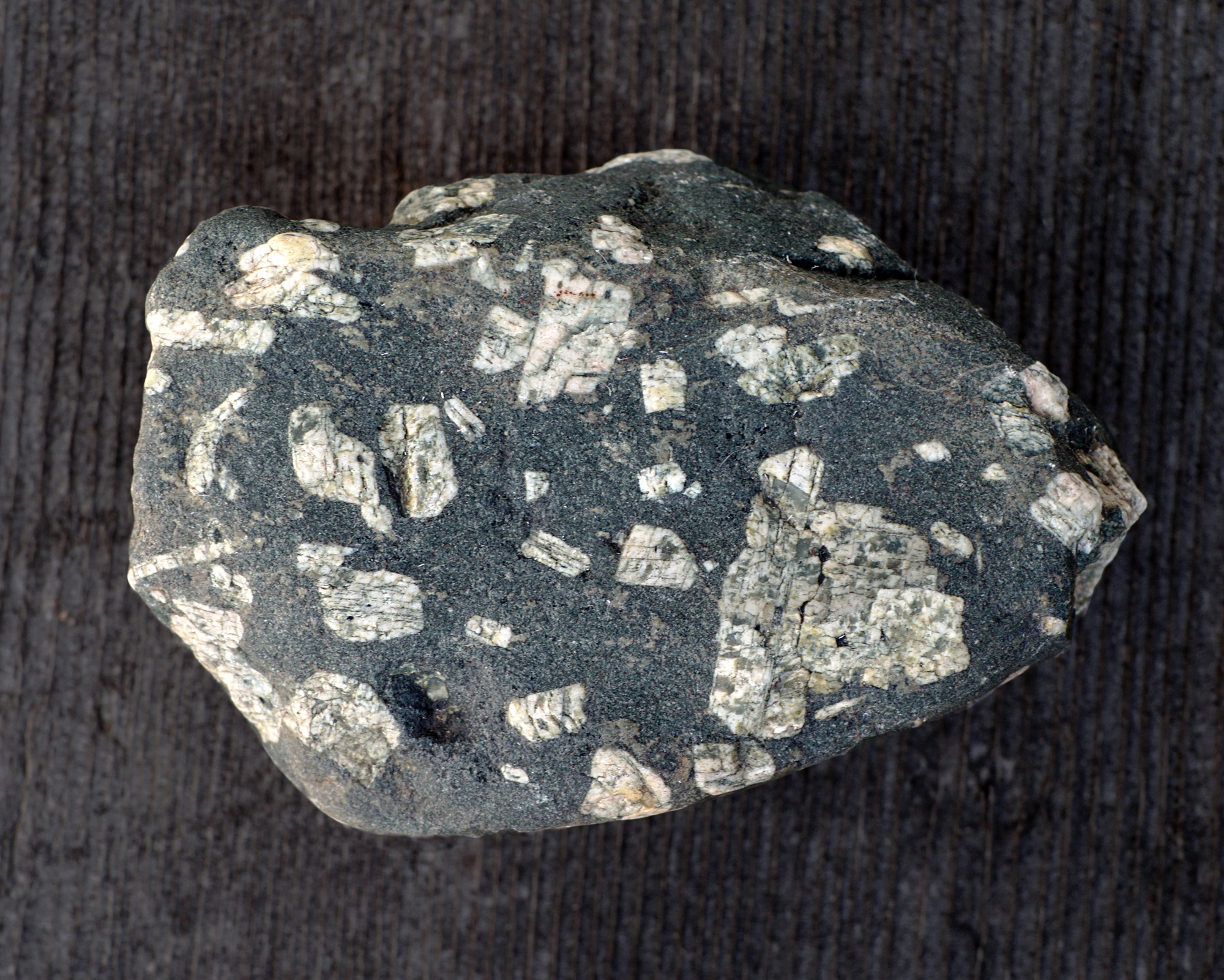
Porphorytic Rhyolite. In order to understand this rock, you need to know what “porphorytic” or “porphyry” means. Simply, these are igneous rocks with one mineral (phenocryst) that exhibits a larger grain size than the dominant minerals (ground mass). The obvious differing grain sizes are quite apparent in porphorytic rocks as seen in the porphorytic rhyolite sample above left.
Michigan’s Igneous Rocks The igneous volcanic rocks of Michigan, including rhyolite, granite and basalt for example, are very old. The rock material slowly seeped through cracks and crevices in the Earth’s crust during the molten state. If you hold a sample of igneous rock in your hand, you’re holding something that likely formed a billion years ago or more . . . amazing when you think about it!
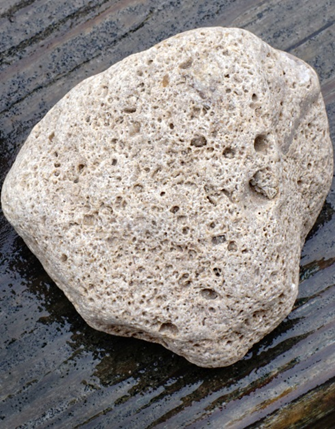
Rhyolite Pumice
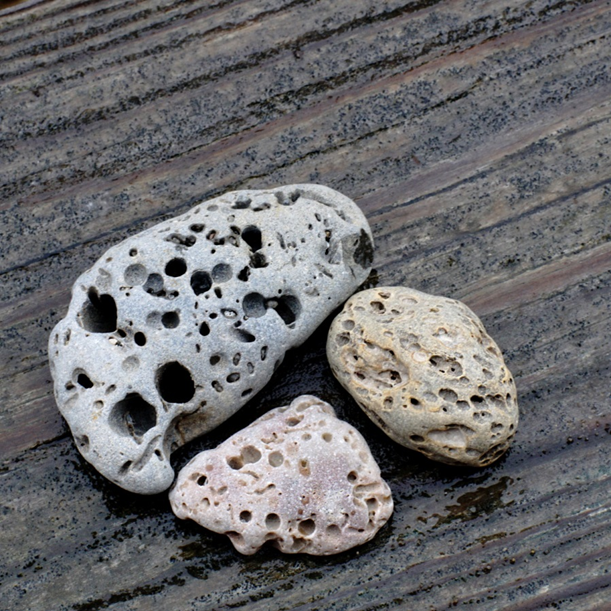
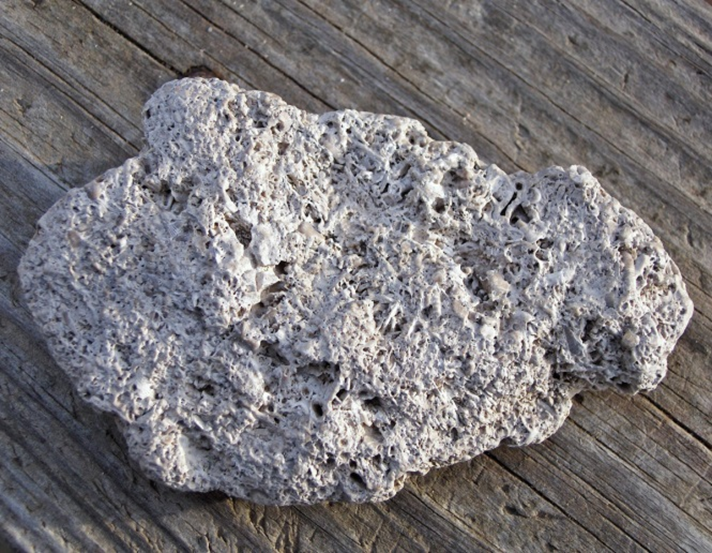
Rhyolite Pumice. Due to its high silica content, rhyolite lava is very viscous . . . it flows slowly, like toothpaste squeezed from a tube. Also, it tends to pile up forming lava domes. The thick viscosity traps gas bubbles and if rhyolite magma is gas-rich, it can erupt explosively, forming a frothy solidified magma called pumice (a very lightweight, light-colored, vesicular, or pitted, form of rhyolite), which includes ash deposits. Pumice is most common from silica-rich (felsic) magmas like rhyolite and dacite, but it also occurs with andesite, trachyte and even basalt, resulting in different colors, from pale to black, but always as a glassy, gas-filled volcanic rock.
Notably, eruptions of granite magma can produce rhyolite, pumice, obsidian, or tuff. These different rock types can all be found in the products of a single magma eruption. These rocks have similar compositions but different cooling conditions.
- Explosive eruptions produce tuff or pumice.
- Effusive (slow) eruptions produce rhyolite or obsidian if the lava cools rapidly.
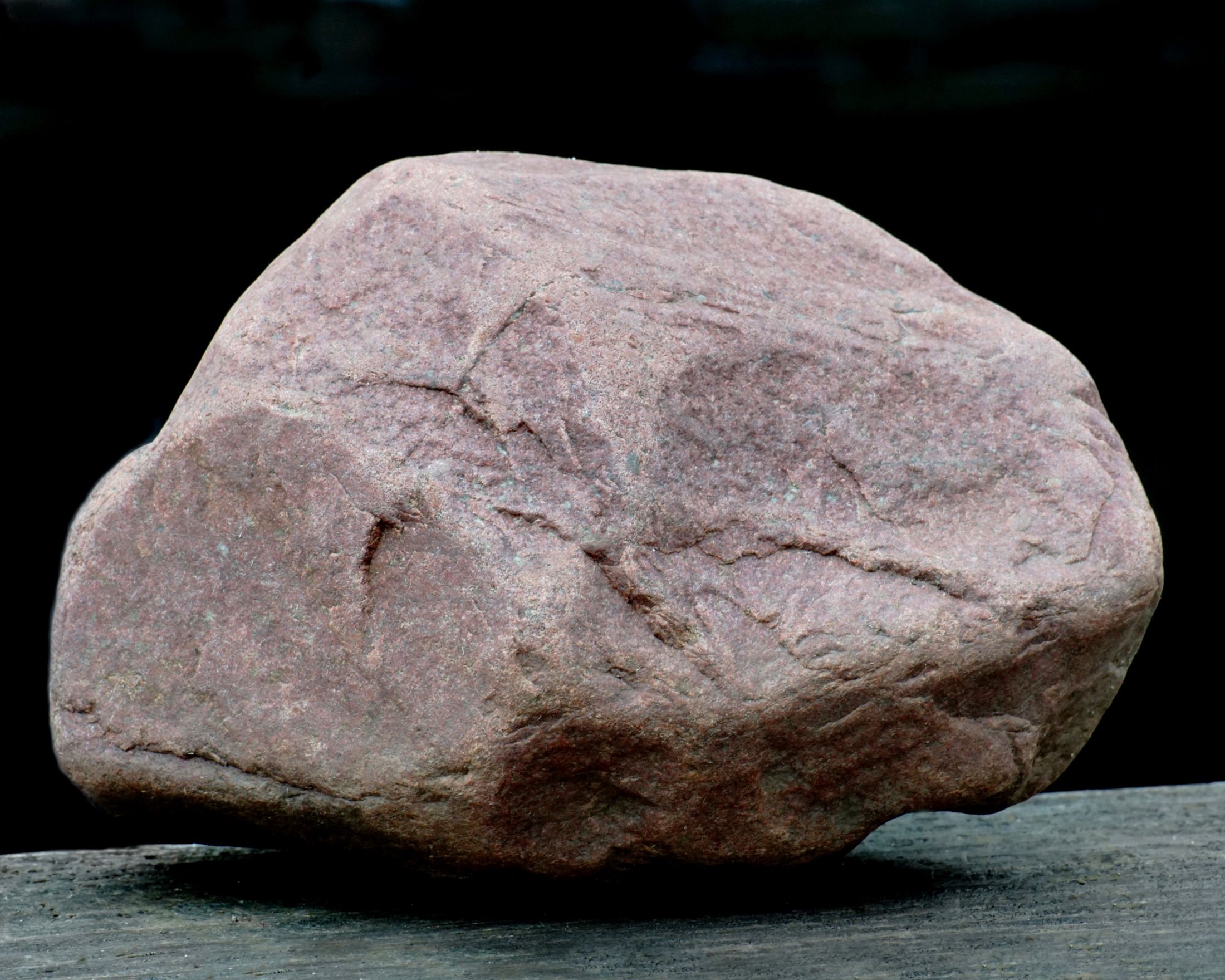

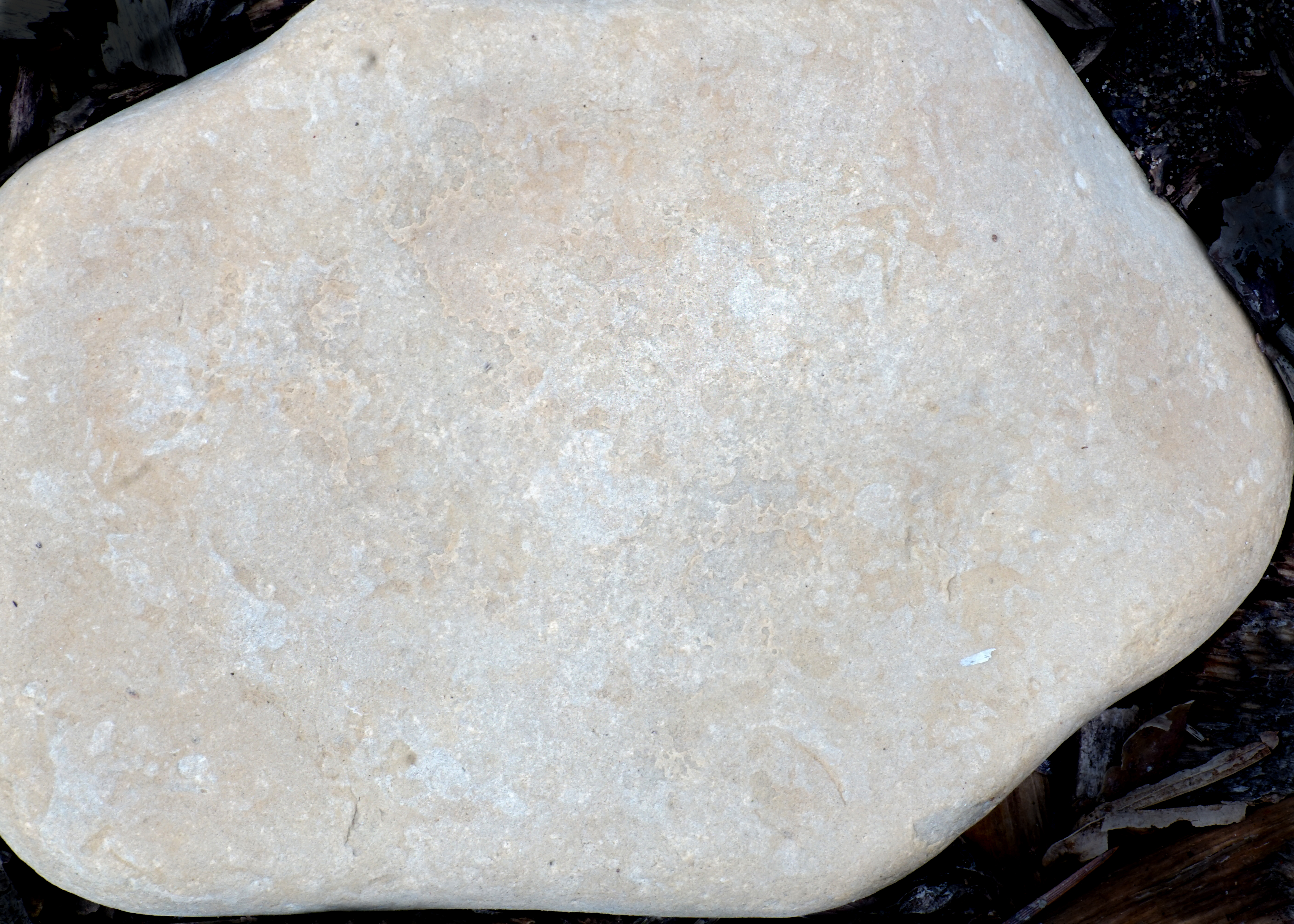
Various Colored Dolomite Boulders Found on Lake Michigan Beach
Dolomite Rock
There is considerable confusion about the name of this rock. The problem is that dolomite is both a mineral and a rock type. Dolomite rock is a sedimentary rock derived from limestone with a high percentage of the mineral dolomite. Limestone and dolomite rock are often indistinguishable in the field so geologists will often carry diluted hydrochloric acid to test the rocks. Limestone is strongly effervescent in acid, while dolomite reacts very weakly.
Dolomite rock originates in warm, shallow marine environments where calcium carbonate accumulates from shells, crinoids, algae, or coral fragments, the same as does limestone. It is widespread within the Cambrian Period strata throughout the world. Limestone and dolomite rock also share the same color ranges: white to light gray, yellowish, greenish, pinkish, purplish, and even black are possible. Like limestone, dolomite rock can also exhibit fossils, but not as commonly. Dolomite rates higher on the Mohs hardness scale and you can feel the difference in your hands. I have collected several dolomite boulders from the beach in a variety of colors. They do make lovely landscape decorations!
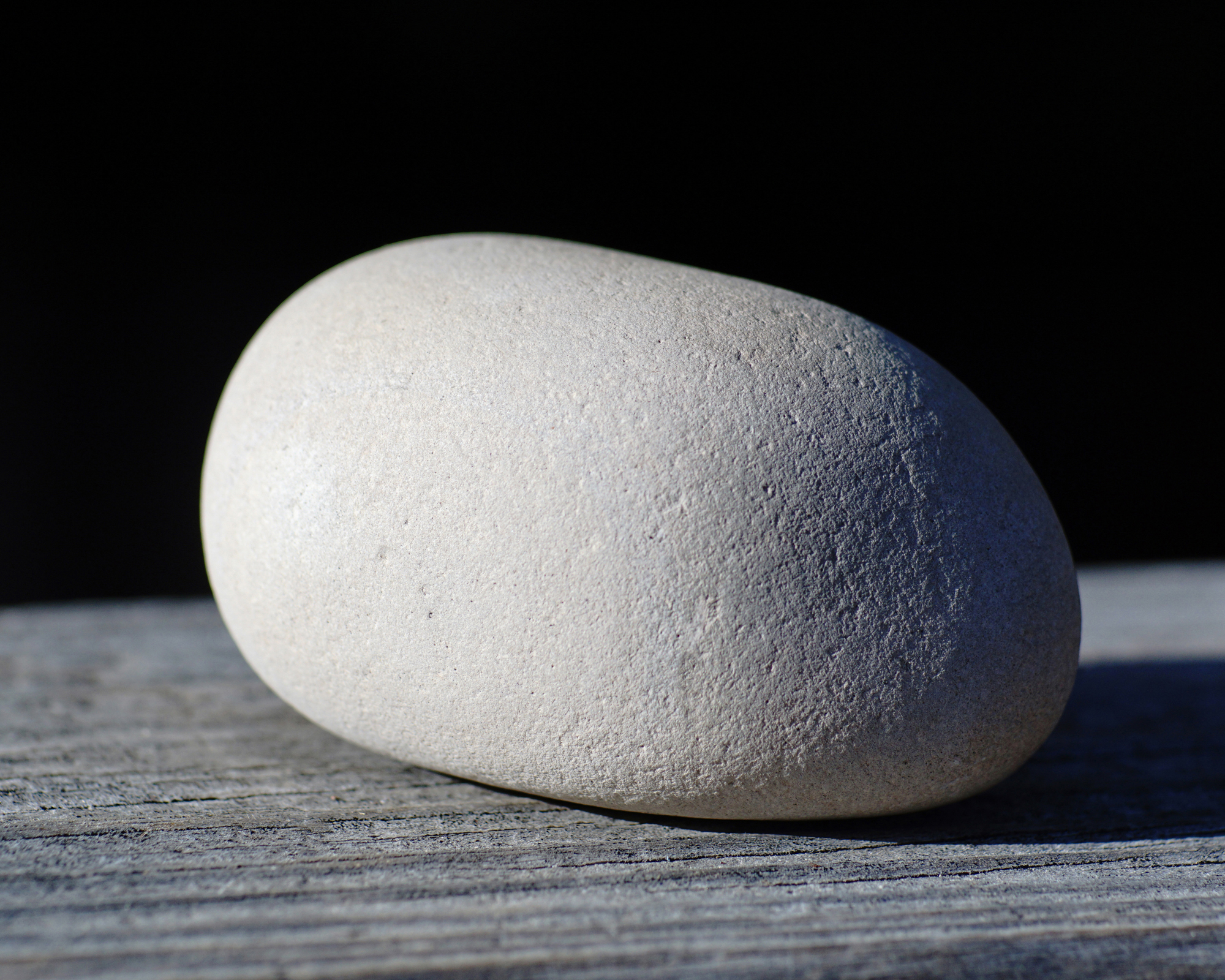
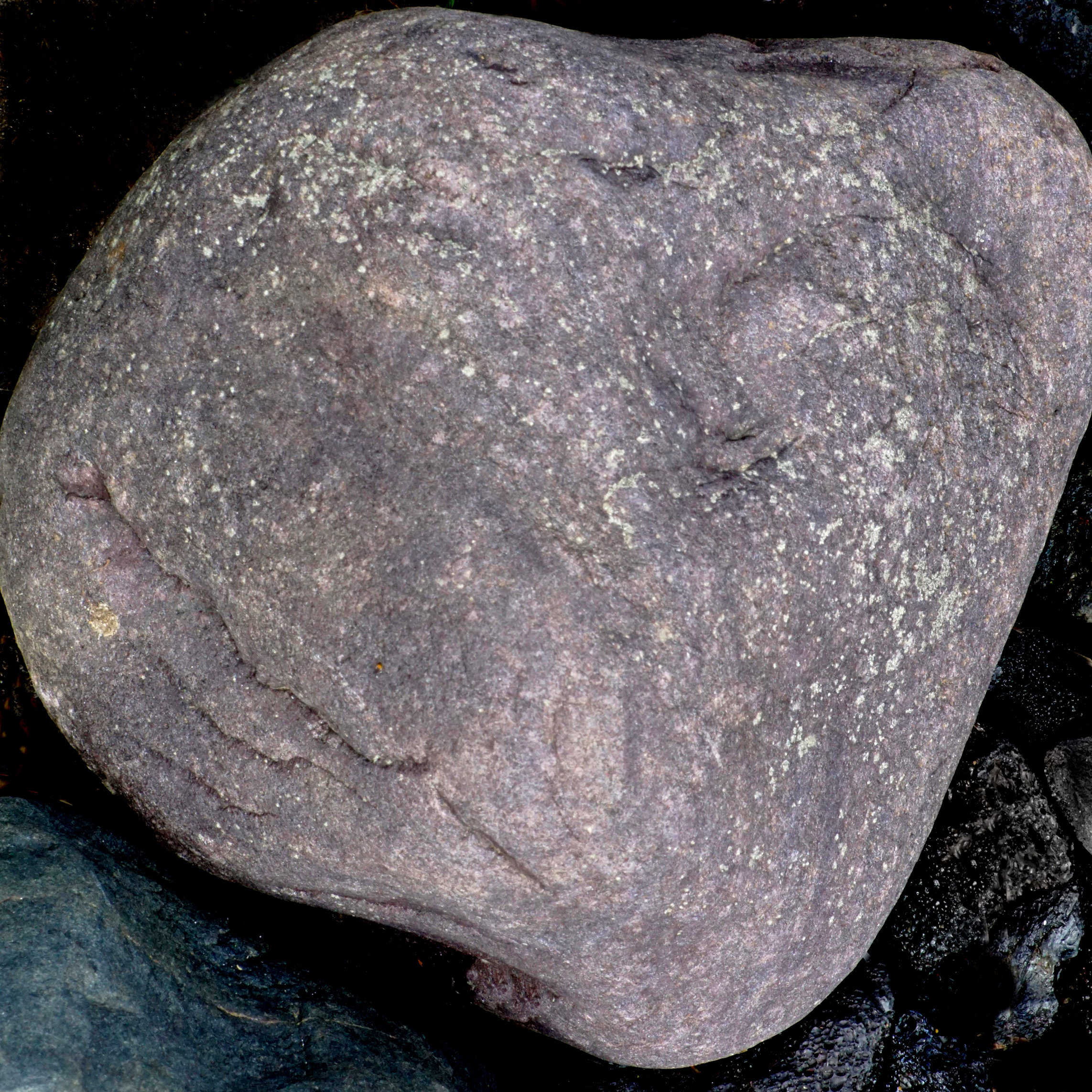
Various Colors of Dolomite Beach Stones
How does dolomite form? Dolomite stone forms in several ways, but the main method is from a former limestone that was precipitated by calcium “magnesium” carbonate (mineral dolomite) through the action of magnesium-bearing water percolating the limestone or limy mud and replacing the limestone calcium carbonate minerals of aragonite and/or calcite.
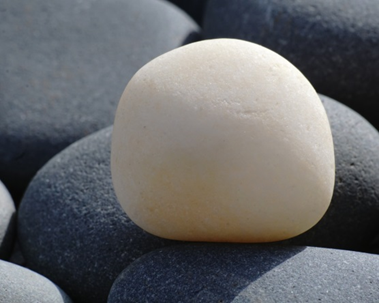
Milky Quartz
Quartz Basics: Did you know quartz is the single most abundant mineral on the planet? Quartz is made up of the elements silicon and oxygen, otherwise known as silica. Quartz can form large, six-sided crystals over rocks or can be found within rock cavities such as with granite, yet it also can fill rock vesicles (gas bubbles) during the cooling process of molten rock. Quartz can be found in a wide range of sizes such as masses larger than a basketball or crystal points smaller than a pea. Other quartz varieties are named for their different colors caused by impurities permeating during the crystallization process. For example, amethyst contains impurities of iron and aluminum, smoky quartz is colored by aluminum, and red quartz is iron-stained.
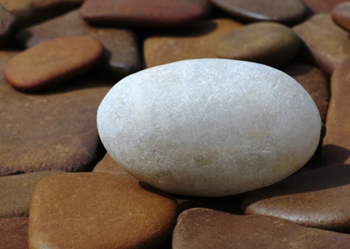
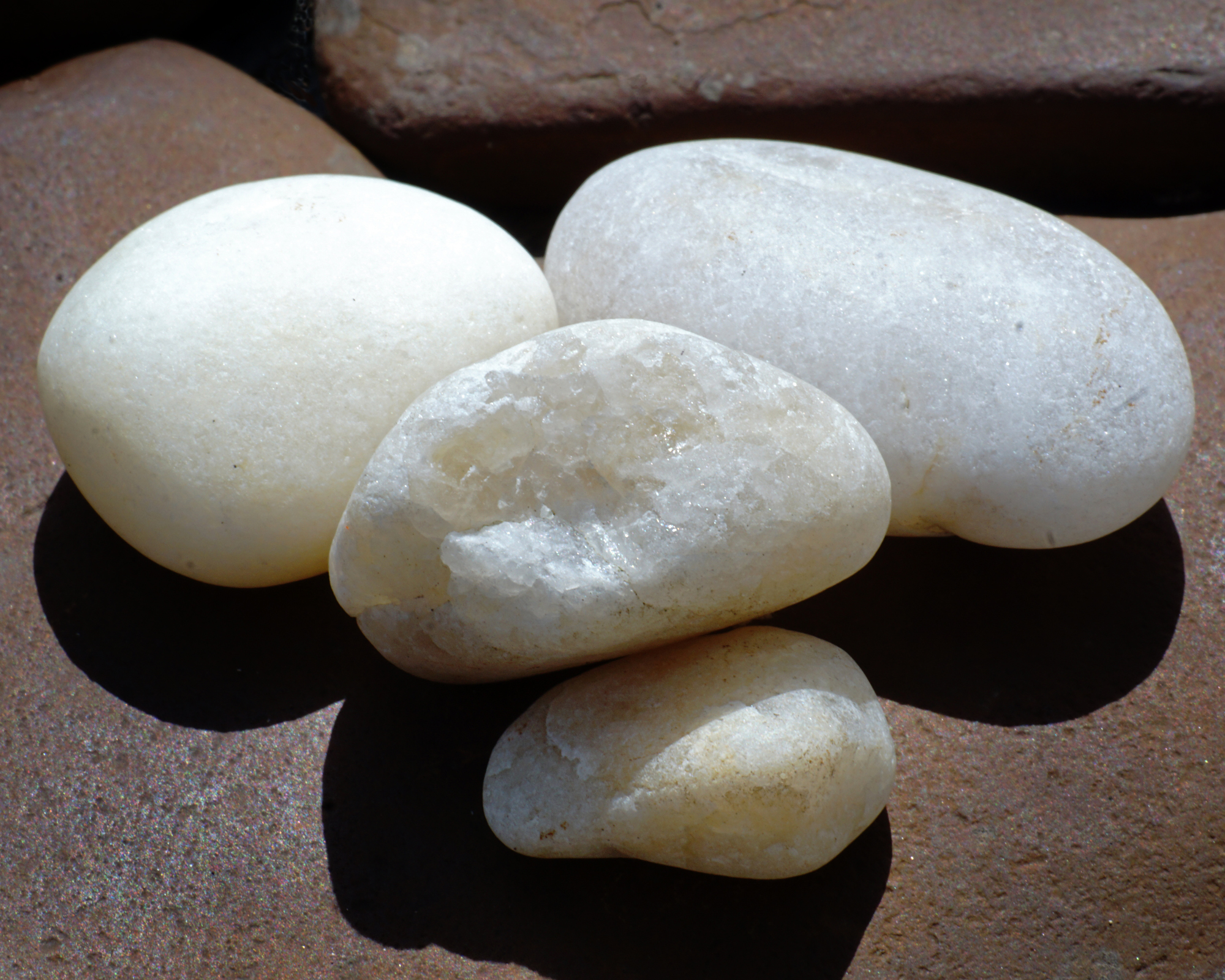
Milky Quartz Nuggests found on Lake Michigan Beach
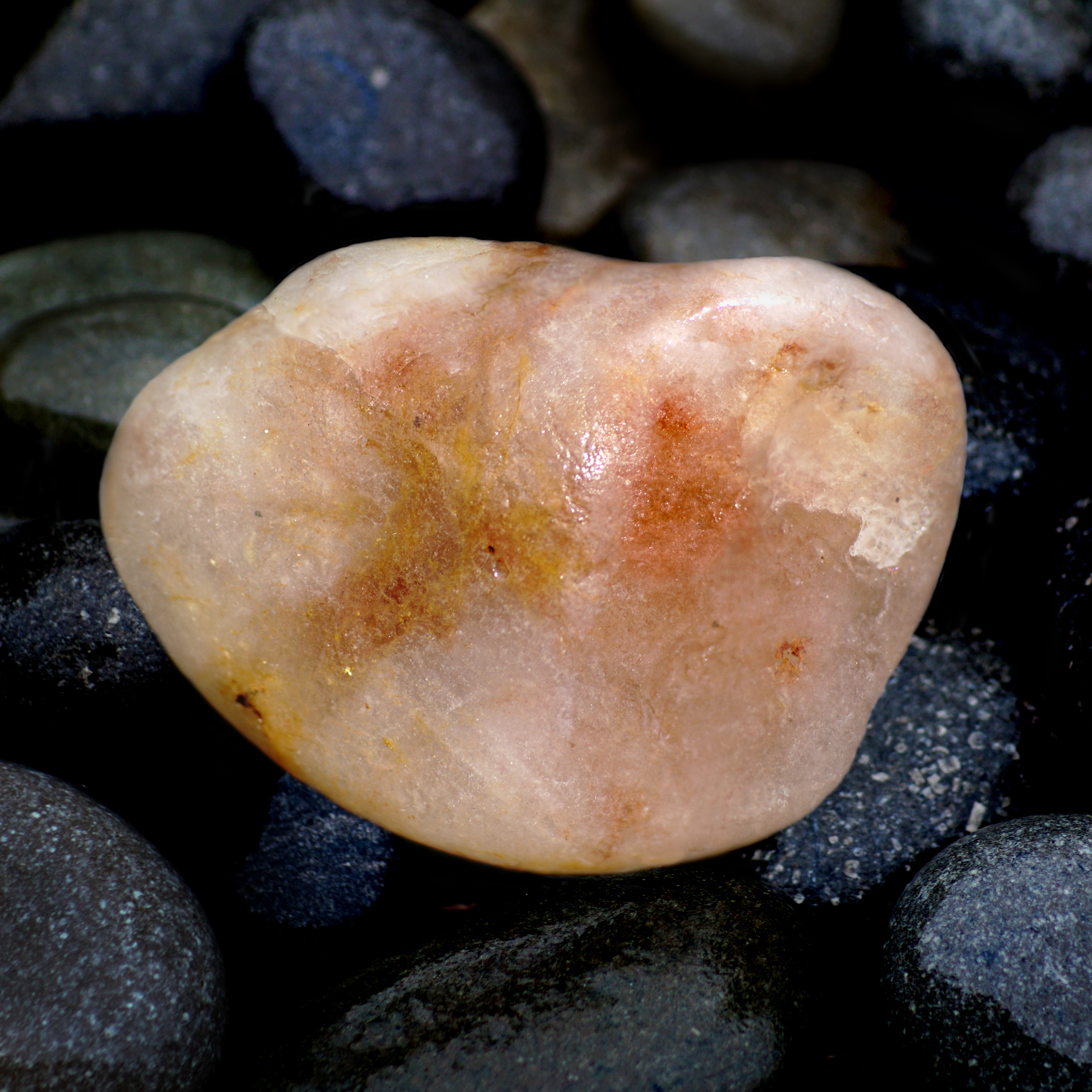
Milky quartz is the most common variety of crystalline quartz (crystals too small to be seen with the naked eye). Several varieties of quartz are microcrystalline These include agate, jasper, chert, chalcedony and more. The cloudiness of milky quartz comes from microscopic inclusions of fluids, gas, or both that have been encased in the crystal from the time the crystal first grew. The inclusions have spoiled the crystal for optical purposes and for the use in jewelry-making gemstones. Holding the milky quartz up to the sun, the light can be seen through the translucence of this stone. We find these quite often and in a rounded, polished form due to the weathering action of the beach windblown sand.
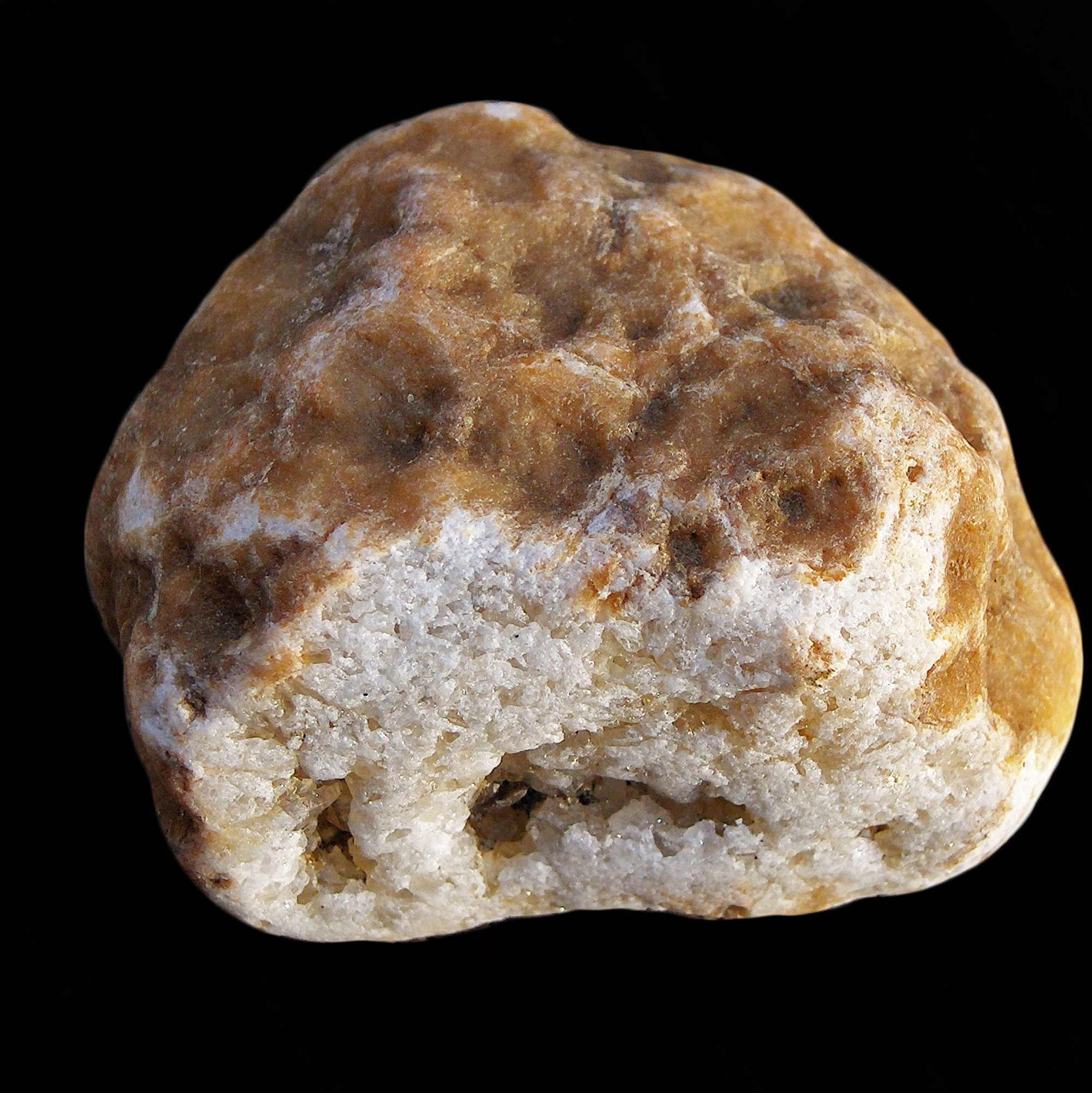
Geodes
Geodes are one of the less-common finds on our beaches, but it’s very exciting when you do find one. Geodes begin their formation as volcanic rock hollowed out by gas bubbles. But they can also form in areas other than volcanoes. In sedimentary rocks, geodes can start out as animal burrows, tree roots, or mud deposits, which over time form the hollow cavity within the rock while the outer edges harden and form a sphere. Mineral-rich ground water infiltrates the cavity and after many years, the minerals crystallize into various colors depending on the mineral content such as quartz and amethyst for example.
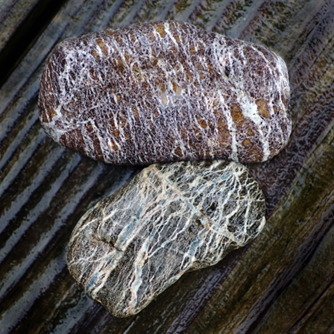
Presque Isle Serpentine
Presque Isle stones are quite rare finds on our Southwest Michigan beaches, but exciting to discover. These heavily veined cobble beach stones likely originated from Presque Isle Park in Marquette, Michigan, of Upper Michigan, a significant forested peninsula bordering Lake Superior. One source I found states it is serpentinized peridotite (serpentinite rock) of the Mona Formation, which is Archean in age, 2.6 billion years ago. Peridotite is the dominant rock of the upper part of the Earth’s mantle either as solid blocks and fragments or as crystals accumulated from magmas that formed in the mantle.
Presque Isle Formation: It begins with peridotite, a dense, coarse-grained igneous rock consisting mostly of the minerals olivine and pyroxene with lesser amounts of chromite, plagioclase, and amphibole varying in compositions. Peridotite is ultramafic, meaning it is a rock that contains less than 45% silica. It is high in magnesium, reflecting the high proportions of magnesium-rich olivine, with appreciable iron. The Serpentinization process (usually with ultramafic rock, as with peridotite) is changed by the addition of water, heat, and pressure into the crystal structure of the minerals found within the rock. Serpentinization of peridotite into serpentinite (the metamorphic equivalent) is a common example of this process. The unusual veining is more of a mystery because of its intricacy, but I have explained a little bit about quartz veining below. At any rate, we can all agree, Presque Isle Stone formation is complicated!
Quartzite
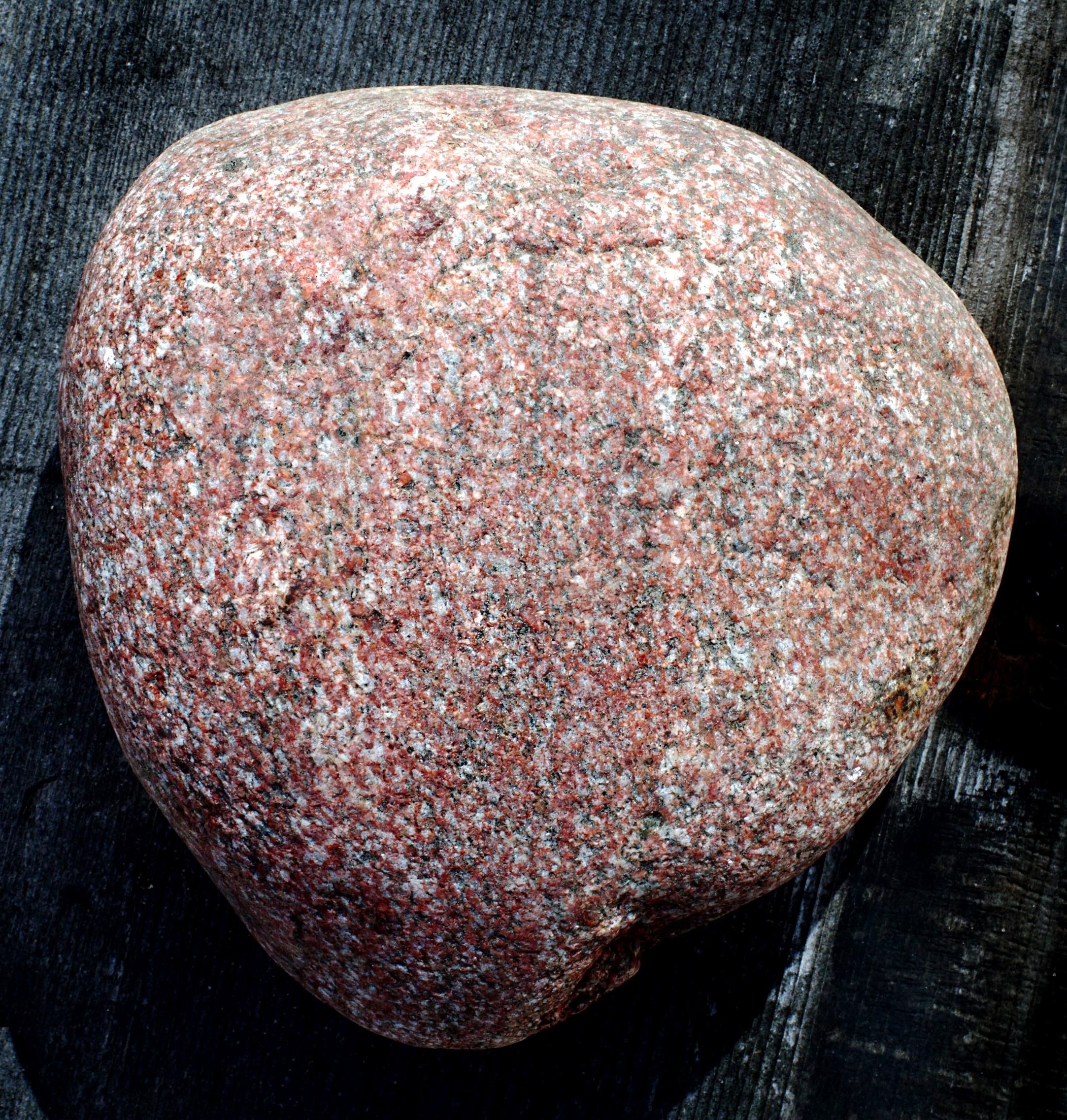
Quartzite is a metamorphic rock composed almost entirely of sandstone. The sandstone is altered by heat, immense pressure, and chemical activity. These conditions recrystallize the sand grains and the silica cements and binds them. The result is a network of interlocking quartz grains of incredible strength. Because it is so hard and dense, quartzite has not been quarried as extensively as other stones such as limestone, sandstone, and granite.
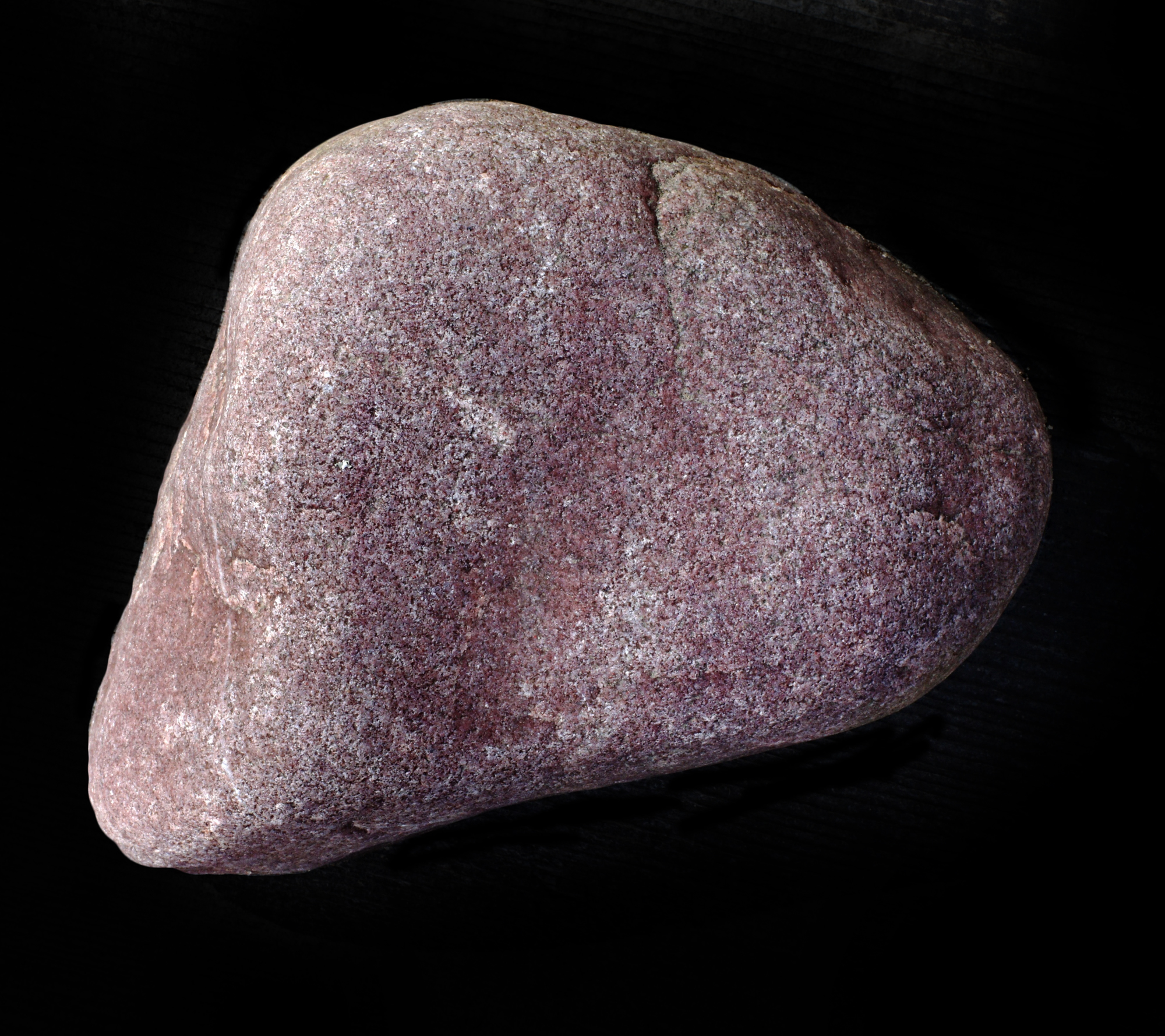
Quartzite ranks high on the Mohs hardness scale as one of the most physically durable and chemically resistant rocks found on Earth. When mountain ranges are worn down by weather and erosion, less-resistant rocks are destroyed, but the quartzite remains. Quartzite is also a poor soil former. Unlike feldspars which break down to form clay minerals, the weathering debris of quartzite is quartz.
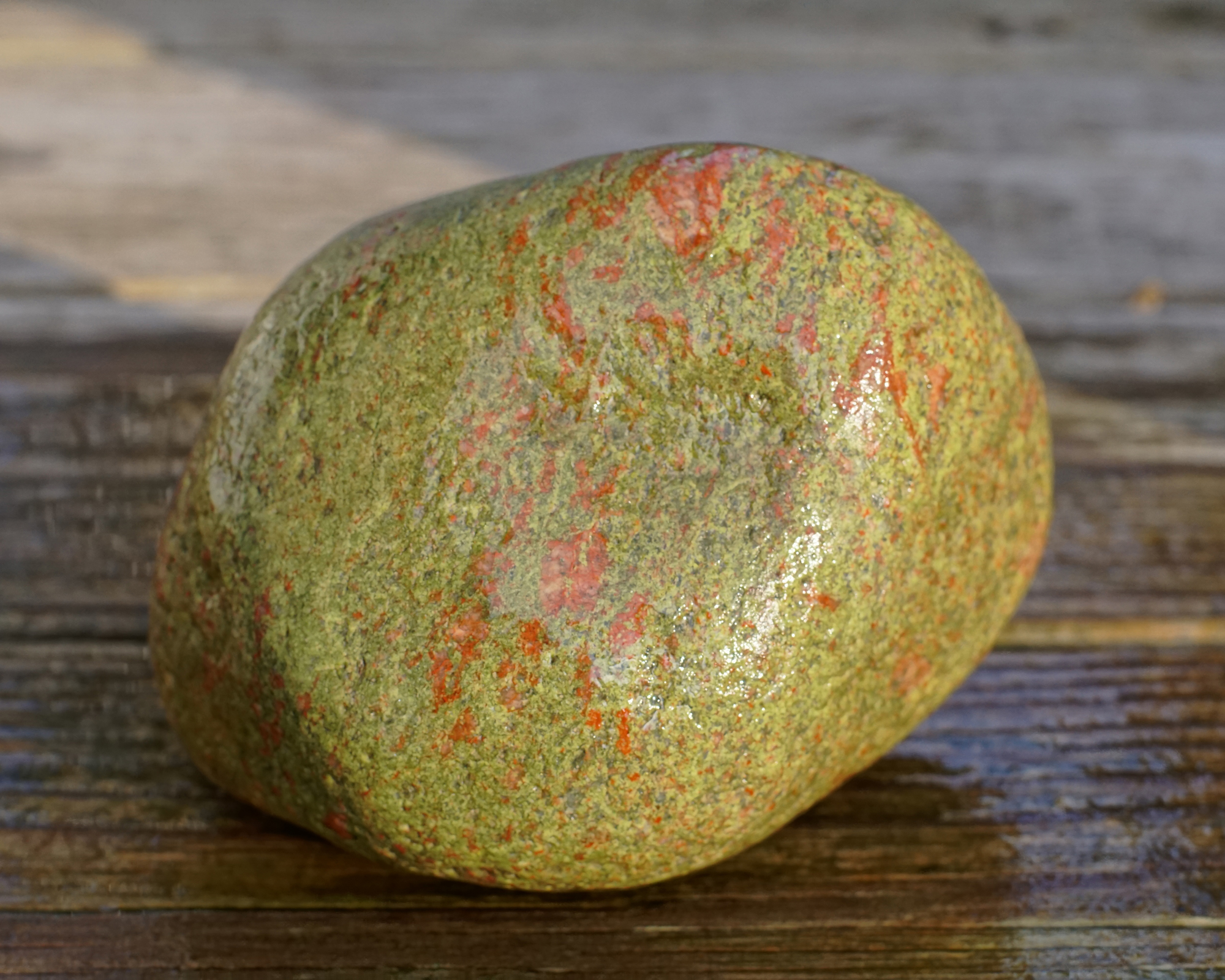
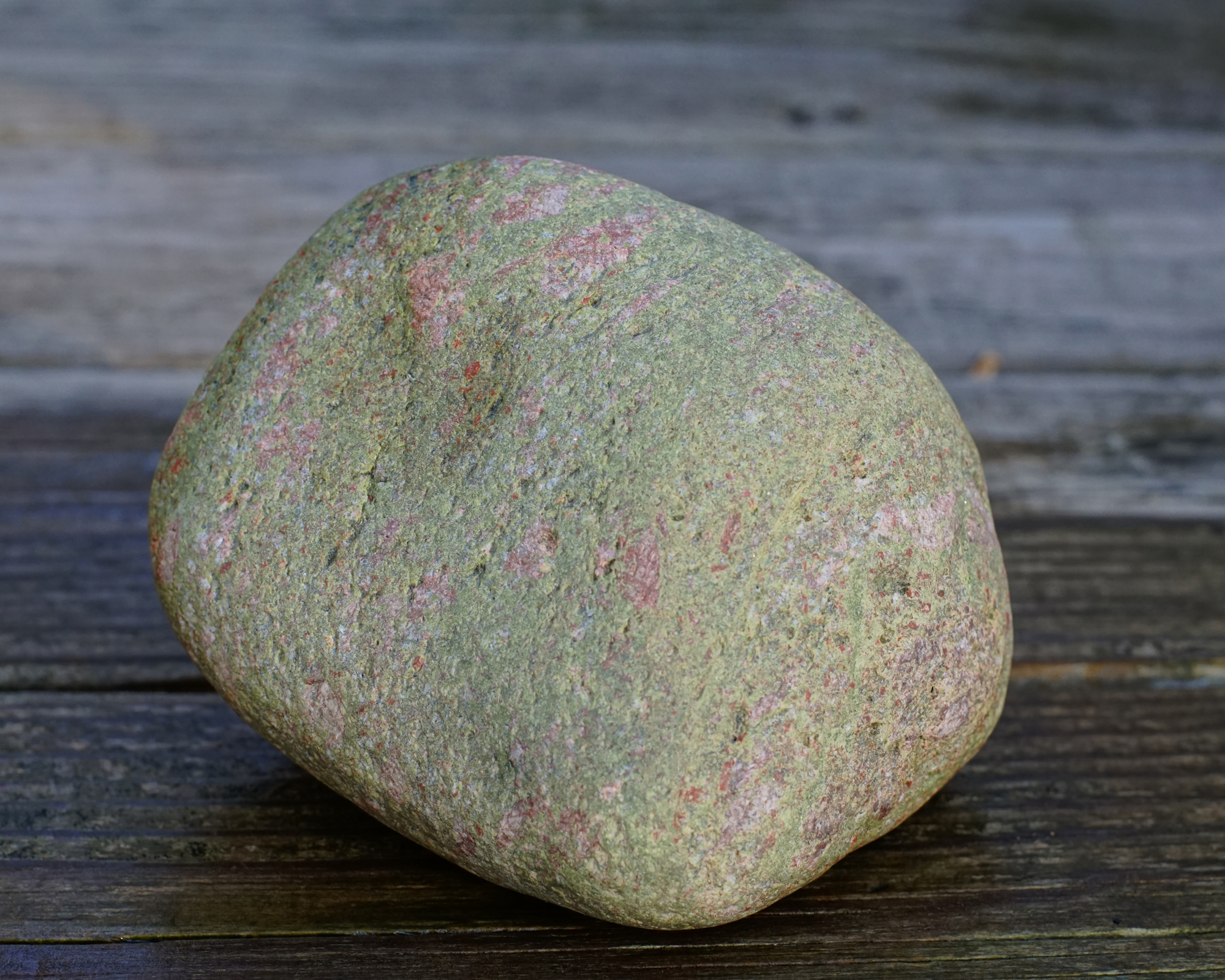
Unakite is a metamorphic rock of granite with a mixture of pink orthoclase feldspar and transformed plagioclase feldspar into the green mineral epidote; it may or may not also contain quartz. Another name for it is Epidote Granite. It has mistakenly been called Unakite Jasper, but jasper is a form of quartz colored by iron oxide inclusions. Some Unakite will show pinkish-orange toned inclusions as the Feldpar has turned darker than the salmon-pink you may see in other pieces. Sometimes you will see litttle to barely visible green Epidote in Orange Unakite.
.
In everyday uses, Unakite is found in construction and architecture. Crushed up, Unakite is used on highways and drainage rocks. It is also easy to polish and makes for a beautiful stone for flooring tiles, paving stones, stair treads, countertops, and jewelry.
.
.
.
.
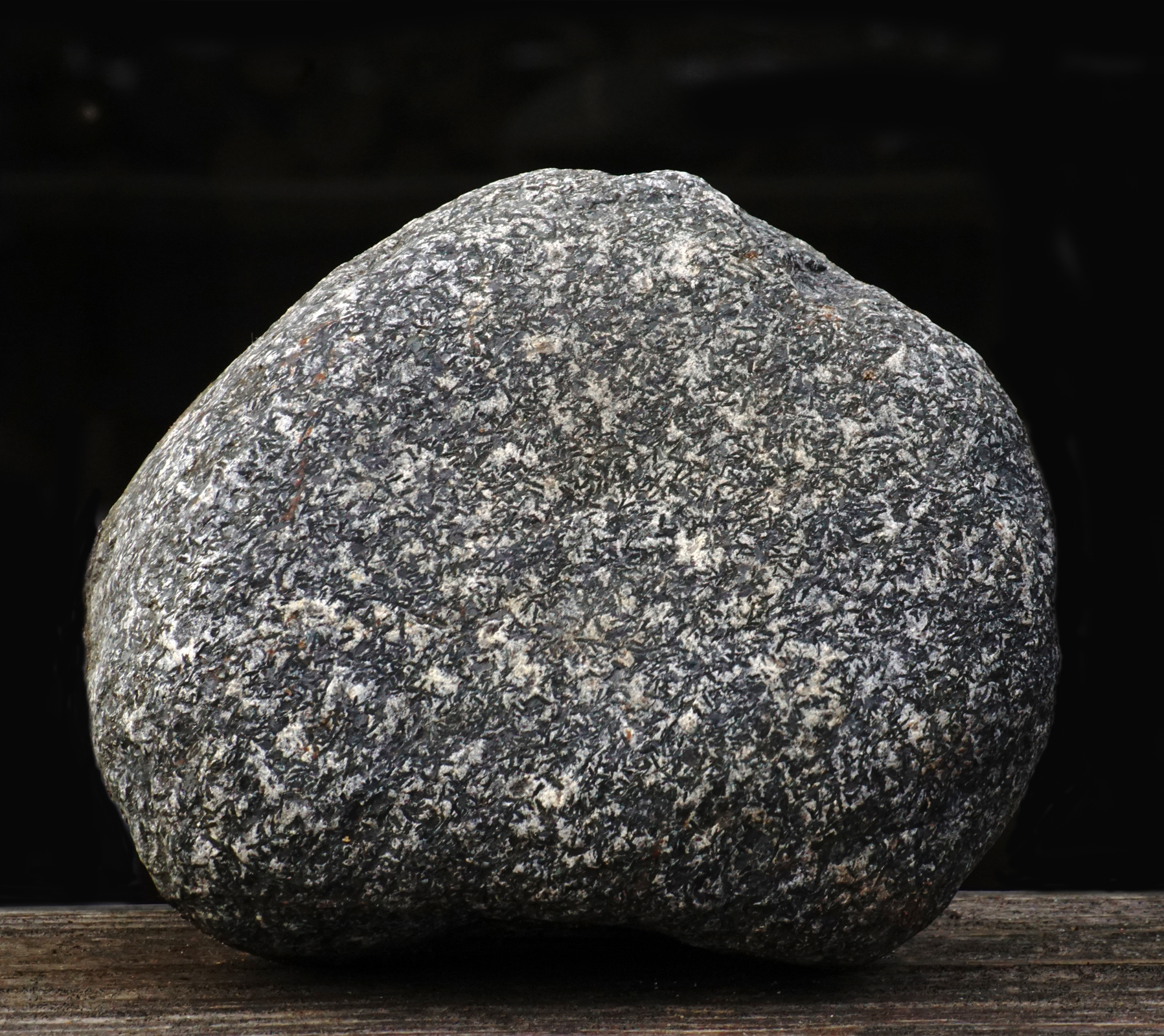
Diabase (Dolerite)
Diabase (older term”dolerite”) is a dark rock that may have light-colored, lath-shaped (flakey, elongated) grains. Like basalt, rhyolite, and gabbro, diabase is a Michigan volcanic rock, only less commonly found along the shoreline as a beach-worn cobbler or boulder stone.
Diabase is equivalent to gabbro and basalt in composition, but between them in texture. The term “microgabbro” is sometimes used to refer to such rocks, but they cooled closer to Earth’s surface, hardening much faster, and therefore have far fewer visible crystals than gabbro. They are classed as separate rocks because of the peculiar lath-shaped crystals of “plagioclase” lime-feldspar minerals (mostly labradorite) in a groundmass of the “pyroxene” mineral, augite.
To review plagioclase minerals: Any member of the series of abundant feldspar minerals usually occurring as light-colored, glassy, transparent-to-translucent, brittle crystals. To review pyroxene minerals: Any member of a large class of rock-forming silicate minerals, usually dark-colored, generally containing calcium, magnesium, and iron, and typically occurring as prismatic crystals.
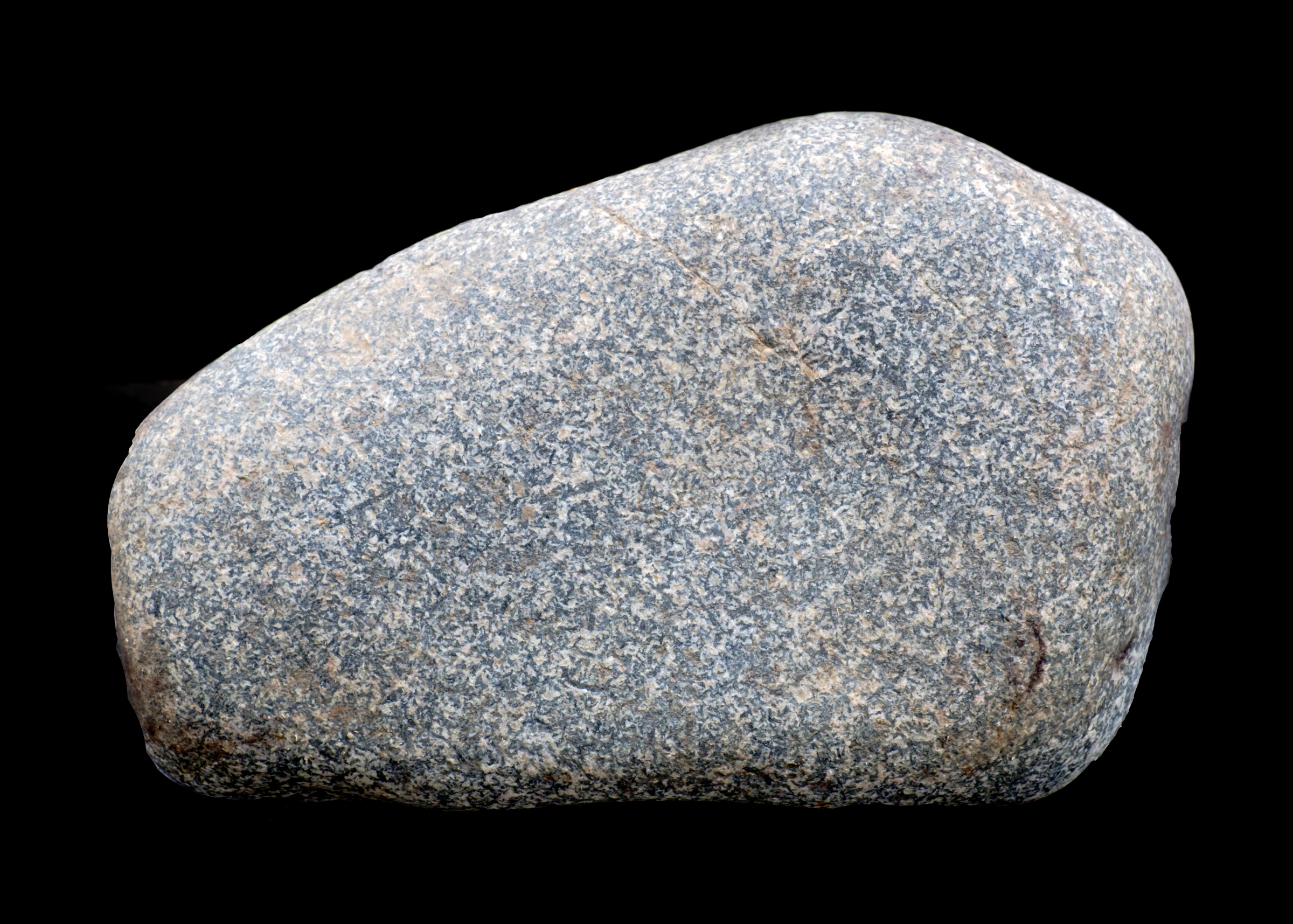
Diabase minerals of lesser importance are magnetite, olivine, ilmenite, hornblende, biotite, and chlorite, among others. Note: Specimens with few visible crystals can easily be confused with basalt, and a microscope would be necessary to distinguish the two.
Why do the lighter feldspar crystals often appear fuzzy, stick-like in shape, in diabase rock? This is because they crystallized first, forcing the other, darker minerals to squeeze in around them, which distorted the feldspar. This is the opposite of what generally happens in rock formation; the dark minerals tend to crystallize first. Colors can vary with diabase from gray to black, greenish black, and brown.
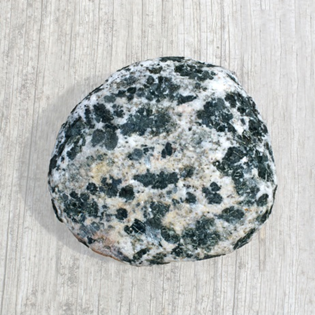
Pegmatite
Pegmatite is extreme plutonic igneous coarse-grained granite that forms during the final stage of magma’s crystallization (intrusive type). They are extreme because they contain exceptionally large crystals made of feldspar, quartz, and mica, as with granite. Many of the crystals range from several inches to a foot or more in diameter. It is the parent rock of many gemstones including topaz and tourmaline and rare and valuable minerals such as beryl. Note: Even though the above pegmatite beach stone sample has large, coarse grains, Lake Michigan has ground them down, molding the stone into a round ball, demonstrating the powerful tumbling action of the wind, waves, and sands of the inland sea.
Pegmatite is seldom seen in large masses but is usually found in veins cutting through other kinds of rock, such as granite and diorite. Pegmatite should not be confused with porphyritic granite, as the two can be distinguished by the relative size of the mineral grains. In pegmatite, the crystals are uniformly large, unlike porphyritic granite which usually one mineral is in large crystals within the finer groundmass.
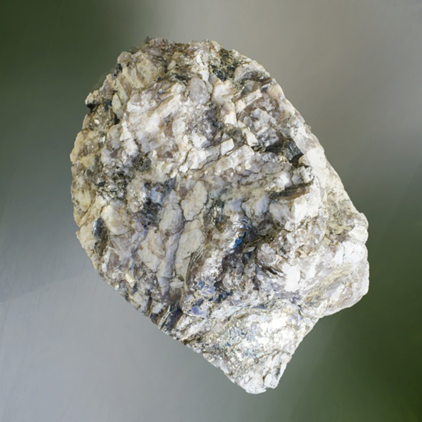
Other Pegmatites: Granite, Gabbro and Syenite
To indicate the mineral composition—or to make things even more complicated—pegmatite can be “granite pegmatite,” “gabbro pegmatite,” “syenite pegmatite,” and any other plutonic rock name combined with “pegmatite” are possible. My first beach stone sample reminds me of the salt-and-pepper grains contained in diorite, so it could possibly be “diorite pegmatite.” Note: I featured diorite, gabbro, and granite in another photo essay about beach stones, but will briefly explain them here.
- Diorite is primarily composed of feldspar and various dark-colored minerals, which explains its black and creamy white coloring with a salt-and-pepper pattern.
- Granite is composed of four materials: feldspar, mica, quartz, and hornblende minerals. These minerals themselves come in a variety of forms, giving granite a much larger variety than diorite or gabbro.

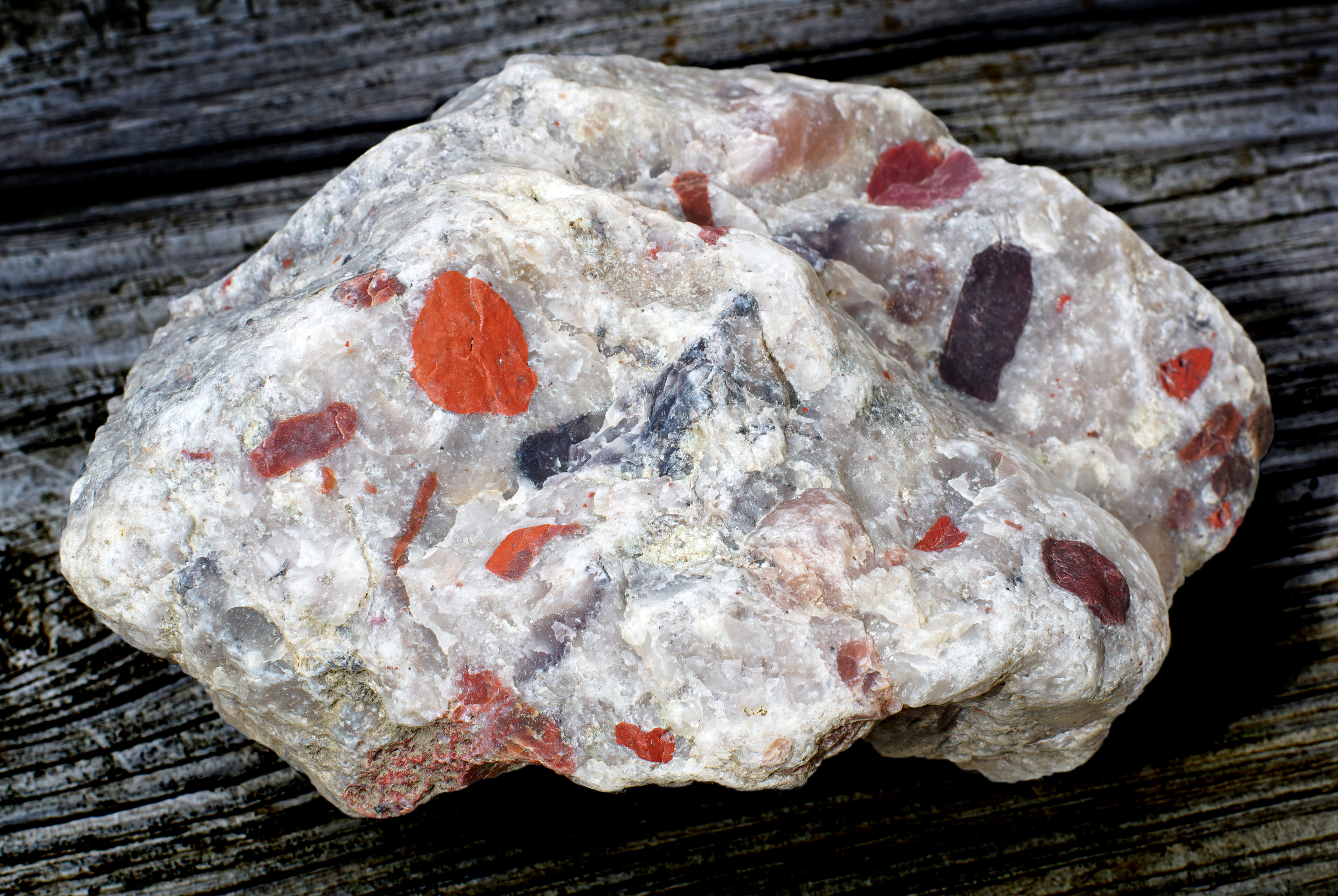
Conglomerate “Pudding Stones”
Conglomerates are sedimentary rocks with inclusions of rock pieces of various sizes, colors and shapes cemented with sand and pebbles by dissolved minerals. Heat and pressure over long periods of geological time mold the mixture and hold it together. The pebbles and small rocks in a conglomerate are typically rounded, a feature that differentiates them from “breccias” where the larger stones in the mix are angular. Conglomerates or “pudding stones” are not the most common rocks I find on the beach but are, nevertheless, an occasional find.
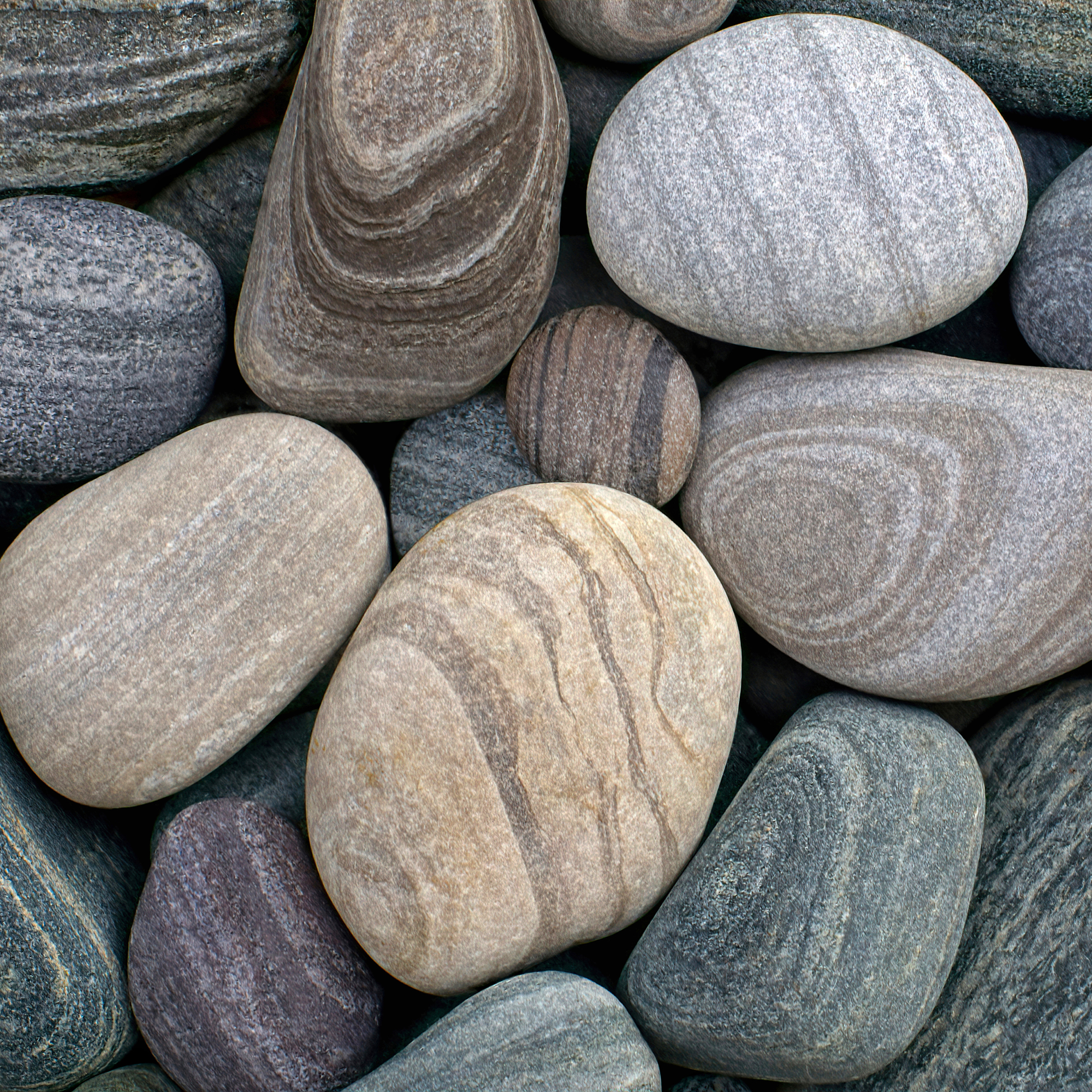
Banded Metamorphic Beach Stones
I’ve always been attracted to these banded beauties and have fun arranging them in my rock garden or photographing them into works of art. The samples directly above are metamorphic basalt. To briefly review metamorphic rocks: Metamorphism involves the alteration of existing sedimentary or igneous rocks by either excessive heat and pressure or through the chemical action of permeating fluids. This alteration can cause chemical changes or structural modifications to the minerals making up the rock.
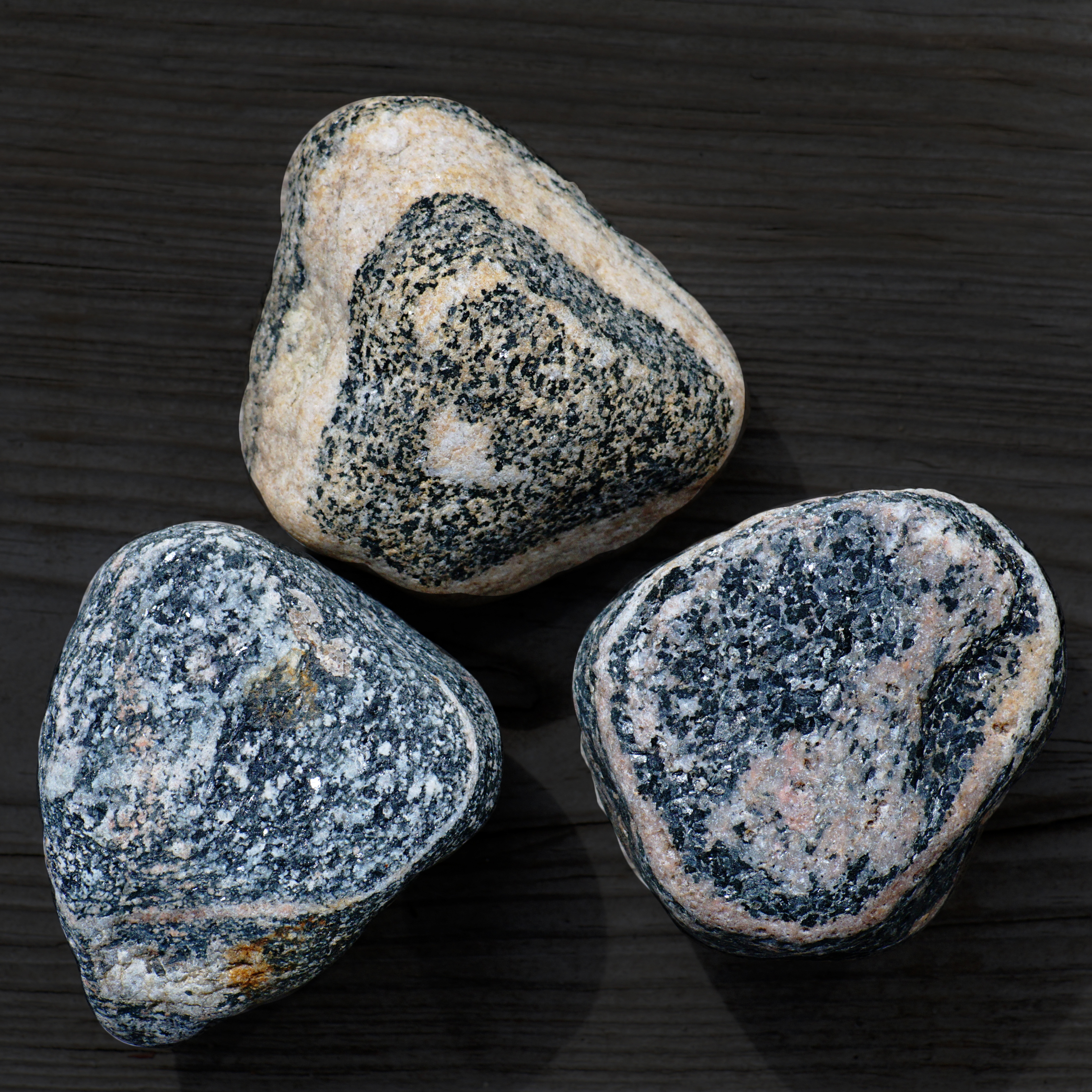
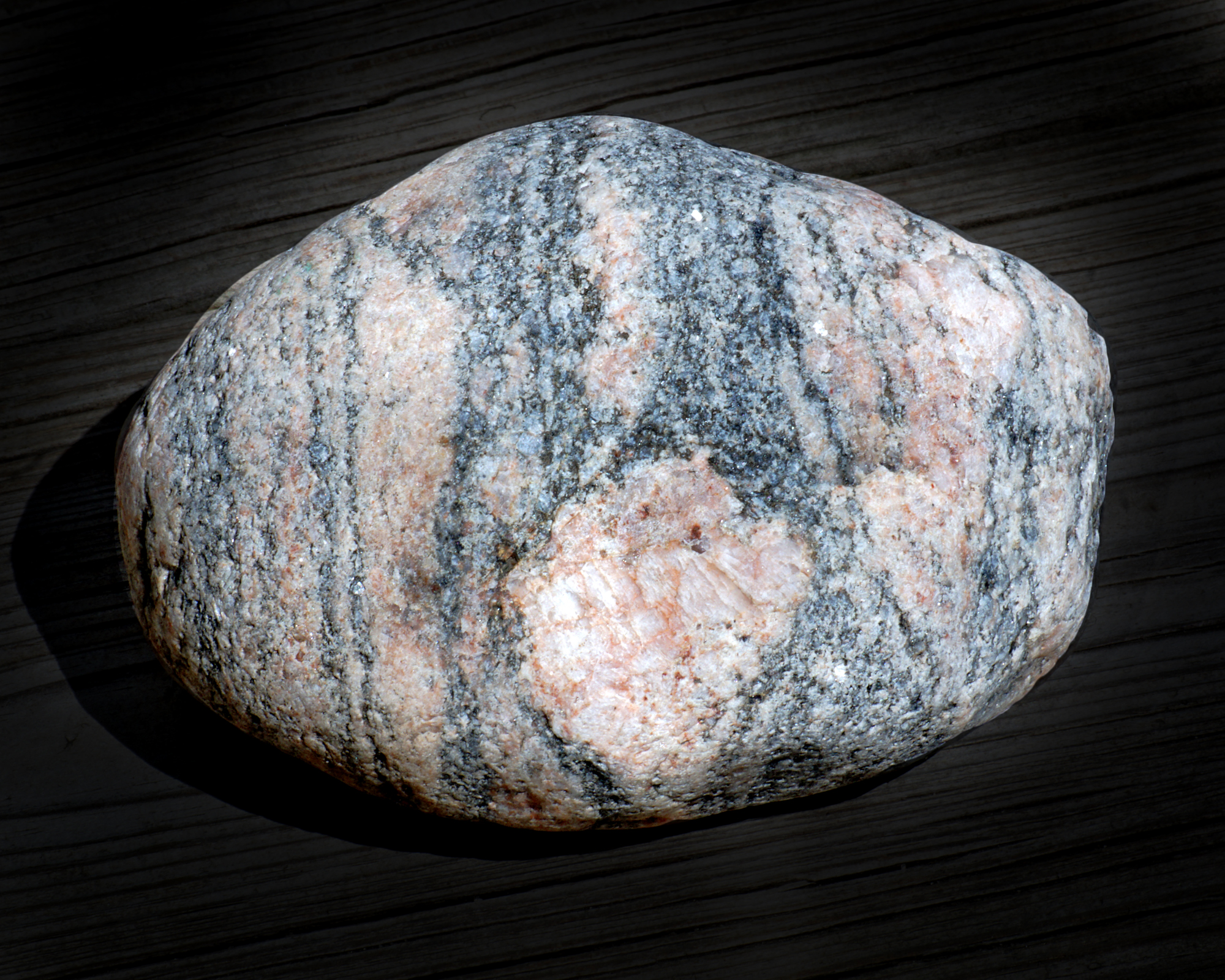
My best guess is all but one of these stones shown above are metamorphic granite. Top left might be metamorphic diorite. We find quite a few of these pretty stones on the beach.
Metamorphic Rock Traits
- Because their mineral grains grew together tightly during metamorphism, they’re generally strong rocks.
- They’re made of different minerals than other kinds of rocks and have a wide range of colors and lusters.
- They often show signs of stretching or squeezing, giving them a striped appearance.
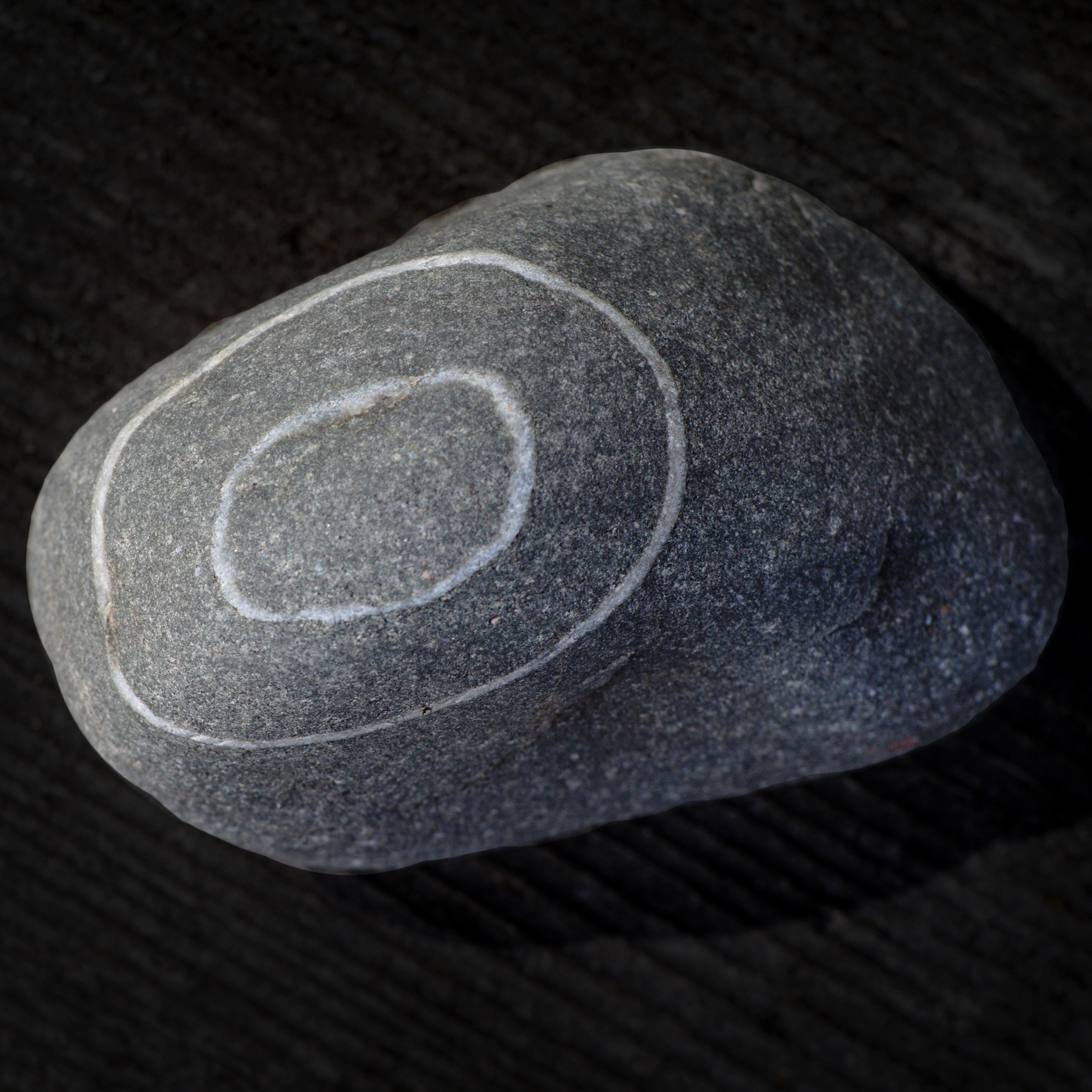
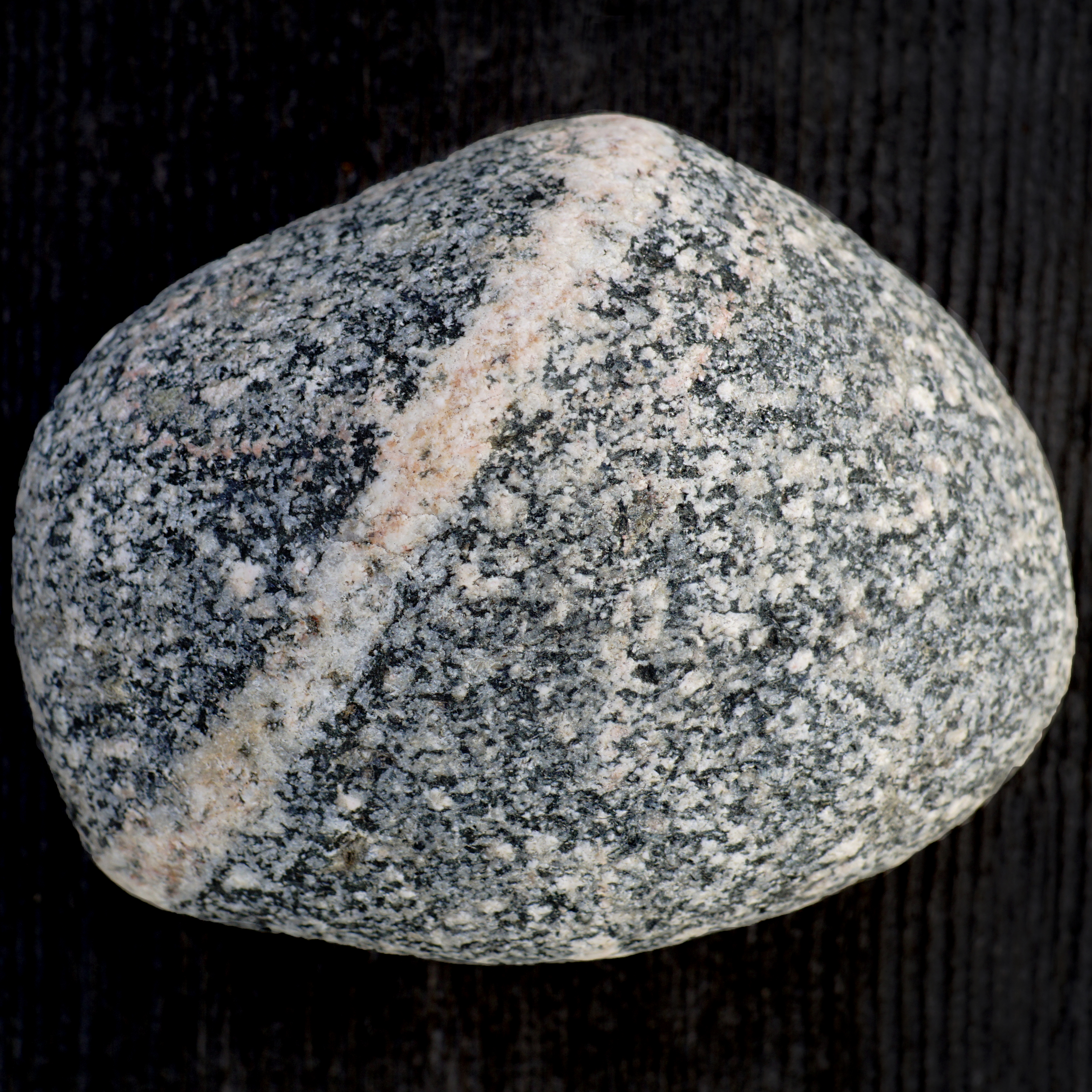
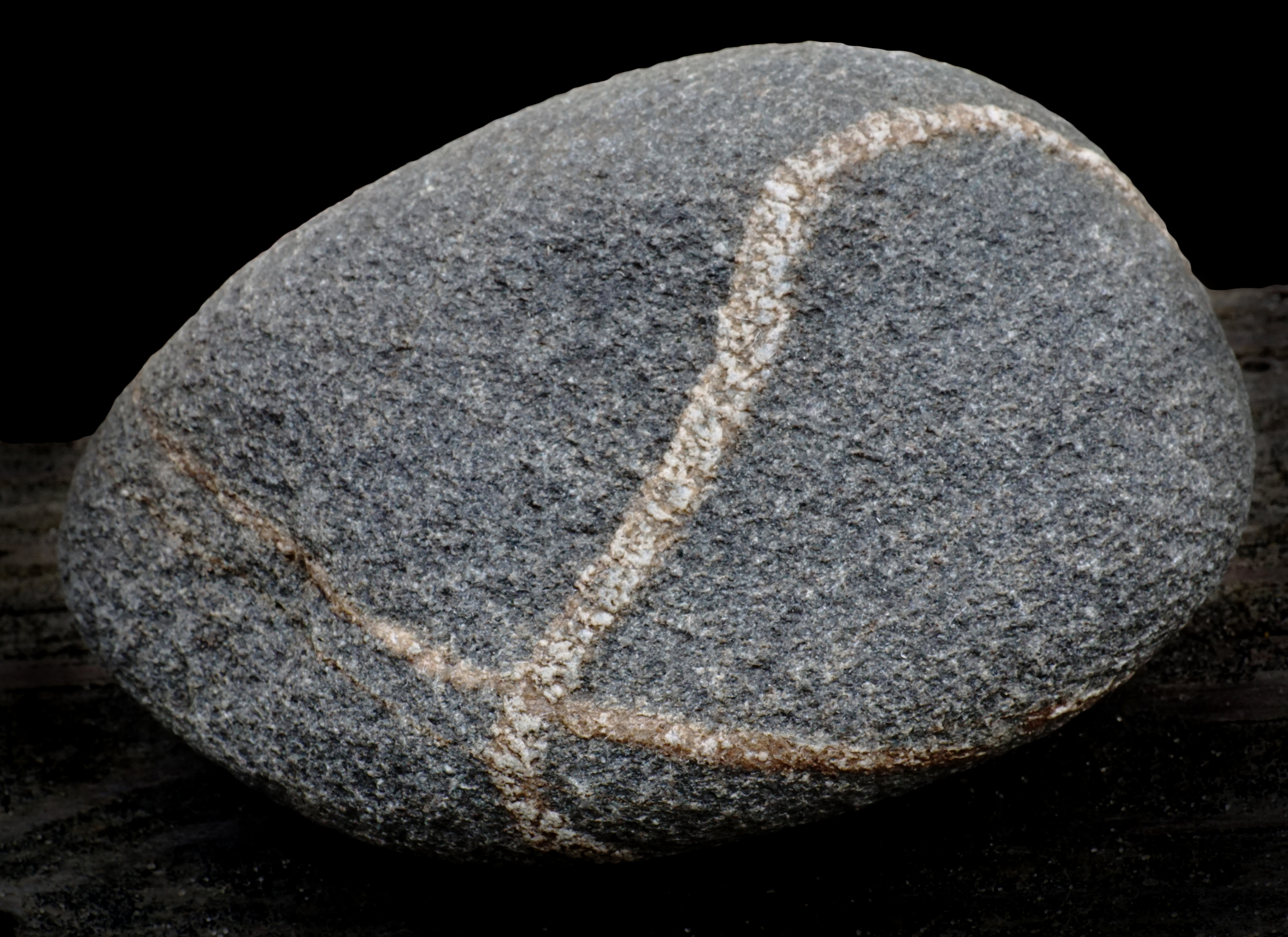
Quartz Veining in Various Rock Types
Quartz Veining
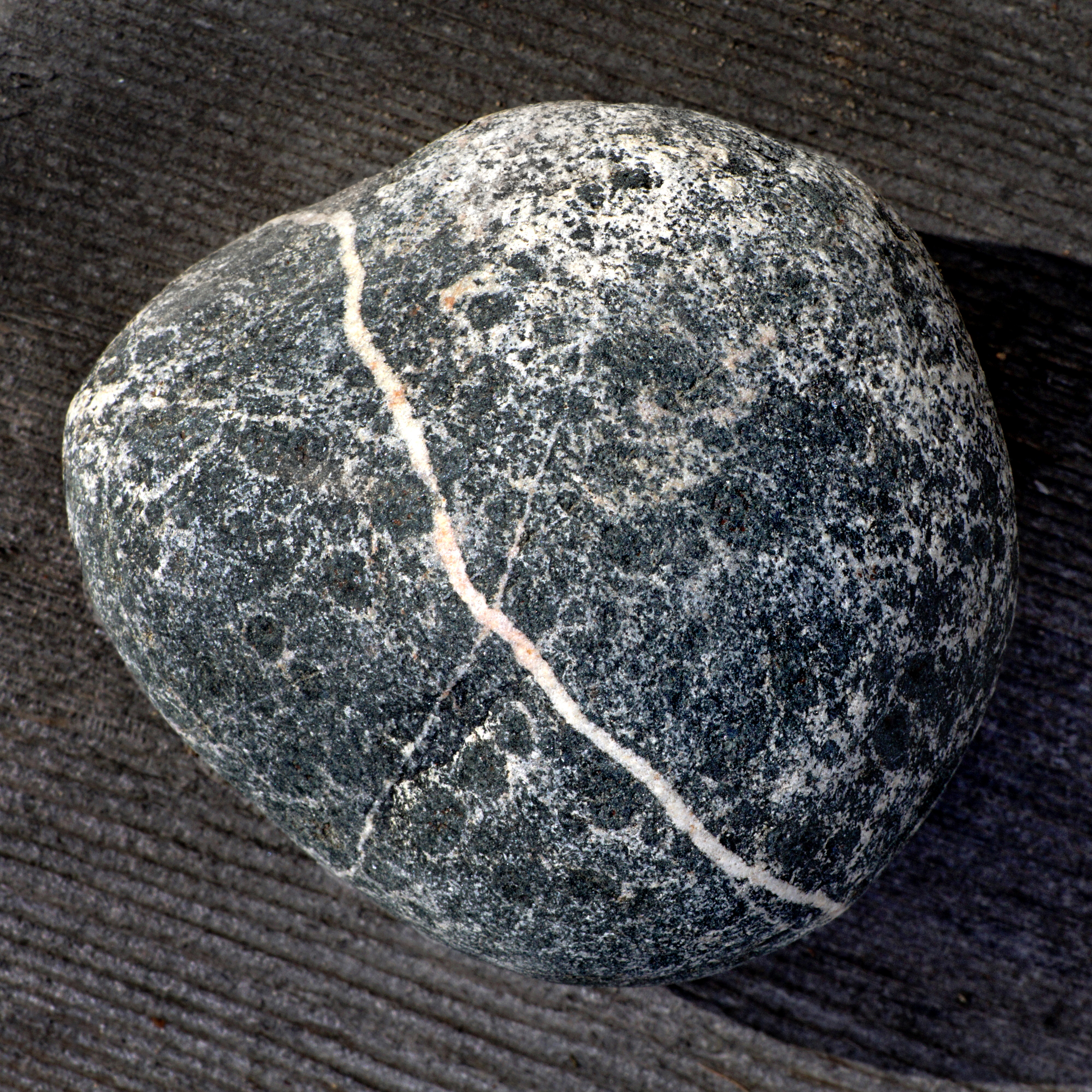
The striking quartz veins running through the rocks shown above certainly elicit curiosity. One can’t help but marvel and wonder how. There are a few methods, but the simplest way happens when exposed cracks in rocks are filled-in with mineral-rich groundwater deposits. While quartz is a very common mineral filling in cracks in rocks, other minerals such as calcite, feldspar, gold, silver or iron-oxides are possible. Cracks in rocks can form during folding of the rock in mountain-building processes, or by shattering during tectonic events, or by a decrease in pressure during the uplift of rock. Yet another method of veining may happen when molten rock has cooled down and shrank, then after cracks are exposed, hot brines may migrate through the cracks and crevices in the host rock, depositing various minerals which may or may not crystallize.
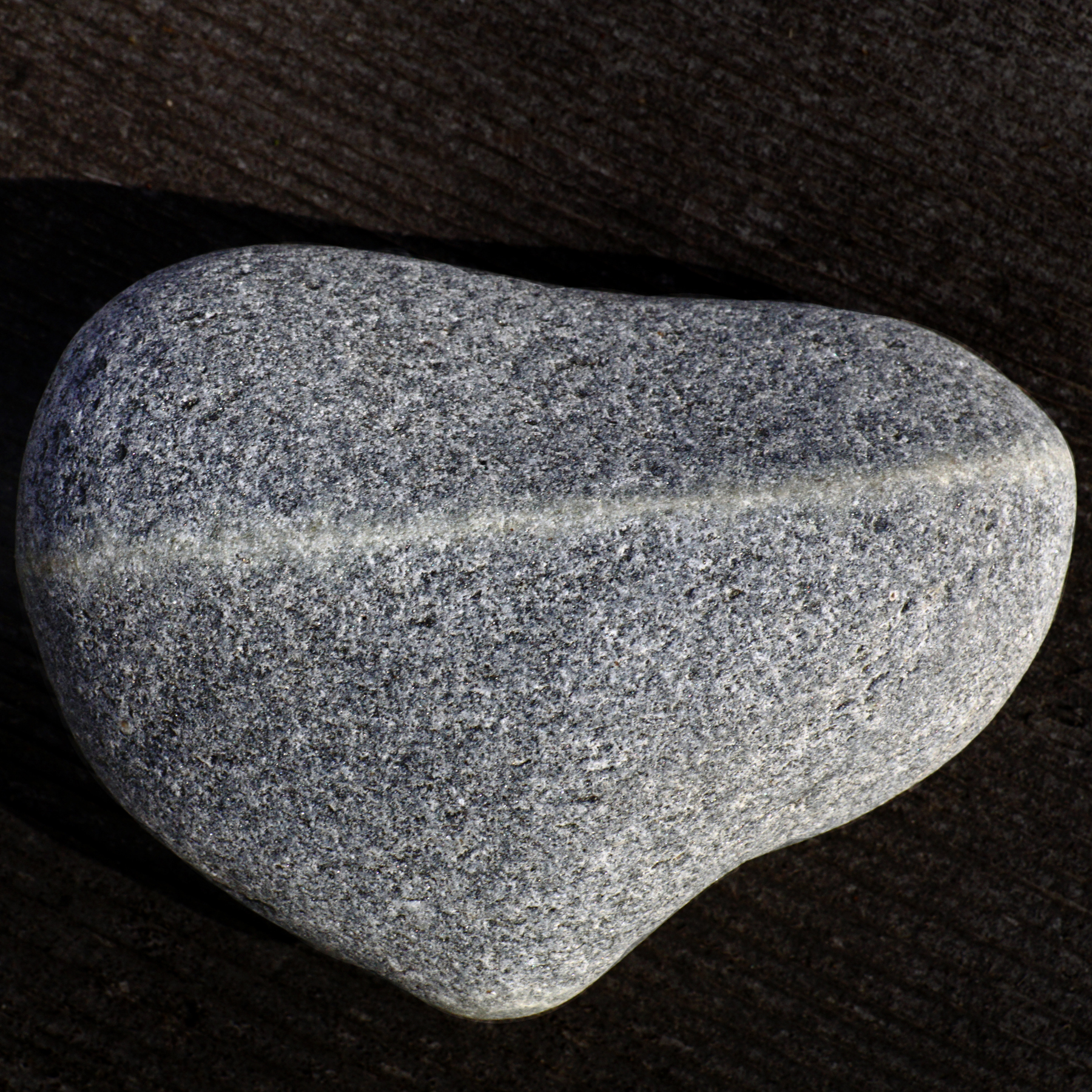
Wishing Stones and Heart Stones
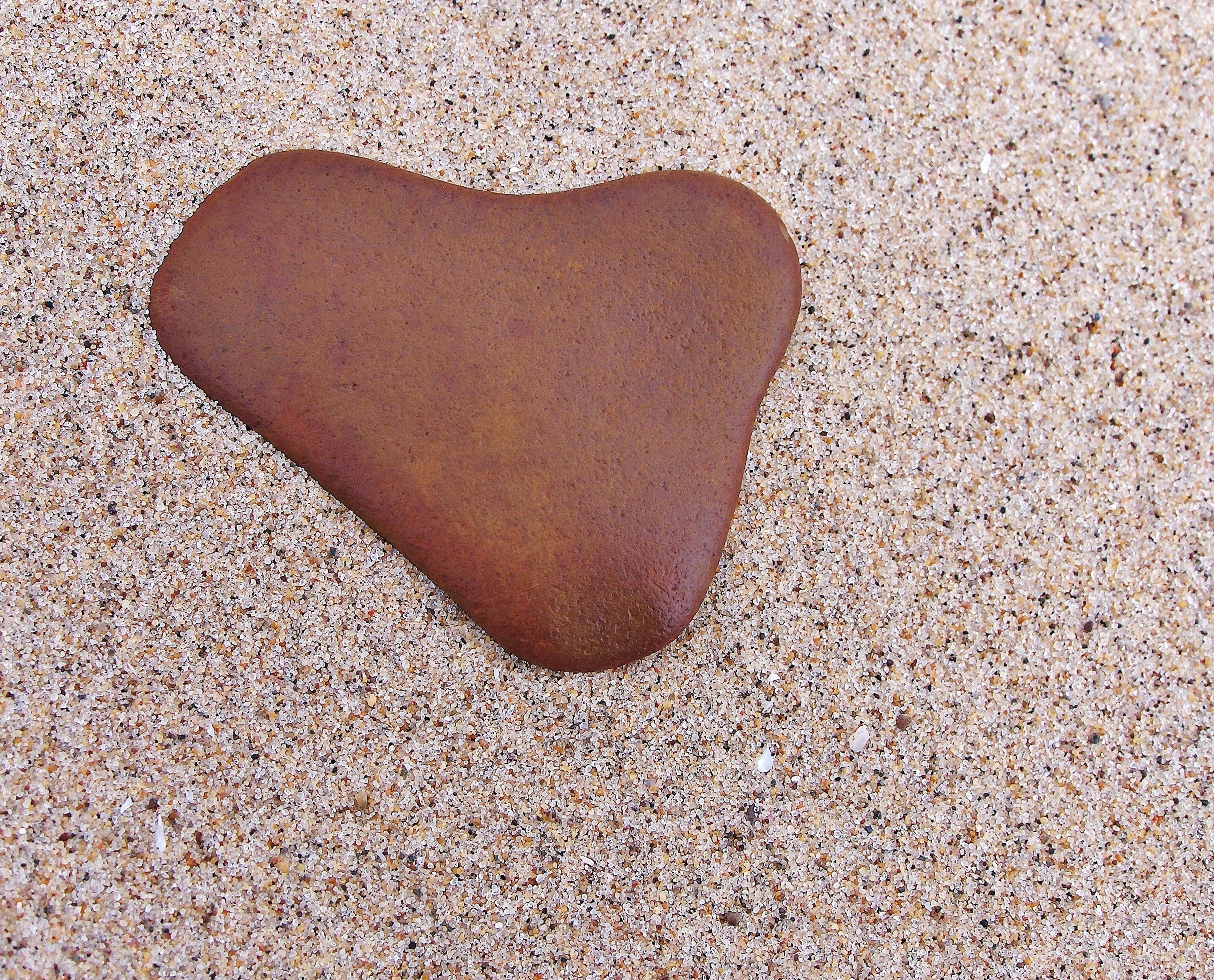
Just for fun, a “wishing stone” is a stone with a distinct vein running through it, but in order to be a true “wishing stone,” the rock can show only one single vein and it must encircle around the entire stone without any breaks! If you’re lucky enough to find one, the legend says to close your eyes, make a wish, then throw the stone into the water as far as you can and your dream wish will come true. The wishing stone in the photo (above left) is shaped like a heart, which makes it even more special. Speaking of heart shaped stones, they are another favorite stone that collectors love to find. I have quite a few in my collection, some large enough to arrange around the garden! I like to think of them as warm messages or hellos from loved ones who have passed.
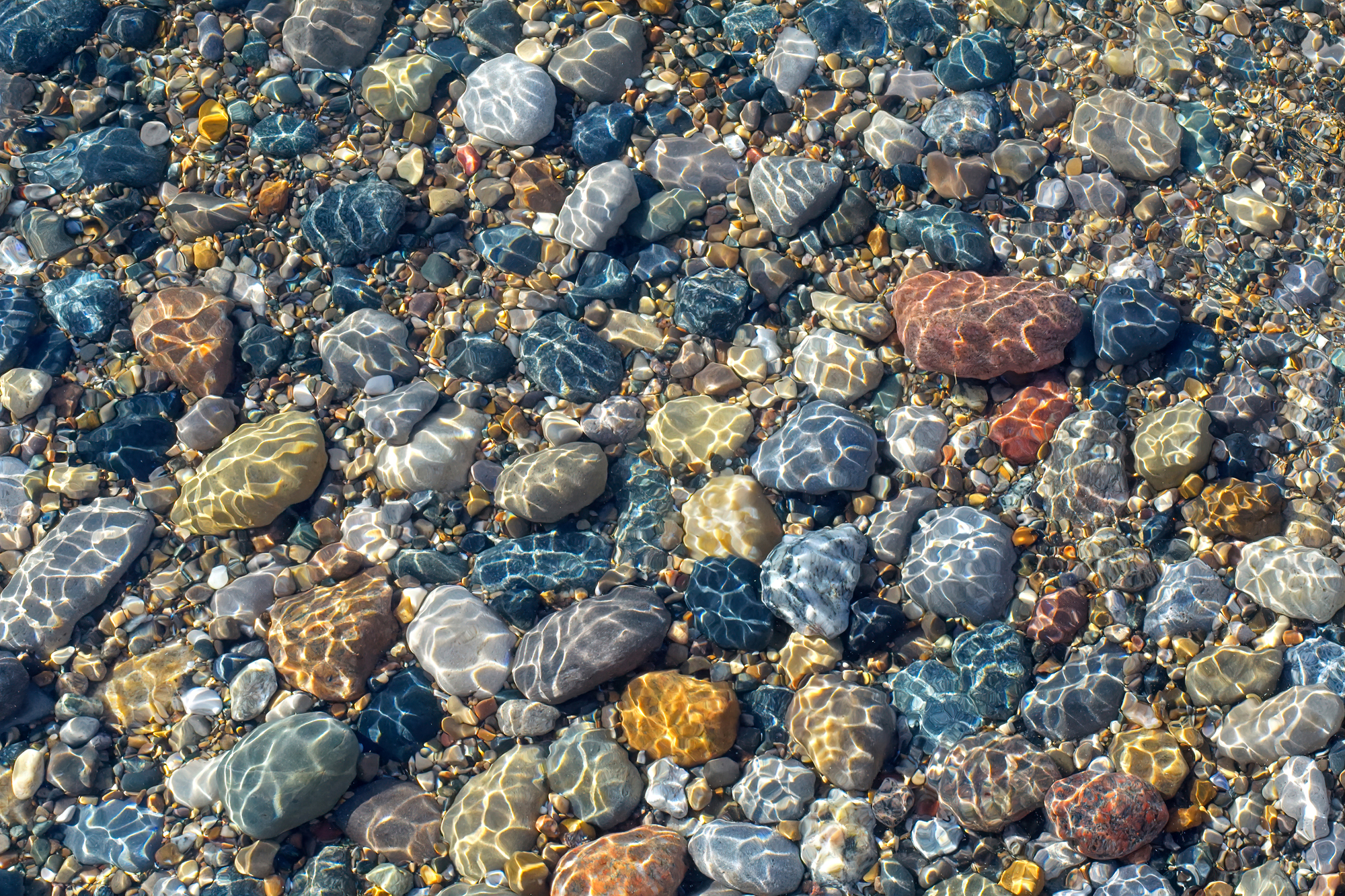
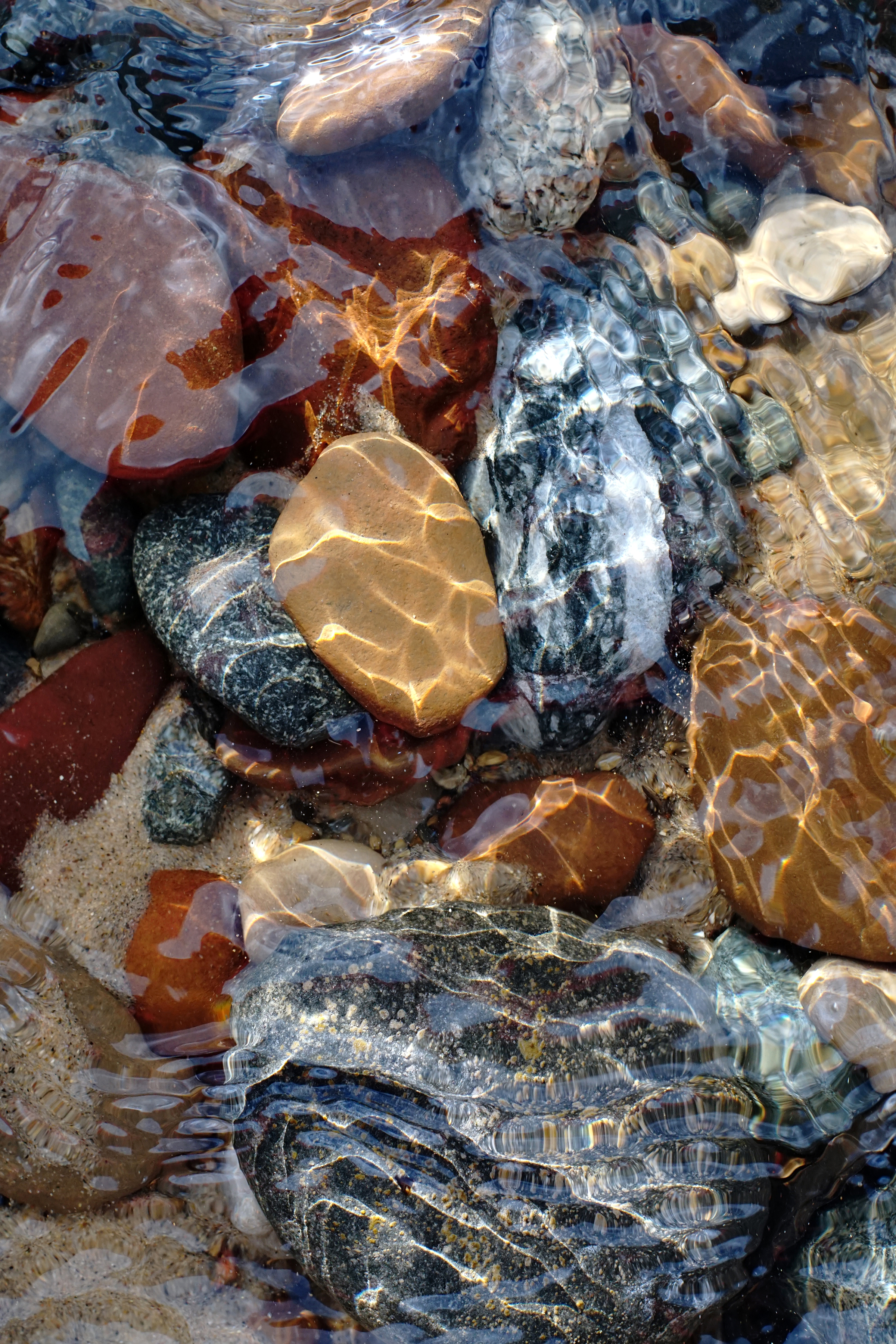
I leave you with a lovely photo of a sunlit creek filled with cobblestones where it flows into Lake Michigan!
All rights reserved © Fossillady 2026
 Fossil Lady