The extinct fern leaves called Pecopteris grew on the tree called Psaronius appearing in the coal swamps of the Carboniferous and Permian time periods, approximately 359-251 million years ago. Pecopteris leaves grew and dropped off the medium sized, 35 foot (10 meters) Psaronius tree, one of the most common Carboniferous varieties. With its expansive leaves and branches, it resembled modern day palm trees. Impressively, it produced as many as 7000 tiny spores on the underside of its leaves. These fossil samples are preserved in gray coal shale unearthed in the state of Pennsylvania as with many Carboniferous leaf fossils.

Description of Pecopteris Leaves– The individual leaflets of Pecopteris compound fern leaves are oval, straight and narrow. The midveins of each extends all the way up to the tip. A good way to identify Pecopteris leaves is hinted in its name, derived from the Greek word meaning, to comb. Observably, the leaflets along the leaf stems feature an arrangement resembling that of a comb.

What makes ancient fern trees so special? The large fronds produced by Pecopteris leaves, which grew upon the ancient Psaronius fern trees, cloaked the forest floor in deep shade together with the Medullosa seed-fern trees and others. Consequently, they protected the ancient creatures below from the strong ultra violet rays of the sun as it was closer to earth and more powerful during the Paleozoic Era. Also, the shedding and decomposing of leaves created more layers of soil for roots to extend deeper and deeper, alleviating the need for trees to grow near water pools. Trees were then able to spread further inland. Yet another benefit was that the leaves fed inland water sources cultivating more fresh water fish varieties. But this fantastic fossil fern is most special to me because I inherited from my late father-in-law, Joseph Mirto II. It was found in Johnstown, Pennsylvania.
PECOPTERIS LEAF CLASSIFICATION
Kingdom: Plantae
Division: Pteridophtya (meaning vascular plant with transport system for nutrients and fluids)
Class: Filicopsida (Ferns which reproduce with spores)
Order: Marattiales (primitive ferns)
Family: Marattiaceae (known for having the largest fronds and spores of any fern, alongside thick, starchy, edible rhizomes)
Genus: Pecopteris (known for comb-like arranged leaflets)
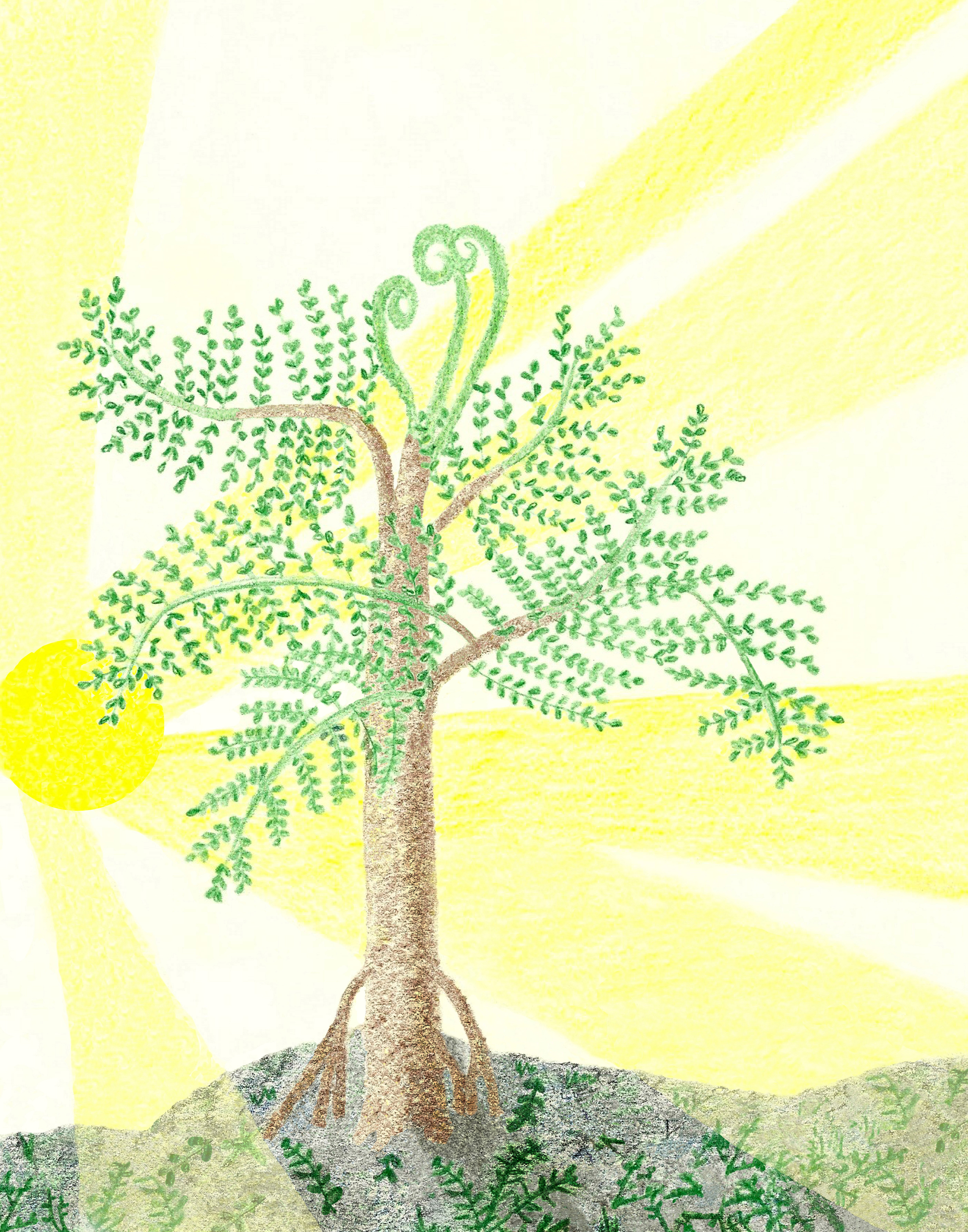
PSARNONIUS FERN TREE CLASSIFICATION
Botanical Name: Psaronius Common Name: Fern Tree
Kingdom: Plantae
Division: Tracheophyta (meaning vascular plant with transport system for nutrients and fluids)
Class: Marattiopsida (distinguished by massive roots and largest fronds of all seed fern trees)
Order: Marattiales (primitive ferns)
Family: Psaronlaceae (small, brownish-orange,or black dots found on the underside of mature fern fronds)
Genus: Psaronius (dominant genus lacking true wood)
Species: magnificus (especially large fronds)
All rights reserved © Fossillady 2025
 Fossil Lady