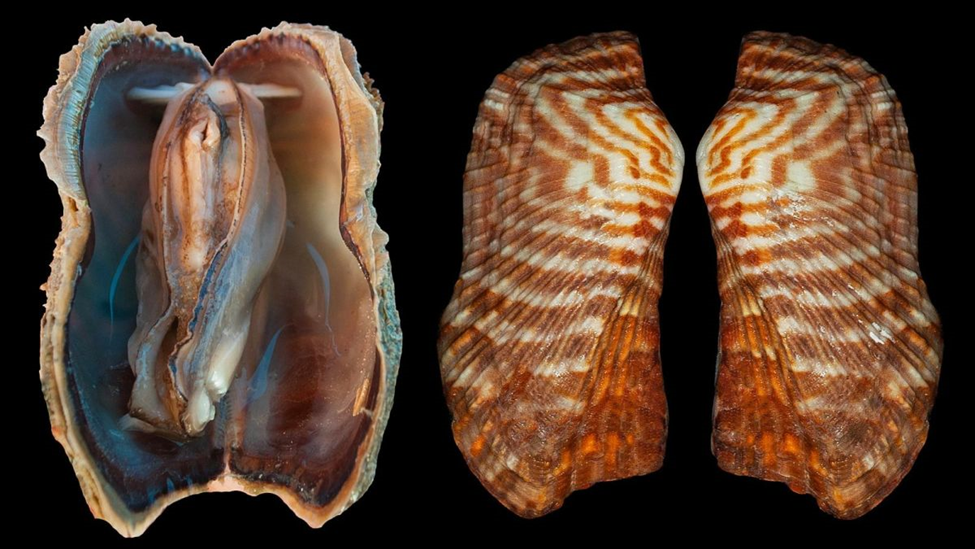
Brief Intro – The word “clam” can be used to cover all bivalves, including scallops, oysters, arks, and cockles, to name a few. Did you know that there are more than 15,000 species of clams around the globe? Amazing, right? Clams and other bivalves first appeared in the fossil record as tiny creatures as early as the Cambrian Period over 500 million years ago. By the Devonian Period around 400 mya and through the Mesazoic Era, they gradually developed into the abundant forms. Follow along to learn interesting facts and help identify those clamshells you couldn’t resist picking up from the beach.
Twelve Atlantic Clamshell Identification Info, Photos and Interesting Facts in the following order:
- Ponderous Ark
- Blood Ark
- Transverse Ark
- Incongruous Ark
- Cut-Ribbed Ark
- Zebra Ark
- Broad-Ribbed Cardita
- Angel Wings
- Buttercup Lucine
- Chalky Buttercup Lucine
- Florida Lucine
- Pennsylvania Lucine
- For additional clamshell ID and info including various Coquinas, various Oysters and Tellins and more, click HERE
- For additional clamshell ID and info including various Cockles, Scallops, Venus Clams, Checkerboard Calico, click HERE
- Otherwise, scroll to Categories, click on “Clam Seashells” and everything is there.
1. Ponderous Ark Clam
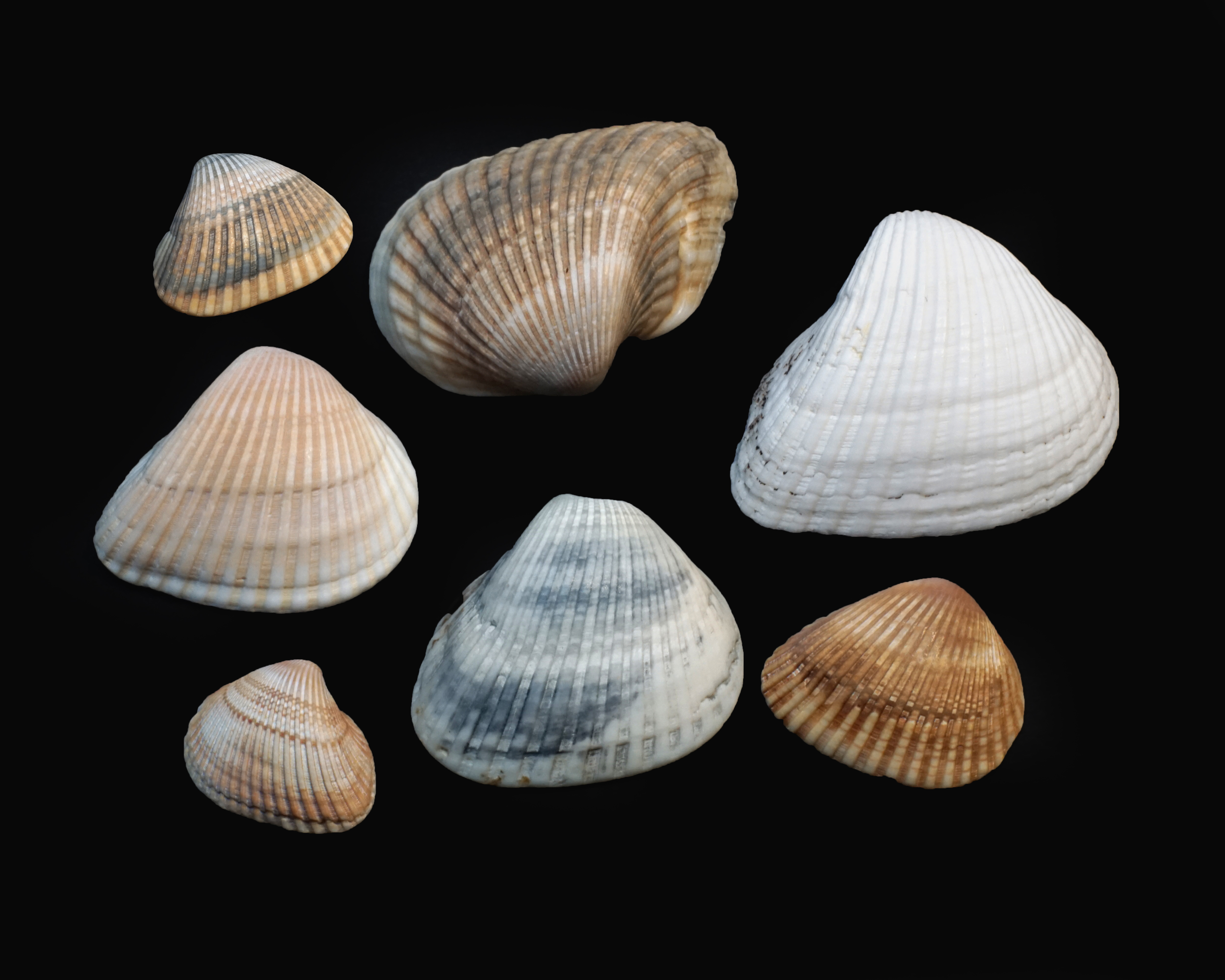
Ponderous Ark (Eontia ponderosa) clam displays a very thick triangular shell with 27 to 31 strong, flat radiating ribs and a large beak that turns back to the rear of the shell. These arks have a dark, velvety skin worn to white after beaching, and the calcareous shell can later stain to rust or gray. Their robust shells make them and their relatives, such as the Blood Arks, among the most common beach finds where other bivalve shells are otherwise pulverized in high-energy wave zones. Ponderous Ark and its relatives are a family of small to large-sized edible saltwater clams.
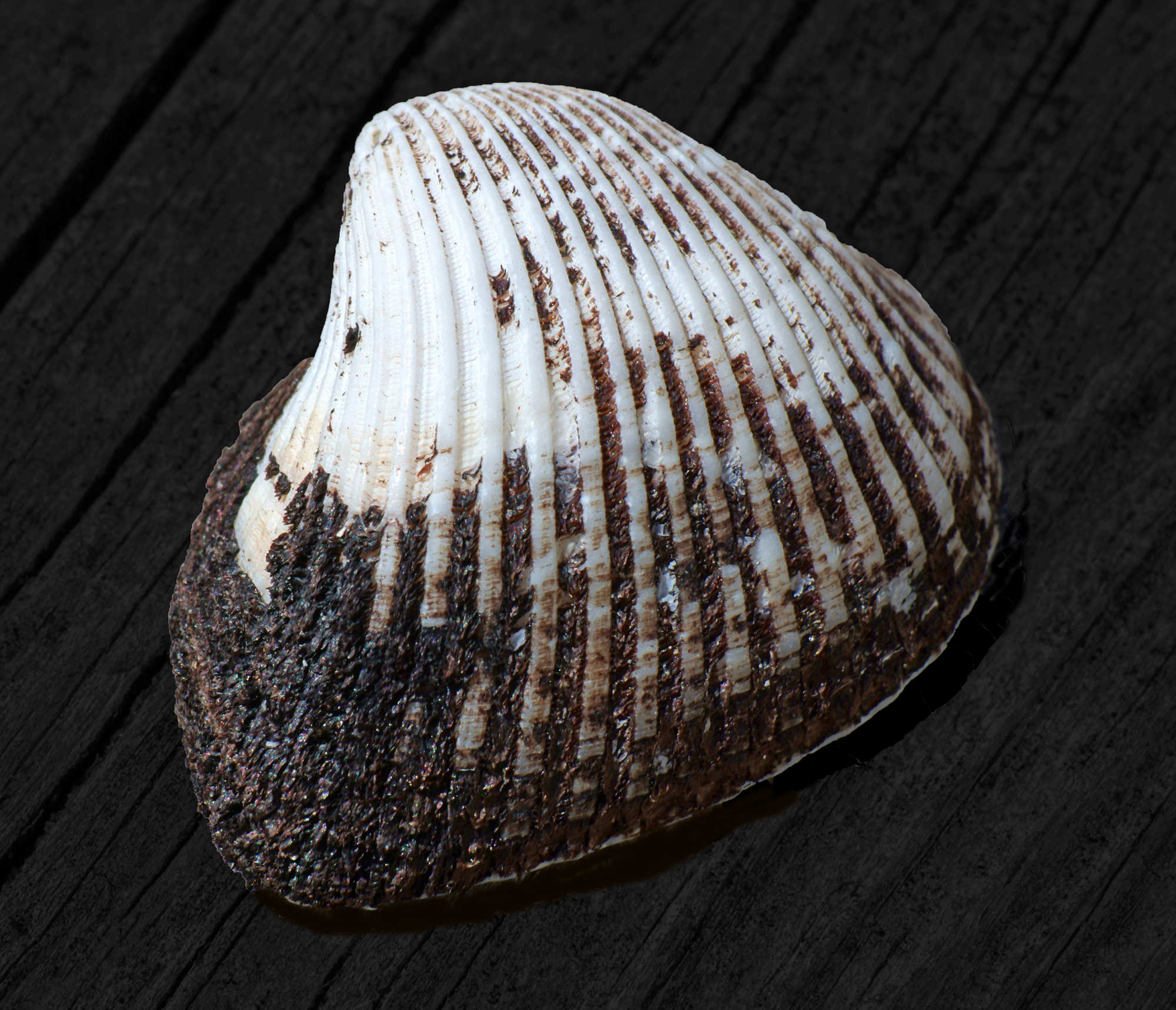
- Camouflaging Layer over Arks: The Periostracum The shells of many ark species have a thick layer of a dark brown velvety covering called the “periostracum”. The photo shows the covering layered over the shell which has partly been worn away. It serves as a protective camouflage. After beaching, the periostracum begins to wear off and, in time, can completely disappear.
- Size: Up to 3 inches
- Habitat: Typically, a sand – silt dweller in shallow shores, often partially buried or attached to substrates in depths to 35 ft (11m)
- Range: Virginia to Key West to Gulf of Mexico
2. Blood Ark Clam
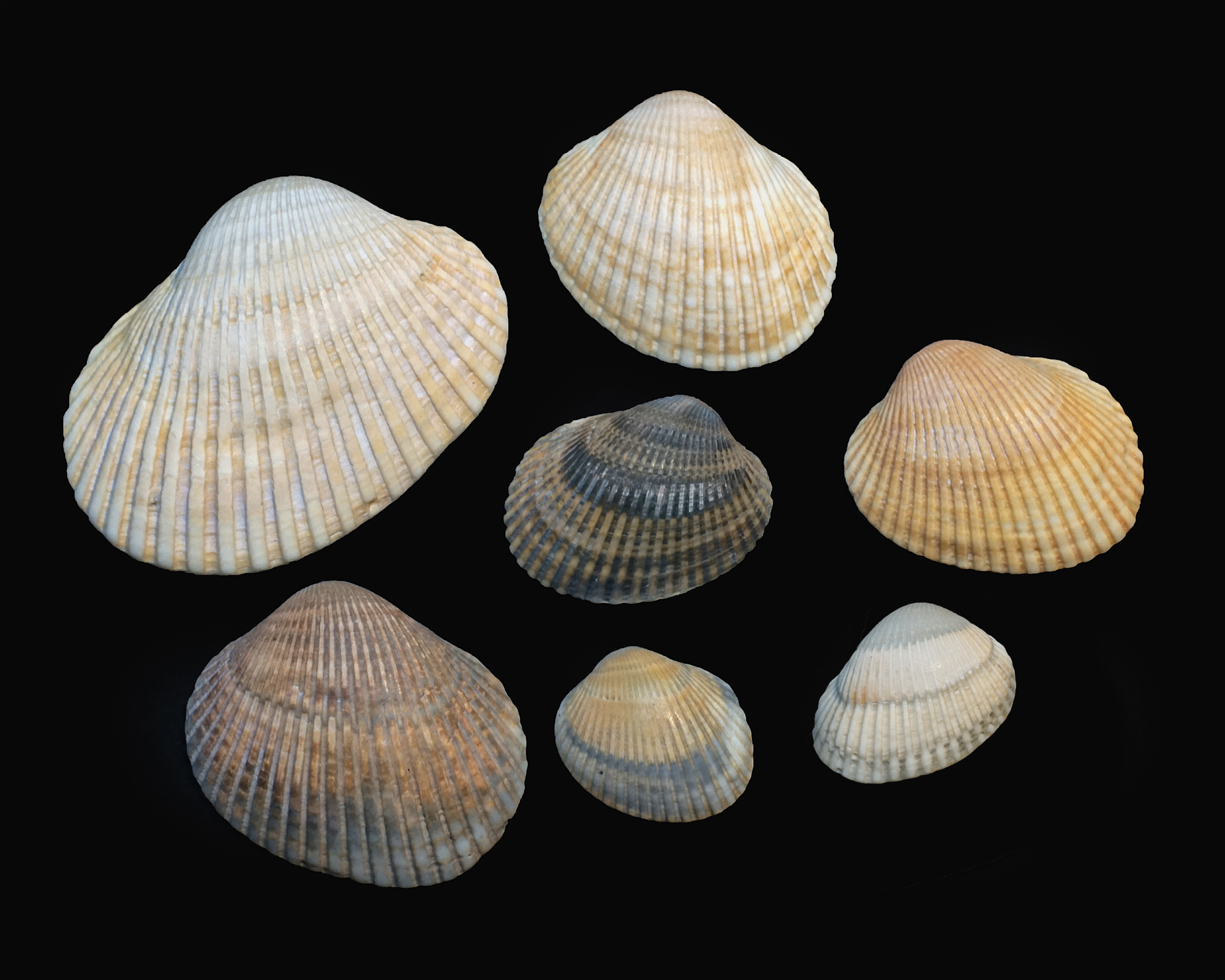
Blood Ark (Anadara ovalis) derives its name from its uncommon red blood; most mollusks have clear blood. Like their close relative, the Ponderous Arks, Blood Arks have very thick shells, only to a slightly lesser degree. After the outer layer “periostracum” wears off, the shells may appear white, gray, or rust-colored. The interior is typically creamy white. Each valve typically has approximately 35 deep, flat radiating ribs.
- Size: 2 1/2 inches
- Habitat: Sandy shallows ommonly found from the low-tide line to depths of 10 ft (3 m); favors brackish water
- Range: Cape Cod, Massachusetts, to Florida and east to Texas
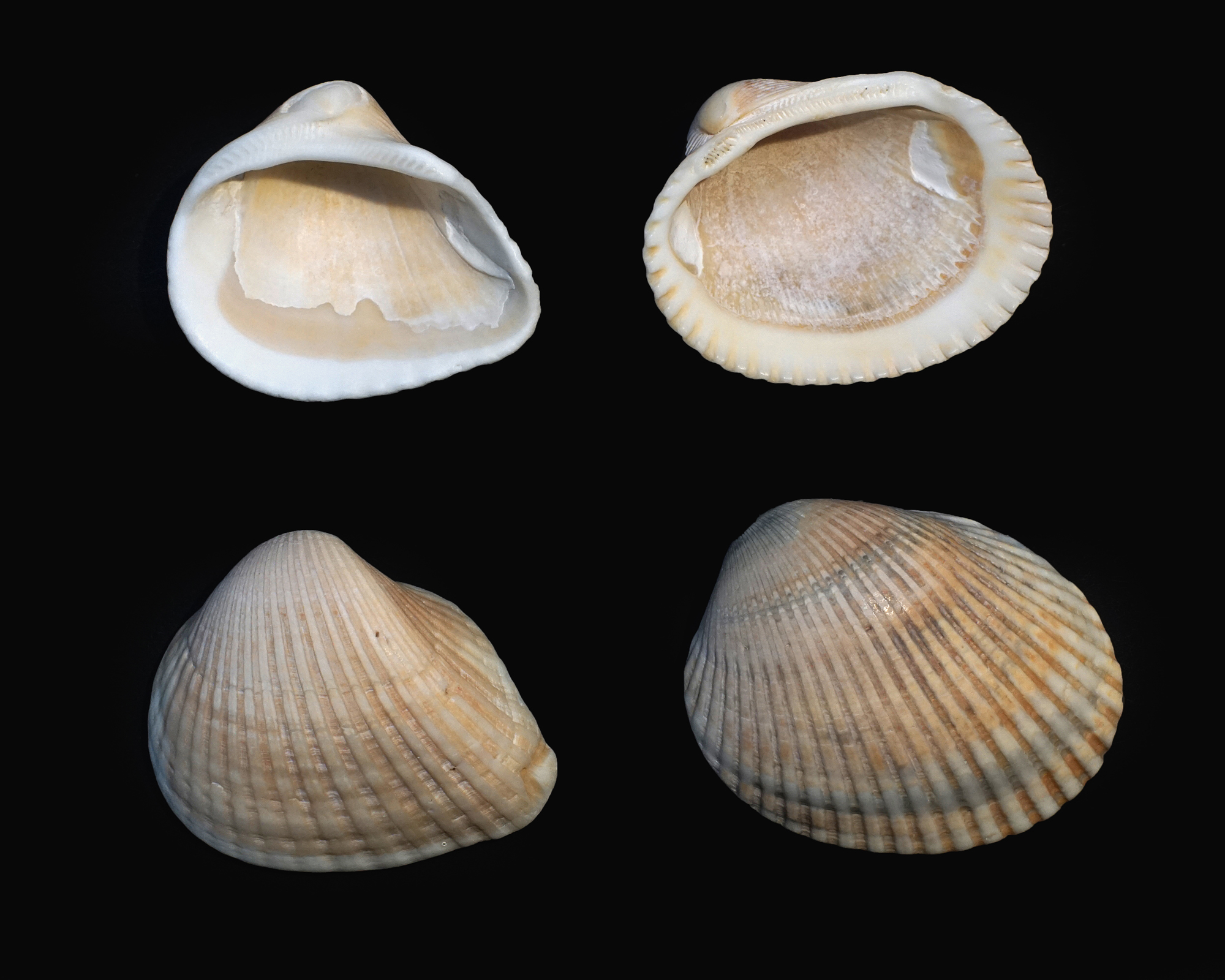
Comparison: At first glance, it’s hard to tell apart the Blood Ark from the Ponderous Ark. The Ponderous Ark (left) has a more triangular-shaped shell with an inflated high crease from the beak, whereas the Blood Ark (right) has a more elongated oval shape (observe the comparison photo). Also, the hinge line of the Blood Ark is slightly longer and straighter.
3. Transverse Ark Clam
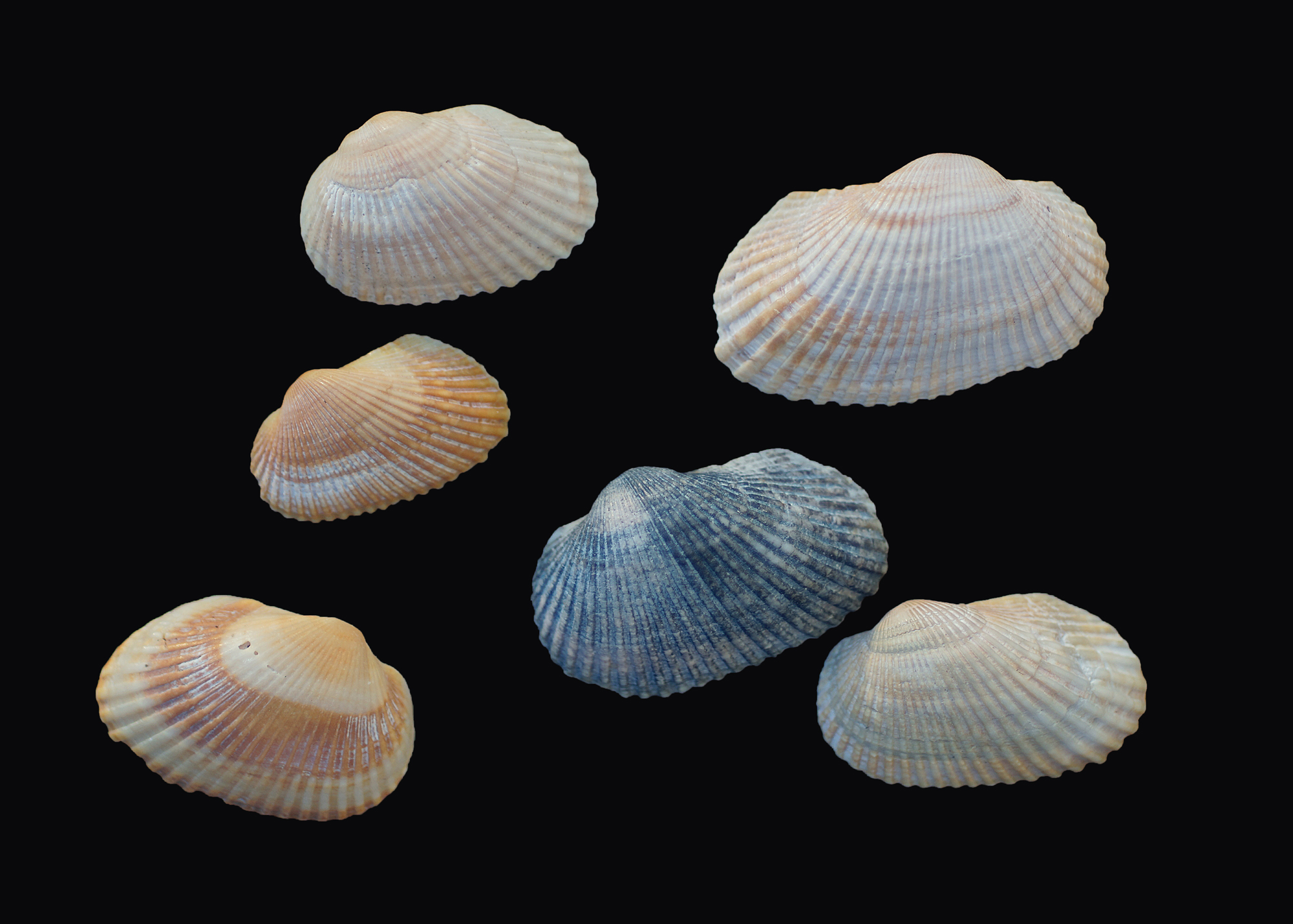
Transverse Arks (Anadara transversa) are fairly sturdy, elongated oval and small bivalves. Their valves are somewhat inflated, bearing a relatively long straight hinge line. They display squarish ribs and are usually colored white once the periostracum covering wears off after beaching. Like many seashells, they can stain rust or gray after prolonged exposure to the sun and air. They are commonly found on Florida shores.
- Size: Up to 1 1/4 inches
- Habitat: Gulf and bay sandy bottoms or hard substrates in sub-tidal inshore waters
- Range: Massachusetts to Florida, east to parts of the Gulf of Mexico and south to the West Indies
4. Incongruous Ark Clam
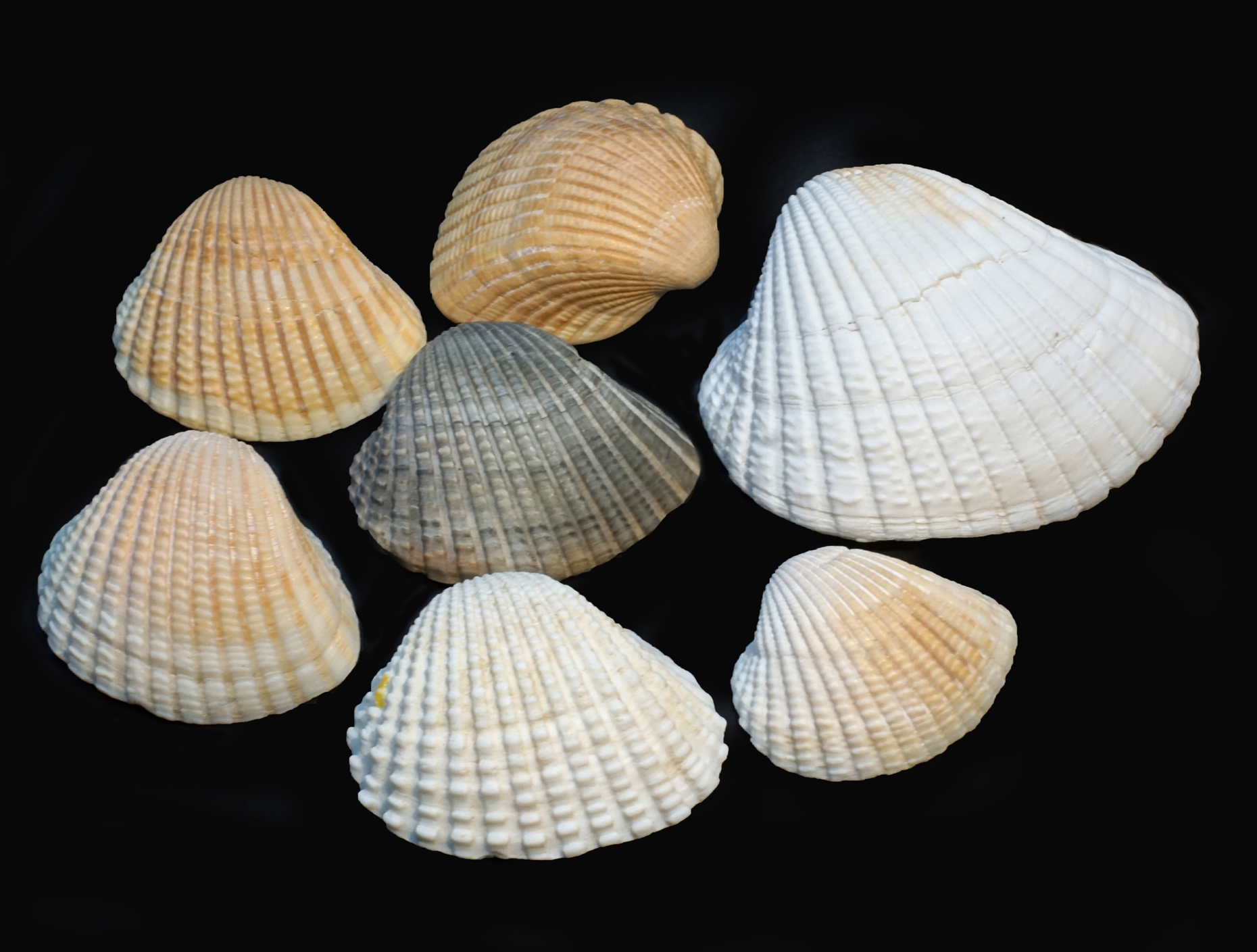
The desirable Incongruous Ark (Scapharca brasiliana), formerly (Anadara brasiliana) possesses a sturdy shell distinguished by obvious beading on its strong radial ribs. The shells grow in a triangular shape with well-inflated valves and a strong beak turned back. The color is white with the brown, furry covering (periostracum) while alive and may discolor after being beached by the sun.
- Size: Up to 3 inches
- Habitat: Shallow sandy bottoms, intertidal zone down to depths of roughly 148 ft (45 m).
- Range: North Carolina to Brazil
5. Cut-Ribbed Ark Clam
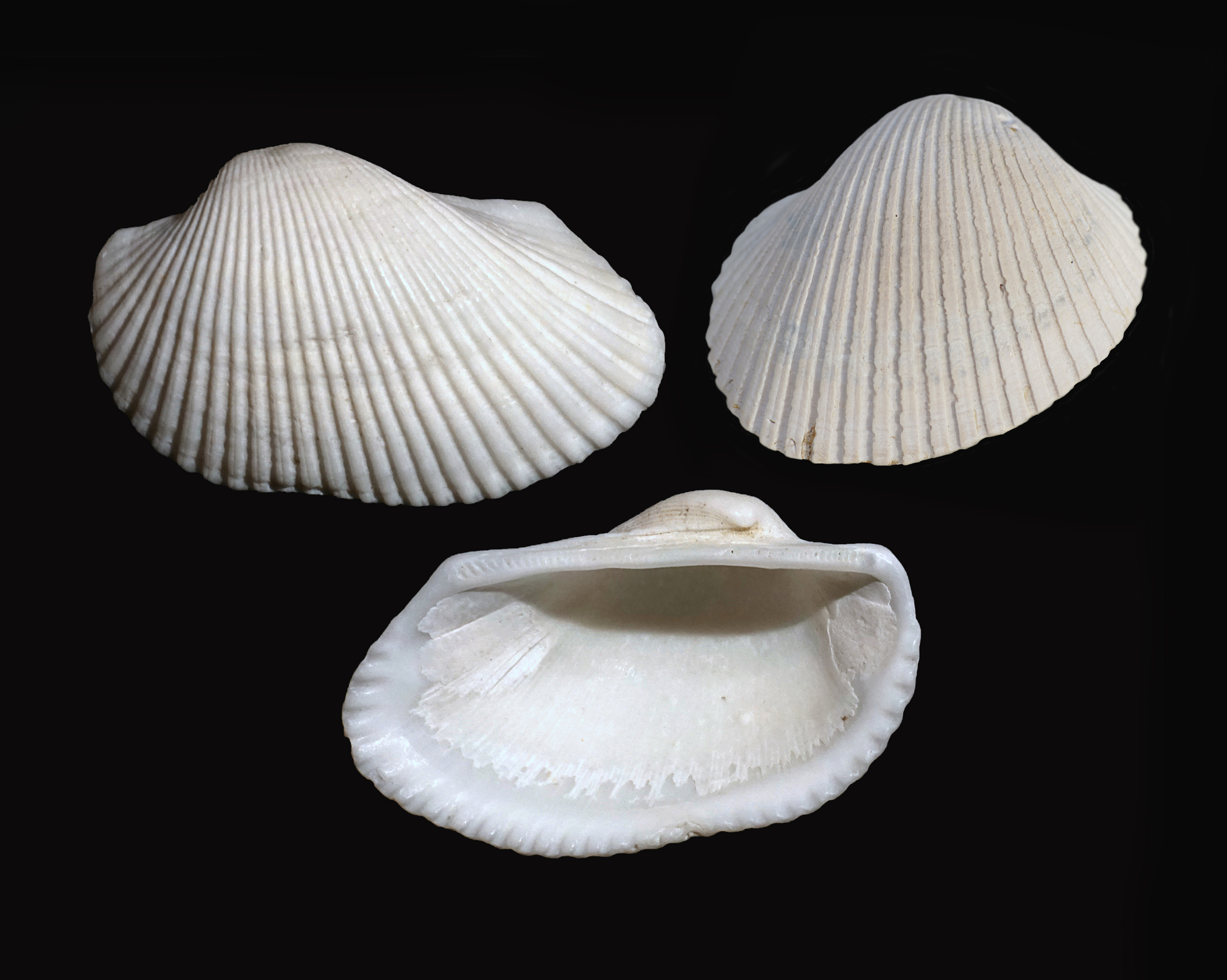
Cut-Ribbed Ark (Anadara floridana), otherwise known as (Anadara secticostata) possess fairly inflated shells with an elongated, slightly uneven oval shape. Their hinge is long and quite straight. Usually the shell is colored white, but like other arks, they are susceptible to staining rust after beaching. The valve consists of 30–38 radial ribs flattened on top with a groove down the center of each rib and concentric ridges between the ribs.
- Size: Up to 4 1/2 inches
- Habitat: Offshore sand or mud in depths ranging from shallow water down to 300 ft (90 m)
- Range: North Carolina, Florida and the Gulf of Mexico to Texas and Westward
6. Zebra Ark Clam (Turkey Wing Ark)
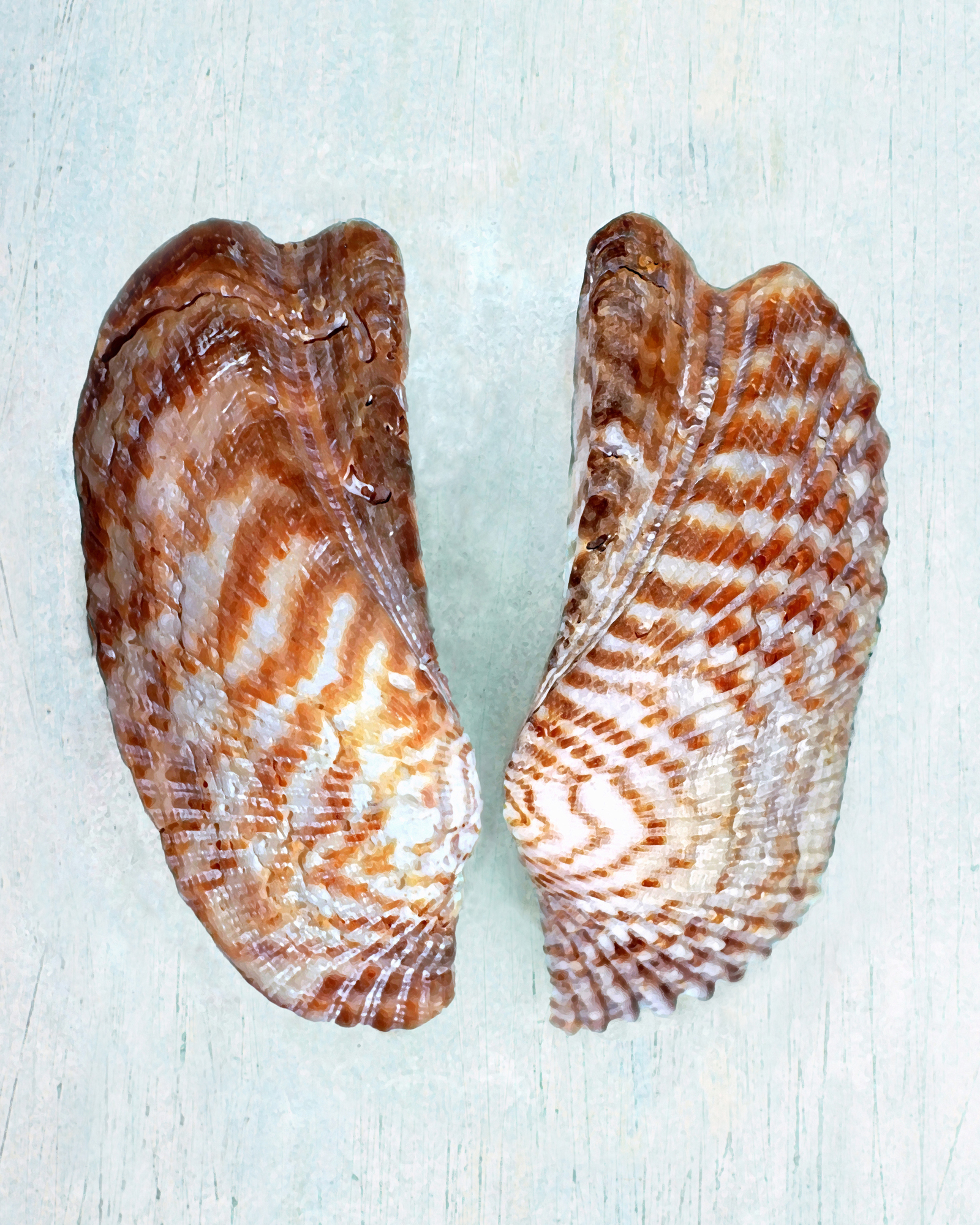
Zebra Arks or Turkey Wing Arks (Arca zebra) possess an unusually elongated oval shape with a long straight hinge. The surface of the valve is uneven with rough-textured ribs. Still, their most distinguishing mark is the attractive zigzag alternating brown and white stripes resembling a zebra or, noticeably, a turkey wing.
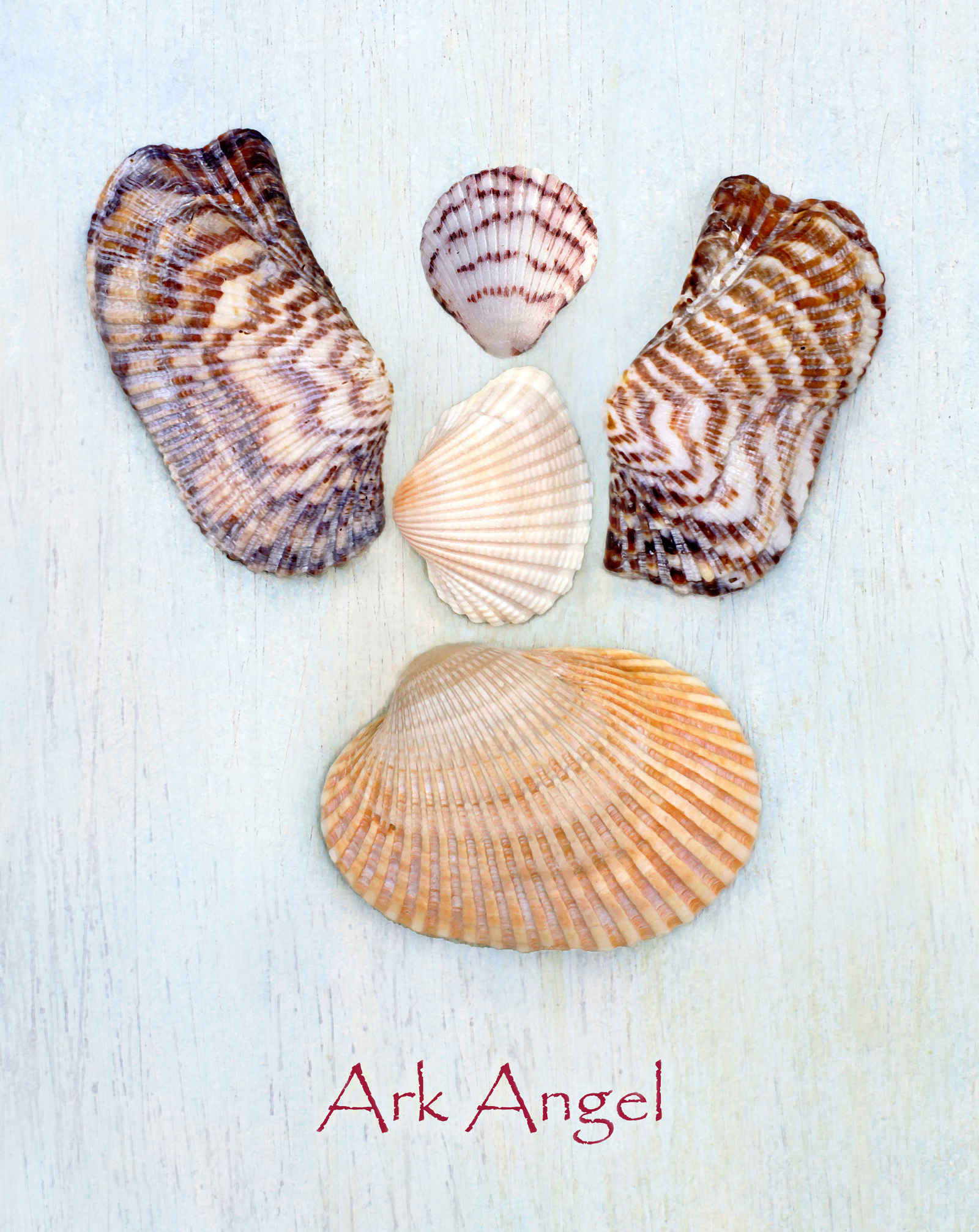
This ark shell has also been called “Noah’s Ark” because of its shape when the valves are connected. Like many ark shells in general, living examples are covered with a thick and bristly “carpet” or periostracum that wears away after the animal has died and after bleaching by the sun.
- Size: Up to 3 1/2 inches
- Habitat: Attaches to rocks, corals and other solid objects using its byssus (threadlike filaments) in shallow water to depths of 65 ft (20 m)
- Range: North Carolina to the West Indies, and also on Bermuda’s shores, as well as in the Mediterranean

7. Broad-Ribbed Cardita Clam
Broad-Ribbed Cardita (Carditamera floridana) is also known as the Bird Wing clam. The exterior shell is covered with white and purple or chestnut blotches with a white interior. The shell is oval, small and thick, with 20 strong raised and beaded radial ribs. Jewelry makers and crafters love this little shell which washes ashore commonly on Florida beaches.
- Size: Up to 1 1/2 inches
- Habitat: Attaches itself to hard objects or seagrass by means of its byssus (threadlike filaments) in sand, mud 3 to 25 ft deep
- Range: Florida east to Texas and Mexico
8. Angel Wings Clam
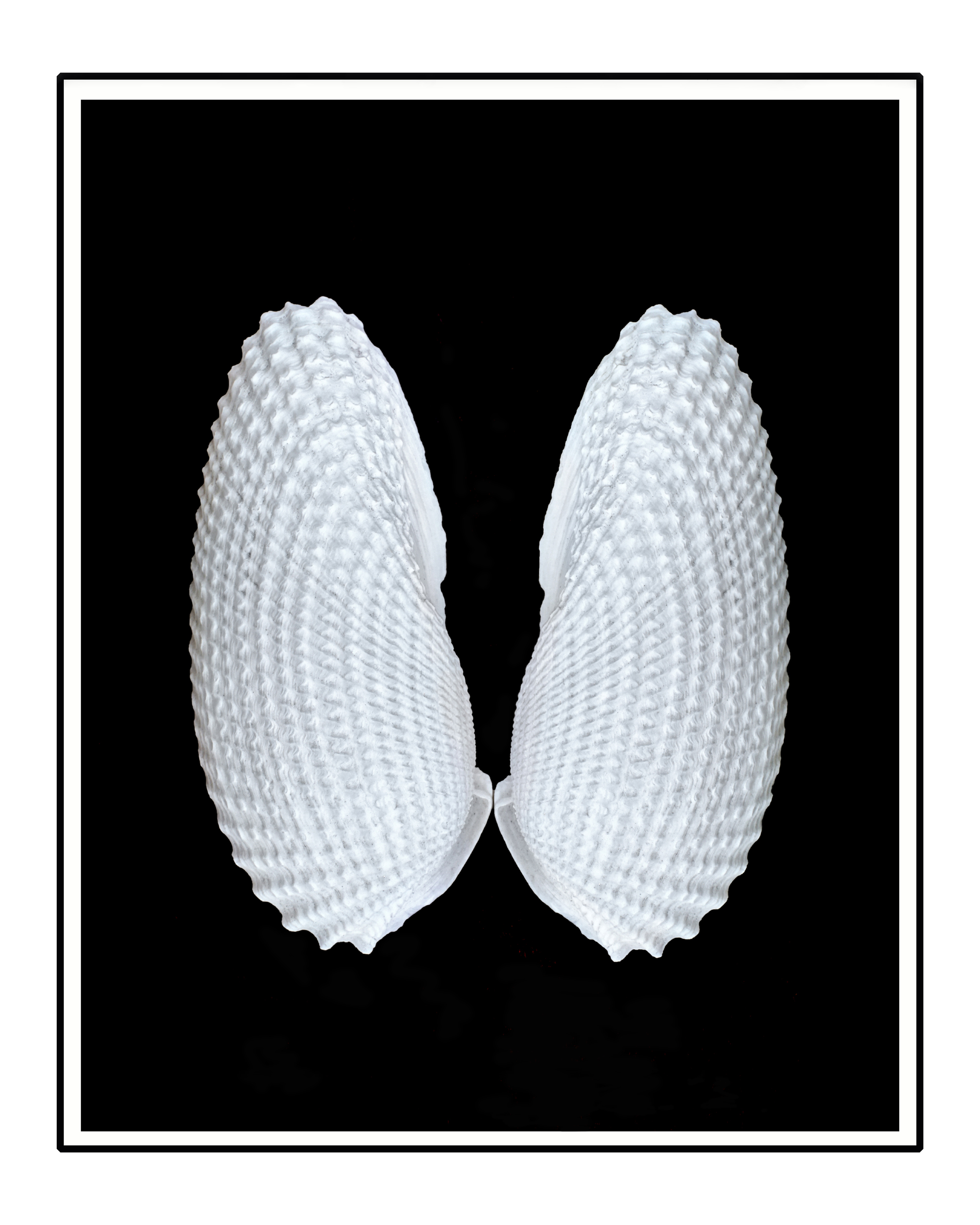
Angel Wing clams (Cyrtopleura costata) display lovely elongated, wing-like valves with 26 radiating ribs finely sculptured, intercepted with a series of concentric growth rings parallel with the margin. Angel Wings are typically white and sometimes tinged pinkish. The muscles on their hinges are relatively weak, so it’s uncommon to find the left and right valves connected. Also, their valves are rather thin and brittle, so they’re often found damaged from rough seas. Interestingly, Angel Wing shells will glow if exposed to ultraviolet light. They living animal can extend a long siphon that protrudes from the burrow used to circulate water and draw in food particles with enough strength to bore into clay, wood and even shale.
- Size: Up to 7 inches
- Habitat: Shallow water burrowing up to three feet deep in soft substrate of mud, clay or peat
- Range: Cape Cod to Florida and the Gulf of Mexico, east to Central America and as far south as Brazil
9. Buttercup Lucine Clam
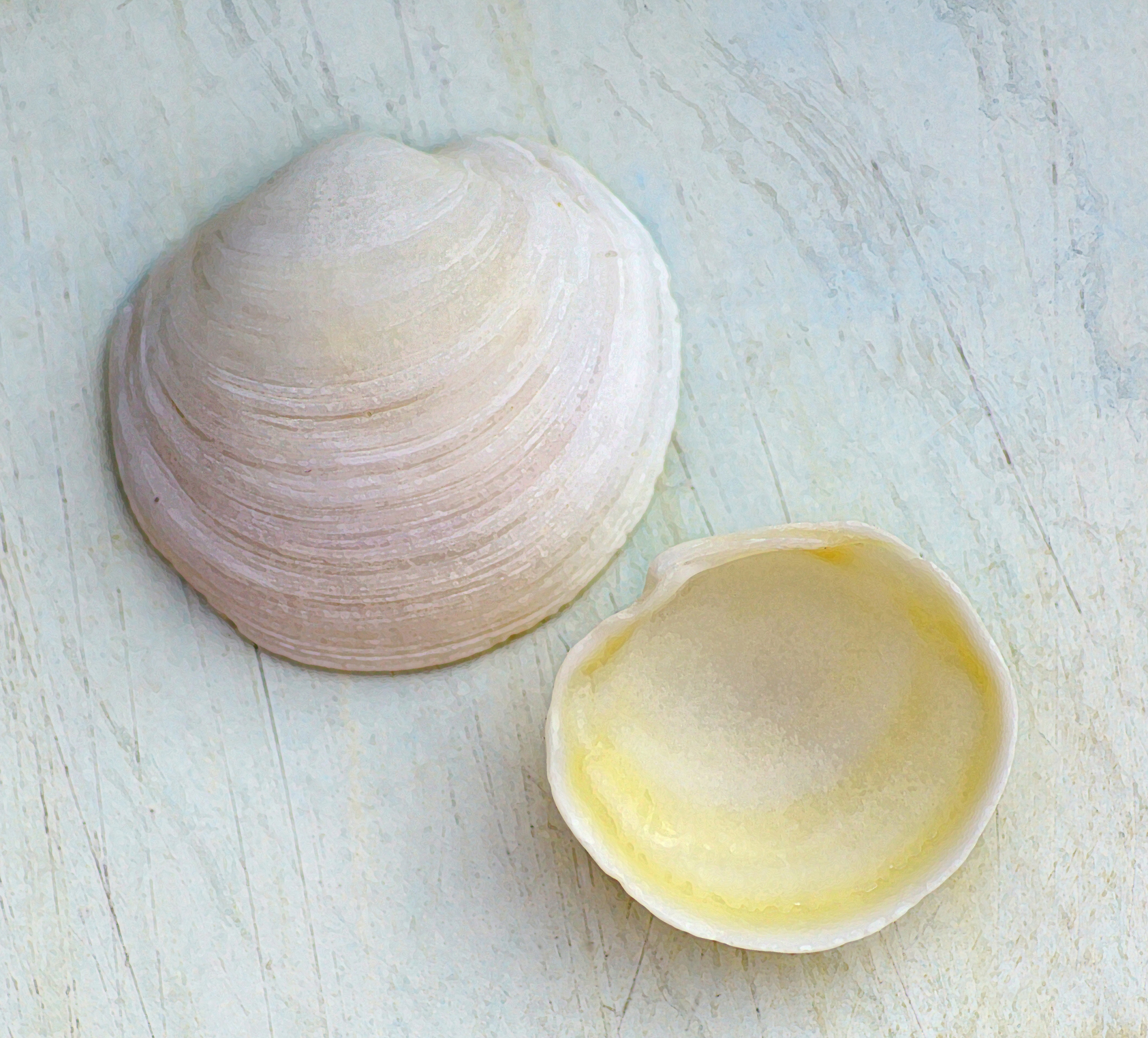
The Buttercup Lucine or Lucina (Anodontia alba) is a circular, bowl-shaped, small bivalve with a fairly sturdy white outer shell and creamy to butter yellow interior. The exterior has numerous fine concentric lines and a somewhat wide hinge plate. Lucines are common in warm waters on both the Atlantic and Pacific Coasts of North America. They are not edible. Did you know the Lucines are named for Lucina, an aspect of the Roman Goddess, Juno, who represented light and childbirth?
- Size: Up to 2 inches
- Habitat: Soft sandy or muddy bays and inlets in shallow water to depths from 3-300 ft (90 m)
- Range: North Carolina to Florida and the West Indies, as well as the U.S. Pacific Coast
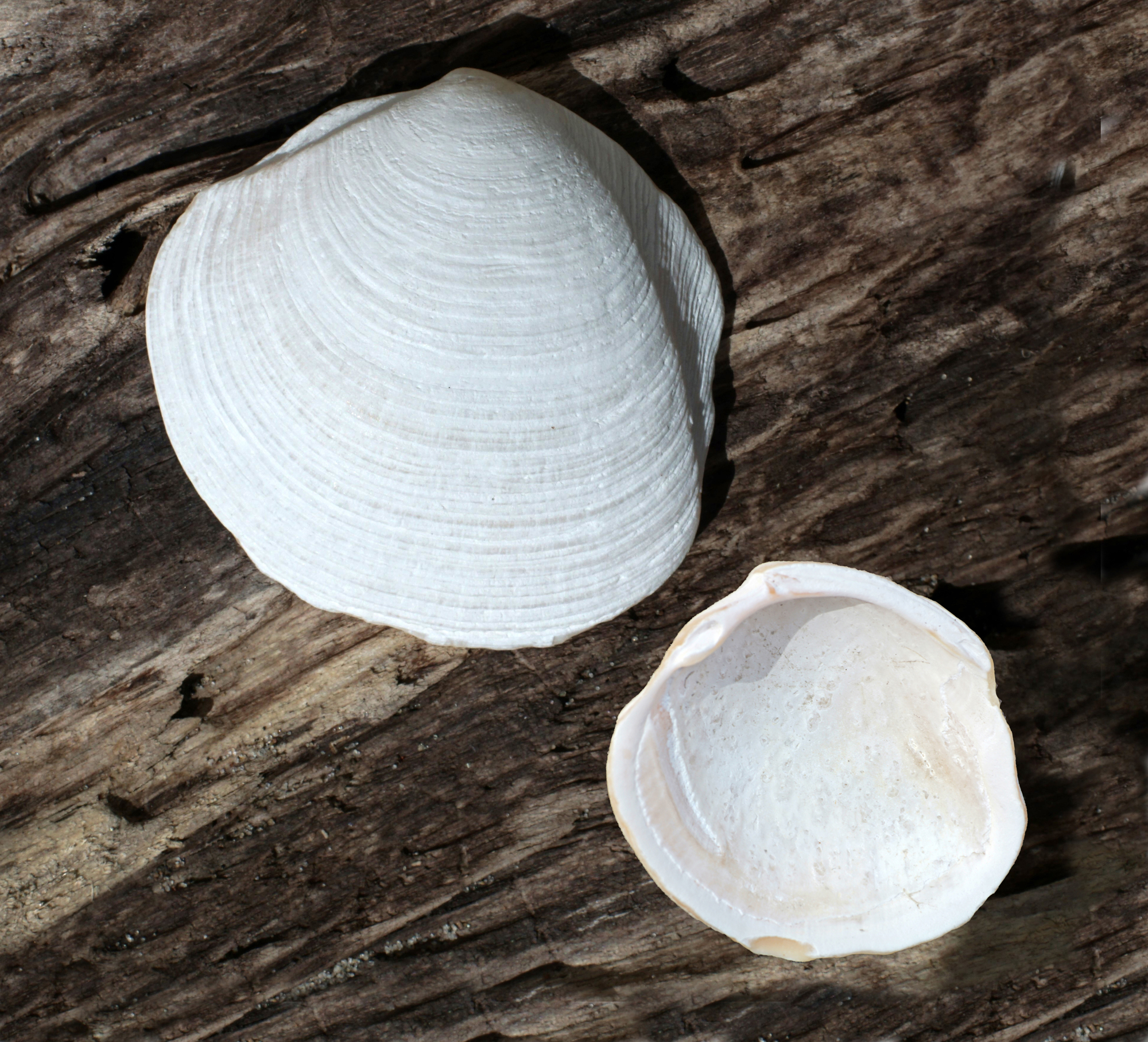
10. Chalky Buttercup Lucine Clam
The Chalky Buttercup Lucine (Anodonitia philipiana) clamshell is slightly thicker and also larger than the Buttercup Lucine (Anodontia alba). The valve color is white with white to pale yellow interior and possesses numerous concentric lines with a dominant furrow.
- Size: Up to 2 1/2 inches
- Habitat: Soft shallow sand or muddy bottoms and mangroves to about 13 ft (4 m)
- Range: North Carolina to Florida and the Gulf states, as well as south to the West Indies
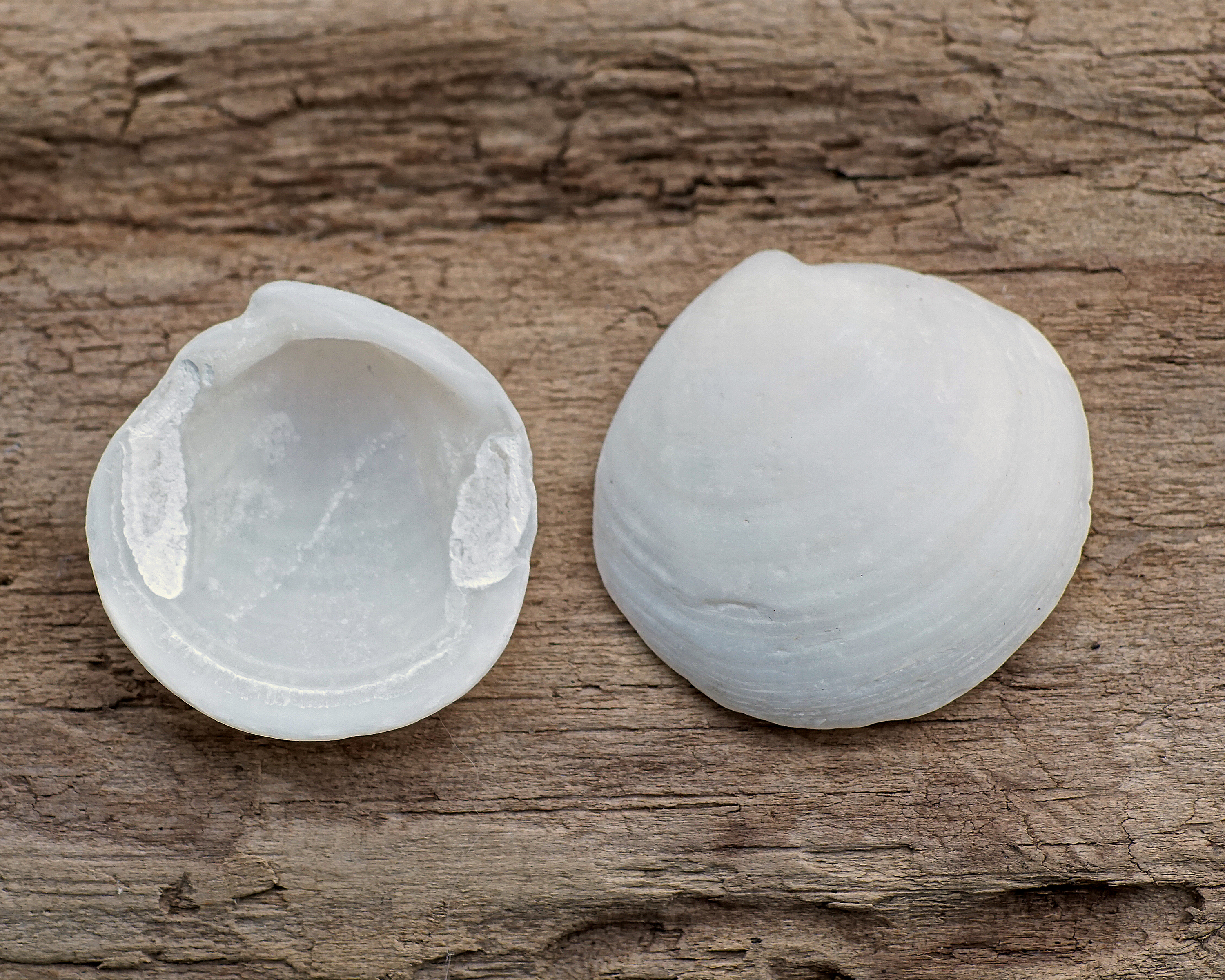
11. Florida Lucine Clam
The Florida Lucine or Lucina (Pseudomiltha floridana) displays weak growth lines but has a sturdy shell. Both its exterior and interior valve colors are white. The shell is fairly inflated and very round with a beak that turns forward which is small, but prominent. They have been called the Face Shell because they are used for the faces of shell dolls. They are not edible.
- Size: Up to 1 1/2 inches
- Habitat: Moderate shallow water in sand, mud, mangroves or seagrass – intertidal lagoons and bays where they bury
- Range: Florida to Texas and the U.S. Pacific Coast
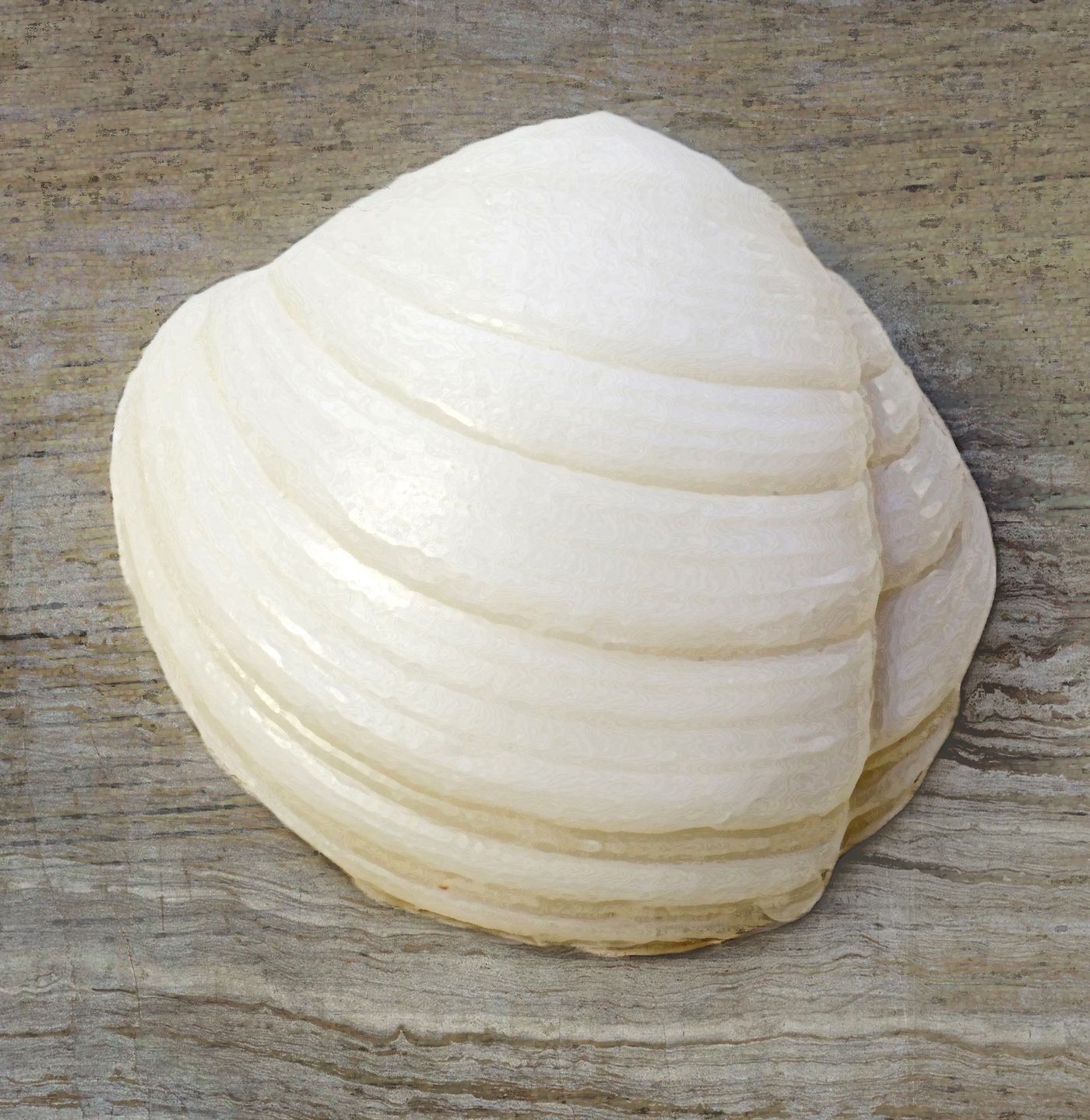
12. Pennsylvania Lucine Clam
The Pennsylvania Lucine or Lucina (Linga pennsylvanica) shell is off-white with distinct concentric ridges and a distinct diagonal furrow about the posterior region. The interior is the same color as the exterior. The shell is sturdy, heart-shaped and inflated with a beak inclined forward. Beach-worn specimens are smooth and shiny. They are not edible.
- Size: Up to 2 inches
- Habitat: Sandy, gravelly, or coral sand habitats in shallow to moderate depths 250+ ft (76 m)
- Range: North Carolina to Florida and the West Indies, as well as the U.S. Pacific Coast
All rights reserved © Fossillady 2026
 Fossil Lady