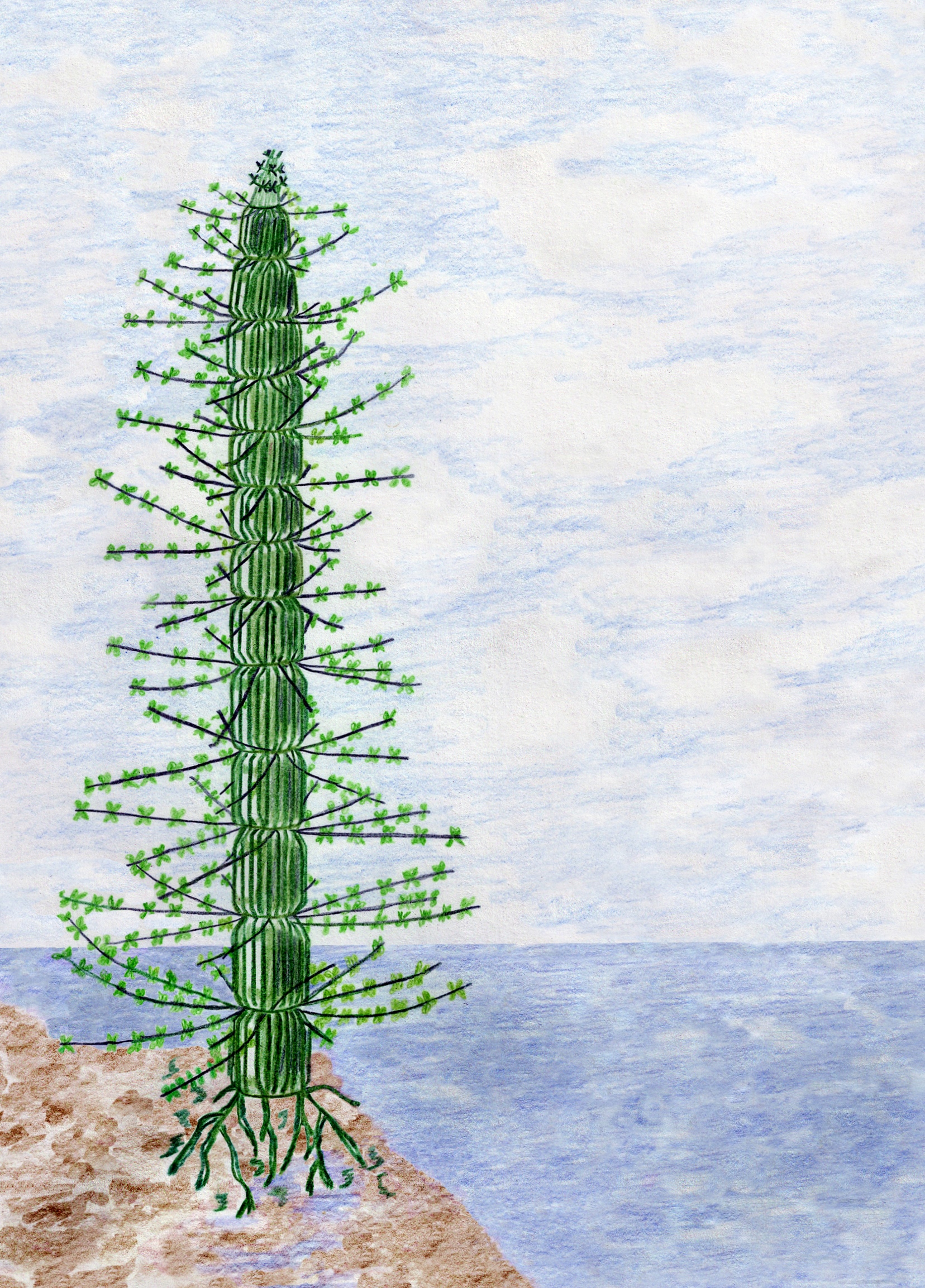
Was the “Calamite” the first tree-like plant to grow on land? Many scientists believe so. It possibly grew up to 100 feet (30 meters) tall, towering above the sparse landscape during its lengthy lifespan. Its earliest ancestral calamites were herbaceous and small appearing approximately 400 million years ago during the Devonian Time Period. The Calamite tree-like species trived during the tropical coal swamps of the Carboniferous roughly 360 million years ago before dying out at the end of the Permian mass extinction roughly 250 million years ago.
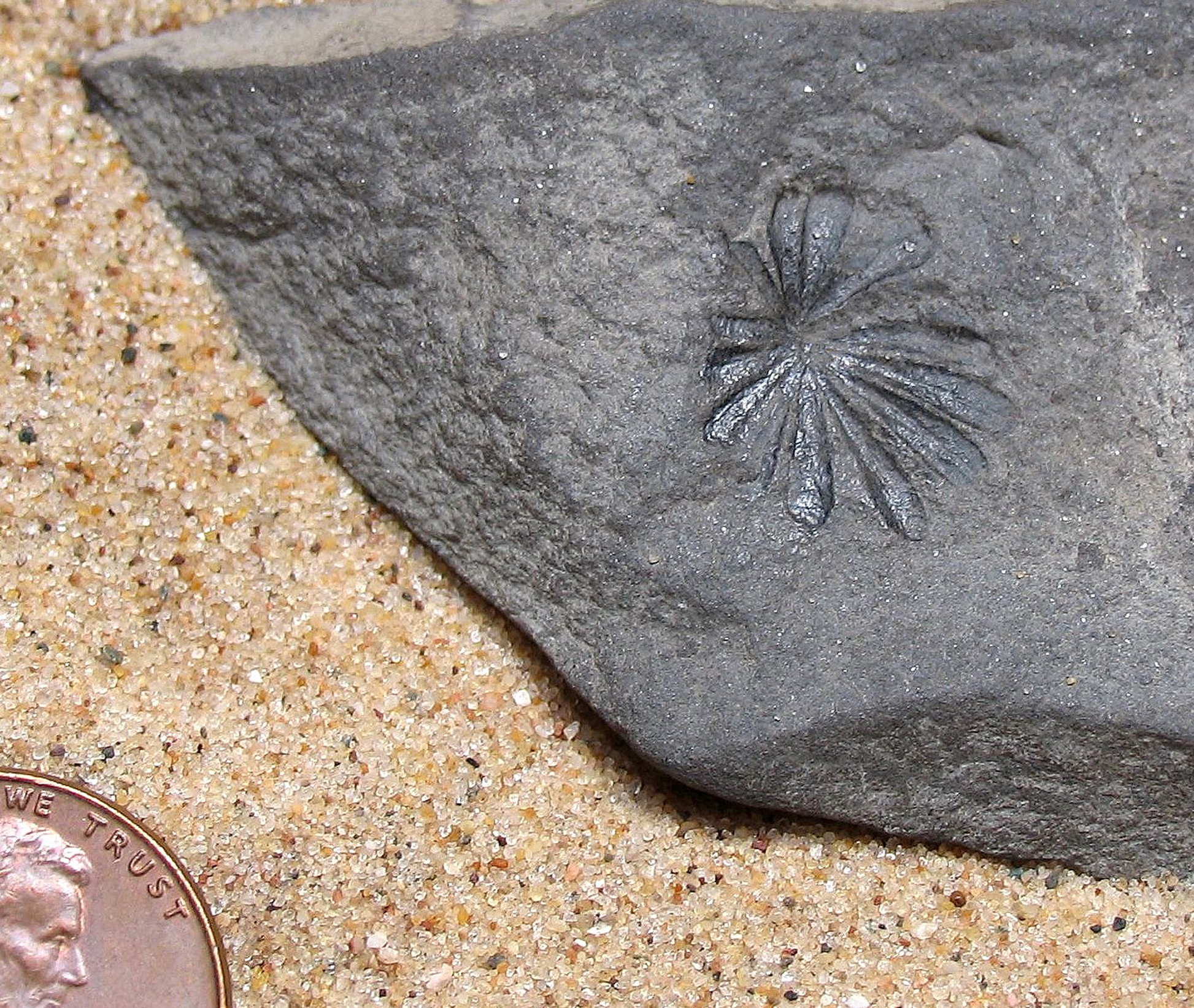
The trunk of the Calamite tree-like plant was a woody hollow tube, lacking true bark. The calamite resembled modern day bamboo with segments and ribbing. The leaves called “annularia” were primitive and needle like, arranged in whorls around a stem.
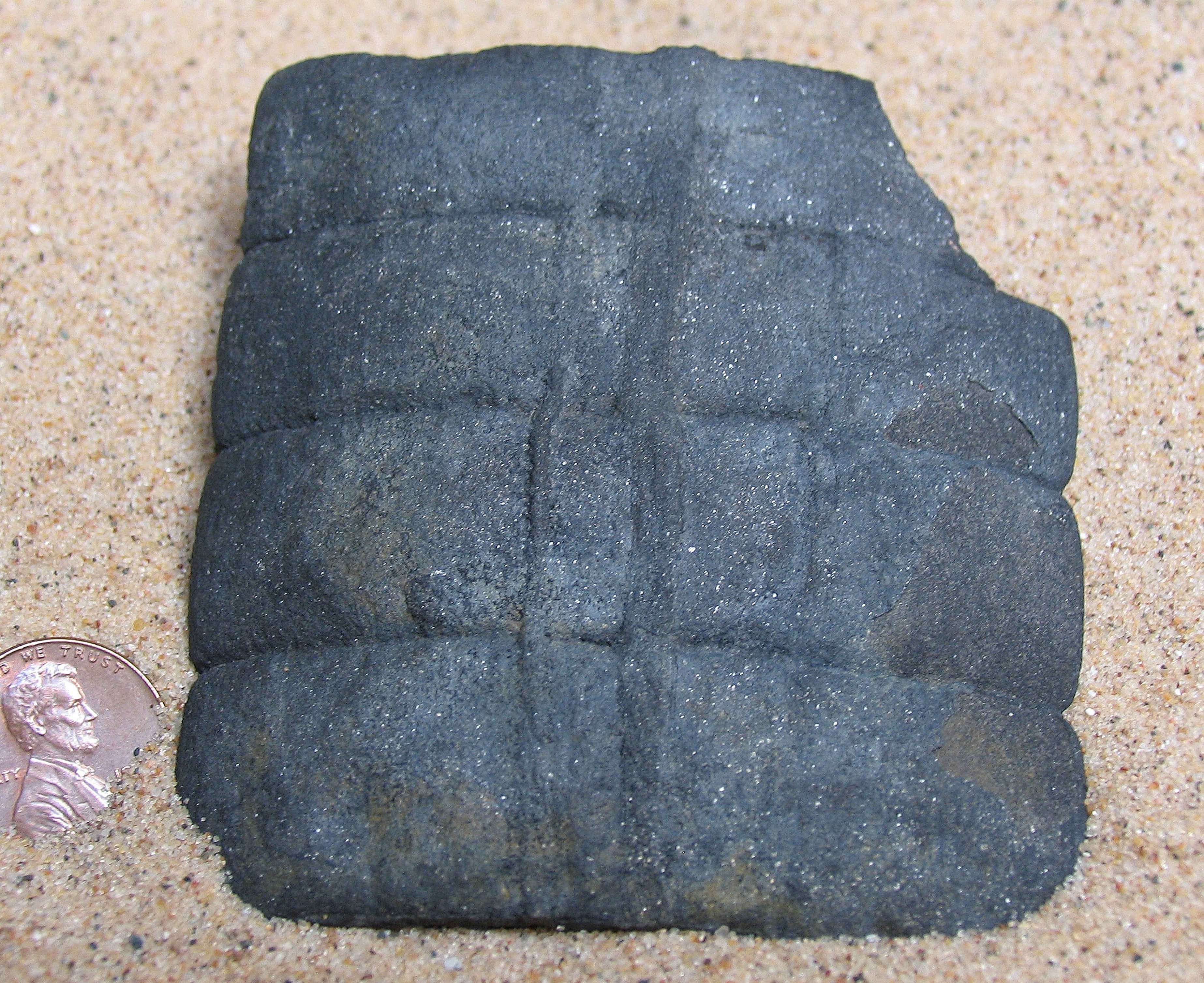
The Calamite-tree reached its zenith durng the hot swamp tropics of the past, particularly during the Pennsylvanian Period around 300 mya. Many of their fossils have been found worldwide including, USA, China, Canada, South America and Europe.
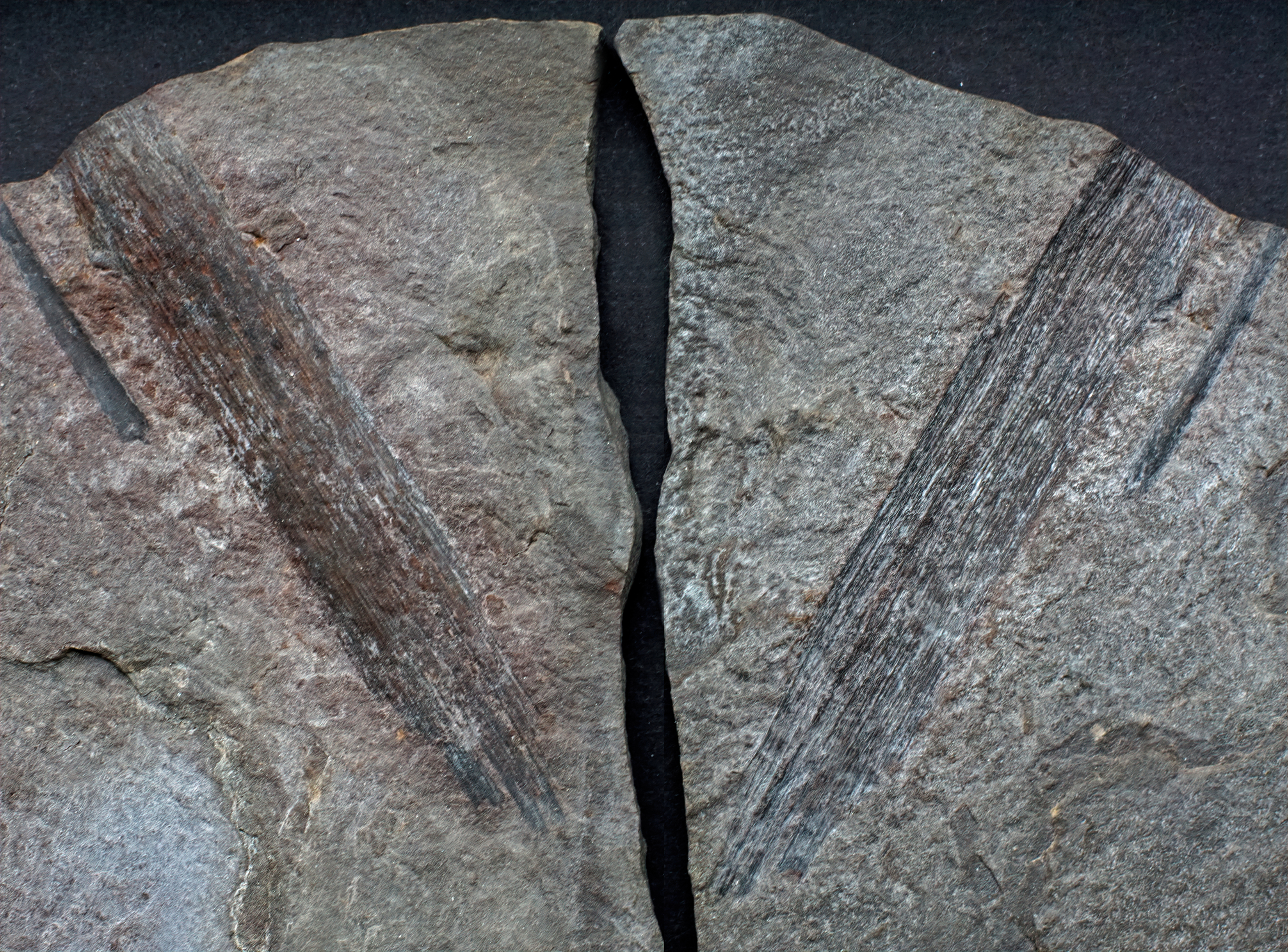
The three amazing fossils above were found in Sebastian County, Arkansas in an old coal strip mine in 1993 by Michael A. Whitkanack, who donated them to my classroom. They are actually the imprints of the Calamite’s leaves and stems which scientists refer to as trace fossils.
CLASSIFICATION
Scientific Name: Calamite Common Name: Horsetail / Wiskfern
Kingdom: Plantae
Division: Pteridophyta (ferns, reproduce by spores)
Class: Sphenopsida or Equisetopsida (means ribbed, vertical jointed stem; bamboo like in appearance)
Order: Equisetales (ancient, arborescent (tree-like) relative of modern-day horsetails (Equisetum)
Family: Calamitaceae (extinct family of tree-sized, spore-bearing plants closely related to modern horsetails)
Genus: (STEM) Calamite (LEAF) Annularia
Special Note: The Calamite may look familiar to some. Their modern descendants are the “horsetails” of today. They grow in open fields and edges of woodlands, but only reach a few feet tall.
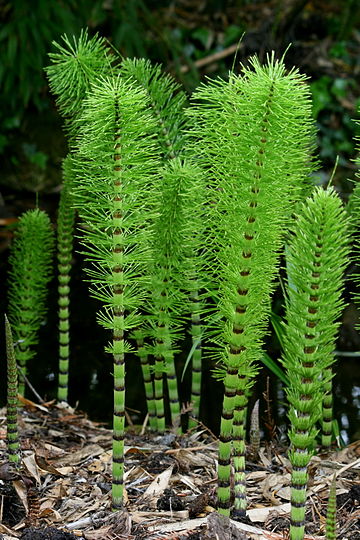
The “horsetail” or Equisetum is an amazing living fossil related to the Calamites, the only surviving genus from the entire class of Equisetopsida. For millions of years, the Equisetopsidas were much more diverse and flouished during the late Paleozoic, Permian and Carboniferous forests. Through the millenniums, they decomposed layer by layer, sinking deep and eventually contributing to the coal deposits of today.
All rights reserved © Fossillady 2025
 Fossil Lady