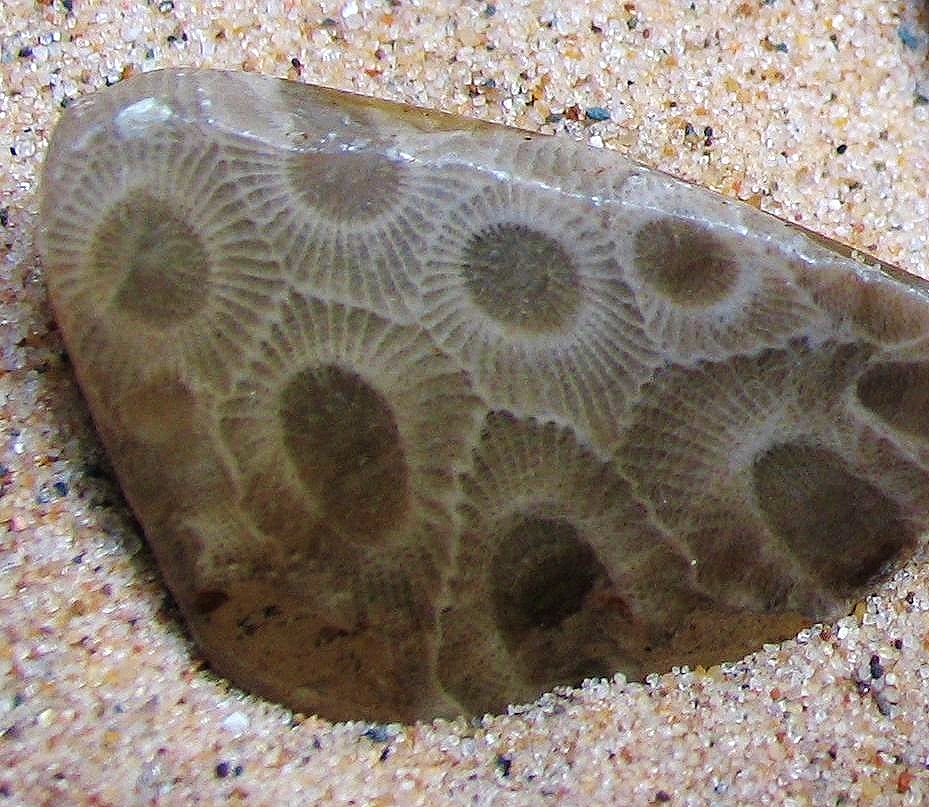
What is a favosites?

Favosite Coral
(Charlevoix Stones) Favosites Honeycomb Coral Fossil

A favosites is a type of extinct coral. Favosites coral fossils most identifying feature is the honeycomb-like openings (corallites) revealing where the animal (polyps) lived. The polyp tentacles could tuck inside for safety, typically at night, or stretch out from their calcium-carbonate substrates in order to filter tiny food particles floating by in ocean currents.

Favosite Coral Preserved in Gray Shale
Favosites Honeycomb Coral Fossil

The large fossil sample shown first is preserved in sedimentary claystone. It was found in a field in the city limits of Saugatuck, Michigan, part of the Ellsworth-Antrim Geological Formation (Mississippian-Devonian), in Allegan County, Southwestern Michigan, USA. This particular type of honeycomb coral fossil is more commonly found in Charlevoix, Michigan, situated in the Traverse Group Geological Formations in the far northwestern region of the state. Consequently, they’re often called, Charlevoix Stones.

The tabulae (horizontal internal layers) place the favosites corals in the order of tabulata with internal chambers that built outward and upwards as the organism grew.

Diagram of Favosites Internal Structure

The walls between corallites were pierced by pores known as mural pores which allowed transfer of nutrients between polyps as illustrated below.

coralmorph2
Favosite Coral Reveals Horizontal "Tabulate" Growth Layers
(Charlevoix Stone) Favosites Honeycomb Coral Fossil Reveals Inner Growth Layers (Found on Oval Beach, Lake Michigan)

Like all coral, favosites corals thrived in warm, shallow, sunlit seas. They were a colony type coral forming colorful quilt-work reefs and fed by filtering microscopic plankton with their stinging tentacles. They were most prevalent during the Silurian and Devonian time slots, but date as far back as the Ordovician and forward to the Permian between 251-488 mya. That’s over 200 million years of living on earth . . . amazing!  

Favosites Honeycomb Coral Fossil

Favosites Classification

Common Name: Honeycomb Coral        Scientific Name: Favosites 

Kingdom: Animal

Phylum: Cnidaria (means to sting)

Class: Anthozoa (means flower animal)

Order:  Tabulata (possess inner horizontal dividing walls)

Family: Favositidae (honeycomb pattern on exoskeleton)

Genus: Favosites Species: Alpenensis (Charlevoix Stone)

Cora Honeycomb-studio textre
Rendering Drawing of Extinct Favosites Honeycomb Coral Showing Polyps Drawn-out

All rights reserved © Fossillady 2026

What is a Petoskey Stone?

Polished Petoskey Stone Coral Fossil (Hexagonaria, percarinata)

Simply put, a Petoskey Stone is an extinct fossilized coral. Why is it called, “Petoskey Stone”? Because they are found in abundance in and around Lake Michigan shores, especially near the Northern Michigan city of Petoskey (USA)! The name “Petoskey” is the English adaptation of an Ottawa Indian Chief Petosegay, which is said to mean “The Rising Sun”!

They are also called “lucky stones” by many because finding these ancient coral fossils, remnants of prehistoric reefs, feels like discovering a special piece of history!

How could the remains of a coral, which thrived in tropical warm waters, possibly find its way to the cool regions of Michigan? So, during the prehistoric Devonian time period around 416 to 369 million years ago when the Petoskey Stone corals thrived, the dominant landscape of North America lay nearer to the equator and the entire earth was more tropical. Consequently, risen, warm, shallow seas covered a large portion of the continent, including Michigan. Later, the coral remains were buried under deep layers of sediment. Many millions of years after that when the great glaciers retreated northward, they scraped and dug into those forgotten layers of earth freeing them from trappings. The glaciers released and deposited them where we can now enjoy the good fortune of discovering their mysteries.
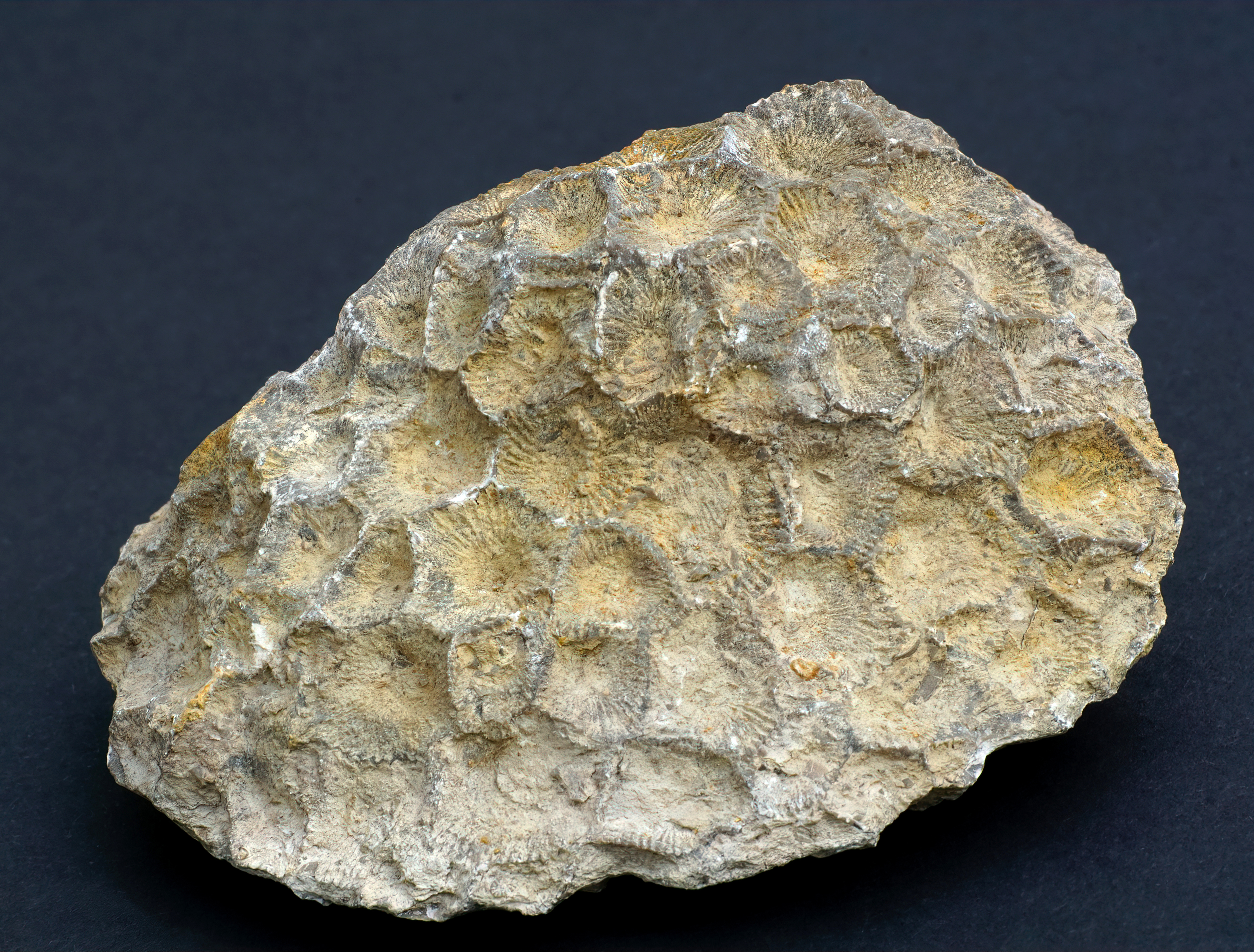
Rough unpolished Petoskey Stone Coral Fossil (Hexagonaria, percarinata)

Petoskey Stone fossils originate from mass coral colonies of Hexagonaria, percarinata. Each hexagonal corallite (visible in the stone) held a single animal which opened a mouth exposing tentacles that siphoned food particles floating by in ocean currents. The tentacles were also used to sting any organism or other corallites that came too close. Calcite, silica and other minerals replaced the original exoskeleton over many millions of years.
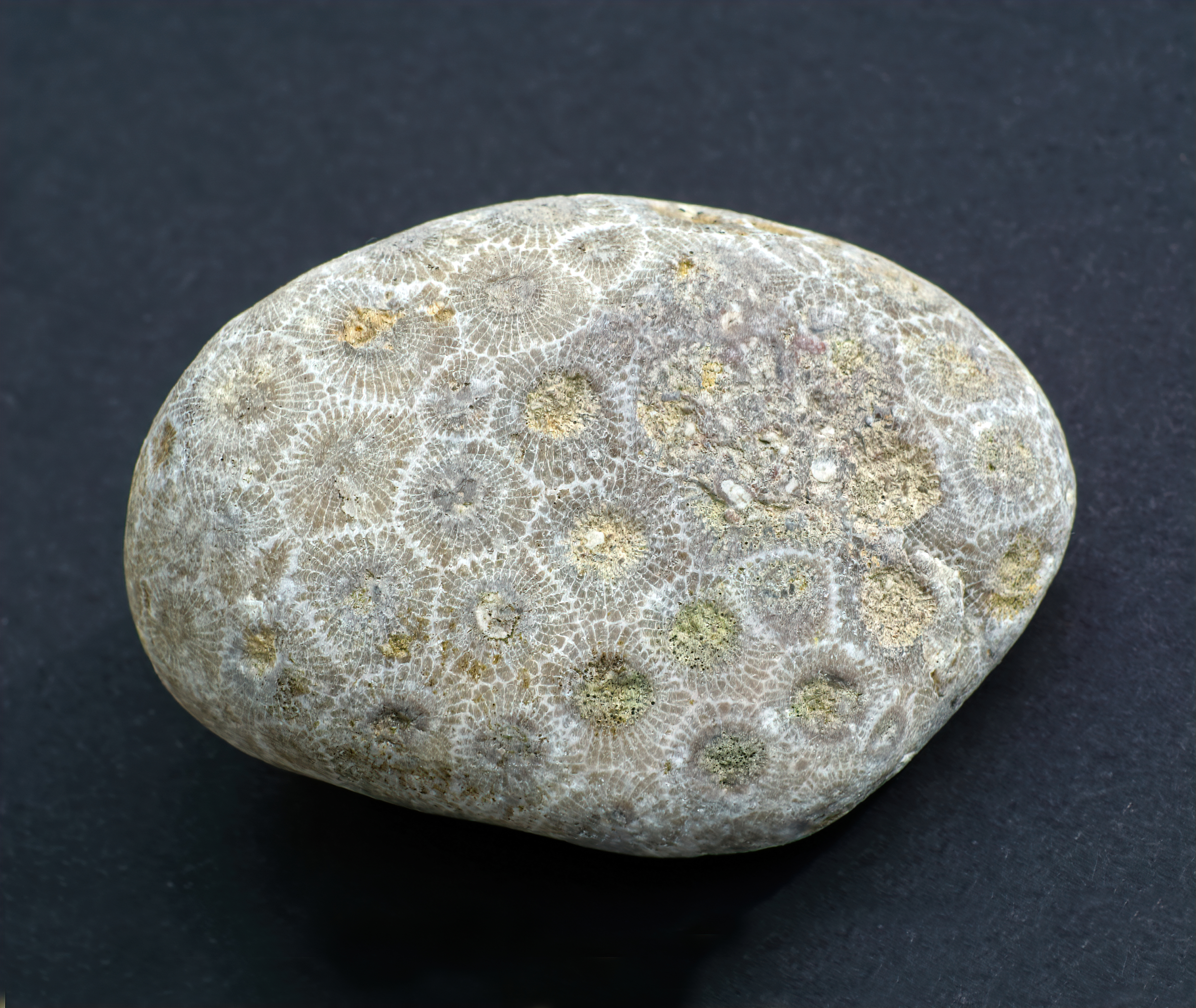
Corallites Detail of Petoskey Stone Coral Fossil (Hexagonaria, percarinata) found on Lake Michigan Beach

PETOSKEY STONE CLASSIFICATION

Common Name: Petoskey Stone or Lucky Stone

Scientific Name: Hexagonaria, percarinata

Kingdom: Animalia

Phylum: Cnidardia (means to sting)

Class: Anthozoa (ie coral, sea pens, sea anemones)

Subclass: Zoantharia (true corals)

Order: Rugosa (means wrinkled wall)

Family: Hexagonaria (means six sides)

Species: percarinata
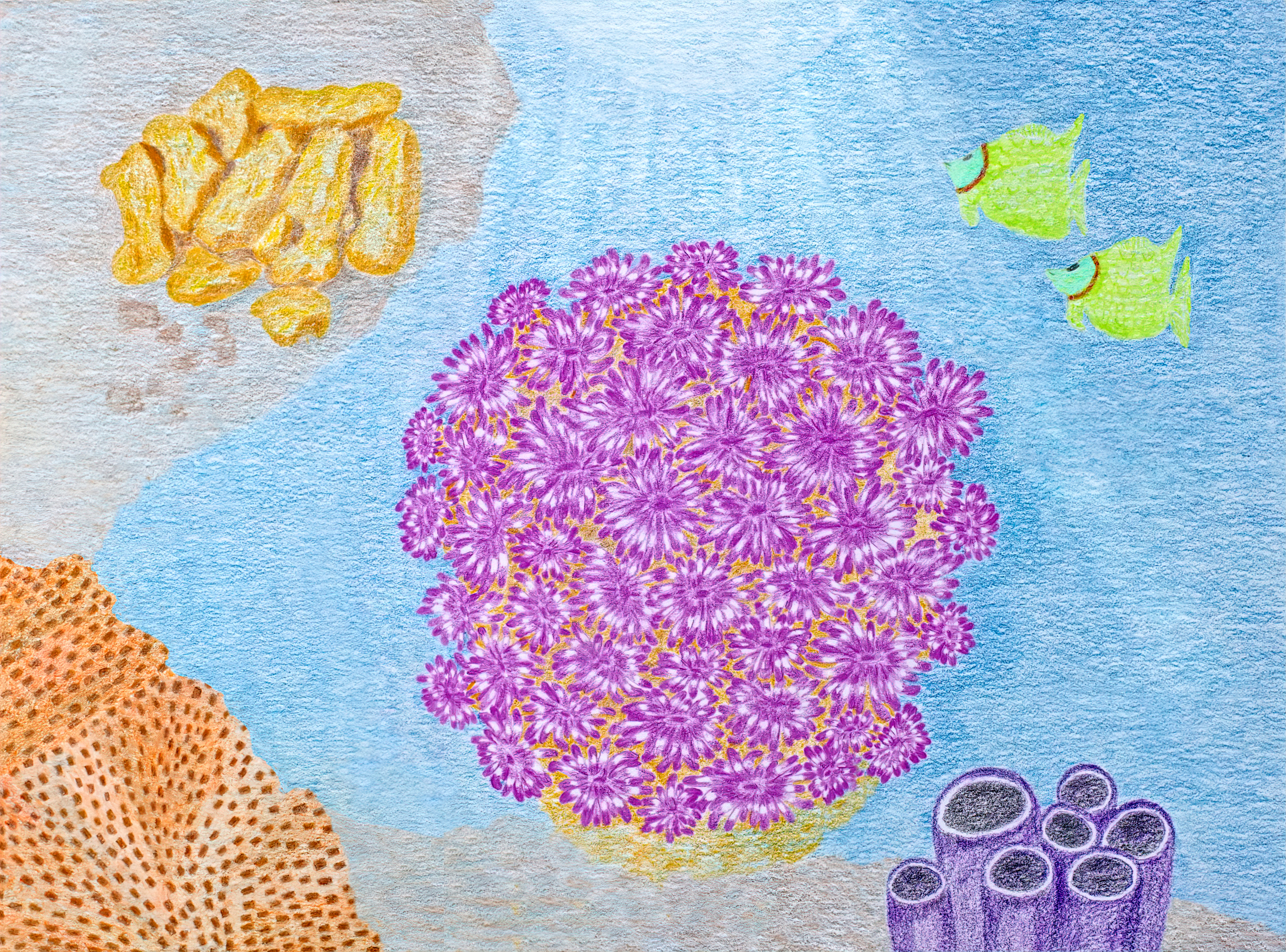
Petoskey Stone Coral (Hexagonaria, percarinata) Rendering Drawing of Living Sample

All rights reserved © Fossillady 2026