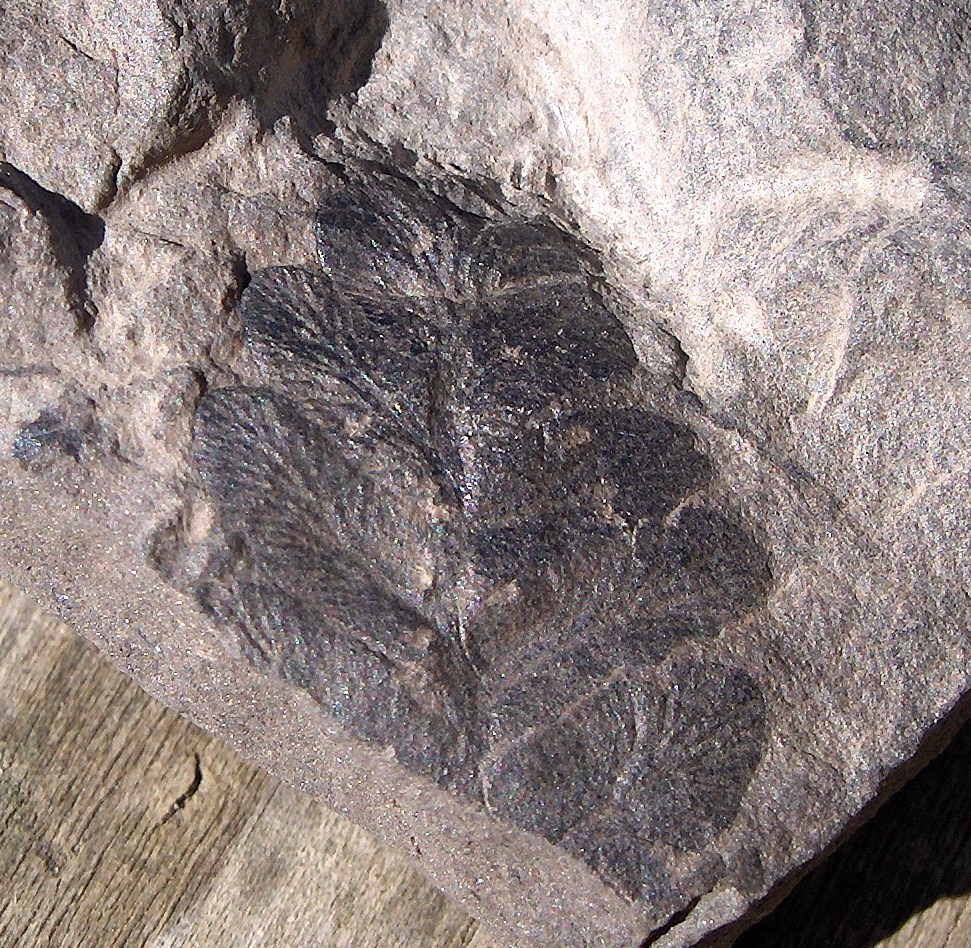
Extinct Neuopteris leaves are associated with the extinct tree called Medullosa, an ancestor of the flowering plant group. They flourished at the same time as the tree called Psaronius associated with the leaf called Pecopteris during the hot swamps of the Carboniferous through the Permian time slots around 360 to 250 million years ago. Earth’s cooling temperatures likely contributed to both of these trees disappearances.
Comparison Neuropteris Vs. Pecopteris Leaf Fossil Identification: One way to tell the difference between these two leaf fossil imprints is by examining the mid-vein of their leaflets. In Neuropteris, the vein stops midway up the leaflet and splits into several fine veins, whereas the mid-vein in Pecopteris extends up to the tip. Neuropteris leaflets are more blunt tipped and attach by a single stem as opposed by the entire base, as with Pecopteris. Also, Neuropteris has a more overall heart shape. A link to my article about the Psaronius tree, associated with the Pecopteris leaf, for photo comparison is provided at the end of this article.
Note: The reason these extinct trees have different names from their leaves is because scientists discovered them at different times and assigned them separate names before they put them together. If you think this creates confusion, I would have to agree.
NEUROPTERIS LEAF CLASSIFICATION
Kingdom: Plantae
Division: Tracheophyta (vascular plants with system of transporting nutrients and liquids)
Class: Gymnosperm (means bare seeds – today’s examples i.e. conifers, cyads, ginkgo)
Order: Pteridospermales (extinct group of seed-ferns which bore seeds on leaves)
Family: Medullosales (plants with complex pollen organs and large fronds)
Genera: Neuropteris (given name of foliage)
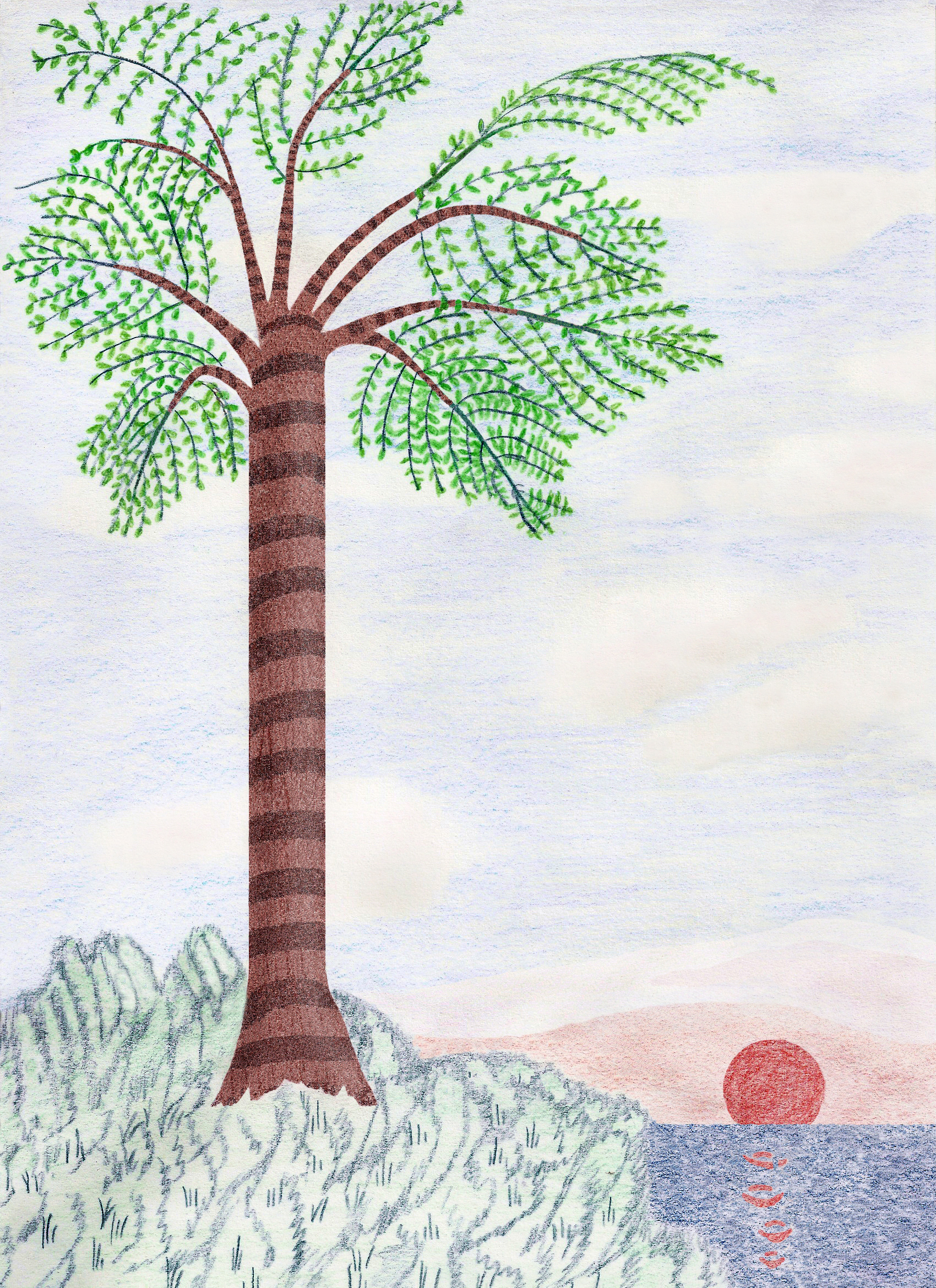
Medullosa seed-bearing tree is associated with the leaves called “Neuropteris”. Medullosa was a medium sized tree, often called seed-fern tree, reaching about 33 feet (10 meters) tall. It was not a true fern because it produced seeds, instead of spores. It only resembled fern trees and grew during the same era as the true fern trees, for example the “Psaronius” tree associated with the “Pecopteris” leaves. The leaves of Medullosa had many leaflets attached to a leaf stem which could grow quite large, as much as 10 feet (3 meters) long.
MEDULLOSA TREE CLASSIFICATION
Kingdom: Plantae
Clade: Traceophytes (Large group of vascular plants with transport system for nutrients and fluids)
Division: Pteridosperm(aphyta) (Extinct group of seed bearing plants)
Order: Medullosales (Plants with complex pollen organs and large fronds)
Family: Neurodontopteridaceae (Neuropteris Leaf)
Genus: Medullosa (Seed-bearing, fern-like plants)
For photos and descriptions of the Psaronius tree and its Pecopteris leaves that lived during the same time period of Medullosa go HERE , otherwise keep scrolling if you are viewing from the “Categories” list under “Tree Fossils”
All rights reserved © Fossillady 2026
 Fossil Lady