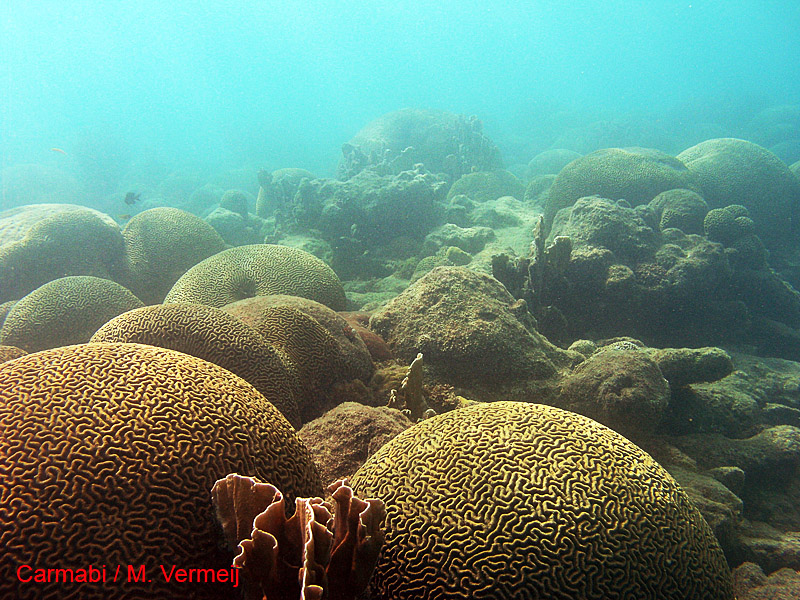
I have two species of coral from my collection that have earned the common name, Brain Corals, due to their convoluted surfaces, loosely resembling the physical brain and general spherical formations. Both species are slow growing, colony forms which may reach colossal sizes to a few meters in length and live for hundreds of years. The oldest know brain coral is 900 years old. Both species below grow in shallow parts of the Caribbean Sea, the Bahamas, Bermuda, Texas and Florida.

Boulder Brain Coral (Colpophyllia, natans) is a very large brain coral diplaying domed, hemispherical colonies that may exceed one meter (3 feet) across, but smaller colonies may be flat discs depending on location.
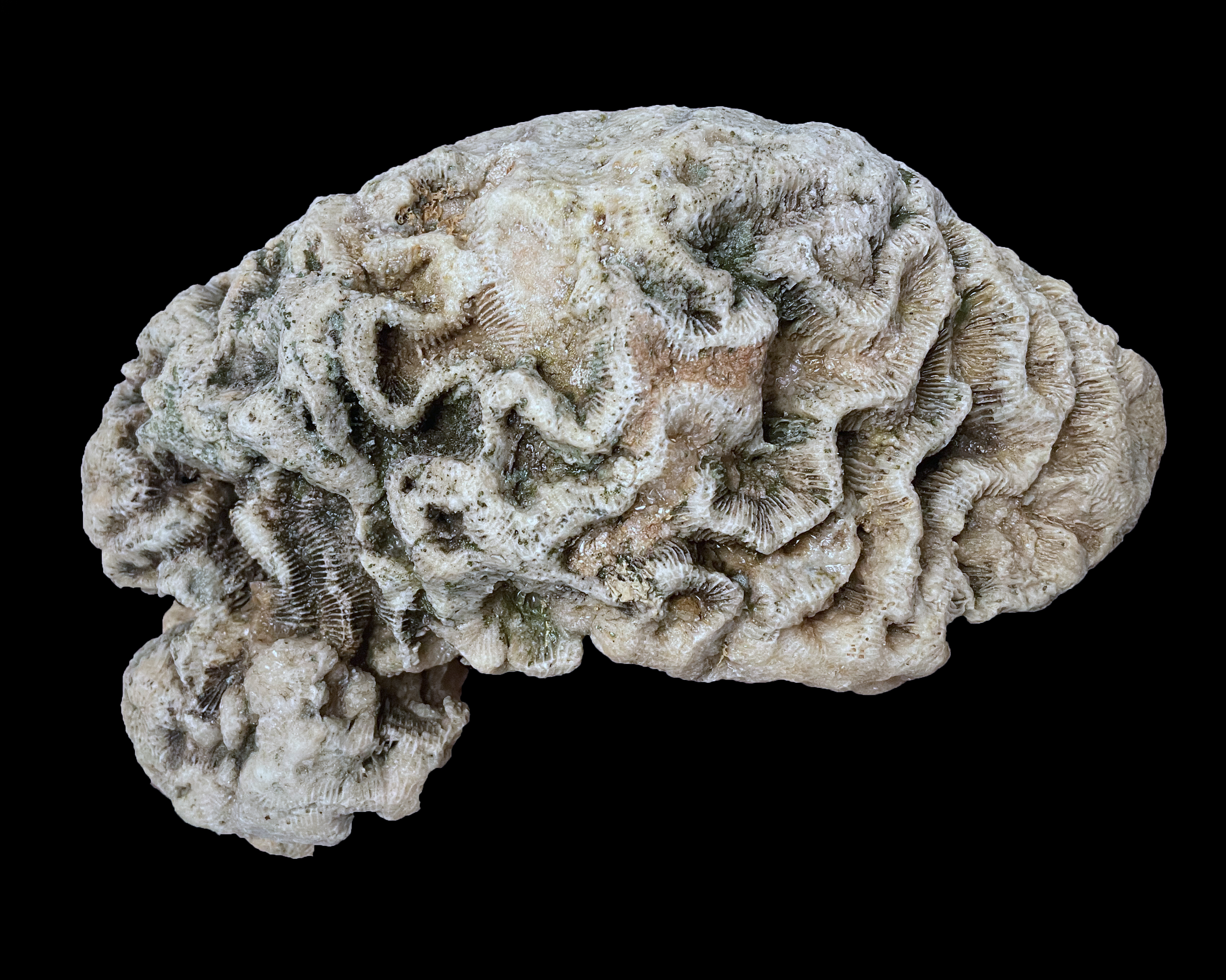
Boulder Brain Coral polyp valleys on the surface may stretch the entire width, or be subdivided into shorter series. The valleys and walls may be two centimeters broad distinguishing it from my Symmetrical Brain Coral (shown below) which display narrower valleys and walls.The walls of the Boulder Brain Coral commonly have fine grooves running along the raised walls. The Boulder Brain Coral also has a sharp break between the wall and the valley floor. The living Boulder Brain Coral colors vary with ridges being various shades of brown, and the valleys are varied colors from whitish, green, or tan.
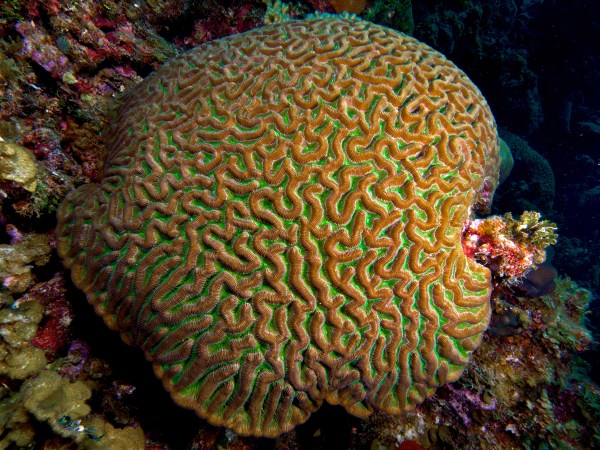
Symmetrical Brain Coral
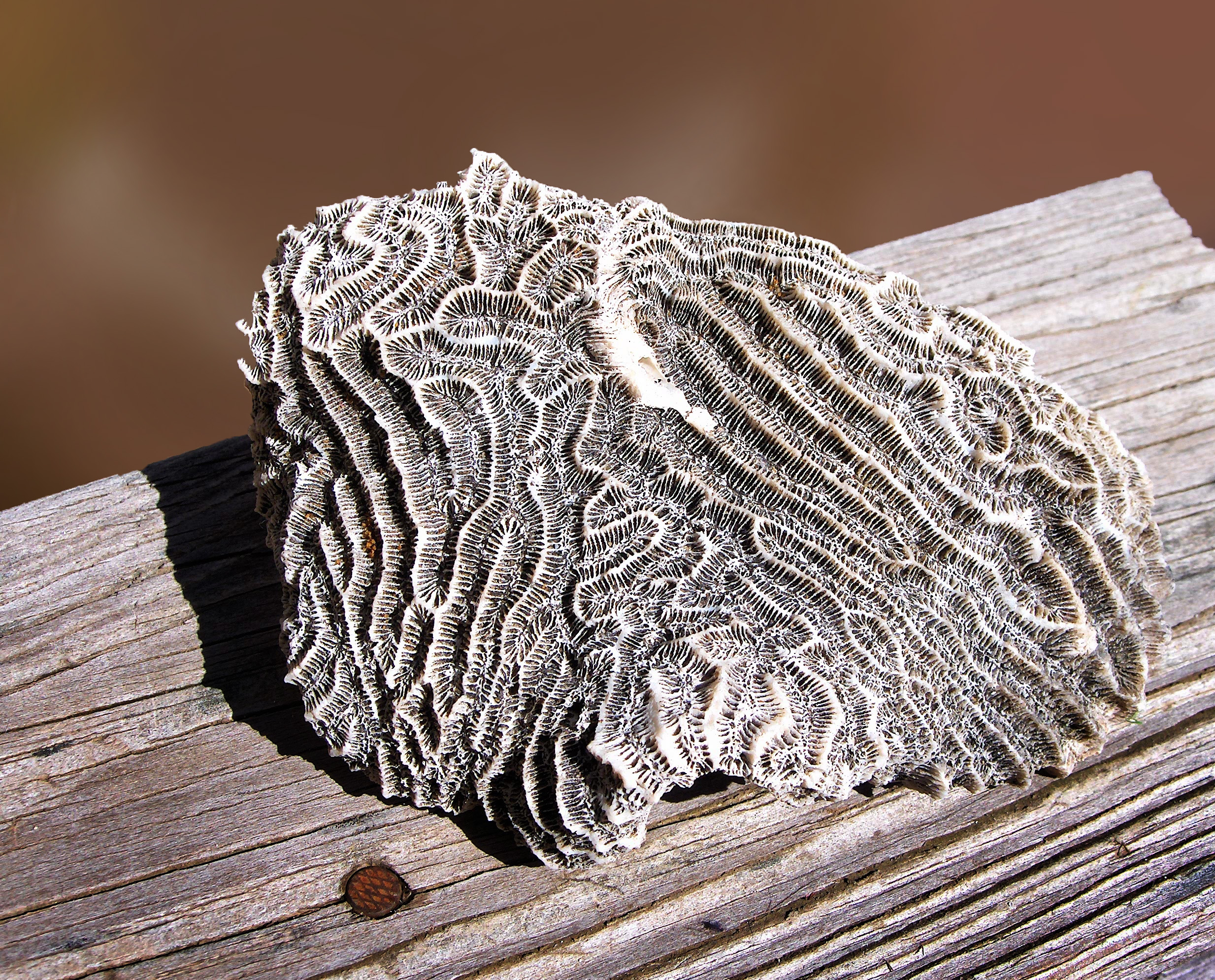
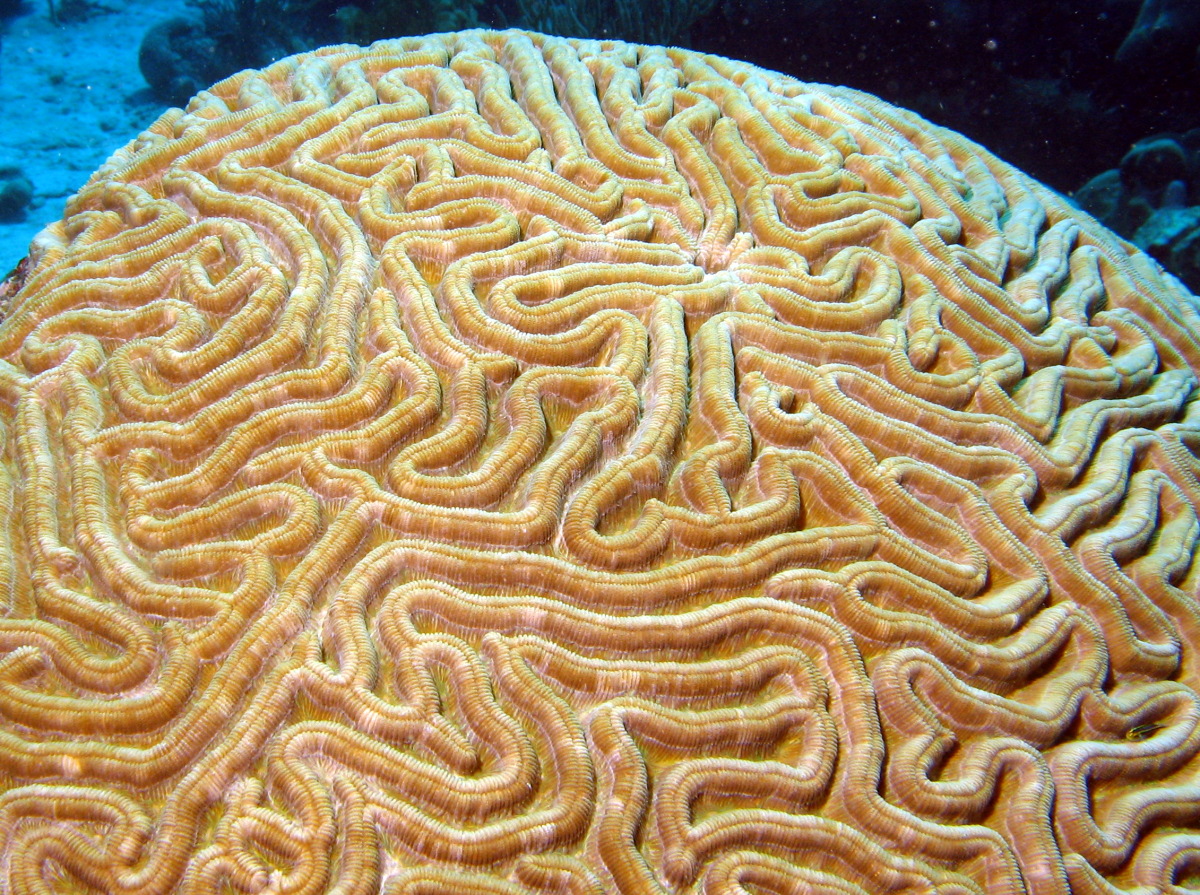
Symmetrical Brain Coral (Diploria, strigosa) forms flat plates or massive hemispherical domes up to 2 meters, (6 feet) in diameters. Sometimes, they will show a very narrow groove along the tops of the walls, which have sloping or rounded sides. Valleys may run straight for considerable distances or be highly irregular in direction. Living samples range in color from purplish brown to tan, grey or green, often with the groove floors being a contrasting paler color.
Diploria, strigosa is the most widespread of all the Diploria species, being more resistant to threats with the ability to thrive in muddy stretches of seabed where many other corals are not able to flourish needing clearer waters.
NOTE ABOUT SCLERACTINIA: The order “Scleractinia” includes all living corals today developing a stony, light porous skeleton. Scleractinians were fairly rare in North America until the Cretaceous, about 100 million years ago, when they first built reefs in Texas and Mexico. It wasn’t until the Pleistocene Period, about 2.6 million years ago, that reefs flourished widely where they do today.

Night Time Activity : Coral polyps, the living breathing jelly-like part of the animal, are found in single file in the valleys of this brain coral’s convoluted ridges. They are normally contracted during daylight expanding at night to catch micro-bits of food drifting by.
BRAIN CORAL CLASSIFICATION
- Kingdom – Animalia
- Phylum – Cnidaria (means stinging cells)
- Class – Anthozoa (means flower animal)
- Order – Scleratinia (stony skeleton)
- Family – Faviidae (spherical group with grooved surfaces)
- Genus – Colpophyllia (large-grooved) / Diploria (grooved)
- Species – strigosa (thin, narrow, well-defined ridges) / natans
For more interesting facts, photos and identification of Florida, Gulf and Atlantic Coast Corals scroll to “Categories” sidebar under “Corals Florida, Atlantic and Gulf Coasts.
© 2026 Fossillady
 Fossil Lady