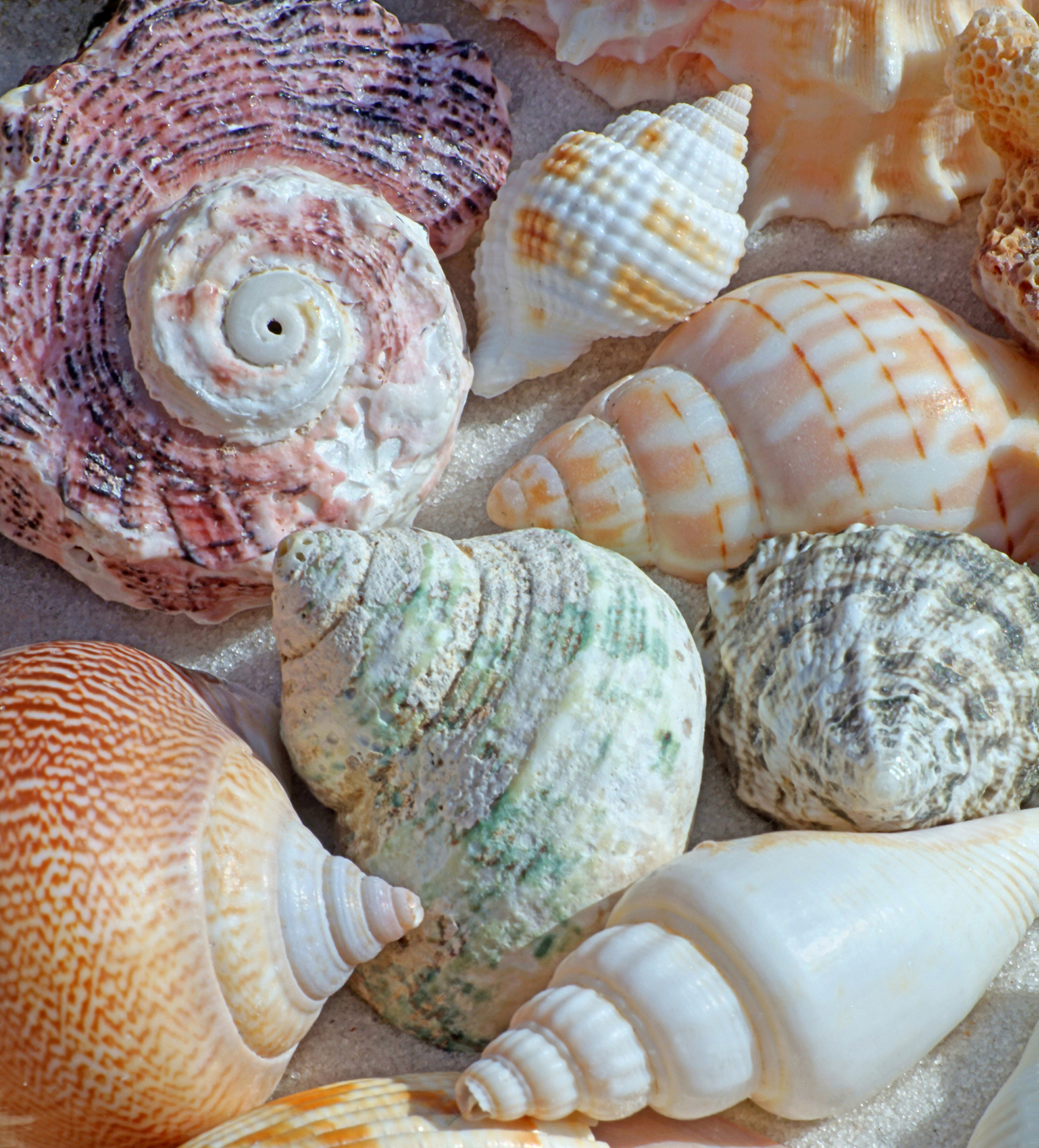
Univalve Seashell ID and Facts (From Tritons, Ceriths, Turbans and more)

Everybody Loves Seashells – If you have ever walked the beaches along the Atlantic or Pacific coasts, you have likely come across various seashells, lovely and irresistible to pick up! Follow along for interesting facts and identification guidlines for those seashells that filled you with wonder!
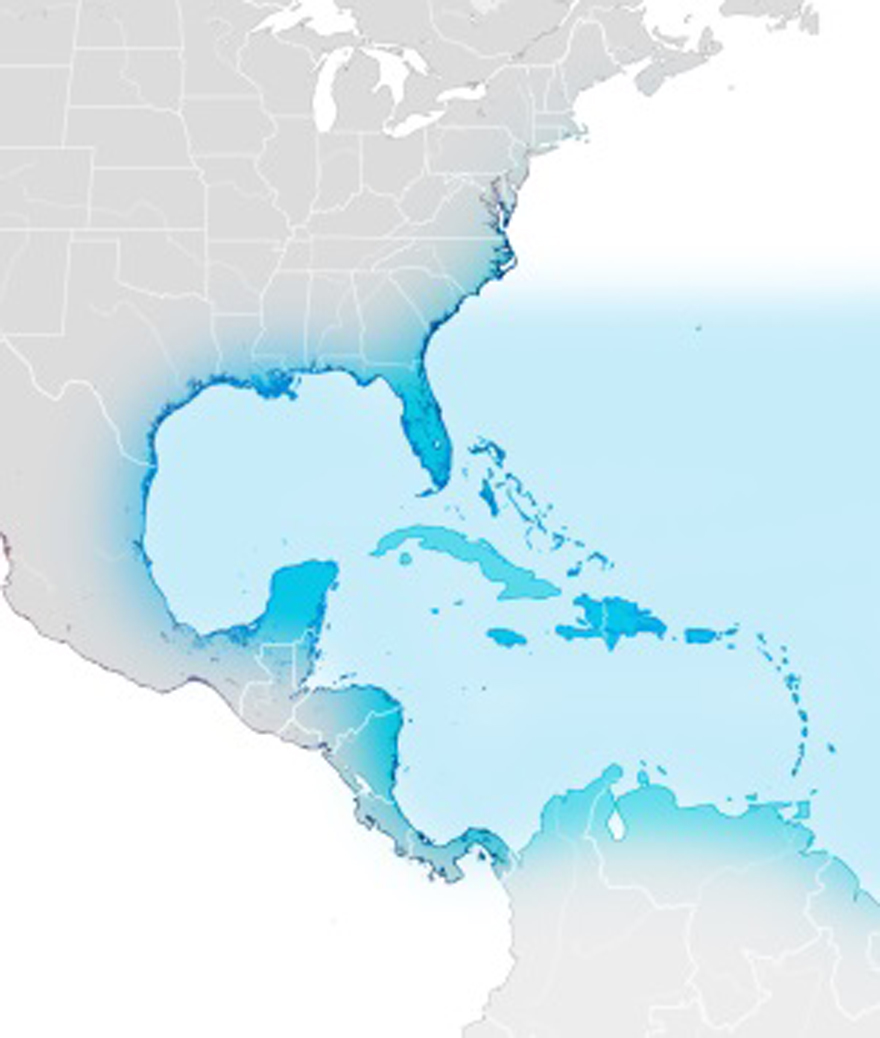
Tropical-Subtropical Atlantic Coastal and Gulf Coast Regions

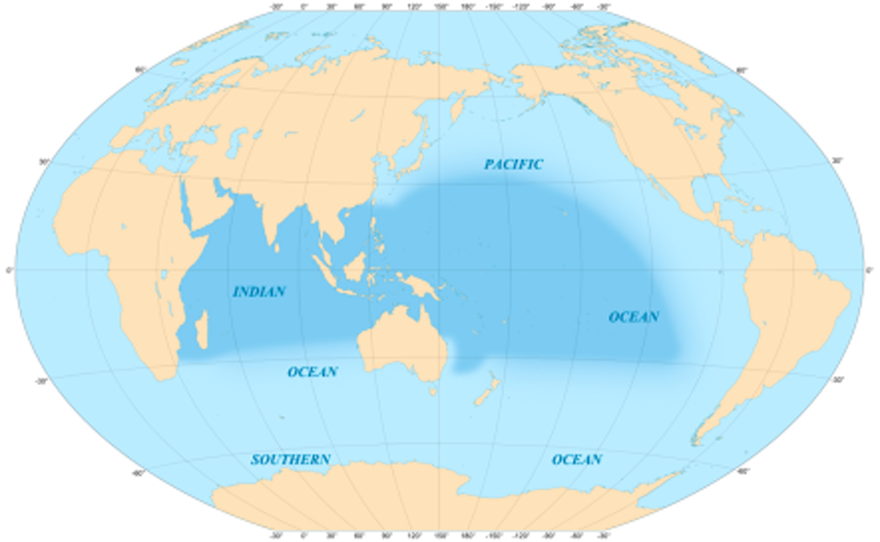
The univalve seashells profiled in this photo essay can be found in the subtropical to tropical Atlantic coastal regions bordering the USA, the Caribbean, South America and the Gulf of Mexico or the Indo-Pacific coastal regions bordering India, China, Japan, Australia, Indonesia, South Korea, Russia and the USA.  
Indo-Pacific Coastal Regions

What Is a Univalve? Univalves, otherwise known as gastropods or snails (sea snails), possess valves (shells) characterized by a single shell, typically spiraled.  When identifying univalve shells, location is important along with the obvious features such as shape, textures, markings, and color. Size is important as well, but keep in mind that sometimes you may have found a juvenile that hasn’t reached full size.
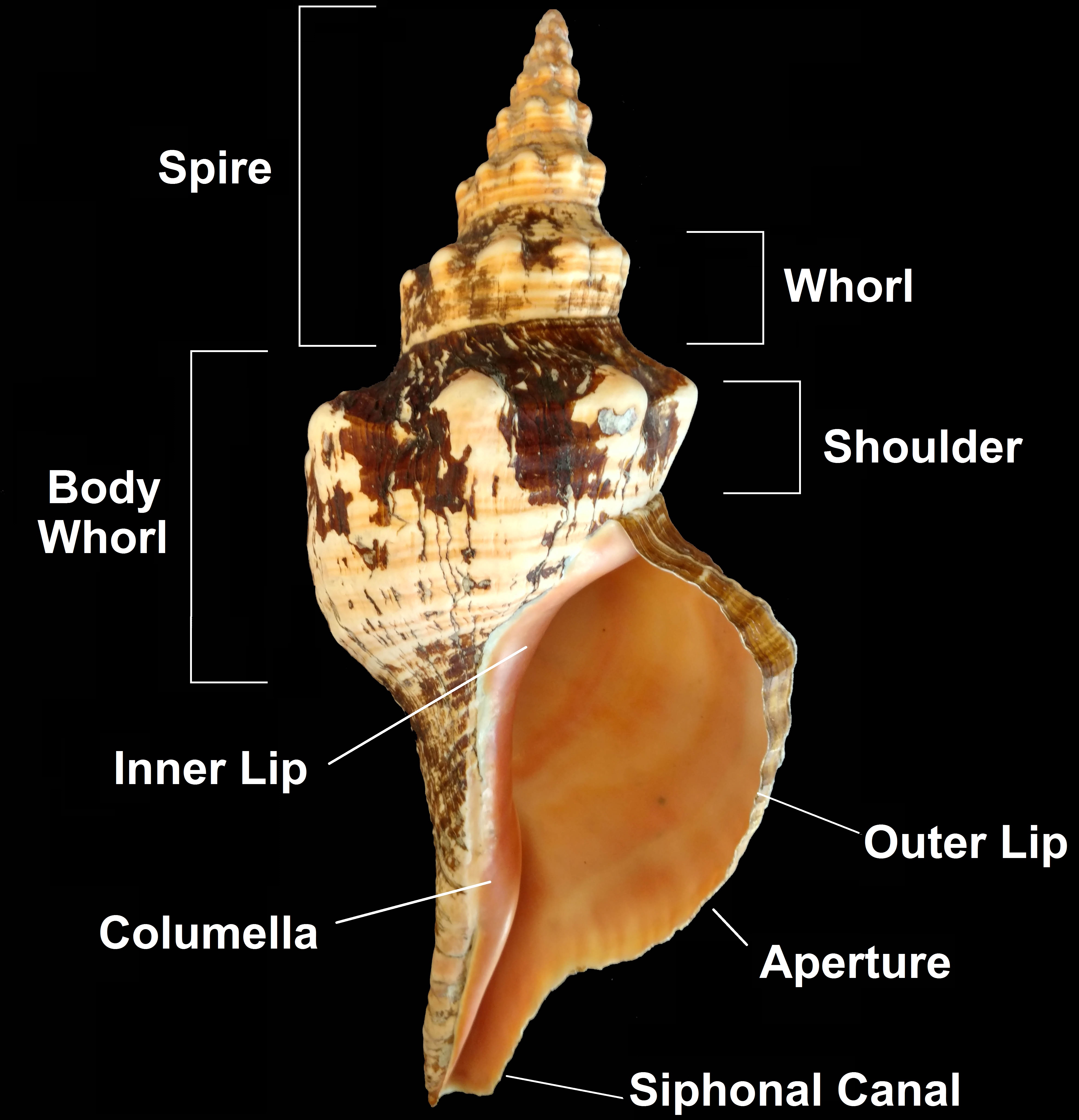
Univalve Identification and Facts in the following order:

  • 1. Triton’s Trumpet (Giant Triton)
  • 2. Girdled Triton
  • 3. Banded Tulip
  • 4. Cumings Cerith
  • 5. Florida (Dark) Cerith
  • 6. Adam’s Miniature Cerith
  • 7. Common (Atlantic) Auger
  • 8. Boring Turret
  • 9. Rough Turban
  • 10. Wavy Turban
  • 11. Gold Mouth Turban
  • 12. Silver Mouth Turban
  • 13. Delphinula “Dolphin” Snail
  • 14. Florida Voluta
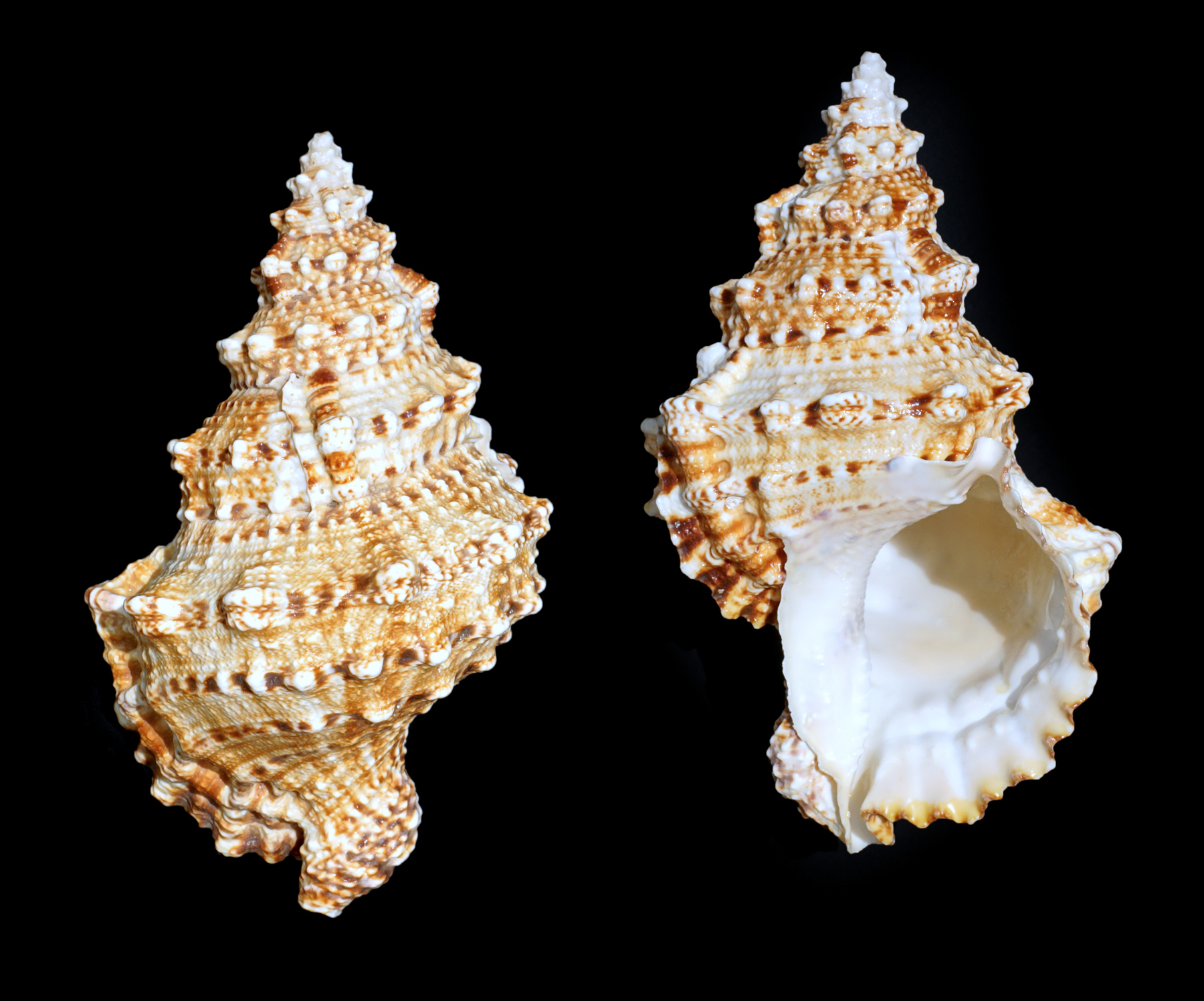
Tritons Trumpet (Giant Triton) Seashells (Exterior – Interior Aperture)

    1. Triton’s Trumpet “Giant Triton” (Charonia tritonis)

    • The Triton’s Trumpet, also called Giant Triton, is a large species of sea snail; one of the biggest mollusks in the coral reef
    • It is named (Triton) for the son of the Greek god of the sea (Poseidon).
    • It is a decorative treasure sometimes modified to a trumpet, such as the Japanese “horagai.”
    • It’s one of the few animals that feed on the Crown of Thorns Starfish, a large and destructive species having killed extensive areas of coral on the Great Barrier Coral Reef of Australia. This Triton has a reputation for tearing apart the starfish to pieces with its file-like radula.
    • It’s a protected species in Australia and other countries such as India but is illegally traded and found in shops around the world and on the internet for sale!
    • .
    • Size: Up to 2 ft, 60 cm (the sample from my collection is a juvenile measuring 6 in (15 cm)
    • Habitat: Primarily reside in shallow coral reefs, rocky shores, and lagoons, often found on sandy or hard bottoms from the low intertidal zone down to depths of roughly 650 feet (200 meters) 
    • Range: Widespread in the Indo-Pacific from the Red Sea to Japan, New Zealand, Australia, the Mediterranean from East Africa to Pacific Hawaii
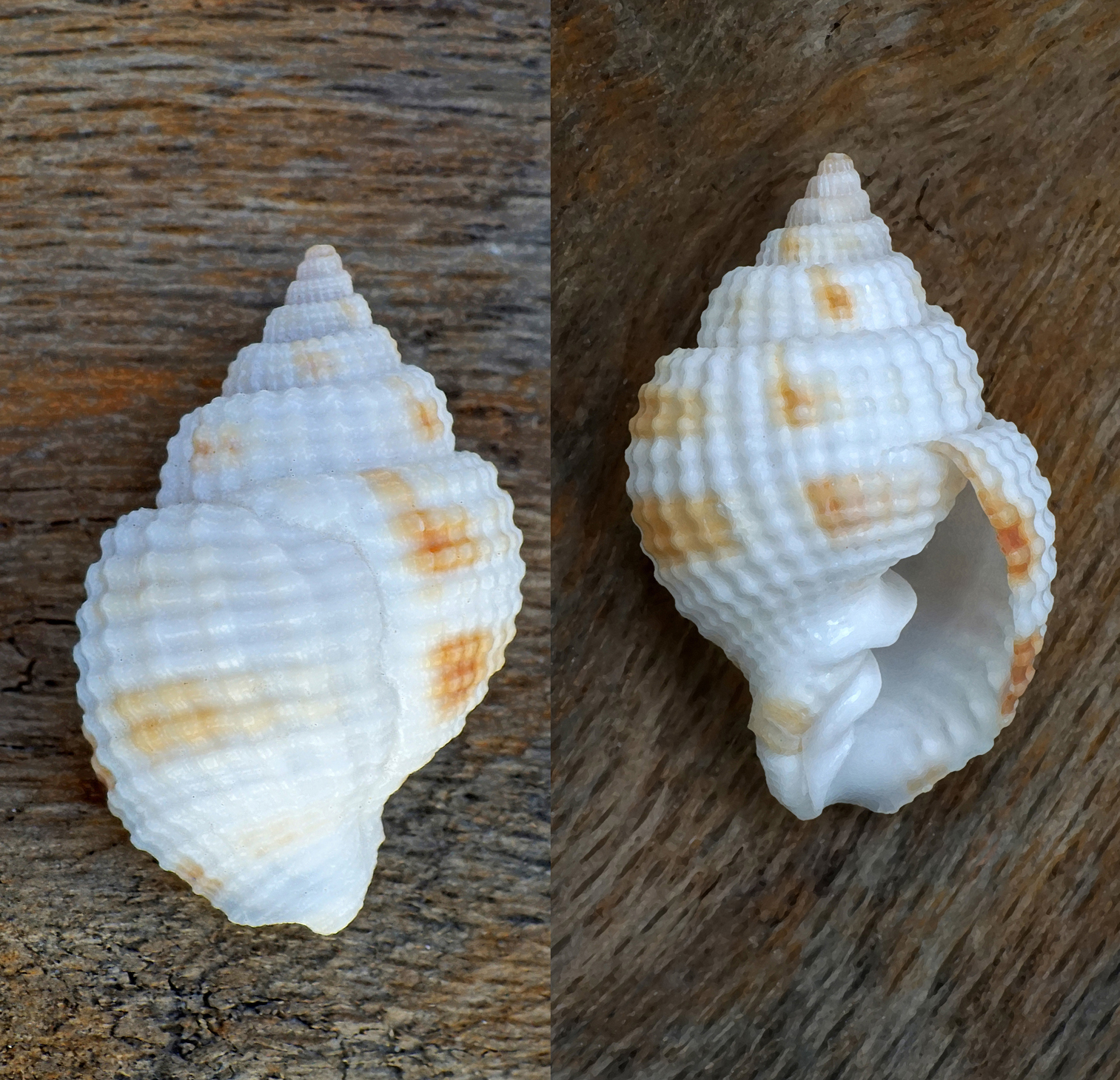
    Girdled Triton Seashell (Exterior-Interior Aperature)

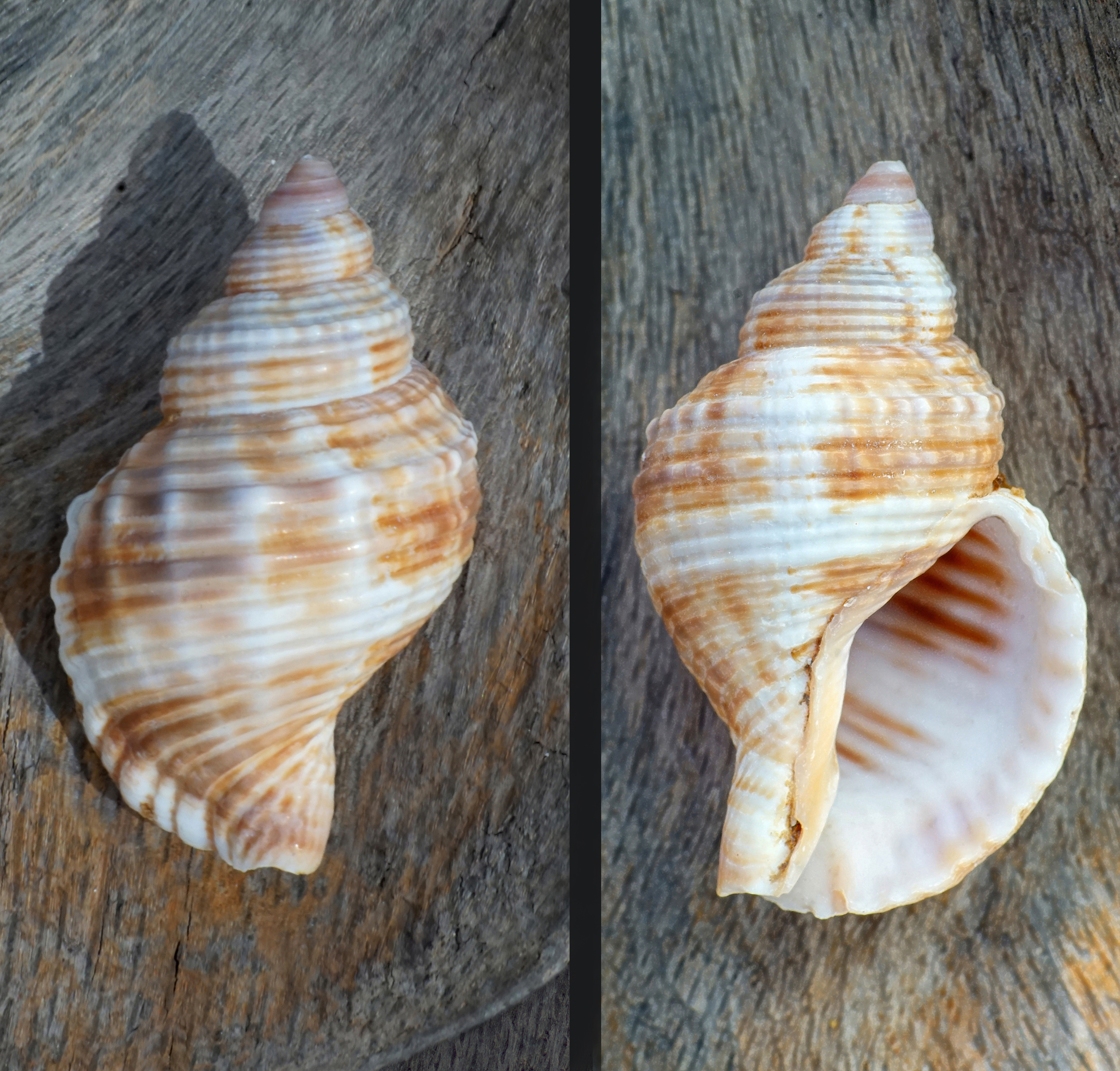
    2. Girdled Triton (Linatella caudata)

    The Girdled Triton is shaped with small spines arranged along deep cut ribs. The tail is turned to one side. The color varies with white background, light-gray and brownish markings, or rarely greenish

    • Size: Up to 2 3/4 in, 7 cm
    • Habitat: often found on soft substrates such as sand and mud, but also in seagrass meadows at depths ranging from shallow intertidal zones to over 300 ft (100 meters) with a common range from 65-650 feet (20 – 200 meters)
    • Range: This species is very widespread (but uncommon) from the Atlantic coast of South Carolina to Brazil, across to the Canary Islands. It is also present in European waters in the Mediterranean Sea, in the Red Sea, and in the Indian Ocean along Tanzania and in the Indo-Western Pacific as far north as southern Japan.
    Banded Tulip Seashells (Exterior – Interior Aperture)

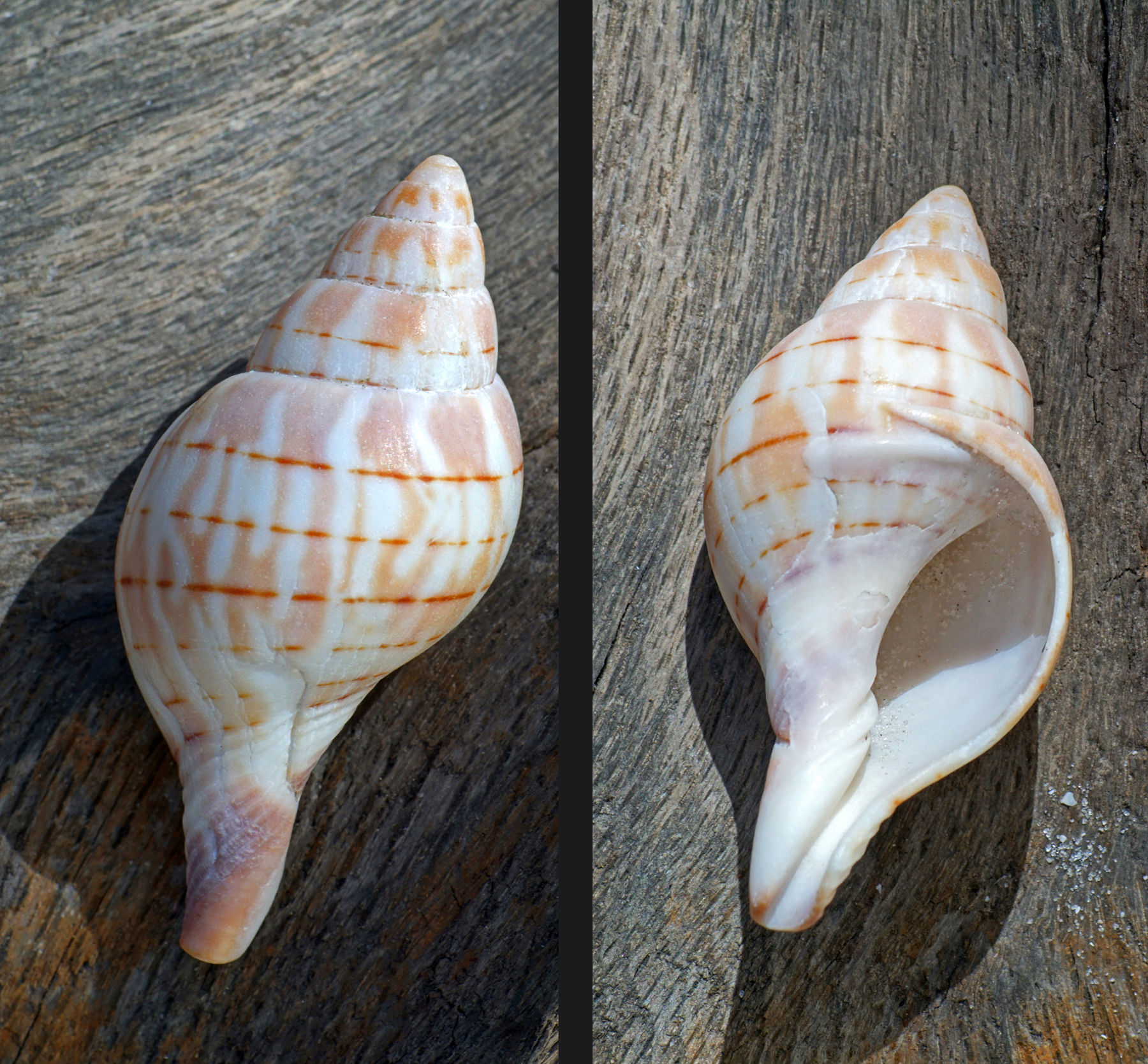
    3. Banded Tulip (Cinctura lilium)

    The Banded Tulip shell does not grow as large as the true tulip’s “Fasciolaria tulipa” which is often confused with its cousin. The color pattern is also different, the banded tulip shows color splotches that can be redder to tannish color (bluish in rare areas) and the stripes that give the banded tulip its name are much farther apart. Both species are from the same family “Fasciolaria”. Both species are shaped like a spindle that opens in the middle and forms a pointy spire on the ends. They prey on other mid-size gastropods.

    • Size: 3-4 in (7-10 cm)
    • Habitat: Prefers sandy or muddy bottoms, seagrass beds, and inlets in depths ranging from 2 -150 feet (0.6 – 46 meters) 
    • Range: North Carolina, south to Florida and the Caribbean, west to the Texas Gulf
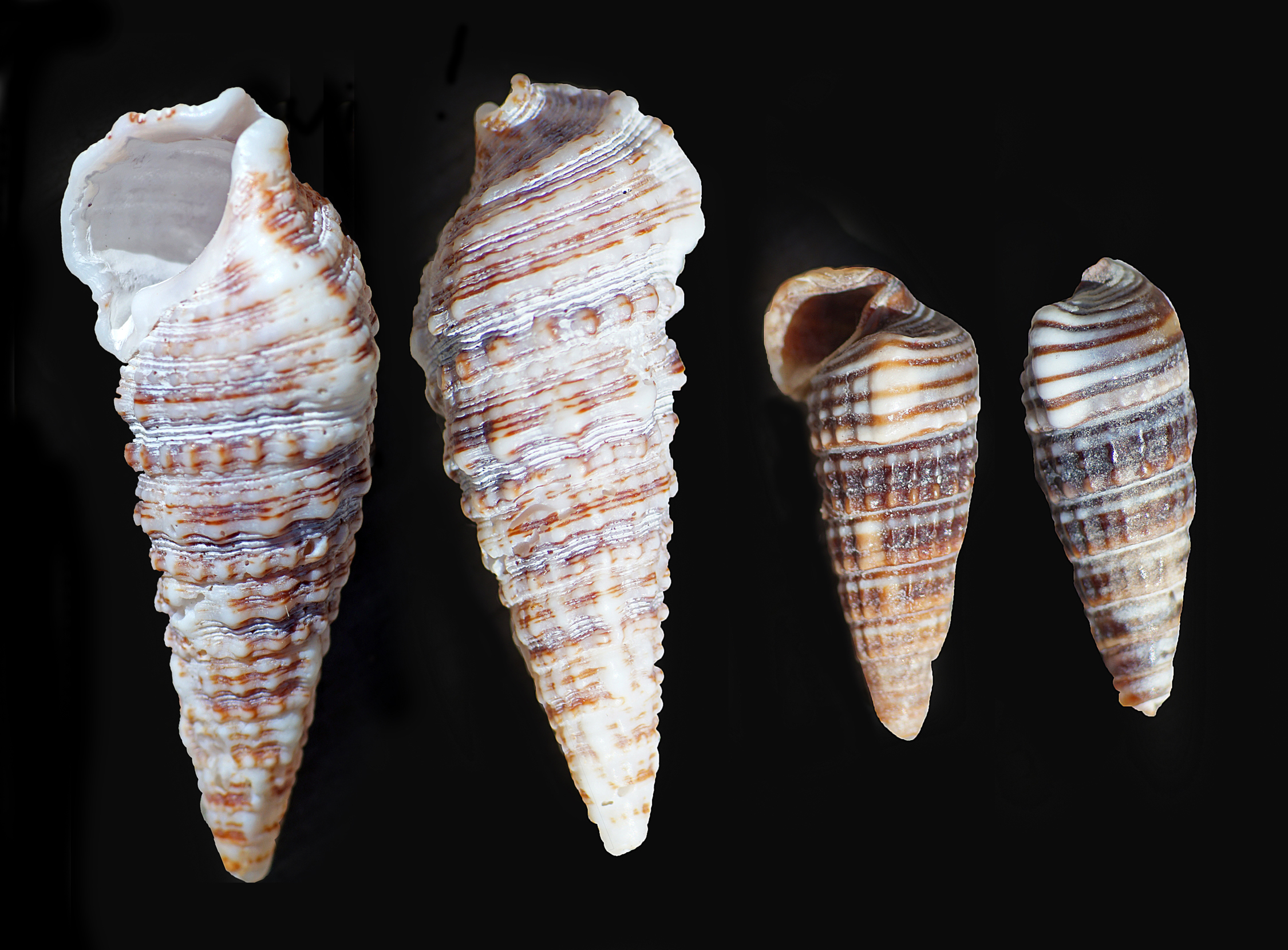
    Cumings Cerith Seashell (Exterior – Interior Aperture)

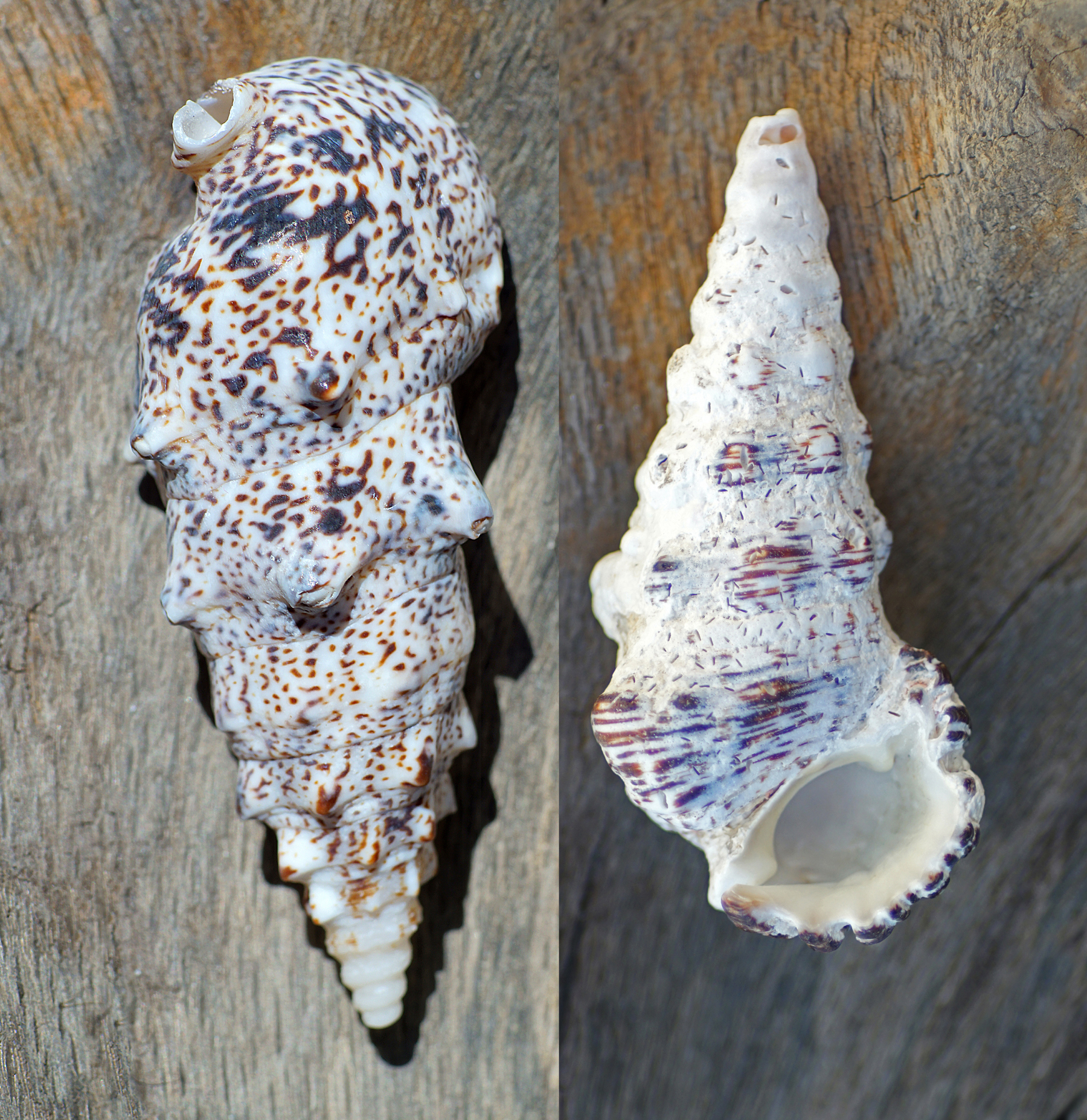
    4. Cumings Cerith (Pseudovertagus aluco)

    The Cummings Cerith shell shows prominent knobs, is light colored with dark brown speckled blotches. One may find Cetiths of all species scurrying around in shallow ocean lagoons, but look more closely, there may be a hermit crab occupying it, so when you collect the long slender Ceriths, make sure they are empty of living creatures. About 30 species of Ceriths are found in North American coasts and approximately 42 species are found along coasts of the Indo-Pacific regions in warm or temperate waters. They feed mostly on waste matter or algae and people like to put them in aquariums as cleaners.

    • Size: Up to 3 1/2 inches (9 cm)
    • Habitat: Soft sea beds, seagrass meadows, mangrove forests, rocky shores, and mudflats. They are found in intertidal and subtidal zones, often burrowing into or grazing on top of sand, mud, and algae-covered rocks. 
    • Range: Indo-West Pacific regions
    Florida Cerith (Dark Cerith) Adult and Juvenile Seashells (Exteriors – Interior Apertures)

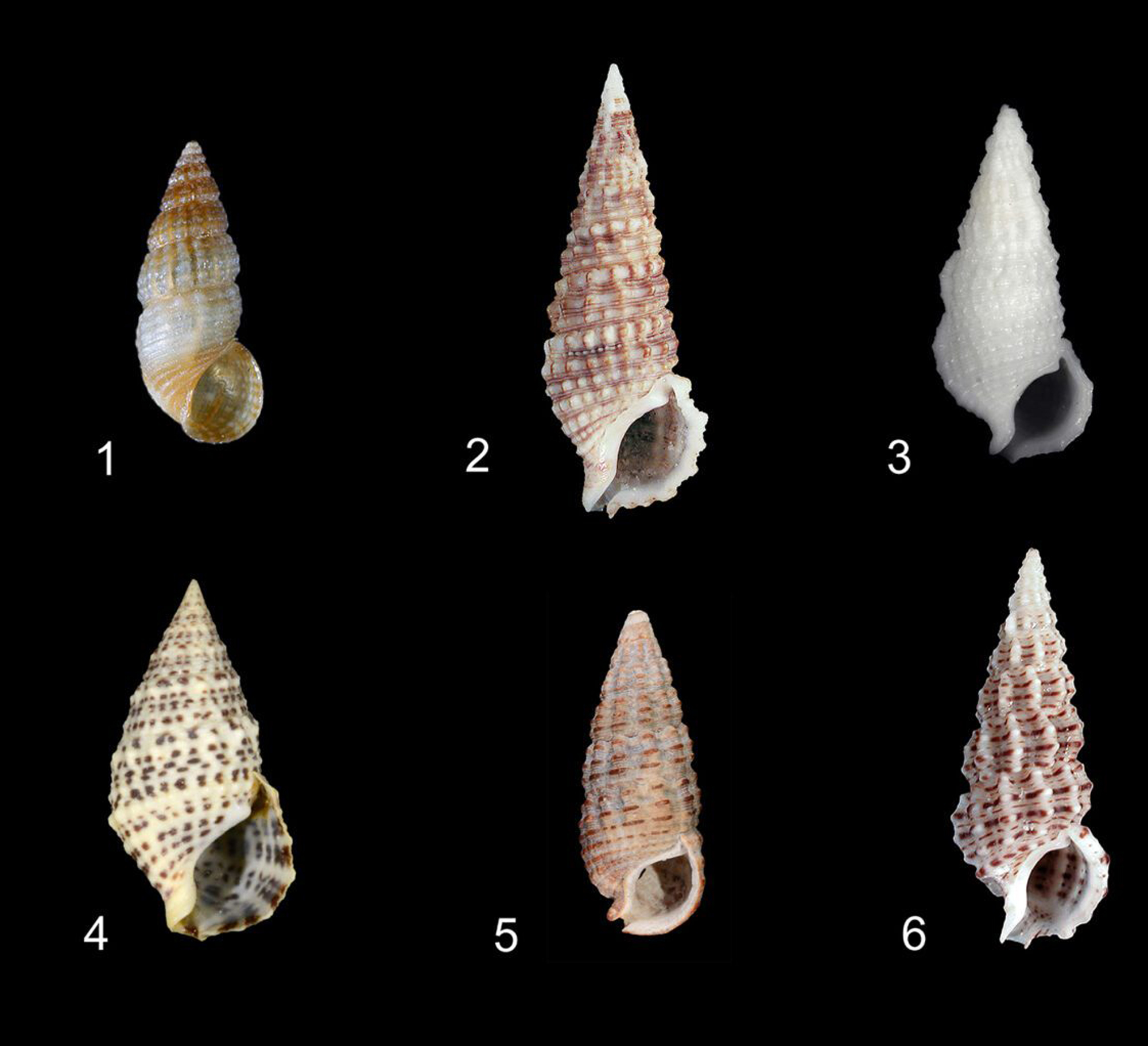
    5. Florida Cerith “Dark Cerith” (Cerithium atratum)

    The Florida Cerith (Dark Cerith) shell diplays a ribbed beaded texture with distinct varied brown stripping and the animal is a rather small species of gastropods.
    Florida Ceriths (#2 Dark Cerith) Source
    • Size: 1.5 in (4 cm)
    • Habitat: Soft sea beds, seagrass meadows, mangrove forests, rocky shores, and mudflats. They are found in intertidal and subtidal zones, often burrowing into or grazing on top of sand, mud, and algae-covered rocks. 
    • Range: North Carolina to Florida, west to Texas
    Adam’s Miniature Cerith Seashell

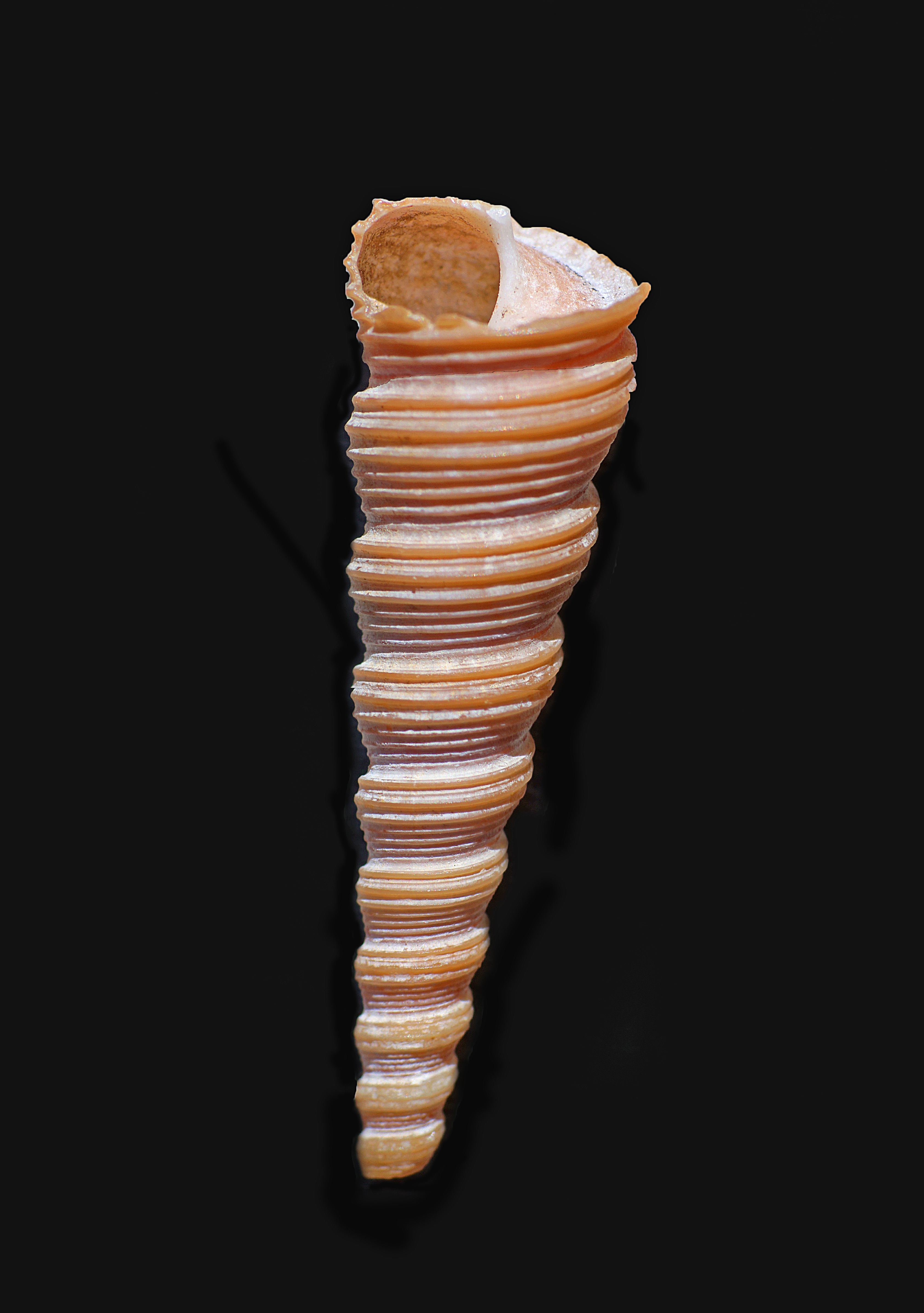
    6. Adam’s Miniature Cerith (Seila adamsi)

    The Adam’s Miniature Cerith as the name suggests, is a rather small slender conical shell with flat whorls sculptured with three strong, spiral cords distributed evenly on whorls. It is typically colored orange to dark brown. It is named named in honor of American conchologist and educator, Charles Baker Adams (1814-1853). 

    • Size: 1/2 in (1.2 mm)
    • Habitat: Soft sea beds, seagrass meadows, mangrove forests, rocky shores, and mudflats. They are found in intertidal and subtidal zones, often burrowing into or grazing on top of sand, mud, and algae-covered rocks. 
    • Range: Massachusetts to Florida, south to the West Indies
    Common or Atlantic Auger Seashells (Exterior – Interioir Aperture)

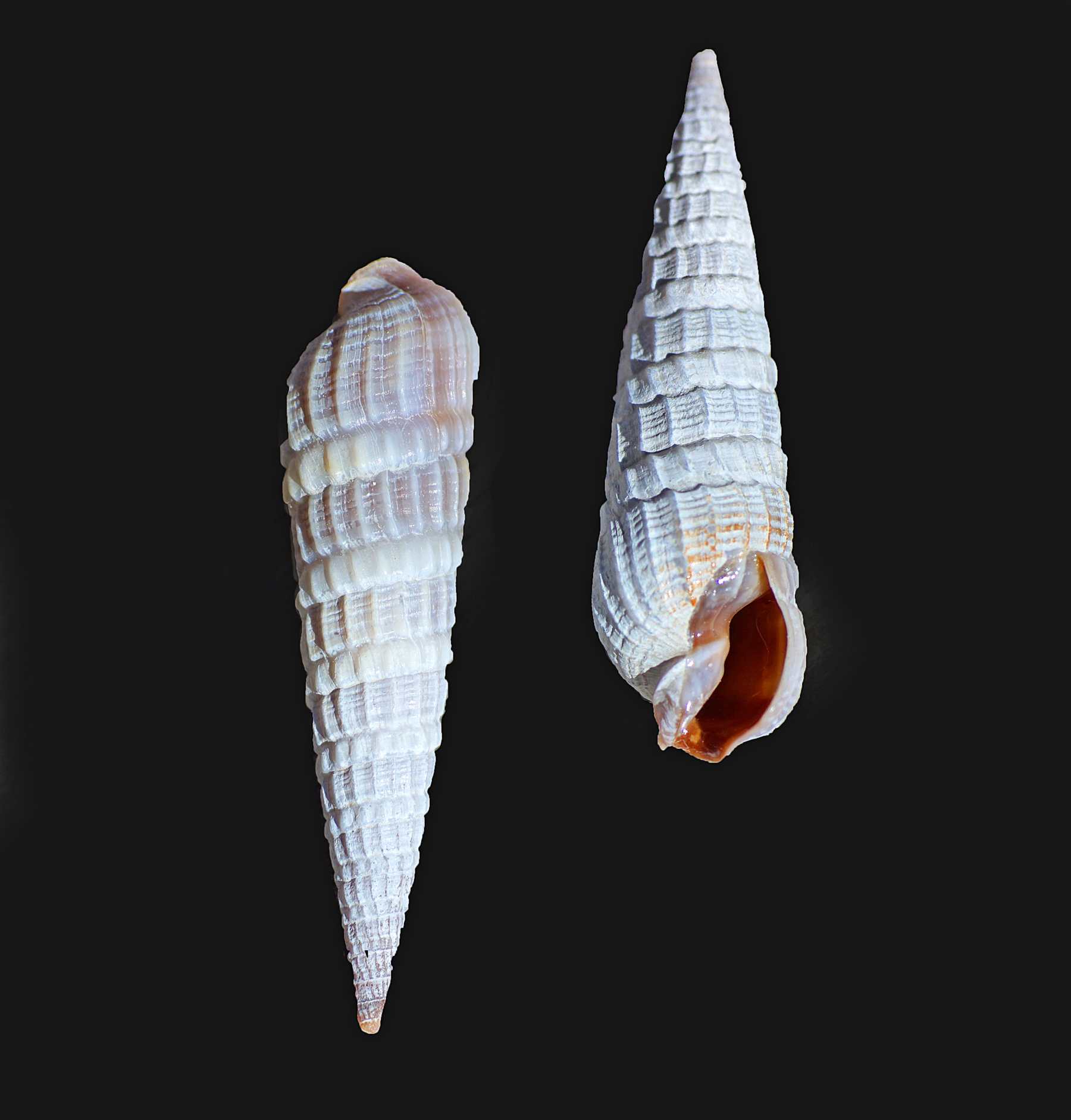
    7. Common “Atlantic” Auger (Terebra dislocate)

    The Common or Atlantic Auger, also called Eastern Auger diplays a shell that can be colored from gray to tannish-white. They have a slender triangular shape, with a small aperture and a very long spire.

    • You wouldn’t want to pick up a live auger because they have venomous, stinger-like teeth to subdue their prey, and the flesh may also be poisonous depending on the species.
    • The Augers are relatives of the Cones. This is the most abundant of the four species of auger snails living on the sandy shores of southwest Florida.
    • During mating season, they may be observed in populated swarms.
    • They feed on small crustaceans, clams, and worms.
    • Size: Up to 2 1/2 in (6 cm)
    • Habitat: Muddy or sandy flats in intertidal shallows to depths of  25 feet (8 m)
    • Range: Florida to Texas
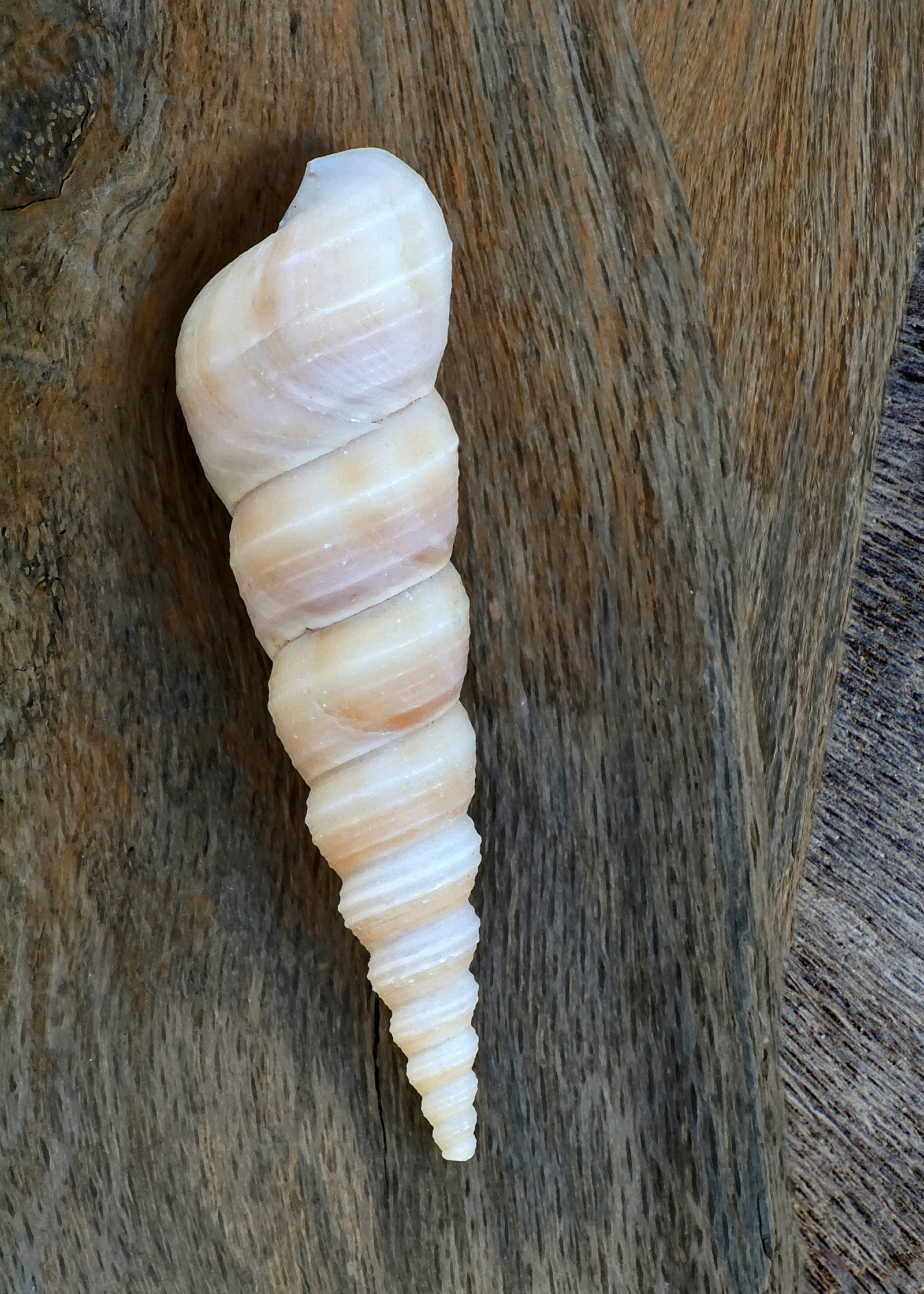
    Boring Turret Seashell

    8. Boring Turret (Turritella acropora)

    The Boring Turret snail may vary from whitish tan with pinkish and orange-brown irregular mottling. Adults may have up to 15 whorls that bulge with fine concentric lines.

    • Are not as commonly found because they tend to remain offshore farther in deeper waters than most.
    • The Turritelline gastropods are moderately diverse and abundant.
    • Typically, filter-feeding on microscopic organisims found globally, often in high-productivity environments. 
    • Size: Up to 4 in (10 cm)
    • Habitat: Offshore sub-tidal, sandy, or muddy bottoms, often at depths ranging from 18 ft to 2400 ft (5.5 to 755 meters).
    • Range: North Carolina, Florida, much of the Gulf Coast, south to Cuba and the Bahamas.
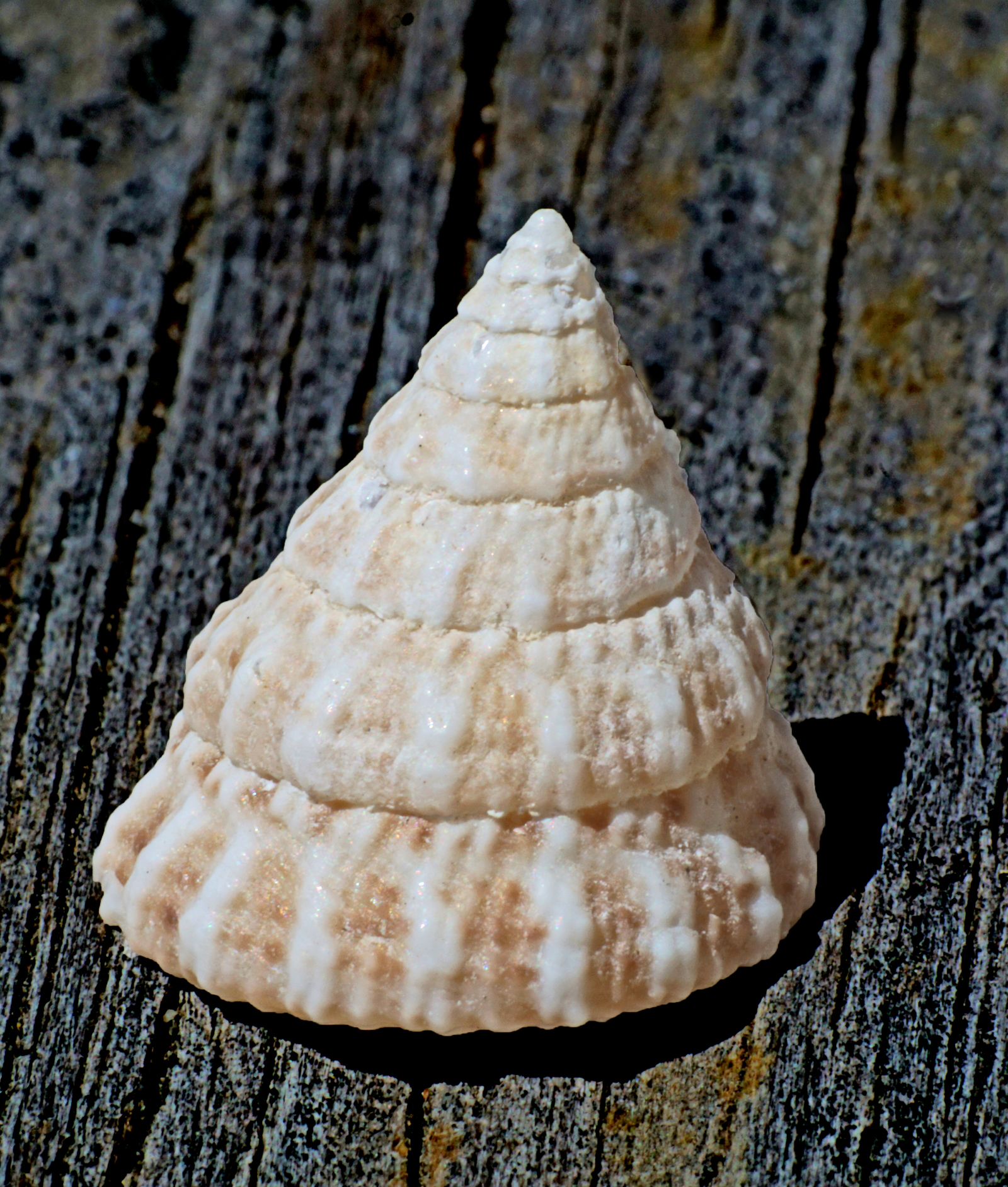
    Rough Turban Seashells (Exterior – Interior Aperture)

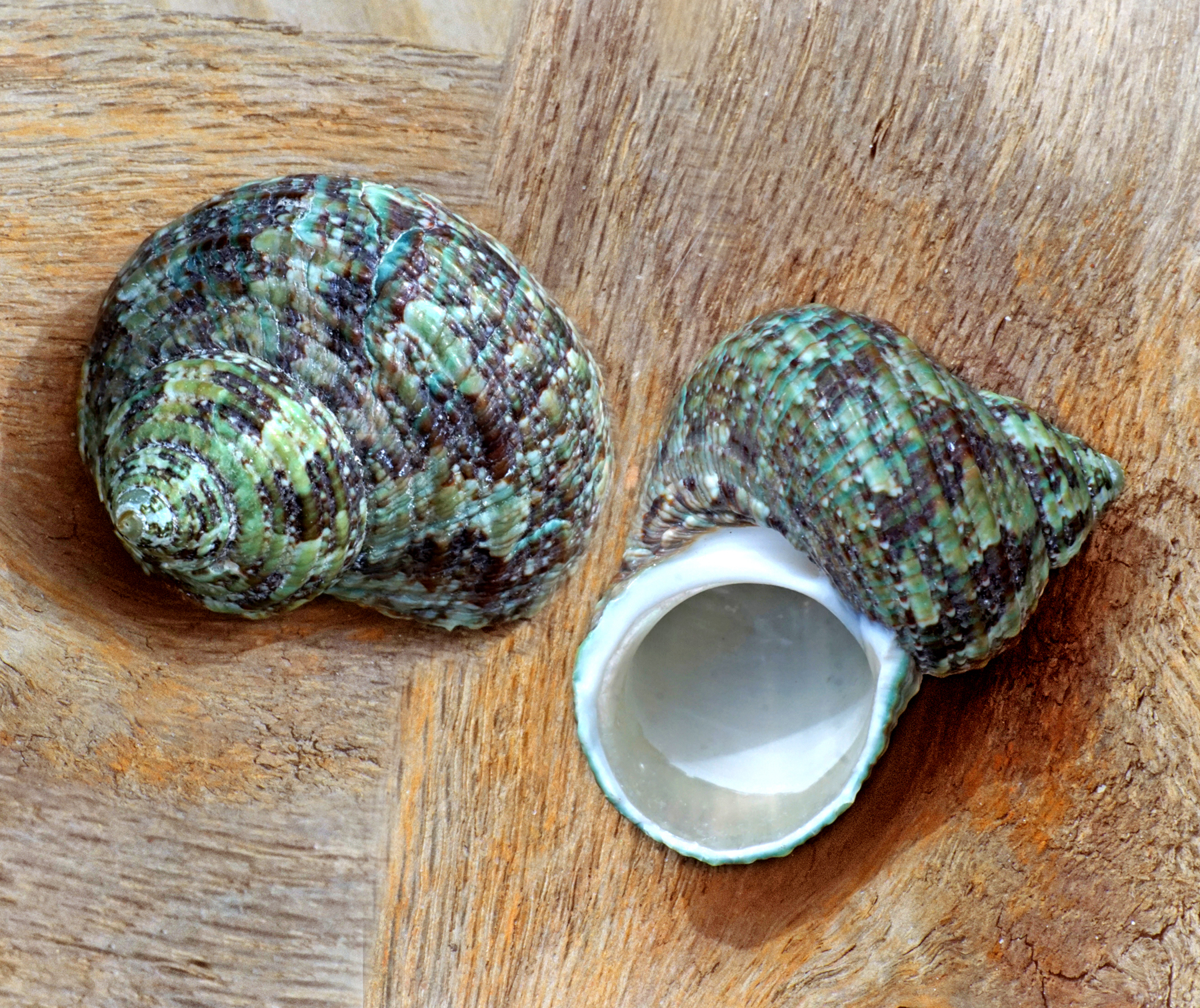
    9. Rough Turban (Turbo setosus)

    The Rough Turban is typically green with brown patches and a pearly white aperture. The texture is beaded, and the top spire is acute and pointed. As with all turbo shells, they have round to semi-circular apertures with inflated, thick shells topped with swirling spires, giving them the appearance resembling a turban (a wrap-around headdress).

    • Turbo Snails are found in tropical regions around the world. They were in existence as early as the Upper Cretaceous period approximately 100 million years ago.
    • Empty turbo snail shells are a favorite choice of hermit crabs and favorites among collectors and crafters who love to polish them beautifully and put them on the market.
    • Most young snails feed on algae, while adults feed on seaweed.
    • They prefer to avoid bright light and are often found in shaded, damp areas to minimize water evaporation.
    • They can tolerate a wide range of temperatures.
    • Turbo or turban snails are known for their defensive chemical receptor mechanism enabling them to sense predators like sea stars and crabs, often leading to rapid flight responses, such as fleeing to higher ground, dropping into deeper water or detaching to float away.
    • Size: Up to 3 in  (8 cm)
    • Habitat:  Intertidal rocky shores, coral reefs, and seaward platforms, often in tropical to subtropical waters. They can be found under stones, in crevices, or in reef rubble in depths as deep as 90 ft (30 m) deep.
    • Range: Indian Ocean east to the northern shores of Australia
    Wavy Turban Seashells (Exterior – Interior Aperture)

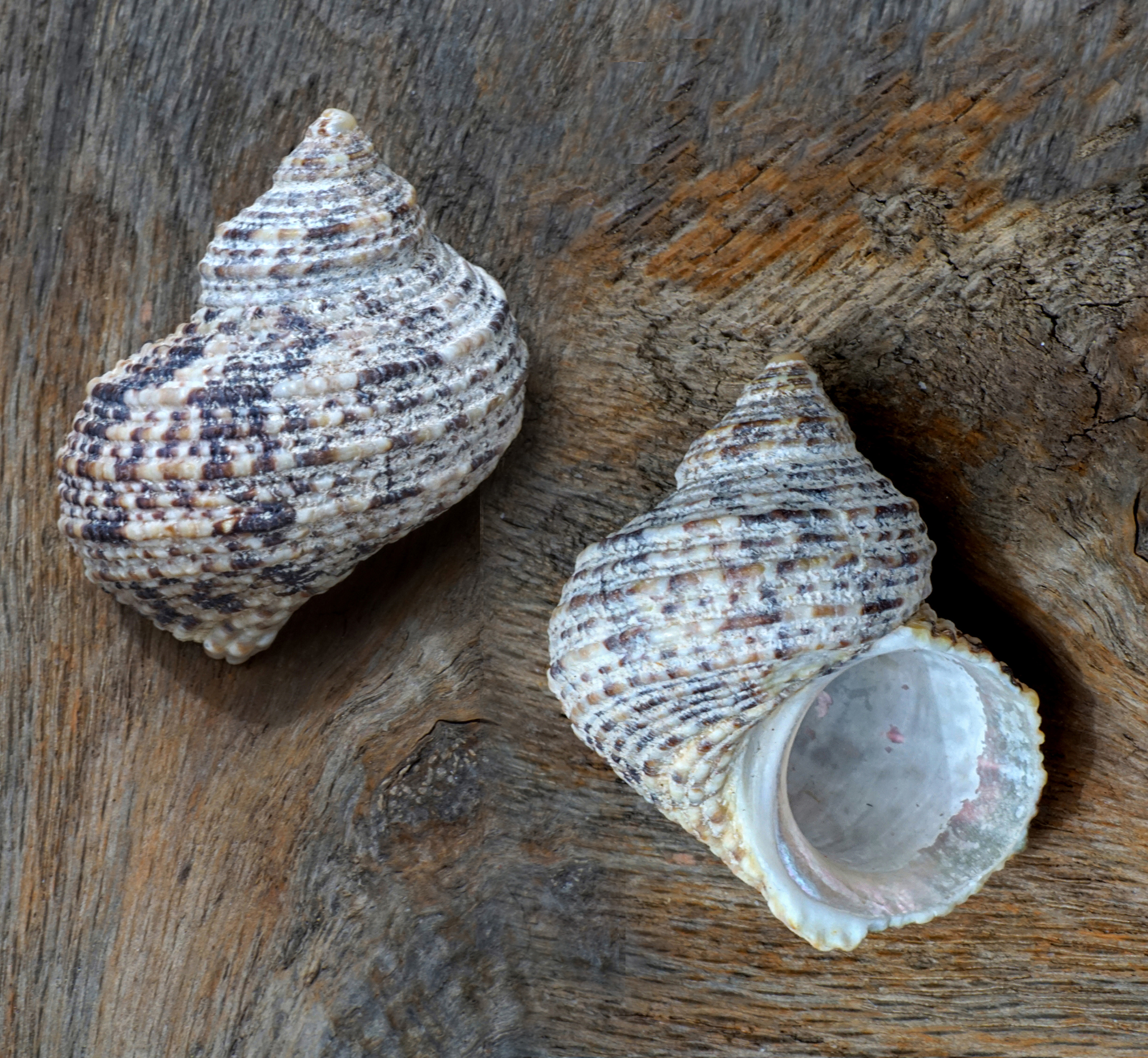
    10. Wavy Turban (Turbo fluctuosus)

    The Wavy Turban varies in color from olive green, brown, or grayish with varying patterns and displaying a white aperture shaped round to semi-circular and the main body is inflated, bulbous and thick topped with swirling spires, giving them the appearance resembling a turban (a wrap-around headdress). The Wavy Turbans are herbivores frequently populating areas with abundant algae and kelp, often in areas with strong wave action. 

    • Size: Up to 3 1/2 in (9 cm)
    • Habitat: Rocky reefs, kelp beds, and shallow rocky shores from intertidal zones to depths of 250 feet (76 meters)
    • Range: Pacific Ocean from Southern California farther south to the western Mexican coastline and Peru, further west to Galapagos Islands
    Gold Mouth Turban Seashells

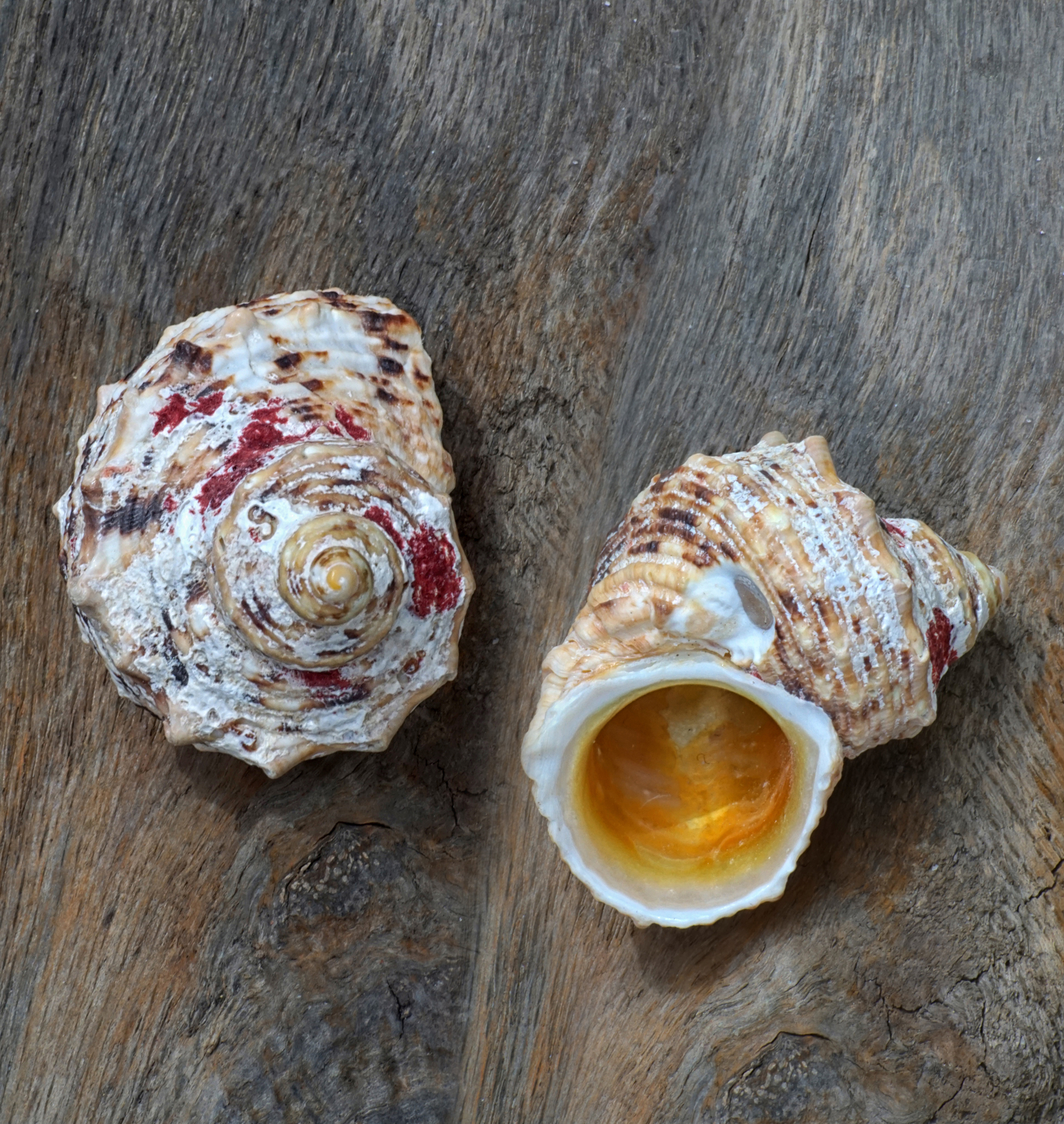
    11. Gold Mouth Turban (Turbo chrysostomus)

    The Gold Mouth Turban displays a rough textured shell. The color is a patterned brownish or white, marbled with chestnut to red flecks. Of course, the best way to be sure of its identity is its richly golden, shiny aperture. It is often polished and sold in stores or used in crafts.

    • Size: Up to 3 in (8 cm)
    • Habitat: Shallow, intertidal rocky areas and coral reefs, often at depths ranging from the shoreline down to 65 ft (20 m)
    • Range: Indian Ocean off Madagascar Basin to Western Pacific Philippines to Northern and Western Australia
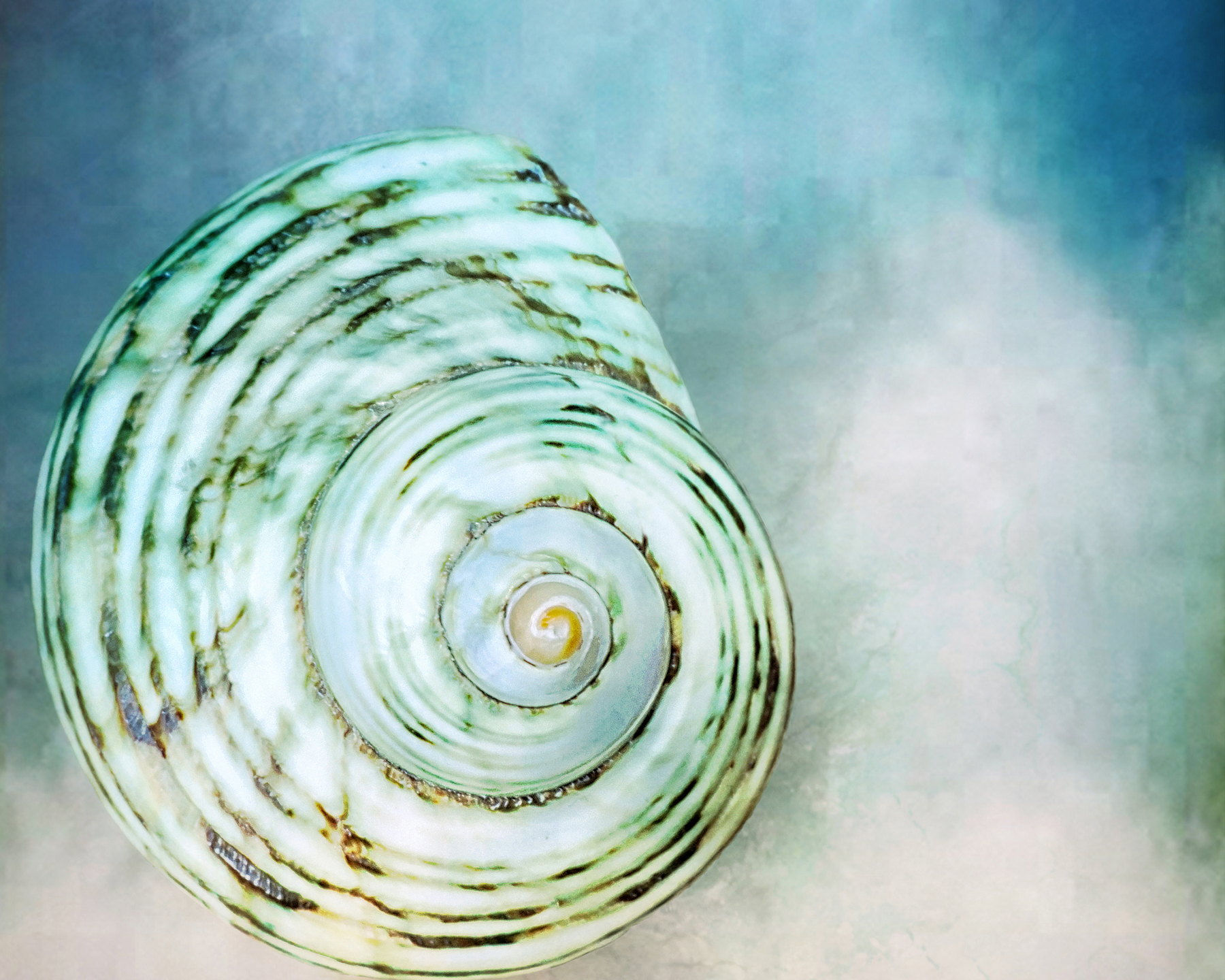
    Silver Mouth Turban Seashell (Polished)
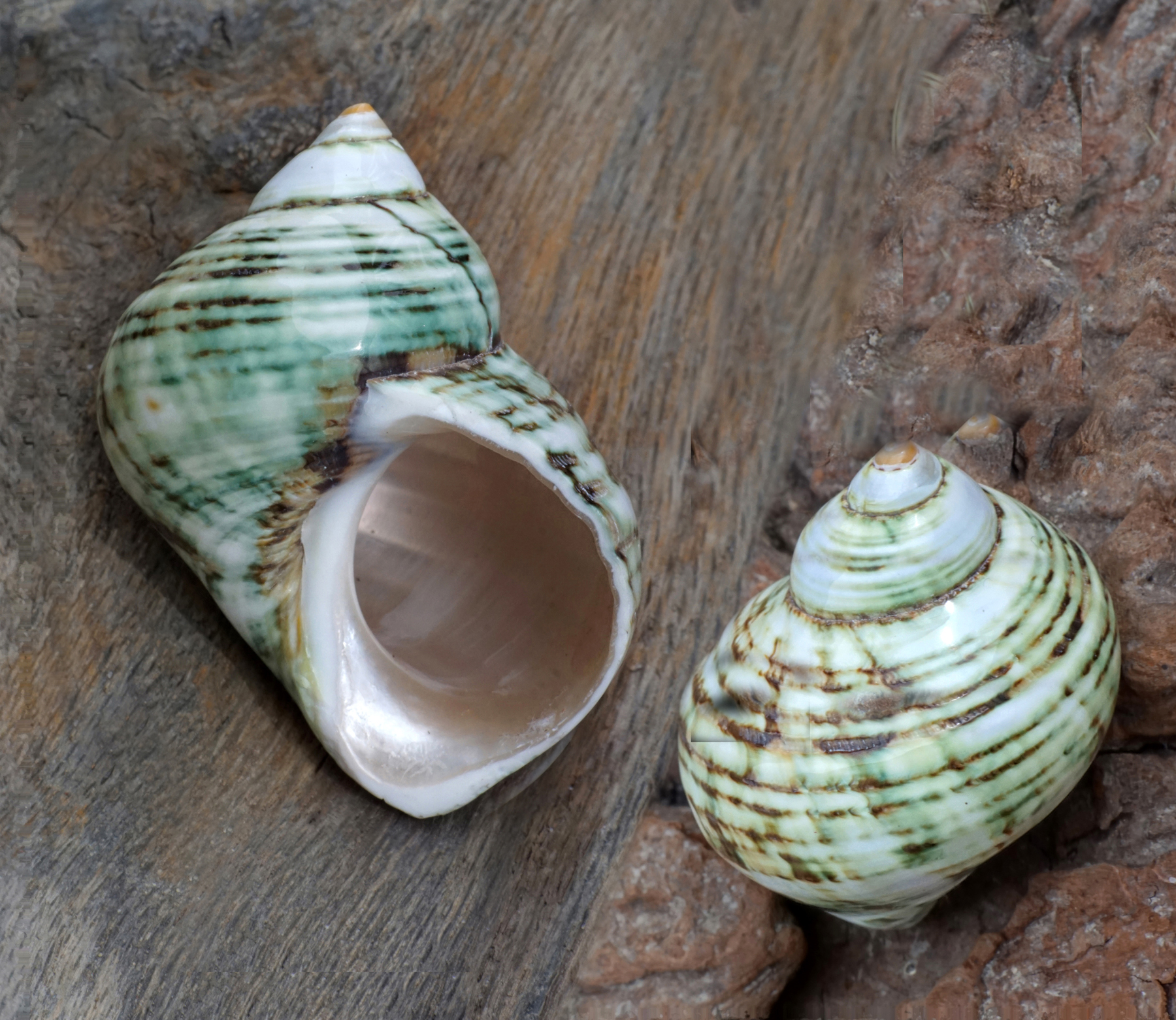
    Silver Mouth Turban Seashell

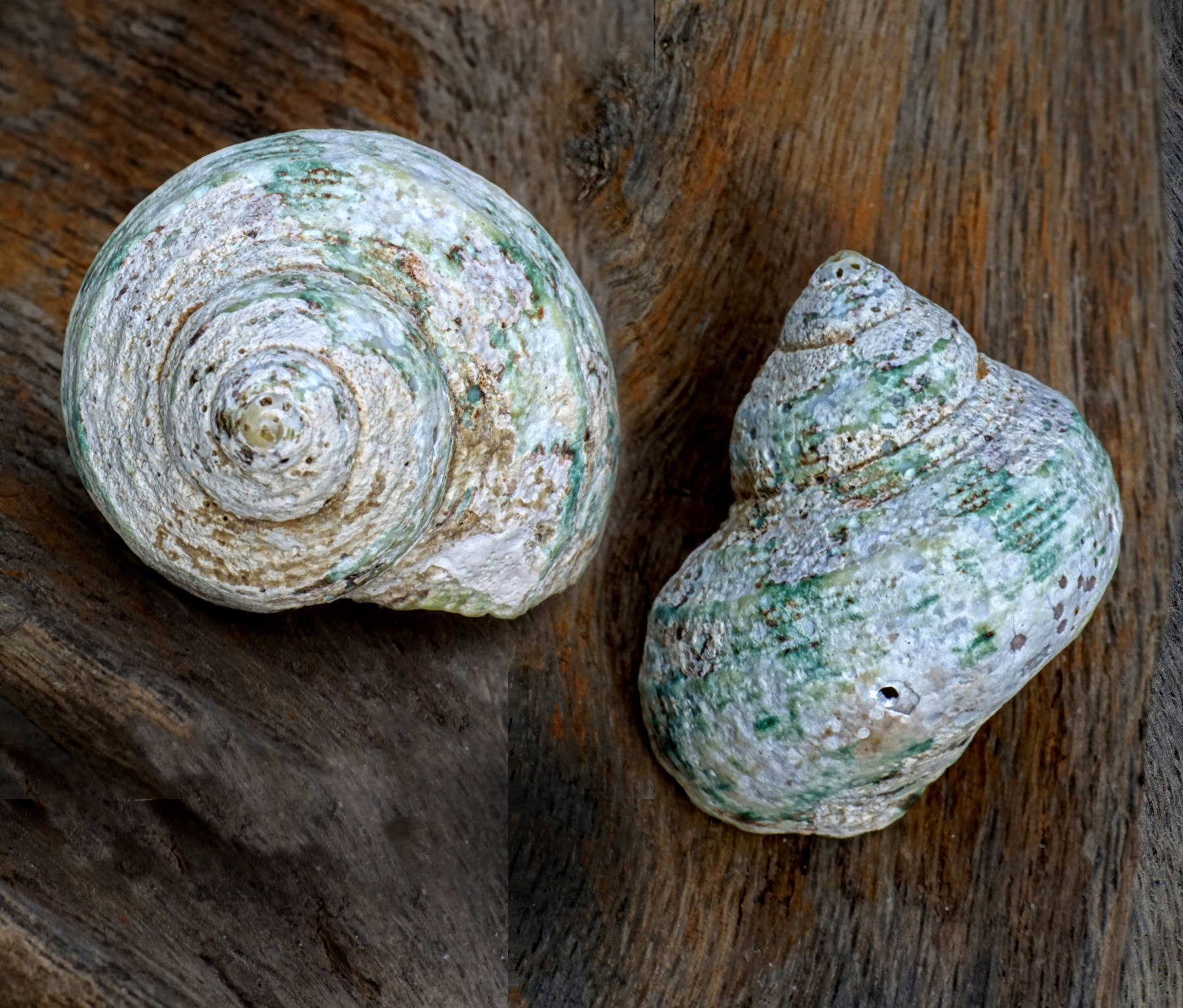
    The Silver Mouth Turban shell is typically green with brown markings and (as with most turbos) patterns. Sometimes the apex is red, others, goldish. The silver glossy aperture is a dead giveaway varying ornamental for this species. Collectors especially love to polish this beauty and put them up for sale!
    Silver Mouth Turban Seashell
    • Size: Up to 3 in (8 cm)
    • Habitat: Frequently found on coral reefs, rocky shores, and in lagoons typically found at depths ranging from the intertidal zone to about 100 ft (30 m). They prefer areas with rock fragments and seaweeds. 
    • Range:  Indo-West Pacific, including the Red Sea, East Africa, Madagascar, the Philippines, and Australia.
    Delphinula “Dolphin” Snail Seashell

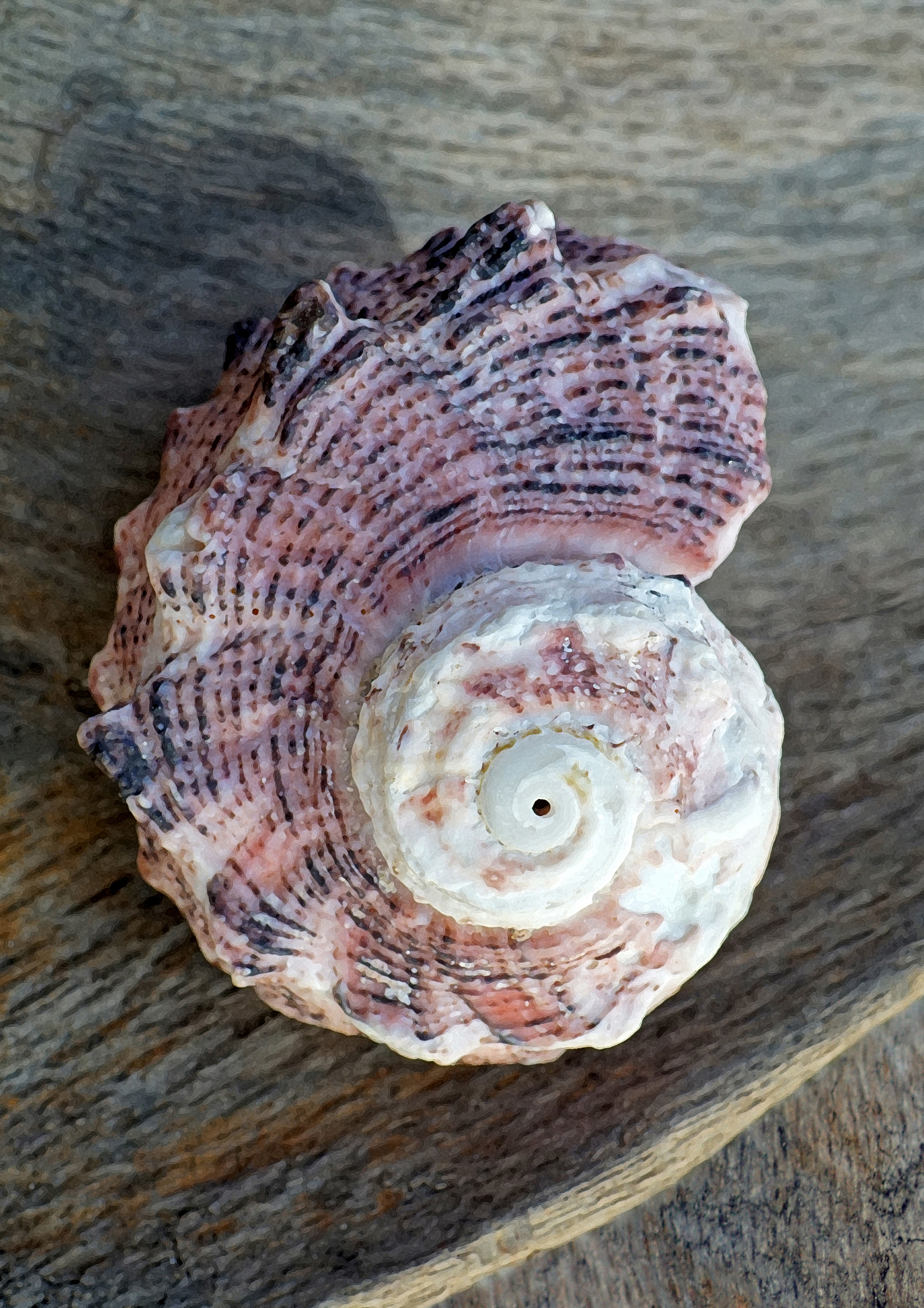
    13. Delphinula “Dolphin” Snail Shell (Angaria delphinus)

    The Delphinula or Dolphin Snail shell is variable in form, size, color, and spine formation. The shell is typically colored pinkish to purple, brown, or grayish. It’s thick and flattened conically. The outer shell has spiky projections which may be short or long depending on the environment and other factors. The aperture is pearly white. It’s been called a turbo snail, but is not a true turbo.

    Interesting how the Dolphin Snails are able to adapt their shell to their surroundings, creating darker, more ridged shells in rocky environments and brighter colors near coral reefs.
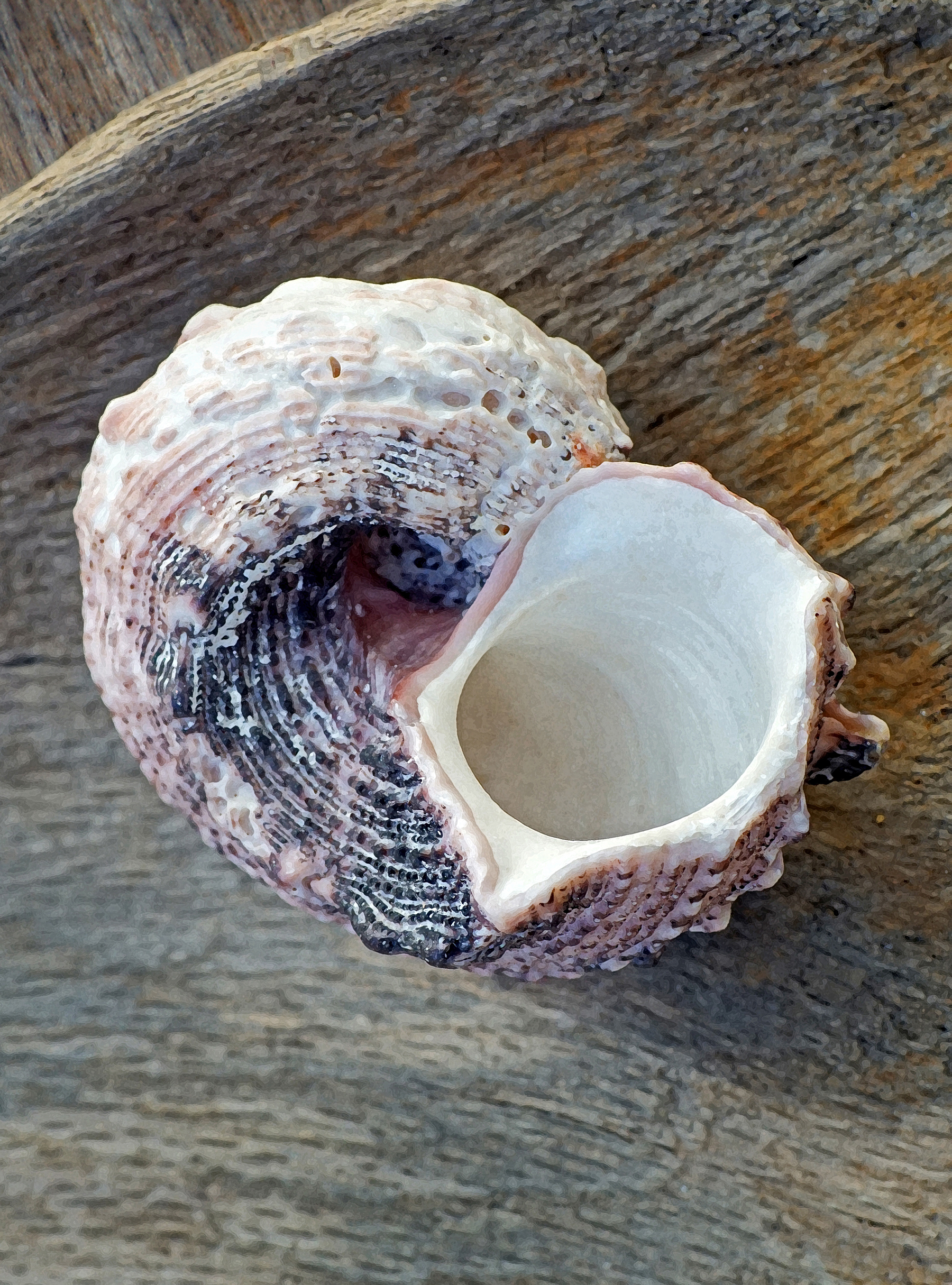
    Delphinula “Dolphin” Snail Seashell – Interior Aperture
    • Size: Up to 2 3/4 in (7 cm)
    • Habitat: Primarily found in shallow, subtidal, and intertidal waters, including rocky shores, reef flats, and areas near coral reefs and algae-covered rock beds to depths of 148 ft (45 m)
    • Range: Indo-Western Pacific to Northern Australia, New Caledonia, and Japan to Southeast Asia, the Philippines, and the Andaman Sea
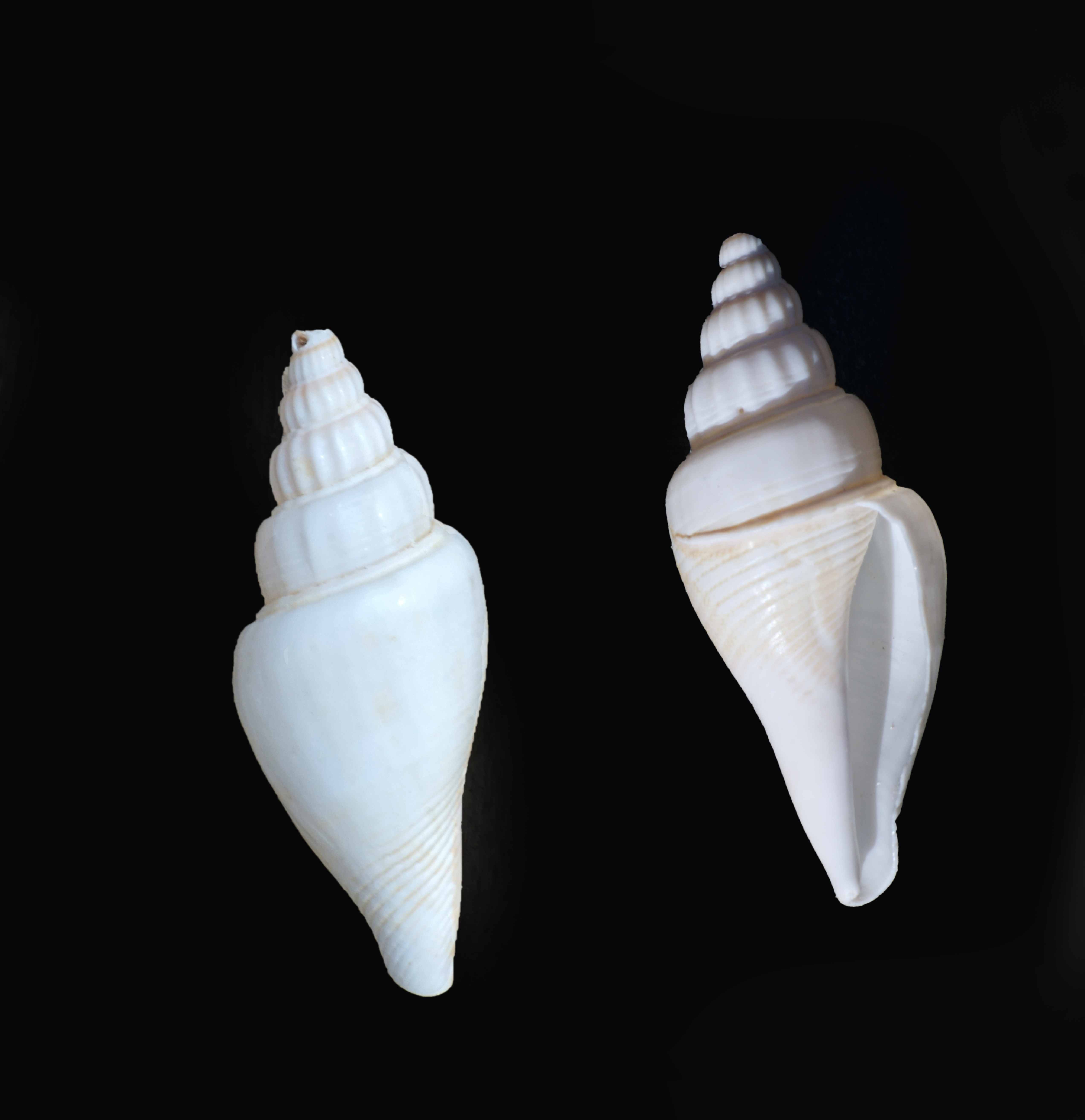
    Dubious Volute Seashells

    14. Dubious Volute (Aurinia dubia)

    The Dubious Volute is distinguished by its elongated shape, and thin shell. There are numerous upper anterior spiral whorls and the outer shell displays thin lateral ribs. Like all Volutes, the shells have an elongated aperture from the first whorl. The shell is typically tan-colored with sparse reddish-brown spots. After the animal dies, the colors can fade.
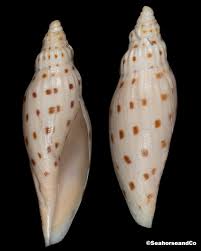
    Dubious Volute Seashells Source

    All members of the family Volutidae are carnivorous. Their prey includes other mollusks and echinoderms. A Volute seeks out buried bivalves with its siphon and encloses the prey in its huge foot, then waits. When the exhausted bivalve opens up to breathe, which can take several days, they siphon out the flesh with the radula! Volutes may hunt their prey from the surface, but often burrow to eat their prey under the sand.

    Fossils of this Volute family have been discovered from the Pliocene Period 5.3 million to 2.5 million years ago.  

    • Size: Largest of the volutes up to 7 in (18 cm)
    • Habitat: Deep sandy or muddy bottoms ranging from 160 to 1300 feet (50 to 400 meters) 
    • Range: North Carolina, south to Florida, the Gulf of Mexico and the greater Caribbean

    For more univalve ID and interesting facts including Conchs, Helmets, Whelks, Murex and more, click HERE. Otherwise, if you are in the “Categories” section under “Seashells Univalves” you can simply continue scrolling.

    For more univalve ID and interesting facts including Top, Cones, Cowries, Olives and more, click HERE. Otherwise, if you are in the “Categories” section under “Seashells Univalves” you can simply continue scrolling.

    All rights reserved © Fossillady 2026
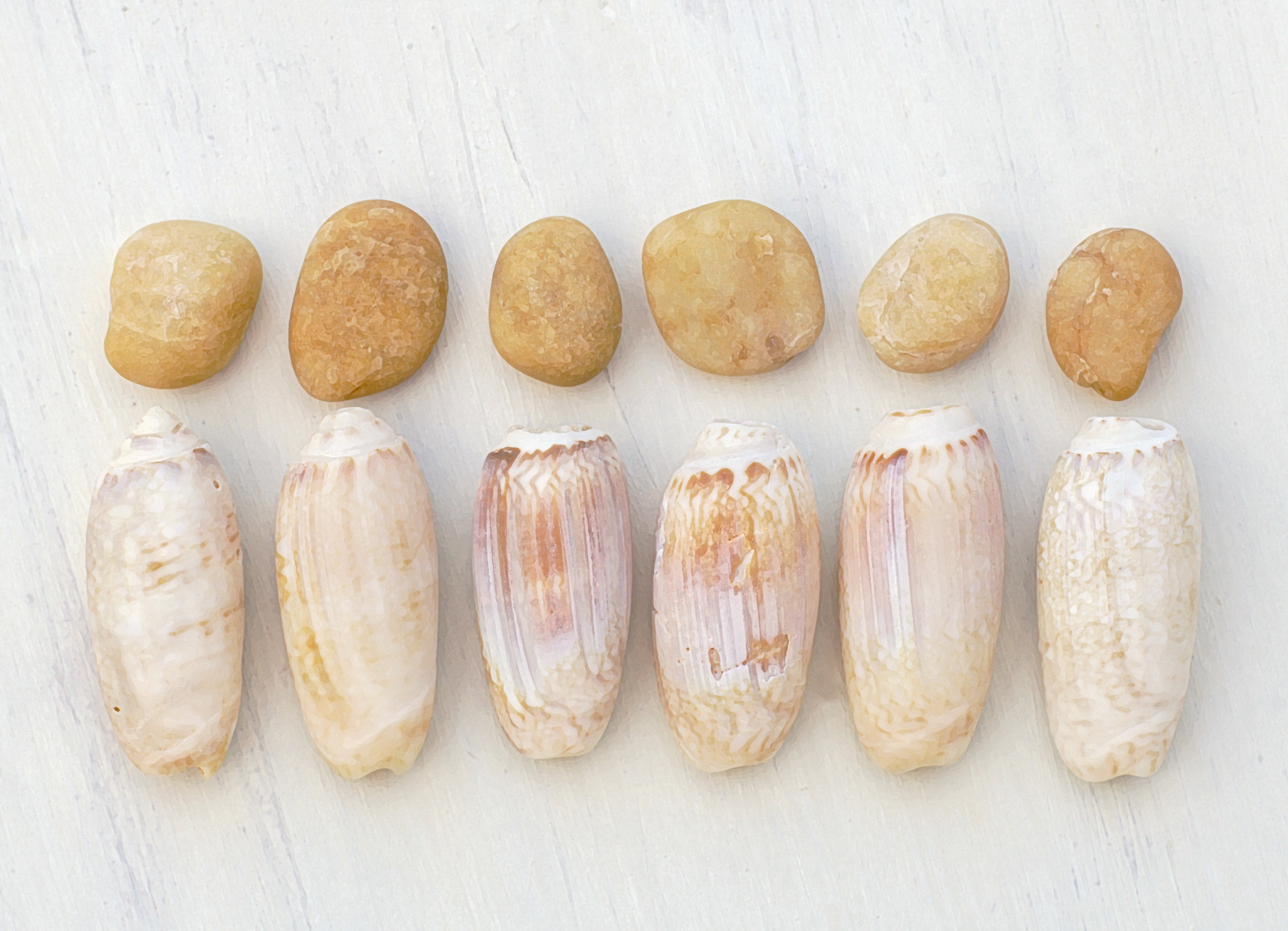
    Univalve Seashell Identification from Tops, Cones, Cowries, Moon, Olives and more

    Everybody Loves Seashells – If you have ever walked the beaches along the Atlantic or Pacific coasts, you have likely come across various seashells, lovely and irresistible to pick up! Follow along for interesting facts and identification guidlines for those seashells that filled you with wonder!

    Tropical-Subtropical Atlantic Coastal and Gulf Coast Regions

    The univalve seashells profiled in this photo essay can be found in the subtropical to tropical Atlantic coastal regions bordering the USA, the Caribbean, South America and the Gulf of Mexico or the Indo-Pacific coastal regions bordering India, China, Japan, Australia, Indonesia, South Korea, Russia and the USA.  

    Indo-Pacific Coastal Regions

    What Is a Univalve? Univalves, otherwise known as gastropods or snails (sea snails), possess valves (shells) characterized by a single shell, typically spiraled.  When identifying univalve shells, location is important along with the obvious features such as shape, textures, markings, and color. Size is important as well, but keep in mind that sometimes you may have found a juvenile that hasn’t reached full size.

    Univalve Identification and Facts in the following order:

    • 1. Pearl Top
    • 2. Jujube Top
    • 3. Alphabet Cone
    • 4. Nutmeg Sea Snail
    • 5. Arabic Cowrie
    • 6. Snakehead Cowrie
    • 7. Purple Top Tiger Cowrie
    • 8. Wandering Cowrie
    • 9. Atlantic Bubble Snail
    • 10. Moon Shark Eye
    • 11. Atlantic Common Slipper
    • 12. Letter Olive
    • 13. Olive Sea Snail
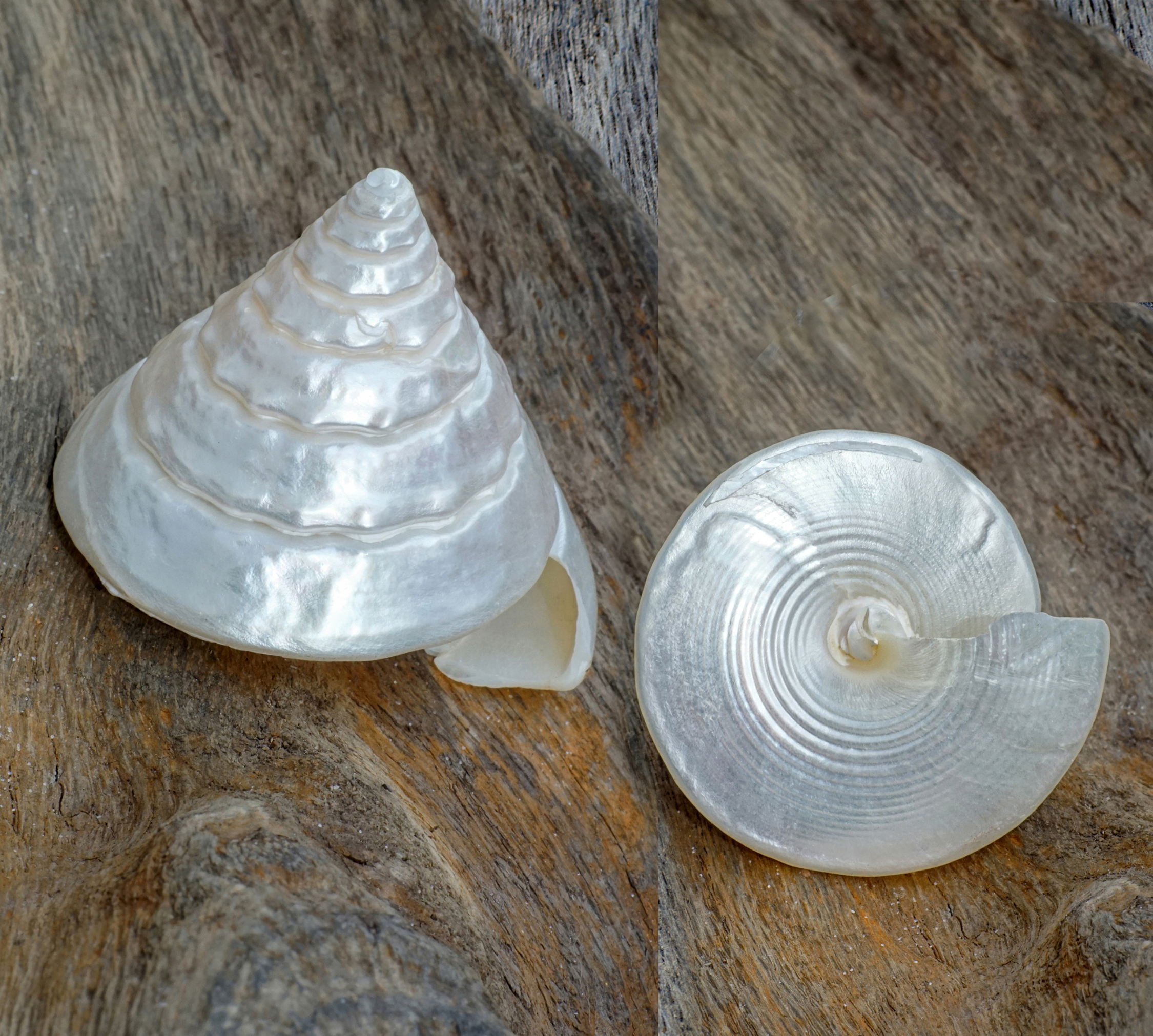
    Pearl Top Seashell (Top and Base Views)

    1. Pearl “Trochus” Top Sea Snail (Trochus lumea)

    The Pearl Top shell displays cream colored stunning iridescence, prized for their mother of pearl glow. The shell is thick, conical in shape with a sharp spire displaying 8 to 10 whorls. The base is flat showing numerous circular ridges.

    • Crafted into jewelry making, buttons, beads, and even crushed for countertops and flooring.
    • Another favorite in gift shops of Florida and other Atlantic Coast or Indo-Pacific tourist cities around the world.
    • Size: Up to 2.5 in, 6 cm
    • Habitat: Typically in shallow, rocky, or coral-rich areas in depths ranging from 0 to 65 feet (0 to 20) meters, with juveniles preferring shallow intertidal reef flats for protection and food, while adults migrate to deeper, more exposed slopes. They graze on algae, requiring clean water with high calcium levels. 
    • Range: Indo-Pacific region

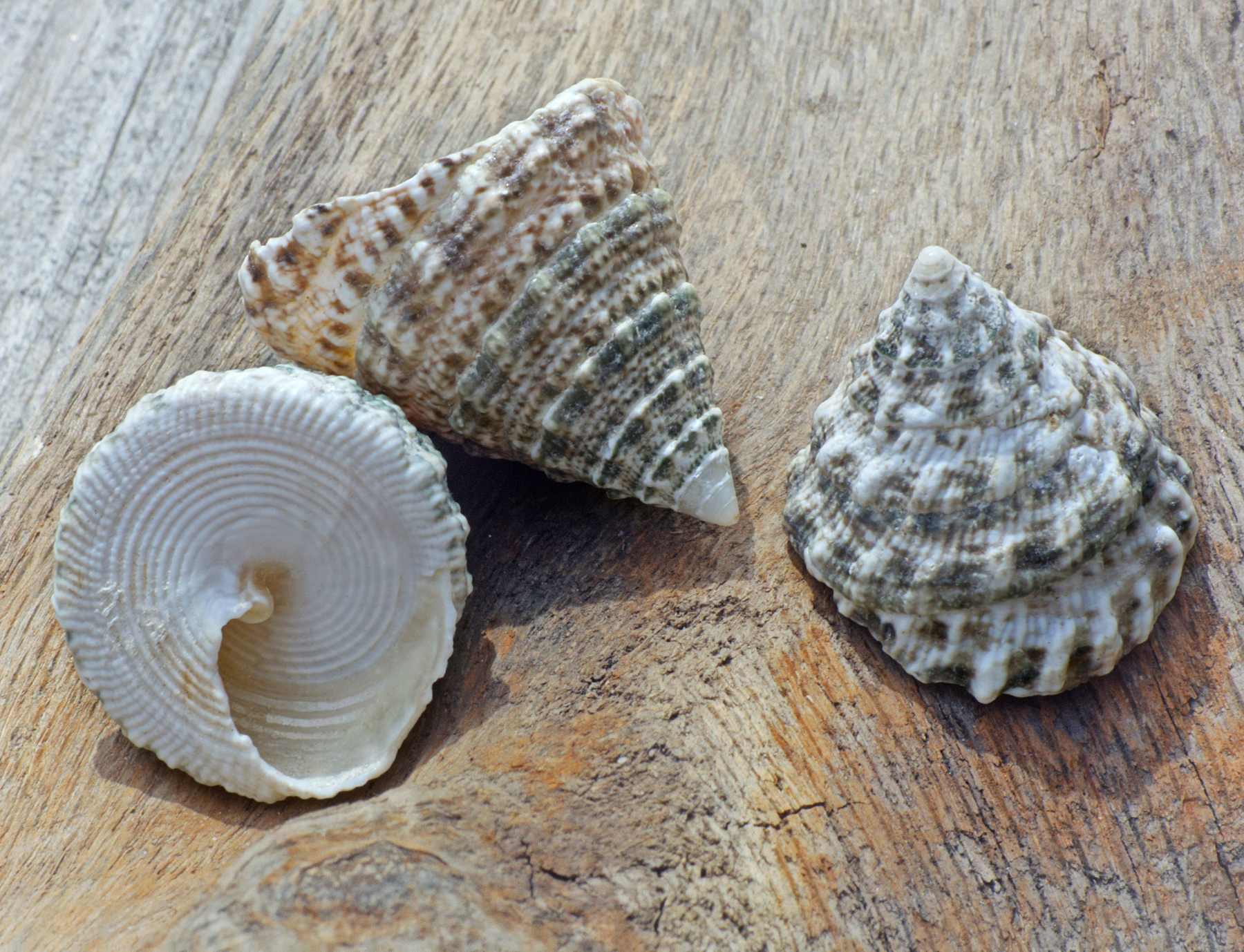
    Jujube Top Seashells

    2. Jujube Top Sea Snail (Calliostoma jujubinum)

    The Jujube Top sea snail displays a pyramid cone-shaped shell that can vary color-wise from chestnut-brown, purple-brown, green-gray, or tan mottled. It is marked with narrow, curved, widely separated longitudinal white elevated streaks. In addition, finely beaded ribs decorate the surface. It has about 10 whorls on the way up to a pointy spire. The base is flattened with an iridescent white interior.

    • Size: Up to 1 1/4 in, 3 cm
    • Habitat: Shallow to deeper waters, ranging from 0 to 625 feet (0 to 192 meters) in depth. These snails live on rocky surfaces, corals, and seaweeds. 
    • Range: North Carolina south to Florida, Bahamas, West Indies, and further south to Brazil; also west to the Gulf of Mexico coast
    Alphabet Cone Seashell

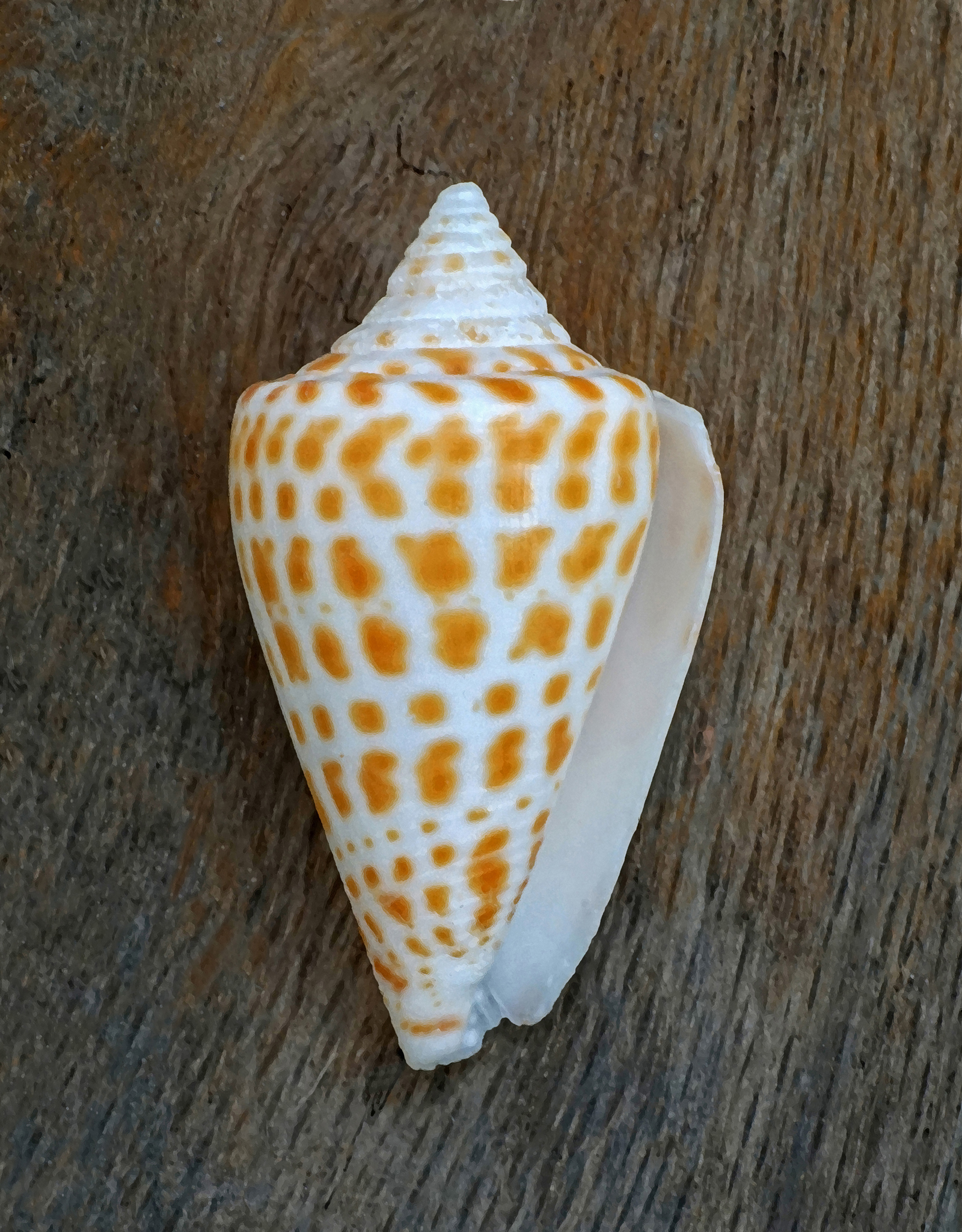
    3. Alphabet Cone Sea Snail (Conus spurius)

    The Alphabet Cone possesses a medium-size cone shaped shell. The opening lip is narrow and extends the length of the outer shell. They are colored creamy-white decorated with rows of reddish brown splotches, some resembling letters of the alphabet. The top of the cone or spire has a small pointy apex.

    • All cone snail stings are toxic; always use caution when collecting their shells. They are nocturnal hunters that use a venomous, harpoon-like tooth to catch prey.
    • Size: Up to 3 in, 8 cm
    • Habitat: Sandbars and grassy flats in shallow water and near coral reefs or hiding in rocky rubble at depths from 0 to 200 feet (0 to 64 meters). 
    • Range: North Carolina to Florida, the Caribbean and Gulf of Mexico
    Nutmeg Snail Seashell (Exterior and Interior Aperture)

    4. Nutmeg Snail (Cancellaria reticulate)

    The Nutmeg Snail shell is small and resembles the shape of a nutmeg seed with the same roughness and texture, hence the name. The background is white with various shades of brown arranged in spiral beaded bands and longitudinal stripes. The apex displays several whorls coming to a point. Nutmeg snails are marine gastropods that uses a long, tubular snout to extract bodily fluids and soft tissues from other marine animals. 

    • Size: Up to 1 3/4 in, 3 cm
    • Habitat: Grassy shallow bottoms or kelp beds; sand or mud substrates in the intertidal zone and extending down deep offshore depths to 9000 feet (3000 meters).
    • Range: Worldwide; North Carolina to Florida southern tip to Brazil, and Indo-Pacific regions. 
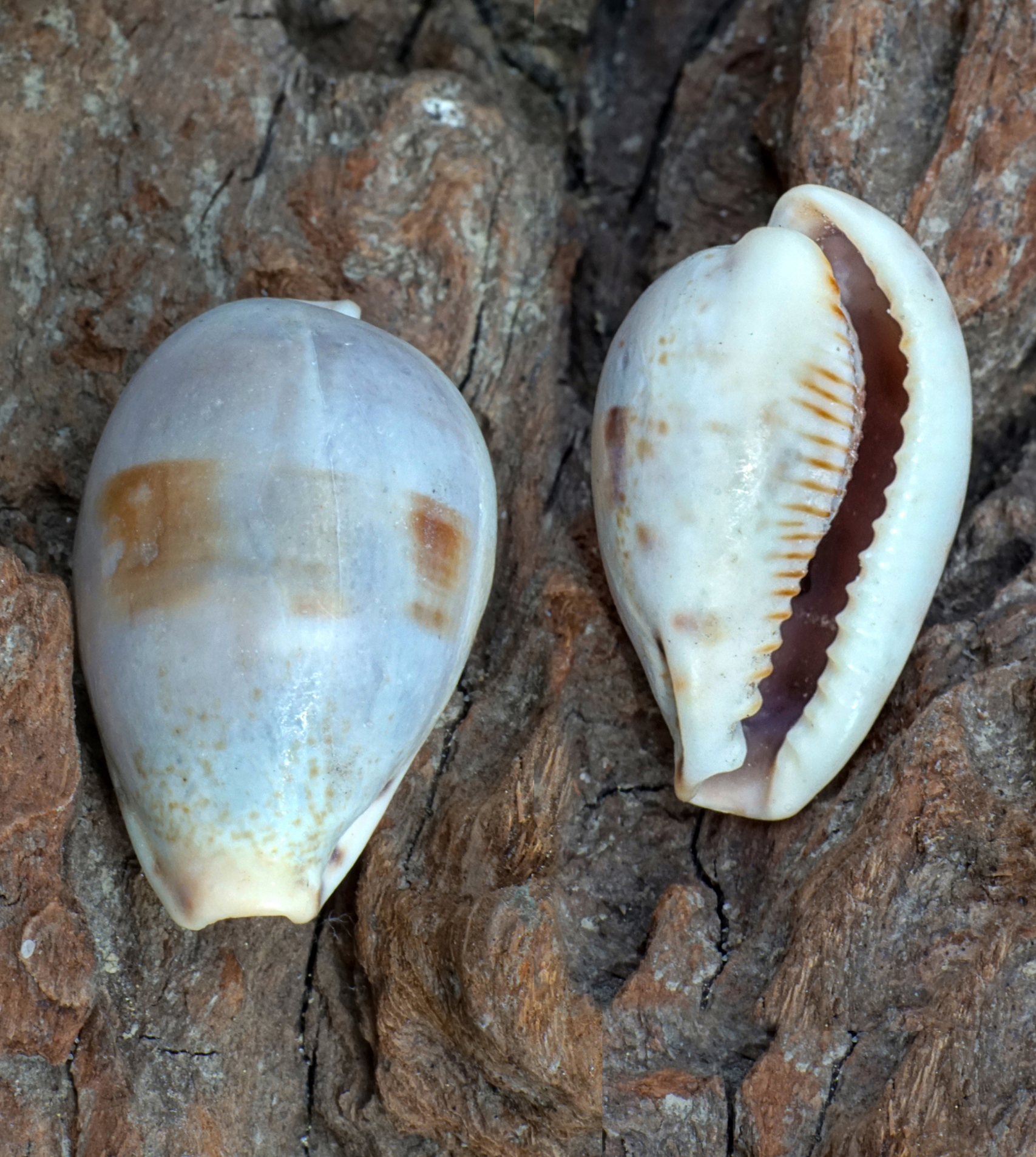
    Arabic Cowrie Seashell (Exterior and Underside)

    5. Arabic Cowrie (Cypraea arabica)

    The Arabic Cowrie is named for the shell’s irregular patterns of thin longitudinal brown lines that are sometimes interrupted by empty spaces, giving an appearance considered similar to Arabic script. As with most cowrie snails, the Arabic Cowrie shell surface is notably shiny, as if it had been polished. The color is generally cream with shades of brown and blue-gray streaks or spots. The underside is cream to grey colored. Both the inner and outer lips are lined with arrays of small reddish-brown teeth bordered by dark speckles or spots.

    • The Arabic Cowrie hides during the day, becoming active at night to feed. Using a specialized, rasp-like tongue called a radula, it consumes encrusting sponges, bryozoans, and, in captivity, is known to graze on nuisance hair algae. 
    • Size: Up to 2.5 in, 6.5 cm
    • Habitat: Shallow water under rock rubble and crevices or  in coral reef outskirts typically from the low intertidal zone to depths from 30 to 130 feet (10–40 meters)
    • Range: Widespread in the Indo-Pacific region, including East and South Africa, reaching Polynesia and Japan.
    • Additional Facts About Cowries
    • In some cultures, cowrie shells are a symbol of fertility and are often offered to a bride as a gift to ensure fertility.
    • Cowries egg-shaped, glossy shells are in high demand for rock aquariums.
    • They differ in color depending upon geographical location.
    • While the cowries do not have an operculum to shut when it retracts its mantle into its shell, the opening is lined with “threatening” tooth-like structures.
    Snakehead Cowrie Seashell (Exterior and Underside)

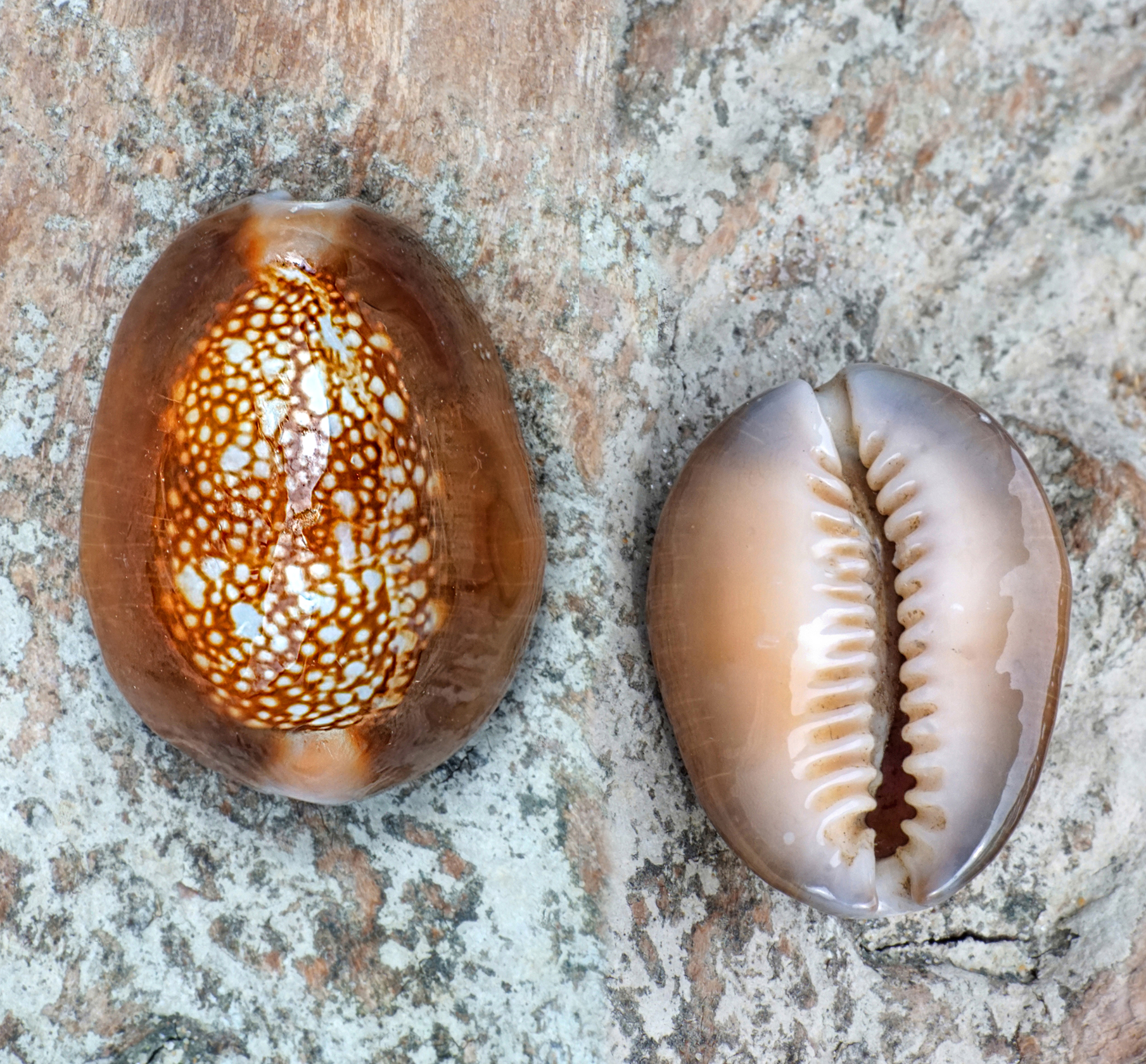
    6. Snakehead Cowrie (Cypraea caputserpentis)

    The Snakehead Cowrie shell, as with other cowries, is oval-shaped, with a raised central area. Its top is olive-brown with irregular spots of white, blue-gray, or cream-colored. A faintly frilled brown band runs along the base of the shell, and a white line or mantle line runs from front to back along the shell top; displays a glossy finish.

    • Sizequite small – 1 1/2 in, 3 cm
    • Habitat: Shallow turbulent water under loose rock or along shorelines and seawall cracks, typically in depths from 3 to 10 feet  (1–3 meters), but can be found down to 700 feet (200 meters). They hide under boulders and in crevices during the day to avoid predators emerging at night to graze on algae. 
    • RangeIndo-Pacific region from eastern African coasts. Also, the Hawaiian coasts. The Hawaiian name is “leho-kupa”. It is the most common species in the Hawaiian Island chain.
    Purple Top Tiger Cowrie Seashells, (Exterior and Underside)

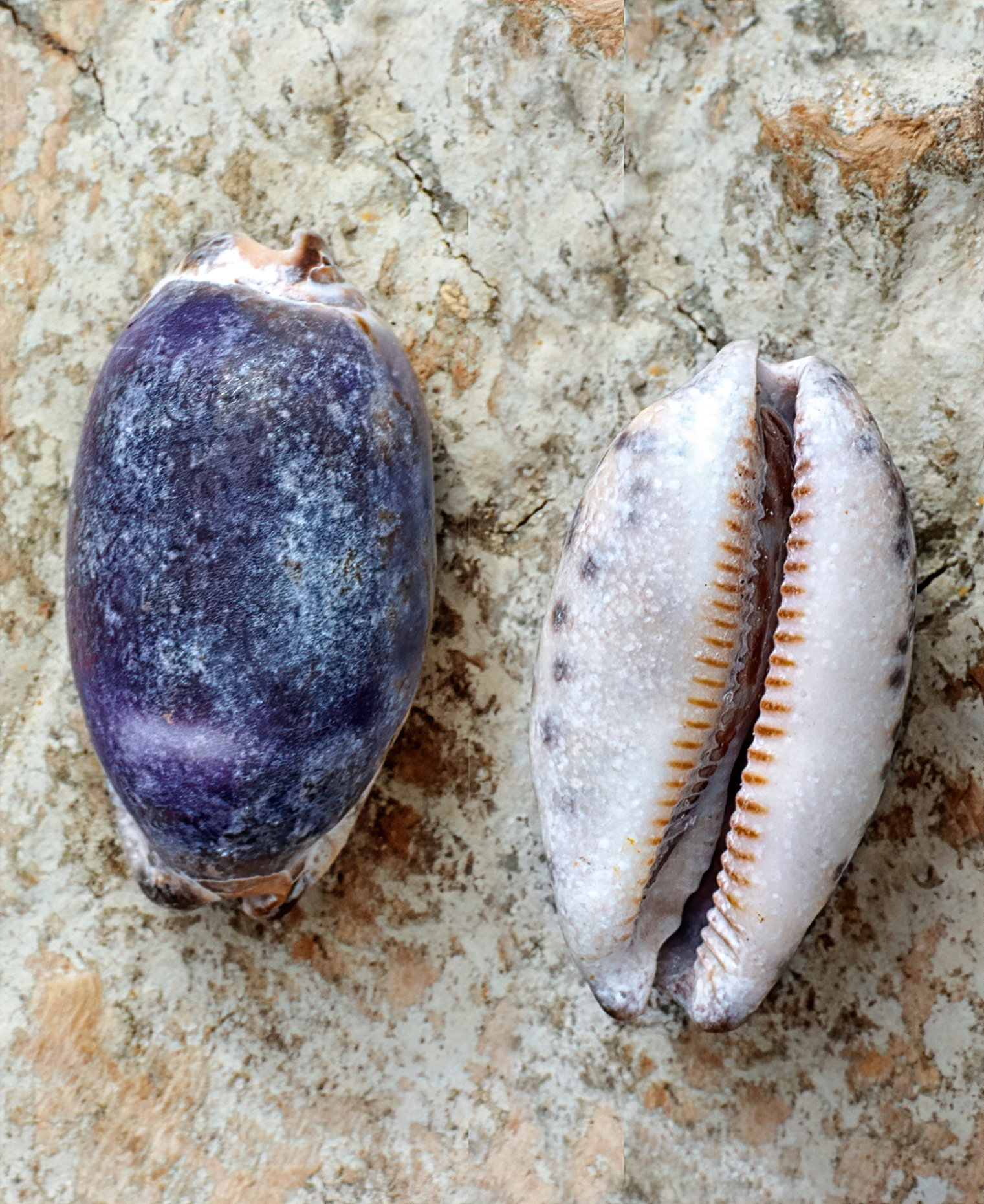
    7. Purple Top Tiger Cowrie (Cypraea tigris)

    The Purple Top Tiger Cowrie is also commonly known as the Tiger Cowrie. This marine gastropod displays an egg-shaped shell, typically 2 to 3+ inches long, featuring a high-gloss and a white-to-buff base partially covered in dark brown or black spots. The distinctive “purple top” is achieved by polishing or buffing the dorsal layer to reveal a purplish hue, often used in coastal decor, crafts, and jewelry; is used in carvings such as cameos due to this uniform color under the top layer.

    A cowrie shell turns dull primarily due to the loss of its natual protective glossy layer, often caused by environmental factors, age, or improper handling after it is removed from the ocean. While living, the cowrie’s mantle covers the shell to keep it shiny. 

    • When small, they eat algae and scavenge for scraps, as adults, they eat anemones, sponges, and soft corals polyps.
    • Size: Up to 6 in, 15 cm
    • Habitat: Shallow water under coral or rocks typically found at depths of 30 to 130 feet (10 to 40 meters), often on live coral colonies (especially Acropora) or on sandy, rocky bottoms near reefs. 
    • Range: Indo-Pacific and the Great Barrier Reef in Australia, also ranging from the eastern coast of Africa to Hawaii.
    Wandering Cowrie Seashells

    8. Wandering Cowrie (Erronea errones)

    The Wandering Cowrie possesses an oval shell typically displaying colors of pale blue, or greenish with variable darker bands of brown or small spots. The base of the aperture is white and extends upwards along the sides. The anterior end tilts right.

    • Feeds at night on sponges, algae, and encrusting organisms.
    • Size: Small, up to 1.8 in, 20 cm
    • Habitat: Shallow tropical waters at low tide intertidal rocky shores, coral reefs, and areas with coral rubble. They are often found hiding under rocks, stones, or among sponges during the day to avoid predators. 
    • Range: Indo-Pacific region: East Indian Ocean along south India, Madagascar, and Tanzania, west along Indonesia, Malaysia, Philippines, Samoa, and Australia
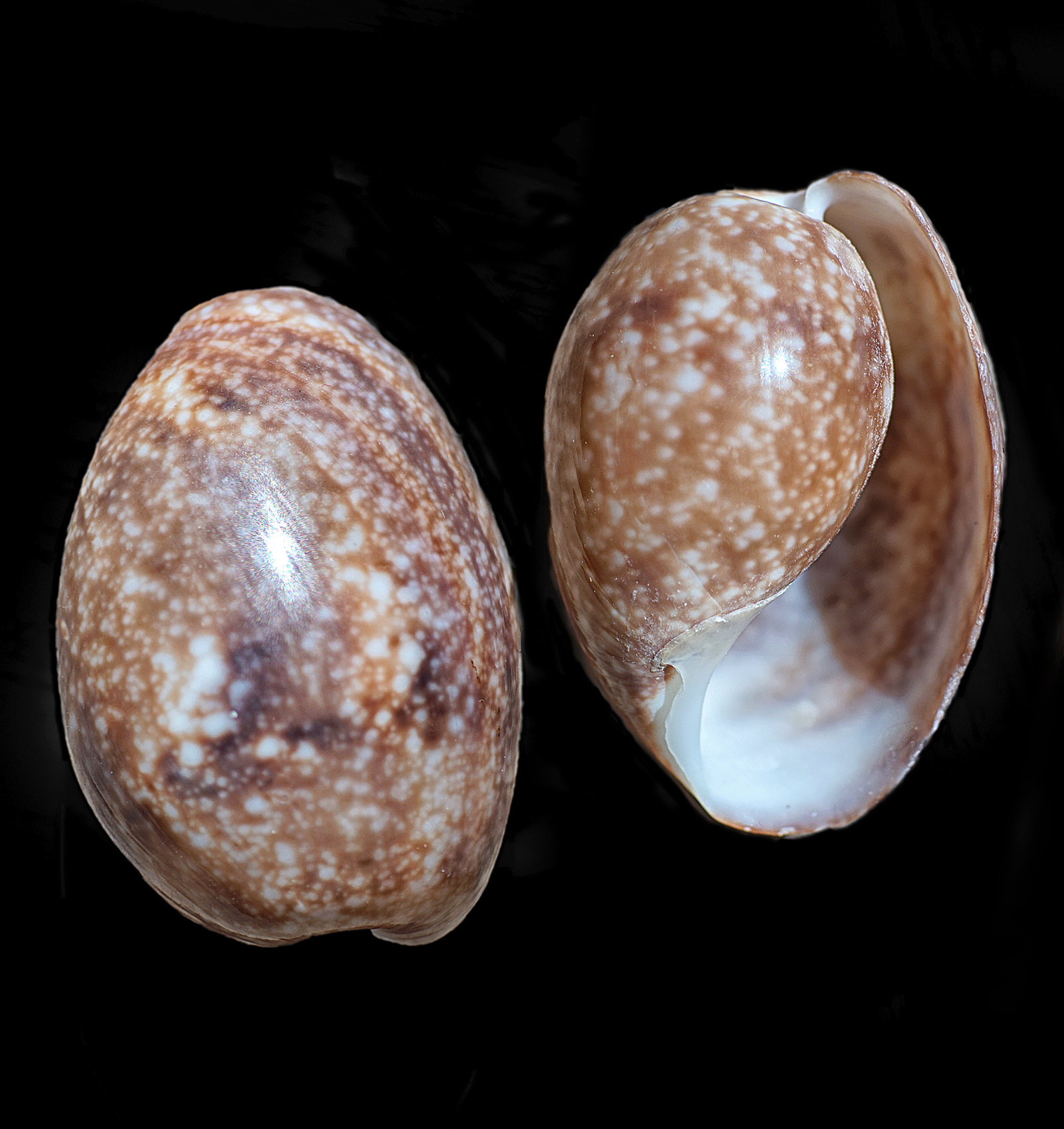
    Atlantic Bubble Seashells

    9. Atlantic Bubble Sea Snail (Bulla striata)

    The Atlantic Bubble shell is barrel-shaped, displays light brown spots with many light and dark flecks, and has a white opening. The shell is smaller than the animal, loosely curved, thin, and brittle.

    • Atlantic Bubble Sea Snails are not true snails because they are essentially a transitional form between snails and sea slugs, characterized by a fragile, small, often internal shell that cannot fully protect their body. 
    • Size: Small, up to 1 in, 2.5 cm
    • Habitat: Shallow, calm warm water, sheltered mudflats, and seagrass beds burrowing at night.
    • Range: North Carolina to Florida, west to the Texas Gulf Coast, south to Brazil
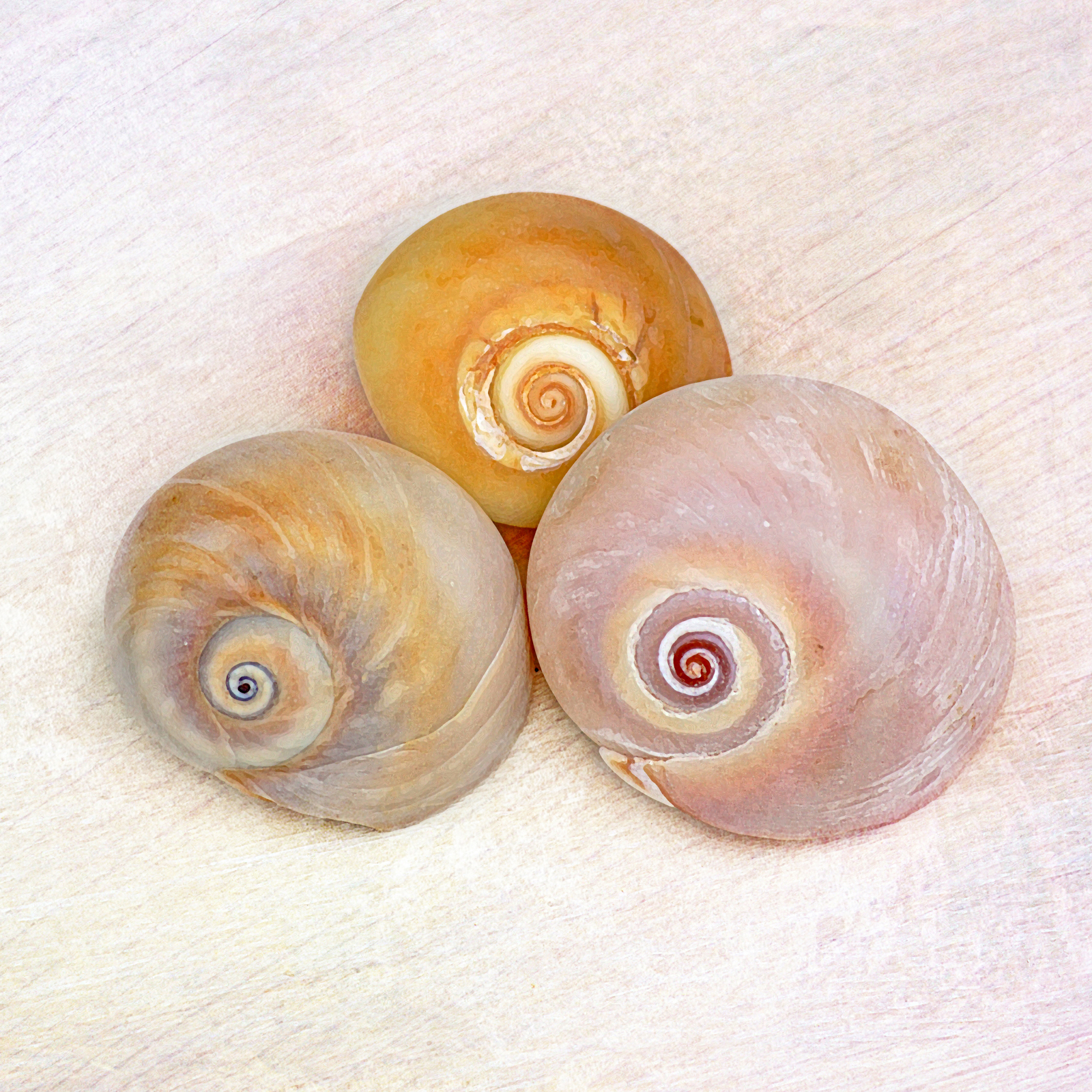
    Moon Shark Eye Seashells My Photo Site

    10. Moon Shell Shark Eye (Polinices duplicata)

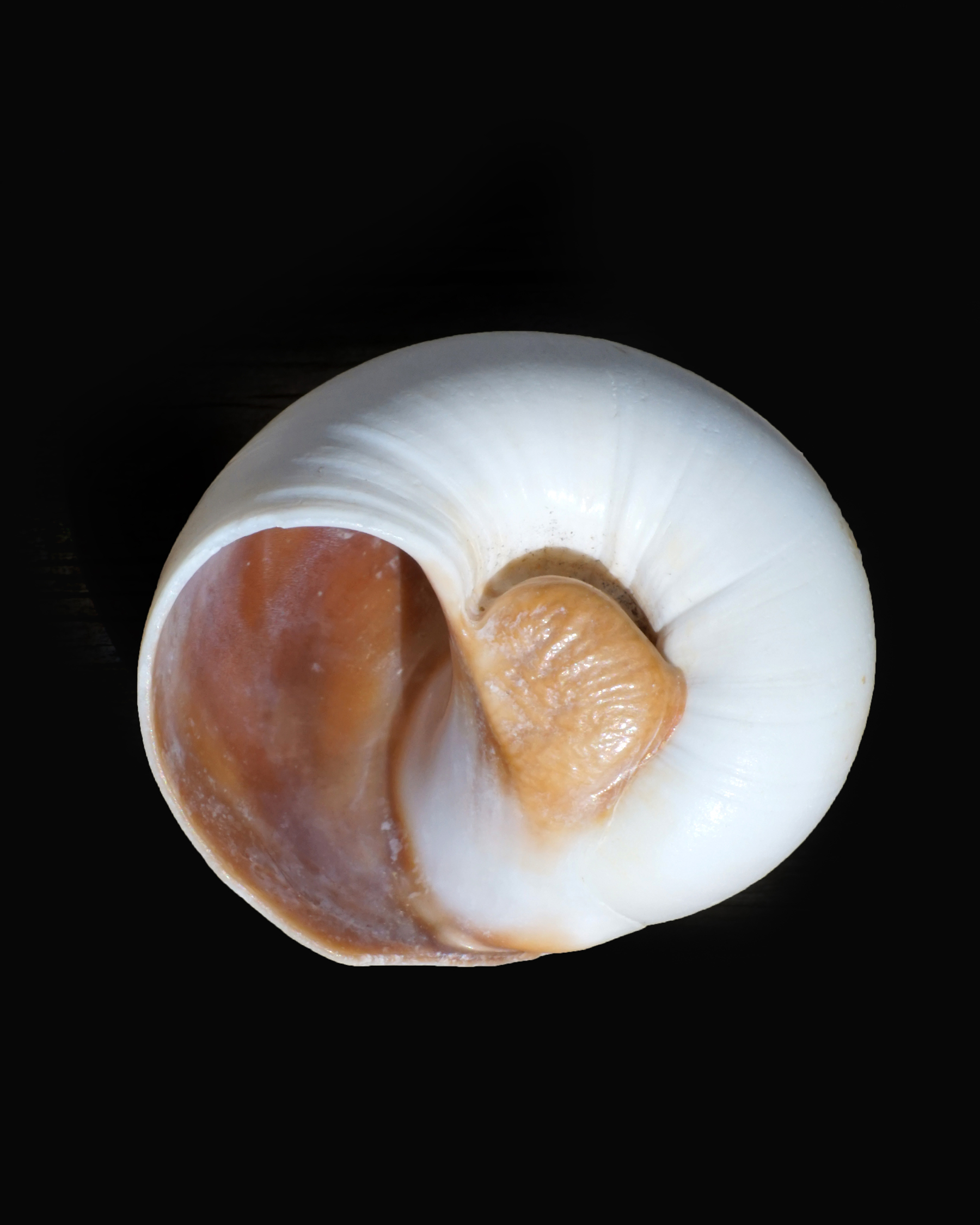
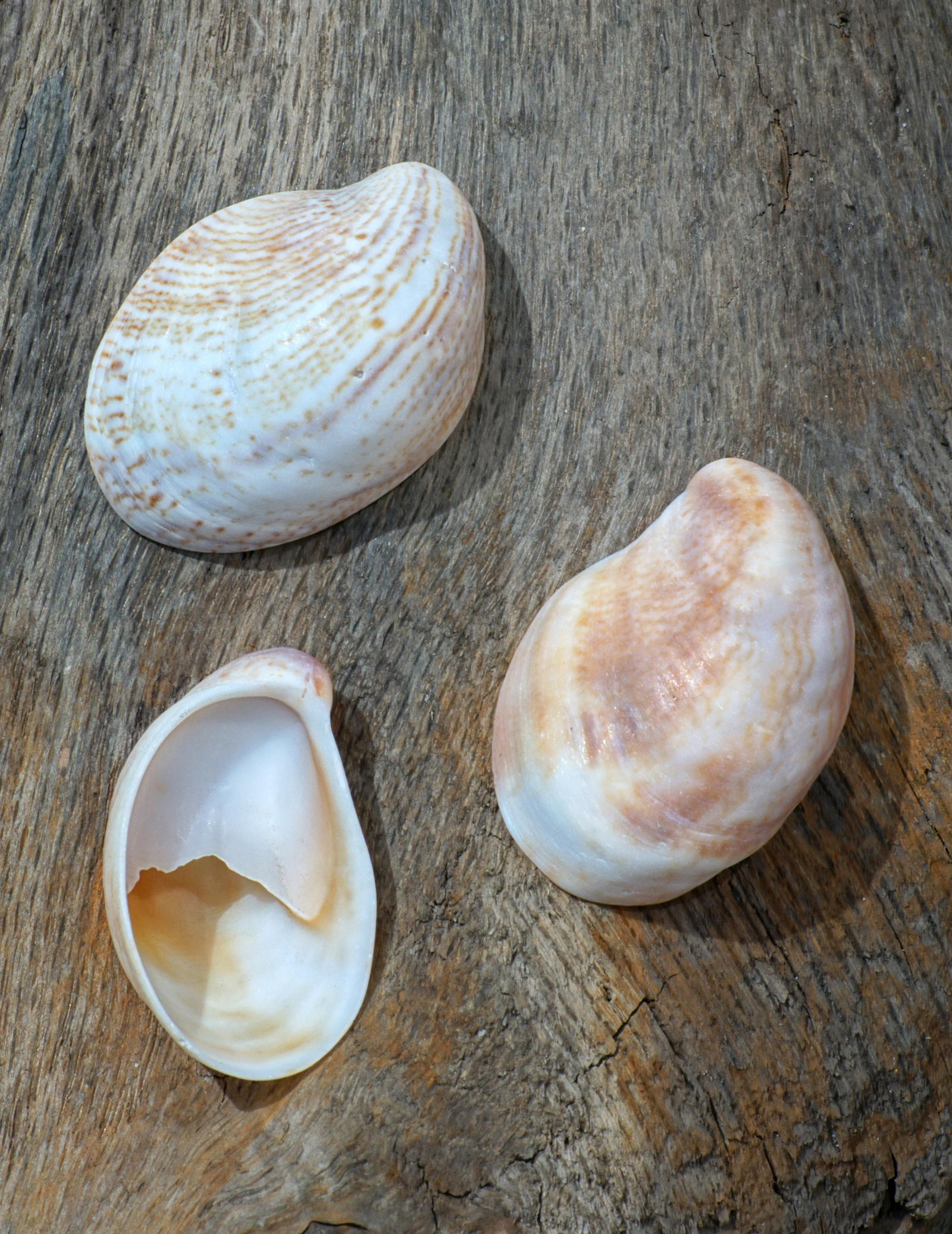
    The Moon Shark Eye shells vary in colors from slate-gray to tan or pinkish, blended with creamy-white. The interior is chestnut colored. The shell is smooth and rounded, flatter than other Moon Shells. The underside has a button-like brown callus in the center.

    Moon Shark Eye Shell Underside
    • The Moon Shark Eye shells are considered valuable to collectors.
    • Moon snails include about a dozen widely distributed species. Their shells are found on all U.S. Atlantic and Pacific beaches. These carnivores feed on other shellfish, which they engulf and smother with the aid of an usually large foot.
    • Moon Shells build a circular “sand collar,” cementing the sand grains with a glue they produce, then deposit their eggs inside the protective ring.
    • Size: Average 1 in, 2.5 cm, but can grow up to 3 in, 7.5 cm
    • Habitat: Sand bars, intertidal and shallow subtidal zones, often burrowing just below the surface in sandy shores and surf zones. 
    • Range: Canada to Florida, west to the Gulf Coast, south to Brazil
    Atlantic Slipper Seashells

    11. Atlantic Common Slipper (Crepidula fornicate) 

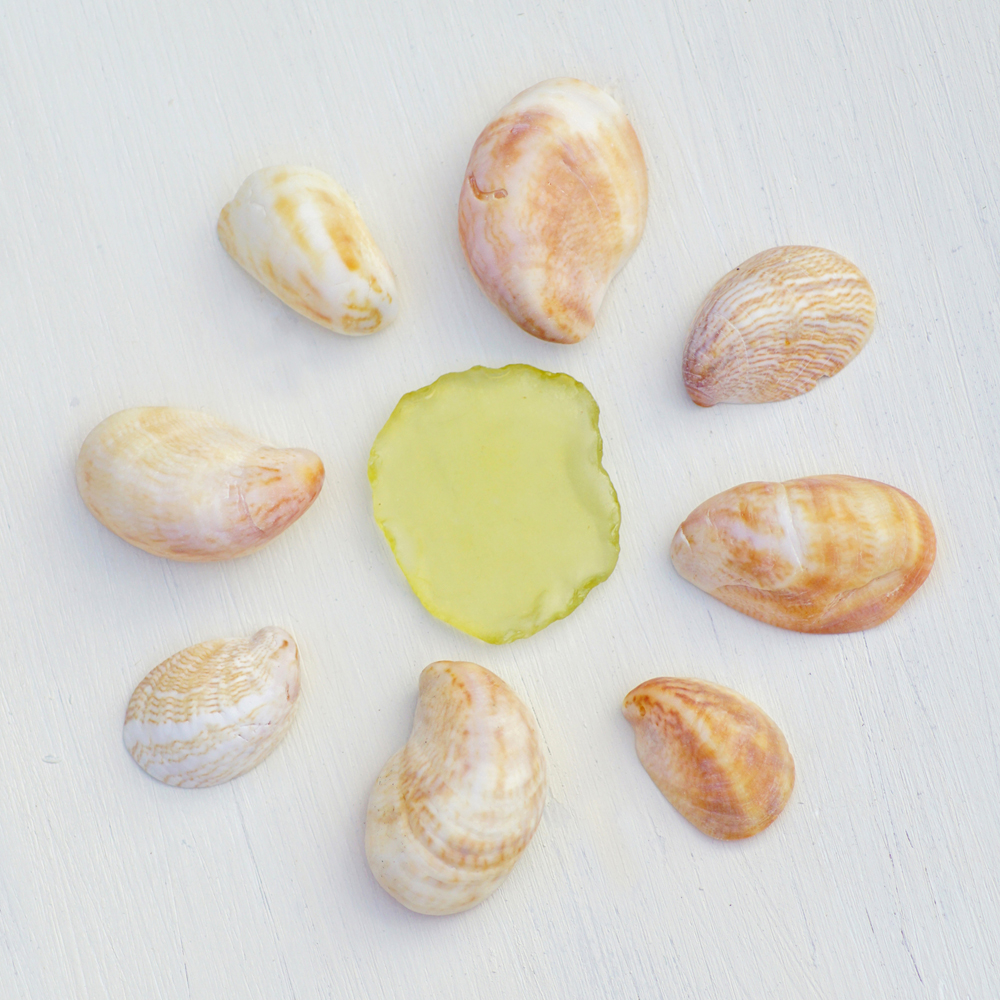
    Atlantic Common Slipper sea snail shells display a creamy white background and curved chestnut-colored stripes variously placed. The inside is shiny and sometimes colored brown. The shell is thin and translucent, with an oval or boat shape. There is a shelf or “seat” in the hinge end, which resembles the stern seats on a boat or put all together, a slipper.

    • The Slipper Sea Snail can change sex and it is interesting to note that in a large group, they stack atop one another; the top layers will be male, the bottom layers female and the section in the middle will be neuter in the process of changing male to female.
    • The Atlantic Sipper is also known as Baby’s Cradle, Boat Shell, Slipper Limpet, Canoe Shell, or Common Slipper.
    • They are edible.
    Atlantic Slipper Seashell Arrangement
    • Size: Up to 3 in, 7.6 cm
    • Habitat: Shallow muddy bottoms piled in groups of larger empty shells; lower intertidal and shallow subtidal marine waters, favoring sheltered areas like bays and estuaries. They attach to hard substrates such as rocks, shells, dock pilings, and ship hulls; they thrive in temperatures ranging from cold to subtropical. 
    • Range: Native from Northwest Atlantic Newfoundland Canada to Florida and west to Texas to Gulf of Mexico and introduced to the Northeast Pacific, Europe (Norway to Spain), and the Mediterranean.
    Lettered Olive Seashells

    12. Lettered Olive (Oliva sayana)

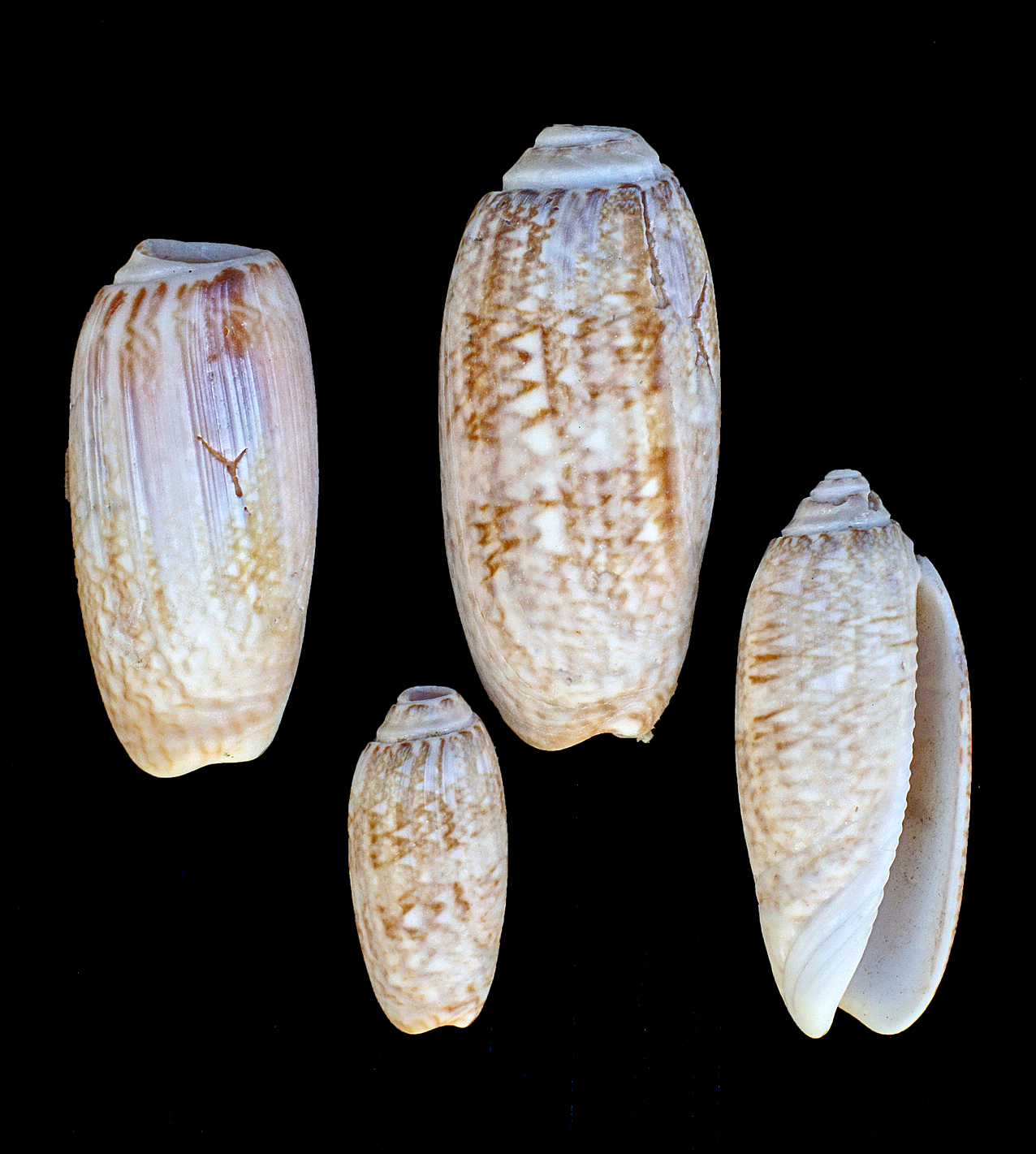
    The Lettered Olive sea snail shell is cyndrical, oblong, colored light brown with an overlay of darker brown that resembles lettering and has a glossy finish.

    • This sea animal is almost always found alive, recognized by a burrowing ridge in the sand at low tide, somewhat resembling a mole in a field.
    • They usually live in colonies.
    • They are non-edible.
    • The shells have a beautiful polished appearance when cleaned properly.
    • Size: Up to 2 1/2 in (6 cm) to 3 1/2 in (9 cm)
    • Habitat: Shallow sandy bottom, near-shore inlets and sandbars from intertidal and subtidal zones, typically to 10 feet (6 meters) deep where they spend most of their time burrowing just beneath the surface of the sand in search of bivalves. 
    • Range: North Carolina to the Gulf Coast to Brazil, particularly the Florida Gulf Coast. Largest colonies have been located around Sarasota Bay and near the Gulf passes.
    Olive Sea Snail Shell

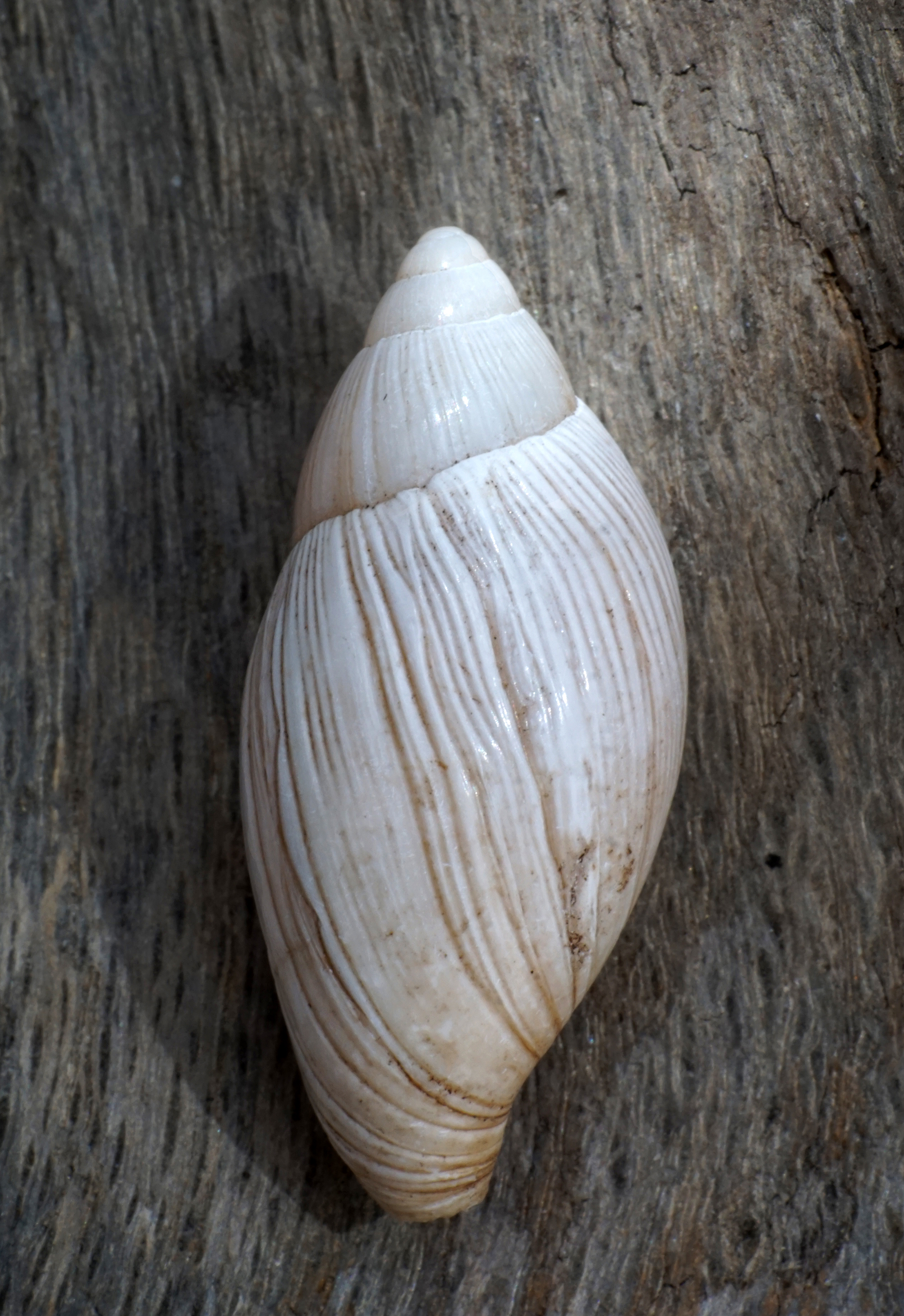
    13. Olive Sea Snail

    The family of Olive Sea Snails display shells that are typically smooth and shiny, except the one in my collection reveals thin brown groves over the exterior. The shells are typically bullet shaped coming to an apex point with three to five wide whorls. The bottom twists in my sample. The Olive Sea Snail family is large with many tropical species. Though, I am baffled about the specific species, it could be the purple olive sea snail (Callianax biplicata). While those are named for their frequent purple or violet tint, they are highly variable in color and can appear in shades of tan, grey, white, or light brown. 

    • Olives are fast-moving, carnivorous, and use a long siphon as a snorkel while submerged. 
    • Size: From 1 to 3.5 in (9 cm)
    • Habitat: Shallow topical to subtropical sandy intertidal zones, burrowing for safety using a large muscular foot. They are active burrowers that prefer sandy beaches, inlets, and areas near coral reefs, often found at depths down to 20 feet (6 meters) 
    • Range: Foundacross the Atlantic Coasts including the Caribbean and Brazil, the Gulf of Mexico, and the Pacific Coasts. 

    For more univalve ID and interesting facts including Conchs, Helmets, Whelks, Murex and more, click HERE. Otherwise, if you are in the “Categories” section under “Seashells Univalves, simply continue scrolling.

    For more univalve ID and interesting facts including Tritons, Ceriths, Turbans and more, click HERE. Otherwise, if you are in the “Categories” section under “Seahells Univalves”, simply continue scrolling.

    All rights reserved © Fossillady 2026