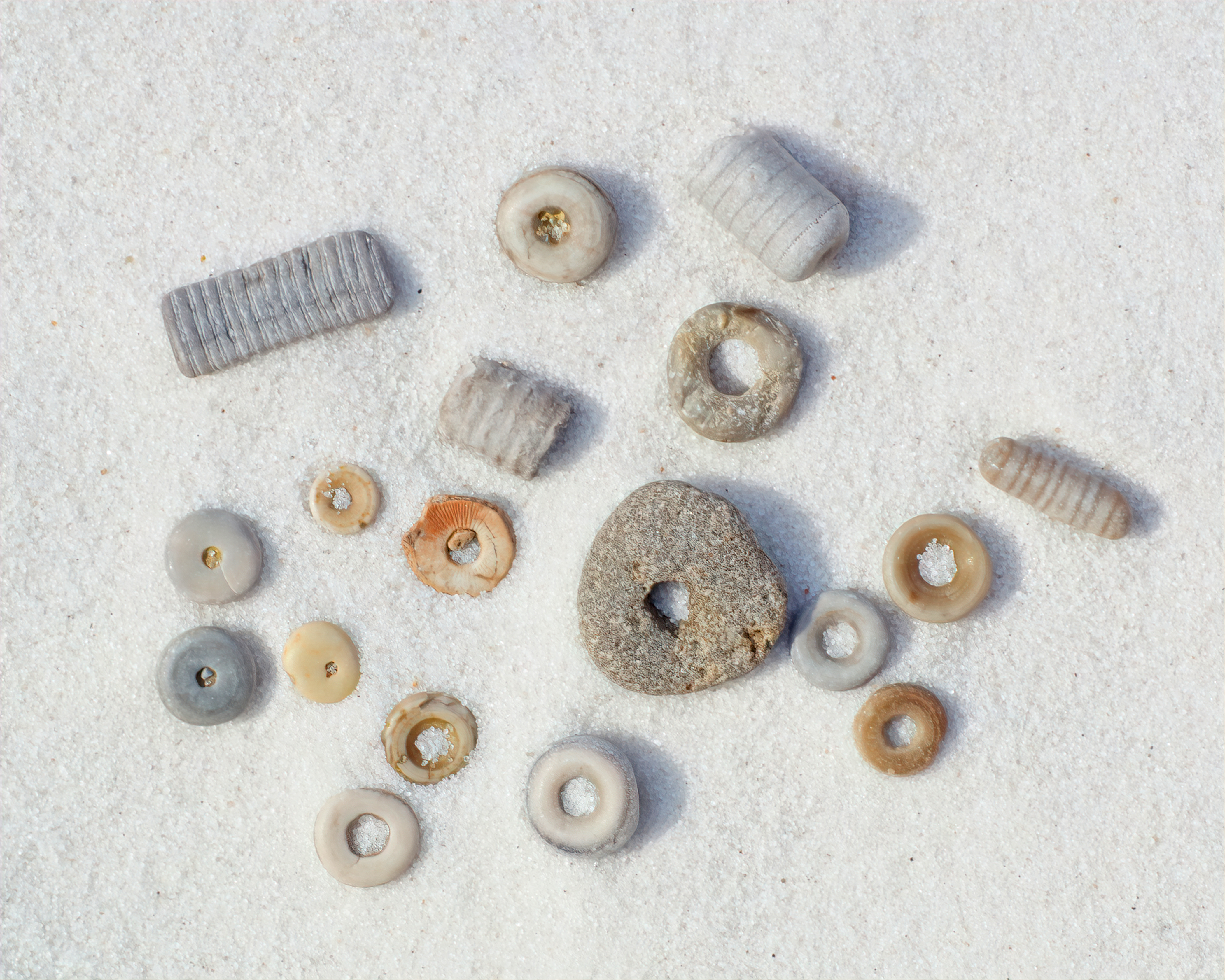
Beachcombers with a keen eye become obsssessed trying to find these tiny crinoid fossil pieces shaped like cheerios mixed among the beach stone rubble and sand along the shores of Lake Michigan. If they are lucky, they will find a piece or two everytime, hence the common name “Lucky Stones“. The largest crinoid fossil in the photo above is just under the size of a dime so you can imagine the luck and patience required to find them.
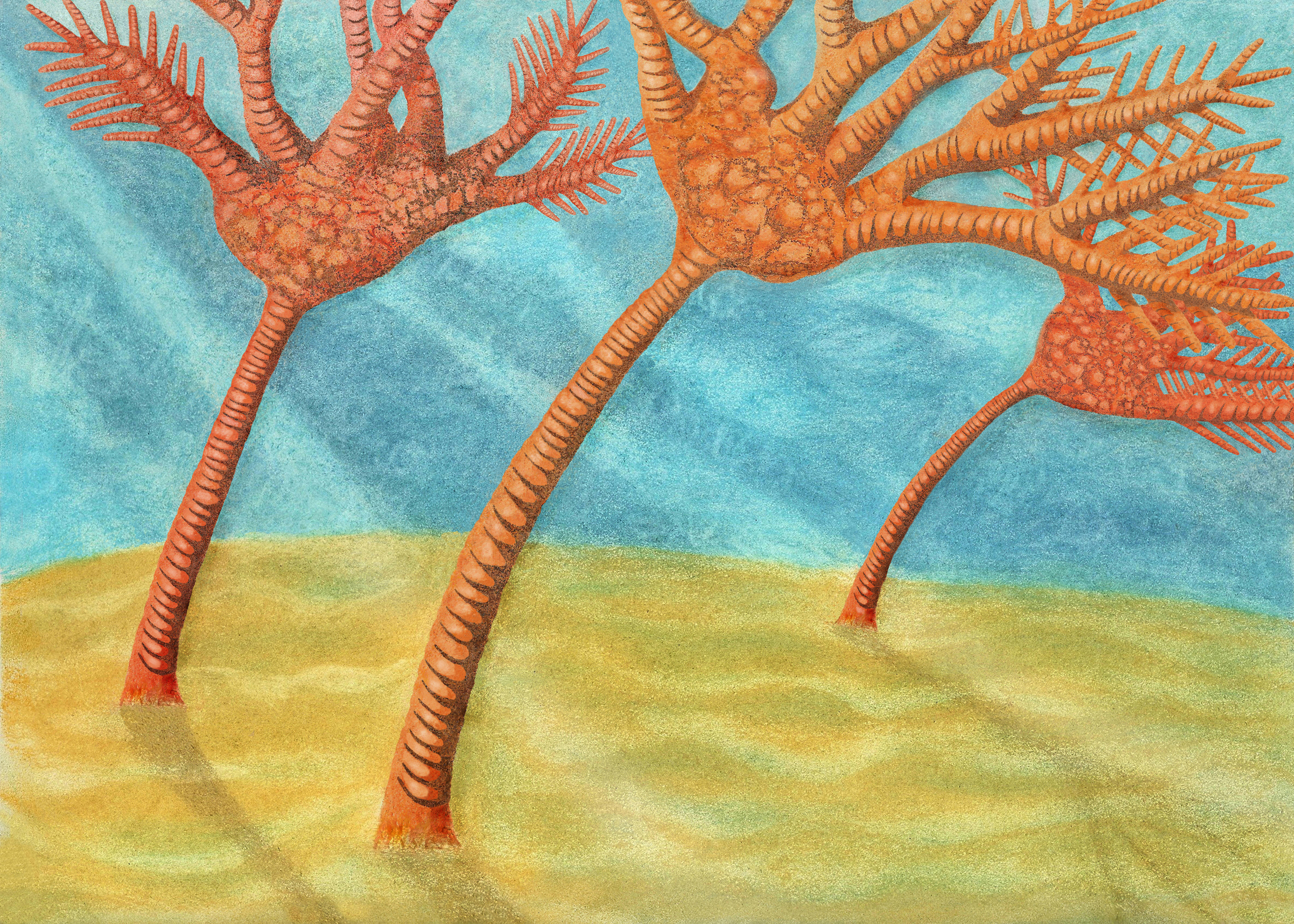
These extinct fossil species are also referred to as “Sea Lilies“ explained by their colorful flower-like appearance as living creatures. They were a type of ocean invertebrate animal that possessed long branching arms and a midsection that sat atop of a single slender stem, sometimes reaching two meters above the seafloor. Feathery tentacles at the tips of their branching arms trapped tiny food particles floating by in the ocean currents.

Crinoids were sessile creatures, meaning they attached themselves directly to the seafloor or to underwater rocks or sunken wood. A spawning of their offspring from these bottom bound creatures may have resembled the spring releasing of thousands of dandelion seeds blowing by in a gust of wind.

Crinoid skeleton fossils are usually found broken up into individual “cheerio” shaped sections or partial stems. Each circular section was stacked one on top of another forming the entire animal framework. The Native Americans used the fragmented fossilized sections for stringing necklaces. Consequently, yet another fitting common name for them is “Indian Beads“.
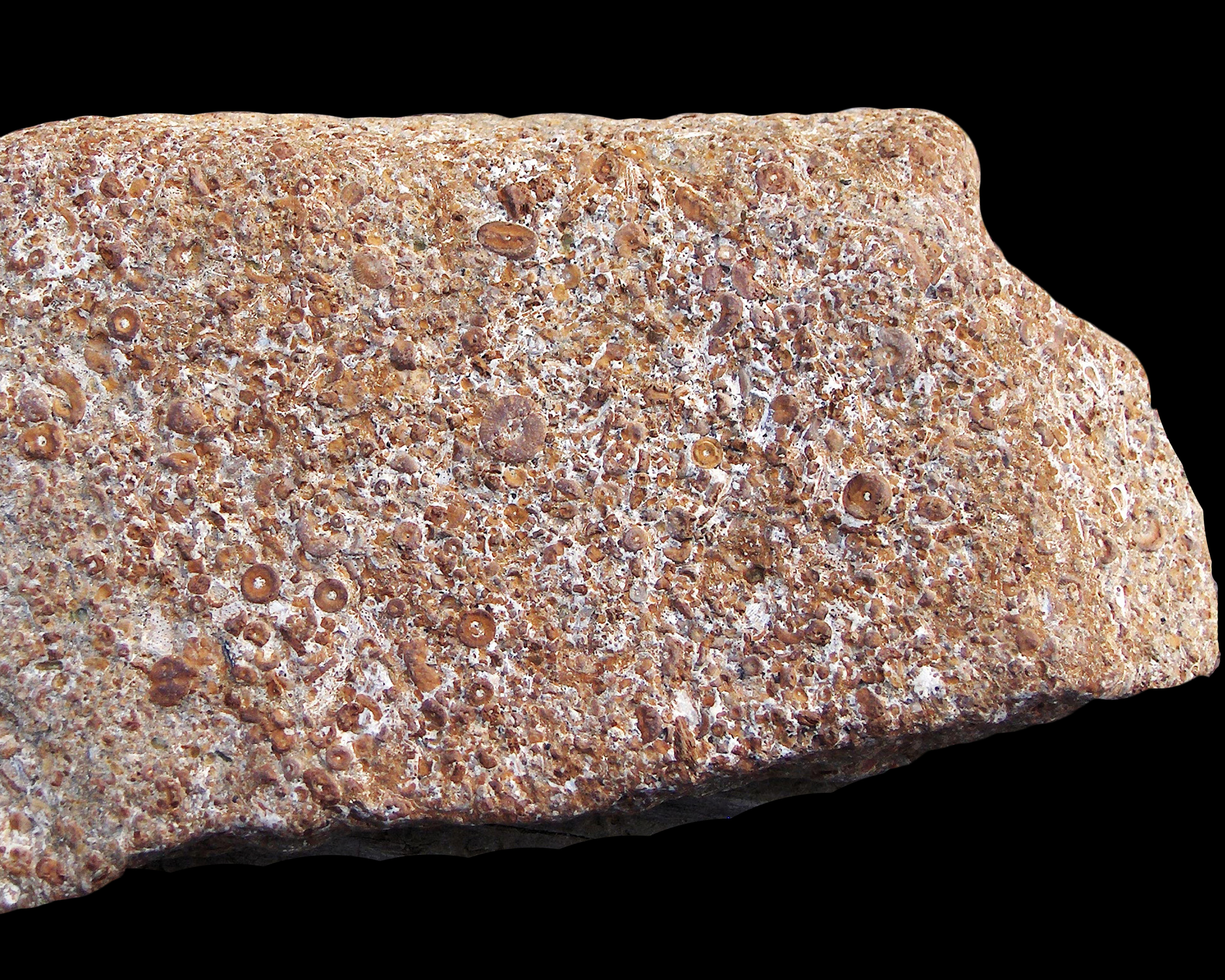
Crinoid’s amazing history dates back as early as the Ordovician Period around 500 million-years-ago, but their heyday happened during the Mississippian Period around 345 mya. Their fossil remains are found widespread in North America explained by the fact that much of the continent was covered under warm shallow seas. The sea lily crinoids were a dominant feature in the Paleozoic Era seas, but most varieties succumbed to the great Permian extinction around 252 mya. Today, a few species survive in cold deep-water environments, but dwarf in length compared to the prehistoric varieties.
Crinoid Classification
- Kingdom: Animalia
- Phylum: Echinoderm (means spiny skin, i.e. starfish, sea urchins, feather stars, crinoids)
- Class: Crinoid (means flower form)
All rights reserved © Fossillady 2026
 Fossil Lady