
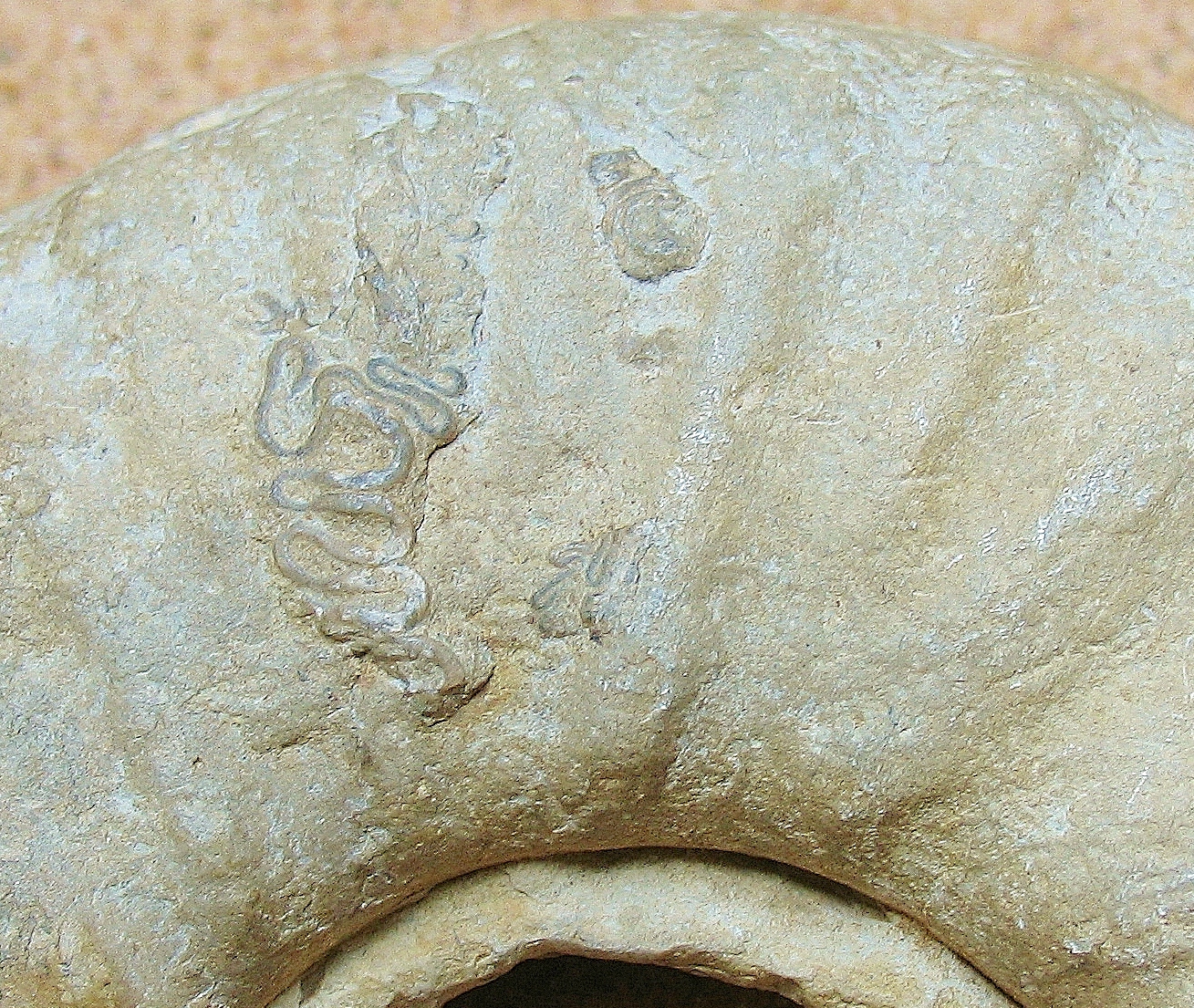
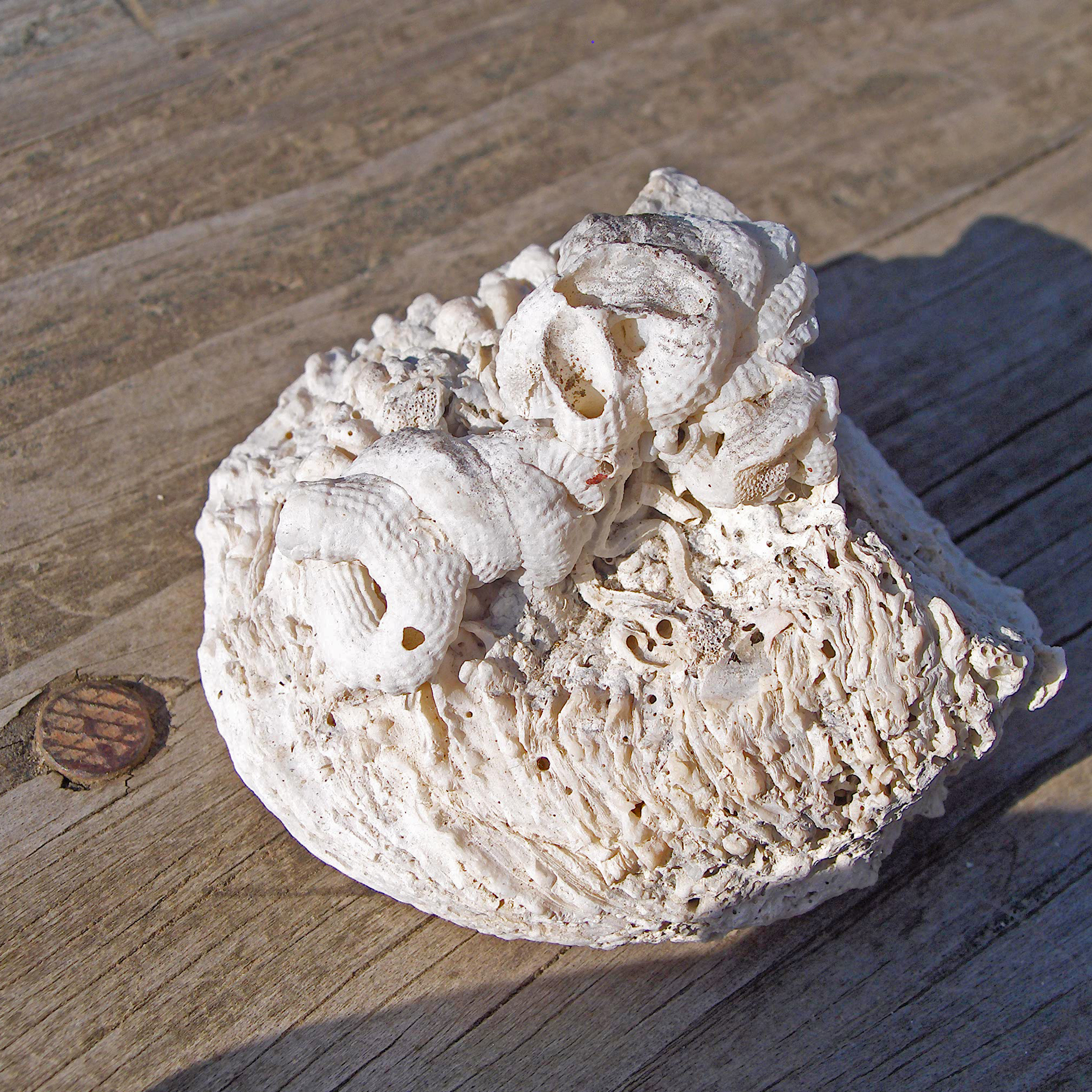
These little segmented sea worms secrete calcium carbonate to build a permanent protective tube over their bodies. They can attach themselves to many available surfaces such as rocks, clams or even other tubes of tubeworms. Their fossil record dates back as far as the Silurian Period around 443 million years ago, and today they are quite common worldwide. The worm living inside the tube is commonly called a “feather duster” or “fan worm” which displays a crown of feathery tentacles that it uses to strain micro-bits of food from the water. Therein lies the tubeworm beauty. Many seashells, living and fossilized, are encrusted with feather duster tubeworms and sometimes they completely over shadow their hosts with a large mass of crusty tubes.
Tubeworms Can Show Off an Attractive Crown of Feathers
It’s true; they can be real pretty as you’ll see from the photo samples below and most likely this was true in the distant past as well. Today, there are approximately 344 known species of feather duster tubeworms that may show off a colorful, attractive crown of feathery plumes. But if you wish you could catch one in your local lake, you would be disappointed because they are all salt-water marine varieties. A breakdown of their taxonomy explains a lot about them which you should find very interesting.

CLASSIFICATION BREAKDOWN DEMONSTRATES TWO FAMILIES
Kingdom: Animalia
Phylum: Annelid (means ringed one) Large group of segmented worms from 17,000 species ranging in size from microscopic to 3 meters long
Class: Polychaeta General marine group of annelid worms from 10,000 species; Each segment of the creature possesses a pair of outgrowths with bristles which help them hold onto objects. They have a well developed head with two to four eyes and antennas. They can be found worldwide and withstand the coldest and hottest temperatures known on the planet. From this group of annelids, they can be predators, herbivores, filter feeders, scavengers or parasites.
Order: Canalipalpata Bristle-footed or Fan-headed tubeworms
Suborder: Sabellida Sedentary marine worms that secrete calcium carbonate tubes
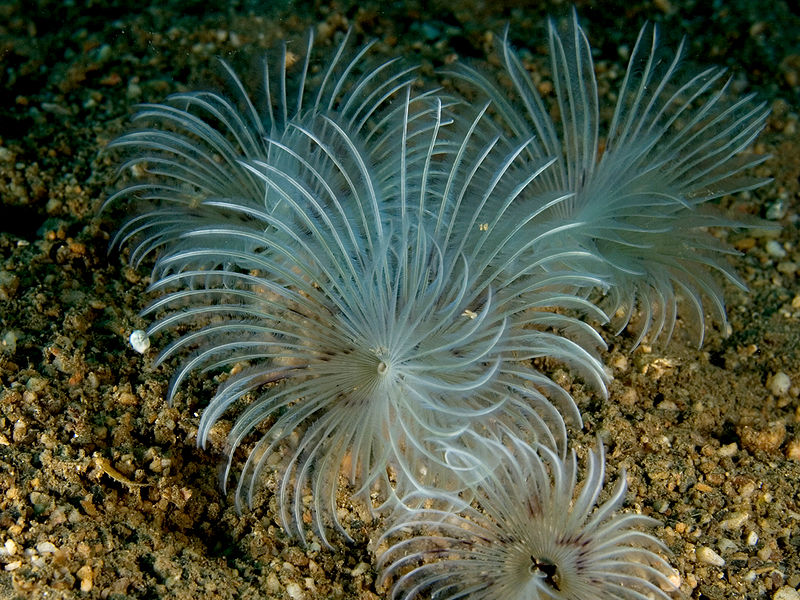
Family 1: Sabellidae (Two Photo Samples Shown Above) Sedentary marine tubeworms where the head is mostly concealed by feathery branches. They reinforce their tubes with sand and bits of shell. They tend to be common in the ocean intertidal zones around the world.
Family 2: Serpulidae (Two Photo Samples Shown Below) Differs from Family #1 primarily by a specialized operculum, a cone shaped plug that often resembles a trumpet which blocks the tube entrance when the worms withdraw into their tubes.
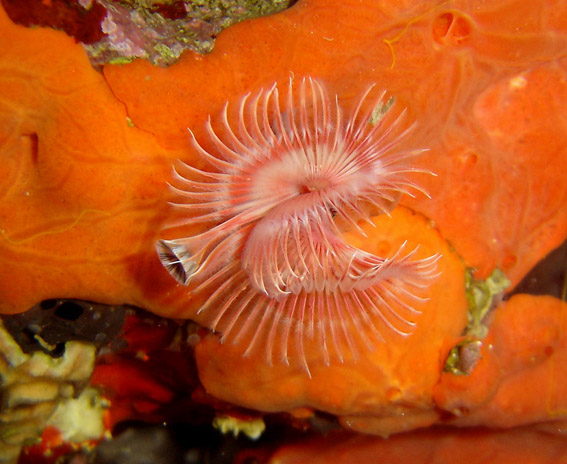
The Red Tubeworm (Serpula, vermicularis) shown above can rapidly retract into its tube; is typically red, orange, or pink with transverse white strands; can be found in shallow intertidal zones to deep depths up to 800 meters deep. The tube can be curved but not spiraled.
The Christmas Tree Tubeworm (Spirobranchus, giganteus) shown below is named for its double spiraled plume of feathers and shape resembling a Christmas tree. They display a wide variety of colors.

Interesting Side Note: According to a paper published February, 2000 in the journal, Nature, written by a Penn State research team, tubeworms living in the cold, calm depths in the Gulf of Mexico have surprisingly long life spans, especially compared to their cousins living in hot, active environments. Apparently, the cold climate tubeworms they studied take from 170 to 250 years to grow two meters long, while the hydrothermal-vent hot climate tubeworms grow well over a meter in just one year.
All rights reserved © Fossillady 2026
 Fossil Lady