Get me outta here!

Fossil Lady

Eager to share my fascination with fossils, rocks and seashells!

Menu

Skip to content
  • Home

Author Archives

Fossilladyhttps://fossillady.wordpress.comThis is where I combine my photography and writing to share my fascination with fossils.
Fossillady's avatar

Mysterious Sponges

October 14, 2010 by Fossillady
HPIM0748
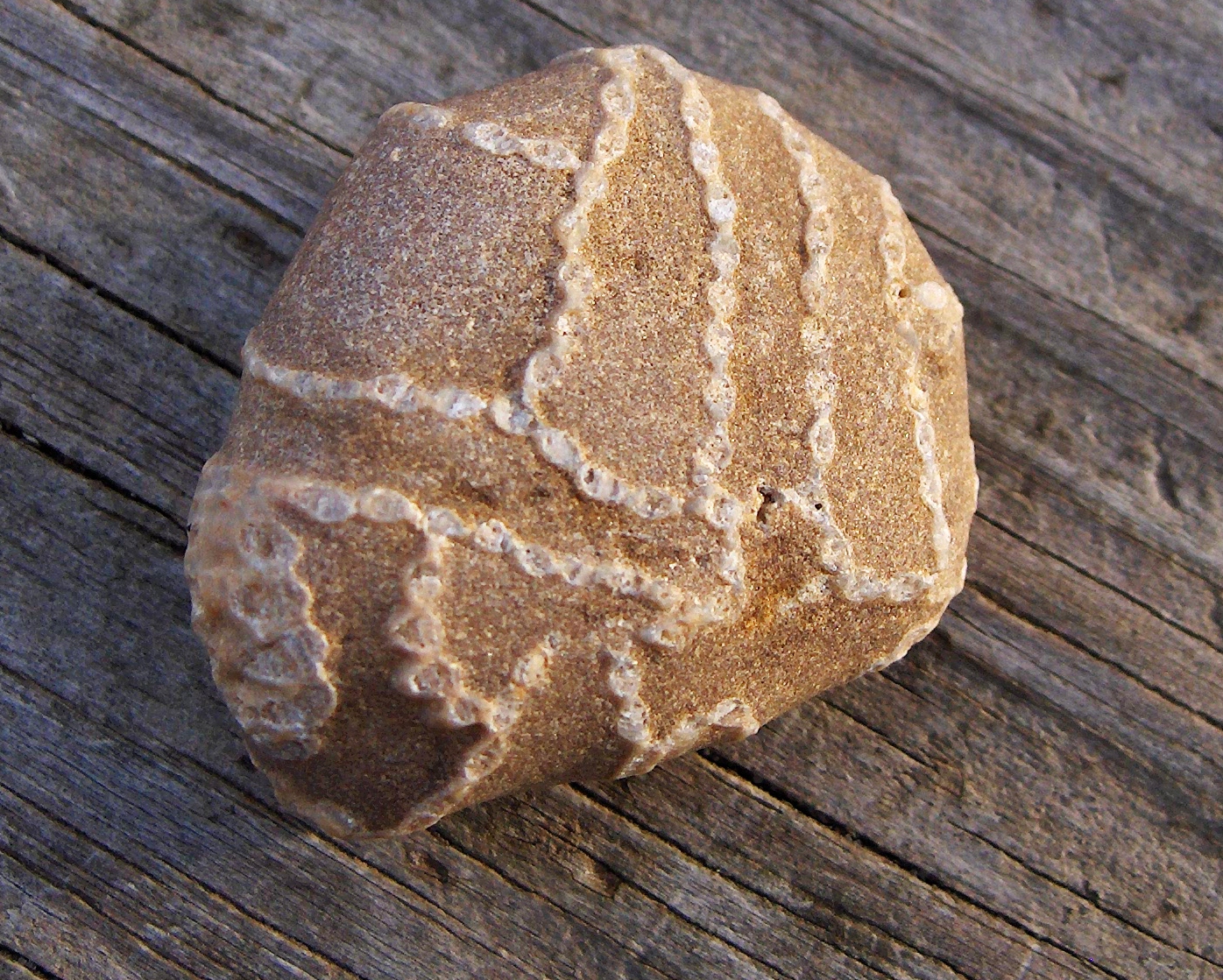
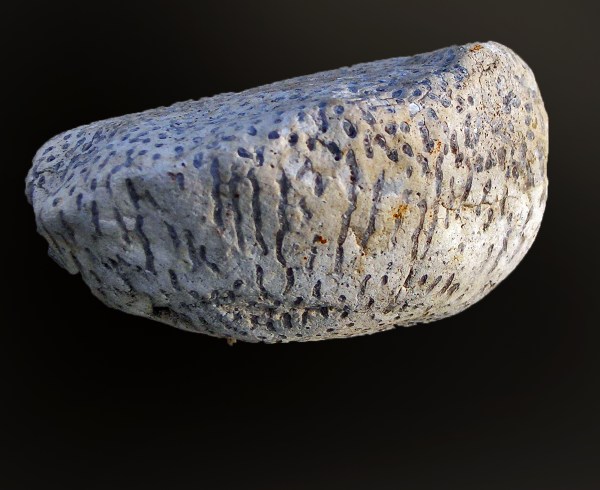
Lake Michigan Sponge Fossil, Side View

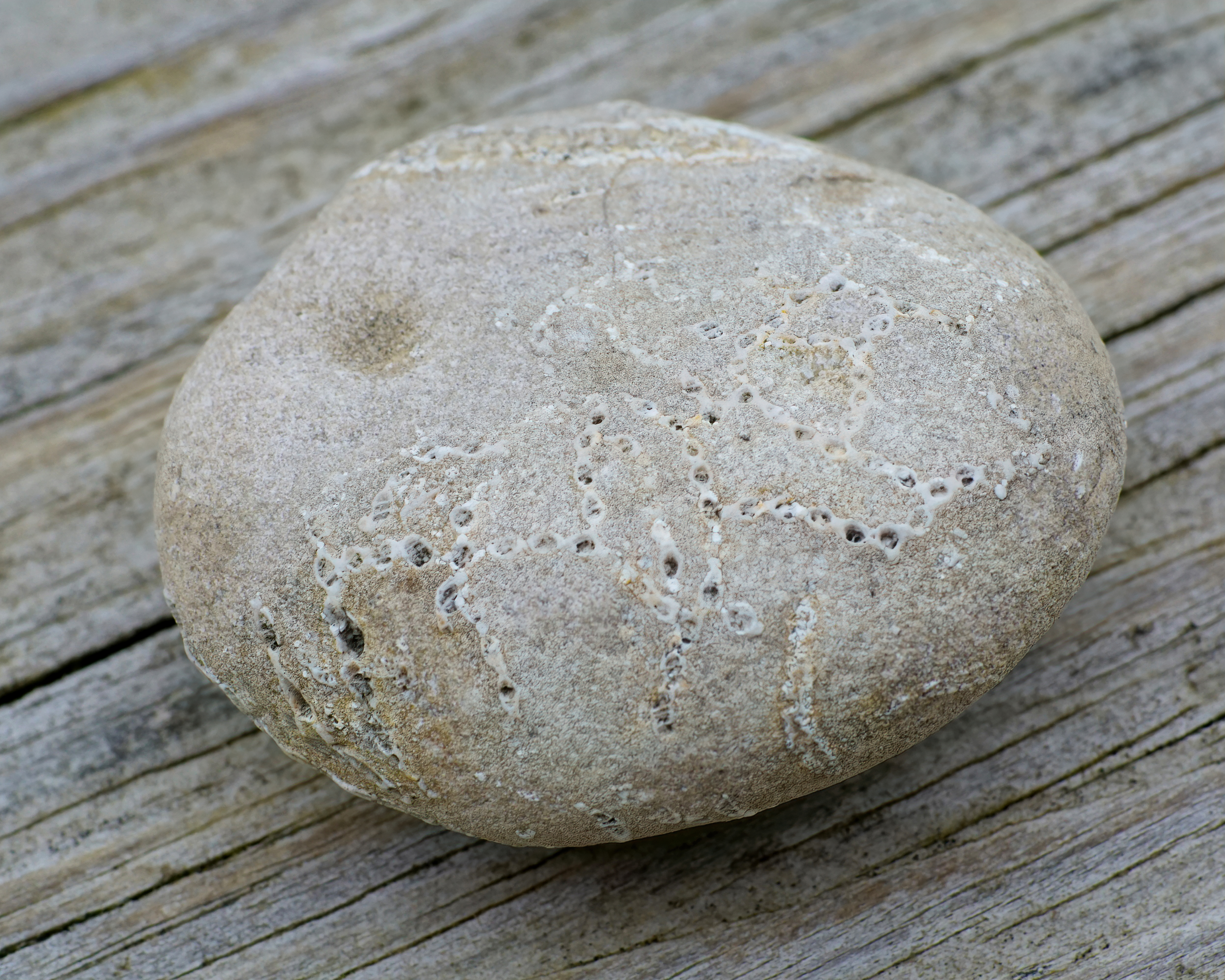
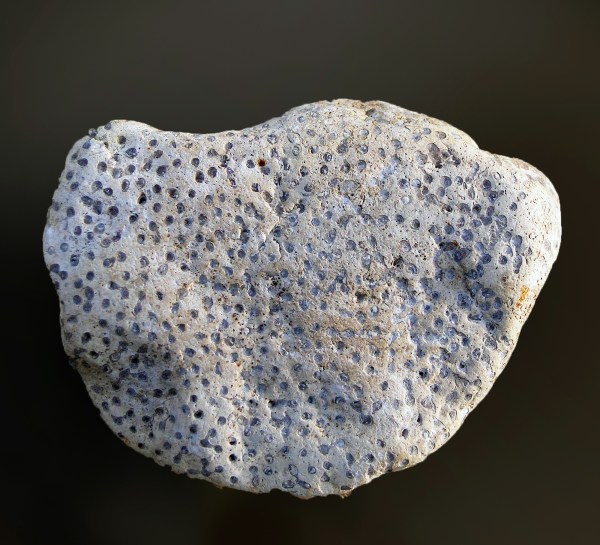
This is one of the more unusual fossil finds from our shores of Lake Michigan in Southwestern Michigan USA! I’m 99.9 % sure it’s a fossilized sponge and not a coral due to the lack of septa, vertical growth walls. From the side view, you can see how the tubes, or pores, permeate down into the structure.

HPIM0749_edited-2
Lake Michigan Sponge Fossil, Top View

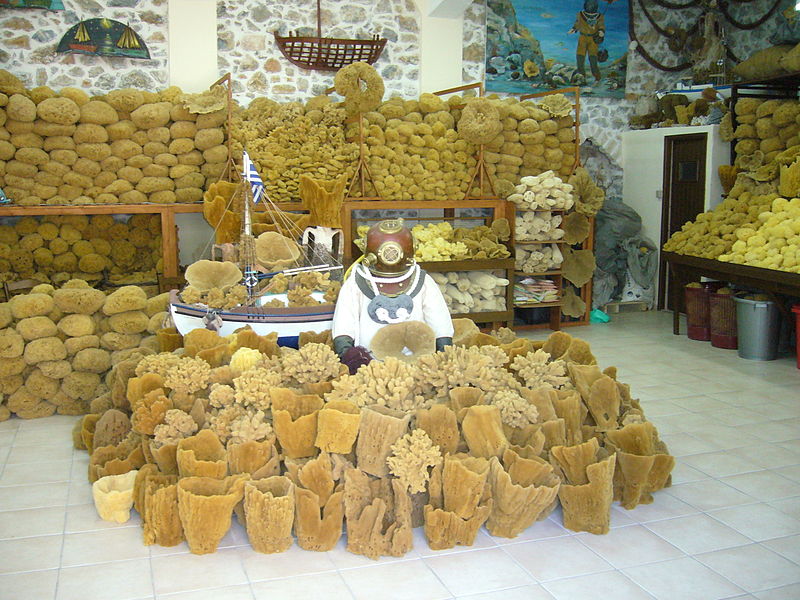
INTERESTING SPONGE FACTS:   The most fascinating fact about sponges is their long extended history on Earth beginning 580 million years ago. The type of sponges we’re most familiar with are the ones we use for our households. Those are actually referred to as, demosponges, having entirely soft fibrous skeletons with no hard elements of which there are only a few species. After thousands of years, humans had almost harvested them to extinction by the 1950’s.  Many are now being researched for a possible source of medicines.

Sponges
Popular Tourist Spot Selling Natural Sponges, Source: en.wikipedia.org

HOW SPONGES LIVE: Sponges have delicate skeletons and rely on a constant water flow through their bodies to capture food and obtain oxygen. They don’t have a digestive or circulatory system like we do. They can actually change the shape of their bodies for maximum water flow.  Most species have the ability to contract and squeeze the water out of their pores in order to flush out sediments clogging them. They can even  escape from predators by squeezing out the water and shrinking themselves. For further defense, many shed spiky spicules to create a dense hazardous carpet around them which keeps away predators such as star fish.

SPONGE CLASSIFICATION

Kingdom:  Animalia       Phylum:  Porifera (means to possess pores)

Four Classes

Demosponges – Largest class; Inner structure reinforced with collagen fibers and spine-like spicules made of silica minerals; Usually barrel shaped; Can live in a wide variety of habitats

Hexactinellida – Glass Sponges; Spiny spicules made of silica minerals forming inner scaffolding structure with gelatin substance weaved in between framework; likes Polar Regions

Calcareous – Outer exoskeleton and inner spicules made of calcium carbonate. Restricted to shallow marine waters where production of calcium carbonate is easiest to obtain.

Scleropongiae (Coralline or Tropical Reef Sponges) soft body that covers a hard, often massive skeleton made of calcium carbonate, either aragonite or calcite.  The layered skeletons look similar to reef corals, therefore are also called coralline sponges.

All rights reserved © Fossillady 2025


Share this:

  • Share on Pinterest (Opens in new window) Pinterest
  • Share on Facebook (Opens in new window) Facebook
  • Print (Opens in new window) Print
  • Email a link to a friend (Opens in new window) Email
  • Share on LinkedIn (Opens in new window) LinkedIn
  • Share on Reddit (Opens in new window) Reddit
  • Share on X (Opens in new window) X
Like Loading...
Sponges Fossils Extinct Michigan fossils factsfossils for kidsMichigan Sponge Fossilspaleozoic fossilsSponge Factssponge fossilssponge information

Straight Shelled Nautiloids Have a Long History

September 25, 2010 by Fossillady

Straight-shelled nautiloids date back from the Cambrian Period roughly 500 million years ago and survived into the Late Triassic Period around 230 mya. That’s approximately 270 million years of living on earth . . . overwhelming and astounding!  Their fossilized shells have been discovered all around the world in large assemblages and commonly occur in marine limestone rock.

During the 18th and 19th centuries, all the straight-shelled nautiloids were named orthoceras, creating a wastebasket taxon and confusion. To clarify, orthoceras is a specific genus of extinct nautiloids restricted to Middle Ordovician aged marine limestones of the Baltic States and Sweden. And more recently to add to the confusion, orthocone refers to just the straight shell.

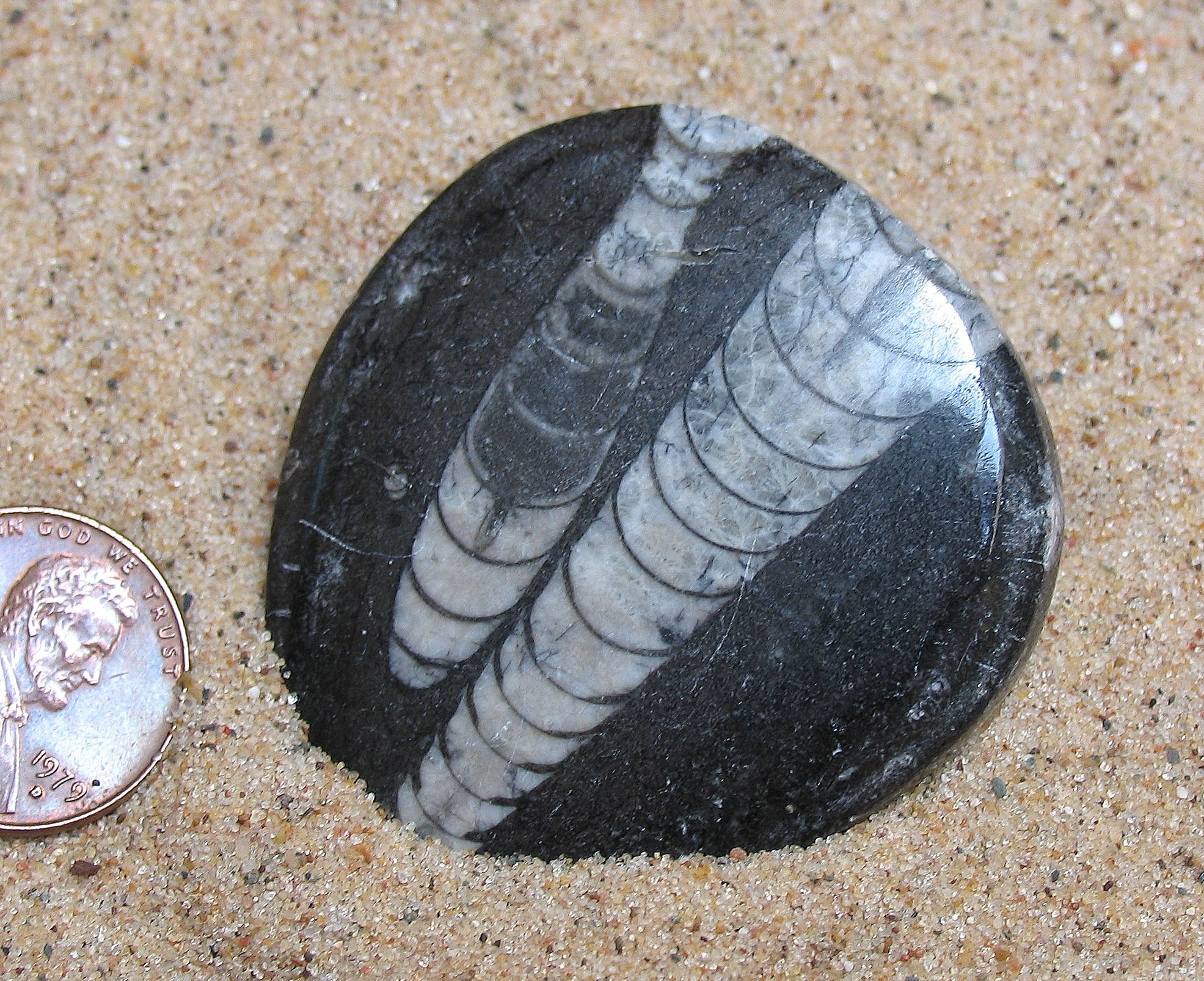
Orthocone (Orthoceras) Straight-Shelled Nautiloid Fossil

The straight-shelled nautiloids were an abundant group of marine mollusk cephalopods that flourished during the Paleozoic timeslot and diminished by the end of the Triassic period into extinction. They are related to modern day cephalopods including octopus, squids, cuttlefish and the nautilus. They were also related to the extinct ammonites possessing coiled shells, which evolved after them. The straight-shelled nautiloids likely were not as agile as their cousin coiled-shelled ammonites. Both species possessed a siphuncle tube that ran through the entire lenght the animal’s inner chambers inside their shells. Each inner chamber was separated by a wall called, a septa wall. As the animal grew, it added another septa wall and a new septa chamber of a larger size.

To move throught the ocean water, the orthoceras straight-shelled nautiloids and ammonites filled their inner chambers with water by using the siphuncle tube. They then forced the water out which propelled them backward with a kind of jet propulsion. The tube also served as a buoyancy device by releasing the water and leaving air space. This allowed the animal to raise and lower itself through various ocean depths.

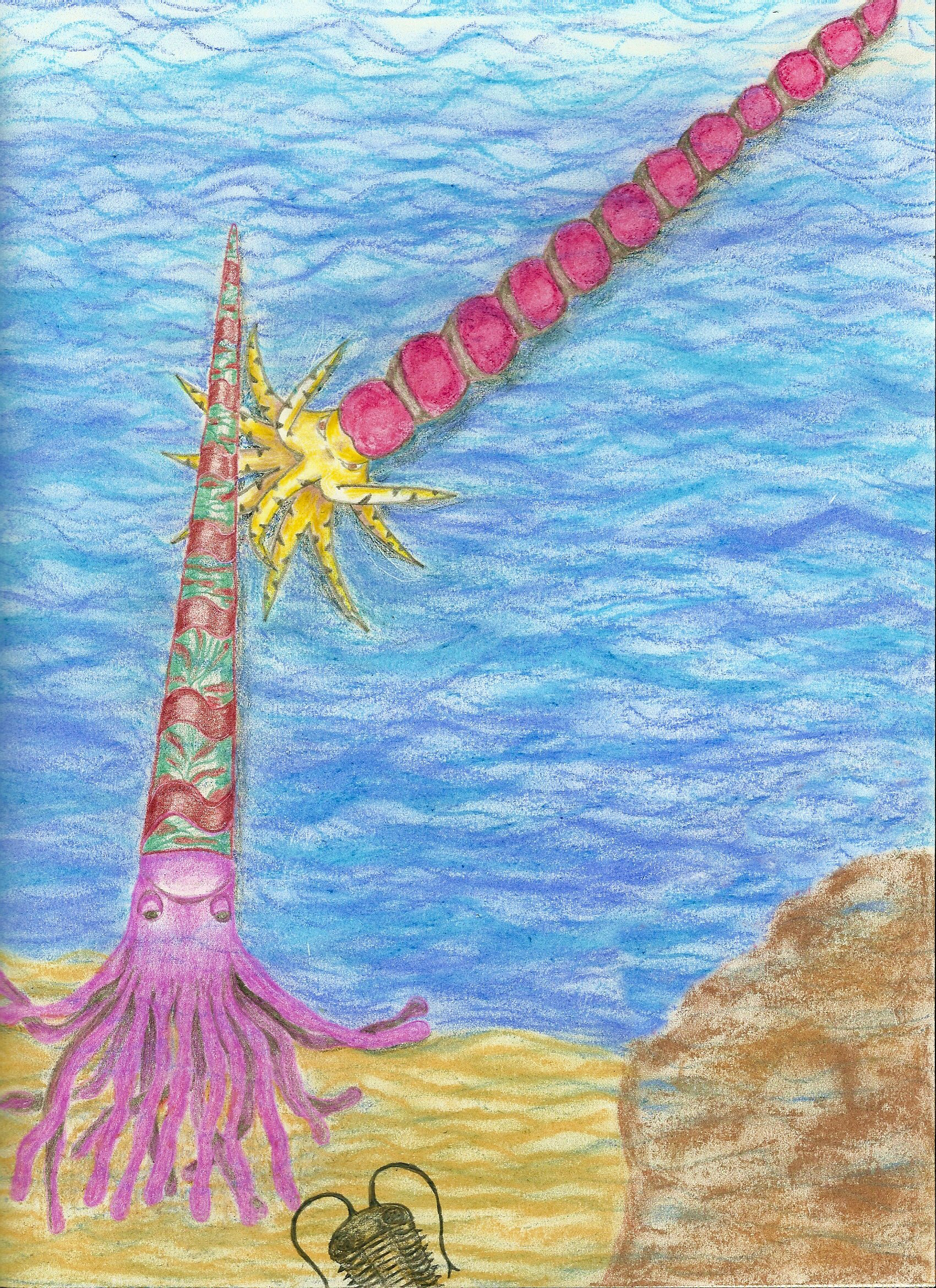
The straight-shelled nautiloids possessed 8 to 10 powerful tentacles which protruded from the wide opened end of its shell and out its head. The tentacles detected and captured prey. The animal possessed well developed eyes, a beak and a well developed brain and head with a hood.

(Orthoceras) Straight-Sheled Nautiloid Fossil

Their fossils have been quarried by Europeans for many years and adorn floors, stairs, jewelry, gravestones and more with their durable and desirable beauty.

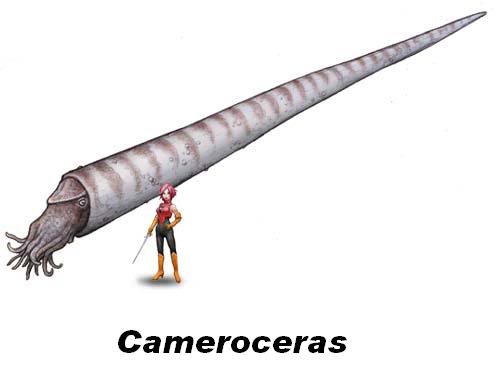
The orthoceras straight-shelled nautiloids displayed extreme diversity in size from a few inches to 14 feet in length. One of the largest orthocone giants from the earliest years, Cameroceras, reached 30 feet in length.

cameroceras

 CLASSIFICATION

Kingdom:  Animalia

Phylum:    Mollusk  (large diverse group of invertebrates with soft bodies encased in a shell i.e. clams, snails, oysters )

Class:      Cephalopoda  (means prominent head and tentacles i.e. squid, octopus, nautilus, cuttlefish)

Subclass: Nautiloidea   (series of chambers of increasing size connected by a central tube)

Order:     Orthocerida  (extinct group of  cephalopods possessing long straight shells)

Family:     Orthoceridae

Genus:    Orthoceras (means straight horn)

Scan_Pic0006
Cephalopod Straight Shelled Nautiloid Orthoceras Drawing Rendition

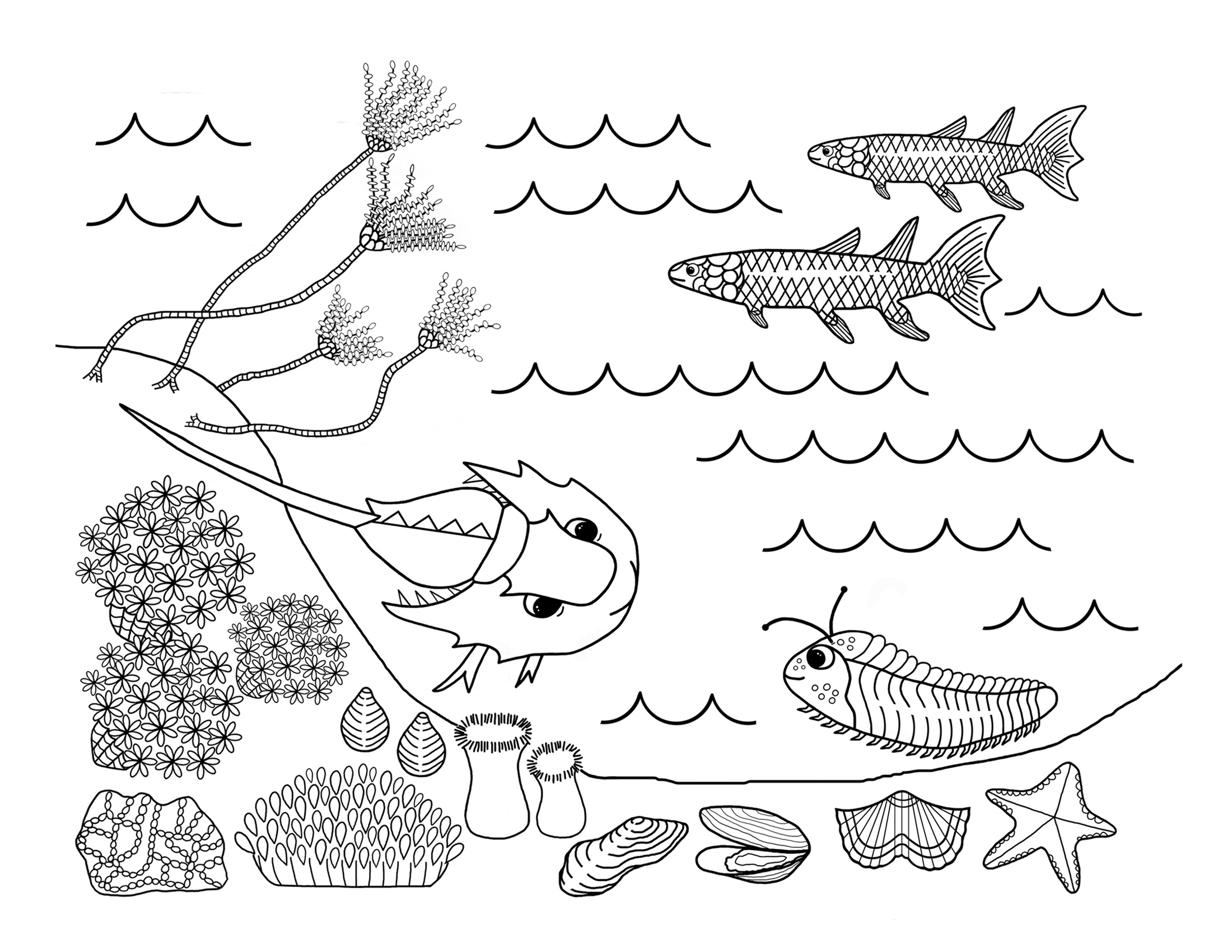
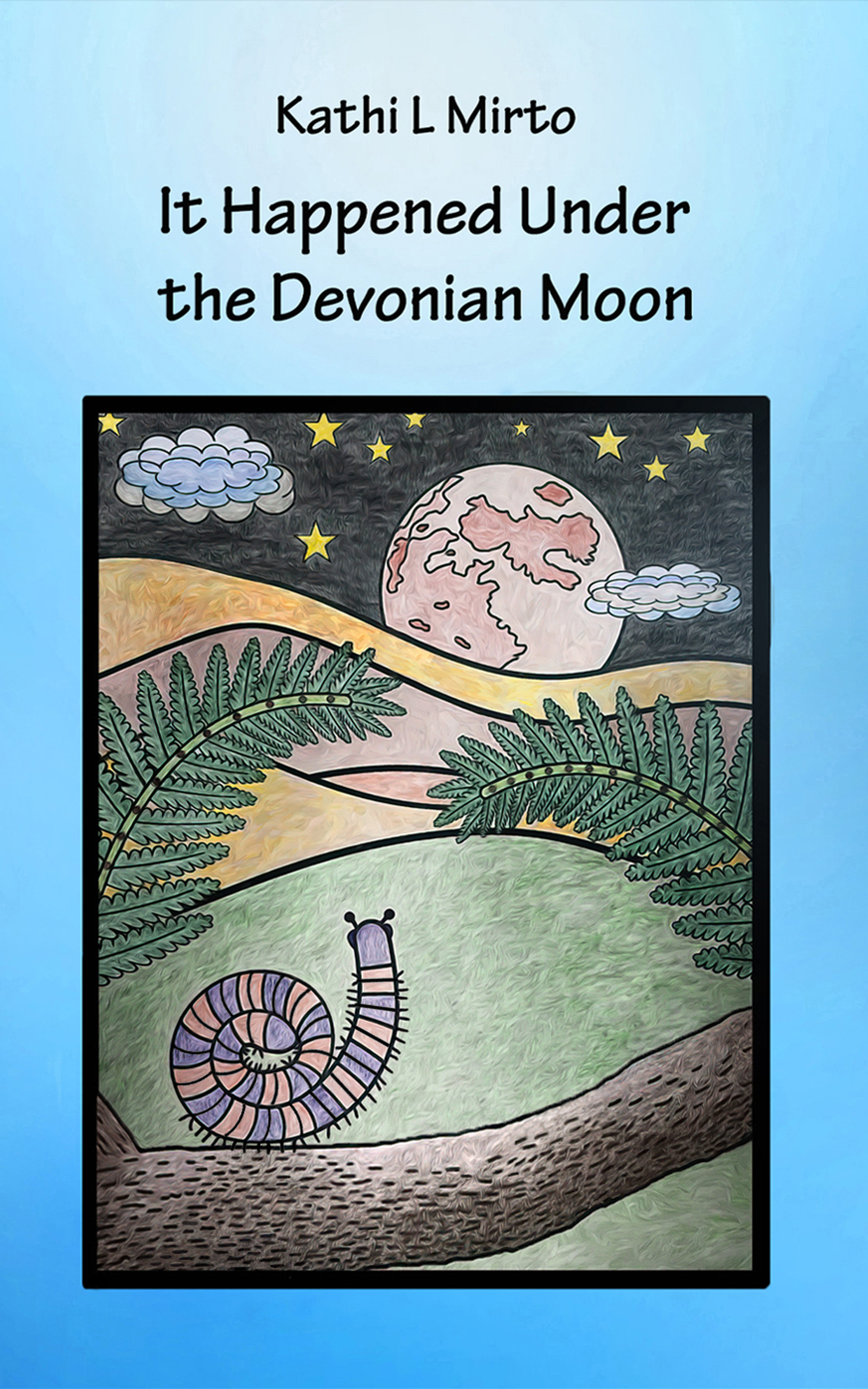
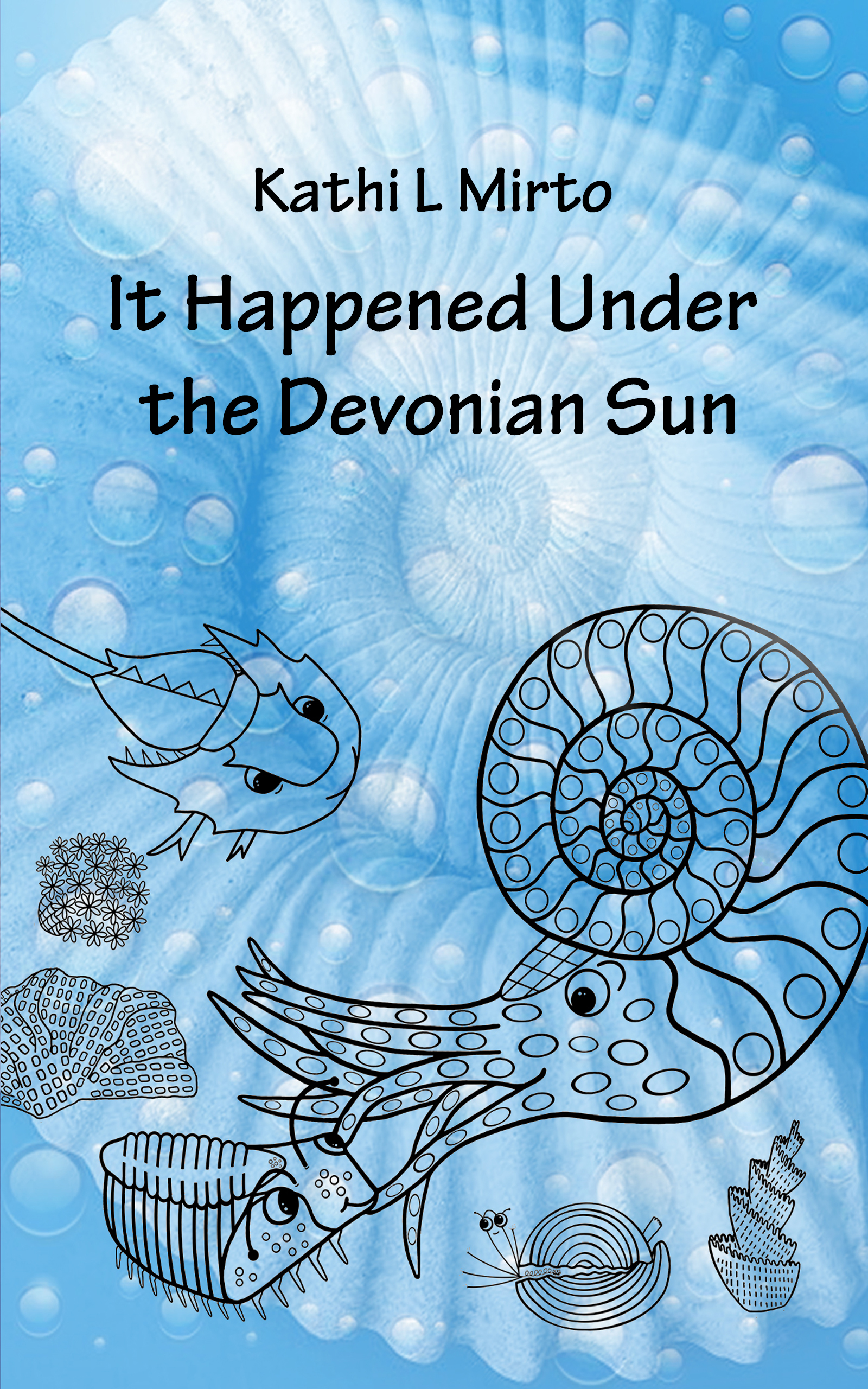
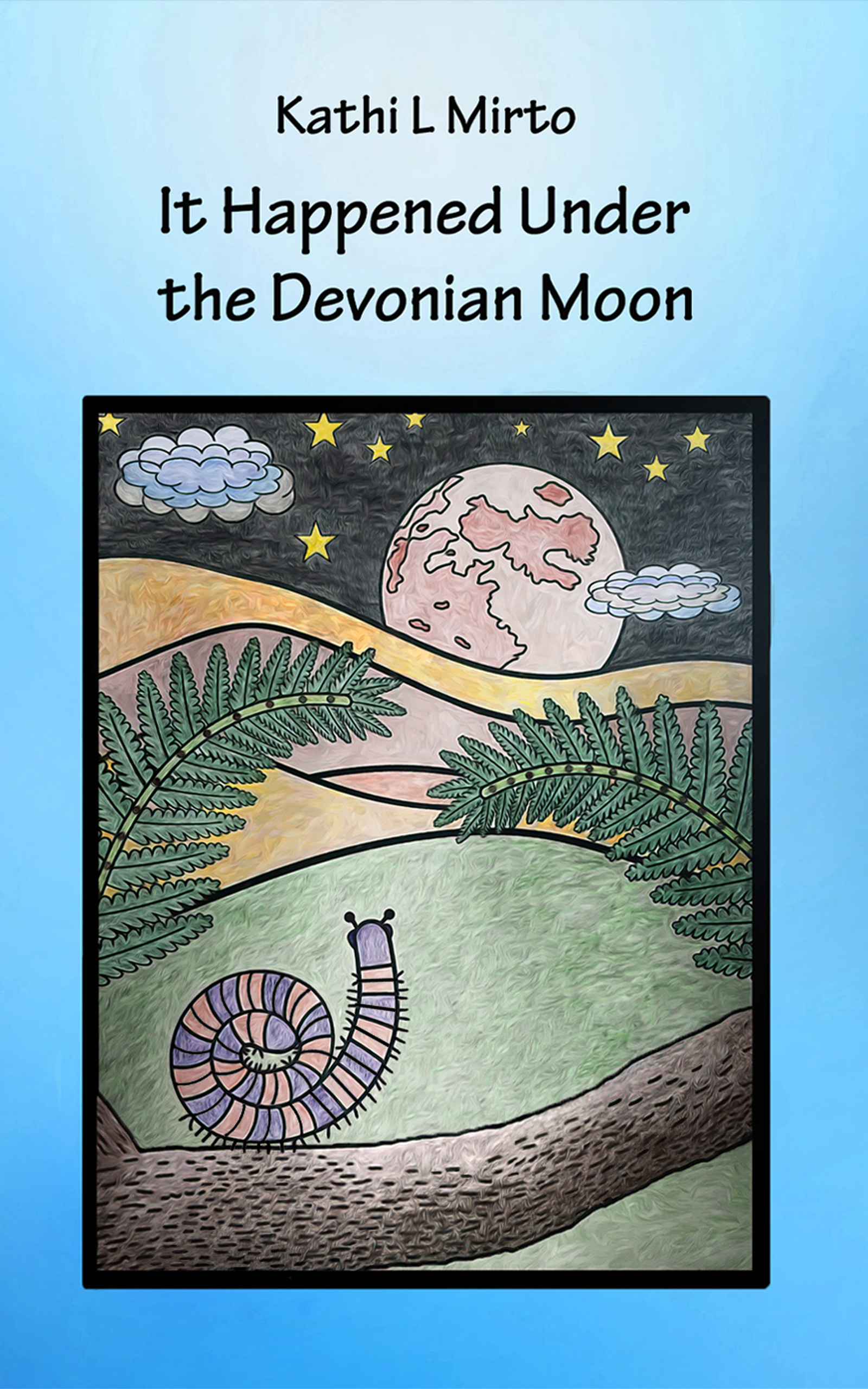
Check out my fiction book, one of two in a series, featuring factual prehistory insights blended with imaginative storytelling that educates as it entertains. Also availabale, a coloing/activity book featuring scenes from both books along with many of the plants and animals that lived during the amazing Devonian Time Period; fossil photos and descriptions included. Perfect for young explorers interested in fossils or young readers who simply like a good story. Ages 11-15+ available on a Amazon.com
All rights reserved © Fossillady 2025

Share this:

  • Share on Pinterest (Opens in new window) Pinterest
  • Share on Facebook (Opens in new window) Facebook
  • Print (Opens in new window) Print
  • Email a link to a friend (Opens in new window) Email
  • Share on LinkedIn (Opens in new window) LinkedIn
  • Share on Reddit (Opens in new window) Reddit
  • Share on X (Opens in new window) X
Like Loading...
Cephalopod Nautiloid Fossils cephalopod nautiloid classificationcephalopod nautiloid drawingcephalopod nautiloid fossil factscephalopod nautiloid fossil informationcephalopod nautiloid rendeingnautiloid fossilsorthoceras classificationorthoceras factsorthoceras fossilpaleozoic fossils

Earth’s Original Land Tree Plant

September 17, 2010 by Fossillady

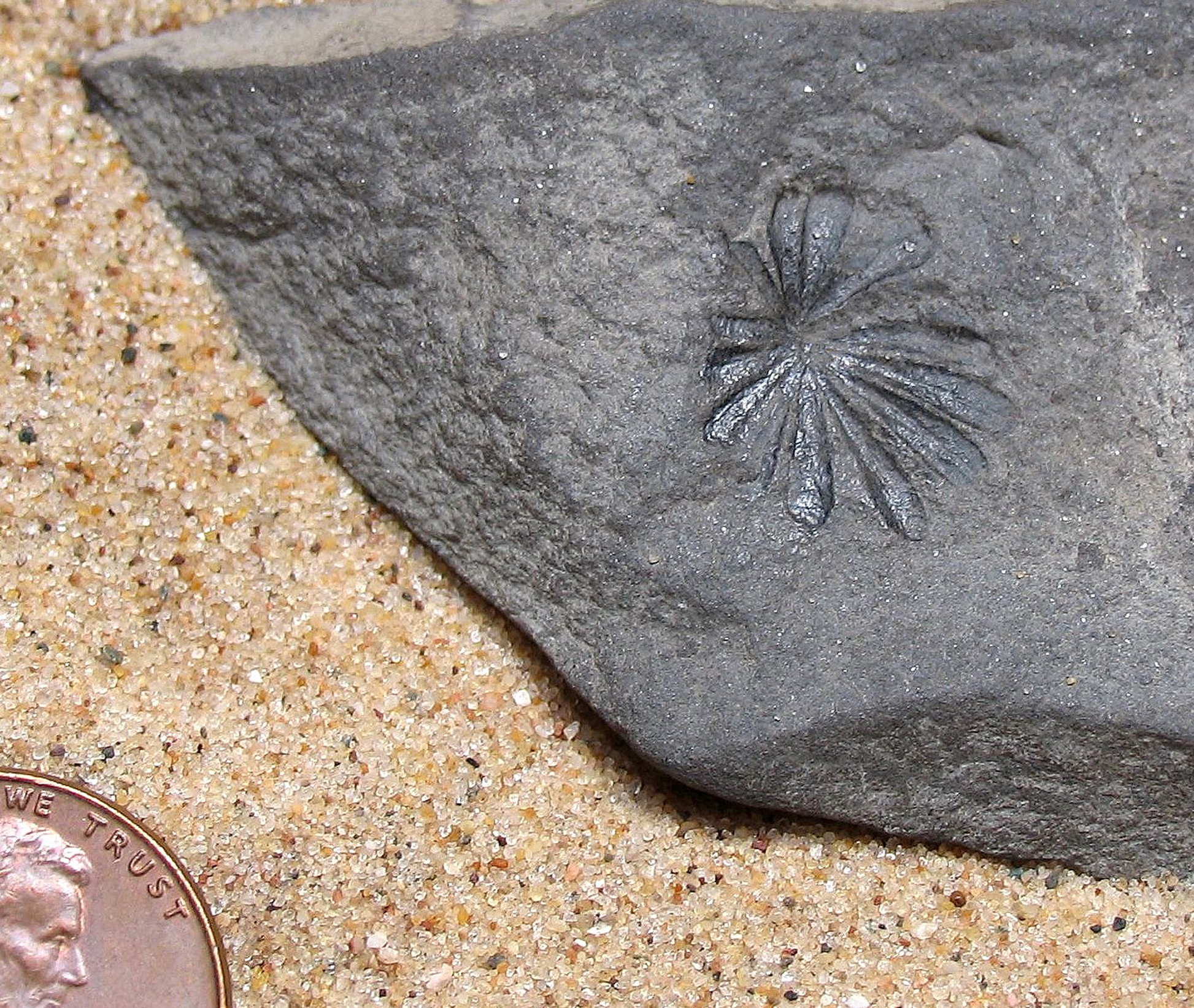
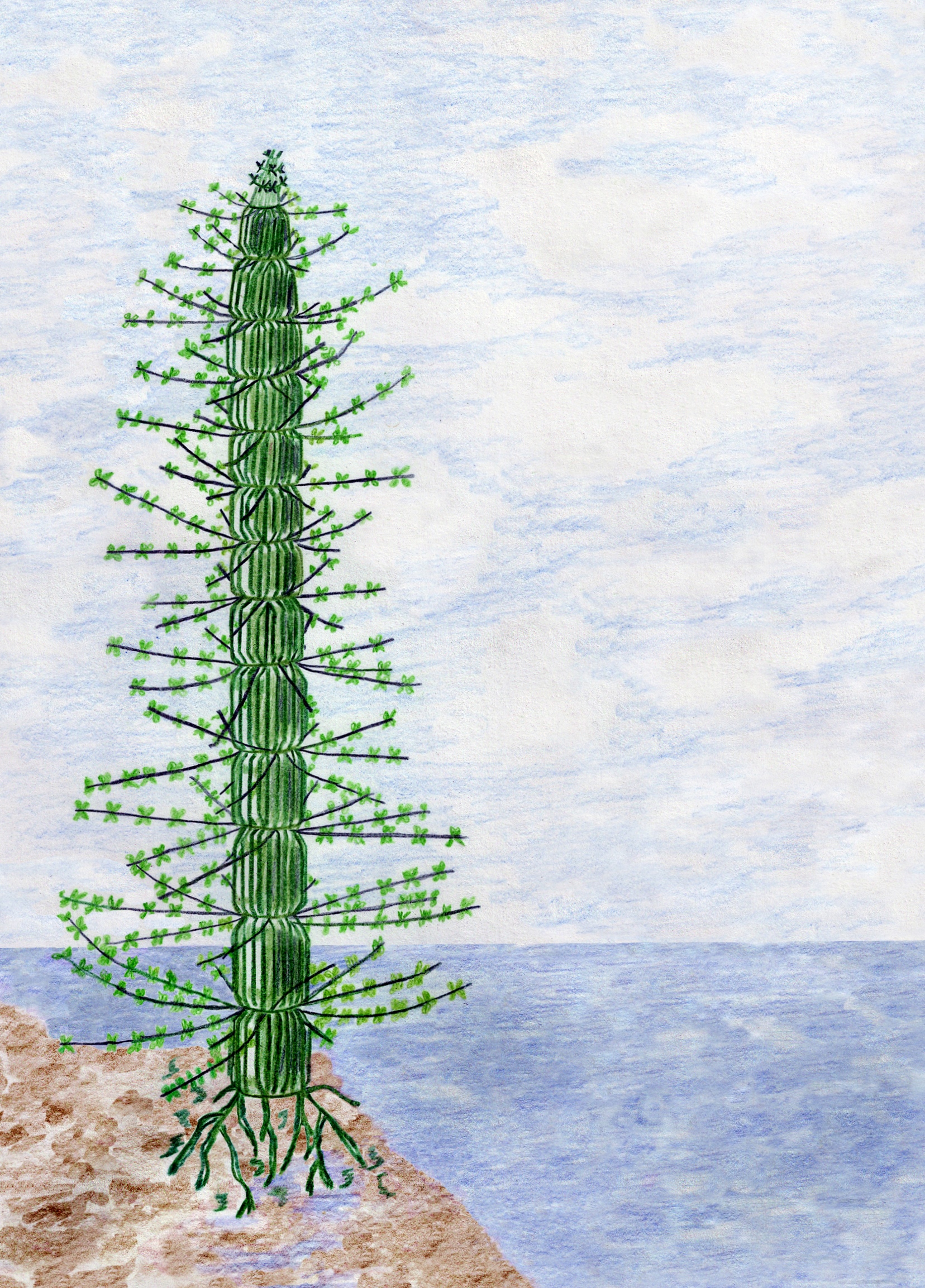
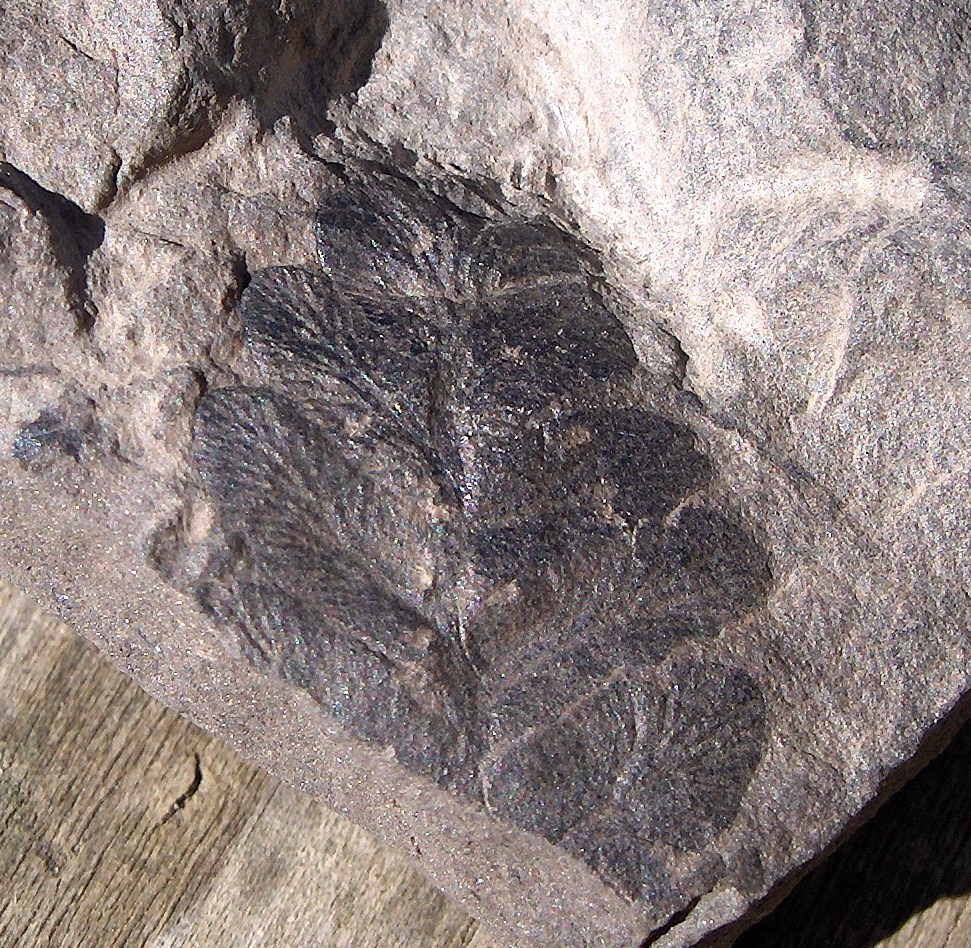
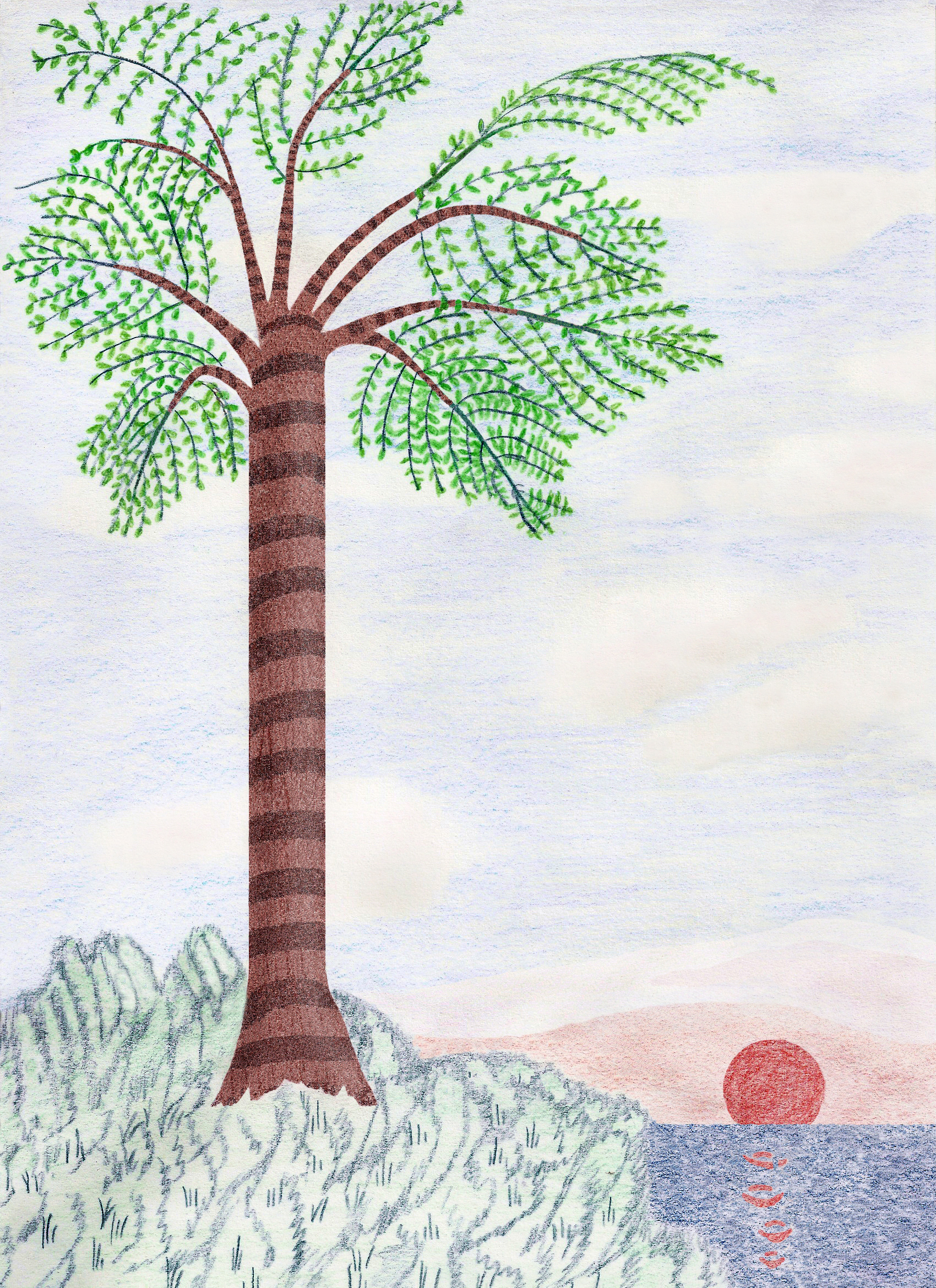
Was the “Calamite” the first tree-like plant to grow on land? Many scientists believe so. It possibly grew up to 100 feet (30 meters) tall, towering above the sparse landscape during its lengthy lifespan. Its earliest beginnings were approximately 400 million years ago during the Devonian Time Period. But this tree-like species trived particularly during the tropical coal swamps of the carboniferous era before it went extinct.

Devonian to Carboniferous Age Calamite Tree Leaf Imprint “Annularia” Trace Fossil

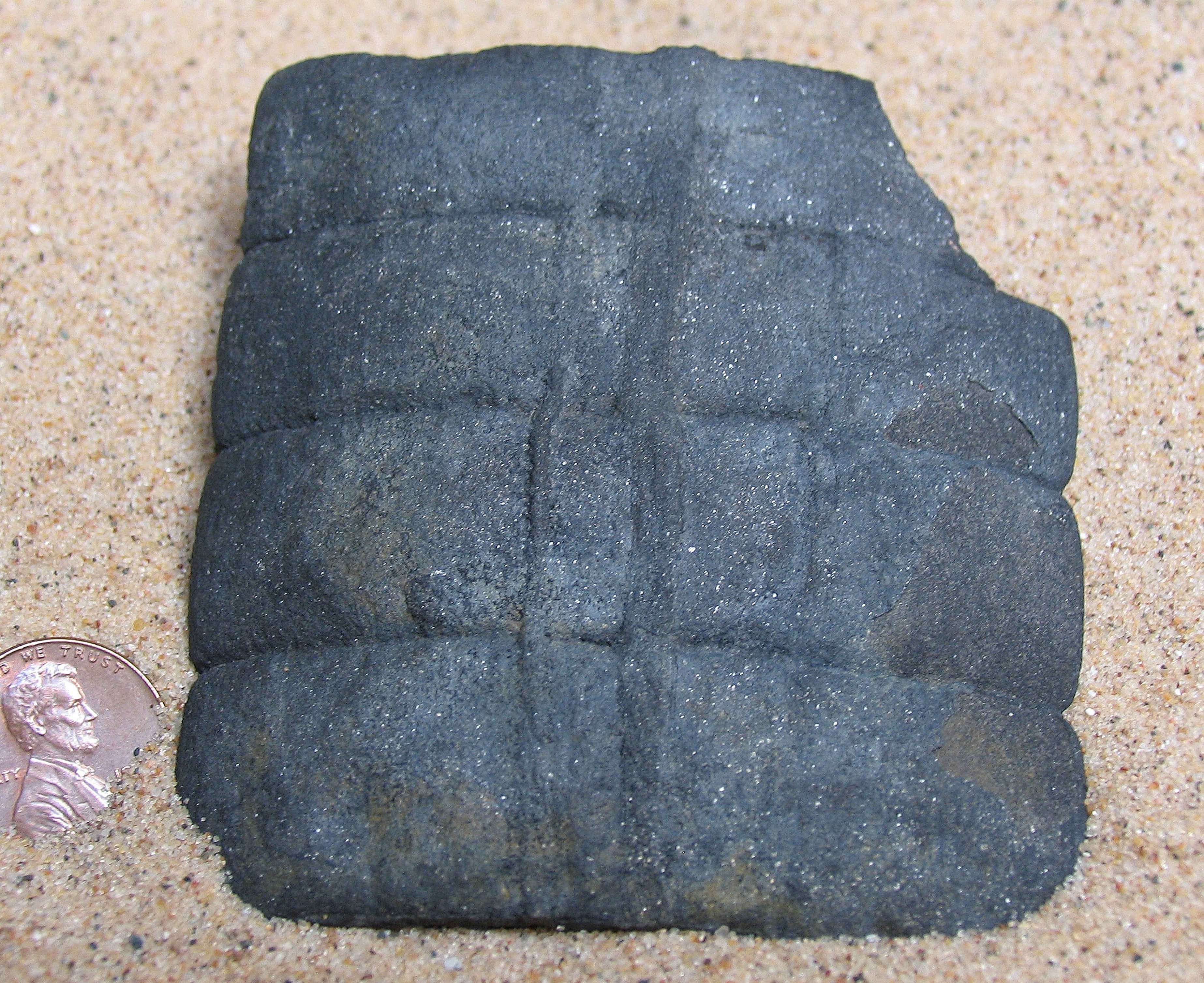
The trunk was a woody hollow tube, lacking true bark. There were various species that resembled modern day bamboo with segments and ribbing. The leaves were primitive and needle like, arranged in whorls around a stem.

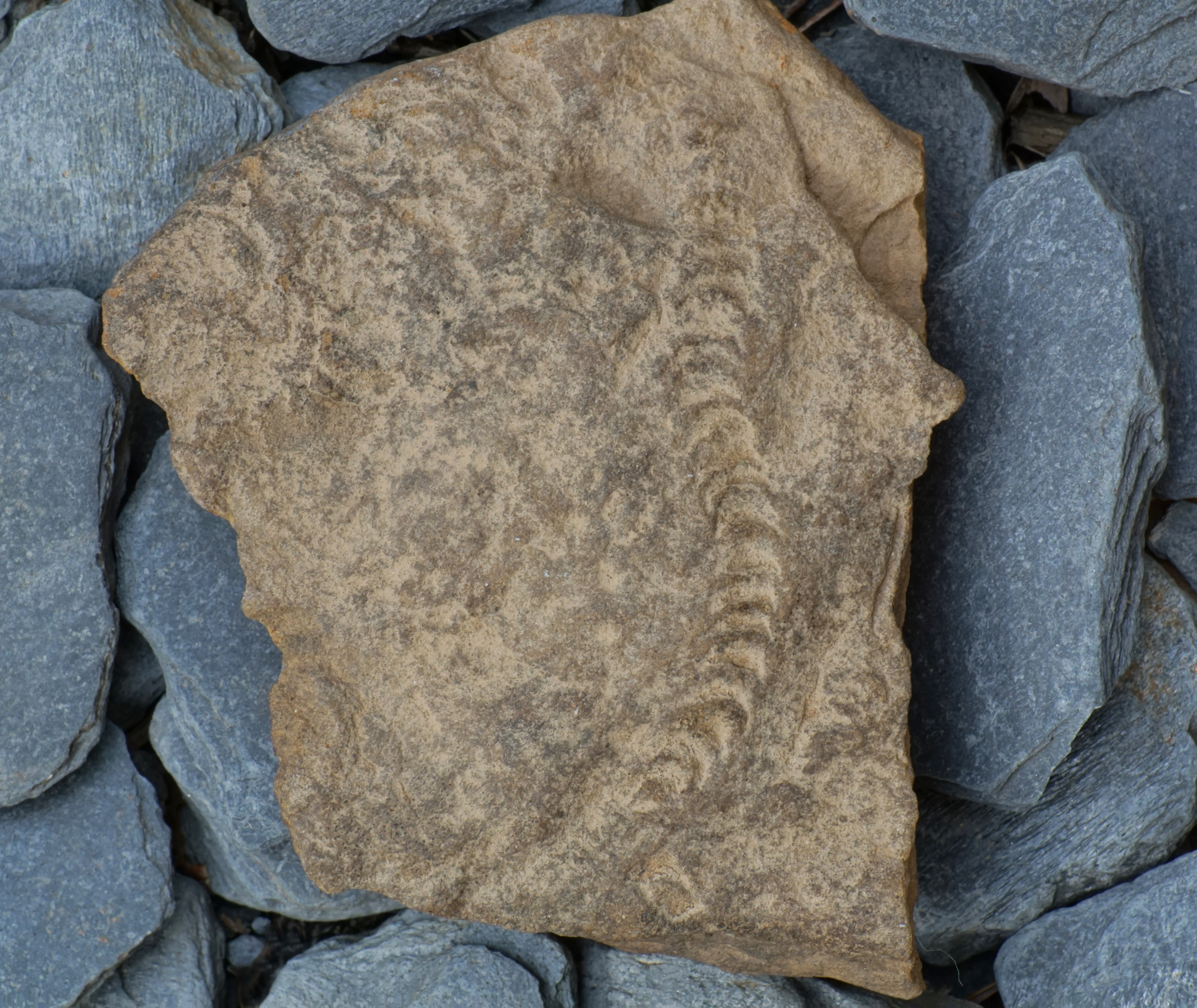
Trace Fossil Imprint of Devonian to Carboniferous Age Calamite Tree Stem

The Calamite thrived in the hot swamp tropics of the past, particularly during the Pennsylvanian Period around 300 mya. Many of their fossils have been found worldwide including, USA, China, Canada, South America and Europe.

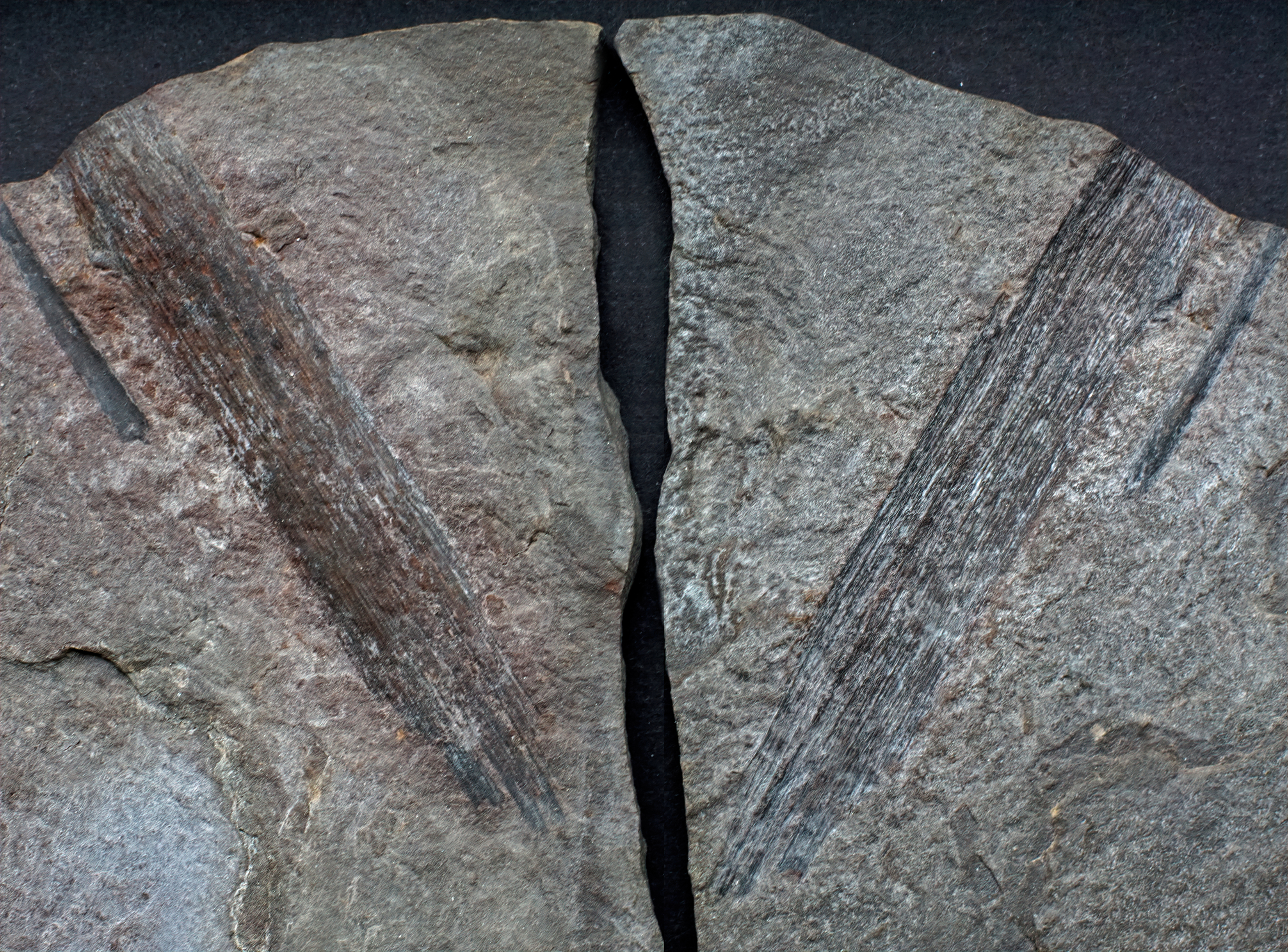
Internal and External Imprint Fossil of Calamite Tree Stem, Devonian to Carboniferous Age

The three amazing fossils above were found in Sebastian County, Arkansas in an old coal strip mine in 1993 by Michael A. Whitkanack, who donated them to my classroom. They are actually the imprints of the Calamite’s leaves and stems which scientists refer to as trace fossils.

Scan_Pic0012a
Devonian to Carboniferous Era Calamite Tree (Earth’s First Tree-Like Land Plant) Rendition Drawing

 CLASSIFICATION

Scientific Name: Calamite Common Name: Horsetail / Wiskfern

Kingdom: Plantae

Division: Pteridophyta (Ferns, reproduce by spores)

Class: Sphenopsida or Equisetopsida (means ribbed, vertical jointed stem; bamboo like in appearance)

Order: Equisetales

Family: Calamitaceae

Genus:  (STEM) Calamite (LEAF) Annularia

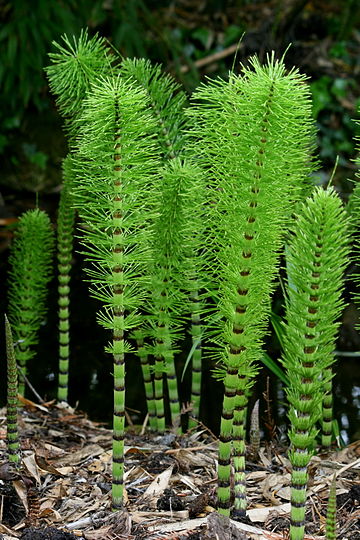
Special Note: The Calamite may look familiar to some. Their modern descendants are the “horsetails” of today. They grow in open fields and edges of woodlands, but only reach a few feet tall, as seen in the photo below.

Equisetopsida

The “horsetail” or Equisetum is an amazing living fossil related to the Calamites, the only surviving genus from the entire class of Equisetopsida. For millions of years, the Equisetopsidas were much more diverse and flouished during the late Paleozoic, Permian and Carboniferous forests. Through the millenniums, they decomposed layer by layer, sinking deep and eventually contributing to the coal deposits of today.

All rights reserved © Fossillady 2025

Share this:

  • Share on Pinterest (Opens in new window) Pinterest
  • Share on Facebook (Opens in new window) Facebook
  • Print (Opens in new window) Print
  • Email a link to a friend (Opens in new window) Email
  • Share on LinkedIn (Opens in new window) LinkedIn
  • Share on Reddit (Opens in new window) Reddit
  • Share on X (Opens in new window) X
Like Loading...
Plant/Tree Fossils Calamite ClassificationCalamite Fossils FactsCalamite plant drawingCalamite treeCalamite tree drawingCarboniferous Plant informationCoal Swamp Plantsextinct plantsfirst land plantPennsylvanian Period Plantsplant fossils

Comparing Neuropteris and Pecopteris Fossil Leaves and Their Trees, Medullosa and Psaronius

September 14, 2010 by Fossillady
Neuropteris Fossil Leaf Imprint

Extinct Neuopteris leaves are associated with the seed fern tree called Medullosa, an ancestor of the flowering plant group. They flourished during the hot swamps of the Carboniferous through the Permian time slots about 360 to 250 million years ago. The first seed ferns appeared durng the late Devonian Period roughly 380 million years ago and many were vines. When Earth’s climate turned colder, it contributed to their final disappearance.

One way to tell the difference between Neuropteris and Pecopteris leaf fossil imprints is by examining the mid-vein of their leaflets. In Neuropteris, the vein stops midway up the leaflet and splits into several fine veins, whereas the mid-vein in Pecopteris extends up to the tip. Neuropteris leaflets are more blunt tipped and attach by a single stem as opposed by the entire base, as with Pecopteris. Also, Neuropteris has an overall heart shape.

NEUROPTERIS LEAF CLASSIFICATION

Kingdom: Plantae

Division: Tracheophyta (vascular plants with system of transporting nutrients and liquids)

Class: Gymnosperm (means bare seeds – today’s examples i.e. conifers, cyads, ginkgo)

Order: Pteridospermales (extinct group of seed ferns which bore seeds on leaves)

Family: Medullosales (plants with complex pollen organs and large fronds)

Genera: Neuropteris (given name of foliage)

Scan_Pic0011c
Carboniferous to Permian Era Medullosa Seed Fern Tree Rendition Drawing

Medullosa Seed Fern tree associated with Neuropteris was a medium sized, seed fern tree reaching about 33 feet (10 meters) tall. It really was not a true fern because it produced seeds, instead of spores. It only resembled fern trees and grew during the same era as the true fern trees, for example, Psaronius associated with the Pecopteris leaves. The leaves of Medullosa had many leaflets attached to a stem and could grow quite large, as much as 10 feet (3 meters) long.

MEDULLOSA SEED FERN TREE CLASSIFICATION

Kingdom: Plantae

Clade: Traceophytes (Large group of vascular plants with transport system for nutrients and fluids)

Division: Pteridosperm(aphyta) (Extinct group of seed bearing plants)

Order: Medullosales ((plants with complex pollen organs and large fronds)

Family: Neurodontopteridaceae (Neuropteris Leaf)

Genus: Medullosa

Explanation of Pecopteris on following page . . . 

All rights reserved © Fossillady 2025

Share this:

  • Share on Pinterest (Opens in new window) Pinterest
  • Share on Facebook (Opens in new window) Facebook
  • Print (Opens in new window) Print
  • Email a link to a friend (Opens in new window) Email
  • Share on LinkedIn (Opens in new window) LinkedIn
  • Share on Reddit (Opens in new window) Reddit
  • Share on X (Opens in new window) X
Like Loading...
Plant/Tree Fossils Carboniferous Plant DrawingCarboniferous Plant informationcoal swampsextinct leaf fossilextinct plant fossil factsleaf fossilMedullosa Tree DrawingNeuropteris classificationNeuropteris leaf fossilNeuropteris Leaf ImprintPecopteris fossil classificationPlant FossilTrace Fossil

Brachiopods and Their Fossils Are Significant

September 7, 2010 by Fossillady

No other organisms typify the Age of Invertebrates more than brachiopods. They are the most abundant Paleozoic fossils ever found, except for maybe trilobites. Paleontologists use them to date rocks and other fossils along the same rock strata.  Countless billions accumulated on the ocean floor with over 30,000 forms. Today, there are far fewer species, only about 300 species which live mostly in cold, deep ocean environments.

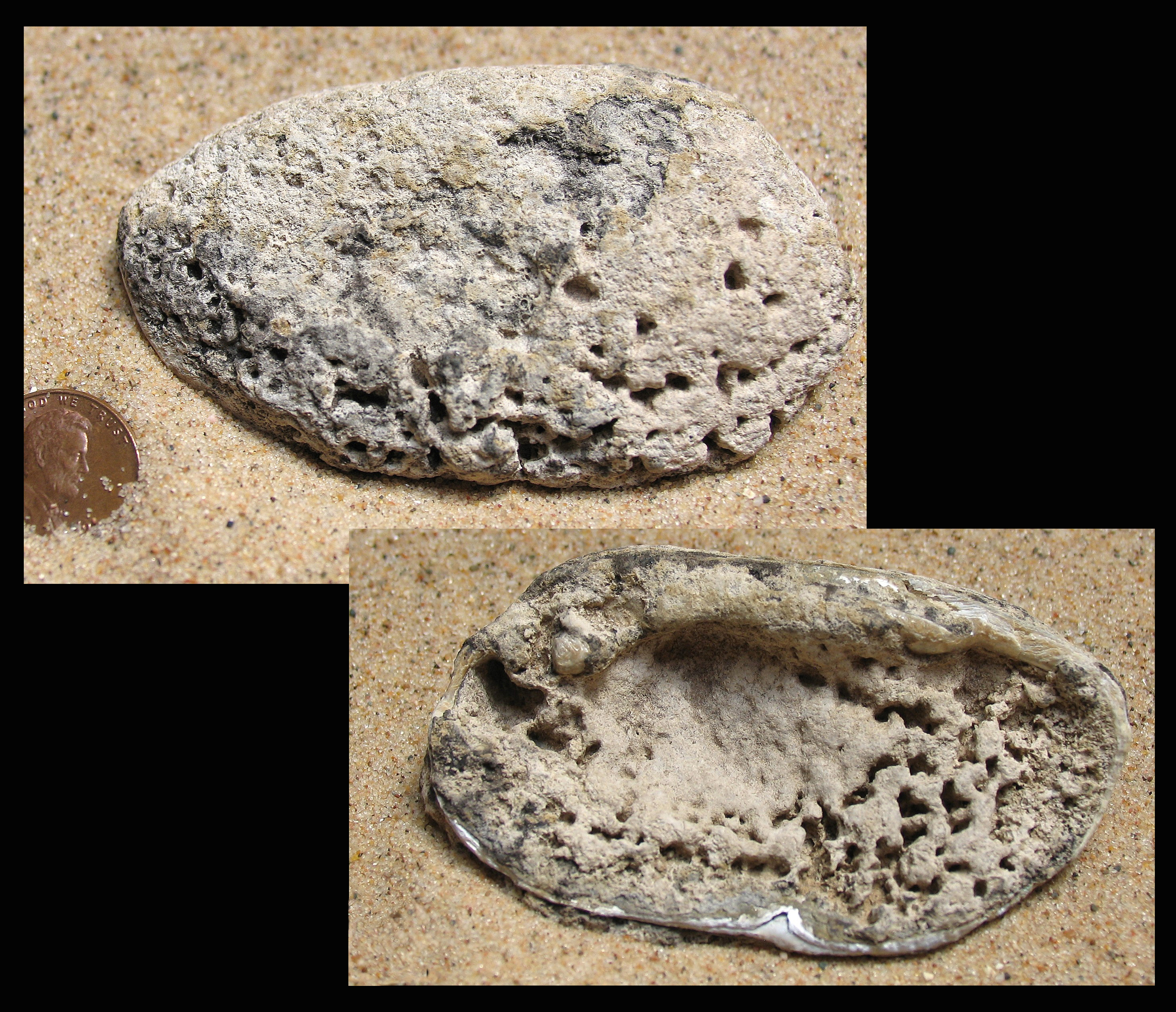
Brachiopod Fossilized Mold Cast found along Lake Michigan Shoreline

The brachiopod fossil specimens shown above and below are casts of the animal’s former shells which has filled in with sediment after the creature died and later the sediment turned to stone leaving an impression of the shell. The original shells very possibly broke up into pieces and washed away settling onto the seafloor along with multitudes of other brachiopod and clam shells.

fossils 005
Fossilized Brachiopod Mold Cast

Thick shelled forms of brachiopods are ribbed and live in shallow water. Thin shelled forms are smooth and live in deep water. Some brachiopods grow to 9 inches across, but most are about an inch in diameter. They live in communities attached to objects by a muscular foot called a pedicle. They strain water in and out of their shells filtering microorganisms with their lophophores, a crown of tentacles.

Sample of stone found on Lake Michigan beach embedded with broken shell pieces

Brachiopods were the first of their kind to lose mobility and develop a hard covering. They look like clams but are very different inside. To tell them apart, clams (pelecypods) have uneven shaped left and right shell valves, but the tops and bottoms are identical. Brachiopods have evenly shaped (symmetrical) left to right valves, but the bottom valve is smaller.

CLASSIFICATION

Common Name: Brachiopod or Lamp Shell (named for resemblance to ancient Roman oil lamps)

Kingdom: Animalia

Phylum:   Brachiopoda (means arm and foot)

Class:      Articulated (shells clamp together by a hinge)

Inarticulated (shells clamp together by a muscle)

Genus: Brown Sample possibly Pseudoatrypa sp   Grey Sample possibly Atrypa, reticularis

Brachiopods in the Ocean Mist

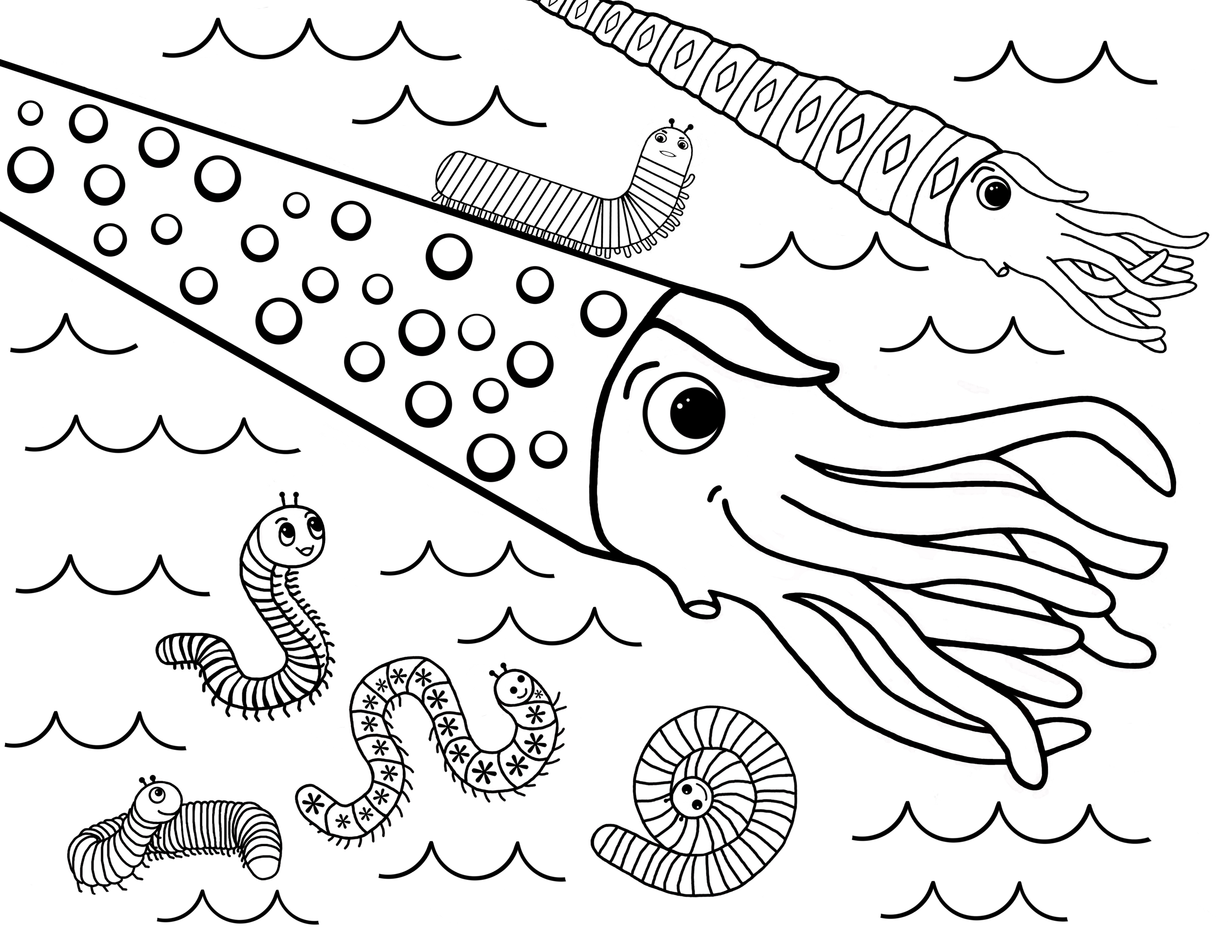
Check out my two fiction books blended with prehistory insights and imaginative storytelling that entertain as they educate. They are geared toward young exlporers interested in early life and fossils, or young readers who simply like a good story; ages 11-15+. Also available, a coloring/activity book featuring scenes from the books along with many of the plants and animals that lived during the amazing Devonian Time Period; fossil photos and descriptions included. Available on Amazon.com
All rights reserved © Fossillady 2026

Share this:

  • Share on Pinterest (Opens in new window) Pinterest
  • Share on Facebook (Opens in new window) Facebook
  • Print (Opens in new window) Print
  • Email a link to a friend (Opens in new window) Email
  • Share on LinkedIn (Opens in new window) LinkedIn
  • Share on Reddit (Opens in new window) Reddit
  • Share on X (Opens in new window) X
Like Loading...
Brachiopod Fossils brachiopod classificationbrachiopod drawingbrachiopod factsbrachiopod informationbrachiopod renderingbrachipod fossilslamp shellpaleozoic fossils

What is a favosites?

September 5, 2010 by Fossillady
Favosite Coral
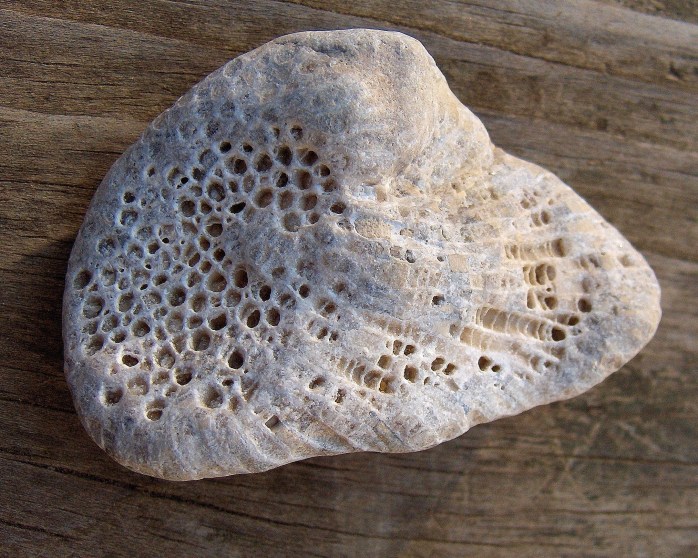
(Charlevoix Stones) Favosites Honeycomb Coral Fossil

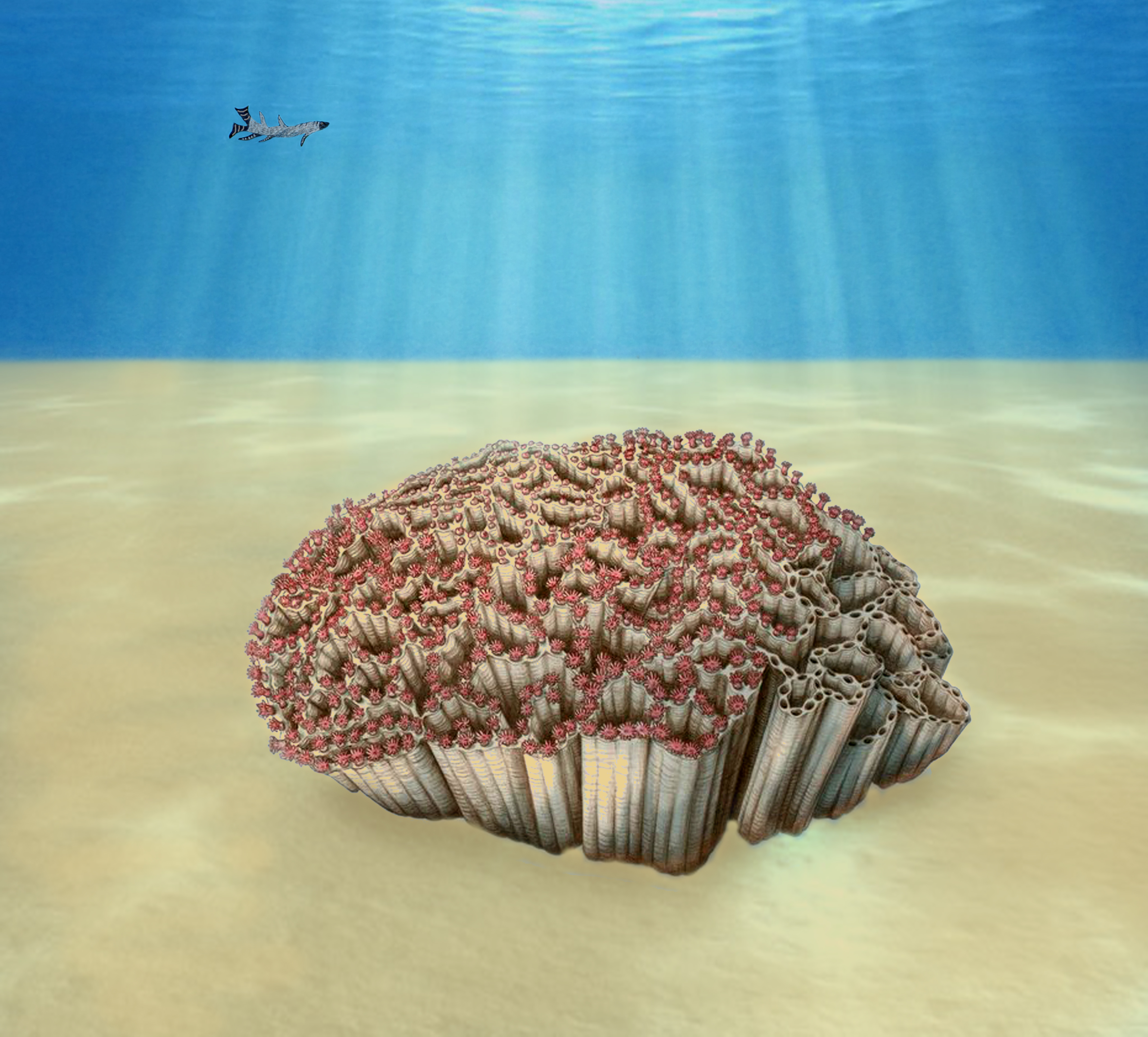
A favosites is a type of extinct coral. Favosites coral fossils most identifying feature is the honeycomb-like openings (corallites) revealing where the animal (polyps) lived. The polyp tentacles could tuck inside for safety, typically at night, or stretch out from their calcium-carbonate substrates in order to filter tiny food particles floating by in ocean currents.

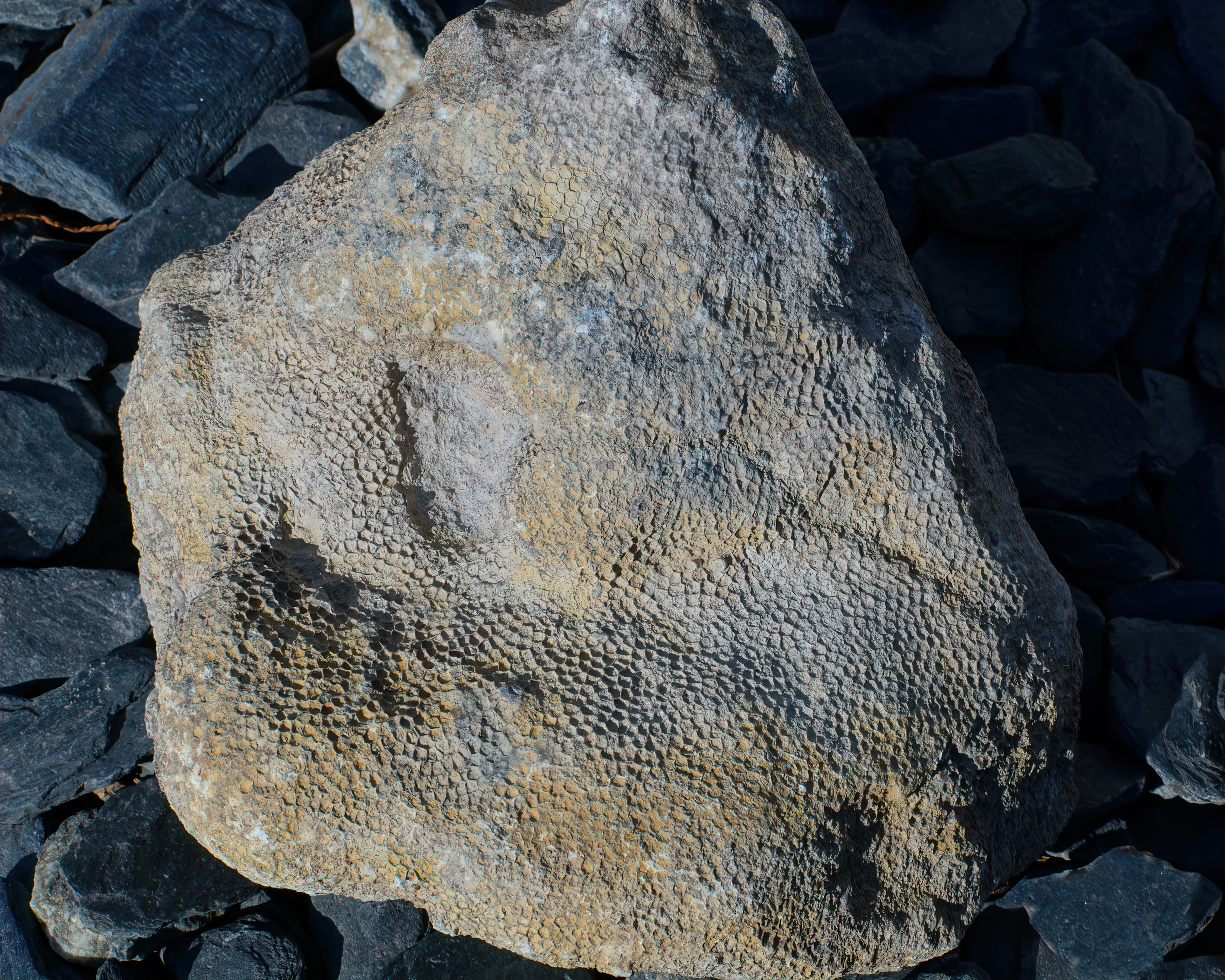
Favosite Coral Preserved in Gray Shale
Favosites Honeycomb Coral Fossil

The large fossil sample shown first is preserved in sedimentary claystone. It was found in a field in the city limits of Saugatuck, Michigan, part of the Ellsworth-Antrim Geological Formation (Mississippian-Devonian), in Allegan County, Southwestern Michigan, USA. This particular type of honeycomb coral fossil is more commonly found in Charlevoix, Michigan, situated in the Traverse Group Geological Formations in the far northwestern region of the state. Consequently, they’re often called, Charlevoix Stones.

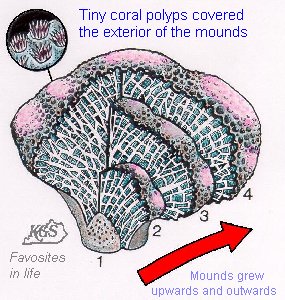
The tabulae (horizontal internal layers) place the favosites corals in the order of tabulata with internal chambers that built outward and upwards as the organism grew.

Diagram of Favosites Internal Structure

The walls between corallites were pierced by pores known as mural pores which allowed transfer of nutrients between polyps as illustrated below.

coralmorph2
Favosite Coral Reveals Horizontal "Tabulate" Growth Layers
(Charlevoix Stone) Favosites Honeycomb Coral Fossil Reveals Inner Growth Layers (Found on Oval Beach, Lake Michigan)

Like all coral, favosites corals thrived in warm, shallow, sunlit seas. They were a colony type coral forming colorful quilt-work reefs and fed by filtering microscopic plankton with their stinging tentacles. They were most prevalent during the Silurian and Devonian time slots, but date as far back as the Ordovician and forward to the Permian between 251-488 mya. That’s over 200 million years of living on earth . . . amazing!  

Favosites Honeycomb Coral Fossil

Favosites Classification

Common Name: Honeycomb Coral        Scientific Name: Favosites 

Kingdom: Animal

Phylum: Cnidaria (means to sting)

Class: Anthozoa (means flower animal)

Order:  Tabulata (possess inner horizontal dividing walls)

Family: Favositidae (honeycomb pattern on exoskeleton)

Genus: Favosites Species: Alpenensis (Charlevoix Stone)

Cora Honeycomb-studio textre
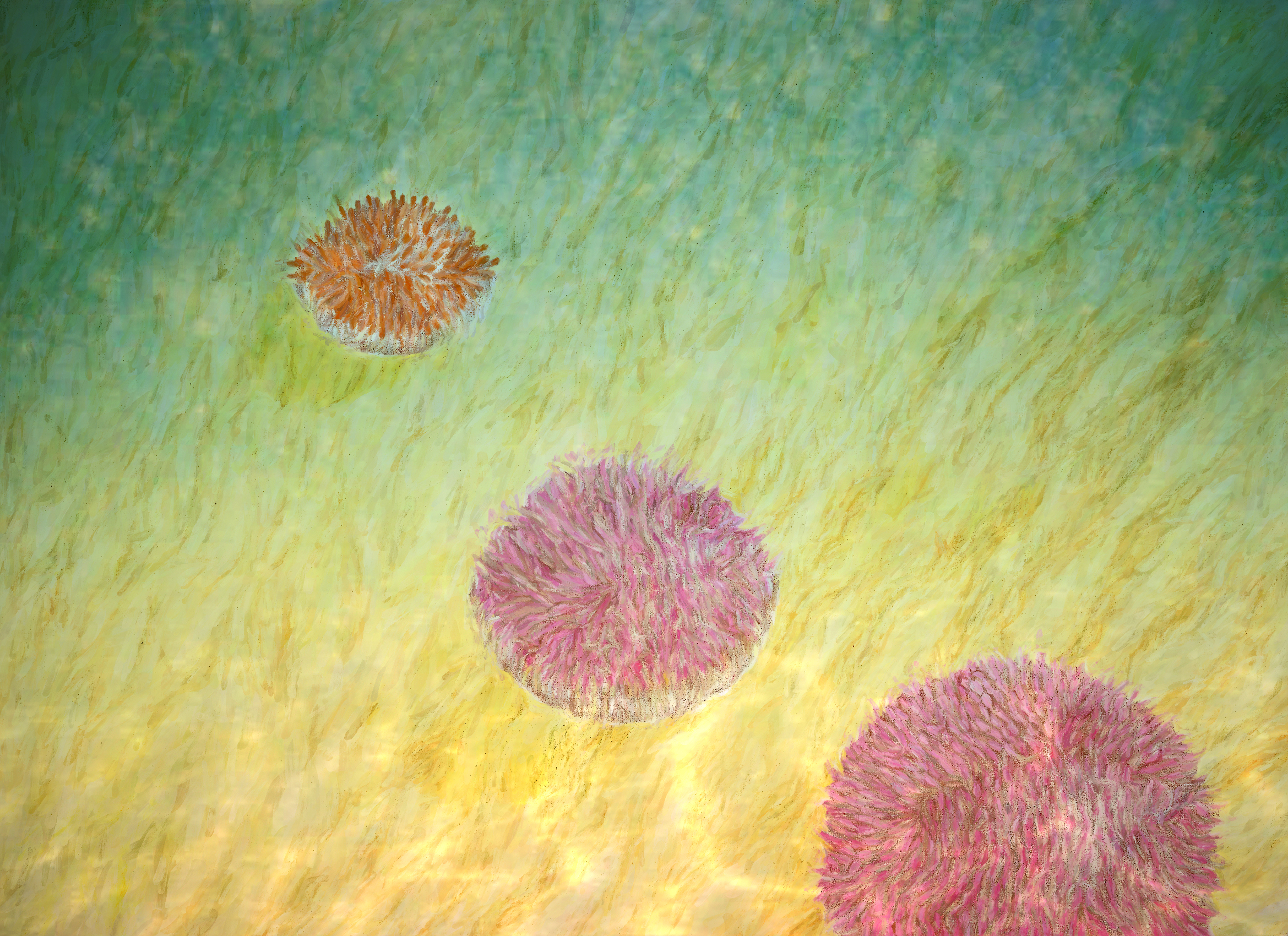
Rendering Drawing of Extinct Favosites Honeycomb Coral Showing Polyps Drawn-out

All rights reserved © Fossillady 2026

Share this:

  • Share on Pinterest (Opens in new window) Pinterest
  • Share on Facebook (Opens in new window) Facebook
  • Print (Opens in new window) Print
  • Email a link to a friend (Opens in new window) Email
  • Share on LinkedIn (Opens in new window) LinkedIn
  • Share on Reddit (Opens in new window) Reddit
  • Share on X (Opens in new window) X
Like Loading...
Coral Fossils Extinct Charlevoix StoneDevonian coralextinct coralfavosite classificationfavosite coral factsfavosite fossilfavosites coralfavosites renderingHoneycomb CoralMichigan CoralTabulate Coral information

Crinoid Fossils or Lucky Stones or Indian Beads?

September 3, 2010 by Fossillady
DSC01197-studio
Crinoid “Sea Lily” Fossil Pieces

Collectors with a keen eye love to find these tiny crinoid fossil stems and sections along the shores of Lake Michigan, if they are lucky enough, hence the common name given them “Lucky Stones”. The largest crinoid fossil in the photo above is just under the size of a dime so you can imagine the luck in finding one in the sand or among the beach gravel. These extinct species are also referred to as “Sea Lilies“ explained by their colorful flower-like appearance as living creatures. They were actually a type of invertebrate animal that possessed long branching arms and a midsection that sat atop of a single slender stem, sometimes reaching two meters above the seafloor. Feathery tentacles at the tips of their branching arms trapped tiny food particles floating by in the ocean currents.

Crinoid Sea Lily Fossil

Crinoids were sessile creatures, meaning they attached themselves directly to the seafloor or underwater rocks or even sunken wood. A spawning of their offspring from these bottom bound creatures may have resembled the spring releasing of thousands of dandelion seeds blowing by in a gust of wind.

Crinoid Broken Stem Fossils

Crinoid skeleton fossils are usually found broken up into individual “cheerio” shaped sections or partial stems. Each circular section was stacked one over the other forming the entire animal framework. The Native Americans used the fragmented fossilized sections for stringing necklaces. Consequently, yet another fitting common name for them is “Indian Beads”.

Embedded Crinoid Pieces found on Oval Beach, Lake Michigan

Crinoid’s amazing history dates back as early as the Ordovician Period around 500 million-years-ago, but their heyday happened during the Mississippian Period around 345 mya. Their fossil remains are found widespread in North America explained by the fact that much of the continent was covered under warm shallow seas. The sea lily crinoids were a dominant feature in the Paleozoic Era seas, but most varieties succumbed to the great Permian extinction around 252 mya. Today, a few species subsit in cold deep-water environments, but dwarf in length compared to the prehistoric varieties.
Crinoid Classification

Kingdom: Animalia

Phylum:   Echinoderm (means spiny skin, i.e. starfish, sea urchins, feather stars, crinoids)

Class:     Crinoid (means flower form)

Scan_Pic0007bbcca
Crinoids “Sea Lilies” Rendering Drawing in the Ancient Seas

All rights reserved © Fossillady 2026

Share this:

  • Share on Pinterest (Opens in new window) Pinterest
  • Share on Facebook (Opens in new window) Facebook
  • Print (Opens in new window) Print
  • Email a link to a friend (Opens in new window) Email
  • Share on LinkedIn (Opens in new window) LinkedIn
  • Share on Reddit (Opens in new window) Reddit
  • Share on X (Opens in new window) X
Like Loading...
Crinoids Fossils crinoid classificationcrinoid drawingcrinoid fossil factscrinoid renderingechinodermpaleozoic fossilsea lily fossil information

What We Can Learn From Oysters

September 3, 2010 by Fossillady
Exogyra ponderosa Oyster Fossil (Cretaceous Period 65 to 100 million-years-ago)

A lesson we can learn from oysters is that even though they have no heart to feel and no brain to reason, many of their species build massive reef communities which provide protection for one another; and not only for their own kind, but for many other ocean organisms. Very fittingly, they’ve been referred to as the “unshellfish”.

Exogyra is a large extinct oyster species that lived in the soft sediment of ancient shallow marine waters. It possessed a thick shell with a distinct pattern of ribbing and pitting representing growth lines. Many of its kind thrived during the Upper Cretaceous Period around 65 to 100 million years ago. Their shells opened using a strong abductor muscle to expose a foot which pushed it along and a siphon to filter food and take in oxygen from the ocean water. The abductor muscle scars on the valves are observable in the photo below.

Oyster Exogyra Insides
Exogrya ponderosa Oyster Fossil Upper and Lower Valves

Oysters and Love

In Greek mythology, the Greek Goddess of Love “Aphrodite” was said to have sprang up out of the ocean on an oyster shell. The term “Aphrodisiac”, meaning to heighten love, has been related to oysters ever since.  Also, the charismatic Casanova was known to have eaten twelve oysters a day, believing it would  enrich his love life.

Oyster Exogyra Under
Exogyra ponderosa Oyster Fossil Underside with Upper and Lower Valves in Closed Position

CLASSIFICATION

Scientific Name: Exogyra, ponderosa

Common Name: Oyster

Phylum: Mollusk (Large group of marine and fresh water invertebrates having soft bodies enclosed in a shell.)

Class: Pelecypod or Bivalve (Means hinged shell)

Order: Ostreoida (Means true oyster with irregular shell and adductor muscle; pearl oysters are not true oysters.)

Family: Gryphaeidae (Includes honeycomb oyster or foam oyster characterized under magnification with distinct shell structure.)

Genus: Exogyra (Extinct group of large, shallow-marine oysters possessing thick shells with distinctive spiraled peaks and ribbing on upper valves; lower valves were smaller and flattened.)

Species: Ponderosa

The Exogyra in my collection is a beautiful specimen that is quite heavy from being fossilized into solid stone. In the two photos above of its underside, you can clearly see how the valves fit together and how the lower valve is much smaller and flatter than the convex upper valve.

Graphea, navia (from Triasic 210mya - Jurassic 150mya
Pycnodonte Oyster Fossil, Upper and Lower Valves (Cretaceous 135 Million-Years-Ago to Miocene 40mya)

Today, the small oyster fossils shown above and below are found in abundance within shell-banks along North American coast lines. In their lifetime, they likely washed ashore during storms and were deposited on the beaches. Eventually, layers of sand and sediment buried them deep down cutting off oxygen and millions of year later, silica and other minerals permeated the shells and they fossilized.

Texigryphaea  oyster fossil (Cretaceous) 135mya - (Miocene) 40mya
Texigryphaea Oyster Fossil (Cretaceous 135 Million-Years-Ago to Miocene 40 mya)

Oysters For Food

Oysters have been a part of the human diet since Greek and Roman times. Today, two-billion pounds are eaten every year around the world. Oysters are prepared in a variety of ways, but raw on the half-shell is the most nutritious. Besides being an excellent source of protein, oysters contain rich sources of B vitamins, and scarce minerals such as calcium, iron, zinc, selenium and magnesium.

Graphea navia Oyster Fossil (Upper Triassic 210 Million-Years-Ago to Upper Jurassic 150 mya)

Hand Crafted Oyster Jewelry

Only one in 10,000 oysters produce a pearl, so human intervention has found a way to culture them artificially, but it still takes about six years for the oyster to complete the process. Many artists also craft beautiful jewelry using the shells of various oysters.

scan_pic0008a
Exogyra, Graphea and Texigryphaea Extinct Oyster Fossil Rendering Drawing

Disclaimer: Room for error as I am about 90% certain on the identities of the small oyster shells.

All rights reserved © Fossillady 2022

Share this:

  • Share on Pinterest (Opens in new window) Pinterest
  • Share on Facebook (Opens in new window) Facebook
  • Print (Opens in new window) Print
  • Email a link to a friend (Opens in new window) Email
  • Share on LinkedIn (Opens in new window) LinkedIn
  • Share on Reddit (Opens in new window) Reddit
  • Share on X (Opens in new window) X
Like Loading...
Oysters Fossils classification oysterCretaceous oystersexogyra ponderosaextinct oysterfossil artfossil oyster drawingfossil oyster factsgryphaeaoyster fossilsoyster informationoyster renderingpycnodontetexigryphaea

Lace Coral / Bryozoan

August 23, 2010 by Fossillady
Bryozoan Fossil
Bryozoan (Lace Coral) Fossil found on Lake Michigan Beach

Combing the shores of Oval Beach in Saugatuck, Michigan, as well as many other beaches along the fresh water coastline, you will occasionally find these interesting fossil samples of one of Earth’s earliest multicellular creatures! They are often called lace corals because of their delicately threaded appearance, but they are not true corals; instead, they are moss-like animals better known as bryozoans.

Today, there are around 5000 species of bryozoans, living mainly in marine water environments. Another 15,000 species or more are known from the fossil records dating as far back as 500 million-years-ago and some of their descendants are still living today. During the Mississippian Period (359.2 mya – 318.1 mya) bryozoans were so plentiful that their broken calcium-carbonate skeletons formed entire limestone beds.

Lace Coral, Bryozoan, Fenestella Source

Bryozoan Colony Growth

Bryozoans form tight colonies sculpted by hard, limy, branching structures, although, freshwater species, form gelatinous blobs. A bryozoan colony often encrusts surfaces such as rocks, shells or even kelp. A colony consists of thousands of individual animals called “zooids”. Each individual zooid lives inside its own limy tube called a zooecium. The zooecium is the size of a sewing needle. A single zooid begins the colony. Each additional zooid is a clone of the very first one. A bryozoan colony has been observed growing from a single zooid to 38,000 in just five months.

Bryozoan (Lace Coral) Fossil, found on Lake Michigan Beach

Interesting How Bryozoan Feed

In order to feed, each bryozoan zooid has an opening through which the animal can extend its ring of tentacles called a lophophore. The bryozoan captures microscopic animals from the water as they pass by its lophophore tentacles. If one zooid receives food, it nourishes the neighboring zooids because they are joined by strands of protoplasm. If only people could be more like them, feeding the masses; imagine!

IMG_0468

Bryozoan CLASSIFICATION

Common Name: “Lace Coral”

Scientific Name:  “Fenestella, plebeian”

Kingdom: Animalia

Phylum: Bryozoa (means moss animal)

Class: Stenolaemata (means tubular walls)

Order: Fenestrata

Family: Fenestellida (group of fan shaped or mesh-like bryozoans)

Genus: Fenestella

Species: plebeian

All rights reserved © Fossillady 2026

Share this:

  • Share on Pinterest (Opens in new window) Pinterest
  • Share on Facebook (Opens in new window) Facebook
  • Print (Opens in new window) Print
  • Email a link to a friend (Opens in new window) Email
  • Share on LinkedIn (Opens in new window) LinkedIn
  • Share on Reddit (Opens in new window) Reddit
  • Share on X (Opens in new window) X
Like Loading...
Bryozoan Fossils bryozoan classificationbryozoan feedingbryozoan fossil factsbryozoan structurebryozoanscolony fossilfenestellalace corallace coral fossil informationMichigan bryozoan fossils

Interesting Horn Corals

August 21, 2010 by Fossillady
Horn Coral
Horn Coral Fossils (Grewingkia, canadensis) #1

The horn corals have been extinct for millions of years, but in their heyday they must have added an extraordinary beauty to the diorama of the Paleozoic seafloor. Some varieties dominated the underwater, prehistoric scene reaching multiple-meters in height off the seafloor. At night, a coral animal flung out its long tentacles in order to sweep up unsuspecting tiny organisms passing by in the ocean currents.

DSC01449
Horn Coral Fossil (Heliophyllum) #2

Horn corals (rugose corals, meaning wrinkled wall) attached themselves to the seafloor with the narrow ends of their exoskeletons. As the organism grew, their top portion widened where the tentacles were encased; hence the reference to the shape of a horn. Horn corals flourished during the Paleozoic time slot from about the Mid-Ordovician Period around 250 million years ago throught to the end of the great Permian mass extinction about 250 million years ago. Most horn corals were individual varieties with a few colony variety exceptions.

Two Horn Coral Species Classification

Paleozoic Horn Corals in the Ocean Mist Drawing

Horn Coral Internal Structure

As a general rule, rugose coral have stronger radial septa (septum) or vertical growth walls that radiate outward from the center . Rugose corals differ from other corals due to the pattern by which they add septa (like bicycle spokes) throughout their growth spurts. Named for their wrinkly outer skin, they possessed less developed horizontal partitions, but stronger vertical partitions.

coralmorph

All rights reserved © Fossillady 2026

Share this:

  • Share on Pinterest (Opens in new window) Pinterest
  • Share on Facebook (Opens in new window) Facebook
  • Print (Opens in new window) Print
  • Email a link to a friend (Opens in new window) Email
  • Share on LinkedIn (Opens in new window) LinkedIn
  • Share on Reddit (Opens in new window) Reddit
  • Share on X (Opens in new window) X
Like Loading...
Coral Fossils Extinct fossil collectionhelliophyllum classificationhelliophyllum factshelliophyllum fossil renderinghorn coralhorn coral classificationhorn coral drawingpaleozoic coral

Post navigation

← Older posts
Newer posts →

Category of Fossil Facts

  • Algae Fossils
  • Ammonite Fossils
  • Brachiopod Fossils
  • Bryozoan Fossils
  • Cenozoic Era Aquatic Fossils
  • Cephalopod Nautiloid Fossils
  • Clam Fossils
  • Clam Seashells
  • Coral Fossils Extinct
  • Corals Florida
  • Crinoids Fossils
  • General Comment
  • Horseshoe Crabs
  • Lake Michigan Fossil Finds
  • Millipede Fossils
  • Oysters Fossils
  • Plant/Tree Fossils
  • Rocks
  • Shark Teeth Fossils
  • Sponges Fossils
  • Stromatolite Fossils
  • Trilobite Fossils
  • Tube Worms Fossils
Advertisements

Fossillady Links

  • Kathi's Photography Site
Advertisements

Join 145 other subscribers
Advertisements
Blog at WordPress.com.
Fossil Lady
Blog at WordPress.com.
Privacy & Cookies: This site uses cookies. By continuing to use this website, you agree to their use.
To find out more, including how to control cookies, see here: Cookie Policy
  • Subscribe Subscribed
    • Fossil Lady
    • Join 145 other subscribers
    • Already have a WordPress.com account? Log in now.
    • Fossil Lady
    • Subscribe Subscribed
    • Sign up
    • Log in
    • Report this content
    • View site in Reader
    • Manage subscriptions
    • Collapse this bar
 

Loading Comments...
 

    %d