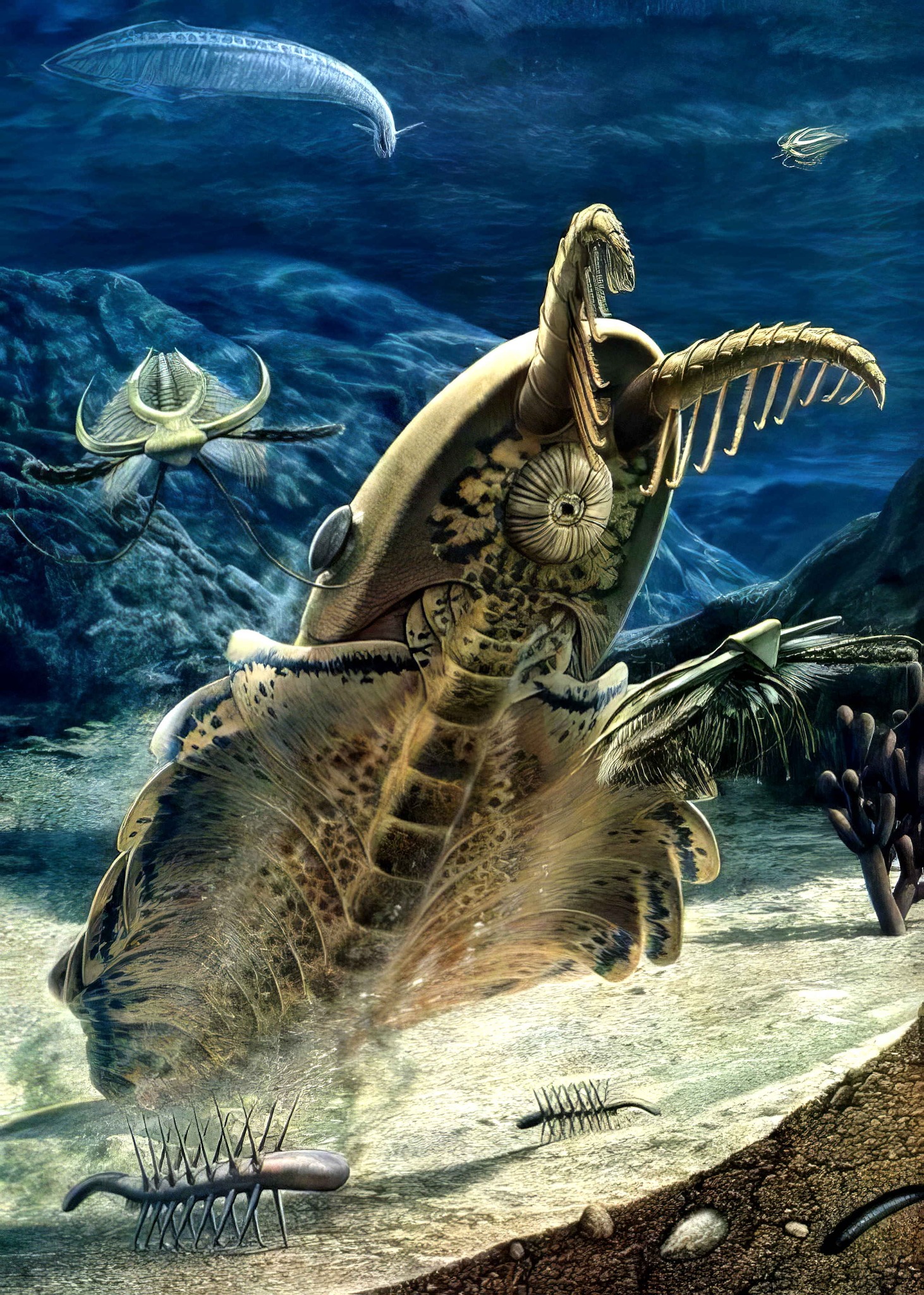
Seven of Earth’s Earliest Gigantic and Bizarre Creatures

Anomalocaris Canadensis Lived 500 Million Years Ago

1. Strange Anomalocaris

Anomalocaris canadensis dominated the Cambrian period seas for tens of millions of years beginning approximately 540 mya. It grew to only two feet (60 cm) long, which doesn’t seem very big by today’s standards, but in relation to every other organism during the Cambrian, it was a giant.
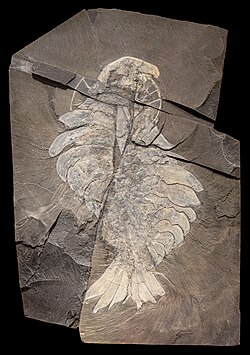
Interesting history of its stalled scientific discovery: A segment fossil of Anomalocaris canadensis was first discovered in the Canadian Rockies in 1892, but it wasn’t until 1981 that a major breakthrough about its identity occurred; and that was further refined in 1996. This one hundred year history of inaccurate theories is but one example of the difficulty identifying fossil remains of Cambrian organisms having no apparent living descendants. Anomalocaris and other genera have since been discovered at various Cambrian fossil locations around the world, including the famous Burgess Shale site in the Canadian Rocky Mountains, the USA, China, and Australia.

Photo: Anomalocaris Canadensis Complete Fossil Specimen

Anomalocaris with its large eyes, impaling front spines and strong swimming lobes probably could overtake any prey during its lifespan, including trilobites. Except, some scientists argue that its pineapple-ring mouth did not have hard parts necessary to crush the tough outer shells of trilobites. Much still remains to be clarified about their anatomy and habits. Scientists believe it swam with an “S” method of locomotion, undulating up and down the length of its body.
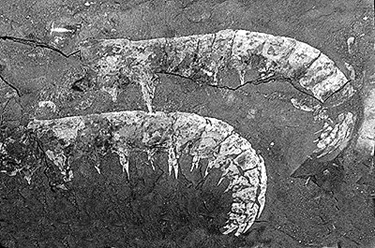
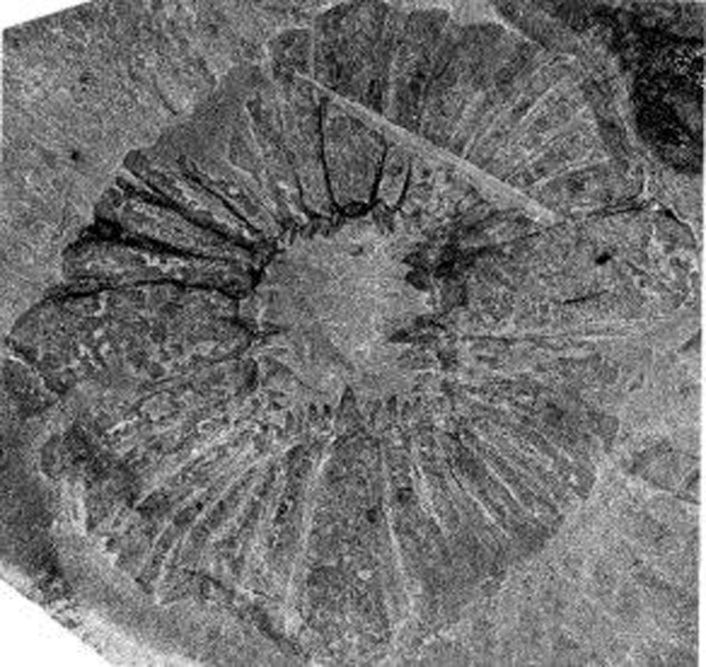
Fossils of Anomalocaris Front Spines and Mouth

Watch the video below to observe Anomalocaris unique movement in the water!
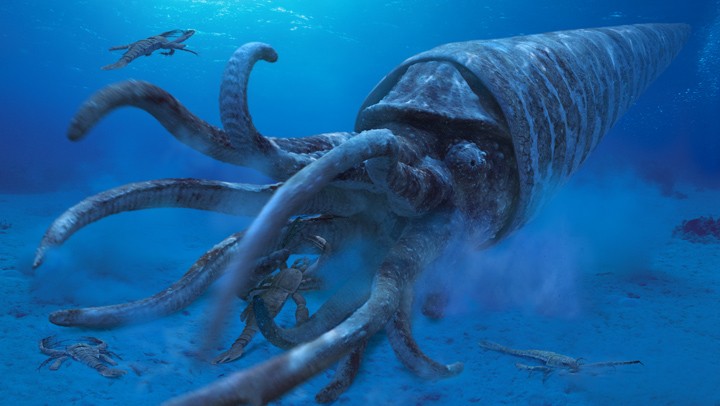
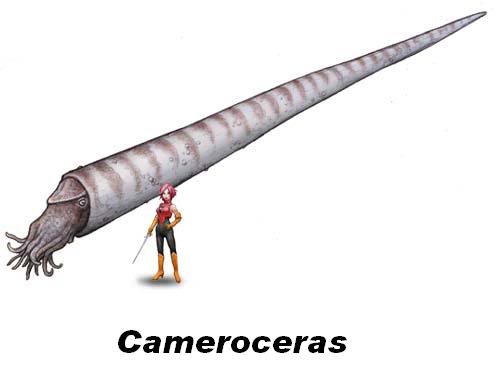
Giant Cameroceras – Straight Shelled Nautiloid “Orthocone” Source

2. Straight Shelled Nautiloid “Giant Orthocone”

The T-Rex of the following time period, the Late Ordovician, beginning around 470 mya, emerged the cephalopod nautiloid creature related to squids and octopuses known as the Giant Orthocone “Cameroceras”. The massive creature’s living tissue was contained primarily at one end of a very long conical shell which could reach 20-30 feet (6-9 meters) in length. Straight-shelled nautiloids (orthocones) varied wildly in size from just a few inches to massive, but most were in the range of several feet long. The animal’s inner shell contained chambers that it could fill with water and then push the water out in order to jet propel itself in a backwards motion. This also alowed it to maneuver up and down throughout the ocean strata. The inner chambers also contained special gases for buoyancy.
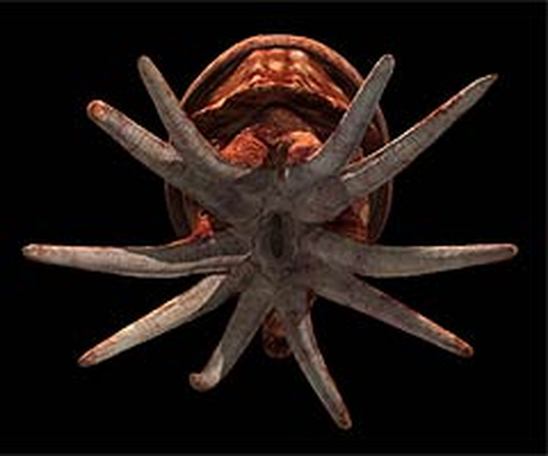
The Giant Orthocones seized its prey using meter long (three feet) muscular tentacles and a beak-like mouth in order to rip apart its victims. It fed upon fish and its arch enemy, sea scorpions.

Did you know fossils of straight-shelled cephalopod nautiloids have been quarried by Europeans for many years and adorn floors, stairs, jewelry, gravestones and art pieces with their durable and desirable beauty?
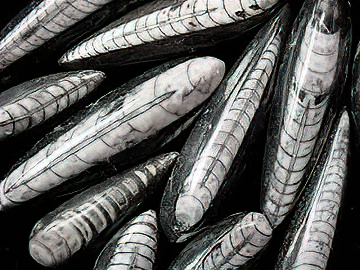
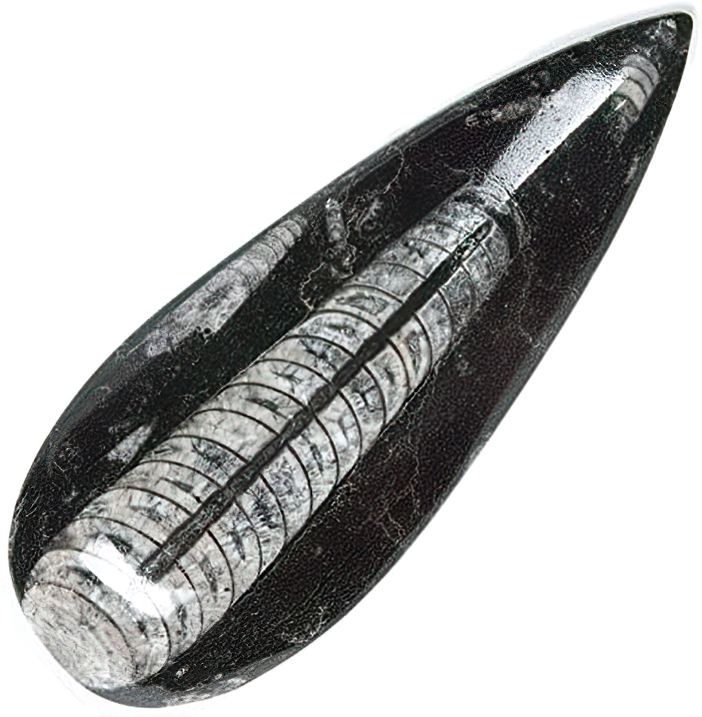
Straight Shelled Nautiloid Polished Fossils

3. Eurypterid Sea Scorpion
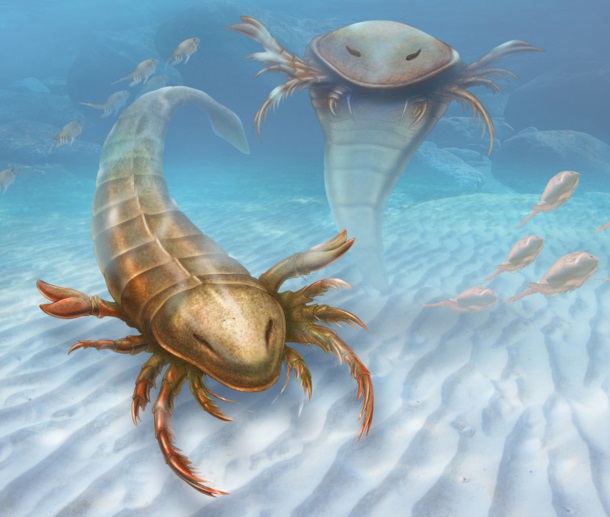
Eurypterid Sea Scorpions (Pentecopterus, the earliest known eurypterid) Artist Rendition Patrick J. Lynch, Yale University

Eurypterids, simply put, were scorpions of the sea, otherwise known as sea scorpions. They were the largest known arthropods that ever lived. The fossils of sea scorpions have been found all over the world. The U.S. state of New York has unearthed an especially large number of this predatory animal. Eurypterids survived a long history beginning with the Ordovician Period extending into the Permian Period from about 460 million-years-ago to 248 mya. That’s over a 200 million year history!
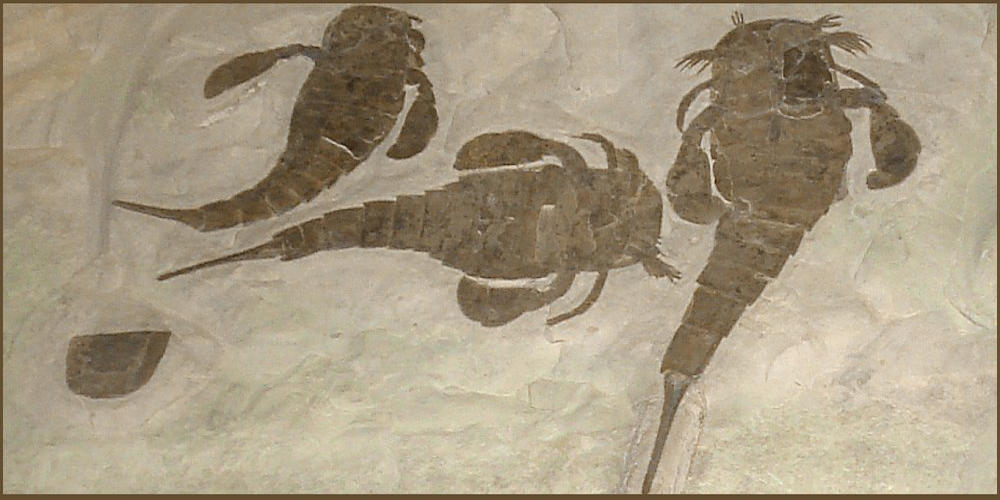
Sea Scorpion Fossils Source: Fossil Guy

Sea scorpions both swam and walked using six legs, two of which were flattened like paddles. They were normally marine sea-floor dwellers, and interestingly, they could also live in freshwater. Sea scorpions preyed upon fish, trilobites and other animals living near the seabed. They possessed strong defenses such as sharp spines, crushing claws and armored plating. Their has been disagreement among scientists whether some of the prehistoric species possessed stingers. The eurypterid’s arch enemies were the straight-shelled nautiloids.
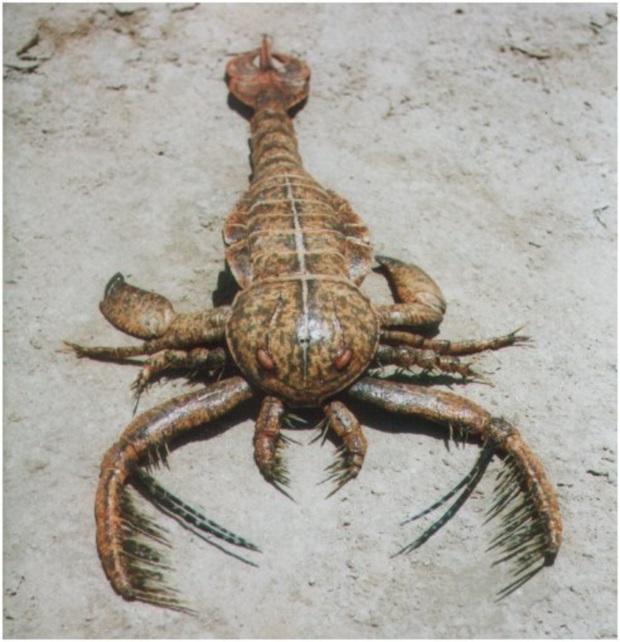
Megalograptus was one of the earlier large species of eurypterid sea scorpions measuring 4 feet (1.2 meters) long, not including its front pincher claws. However, the most common species of eurypterids typically measured only 8 inches (20 cm) long.

Photo: Megalograptus – Giant Eurypterid Sea Scorpion
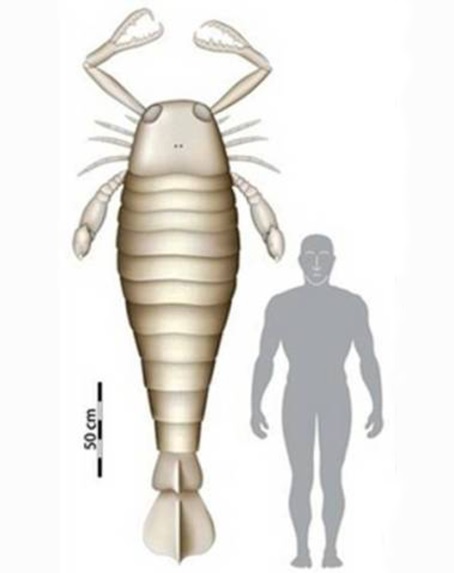
Jaekelopterus was a later species of sea scorpions emerging during the Devonian Period around 390 mya, reaching over 8 feet (2 meters) or more in length. Try to imagine a scorpion about the size of a kayak! Terrifying!

Note: The tables were turned when the sea scorpion’s arch enemies, the straight shelled nautiloids, declined in size during the Devonian time slot from their giant Ordovician Period predecessors. As a result, eurypterids like Jaekelopterus gained the upper hand using their powerful claws to clamp down and crush the linear shells of smaller nautiloids.

Photo: Jaekelopterus – Scale of Giant Eurypterid Sea Scorpion

4. Dunkleosteus Placoderm Fish
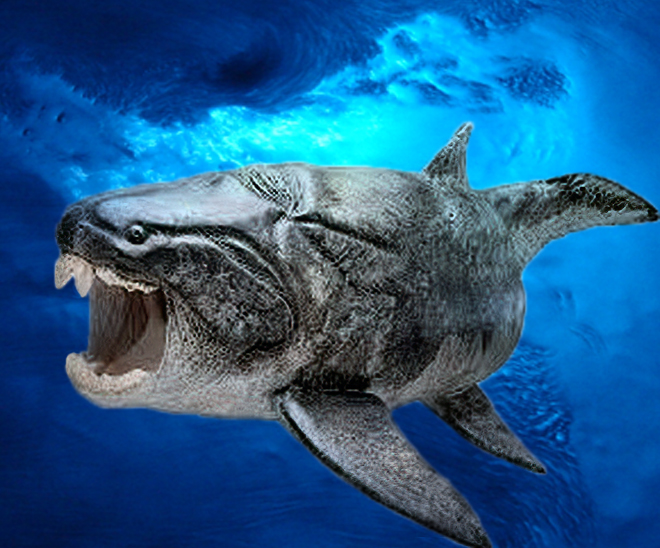
Dunkleosteus

During the Devonian Period around 416 mya until about 360 mya, vertebrates had greatly arisen on the ocean scene. A highly evolved class of fish called “placoderms” possessing advanced characteristics stemming from their predecessor “ostracoderms” dominated the ancient seas. For protection, both classes of fish possessed armored plates covering their head and upper torso regions. The main advancement with placoderms was the development of a jawbone and paired fins. Those two significant adaptations provided them the necessary speed and power to become fearsome predators, aggressively chasing prey rather than waiting for the perfect opportunity. Ostracoderms were eventually overrun into extinction unable to compete with their cousin placoderms.

Dunkleosteus terrelli Fossil

Dunkleosteus placoderm was the T-Rex of the Devonian time-period, terrorizing the ancient seas. He reached lengths up to 10 meters (33 feet) and weighed almost 4 tons. Instead of teeth, Dunkleosteus possessed two pairs of impaling sharp boney blades. Dunkleosteus could open its mouth in 1/50th of a second, which would have caused a powerful suction that pulled prey into its mouth, a food-capturing ability reinvented by many of the most advanced fish today. The placoderm fish could then bite down with a pressure of up to 8,000 pounds per square inch (55 mph), placing it in the league of T-Rex and modern crocodiles! There wasn’t much of anything the great placoderm didn’t or couldn’t eat during its lifespan, including its own kind.

In recent decades, Dunkleosteus has finally achieved the recognition it deserves as a super predator. There are a large number of its fossil specimens on display which have been found in North America, Poland, Belgium and Morocco.
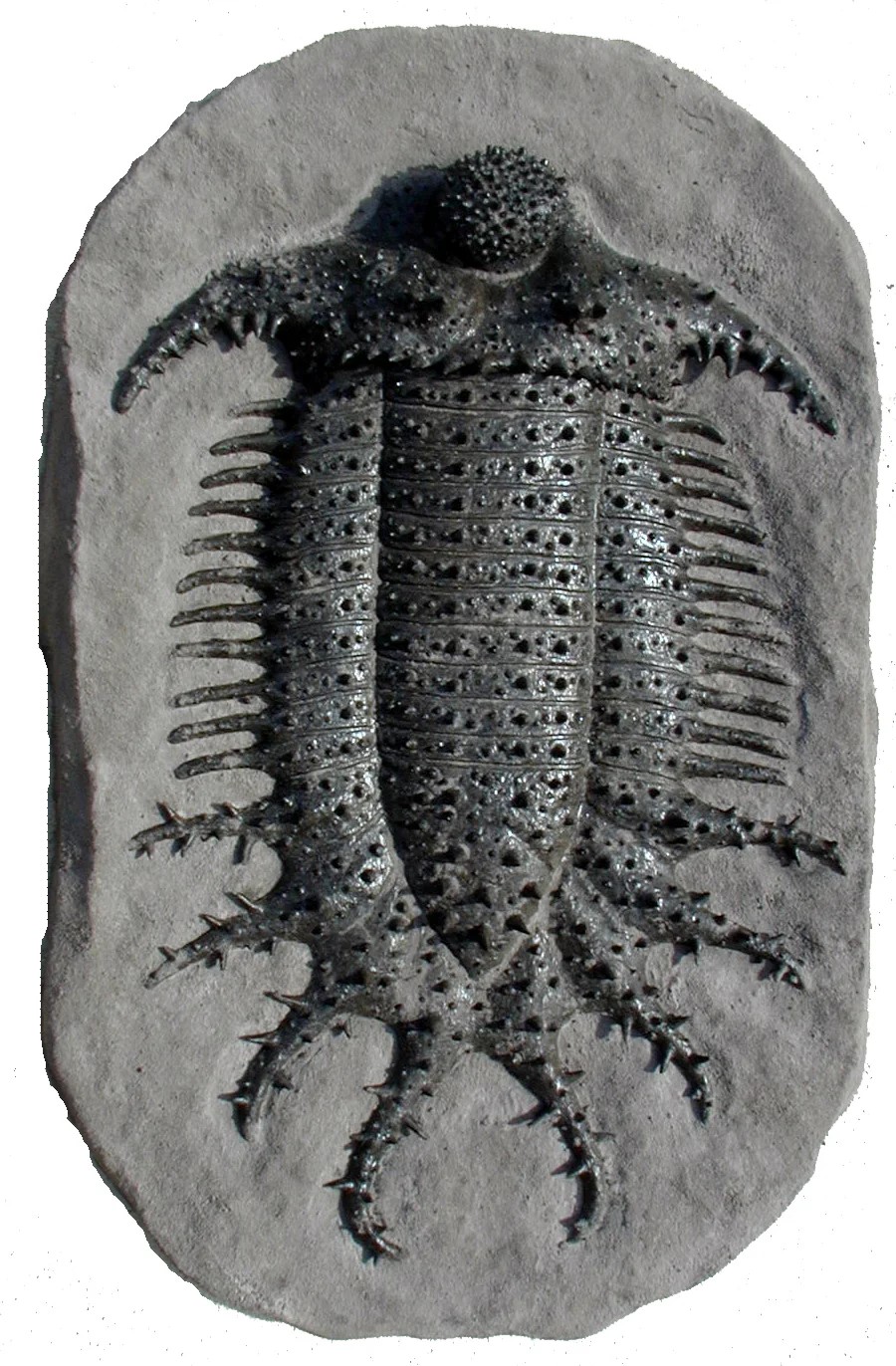
Terataspis Grandis Trilobite

5. Grand Trilobites

Trilobites have an incredible history first appearing approximately 520 million years ago during the Cambrian Period. They thrived for nearly 300 million years, acting as dominant marine arthropods, before going extinct during the Permian-Triassic mass extinction event around 250 million years ago. They were among the earliest and most successful complex animals on Earth!

Terataspis grandis (shown above) means “great monster shield”. Through millions of years of evolution, by the middle of the Devonian Period around 400 mya, trilobites, although low on the food chain, had evolved some serious defenses to survive predators such as the large and spiny Terataspis grandis. Like most trilobites, Terataspis grandis was a bottom feeder, scavenging anything it could find, but it also was an opportunistic predator preying on burrowing animals such as small mollusks, worms and smaller arthropods. Terataspis grandis reached about 2 feet (60cm) in length, which in relation to most other trilobites, was enormous. The vast majority of trilobite species were small, typically measuring between 1 and 4 inches (3 and 10 cm) in length.
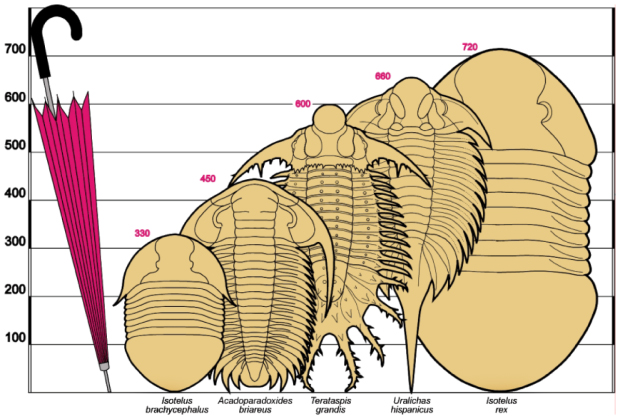
Large Species of Trilobite Comparison Chart shows Isotelus the largest, Terataspis grandis the third largest and Acadoparadoxides briareus (Paleo Joe’s Sample) the fourth largest!

Isotelus, rex is the largest trilobite ever found going back in the time scale from the Ordovician Period which began 485 mya. It could reach 28 inches (71 cm) in length. Many of Isotelusrex fossils have been discovered in the great state of Ohio where it is the proud state fossil.
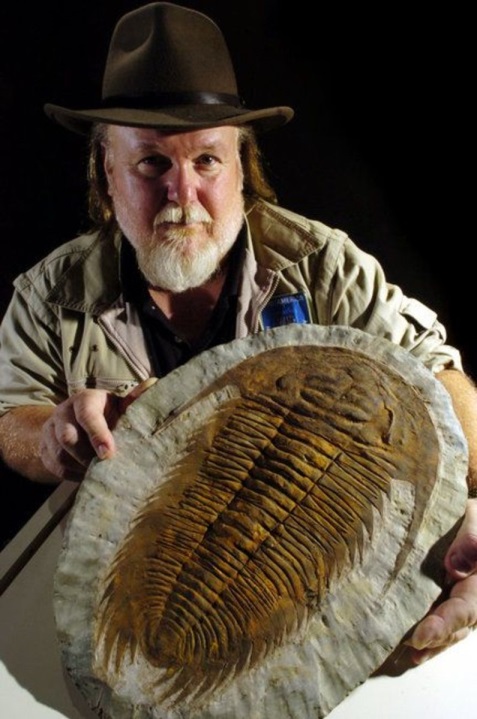
Paleo Joe holding Acadoparadoxides briareus large trilobite!

All trilobites were sea creatures having the distinction of possessing a segmented body, multiple jointed limbs and an armored outer shell, placing them in the category of arthropods related to insects and crustaceans. Trilobite means three lobes in Greek, from tri and lobos, named for its three major lengthwise sections.
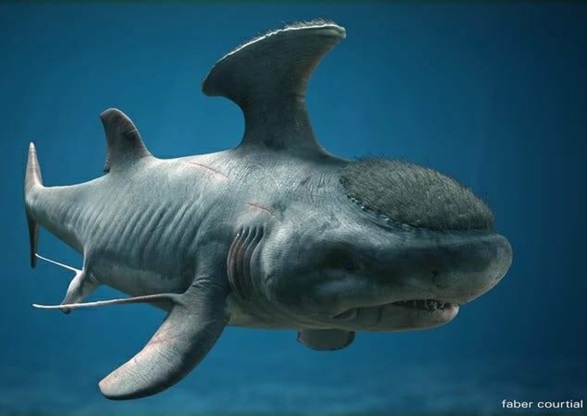
Stethacanthus Extinct Shark Rendition by Michael Schlesinger

5. Bizarre Prehistoric Sharks

Beginning in the late Devonian Period and into the early Carboniferous Period around (345 to 300 mya) sharks were diversifying so much that scientists have labeled it the “Golden Age of Sharks”. The placoderms were dying out, only lasting a 50 million year history compared to sharks 400 million year history. With the decline of placoderms, environmental niches allowed sharks to fill in, and as a result they assumed a wide variety of bizarre shapes. From this stage of evolution, they had become the top predators of the oceans.
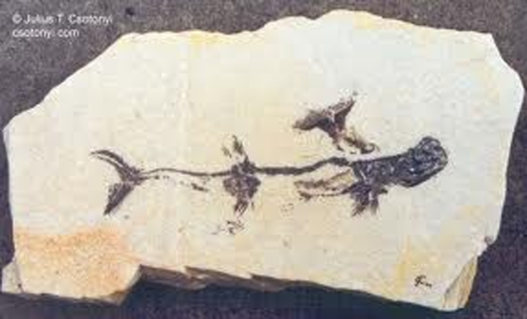
Stethacanthus Extinct Shark Fossil

Stethacanthus shark may have grown to 11 feet (3.3 meters) long, but sources differ referring somewhat smaller. One thing undisputed is the strange anvil-like growth protruding from its back that was completely overlaid with sharp brush-like spikes. The same type of spikes also covered the top of its head. There has been much speculation about the use of these spikes. One theory proposes it may have played a role in courtship, while another proposes it simply may have made the creature look more frightening.
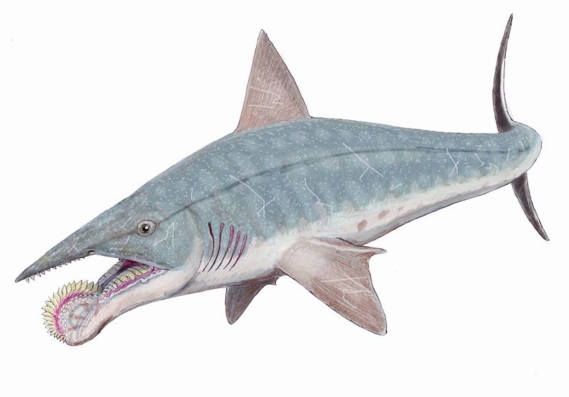
Prehistoric Shark Helicoprion Source

Another strange shark emerging during the period was Helicoprion. Not much is truly known about this shark, but the pattern of its teeth is instantly recognizable. They formed a whorl semi-circle arrangement protruding out of its mouth. One theory suggests the whorl may have aided in shelling or extracting the bodies of nautiloids and ammonites.Unlike modern sharks, the teeth did not fall away at the front possibly resulting in the rotated bizarre spiral which mystifies modern science.
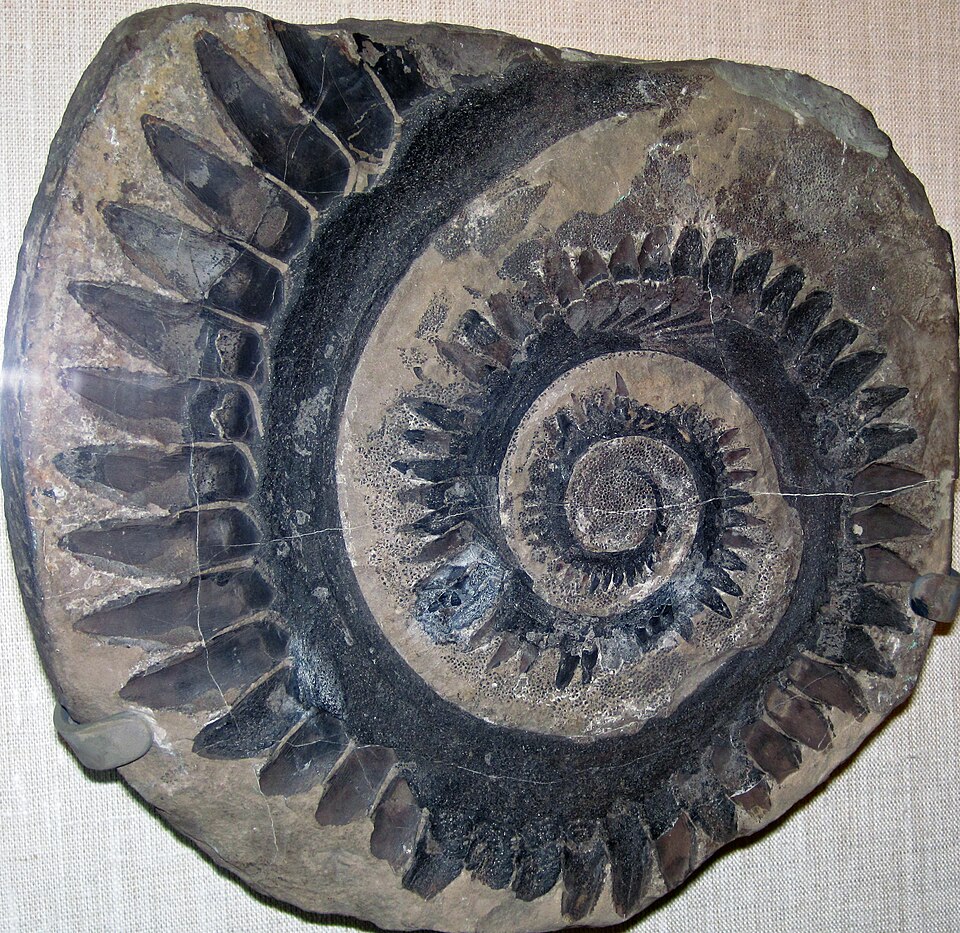
Tooth Worl Fossil of Prehistoric Shark Helicoprion – Photo by James St. John

The largest genus of sharks in the bizarre top-predator group was Edestus giganteous described in the video below. Edestus giganteous lived during the latter part of the Carboniferous Period around 325 mya. He reached up to 20 feet (6 meters) long weighing up to 2 tons. That’s comparable to the largest great white sharks of today. Comparable to its relative, Helicoprion, Edestus giganteus’s teeth formed a strange curved shape, and it also did not shed its teeth. It must have been very intimidating to other creatures looking as if it possessed saw blades for a mouth.
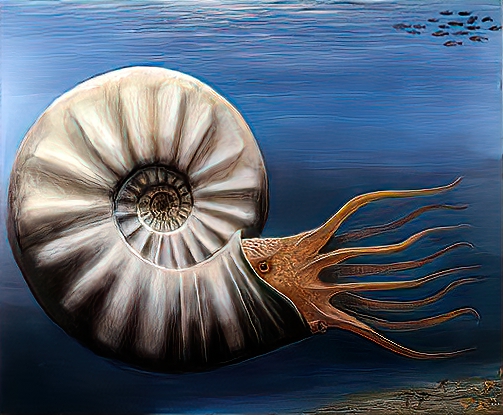
Gigantic Ammonite “Parapuzosia seppenradesis” – Artist Rendering

7. Giant Cephalopod Ammonites

Ammonites were closely related to the straight-shelled cephalopod nautiloids only they had adapted a coiled shell which allowed them more freedom of mobility. They even used the same jet propulsion mode of movement. Their numbers greatly grew beginning as early as the Devonian and peaked some 300 million years later during the Cretaceous Period (144 – 65 mya). Consecutively, the straight-shell forms greatly declined, unable to compete with the more mobile ammonite nautiloids.
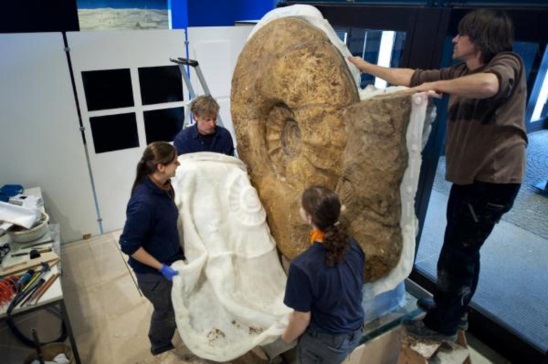
Parapuzosia seppenradesis lived during the Cretaceous Period (145 to 66 mya). The sample in the photo was unearthed in Germany and measured 6.5 feet (2 meters) in diameter. The biggest forms of ammonites have been especially found in later rocks of the upper Jurassic Period from around (180 -145 mya) such as Titanites occidentalis, shown below.

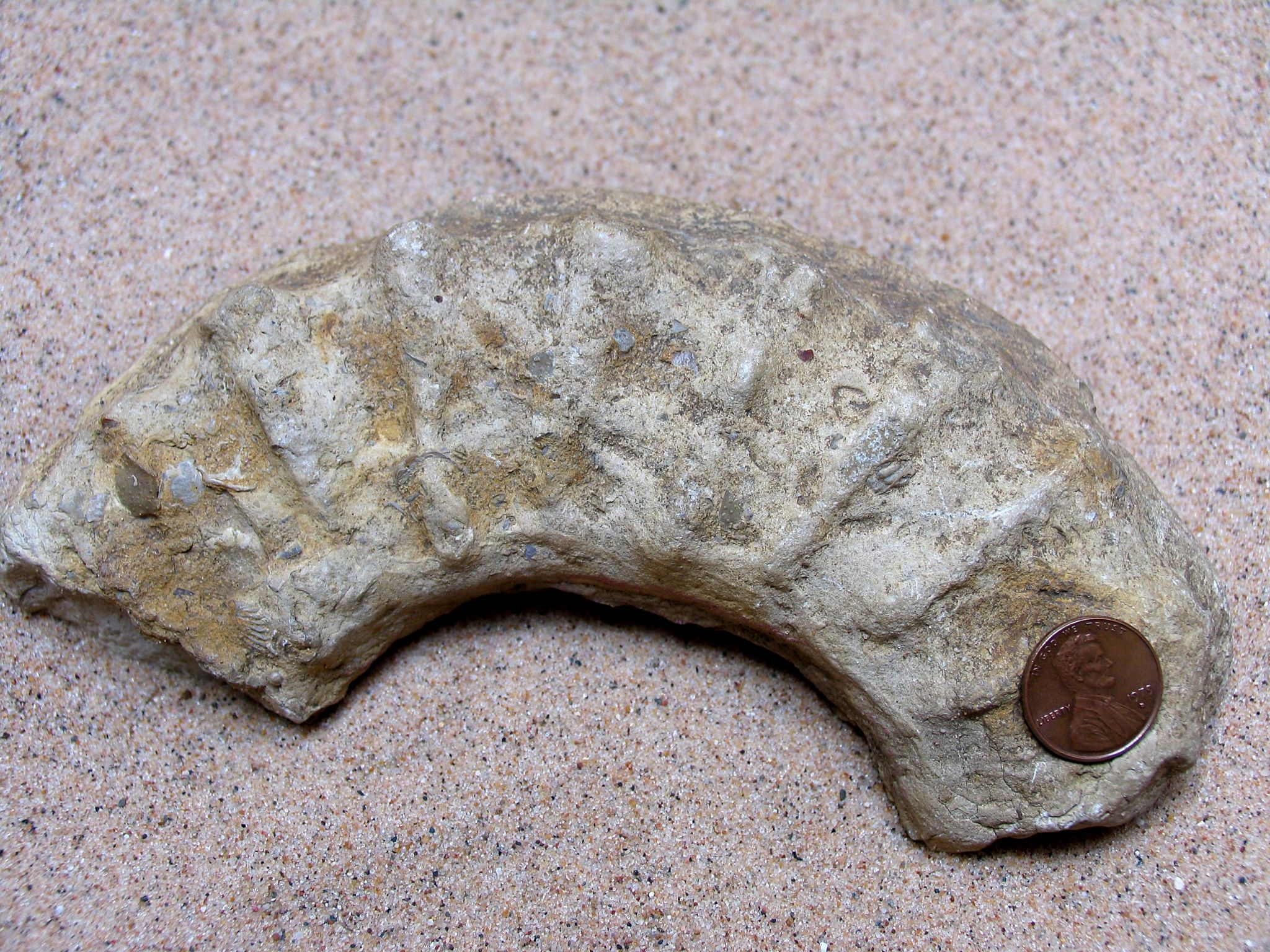
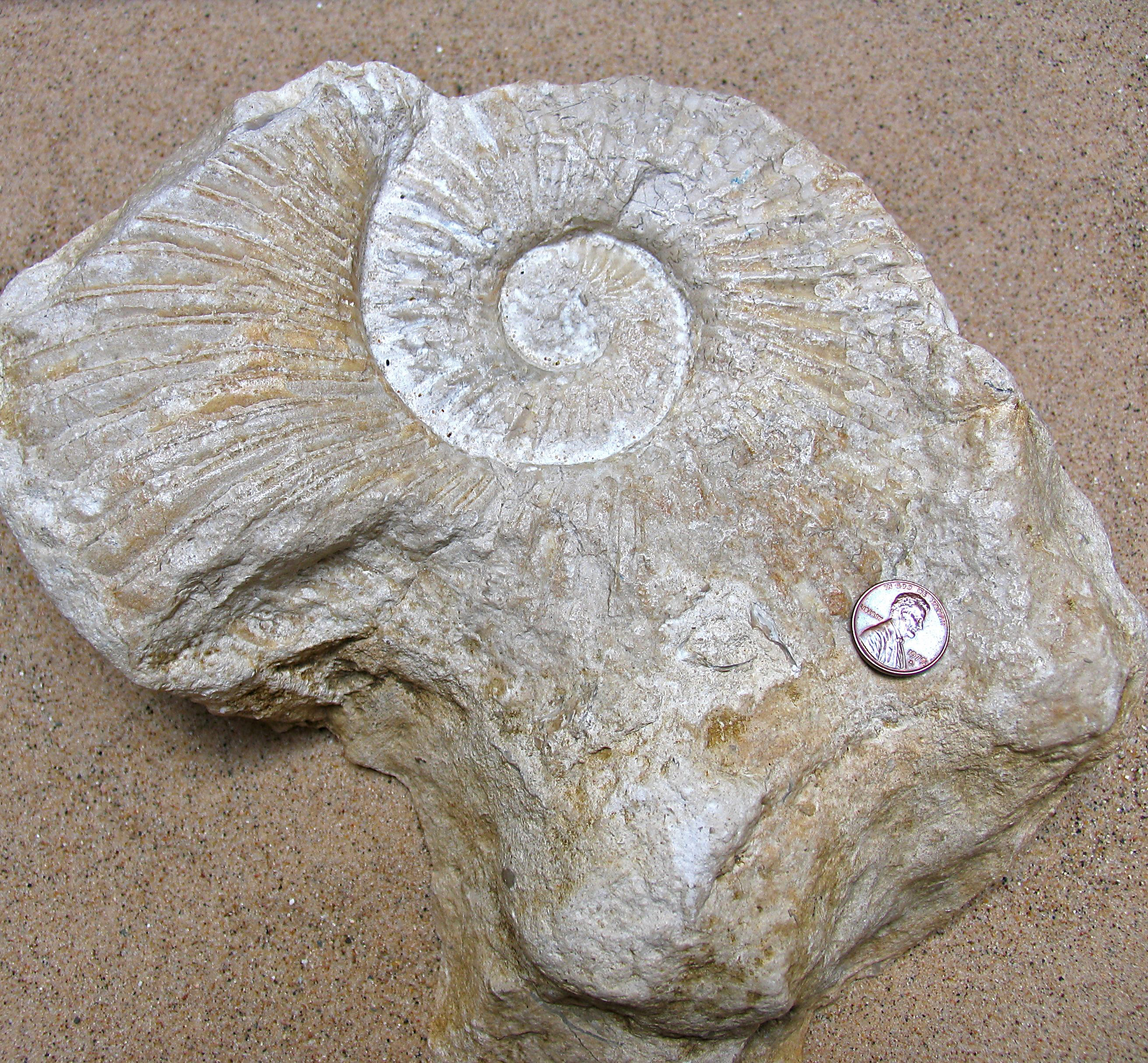
The ammonite fossil shown in the photo below with the lady was first discovered in 1947 on the side of a mountain in British Columbia, Canada. It has been scientifically recognized as Titanites occidentalis. The original fossil was too fragile to move, so scientists used latex to make molds of it. The fossil measures 6.7 feet (2 meter) in diameter earning the nickname “Fossil Truck Tire”. Later, in 2004, another, even larger specimen was found in the same region confirming that the current mountainous region was formerly a shallow, tropical sea.
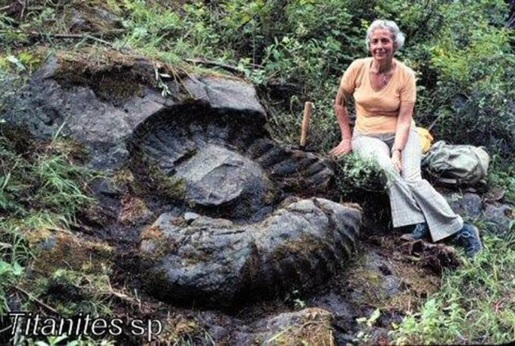
Titanites Occidentalis Giant Ammonite Fossil

The ammonites were so successful and numerous with approximately 30 to 40 thousand species that their remains are used as index fossils for scientists to date rock layers and other organisms within the same rock strata. The super successful ammonites experienced the same final fate 65 million years ago along with the dinosaurs. Their close relative, the nautilus, often referred to as a living fossil, is the lone survivor among nautiloids.

© 2026 Fossillady

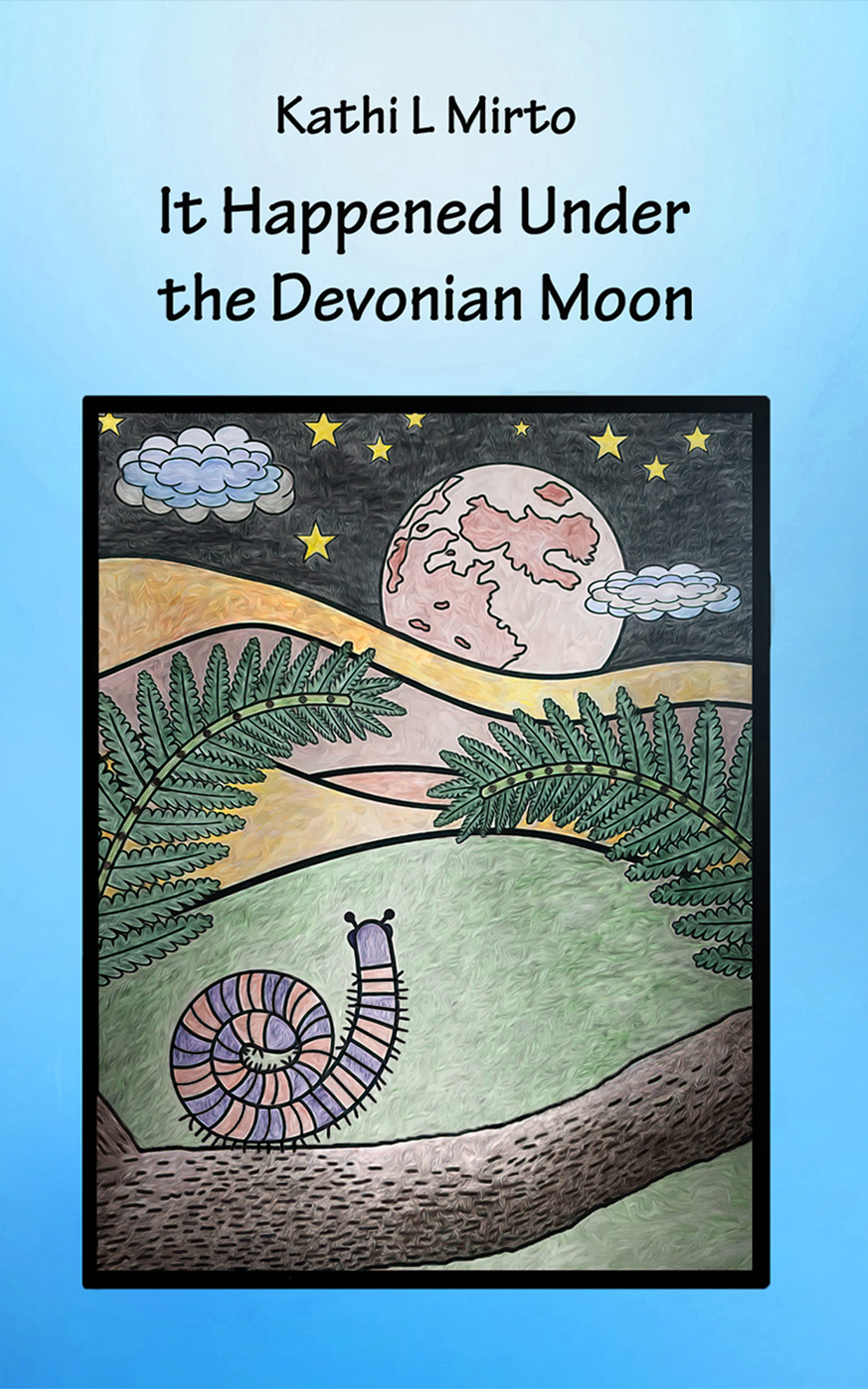
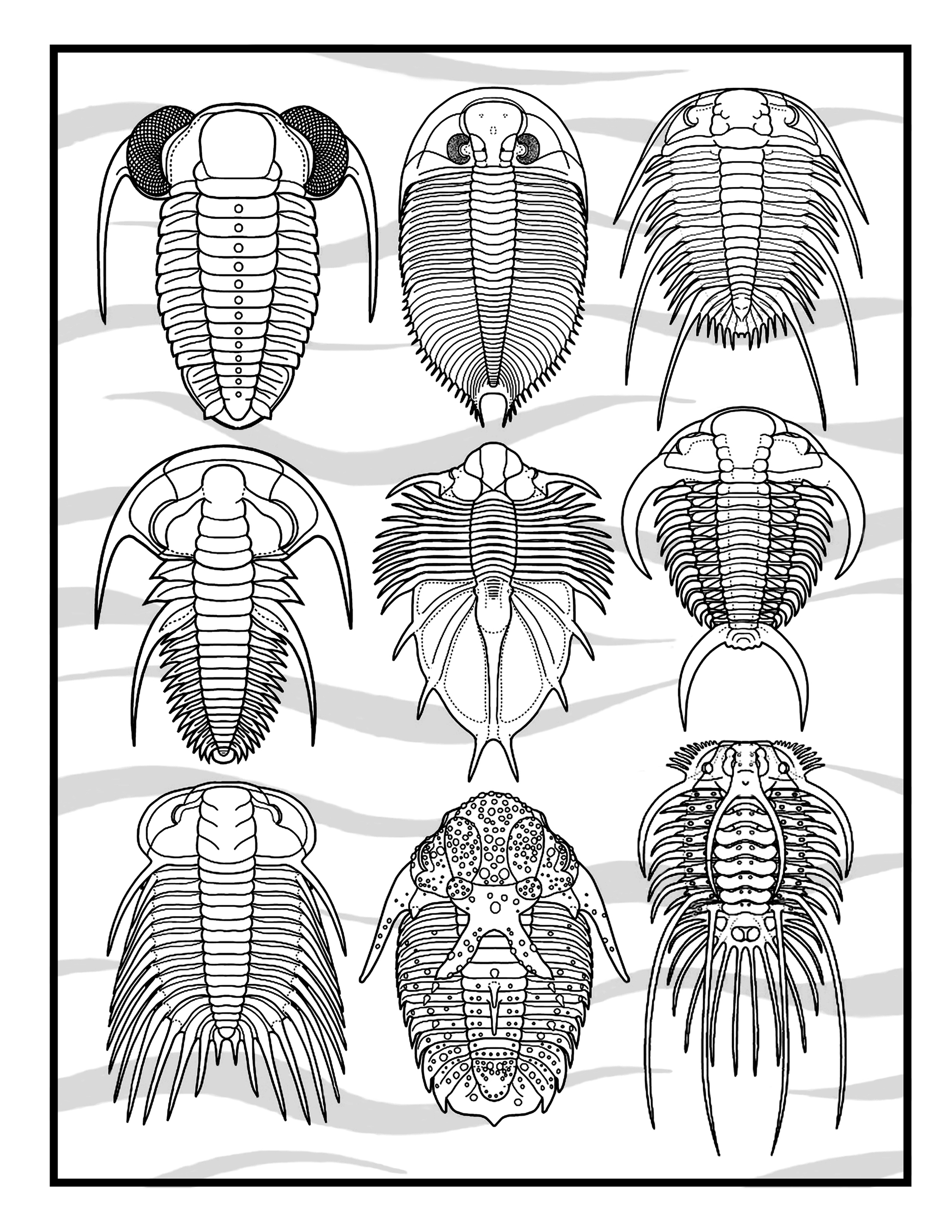
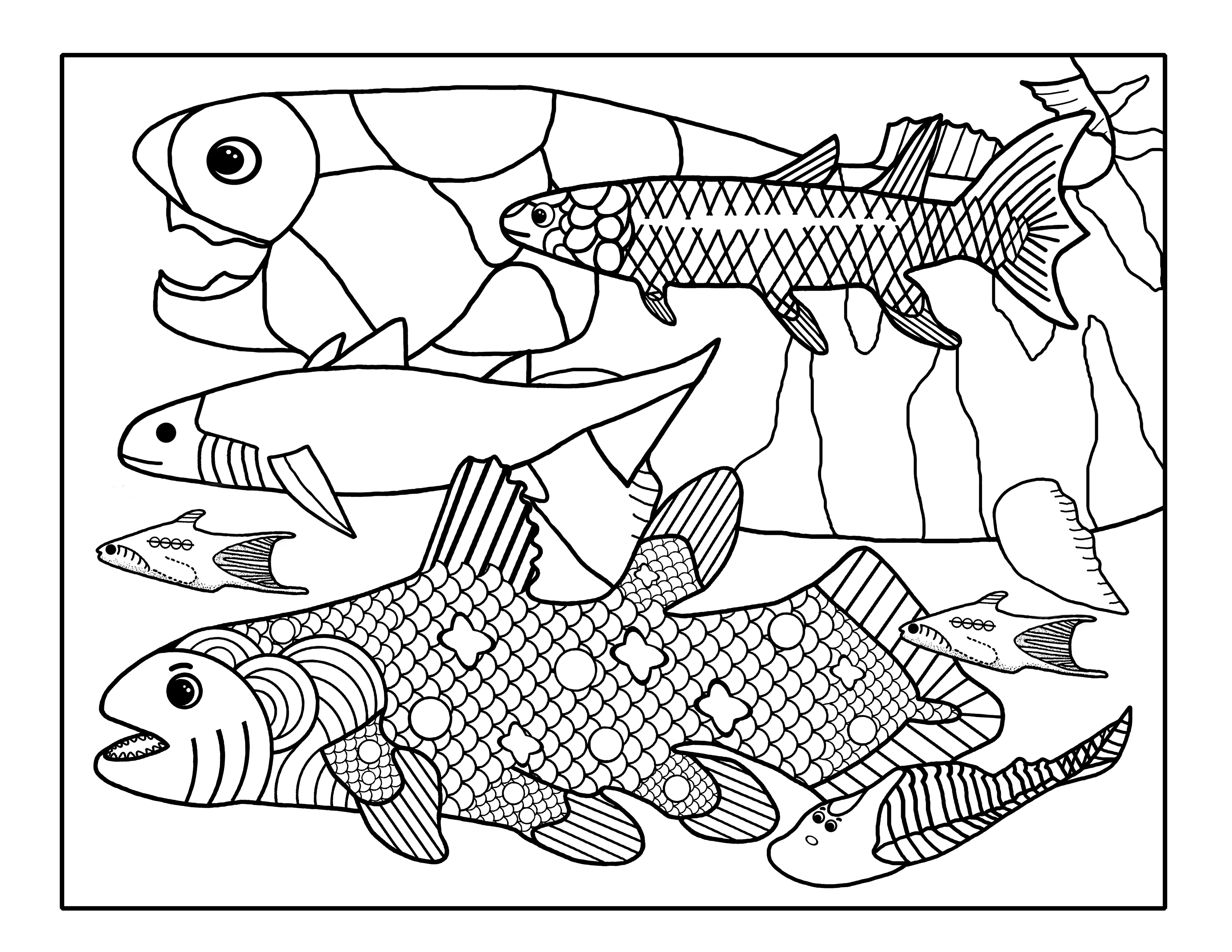
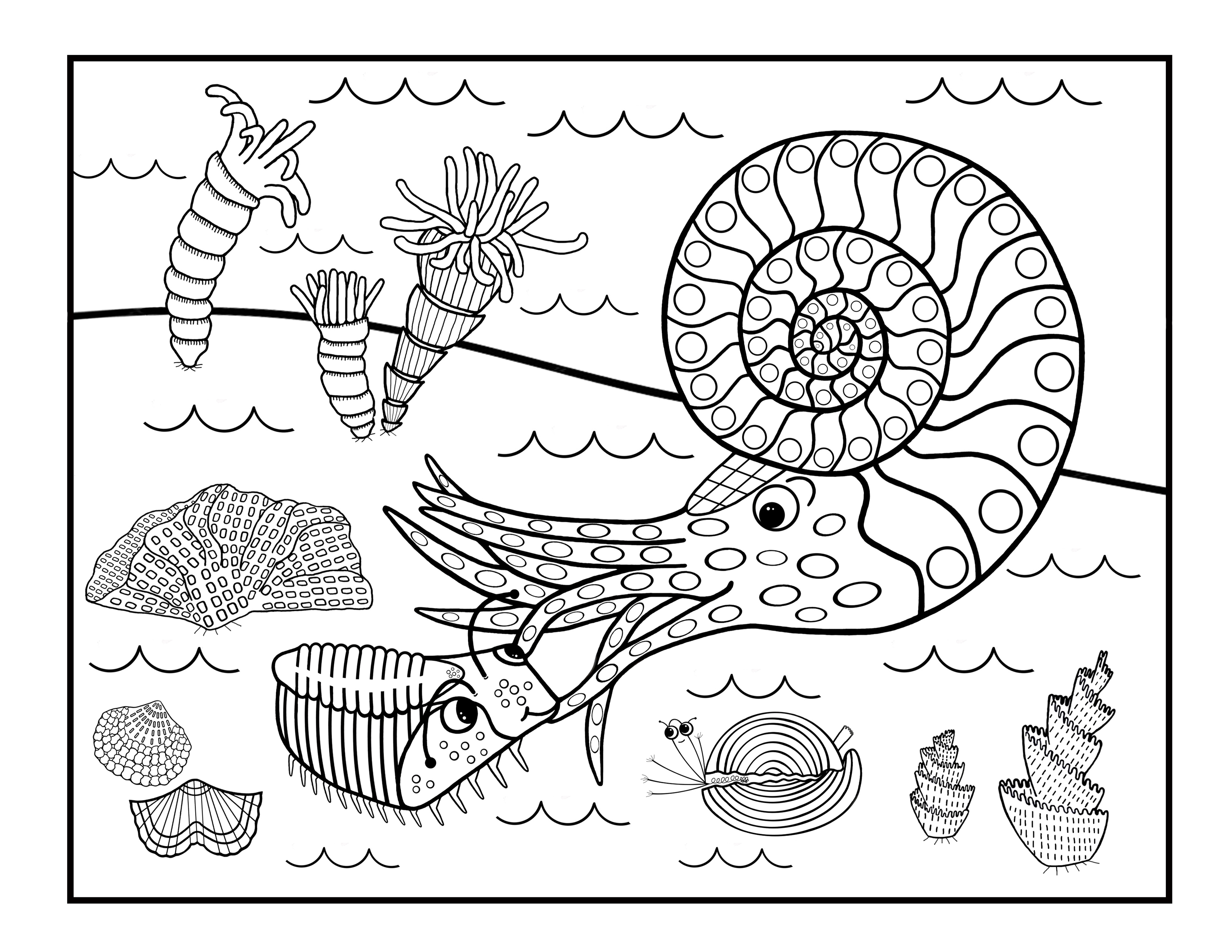
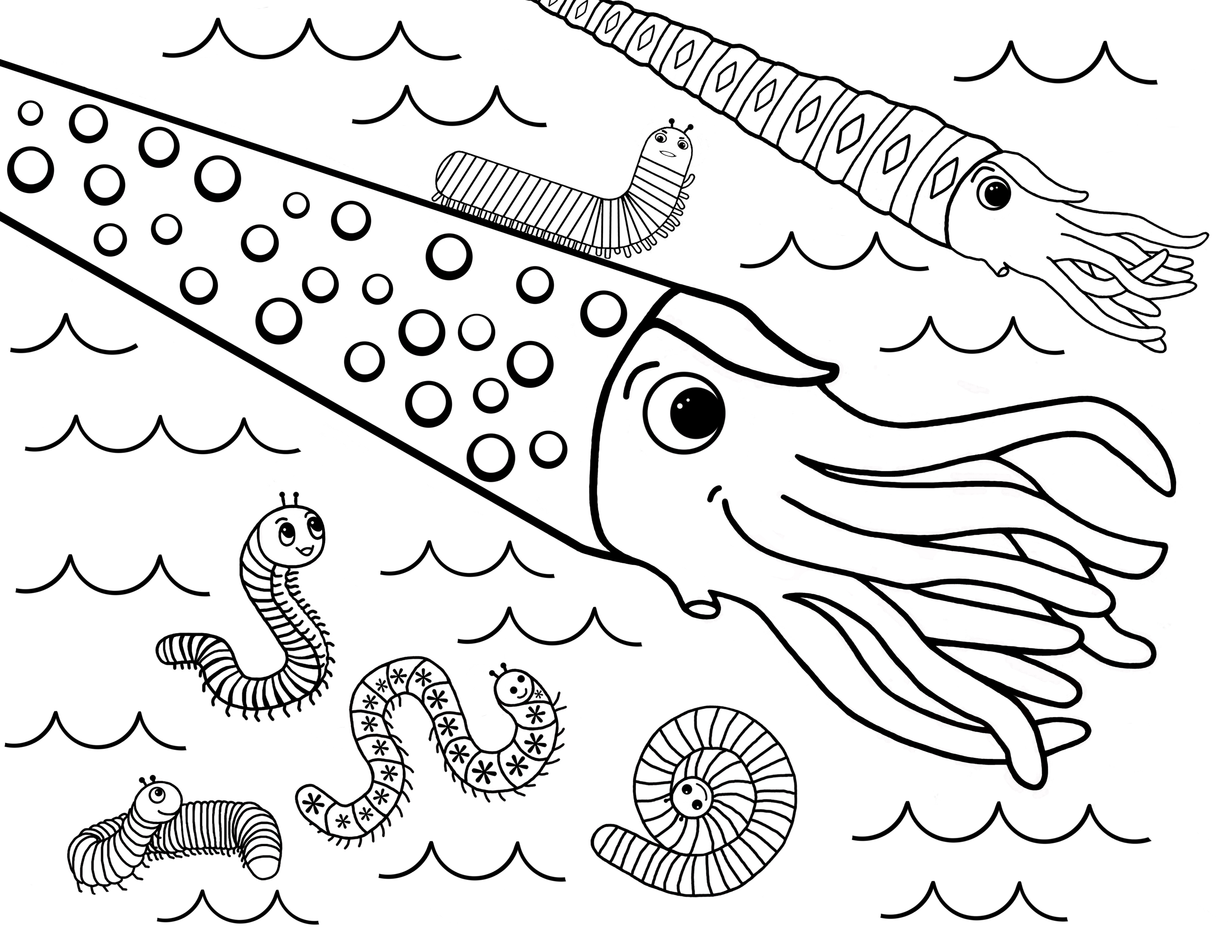
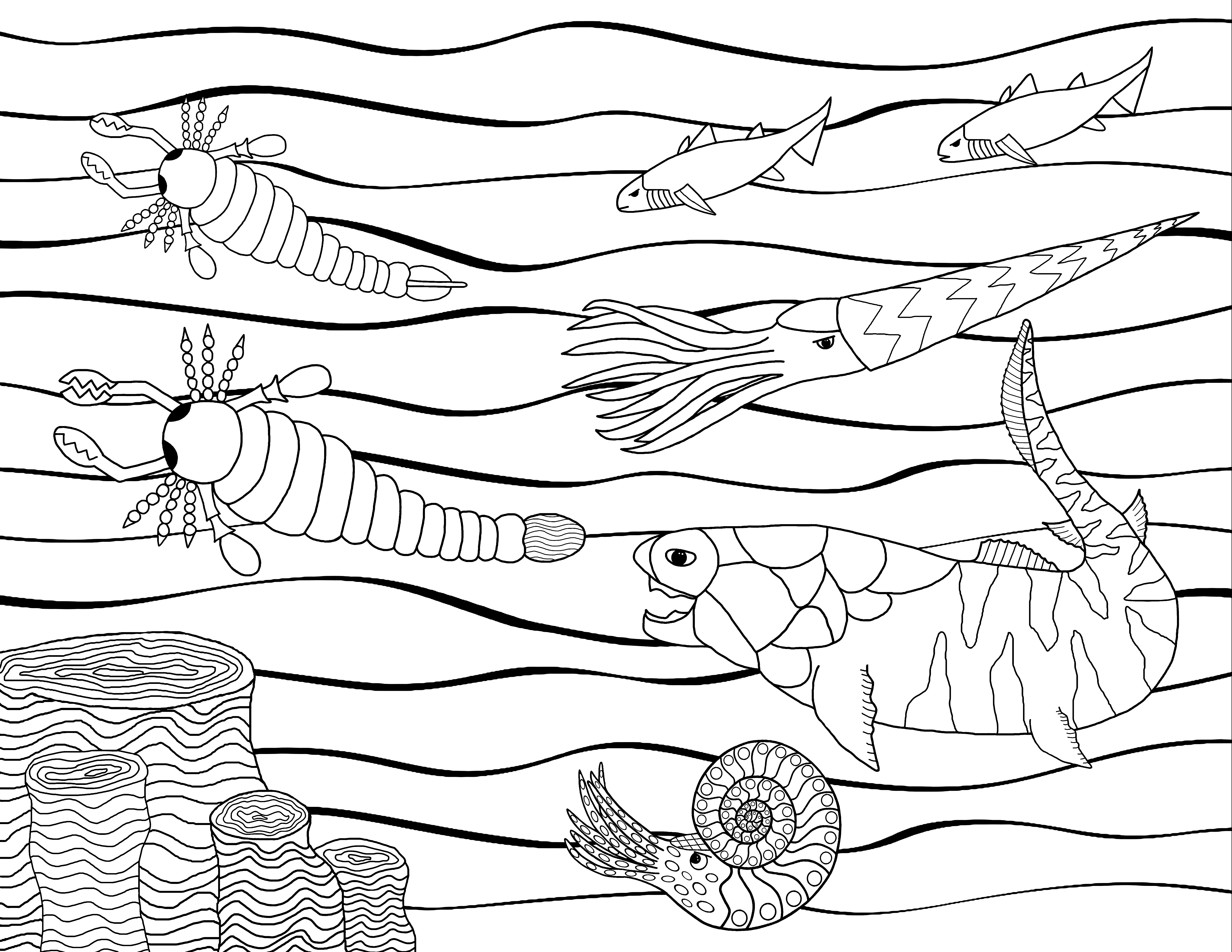
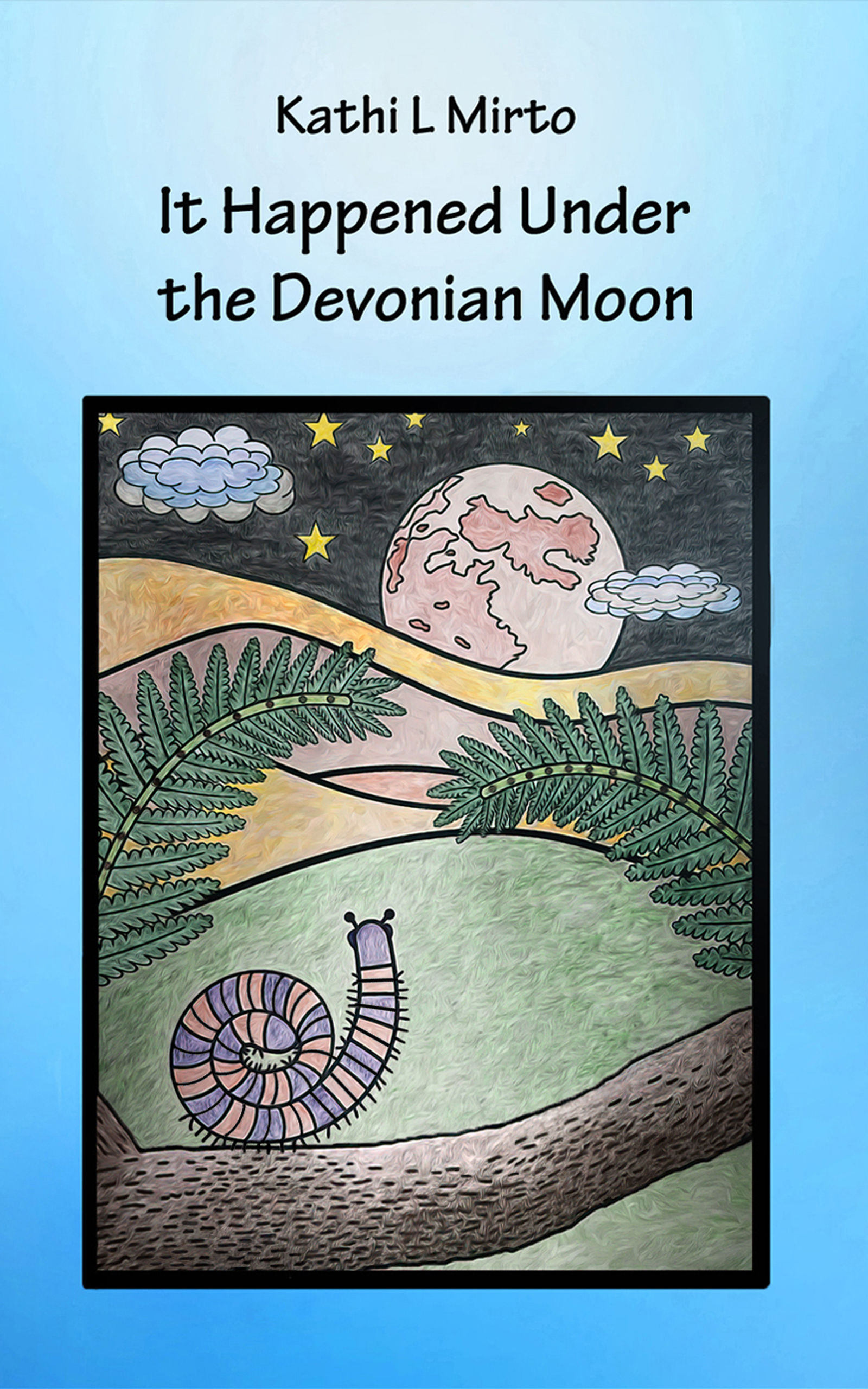
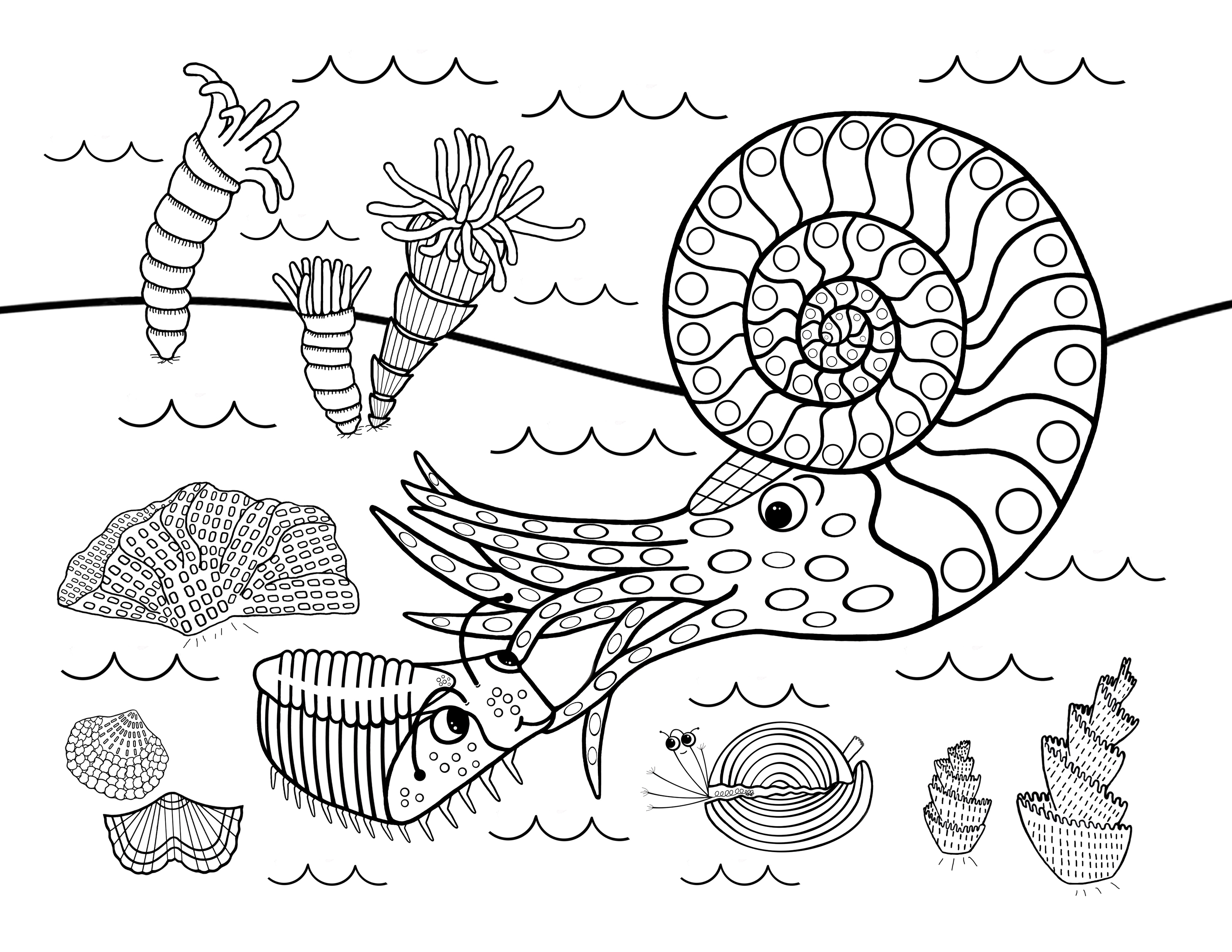
Check out my two fiction books featuring prehistory insights blended with imaginative storytelling that educate as they entertain! Perfect for young explorers, ages 11-15+! A coloring/activiy book available includes story scenes, fossil photos with descriptions of plants and animals from the Devonian time period and more, suitable for adults, as well! Available on Amazon.com.
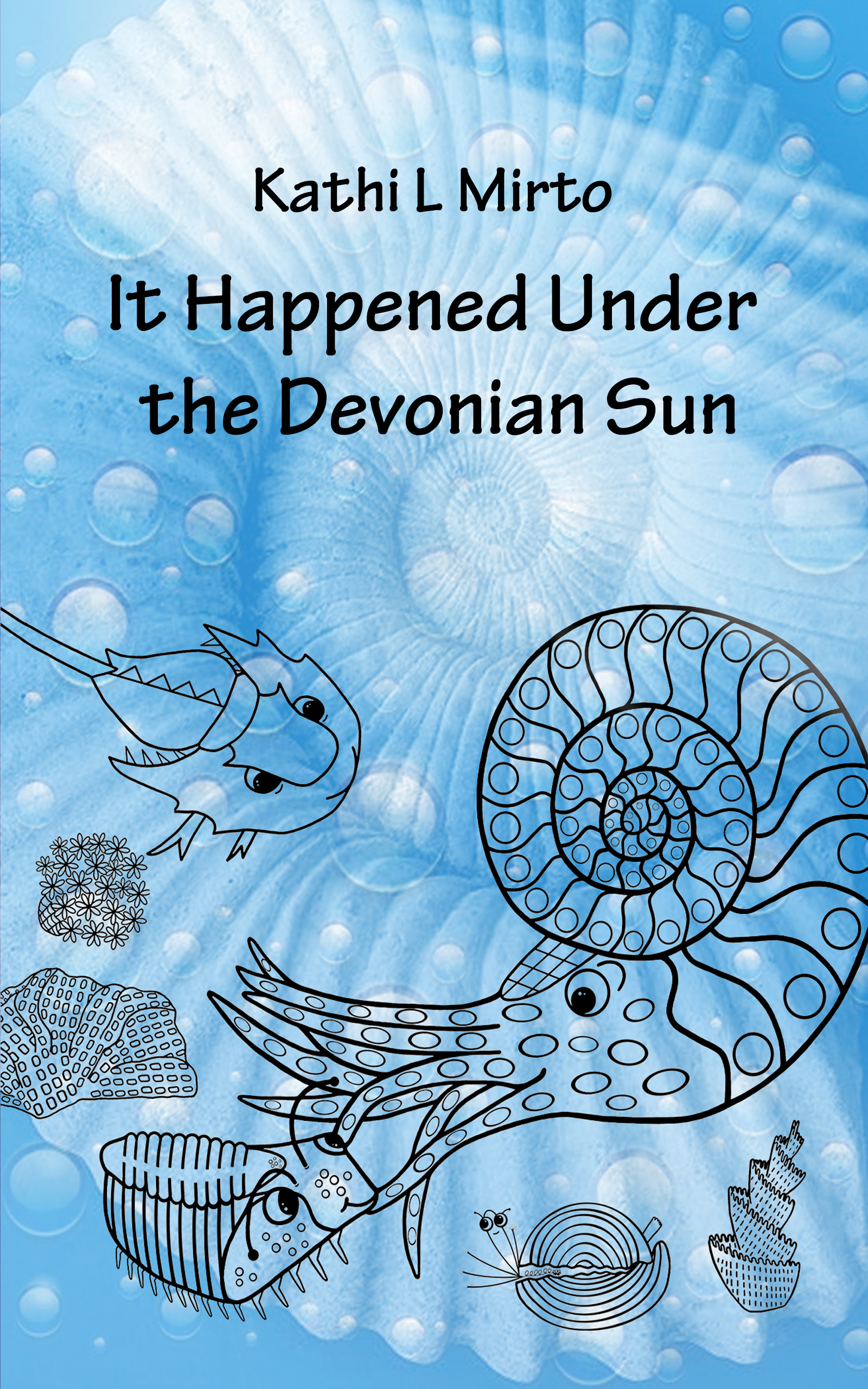
From Tree to Stone

Triassic Period, Araucarioxylon, arizonicum (Petrified Forest National Park) Drawing Rendition

The drawing above is a rendition I drew with colored pencils of Araucarioxylon, arizonicum, an extinct conifer tree identified from the petrified wood from the infamous Petrified Forest National Park located in the U.S. State of Arizona. Originally, it was thought to be a distant relative of the Araucaria tree or the Norfolk Pine, which you often see for sale during the Christmas season as potted plants. Without detailed microscopic examination of the wood, its link to present day trees is only speculation at this point. Modern scientific discoveries indicates there were more species than originally thought lying on the dry Arizona plateau.

Triassic Period Araucarioxylon, arizonicum petrified wood fossil from Arizona Petrified Wood National Park

Triassic Beginnings

During the Triassic Period, around 225 million years ago, the present day continents were melded together as one supercontinent called Pangea. By the end of the era, around 200 million years ago, widespread volcanic activity began to break the continents apart. The first dinosaurs and mammals had evolved and there had been a boom in cycads (palm like trees), giant tree ferns and conifers . . .  enter the Araucarioxylon of Arizona, a type of conifer or pine. It differs from modern day conifers with its sporadic branch growth pattern around the trunk rather than growing in level whorls. It grew up to 200 feet (60 meters) tall with a 9 foot (2.7 m) diameter. Compare that to the tallest current living conifers, the Sequoias, that grow up to 188 feet (57 meters). To help put that into perspective, maple trees reach up to about 50 feet (15 m) and oak trees top out at about 80 feet (24m) tall.

Triassic Landscape

From Tree To Stone

The high and dry tableland in northern Arizona where the National Petrified Forest Park rests, was a vast flood plain during the Triassic Period overflowing with streams and widespread ponds. Prehistoric, extinct plants and trees concentrated along the spilling bodies of water. Dying or blown over trees were washed down the streams into the flood plains where they gathered and decayed. If they were buried under mud, silt or volcanic ash deep enough to cut off oxygen, it slowed the decaying process. Silica laden groundwater gradually seeped through the logs replacing the original wood tissue with silica deposits. As the process continued over the ages, the wood was replaced, atom by atom, with silica crystallized into mineral rich quartz, ultimately turning the wood into a rather attractive stone.

DSC07806
Triassic Petrified Wood Fossil Araucarioxylon, arizonicum from Petrified Forest National Park

Petrified Wood Colors

Various colors, often striking, are produced depending on the mineral contents in the stone:

PINK or RED – Hematite present – a form of oxidized iron – This interesting process is well explained from ScienceView.com. Iron dissolves in ground water when no oxygen is present. The ground water becomes re-oxygenated as it moves though the tree trunks causing oxygen to bond with the iron. The iron then precipitates to produce a solid form of iron called hematite. This hematite is incorporated into the log’s cell walls. The same process occurs when iron stains porcelain sinks. The soluble iron in ground water becomes oxidized into a solid form when it comes in contact with air, causing a reddish stain.
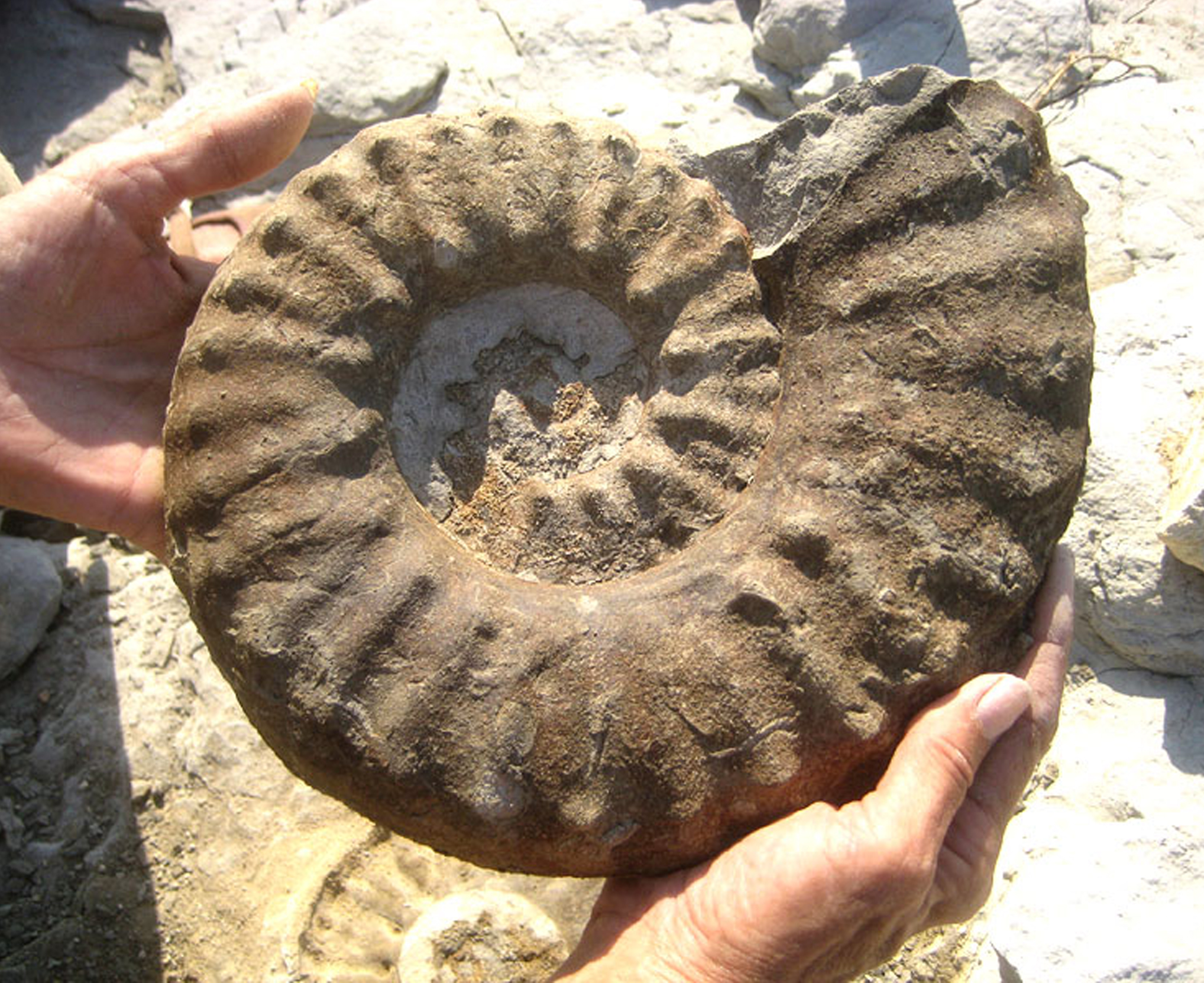
YELLOW BROWN or ORANGE – Goethite present- a weathered hydrated iron oxide that becomes crystallized

GREEN – Pure native iron present

WHITE  – Pure Silica present – Silicon, Si, and oxygen, O, are the two most abundant elements in the earth’s crust which together form silica dioxide quartz

BLACK – Carbon or Pyrite or Iron Sulfide (the most wide spread sulfide) present – The wood was affected as hydrogen sulfide from decaying organic matter interacted with iron forming pyrite.

PURPLE or BLUE  Manganese present – This is a secondary material formed when water leaches manganese from igneous rock and re-deposits it as a concentration of manganese dioxide.

TAN   Silica Dioxide present – naturally found in water, plants, animals, and the earth

Uplift

How did the petrified wood of Arizona become uncovered? First, millions of years ago, the area sank to the point which completely flooded everything with freshwater sediments. It continued to sink deeper becoming completely buried. Millions of years later, the area was lifted far above sea level from westerly continental plate pressure. The uplift created stresses that cracked the giant logs. Over time, wind and water have worn away the layers of hardened sediments, exposing the fossilized wood.

Lake Michigan Petrified Driftwood

Petrified Driftwood Lake Michigan Beach

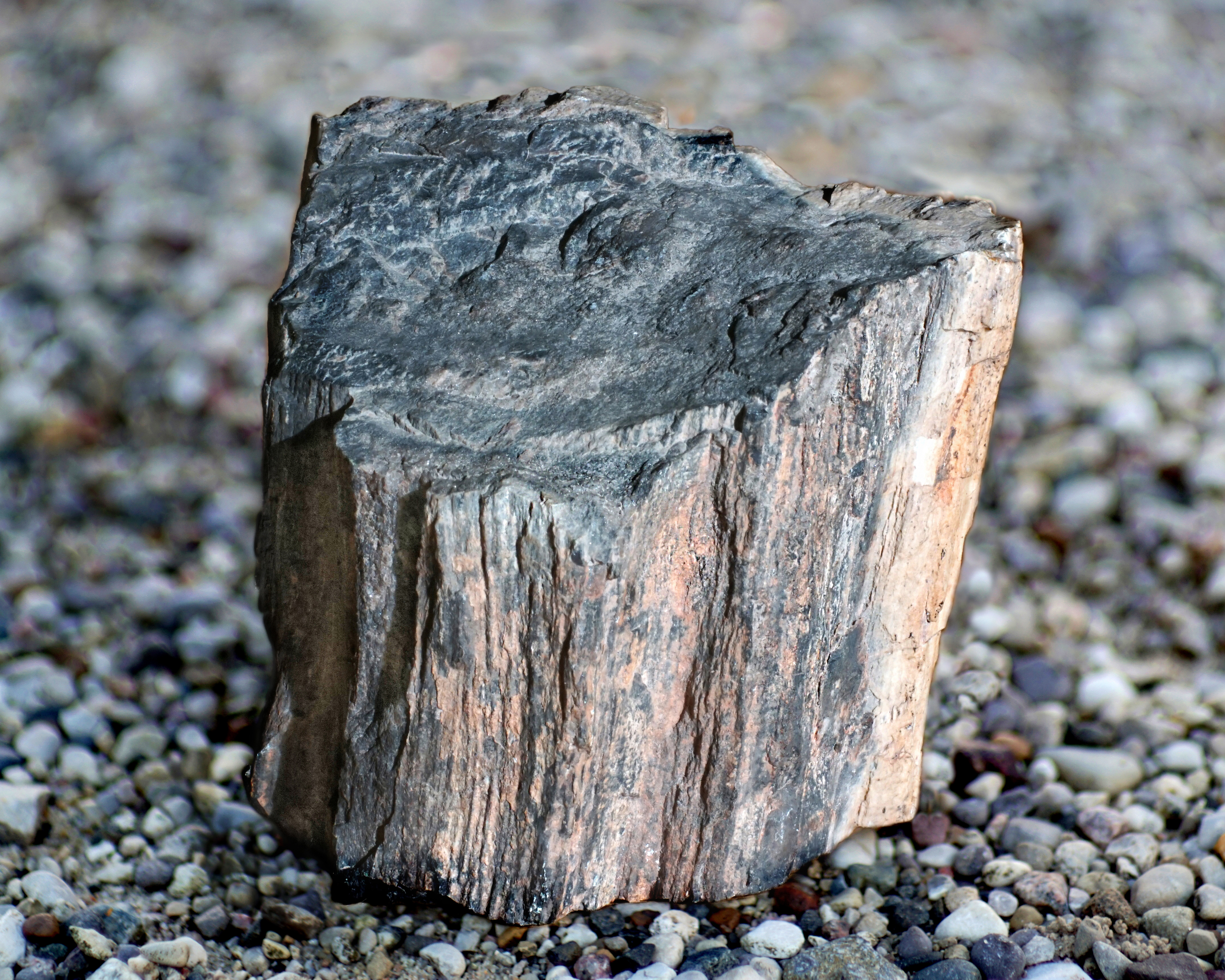
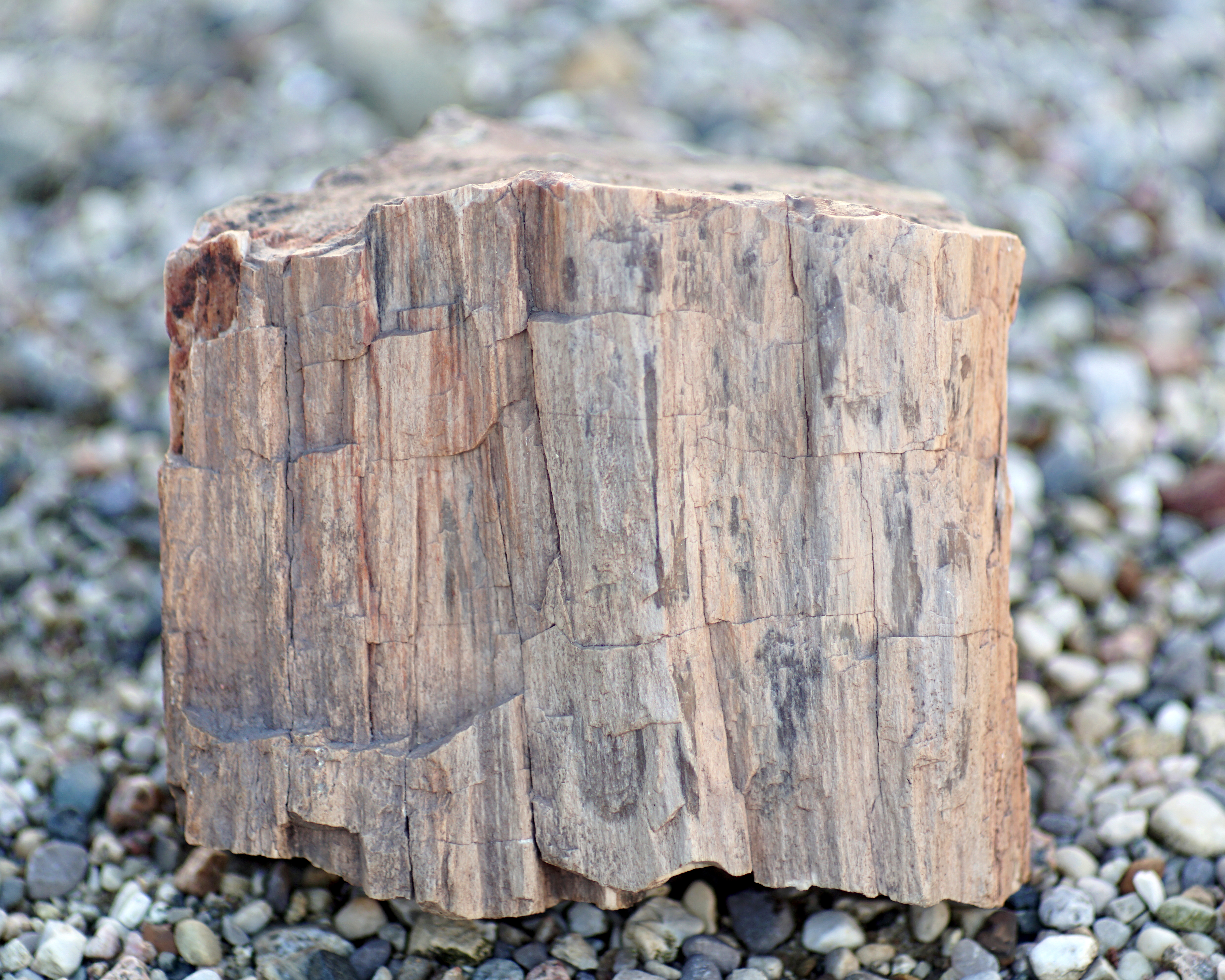
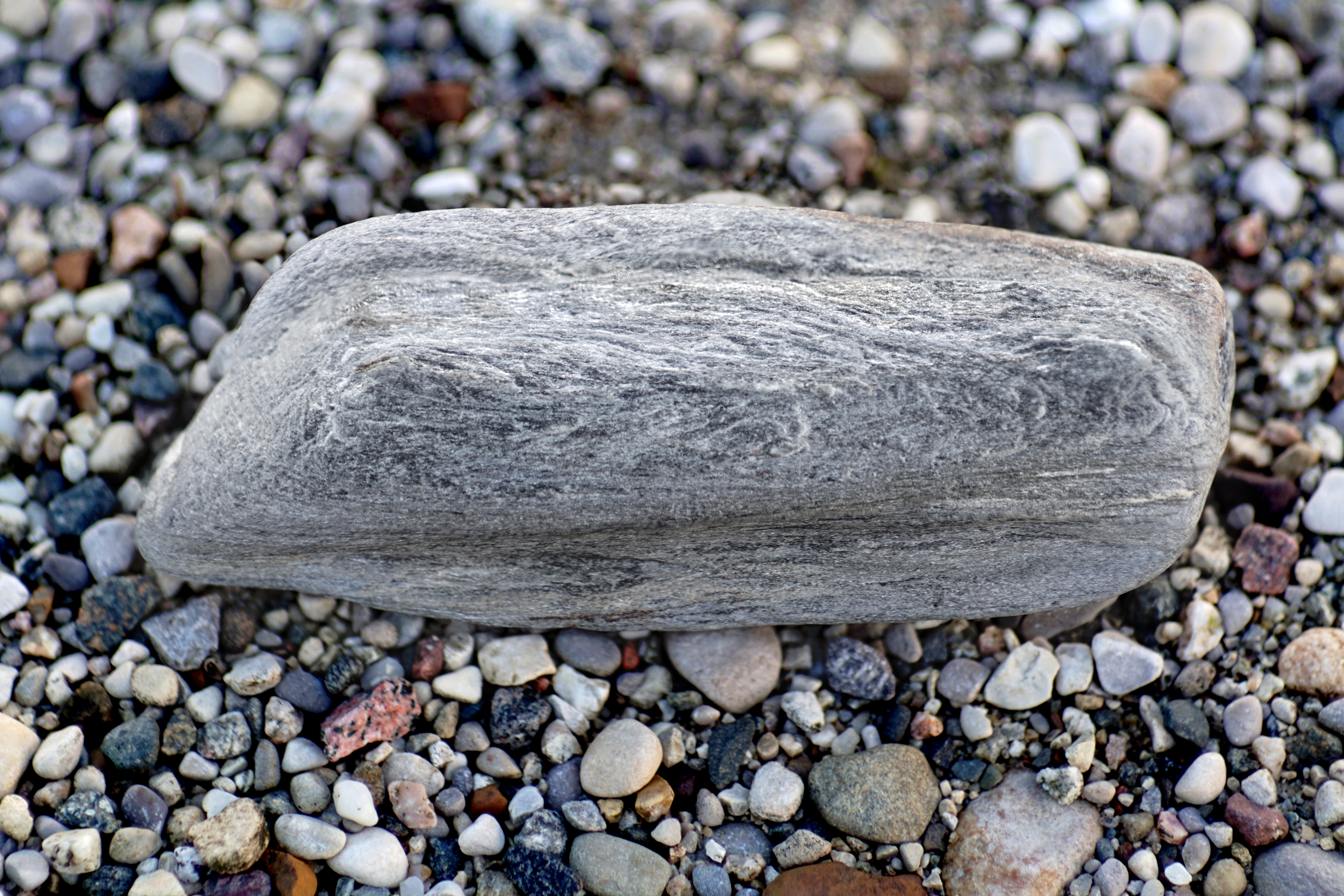
While the Petrified Forest of Arizona has the highest concentration of petrified wood in the world, it can be found in every US state and other countries around the world. I found this sample of petrified driftwood on a Southwest Michigan beach off Lake Michigan called Oval Beach. It’s predominantly gray with a slight bluish green cast and has a few streaks of rust. In certain light, it casts a very bright sheen or luster. It’s difficult to capture the sheen in a photograph, but you can get a better idea from its flip side in the photo below.

Petrified Driftwood Lake Michigan Beach

After researching the possible mineral contents of my sample, according to its dense property, color and luster, my best guess tells me that it’s hematite specularite. I have collected driftwood on the beach very often, but never before a piece that was petrified!

See a sample of petrified wood of extinct scale trees, from one of my previous posts.

All rights reserved © Fossillady 2022

Halysites Chain Coral Uncovered

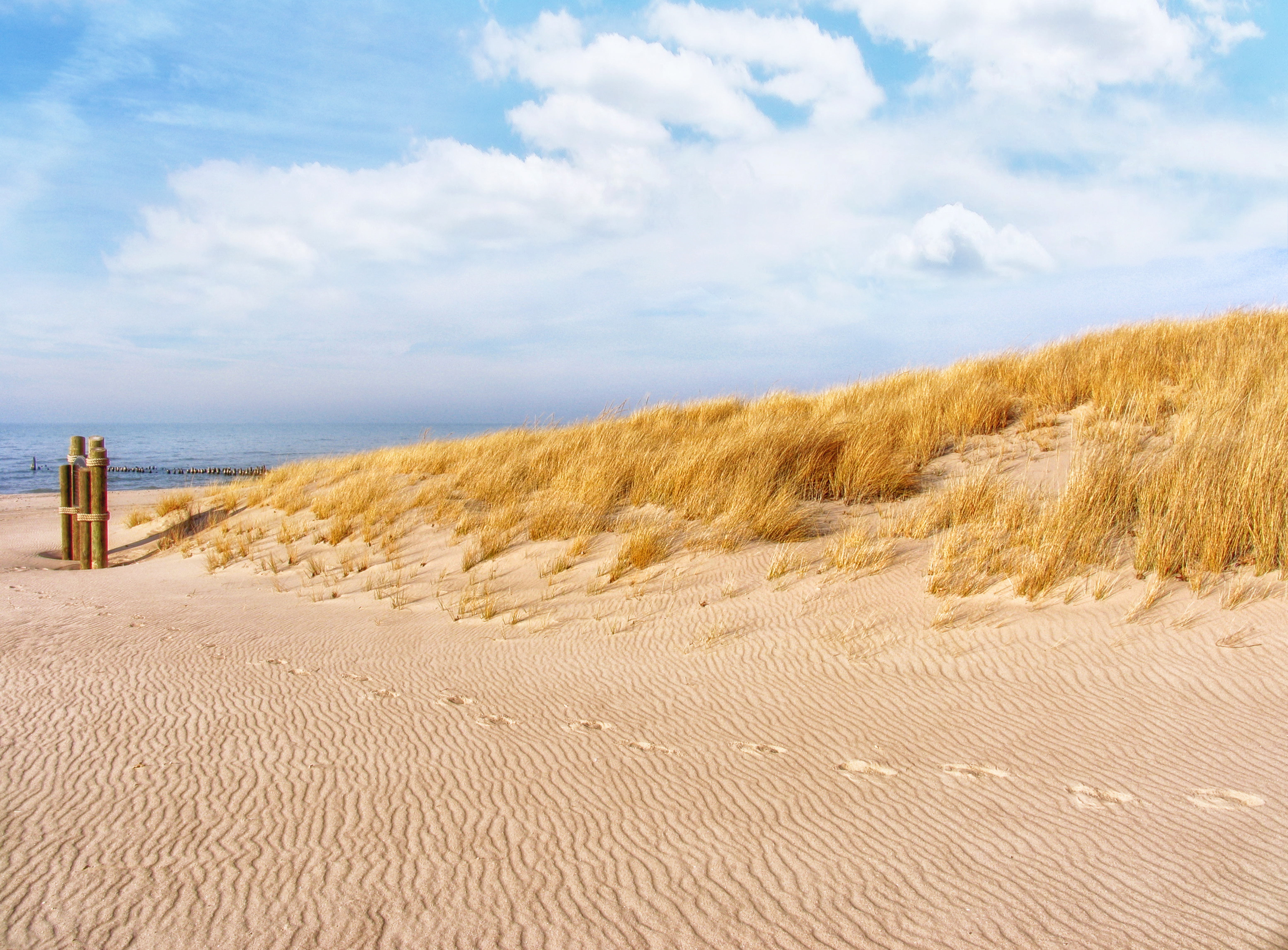
Golden Beach grass dune
Oval Beach Saugatuck, Michigan  (Winter 2012)

I was super excited to discover several fossils on Oval Beach in Saugatuck, Michigan, USA that are highly unusual to find in winter. The fossil below was lying under deep layers of sand, but luckily, the mild weather with minimal snowfall allowed winter winds to push sand off the under layers. Also contributing to fossil hunting were the low water levels from a long dry spell during the summer of 2012 which produced more beach to explore.

Halysite Coral
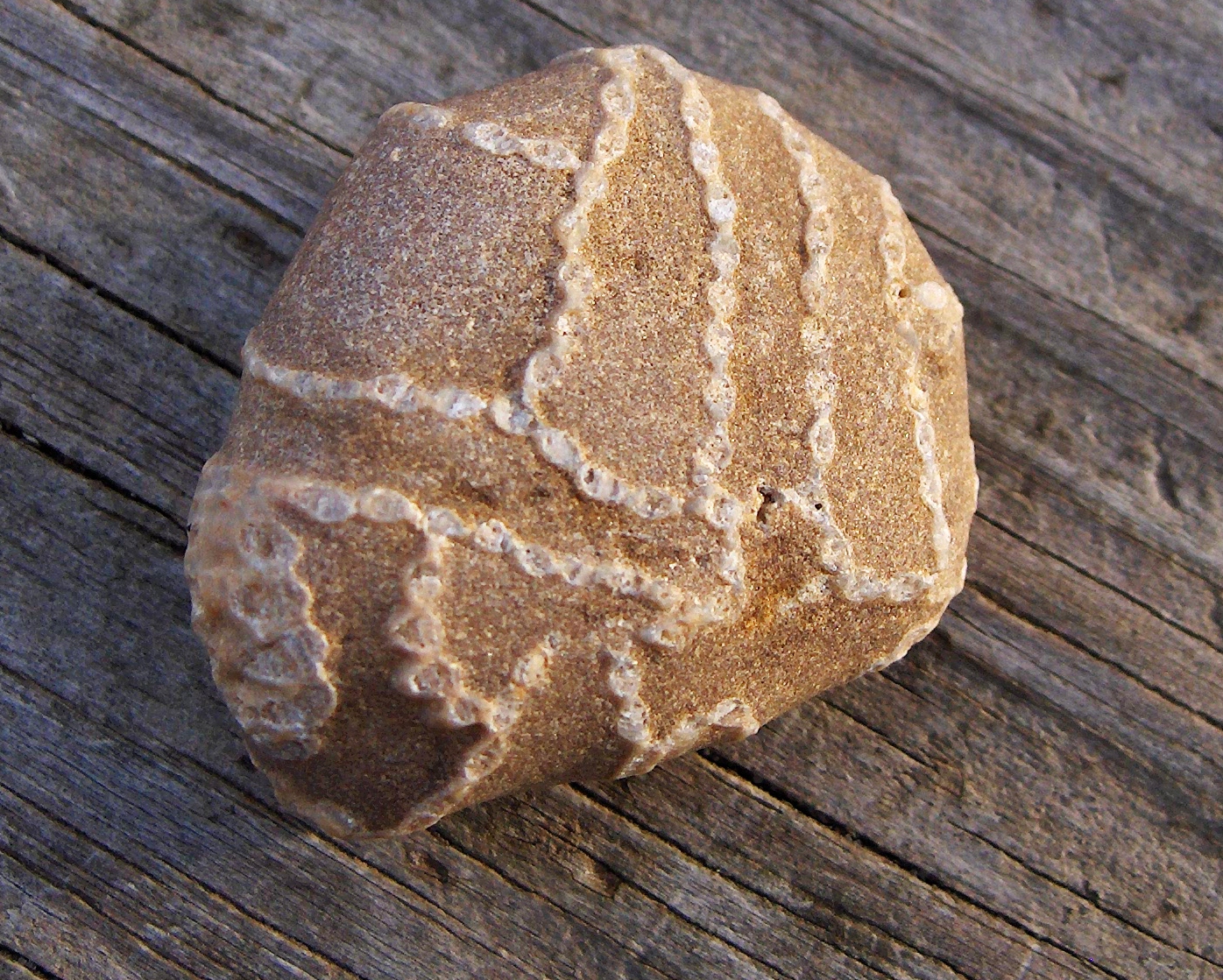
Halysites Chain Coral Fossil Found on Lake Michigan Beach

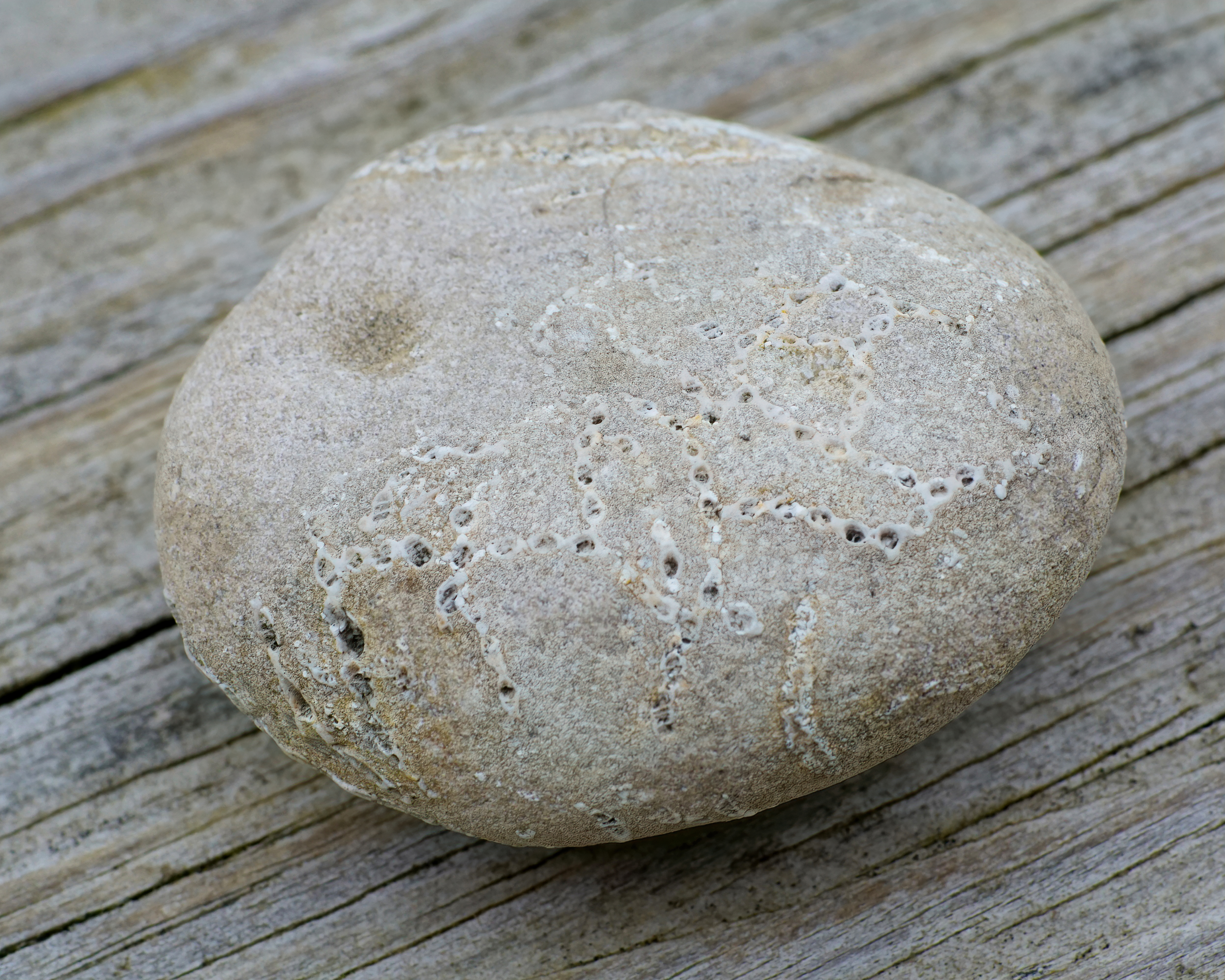
These fossil samples are from the extinct order of “Tabulate” reef building colony-type corals and from the genus,”Halysites”, commonly called, Chain Corals. They are fairly easy to distinguish due to the chain-link raised impressions for which they are named.

Halysites “Chain Coral” Fossil found on Lake Michigan Beach

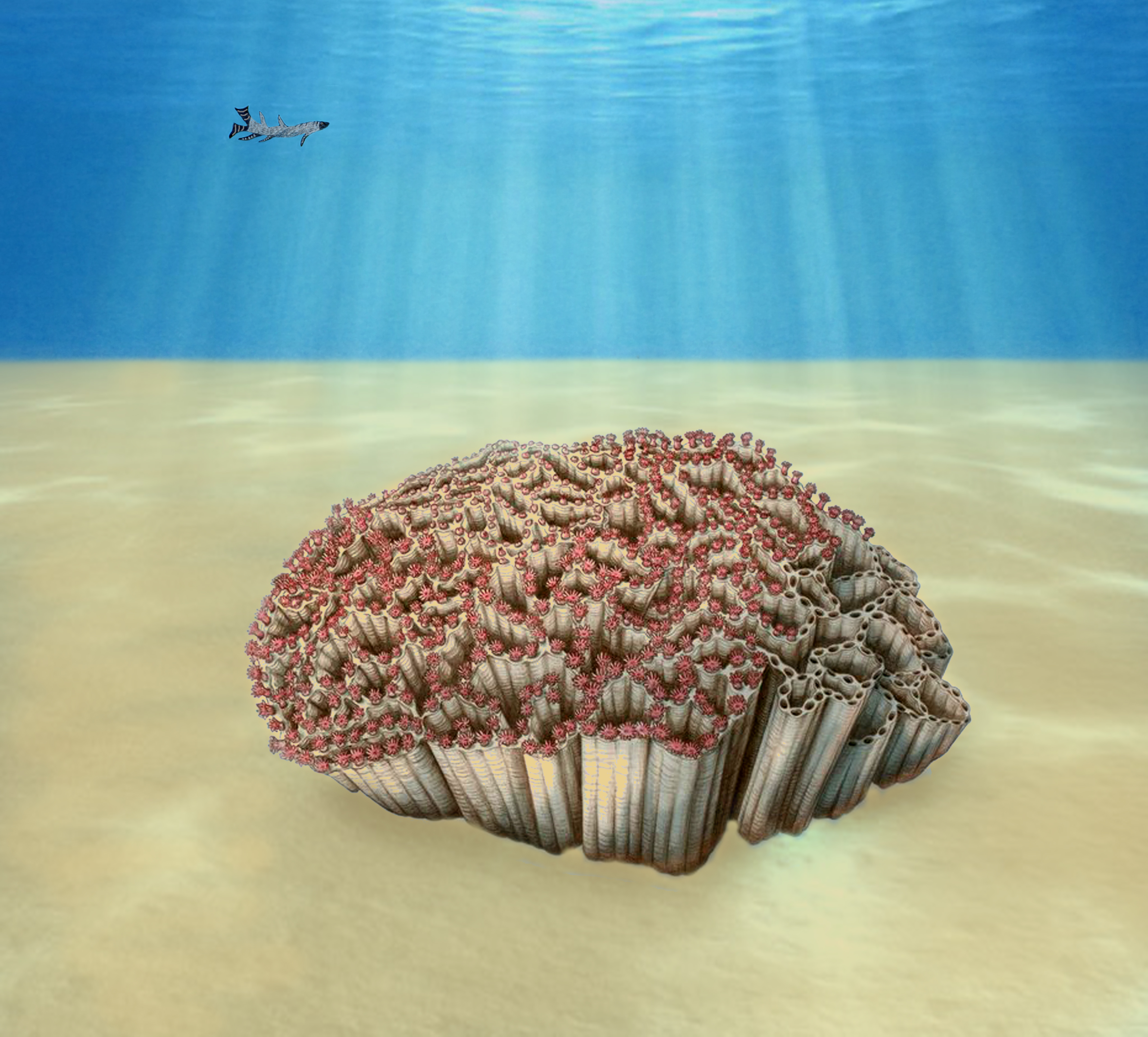
As living creatures, the extinct Halysites corals possessed small tubes where the jelly-like polyps resided. The coral polyps contained stinging cells for protection and also for siphoning plankton and organic matter passing by in the ocean currents. As the Chain Corals grew, they built up walls of tube-like chambers called theca which steadily multiplied while adding more links to the chain. In their heyday, they built large limestone reef structures on the seabed. Halysites survived from the Ordovician Period (starting around 480 Mya) through the Silurian Period (ending around 416 Mya).

Halysites Chain Coral Classification

Kingdom: Animal

Phylum: Cnidaria (means stinging animal)

Class: Anthozoa (means flower animal)

Order:  Tabulata (possess inner horizontal dividing walls from growth patterns)

Family: Halisitidae (means chain coral)

Genus: Halysites  Species: unknown

Halysites Chain Coral Rendering Showing Polyps Extended

All rights reserved © Fossillady 2026

Simple as a Clam

 
Did you know, in 2007 off the coast of Iceland, a clam was discovered to be at least 405 years old. It was declared the world’s oldest living creature by North Wales, Bangor University researchers. Hmm . . . maybe they’re not so simple after all!
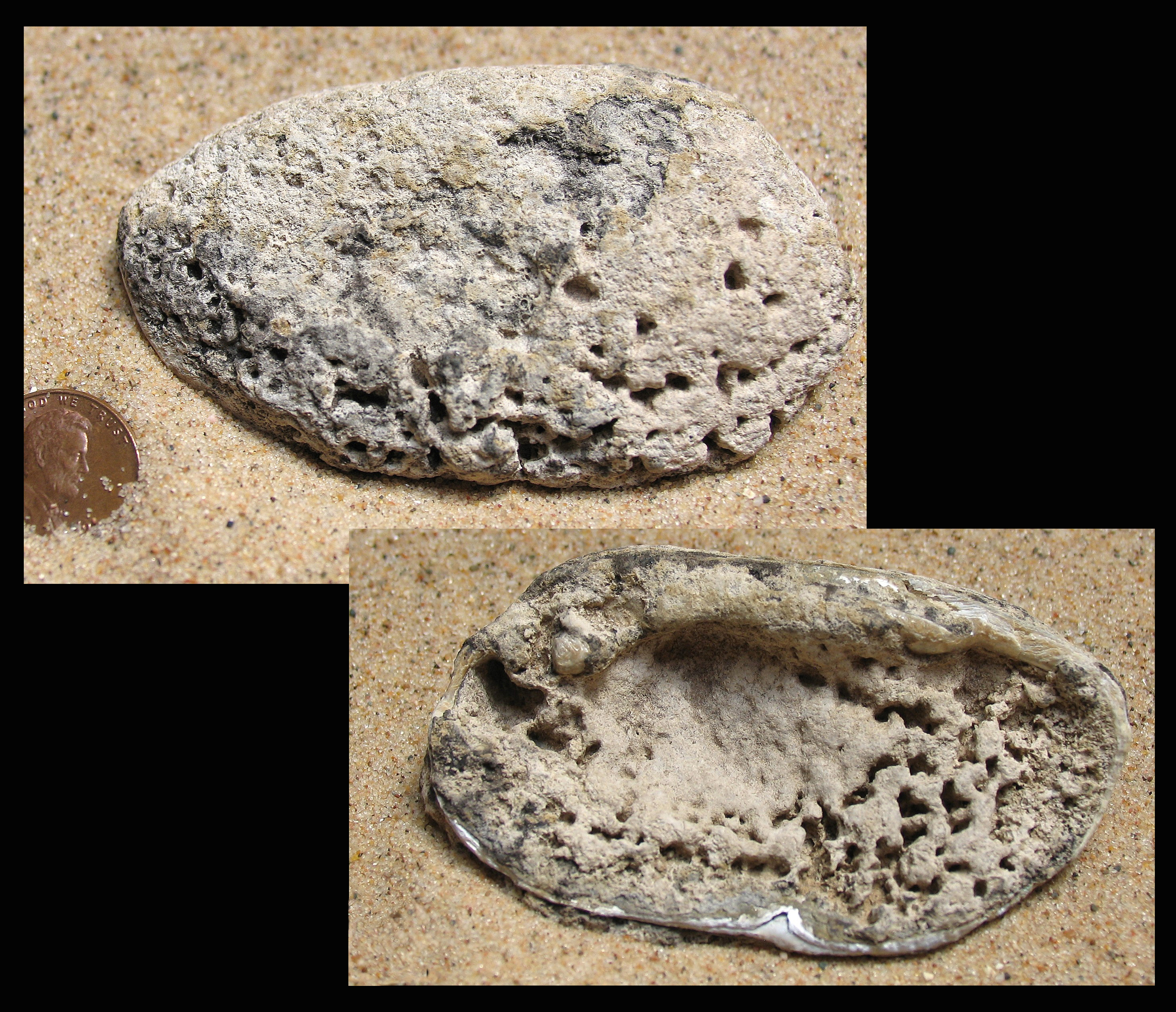
Fossilized Encrusted Clam Shell Found on Lake Michigan Beach

Recently, I found three interesting clam shell fossils on the shore of Lake Michigan, in Southwestern Michigan USA. The first sample shown, clearly reveals the hardened muddy sediment that has completely encrusted its shell.

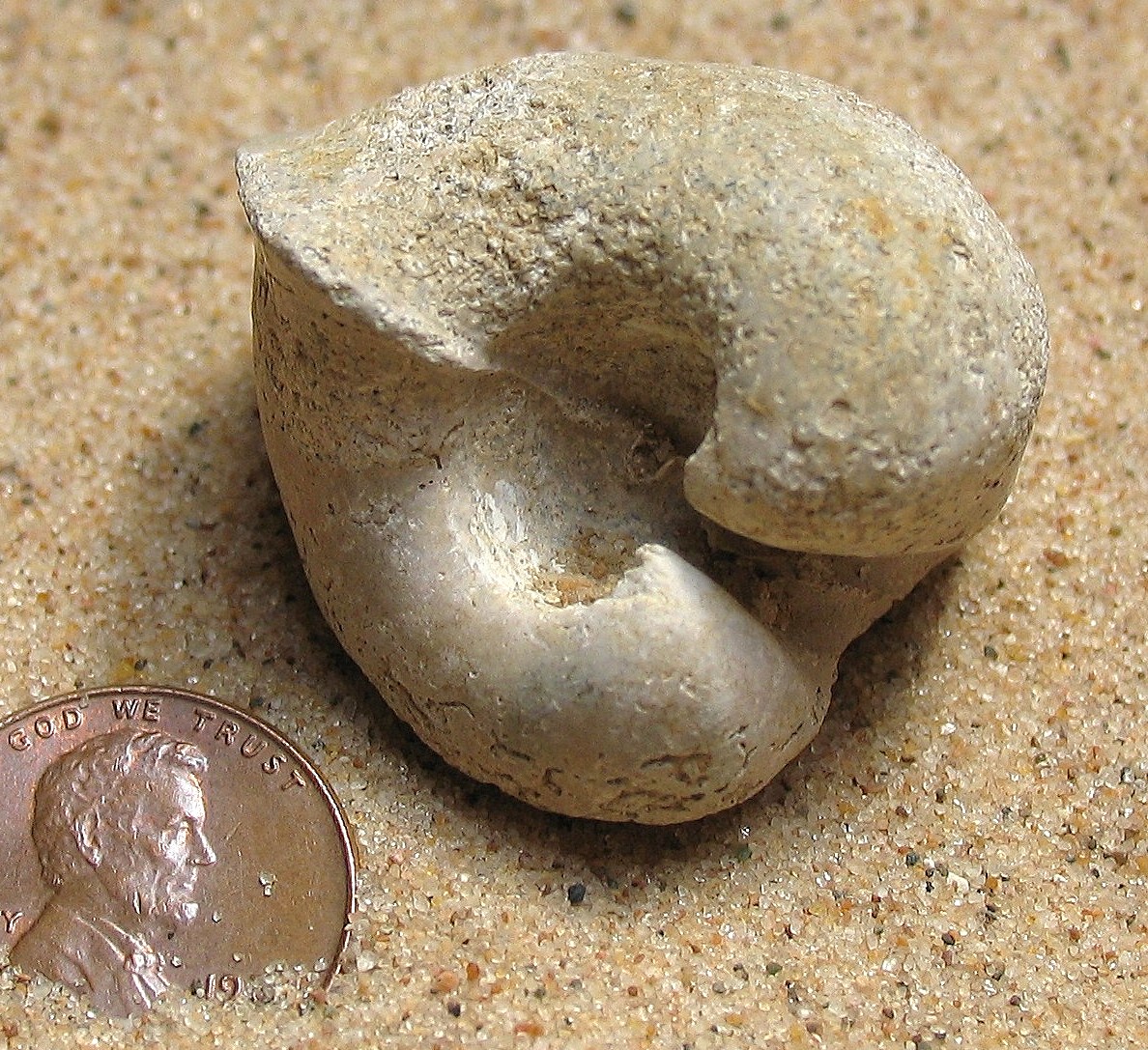
The clam fossil below has been completely replaced by minerals and is petrified to stone. It’s the mold of the original clam shell where sediment filled in the space where the animal’s soft body parts once lived. The smooth surface is a telltale demonstration of Lake Michigan’s sand and wave action.

HPIM1520
Fossilized Clam Shell Mold Found on Lake Michigan Beach

With the use of two abductor muscles, bivalves or clams, can open and close their shells tightly. Very fittingly, the word “clam” gives rise to the metaphor “to clam up”, meaning to stop speaking or listening.

Clams are distinguished from other mollusks like oysters, mussels, and scallops because they typically bury themselves rather than attach themselves to substrates. Wikipedia

Clam Fossil (Limestone Mold) Found on Lake Michigan Beach

AGES: Clams have occupied Earth beginning as early as the Cambrian Period, 510 million years ago, and were quite abundant during the Devonian Period around 400 mya. According to a Smithsonian study, clams and other bivalves became highly abundant following the Permian-Triassic mass extinction (roughly 252 million years ago), with significant proliferation during the Mesozoic Era, specifically the Cretaceous Period (approx. 145–66 million years ago). During the Cretaceous, specialized bivalves called rudists dominated reef-building, replacing corals as the primary reef architects

  • Kingdom: Animalia
  • Phylum: Mollusk (Invertebrate animals with soft body encased in hard shell i.e. squid, snails, clams, chitons, octopus, nautilus)
  • Class: Bivalve or Pelycopod (Animals possessing two uneven halves called valves which are mirror images of each other joined at one edge by a hinge (i..e. oysters, mussels, scallops, clams) 
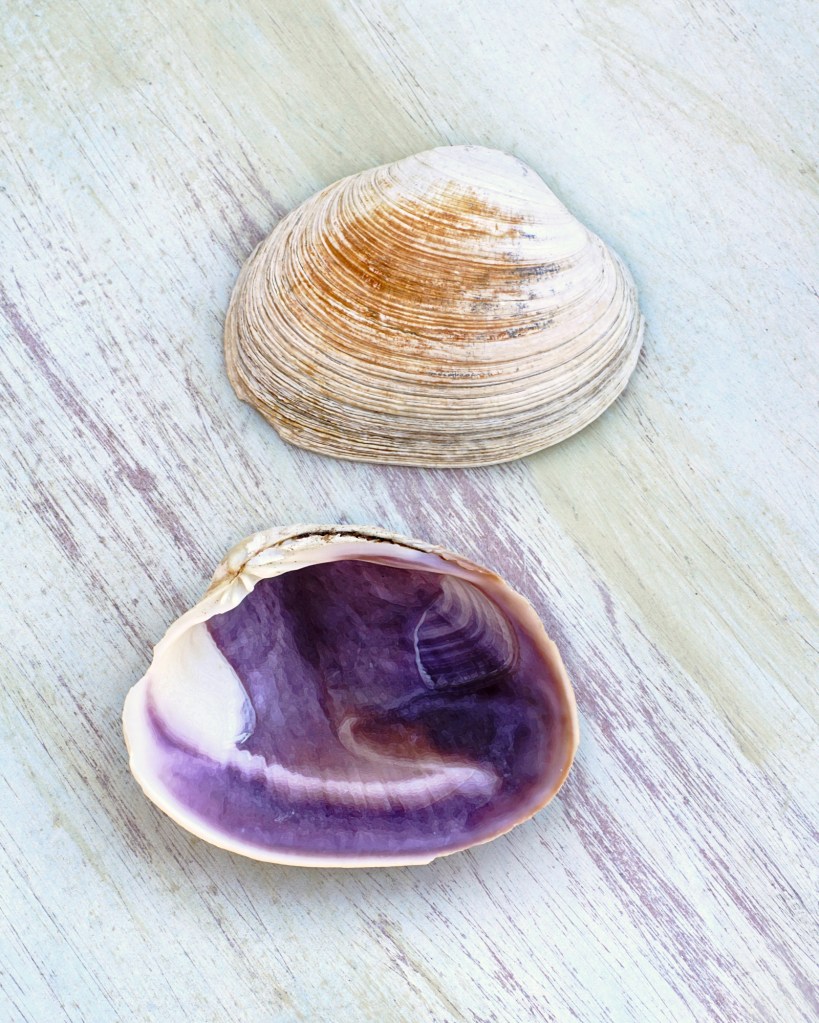
  • Hard Shell Clams Quahogs (Mercenaria mercenaria) (See Photo Sample) 
  • Softshell Clams (Mya arenaria): Known for brittle, chalky-white shells.
  • Razor Clams Elongated, narrow shells resembling an old-fashioned razor.
  • Geoduck (Panopea generosa): Very large clams with a gaping shell. 

Photo Above: Northern Quahog Hardshell Clamshells Mercenaria sp My Seashell Gallery

For more clam photos, drawings and information you can go to another fossillady article HERE.

All rights reserved © Fossillady 2026


Straight Shelled Nautiloids Have a Long History

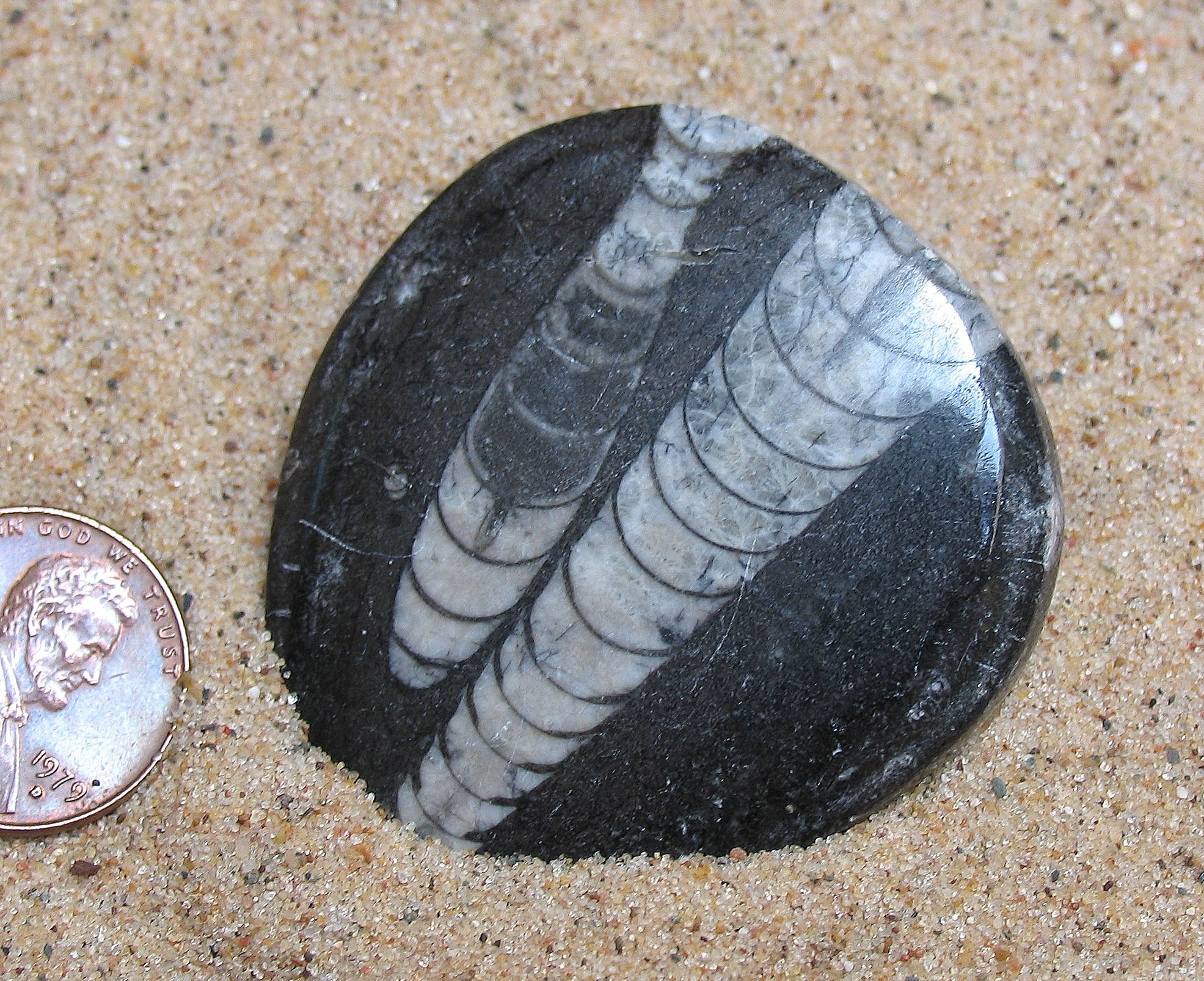
Straight-shelled nautiloids date back from the Cambrian Period roughly 500 million years ago and survived into the Late Triassic Period around 230 mya. That’s approximately 270 million years of living on earth . . . overwhelming and astounding!  Their fossilized shells have been discovered all around the world in large assemblages commonly occurring in marine limestone rock.

During the 18th and 19th centuries, all the straight-shelled nautiloids were named orthoceras, creating a wastebasket taxon and confusion. To clarify, orthoceras is a specific genus of extinct nautiloids restricted to Middle Ordovician aged marine limestones of the Baltic States and Sweden. And more recently to add to the confusion, orthocone refers to just the straight shell.

Orthocone (Orthoceras) Straight-Shelled Nautiloid Fossil

The straight-shelled nautiloids were an abundant group of marine mollusk cephalopods that flourished during the Paleozoic timeslot and diminished by the end of the Triassic period into extinction. They are related to modern day cephalopods including octopus, squids, cuttlefish and the nautilus. They were also related to the extinct ammonites possessing coiled shells, which evolved after them. The straight-shelled nautiloids likely were not as agile as their cousin coiled-shelled ammonites. Both species possessed a siphuncle tube that ran through the entire lenght the animal’s inner chambers inside their shells. Each inner chamber was separated by a wall called, a septa wall. As the animal grew, it added another septa wall and a new septa chamber of a larger size.

To move throught the ocean water, the straight-shelled nautiloids and ammonites filled their inner chambers with water by using the siphuncle tube. They then forced the water out which propelled them backward with a kind of jet propulsion. The tube also served as a buoyancy device by releasing the water and leaving air space. This allowed the animal to raise and lower itself through various ocean depths.

The straight-shelled nautiloids possessed 8 to 10 powerful tentacles which protruded from the wide opened end of its shell and out its head. The tentacles detected and captured prey. The animal possessed well developed eyes, a beak and a well developed brain and head with a hood.

(Orthoceras) Straight-Sheled Nautiloid Fossil

Their fossils have been quarried by Europeans for many years and adorn floors, stairs, jewelry, gravestones and more with their durable and desirable beauty.

The straight-shelled nautiloids displayed extreme diversity in size from a few inches to 14 feet in length. One of the largest straight-shell giants from the earliest years, Cameroceras, reached approximately 30 feet ( 9 meters) in length.

cameroceras

 CLASSIFICATION

Kingdom:  Animalia

Phylum:    Mollusk  (large diverse group of invertebrates with soft bodies encased in a shell i.e. clams, snails, oysters )

Class:      Cephalopoda  (means prominent head and tentacles i.e. squid, octopus, nautilus, cuttlefish)

Subclass: Nautiloidea   (series of chambers of increasing size connected by a central tube)

Order:     Orthocerida  (extinct group of  cephalopods possessing long straight shells)

Family:     Orthoceridae (early Ordovician to the Triassic period (approx. 490–200 million years ago) straight horn nautiloids)

Genus:    Orthoceras (means straight horn)

Scan_Pic0006
Cephalopod Straight Shelled Nautiloid Orthoceras Drawing Rendition

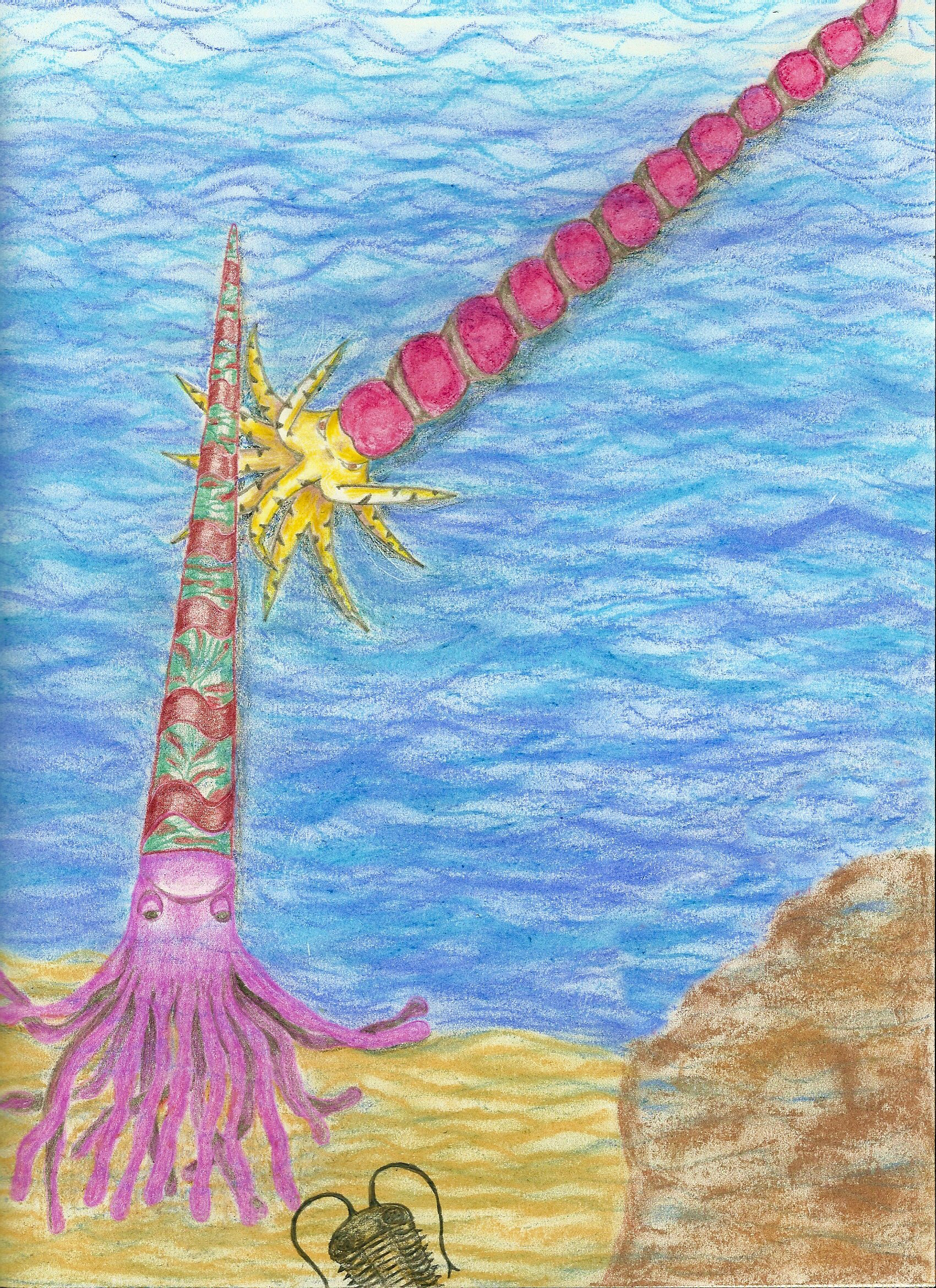
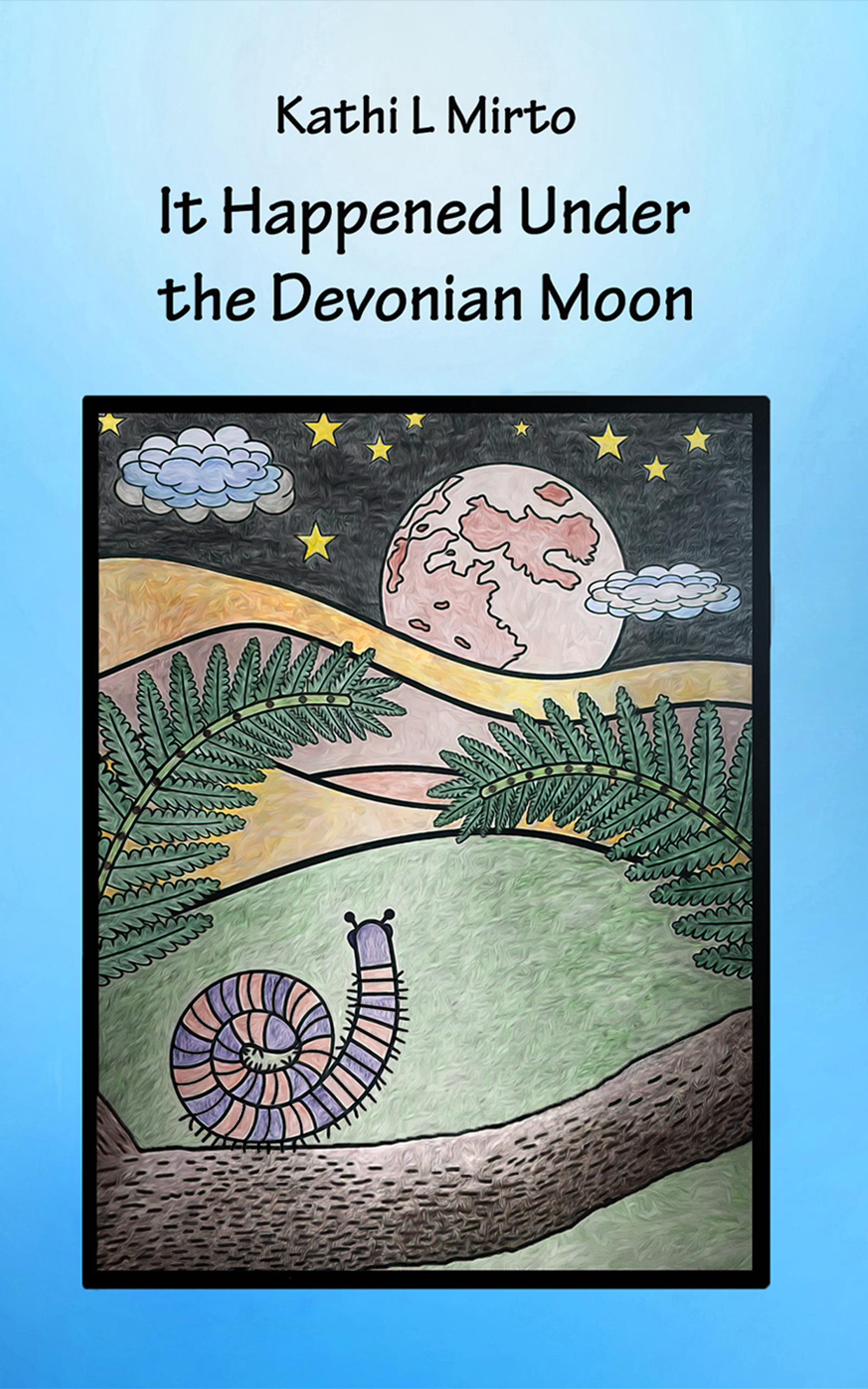
Check out my fiction book, one of two in a series, featuring factual prehistory insights blended with imaginative storytelling that educates as it entertains. Also availabale, a coloing/activity book featuring scenes from both books along with many of the plants and animals that lived during the amazing Devonian Time Period; fossil photos and descriptions included. Perfect for young explorers interested in fossils or young readers who simply like a good story. Ages 11-15+ available on a Amazon.com

All rights reserved © Fossillady 2026

Amazing Ammonites

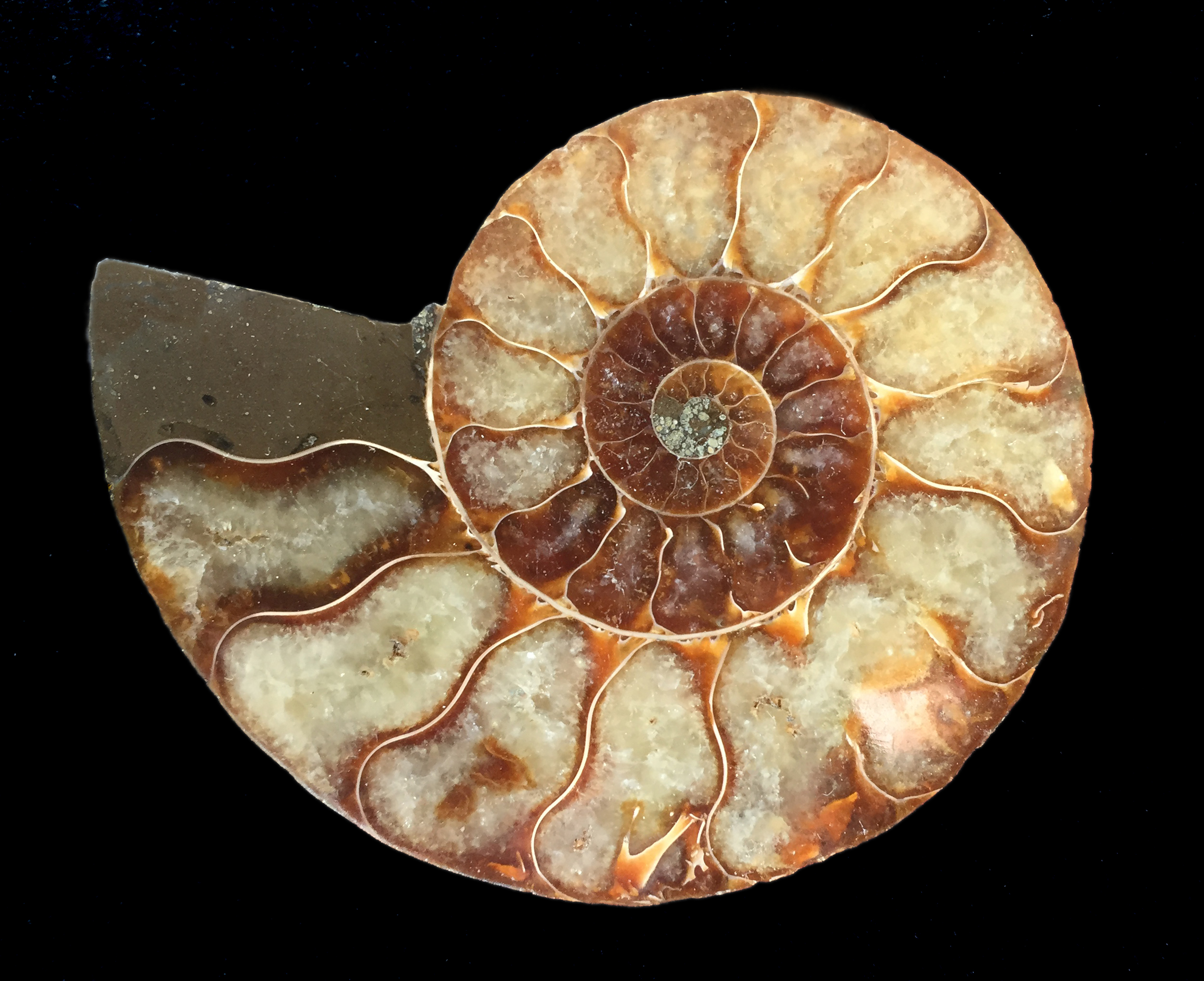
Ammonite Fossil Inner Chambers

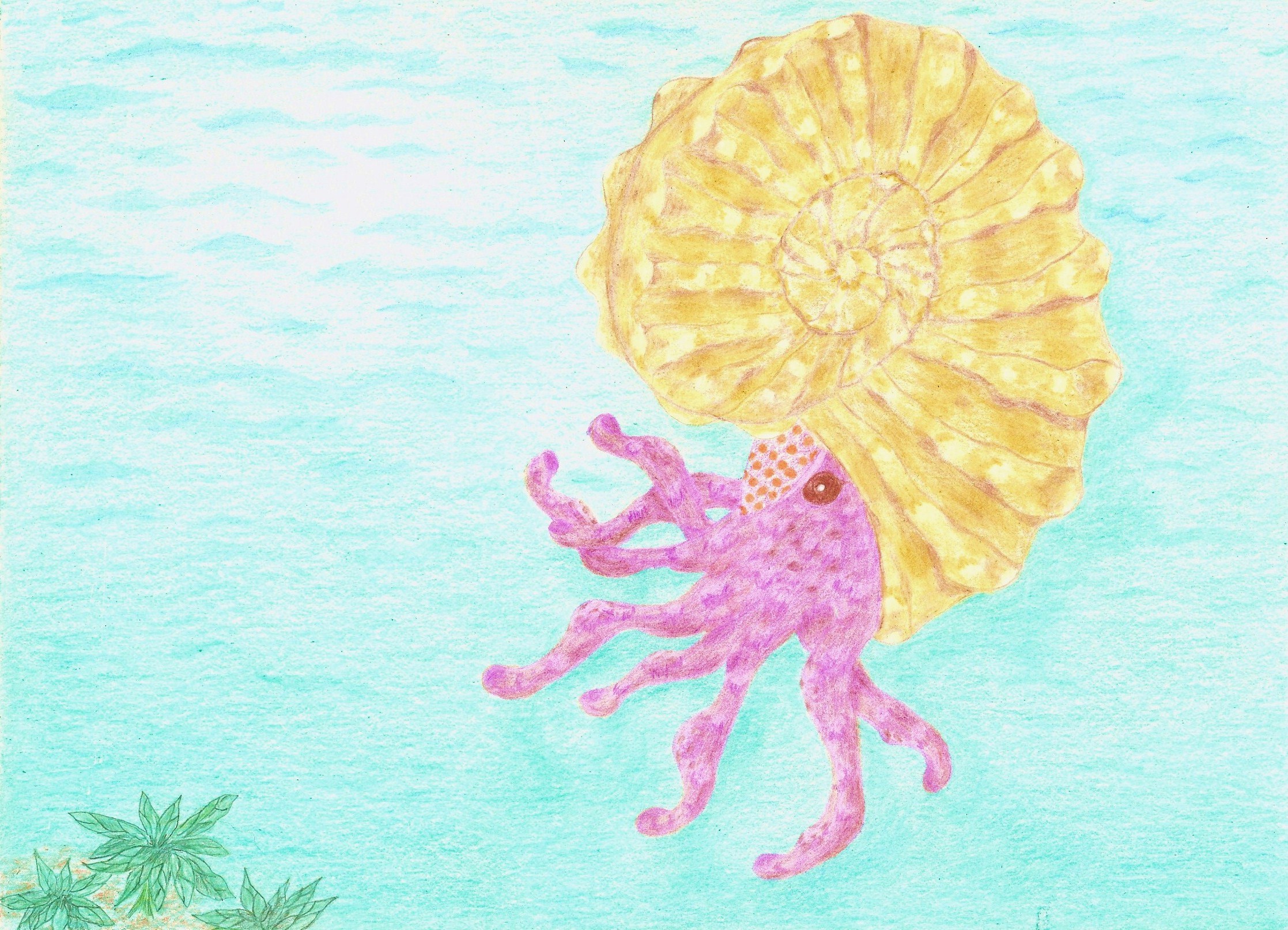
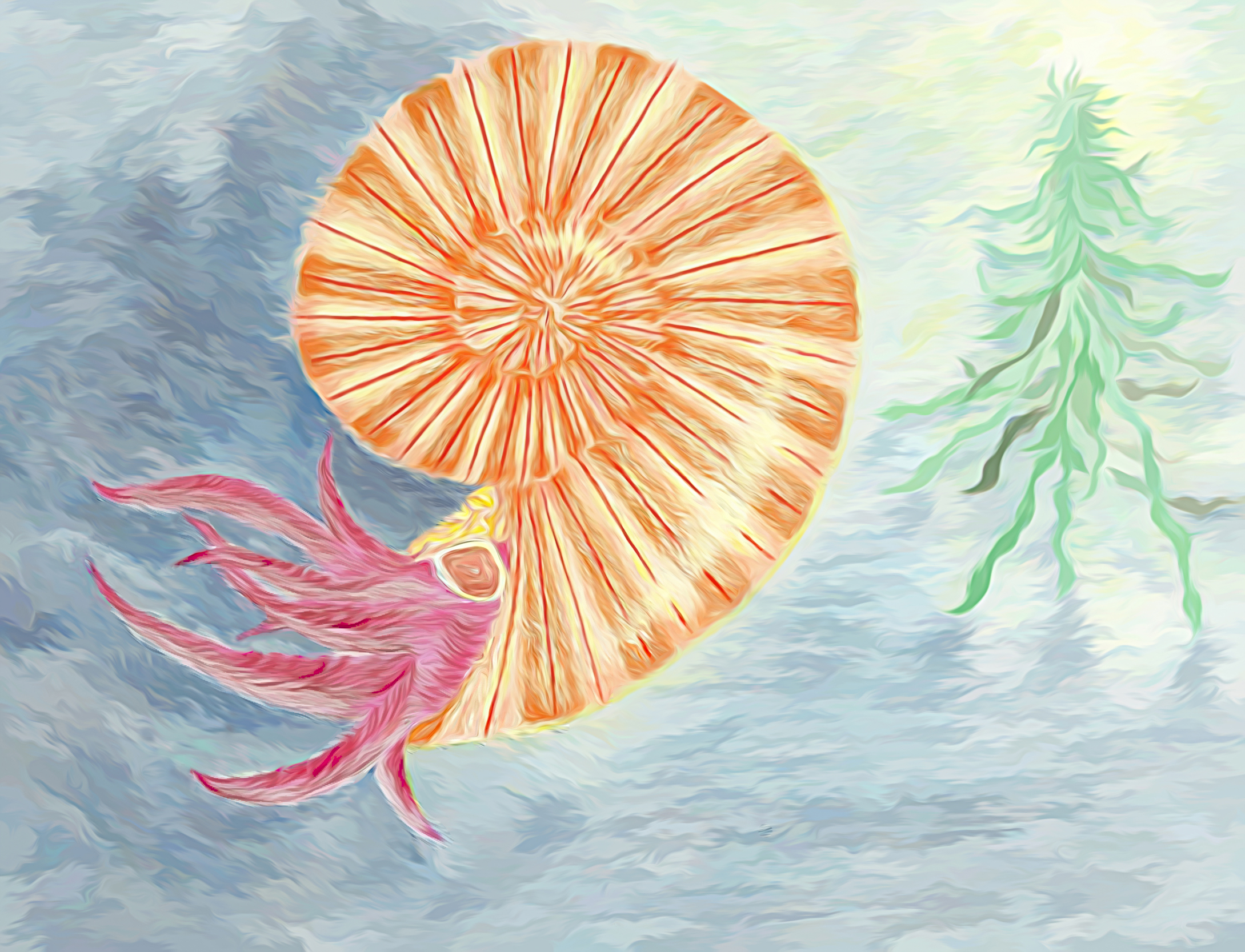
Ammonites are an extinct marine shelled mollusk animal belonging to the class of cephalopods related to today’s squids, octopus, cuttlefish and the nautilus. Ammonites moved in short spurts using a method of jet propulsion by siphoning the ocean water into the inner chambers of their shells and then pushing the water out powerfully through a tube structure called a siphuncle. These inner chambers held water and special gases which helped the animal descend deep down into the ocean depths and reversely, float upward to shallower depths by filling and releasing the gases and water in and out of the chambers.

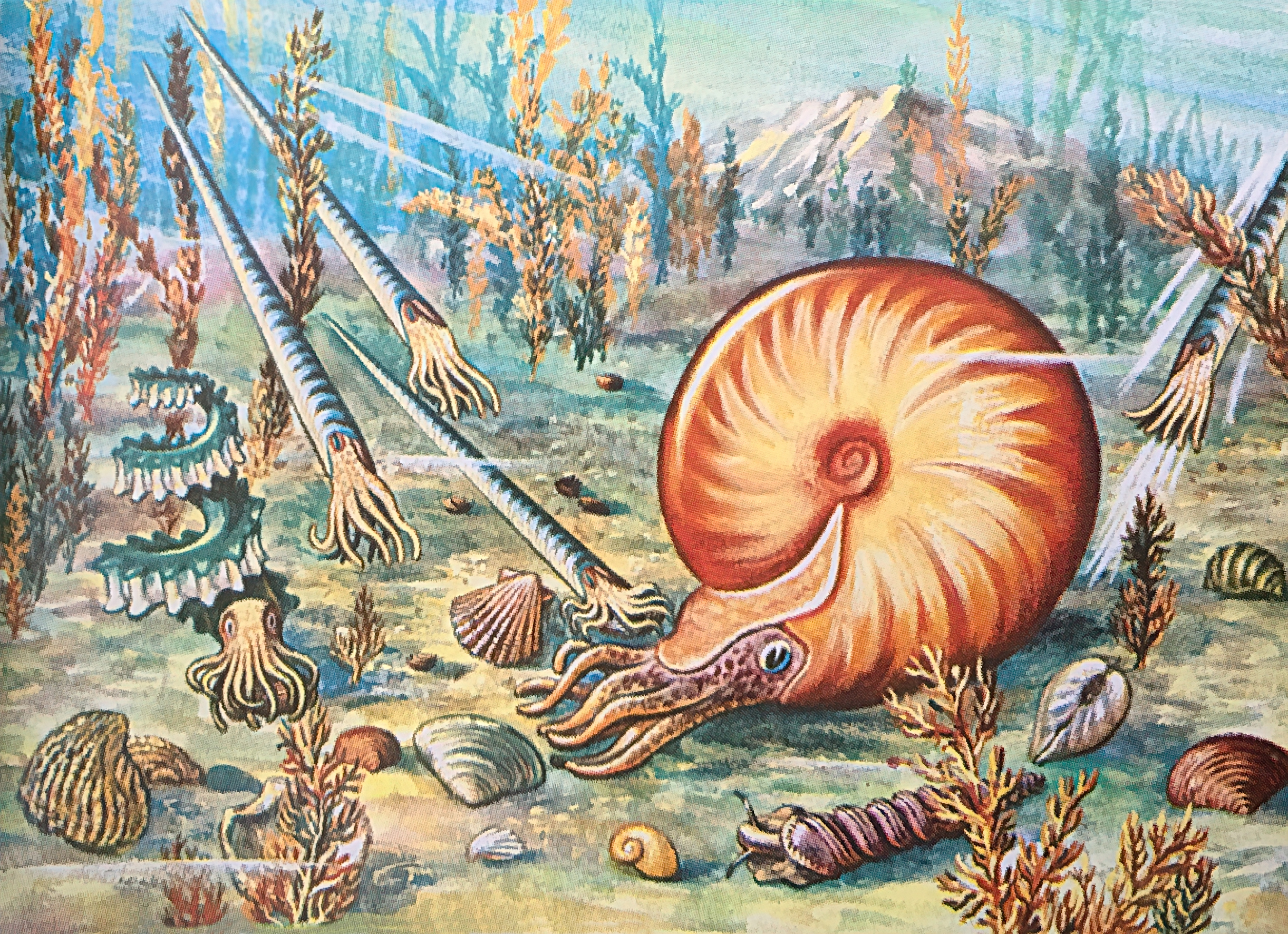
Cretaceous Period Oceanic Environment (145-66 million years ago) Artist Rendition

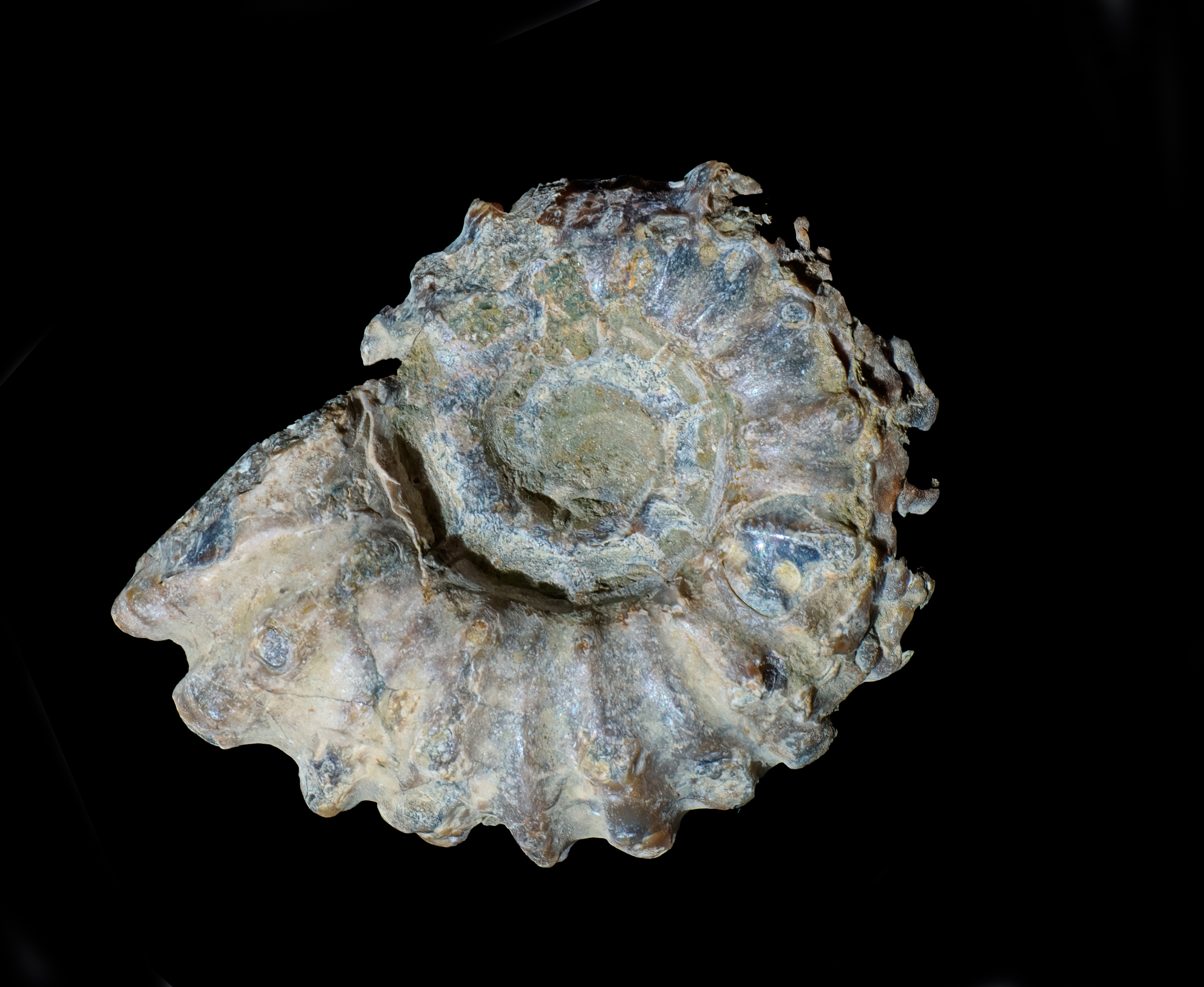
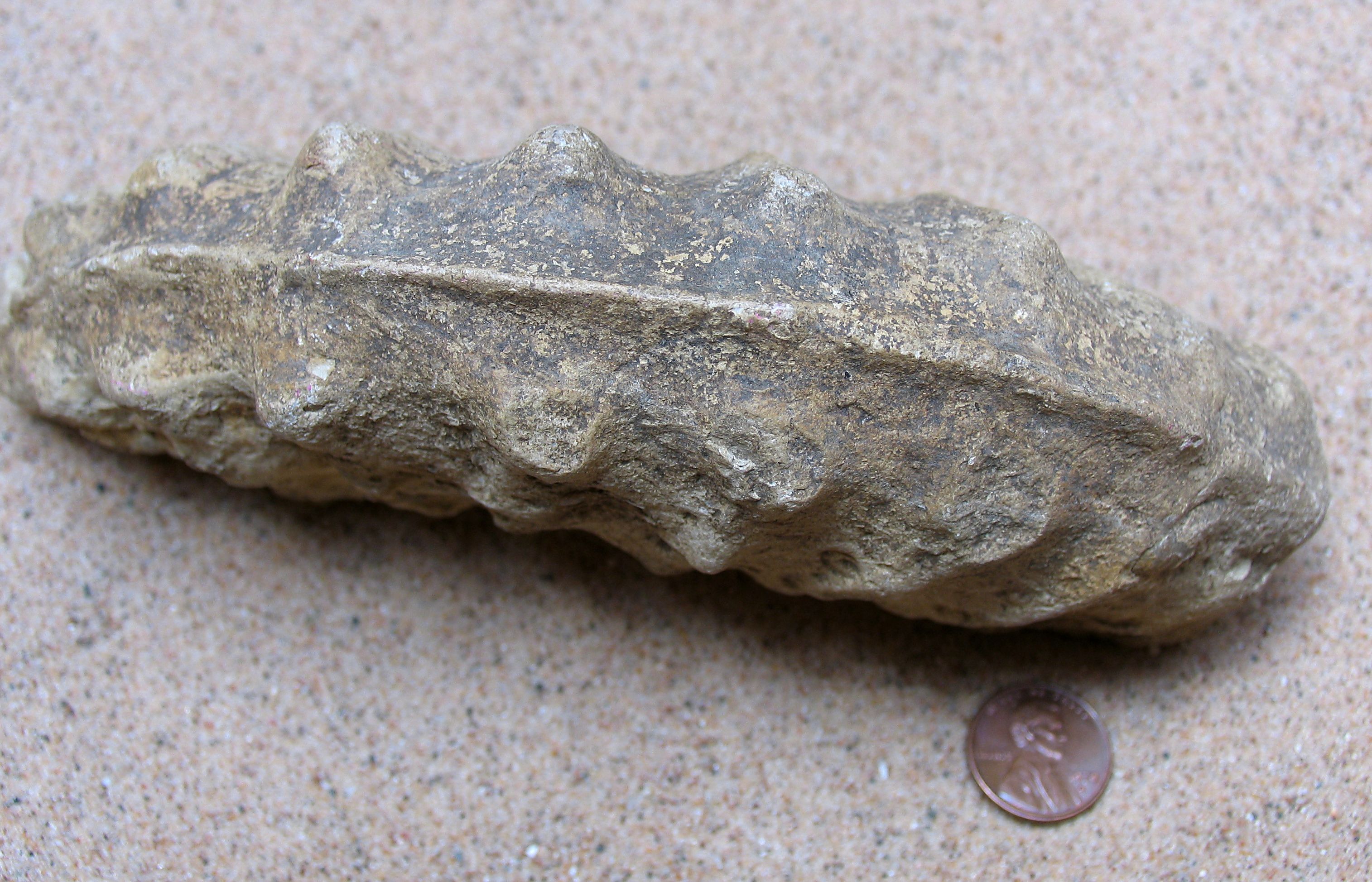
The Douvilleiceras, mammilatum ammonite fossil shown below possessed well-defined growth patterns over its outer shell in the form of knobs or sutures. Douvilleiceras’ spiny knobs are thought to be an indicator of a hostile environment. It lived during the early Cretaceous Period (112–100mya) and was unearthed in Madagascar, Africa within the Albian Era Formation.

Ammonite Fossil (Douvilleiceras, mammilatum)

Ammonites lived during the Paleozoic and Mesozoic Eras, more specifically from the Devonian period around 419 million years ago reaching their zenith and also their extinction during the Cretaceous period around 66 million years ago along with the dinosaurs. They were descendants of their cousin straight-shelled nautiloids developing a coiled shells which allowed them more agility and maneuverability than their predecessors within the oeanic environments.

fossils 127
Mortoniceras sp Ammonite Fossil

The above fossil is a broken section of an ammonite’s shell belonging to the genus, Mortoniceras sp. It was unearthed in the state of Arkansas in a dried up riverbed within the limestone Goodland Formation. The shell is characterized by deep keels and ribbing. It lived mainly during the Cretaceous Period (145 to 66 mya). As with all the ammonites, its fate was doomed side by side with the dinosaurs.

fossils 126
Mortoniceras Ammonite Fossil (Top View)

The siphuncle tube was also used to regulate buoyancy by controlling the amount of gas and water in the animal’s inner chambers. It lay along the outer rim of the ammonite’s shell.

Multi-purpose Tentacles

The ammonites were ocean predators grabbing their victims with precision and crushing them with their long, powerful tentacles. These tentacles contributed to another important function. They contained special sensors which facilitated their ability to navigate and locate prey in the vastness of the ocean.

Mortoniceras Ammonite Fossil
  • Above photo shows a complete sample of Mortoniceras sp from the state of Texas, Fort Worth Formation, Tarrant County

Ammonites possessed large heads and are assumed to have been highly intelligent much like their modern day cousins including octopuses, squids, cuttlefish and the nautilus. Scientist debate whether ammonites contained ink sacs for defense.

Scan_Pic0005
Ammonite Drawing

CLASSIFICATION

  • Phylum: Mollusk (large diverse group of invertebrates possessing a shell, i.e. clams, snails, oysters, etc.)
  • Order: Ammonitida (characterized by thick, ribbed patterned shells)
  • Class: Cephalopod (means prominent head and tentacles, i.e. octopuses, cuttlefish, squids, nautilus)
  • Family: Brancoceratidae
  • Genus: Mortoniceras (characterized by deep keels, tubercules (knobs) and ribbing)

For additional ammonite photos, species and interesting facts, scroll to the bottom of this article when searching under the “Categories” section “Ammonite Fossils” otherwise, click HERE.

Check out my two fiction books blended with prehistory insights and imaginative storytelling that entertain as they educate. Geared toward young exlporers interested in early life and fossils, or young readers who simply like a good story; ages 11-15+. Also available, a coloring/activity book featuring scenes from the books along with many of the plants and animals that lived during the amazing Devonian Time Period; fossil photos and descriptions included. Available on Amazon.com

All rights reserved © Fossillady 2025

Manuiceras sp and Cleoniceras sp Ammonite Fossil Identification and Interesting Facts

Ammonite Dufrenoy
Ammonite Fossil

Manuicera sp. lived in the ancient seas when the dinosaurs walked the earth. In general, the ammonite’s abundance peaked during the Cretaceous Period between 145 to 66 million-years-ago. But according to the fossil records, their incredible long history began as early as 440 mya during the Silurian Period.

This Manuicera sp ammonite fossil was unearthed from a dried up riverbed in the state of Arkansas; they have also been unearthed in the state of Texas. Both of these U.S. states lie within the limestone Goodland Formation where many other Cretaceous fossils have been discovered. Originally, I mistakenly identified the fossil as, Dufrenoy justinae, but that was when I was newer to the field with a less discerning eye and research skills. So there you go. 

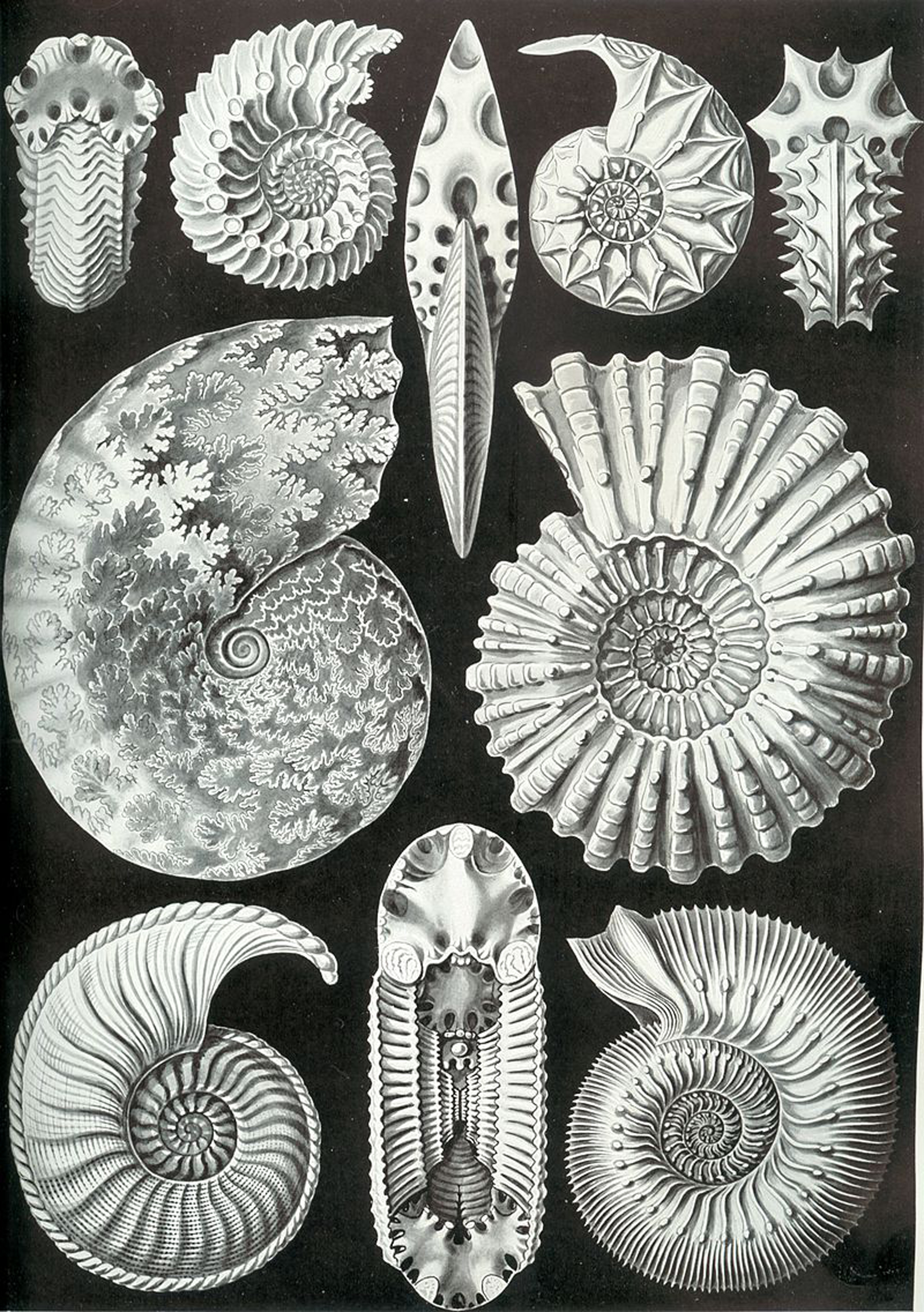
Haeckel_Ammonitida
A variety of ammonite forms, from Ernst Haeckel‘s 1904 Kunstformen der Natur (Art Forms of Nature)

The amazing illustration above shows how ammonites vary greatly in the ornamentation (surface relief) of their shells. Some may be smooth and relatively featureless, except for growth lines. In others, various patterns of spiral ridges and ribs or even spines are shown.

Numerous ammonite fossils have been unearthed boasting a worldwide distribution which indicates the theory of continental drift. Due to their abundance of an estimated 10,000 species, scientists use them as date markers for other fossils along the same rock layers.

Ammonites grew from a few inches in diameter to the size of truck tires.

Manuiceras Ammonite Drawing

Manuiceras CLASSIFICATION

  • Phylum: Mollusk (soft body of invertebrate animal encased in shell)
  • Class: Cephalopod (means prominent head and tentacles, i.e. octopus, squid, cuttlefish, nautilus)
  • Order: Ammonitida (characterized by thick ribbed and patterned shells)
  • Family: Acanthoceratidae (known for their thick, ribbed shells, which were common during the Cretaceous period).
  • Genus: Manuiceras
Cleoniceras. Ammonite Fossil

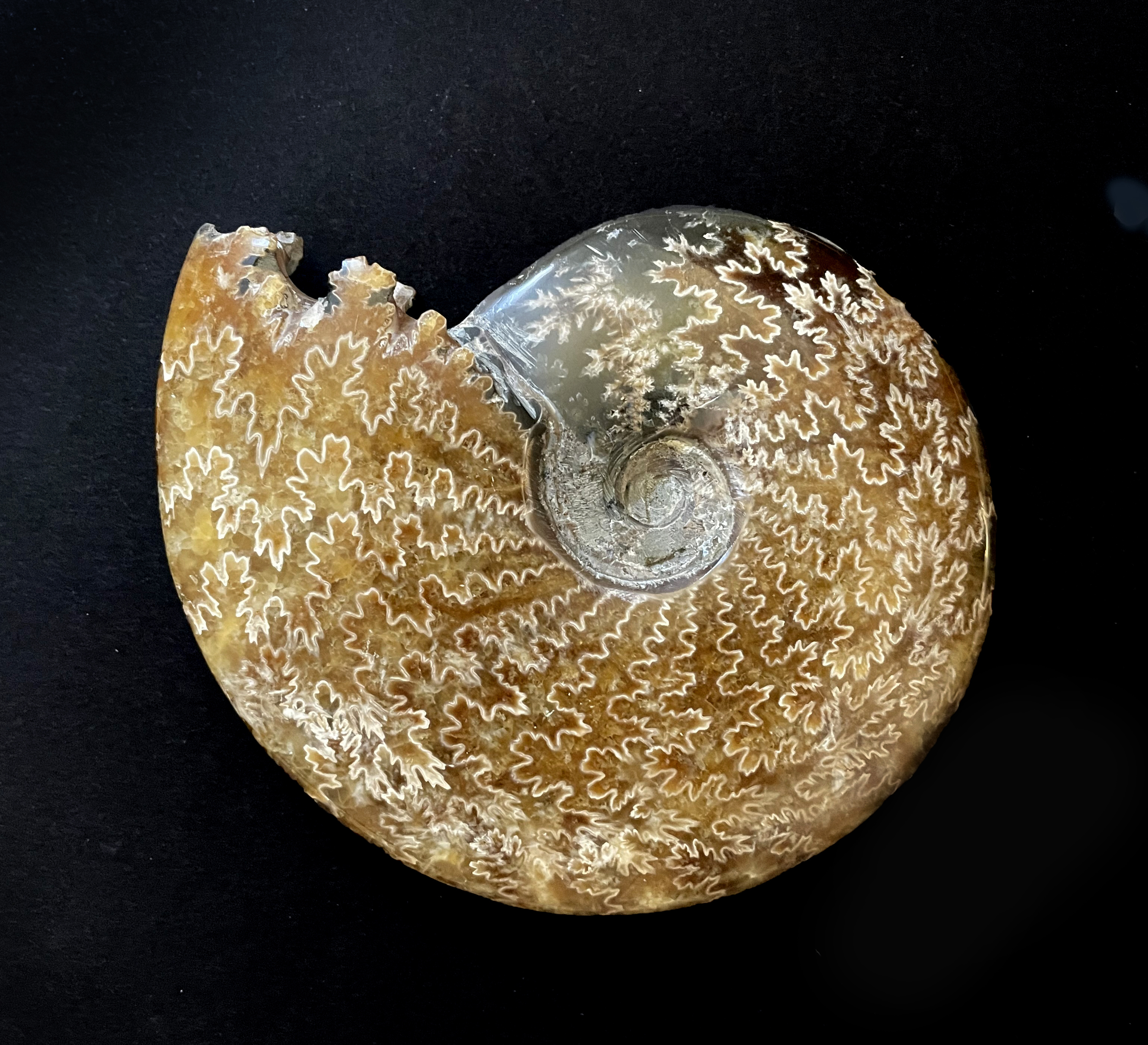
Cleoniceras sp ammonite fossil is approximately 110 million years old from the early Cretacous Period unearthed in Mahajanga Province of Madagascar, Africa. It is characterized by spiraled, high-whorled, tightly coiled shells with distinct wavey ribs. These marine cephalopods are often found polished, revealing iridescent internal chambers filled with calcite or aragonite.

For additional information about these incredible marine animals, see my other article Amazing Ammonites .

All rights reserved © Fossillady 2026

Check out my two fiction books blended with prehistory insights and imaginative storytelling that entertain as they educate. Geared toward young exlporers interested in early life and fossils, or young readers who simply like a good story; ages 11-15+. Also available, a coloring/activity book featuring scenes from the books along with many of the plants and animals that lived during the amazing Devonian Time Period; fossil photos and descriptions included. Available on Amazon.com

All rights reserved © Fossillady 2026