Get me outta here!

Fossil Lady

Eager to share my fascination with fossils, rocks and seashells!

Menu

Skip to content
  • Home

Author Archives

Fossilladyhttps://fossillady.wordpress.comThis is where I combine my photography and writing to share my fascination with fossils.
Fossillady's avatar

Pecopteris Leaf of Fern Tree

August 17, 2010 by Fossillady

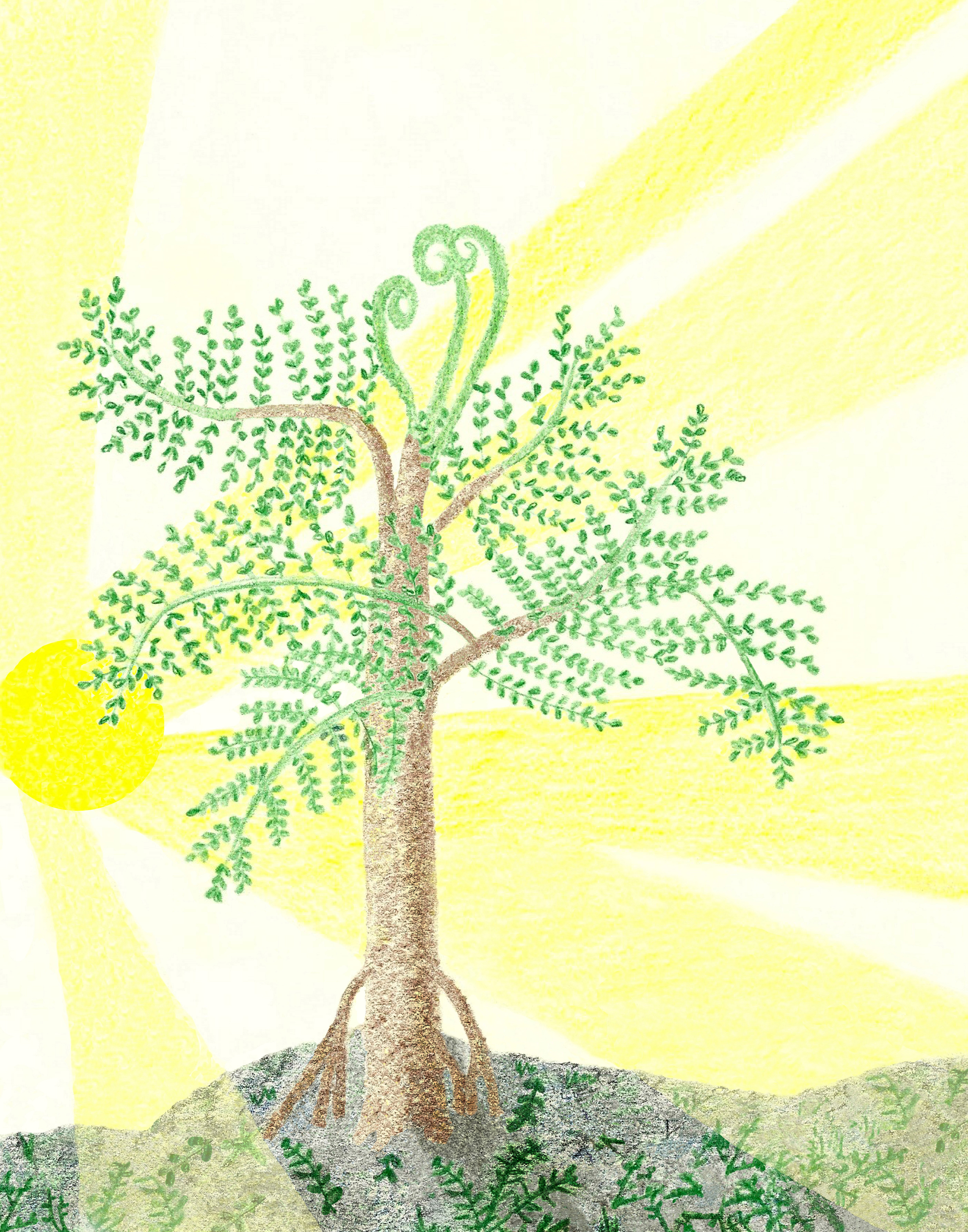
Fern leaves called Pecopteris first appeared during the Devonian Period around 400 million years ago, but grew abundantly in the coal swamps of the Carboniferous and Permian time periods, approximately 359-251 million years ago. These leaves dropped off a medium sized, 35 foot (10 meters) tree called, Psaronius, one of the most common Paleozoic varieties. With its expansive leaves and branches, it resembled modern day palm trees. Impressively, it produced as many as 7000 tiny spores on the underside of its leaves. These fossil samples are preserved in gray coal shale from Pennsylvania as with many Carboniferous leaf fossils.

Devonian to Carboniferous to Permian Era Pecopteris Imprint Fossil Leaf from Fern Tree

If you’ll recall the differences from, Neuropteris leaflets shown on the previous page, the mid-vein stops midway up the leaflet and splits into several fine veins, whereas the mid-vein in Pecopteris extends up to the tip. Neuropteris leaflets are usually more blunt tipped and are attached by a single stem as opposed by the entire base, such as with Pecopteris. Another way to identify Pecopteris is hinted in its name, derived from the Greek word meaning, to comb. Observably, the leaflets along the stems feature an arrangement resembling that of a comb.

Devonian to Carboniferous to Permian Era Pecopteris Imprint Fossil Leaflets from Fern Tree

What makes fern trees so special? The large fronds produced by Pecopteris leaves, which grew upon the ancient Psaronius fern trees, cloaked the forest floor in deep shade together with the Medullosa seed fern trees. Consequently, they protected the ancient creatures below from the strong ultra violet rays of the sun as it was closer to earth and more powerful during the Paleozoic Era. Also, the shedding and decomposing of leaves created more layers of soil for roots to extend deeper and deeper, alleviating the need for trees to grow near water pools. Trees were then able to spread further inland. Yet another benefit was that the leaves fed inland water sources cultivating more fresh water fish varieties. But this fantastic fossil is most special to me because I inherited from my late father-in-law, Joseph Mirto II. It was found in Johnstown, Pennsylvania.

PECOPTERIS LEAF CLASSIFICATION

Kingdom: Plantae

Division: Pteridophtya (meaning vascular plant with transport system for nutrients and fluids)

Class: Filicopsida (Ferns which reproduce with spores)

Order: Marattiales (primitive ferns)

Family: Marattiaceae

Genus: Pecopteris

Scan_Pic0014a
Psaronius Fern Tree Rendition Drawing, Devonian to Carboniferous to Permian Era

PSARNONIUS FERN TREE CLASSIFICATION

Botanical Name: Psaronius Common Name: Fern Tree

Kingdom: Plantae

Division: Tracheophyta (meaning vascular plant with transport system for nutrients and fluids)

Class: Marattiopsida (distinguished by massive roots and largest fronds of all seed fern trees)

Order: Marattiales (primitive ferns)

Family: Psaronlaceae

Genus: Psaronius Species: magnificus

All rights reserved © Fossillady 2025

Share this:

  • Share on Pinterest (Opens in new window) Pinterest
  • Share on Facebook (Opens in new window) Facebook
  • Print (Opens in new window) Print
  • Email a link to a friend (Opens in new window) Email
  • Share on LinkedIn (Opens in new window) LinkedIn
  • Share on Reddit (Opens in new window) Reddit
  • Share on X (Opens in new window) X
Like Loading...
Plant/Tree Fossils Carboniferous Plant FactsCarboniferous Tree Drawingcoal swampsLeaf fossilsPecopteris fossil classificationpecopteris fossil factsplant fossilsPsaronius Tree ClassificationPsaronius Tree DrawingSeed fern tree facts

What is a Petoskey Stone?

August 17, 2010 by Fossillady
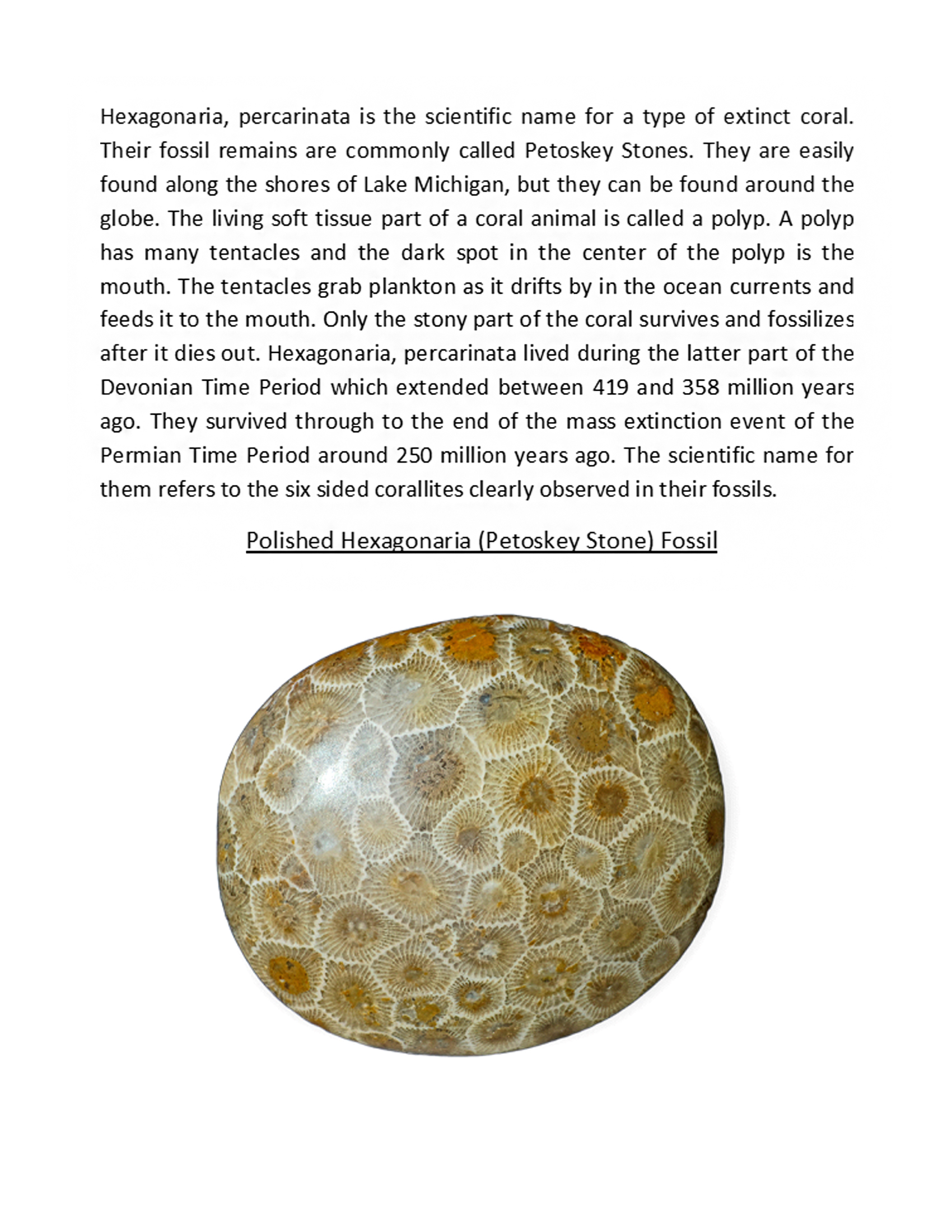
Polished Petoskey Stone Coral Fossil (Hexagonaria, percarinata)

Simply put, a Petoskey Stone is an extinct fossilized coral. Why is it called, “Petoskey Stone”? Because they are found in abundance in and around Lake Michigan shores, especially near the Northern Michigan city of Petoskey (USA)! The name “Petoskey” is the English adaptation of an Ottawa Indian Chief Petosegay, which is said to mean “The Rising Sun”!

They are also called “lucky stones” by many because finding these ancient coral fossils, remnants of prehistoric reefs, feels like discovering a special piece of history!

How could the remains of a coral, which thrived in tropical warm waters, possibly find its way to the cool regions of Michigan? So, during the prehistoric Devonian time period around 416 to 369 million years ago when the Petoskey Stone corals thrived, the dominant landscape of North America lay nearer to the equator and the entire earth was more tropical. Consequently, risen, warm, shallow seas covered a large portion of the continent, including Michigan. Later, the coral remains were buried under deep layers of sediment. Many millions of years after that when the great glaciers retreated northward, they scraped and dug into those forgotten layers of earth freeing them from trappings. The glaciers released and deposited them where we can now enjoy the good fortune of discovering their mysteries.

Rough unpolished Petoskey Stone Coral Fossil (Hexagonaria, percarinata)

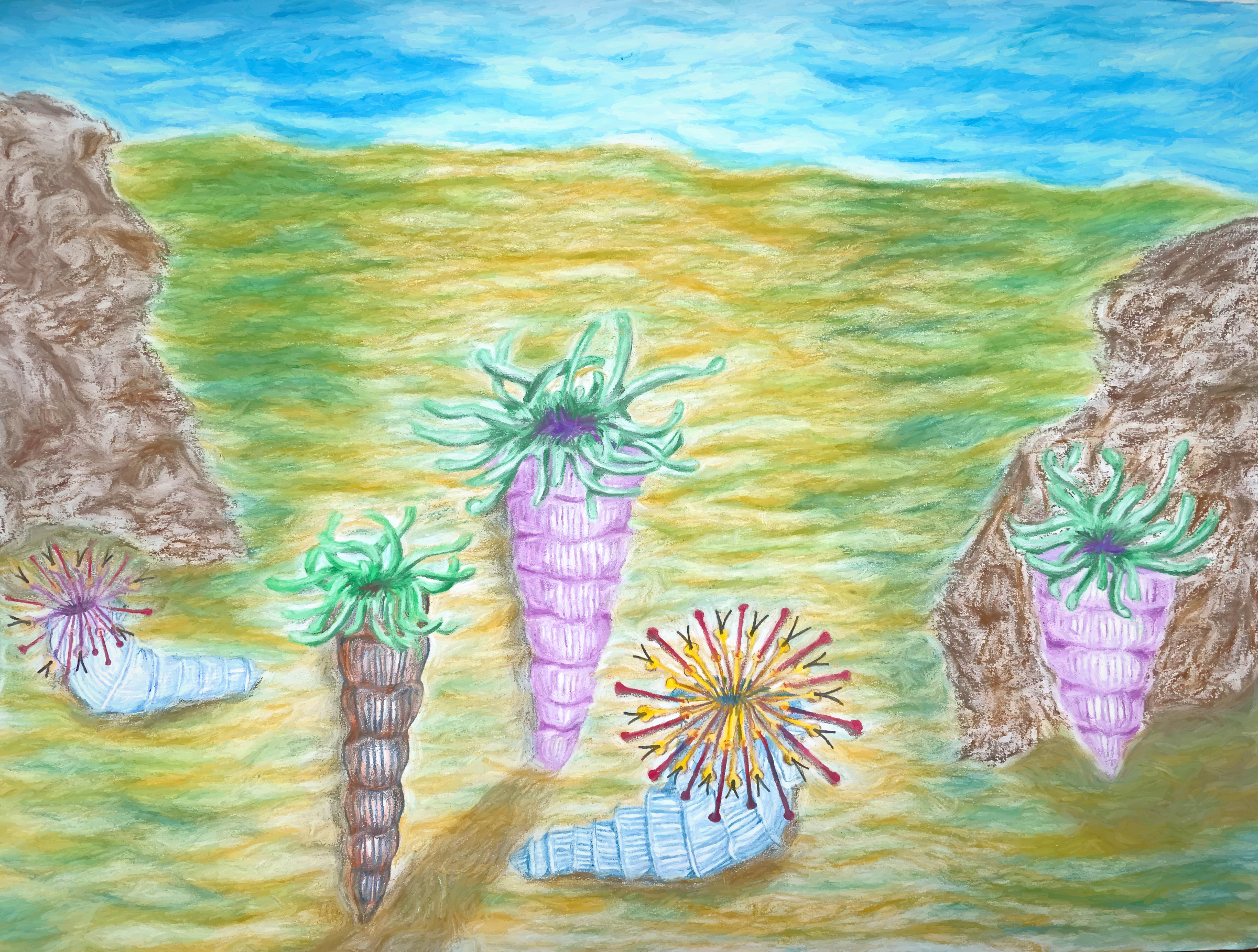
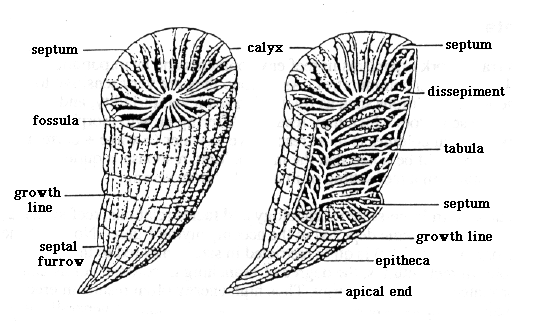
Petoskey Stone fossils originate from mass coral colonies of Hexagonaria, percarinata. Each hexagonal corallite (visible in the stone) held a single animal which opened a mouth exposing tentacles that siphoned food particles floating by in ocean currents. The tentacles were also used to sting any organism or other corallites that came too close. Calcite, silica and other minerals replaced the original exoskeleton over many millions of years.

Corallites Detail of Petoskey Stone Coral Fossil (Hexagonaria, percarinata) found on Lake Michigan Beach

PETOSKEY STONE CLASSIFICATION

Common Name: Petoskey Stone or Lucky Stone

Scientific Name: Hexagonaria, percarinata

Kingdom: Animalia

Phylum: Cnidardia (means to sting)

Class: Anthozoa (ie coral, sea pens, sea anemones)

Subclass: Zoantharia (true corals)

Order: Rugosa (means wrinkled wall)

Family: Hexagonaria (means six sides)

Species: percarinata

Petoskey Stone Coral (Hexagonaria, percarinata) Rendering Drawing of Living Sample

All rights reserved © Fossillady 2026

Share this:

  • Share on Pinterest (Opens in new window) Pinterest
  • Share on Facebook (Opens in new window) Facebook
  • Print (Opens in new window) Print
  • Email a link to a friend (Opens in new window) Email
  • Share on LinkedIn (Opens in new window) LinkedIn
  • Share on Reddit (Opens in new window) Reddit
  • Share on X (Opens in new window) X
Like Loading...
Coral Fossils Extinct Devonian coralDevonian Time PeriodExtinct Michigan fossilsHexagonaria percarinata informationMichigan Fossil Informationpercarinata fossil informationPetoskey Coral ArtPetoskey Stone ClassificationPetoskey Stone DrawingPetoskey Stone RenderingPetoskey StonesRugose Coral

Lepidodendron & Sigillaria Scale Trees

August 14, 2010 by Fossillady
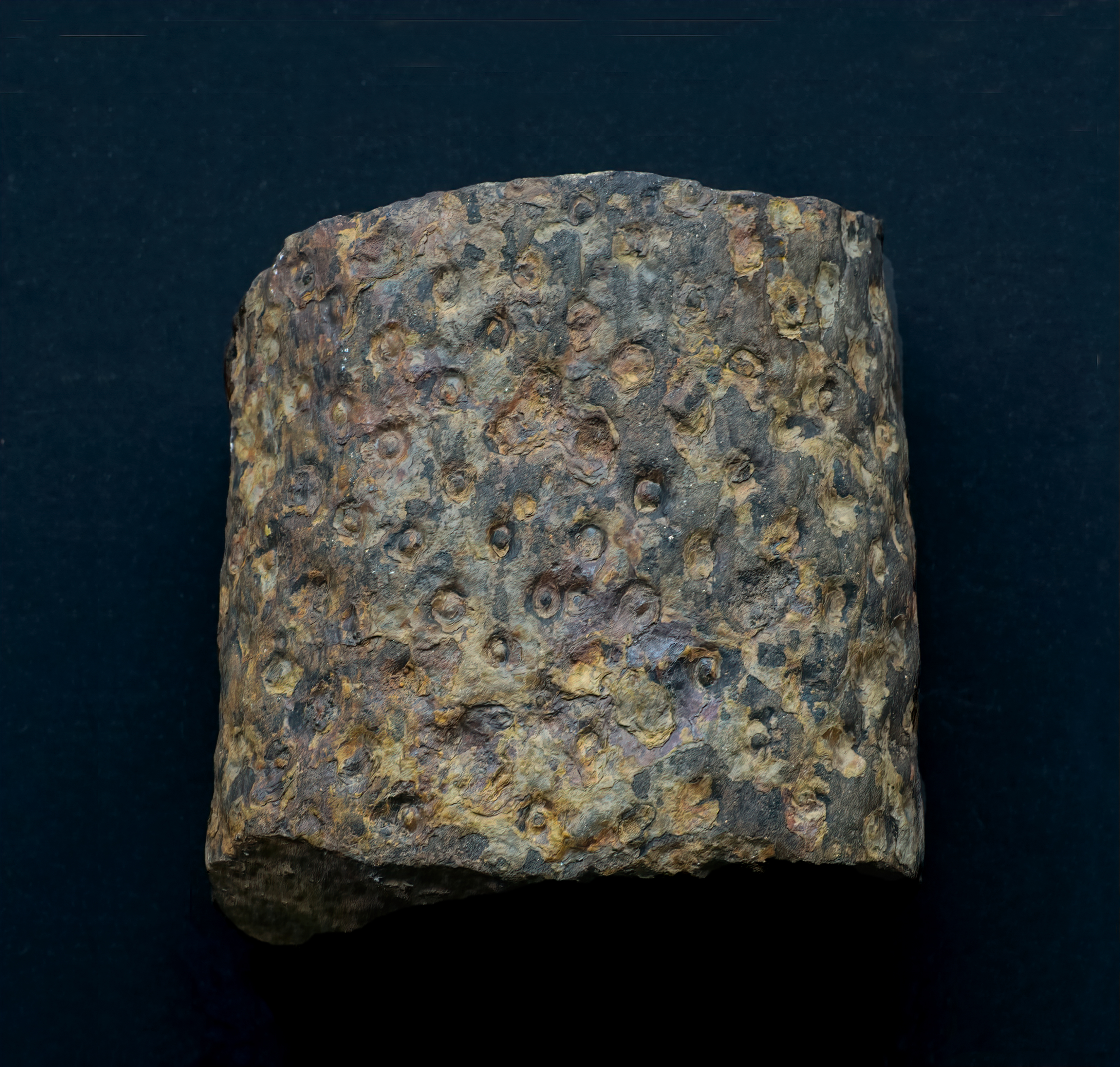
Lepidodendron “Lycopod” Scale Tree Trunk Fossil, Devonian to Carboniferous Era

The fossil above is a section from a large sized, 100 foot (30 meter) lycopod or scale tree trunk which originated around 380 million years ago during the late Devonian Period. The various lycopod trees reached their zenith during the era of coal swamp forests from the Carboniferous Period about 355 to 300 million years ago.

The fossil is very dense and heavy of petrified wood. Petrified wood materializes when plant matter is buried by sediment and protected from decay caused by oxygen and organisms. Subsequently, groundwater rich in dissolved solids flows through the tree sediments, replacing the original plant material with silica, calcite, pyrite, iron or another inorganic material such as opal.

Sigillaria & Lepidodendron Tree Leaf Fossils, Devonian to Carboniferous Era

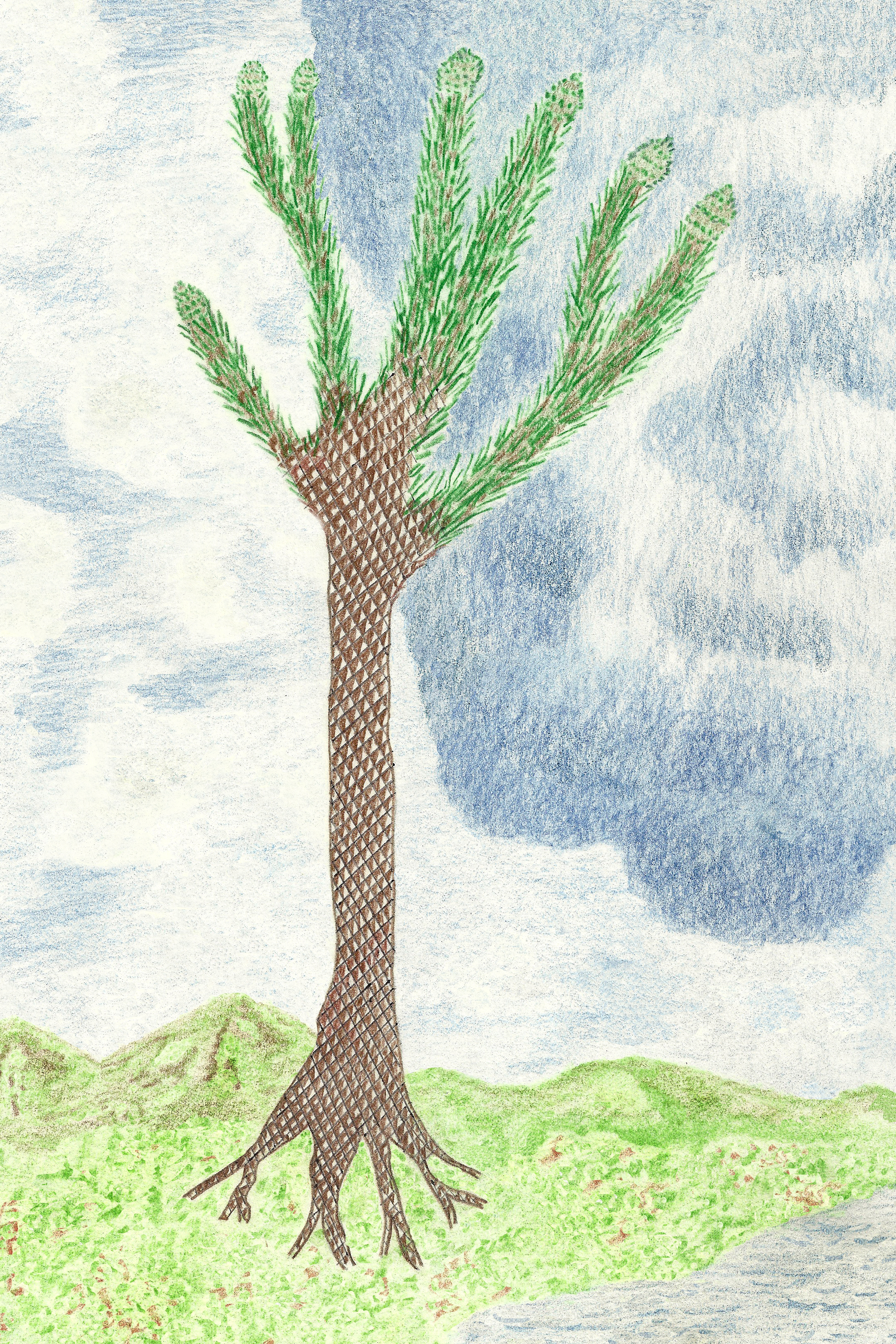
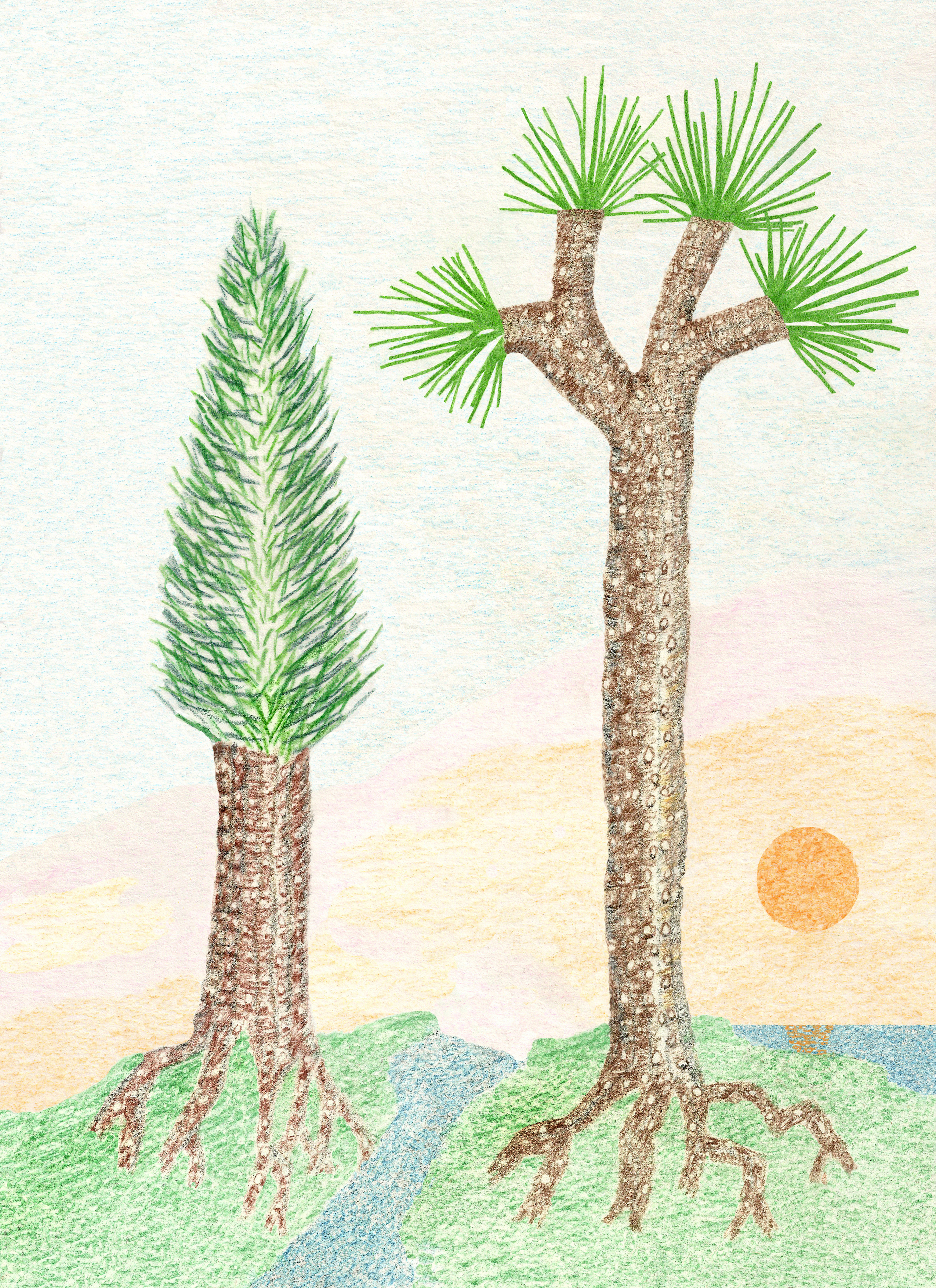
The above fossil shows leaf imprints grown on giant lycopod trees such as Sigillaria and Lepidodendron, cast in coal shale. The trunks of lycopod scale trees were topped with plumes of long thin, grass-like leaves which were often arranged like that of a bottle brush. The trees had relatively short life-cycles growing rapidly reaching heights sometimes up to 130 feet (40 meters). The trunks most distinguishing feature displays patterns of deep grooves, the result of leaf scars along the trunk’s surface. The tree trunks actually would have appeared hairy-like, at least as they grew.

Lycopod forests of plenty generated tremendous amounts of decaying peat. After millions of years, it became coal buried deep in the ground, later, fueling the Industrial Revolution. More importantly, their decaying matter helped revolutionize Earth’s emerging forests by creating soil for trees to develop deeper root systems. This enabled new tree varieties to spread further inland without relying solely on wet swampy habitats.

Scan_Pic0011
Devonian to Carboniferous Era Lepidodendron Lycopod Scale Tree Rendition Drawing
Scan_Pic0013
Devonian to Carboniferous Era Sigillaria Lycopod Scale Trees Rendition Drawing

LYCOPOD SCALE TREE CLASSIFICATIONS

Botanical Names:  Sigillaria and Lepidodendron

Common Name: Scale Tree or Lycopod Tree

Kingdom: Plantae

Division: Lycopod-iophyta (oldest vascular plant group, reproduced by releasing spores)

Class: Isoetopsida (plants with hollow quill-like leaves spirally arranged on a single, unbranched vein) ie quillworts, scale trees, spike moss)

Order: Lepidondrales (primitive vascular tree-like plants related to lycopods which are loosely grouped with ferns)

Family: Lepidodencraceae (has arrangement of spores on cones born on the shoots)

Genera:  Sigillaria (possess deep lace pattern on trunk with bottle brush crown of leaves)

Genera: Lepidodendron (possess deep diamond pattern on trunk with plume of grassy leaves on crown)

All rights reserved © Fossillady 2025

Share this:

  • Share on Pinterest (Opens in new window) Pinterest
  • Share on Facebook (Opens in new window) Facebook
  • Print (Opens in new window) Print
  • Email a link to a friend (Opens in new window) Email
  • Share on LinkedIn (Opens in new window) LinkedIn
  • Share on Reddit (Opens in new window) Reddit
  • Share on X (Opens in new window) X
Like Loading...
Plant/Tree Fossils Carboniferous Tree DrawingCarboniferous tree factsDevonian Lycopod TreesDevonian Tree DrawingFossil LeavesFossil Tree RootLepidodendronLepidodendron ClassificationLepidodendron RenderingLepidodendron Tree DrawingLycopodSeed fern tree factsSigillariaSigillaria ClassificationSigillaria DrawingSigillaria RenderingStigmariaStigmaria Classification

Amazing Ammonites

August 13, 2010 by Fossillady
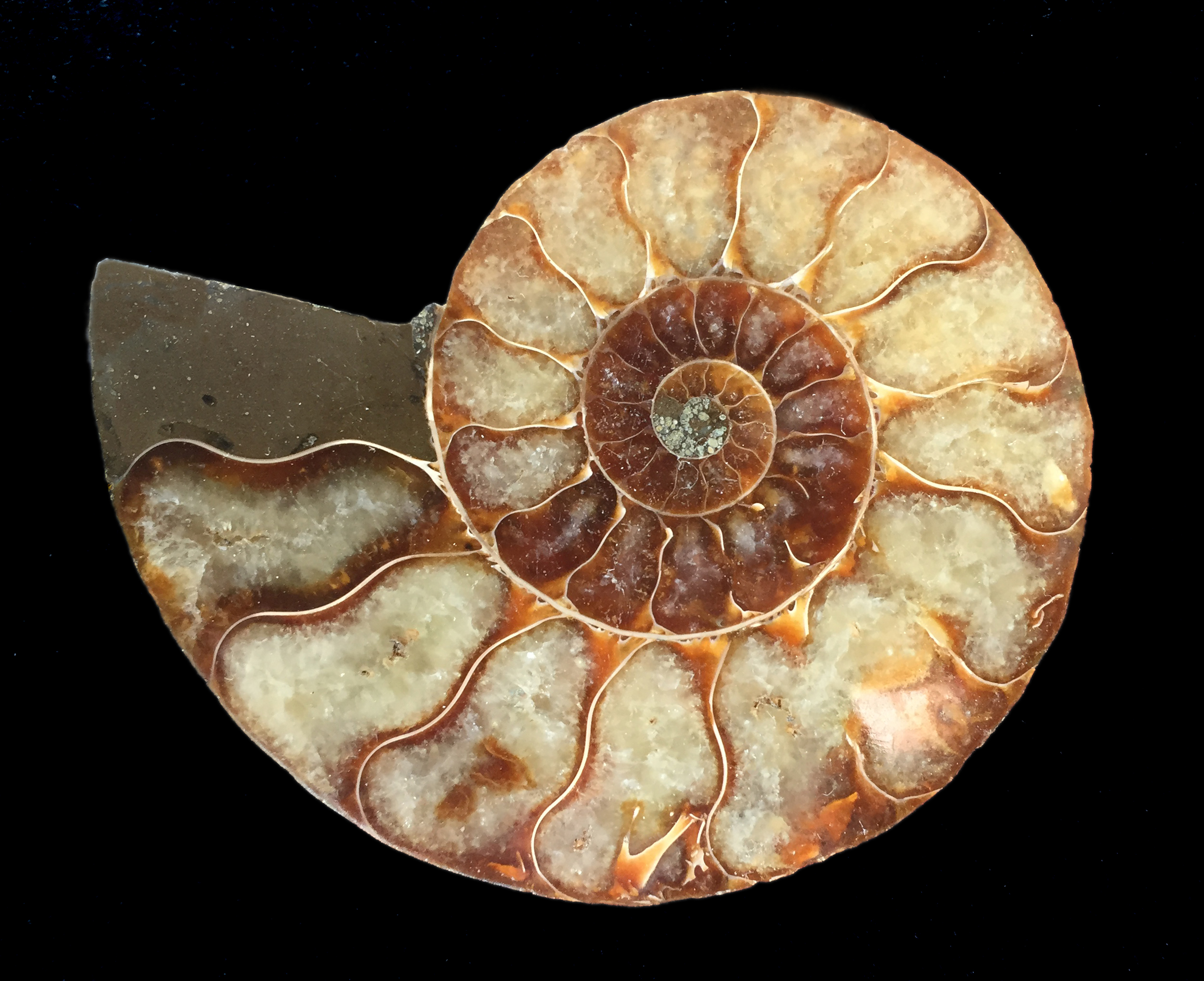
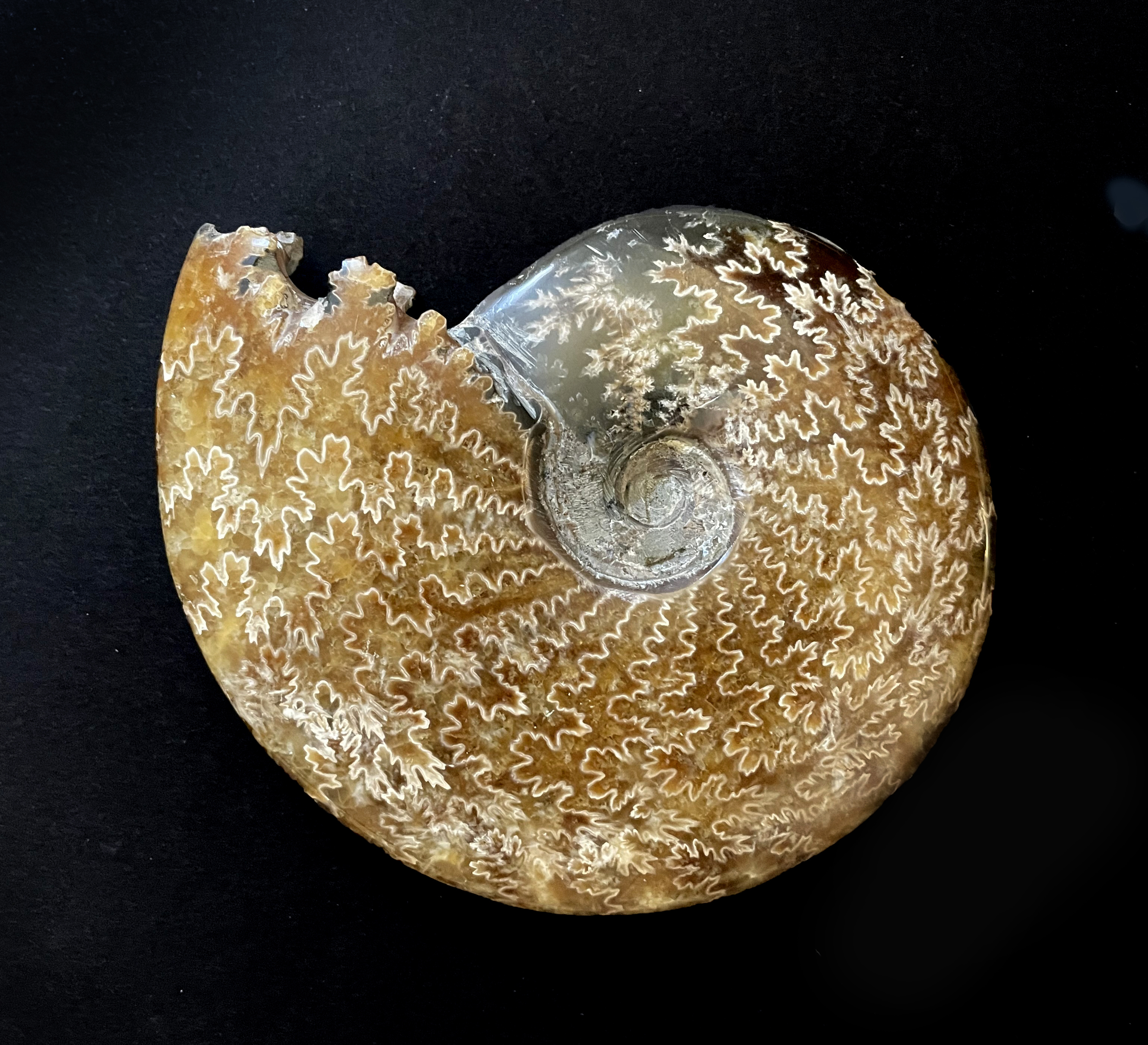
Ammonite Fossil Inner Chambers

Ammonites are an extinct marine shelled mollusk animal belonging to the class of cephalopods related to today’s squids, octopus, cuttlefish and the nautilus. Ammonites moved in spurts using a method of jet propulsion by siphoning the ocean water into the inner chambers inside their shells and then pushing the water out powerfully through a tube structure called a siphuncle. These inner chambers held water and special gases which helped it descend deep down ocean depths or float upward to shallower depths by filling and releasing the gases and water in and out of the chambers.

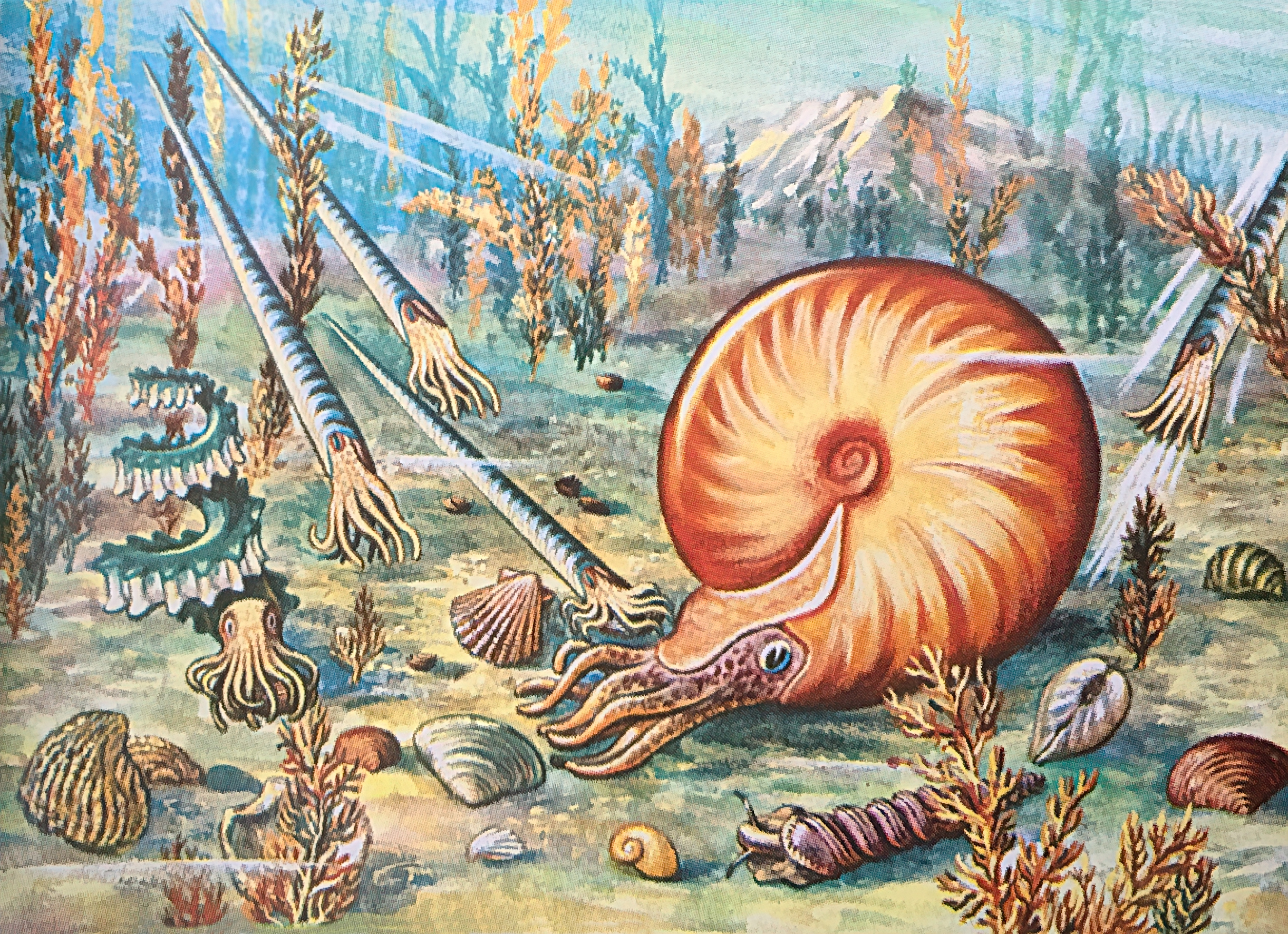
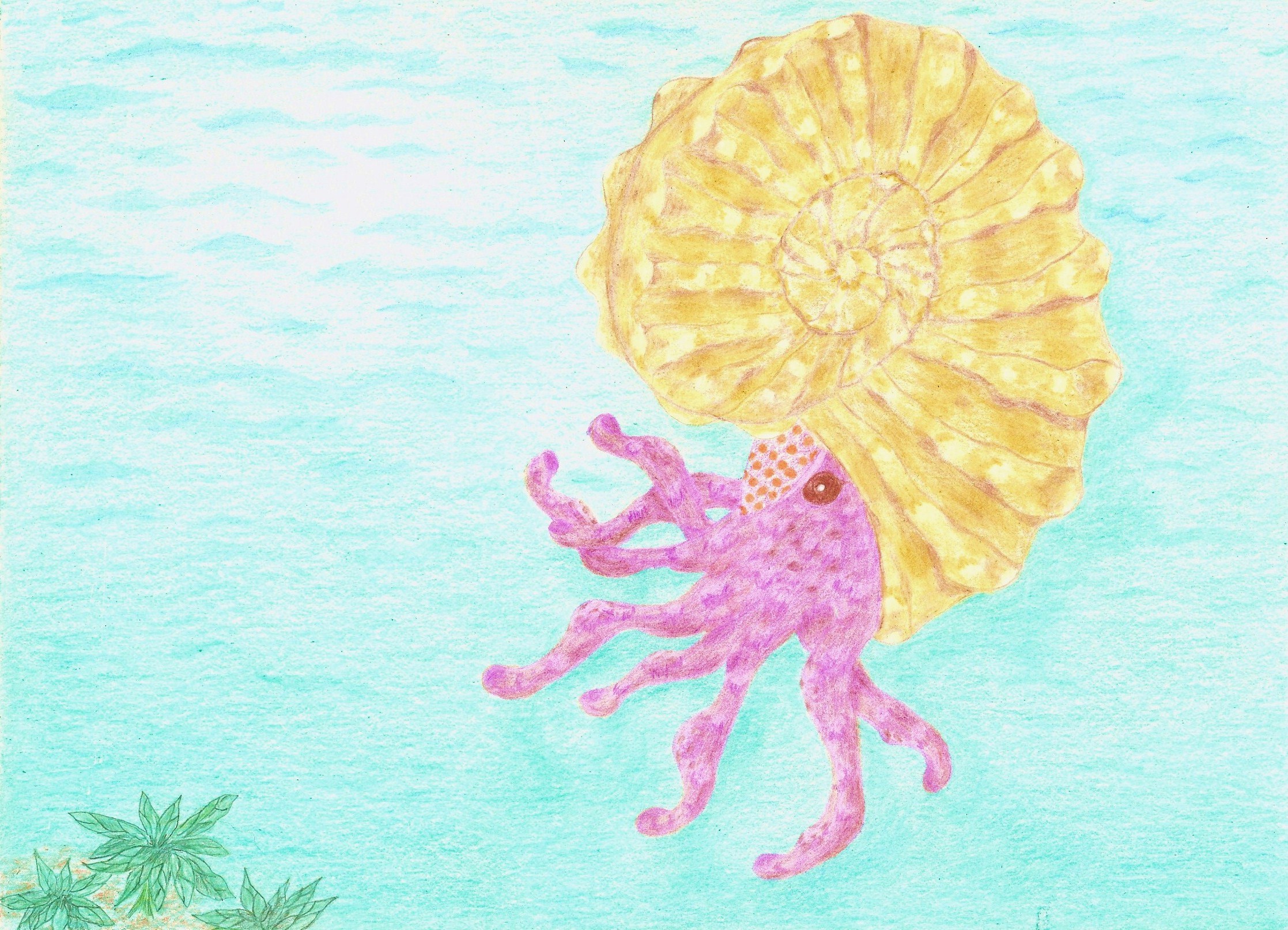
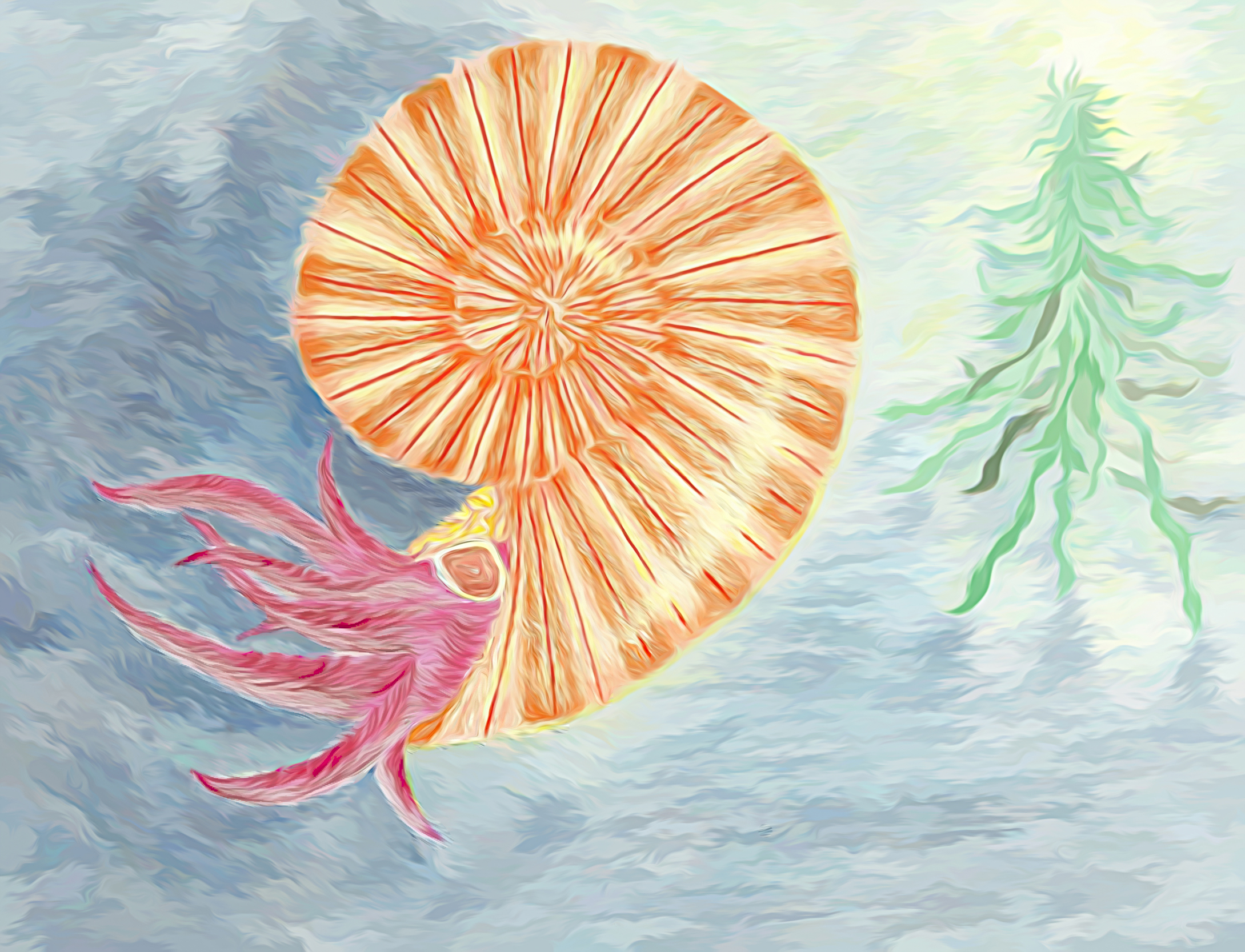
Cretaceous Period Oceanic Environment (145-66 million years ago) Artist Rendition

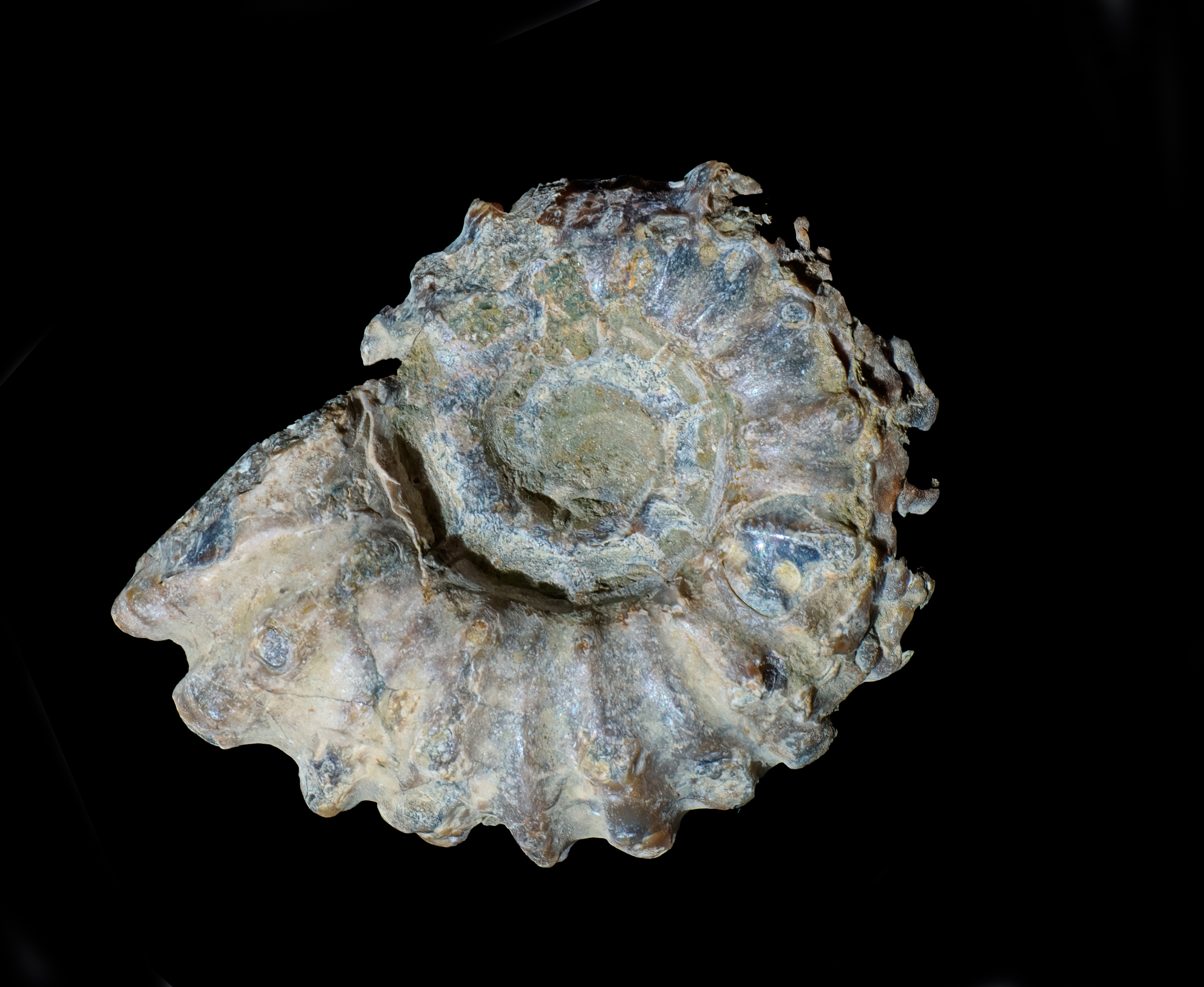
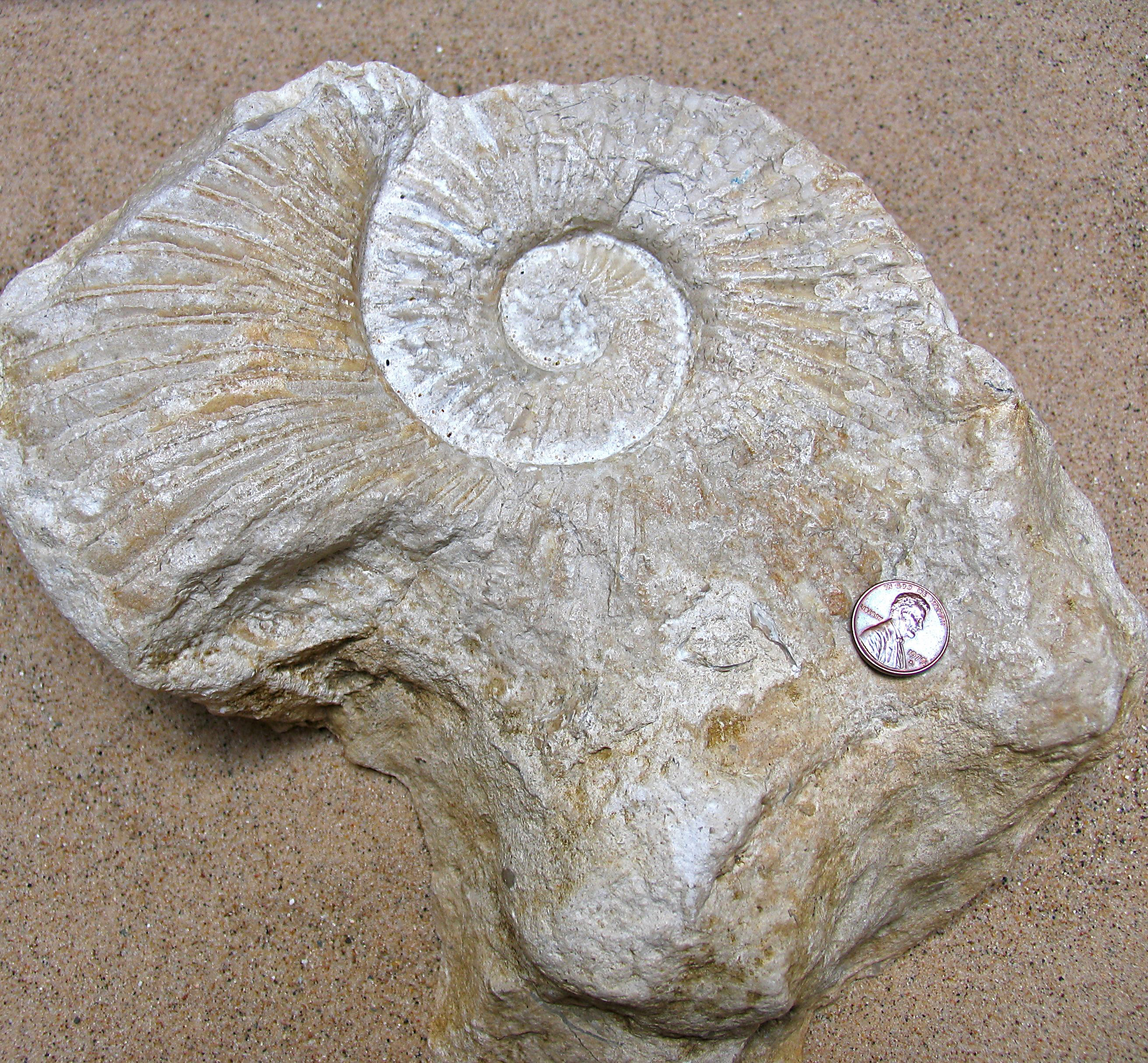
The Douvilleiceras, mammilatum ammonite fossil shown below possessed well-defined growth patterns on its shell (sutures). Douvilleiceras’ knobs and spines are thought to be an indicator of a hostile environment. It lived during the Cretaceous Period (145 to 66 mya) and was unearthed in Madagascar (Albin Formation).

Ammonite Fossil (Douvilleiceras, mammilatum)

Ammonites lived during the Paleozoic and Mesozoic Eras, specifically from the Devonian period (around 419 million years ago) until the end of the Cretaceous period (about 66 million years ago). They were descendants of their cousin straight-shelled nautiloids, but the ammonite’s coiled shells allowed them more agility and maneuver ability within their oeanic environments than their predecessors.

fossils 127
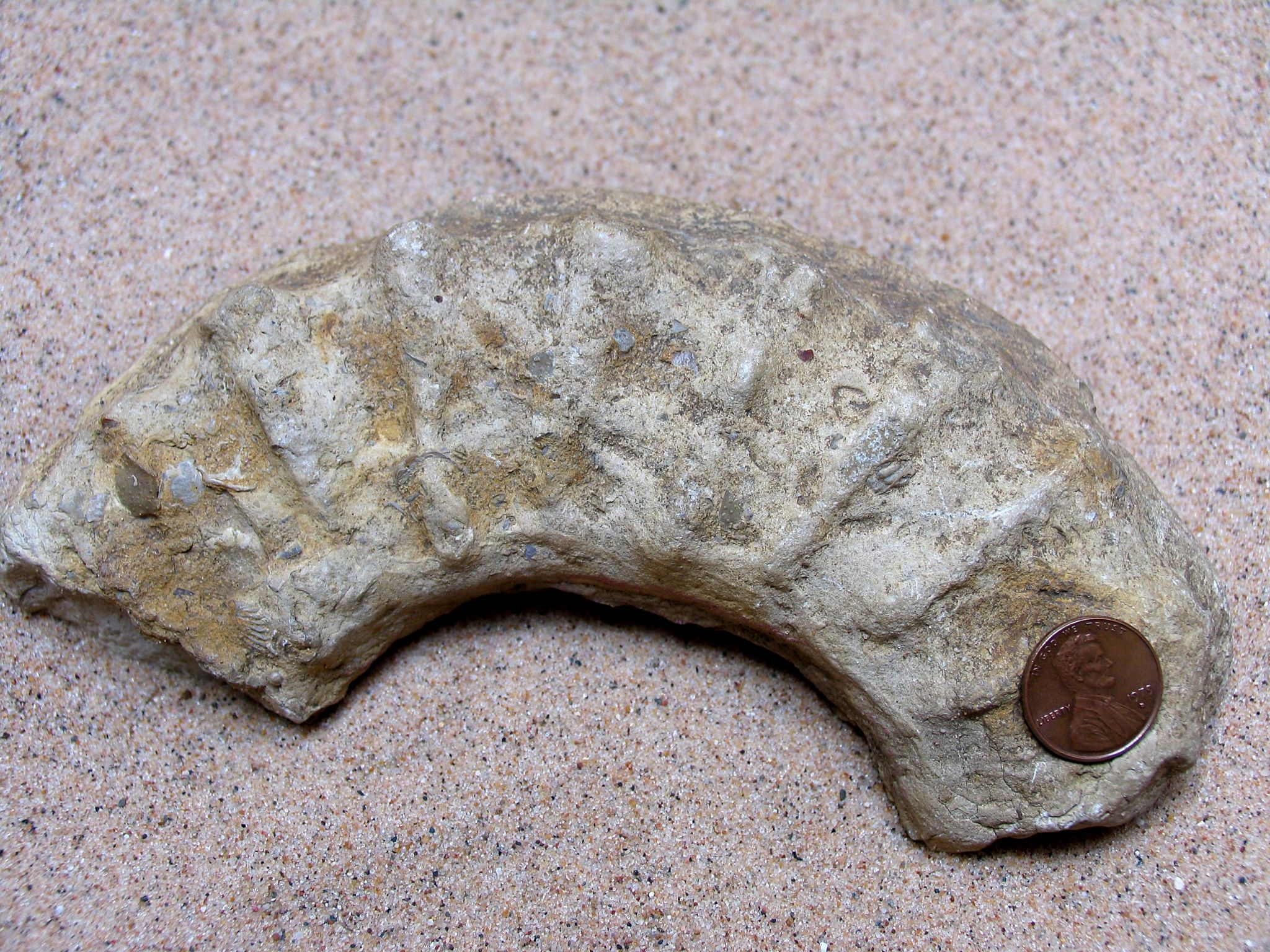
Mortoniceras sp Ammonite Fossil

The above fossil is a broken section off an ammonite’s shell belonging to the genus, Mortoniceras sp. It was found in Arkansas in a dried up riverbed within the limestone, Goodland Formation. The shell is characterized by deep keels and ribbing. It lived mainly during the Cretaceous Period (145 to 66 mya). As with all the ammonites, its fate was doomed side by side with the dinosaurs.

fossils 126
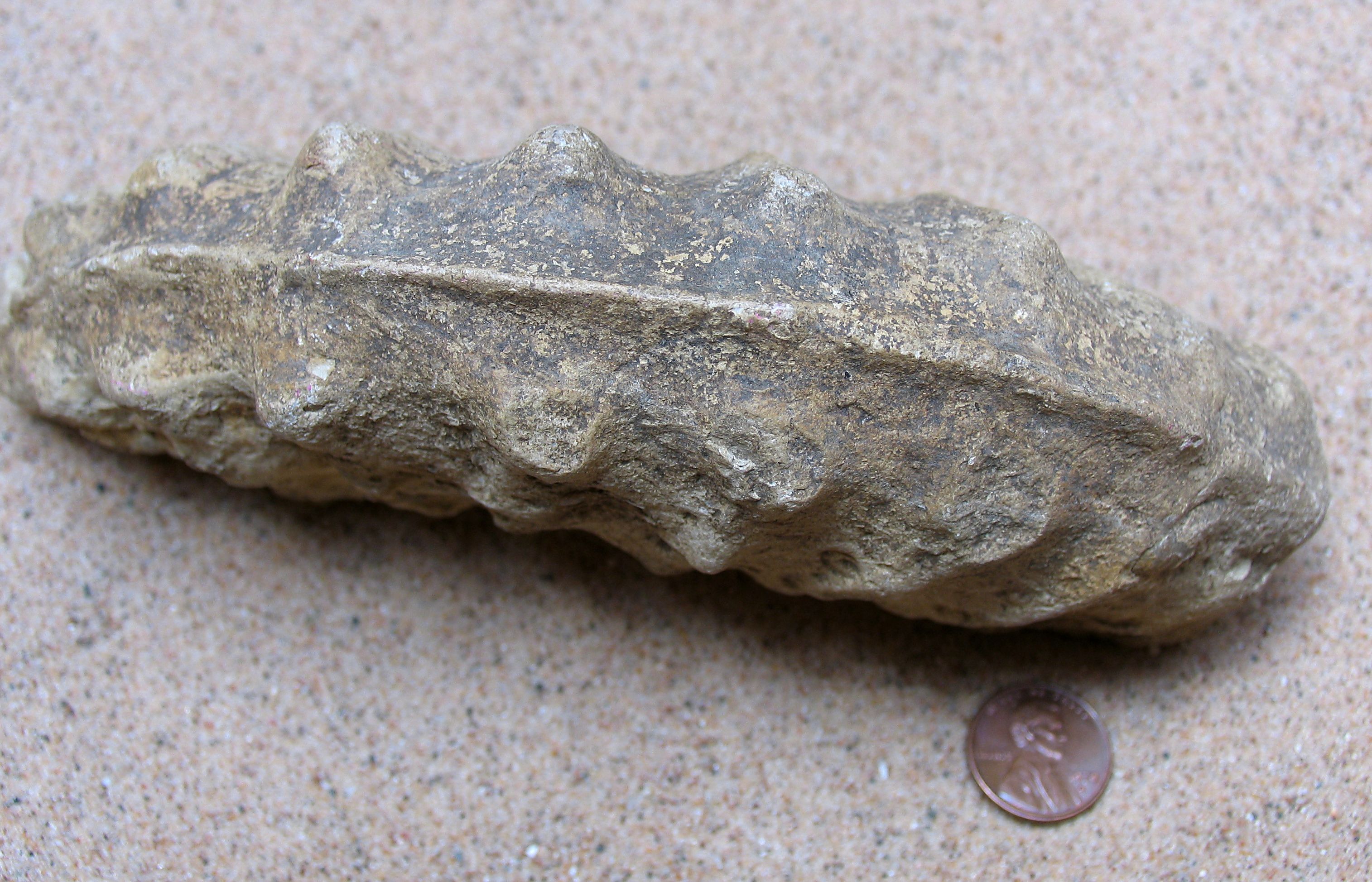
Mortoniceras Ammonite Fossil (Top View)

The siphuncle tube was also used to regulate buoyancy by controlling the amount of gas and water in the animal’s inner chambers. It lay along the rim of the ammonite underneath its shell.

Multi-purpose Tentacles

The ammonites were ocean predators grabbing their victims with precision and crushing them with their long, powerful tentacles. These tentacles contributed to another important function. They contained special sensors which facilitated their ability to navigate and locate prey in the vastness of the ocean.

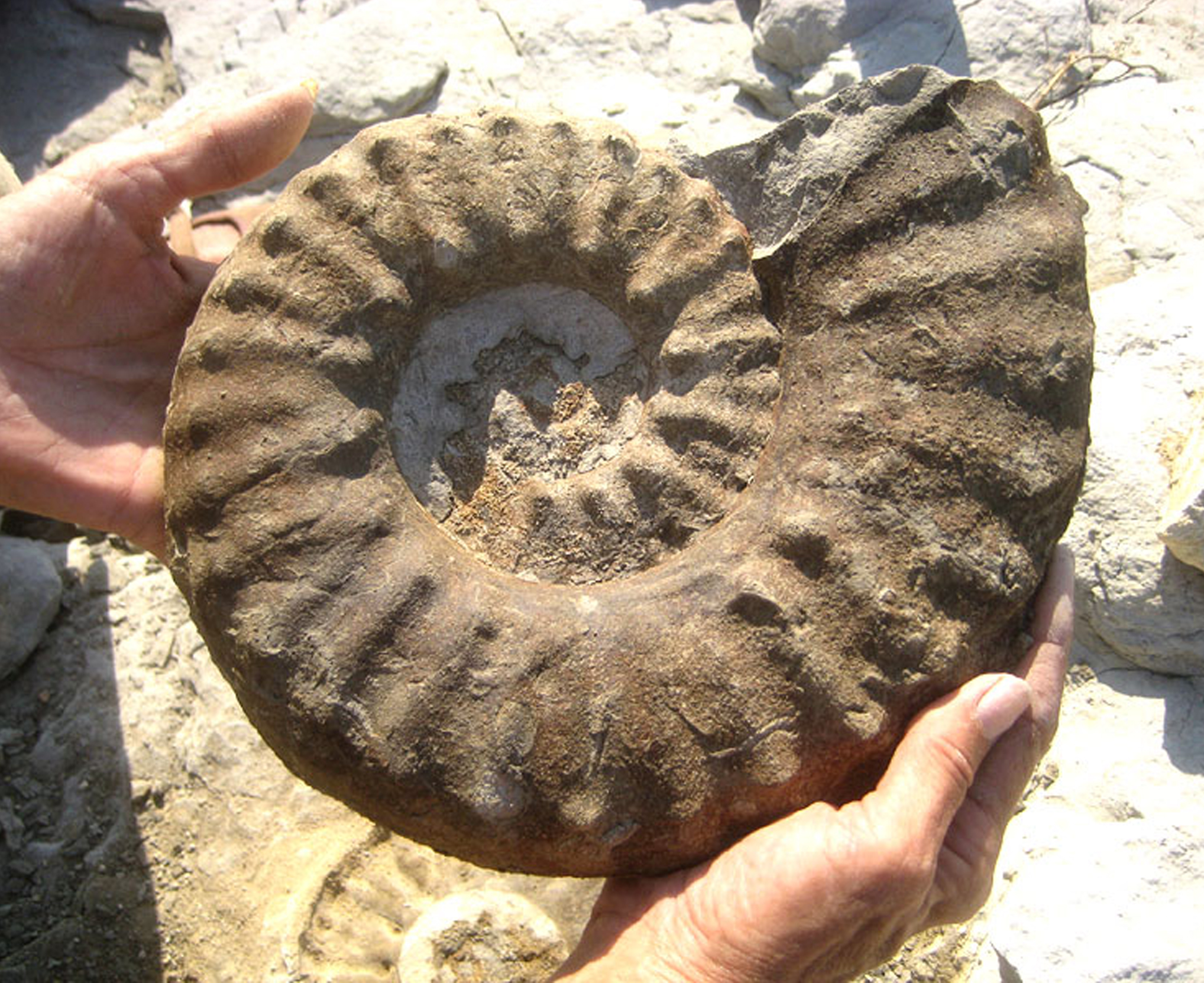
A Complete Sample of Mortoniceras sp from Texas, Fort Worth Formation, Tarrant County

Ammonites possessed large heads and are assumed to have been highly intelligent like their modern day cousins octopuses, squids, cuttlefish, nautilus etc. Scientist debate whether ammonites contained ink sacs for defense.

See two gigantic ammonite fossils from another article I have written (scroll to the bottom of article).

Scan_Pic0005
Mortoniceras Ammonite Rendering Drawing

CLASSIFICATION

Scientific Name: Mortoniceras

Common Name: Ammonite

Kingdom: Animalia

Phylum: Mollusk (large diverse group of invertebrates possessing a shell, i.e. clams, snails, oysters, etc.)

Order: Ammonitida (characterized by thick, ribbed patterned shells)

Class: Cephalopod (means prominent head and tentacles, i.e. octopuses, cuttlefish, squids, nautilus)

Family: Brancoceratidae

Genus: Mortoniceras (characterized by deep keels, tubercules (knobs) and ribbing)

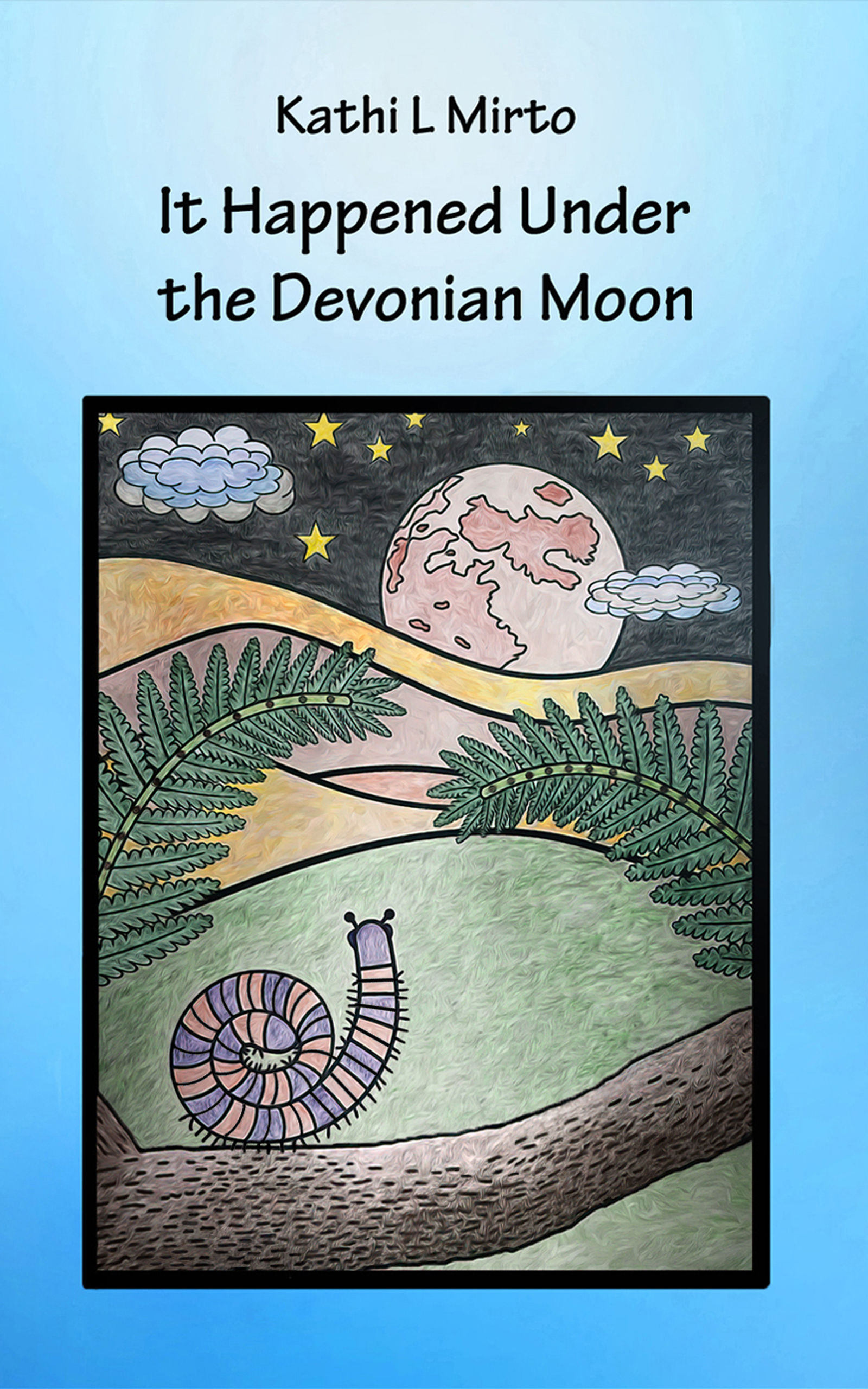
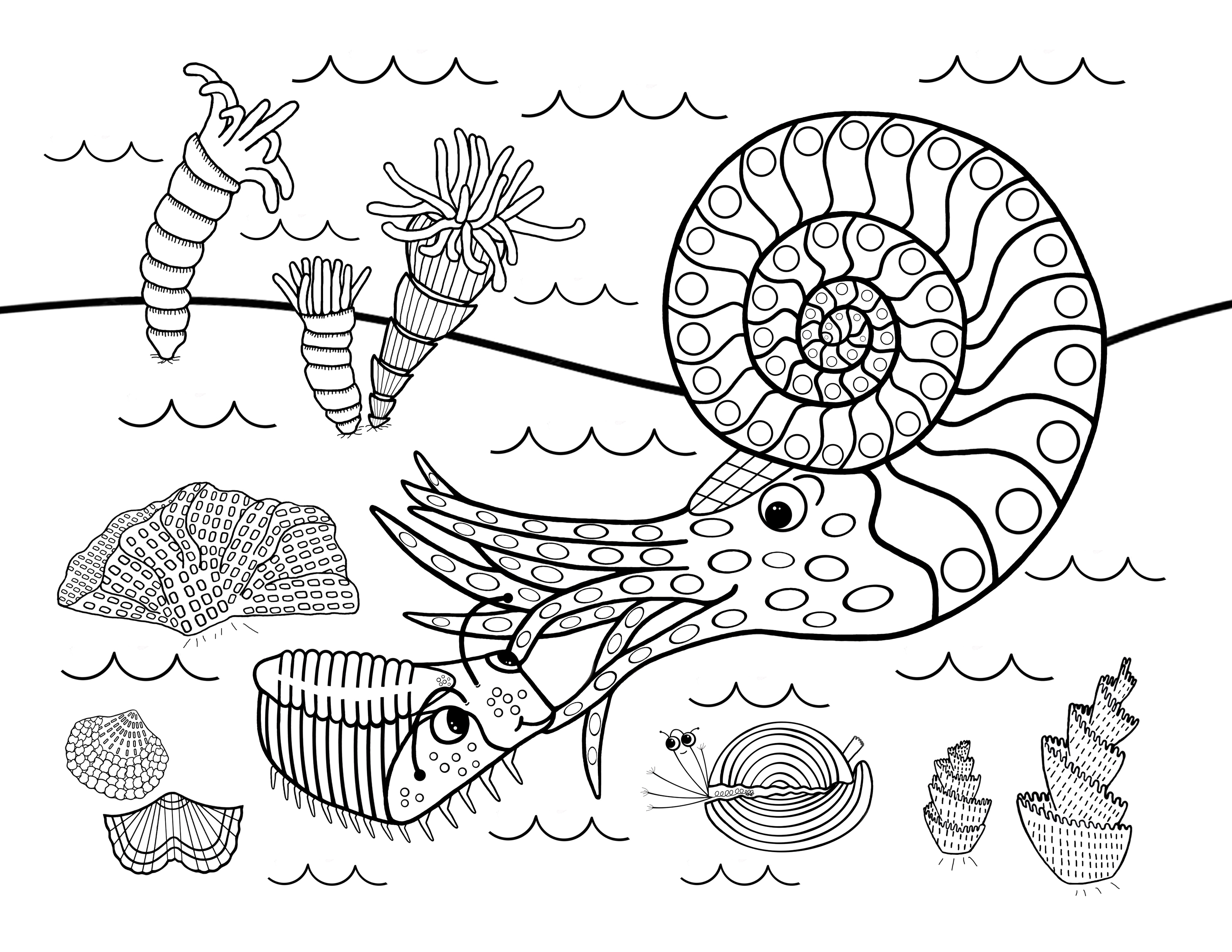
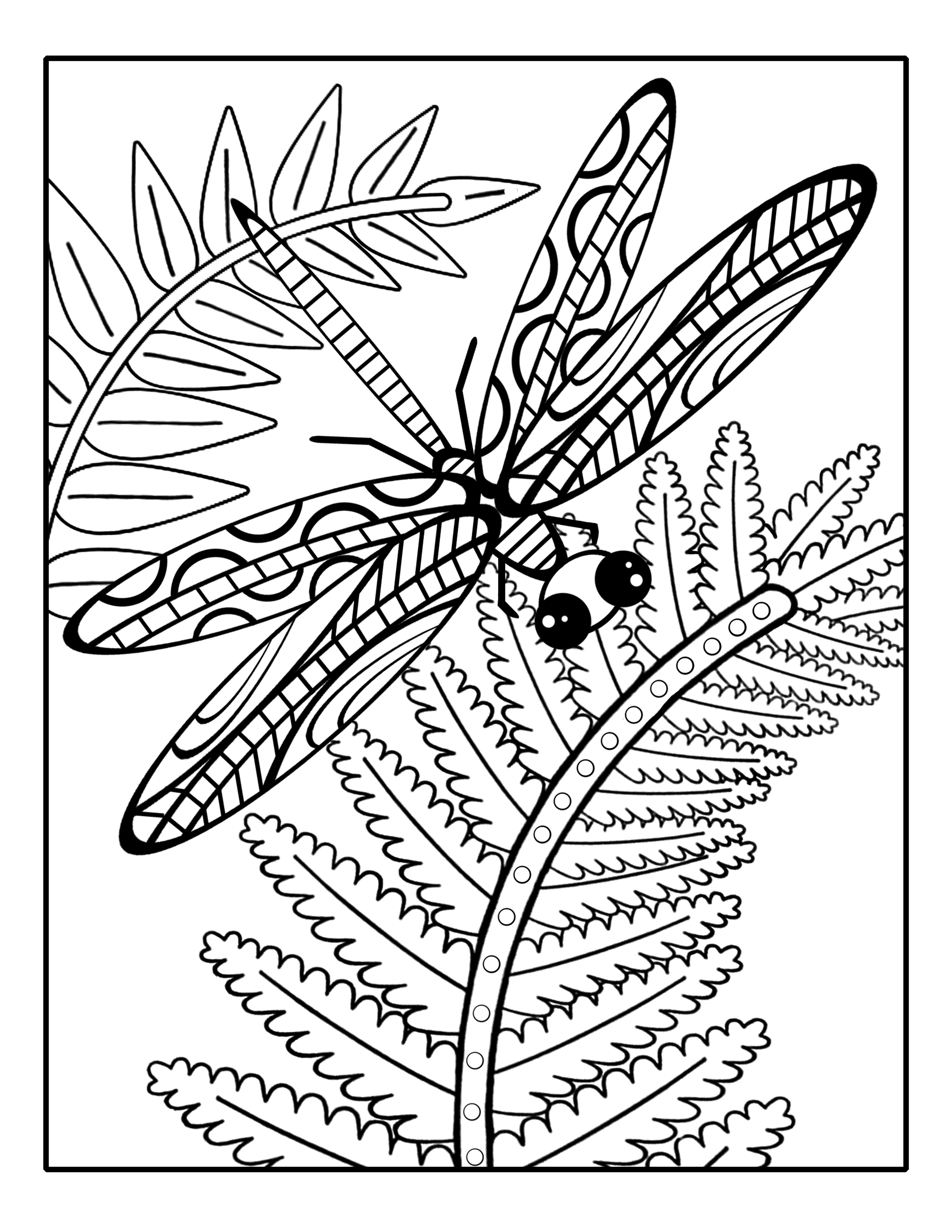
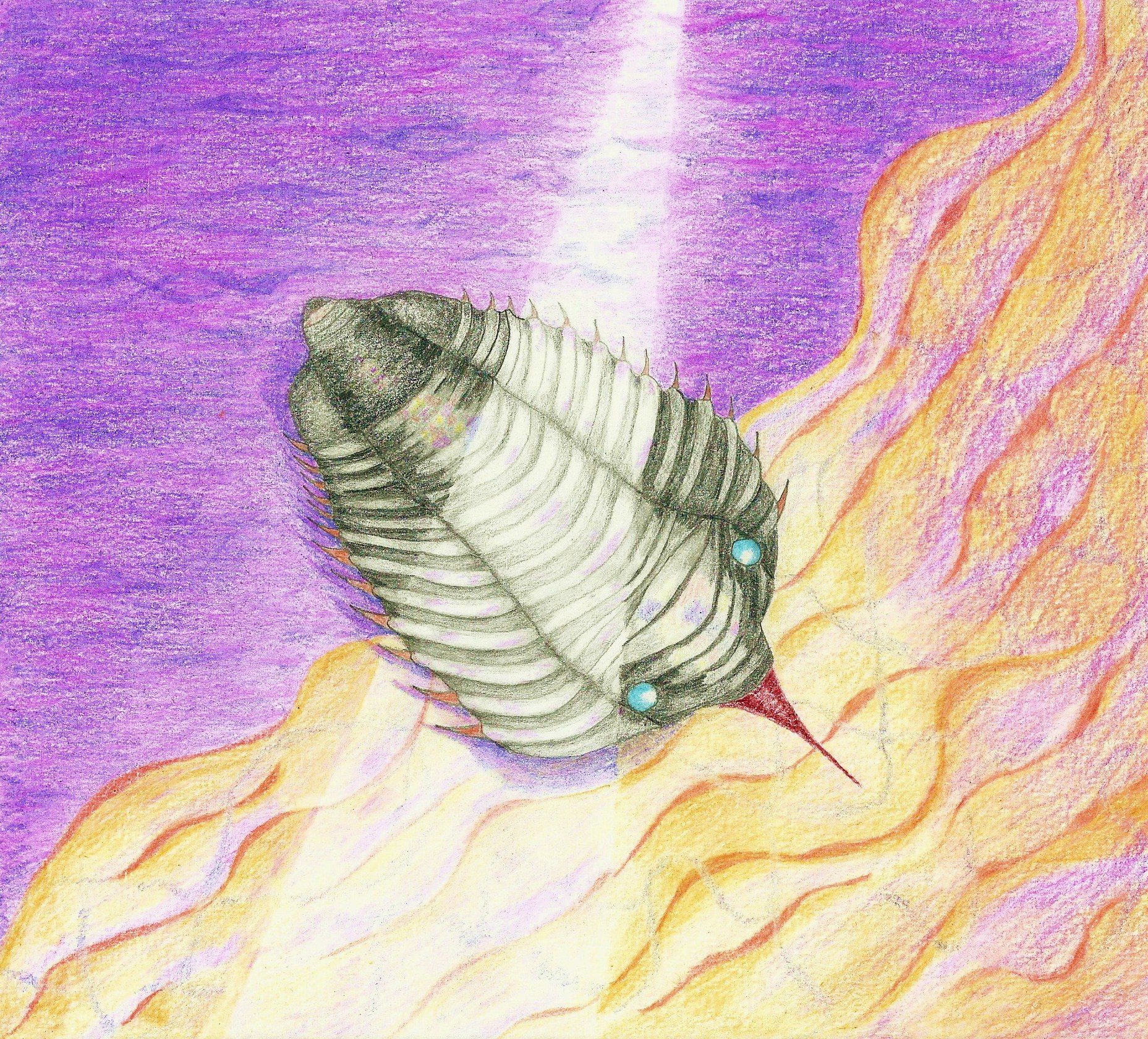
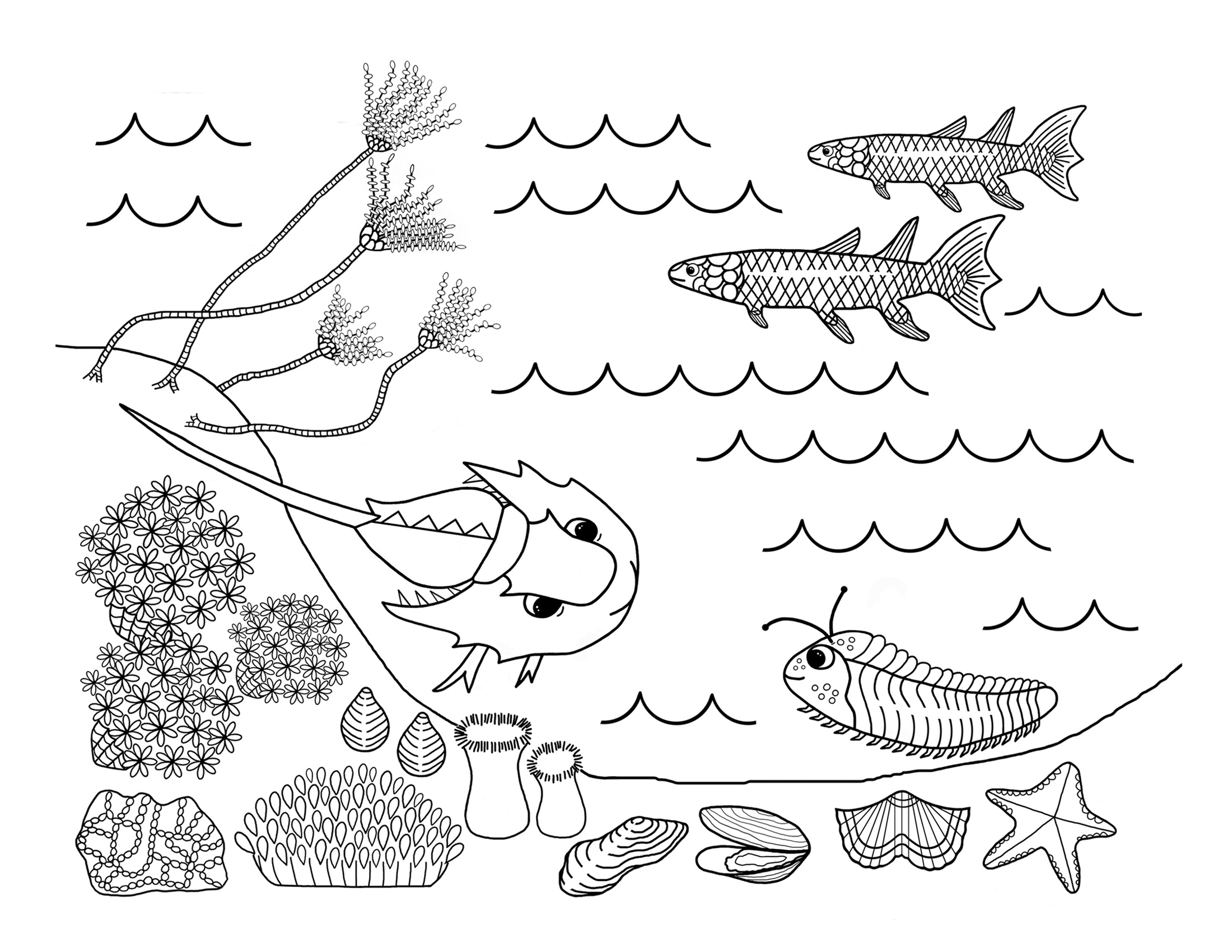
Check out my two fiction books blended with prehistory insights and imaginative storytelling that entertain as they educate. Geared toward young exlporers interested in early life and fossils, or young readers who simply like a good story; ages 11-15+. Also available, a coloring/activity book featuring scenes from the books along with many of the plants and animals that lived during the amazing Devonian Time Period; fossil photos and descriptions included. Available on Amazon.com
All rights reserved © Fossillady 2025

Share this:

  • Share on Pinterest (Opens in new window) Pinterest
  • Share on Facebook (Opens in new window) Facebook
  • Print (Opens in new window) Print
  • Email a link to a friend (Opens in new window) Email
  • Share on LinkedIn (Opens in new window) LinkedIn
  • Share on Reddit (Opens in new window) Reddit
  • Share on X (Opens in new window) X
Like Loading...
Ammonite Fossils ammoniteammonite classificationammonite drawingammonite factsammonite infoammonite renderingcephalopodcretaceousfossilfossil artfossil fiction bookfossils for classroomfossils for kidsmortoniceras classification

Manuiceras sp (Ammonite)

August 12, 2010 by Fossillady
Ammonite Dufrenoy
Ammonite Fossil

Manuicera sp. lived in the ancient seas when dinosaurs were around. In general, the ammonite’s abundance peaked during the Cretaceous Period (145 to 66 million-years-ago). But according to the fossil records, their incredible long history began as early as 440 mya during the Silurian Period.

Manuicera sp ammonite was unearthed from a dried up riverbed in Arkansas, they have also been unearthed in Texas. Both of these U.S. states lie within the limestone, Goodland Formation where many other Cretaceous fossils have been discovered. Originally, I mistakenly identified the fossil as, Dufrenoy justinae, but that was when I was newer to the field with a less discerning eye and research skills. So there you go. 

Haeckel_Ammonitida
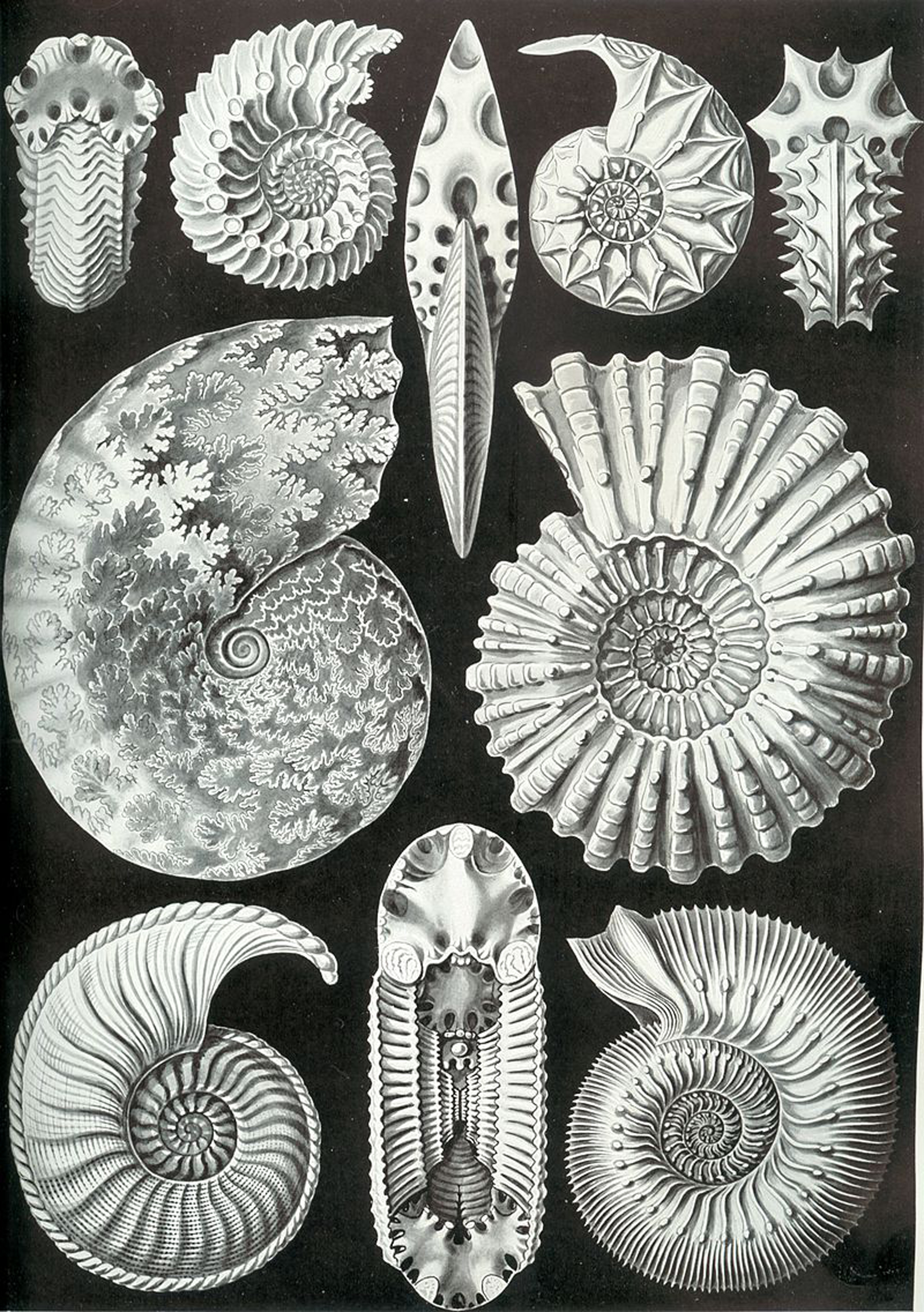
A variety of ammonite forms, from Ernst Haeckel‘s 1904 Kunstformen der Natur (Art Forms of Nature)

The amazing illustration above shows how ammonites vary greatly in the ornamentation (surface relief) of their shells. Some may be smooth and relatively featureless, except for growth lines. In others, various patterns of spiral ridges and ribs or even spines are shown.

Ammonite fossils have a world wide distribution indicating the theory of continental drift and due to their abundance (estimated 10 thousand species) scientists use them as date markers for other fossils along the same rock layers.

Ammonites grew from a few inches in diameter to the size of truck tires. See my other article on ammonites.

Manuiceras sp Ammonite Rendering Drawing

CLASSIFICATION

Scientific Name: Manuiceras sp. Common Name: Ammonite

Kingdom: Animalia

Phylum: Mollusk (soft body of invertebrate animal encased in shell)

Class: Cephalopod (means prominent head and tentacles, i.e. octopus, squid, cuttlefish, nautilus)

Order: Ammonitida (characterized by thick ribbed and patterned shells)

Family: Acanthoceratidae (possibly)

Genus: Manuiceras

All rights reserved © Fossillady 2025

Check out my two fiction books blended with prehistory insights and imaginative storytelling that entertain as they educate. Geared toward young exlporers interested in early life and fossils, or young readers who simply like a good story; ages 11-15+. Also available, a coloring/activity book featuring scenes from the books along with many of the plants and animals that lived during the amazing Devonian Time Period; fossil photos and descriptions included. Available on Amazon.com

Share this:

  • Share on Pinterest (Opens in new window) Pinterest
  • Share on Facebook (Opens in new window) Facebook
  • Print (Opens in new window) Print
  • Email a link to a friend (Opens in new window) Email
  • Share on LinkedIn (Opens in new window) LinkedIn
  • Share on Reddit (Opens in new window) Reddit
  • Share on X (Opens in new window) X
Like Loading...
Ammonite Fossils ammoniteammonite drawingammonite renderingcephalopodcretaceousdufrenoydufrenoy ammonite classificationfossilfossil artjustinae drawing

Interesting Facts About Trilobites

August 12, 2010 by Fossillady
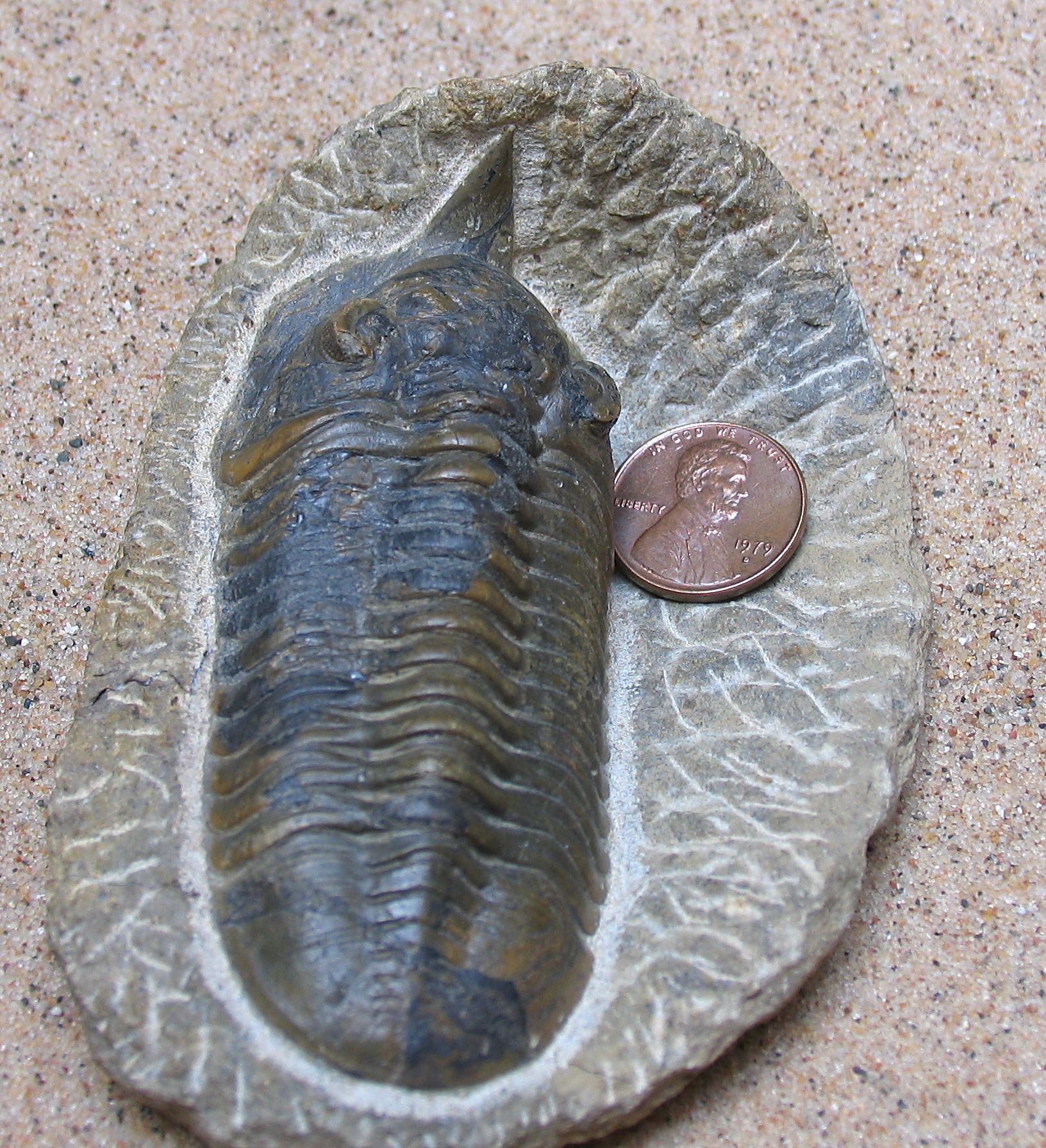
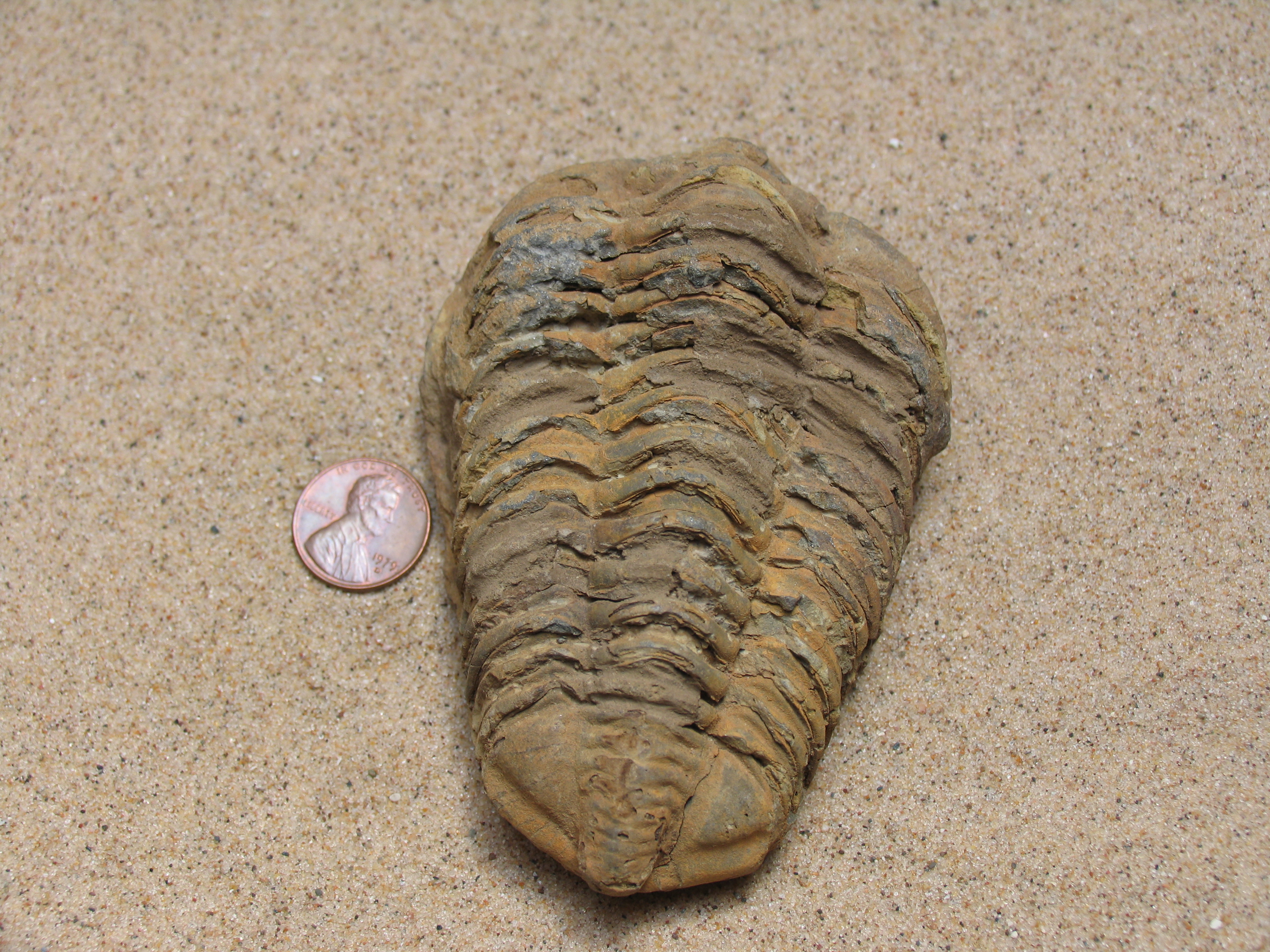
Calymene, celebra Trilobite Fossil

Most trilobites grew to only about 3 inches (7.6 cm) long, while a few reached almost 3 feet (1 meter) long. This Calymene, celebra fossil fits nicely into a man’s palm. In life, it was a scavenger finding food on the ocean floor where it could easily burrow underneath the sand to hide from predators. Many of their fossils are often found rolled up in a defensive position. They were able to bend because their chiton exoskeletons were fitted with overlapping sections. Think of roly-poly bugs, or pill bugs, as some call them; it’s the same idea.
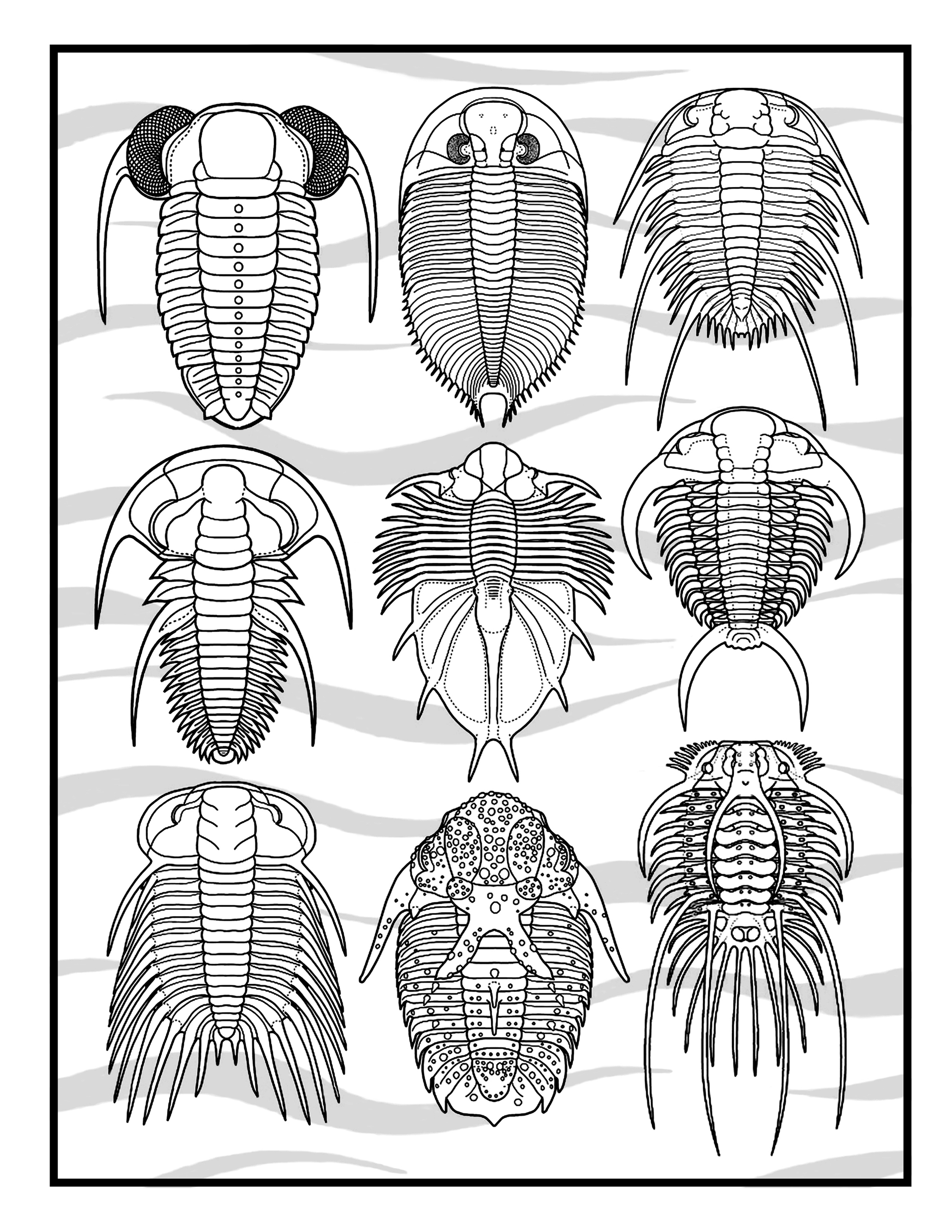
Lifestyle of Trilobites

Trilobites developed several different life styles; some moved over the seabed as predators or scavengers, while others were filter feeders, yet some swam along the ocean strata feeding on plankton. Most were sluggish swimmers, while some later varieties were designed precisely for speed and swam in the mid-ocean, pelagic zones where more predators existed. 

Calymene, celebra Trilobite Fossil

This little Calymene trilobite crawled on the ocean floor over 400 million years ago during the Devonian time period. His species had smaller eyes than many other trilobite species and was probably a sluggish swimmer. A good number of their fossils are found in Michigan and other Midwest states where warm shallow oceans once dominated the continents.

Trilobites have the distinction of possessing a segmented body, multiple jointed limbs and an armored outer shell, placing them in the category of arthropods related to insects and crustaceans. Trilobite means three lobes in Greek, from tri and lobos, named for their three major lengthwise body sections.

All trilobites died out at the end of the Permian mass extinction event, 251 million-years-ago, which removed over 90% of all species on Earth.

Find out about a few giant sized trilobites here in another article I’ve written. (Scroll down to middle of page)

Scan_Pic0004
Calymene Trilobite Rendering Drawing

Classification

Kingdom: Animalia

Phylum: Arthropoda (Invertebrate animals with jointed legs, segmented bodies, exoskeletons made up of chiton, a tough fibrous material often mineralized with calcium carbonate)

Class: Trilobota (Means three lobes or body sections. They are one of the earliest and most successful groups of artrhopods to appear in the fossil record with an estimated 22,000 species)

Order: Phacopida (Means lens face, these trilobites lived from the late Cambrian Period to the late Devonian Time Period)

Family: Calymenidae

Genus: Calymene (Small group of trilobites often found rolled up)

Species: celebra

All rights reserved © Fossillady 2025

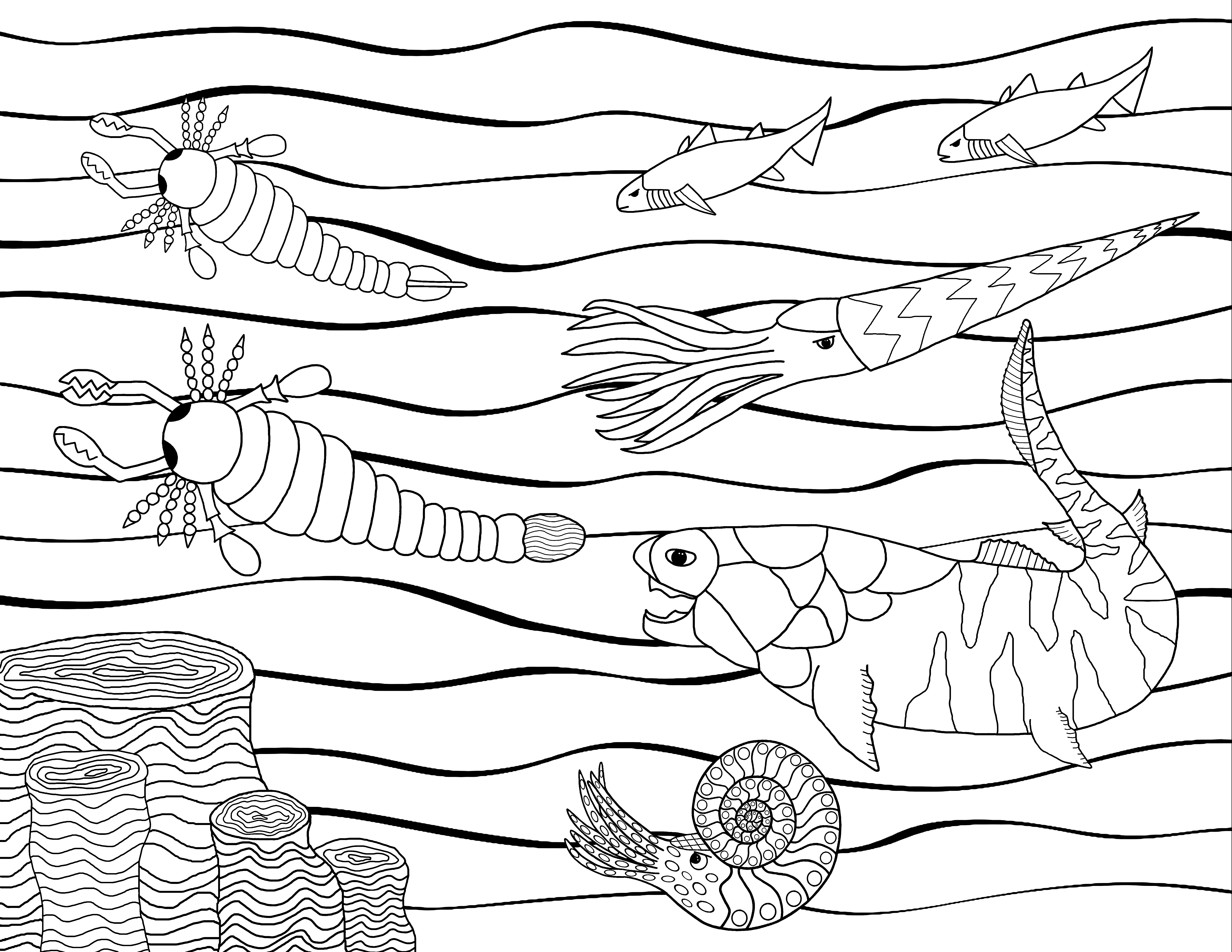
Check out my fiction books featuring factual prehistory insights blended with imaginative storytelling that entertain as they educate. Perfect for young explorers ages 11-15+ or young readers who simply like a good story, available on Amazon.com. Also available, a coloring/activity book featuring scenes from both books along with many of the plants and animals that lived during the amazing Devonian Time Period; fossil photos and descriptions included.

Share this:

  • Share on Pinterest (Opens in new window) Pinterest
  • Share on Facebook (Opens in new window) Facebook
  • Print (Opens in new window) Print
  • Email a link to a friend (Opens in new window) Email
  • Share on LinkedIn (Opens in new window) LinkedIn
  • Share on Reddit (Opens in new window) Reddit
  • Share on X (Opens in new window) X
Like Loading...
Trilobite Fossils arthropod fossilCalymenecalymene trilobite classificationfossilMichigan trilobitespaleozoic fossiltrilobiteTrilobite arttrilobite drawingtrilobite factstrilobite informationtrilobite renderingTrilobites for kids

Post navigation

Newer posts →

Category of Fossil Facts

  • Algae Fossils
  • Ammonite Fossils
  • Brachiopod Fossils
  • Bryozoan Fossils
  • Cenozoic Era Aquatic Fossils
  • Cephalopod Nautiloid Fossils
  • Clam Fossils
  • Clam Seashells
  • Coral Fossils Extinct
  • Corals Florida
  • Crinoids Fossils
  • General Comment
  • Horseshoe Crabs
  • Lake Michigan Fossil Finds
  • Millipede Fossils
  • Oysters Fossils
  • Plant/Tree Fossils
  • Rocks
  • Shark Teeth Fossils
  • Sponges Fossils
  • Stromatolite Fossils
  • Trilobite Fossils
  • Tube Worms Fossils
Advertisements

Fossillady Links

  • Kathi's Photography Site
Advertisements

Join 145 other subscribers
Advertisements
Blog at WordPress.com.
Privacy & Cookies: This site uses cookies. By continuing to use this website, you agree to their use.
To find out more, including how to control cookies, see here: Cookie Policy
  • Subscribe Subscribed
    • Fossil Lady
    • Join 145 other subscribers
    • Already have a WordPress.com account? Log in now.
    • Fossil Lady
    • Subscribe Subscribed
    • Sign up
    • Log in
    • Report this content
    • View site in Reader
    • Manage subscriptions
    • Collapse this bar
 

Loading Comments...
 

    %d