
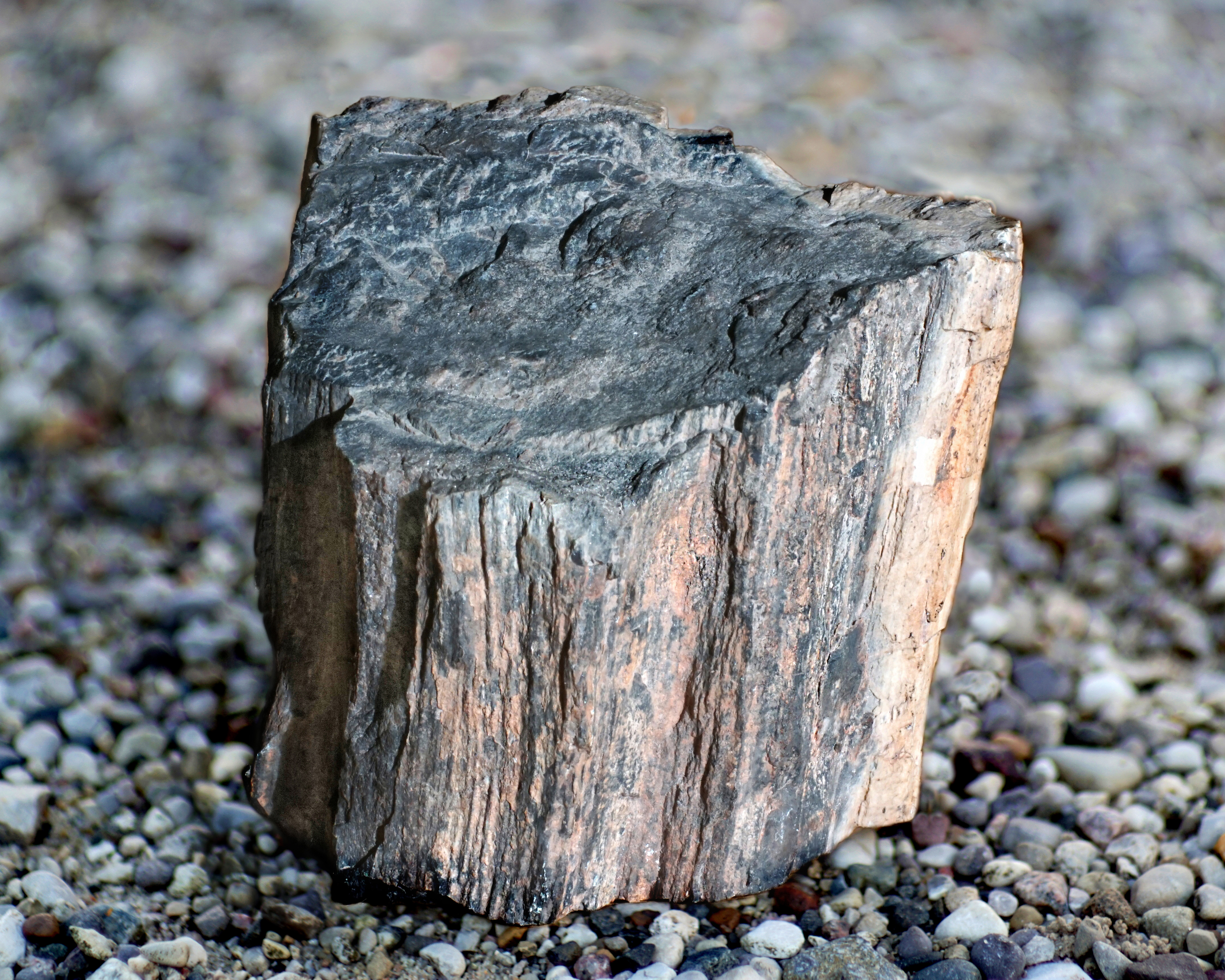
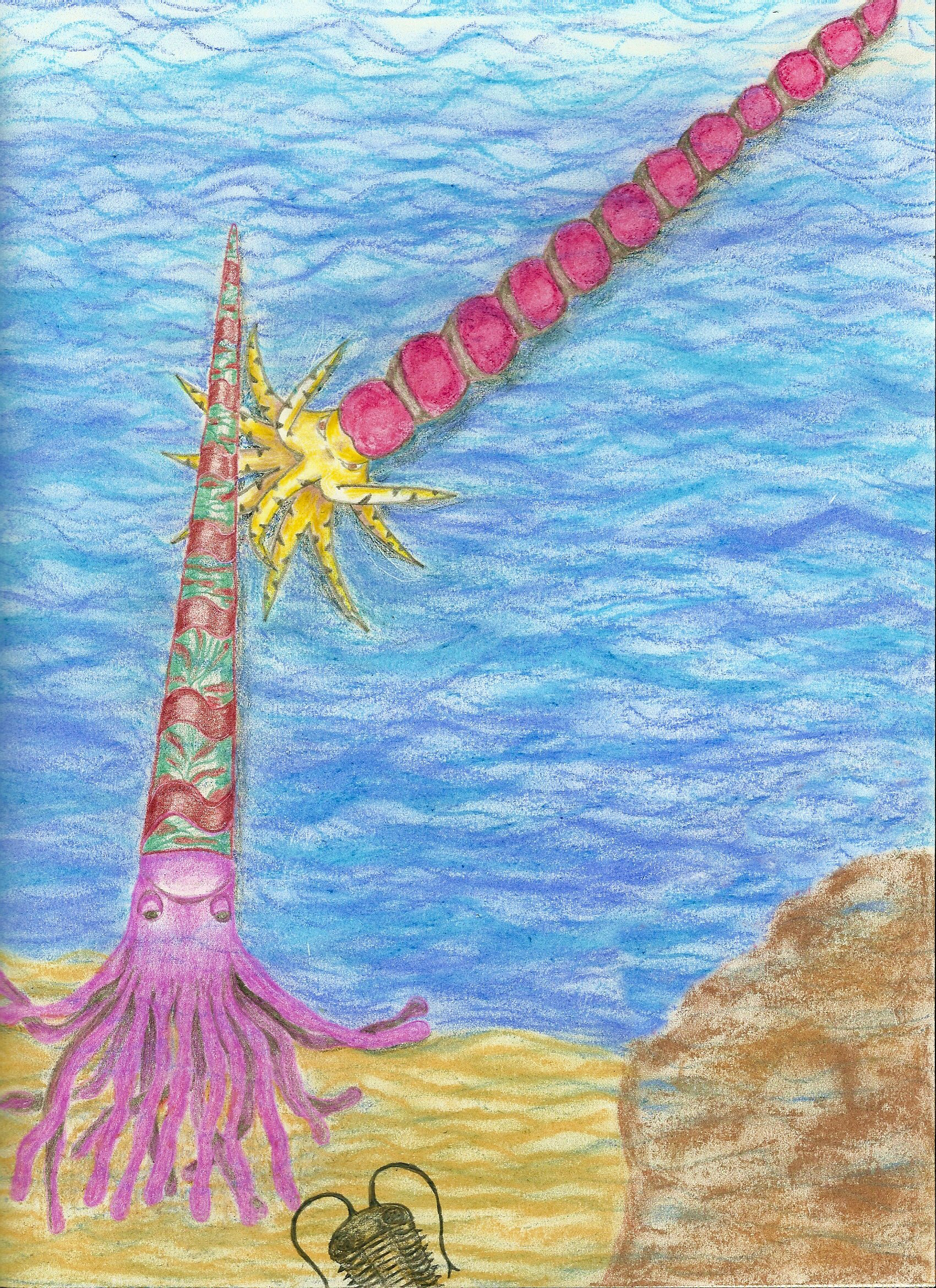
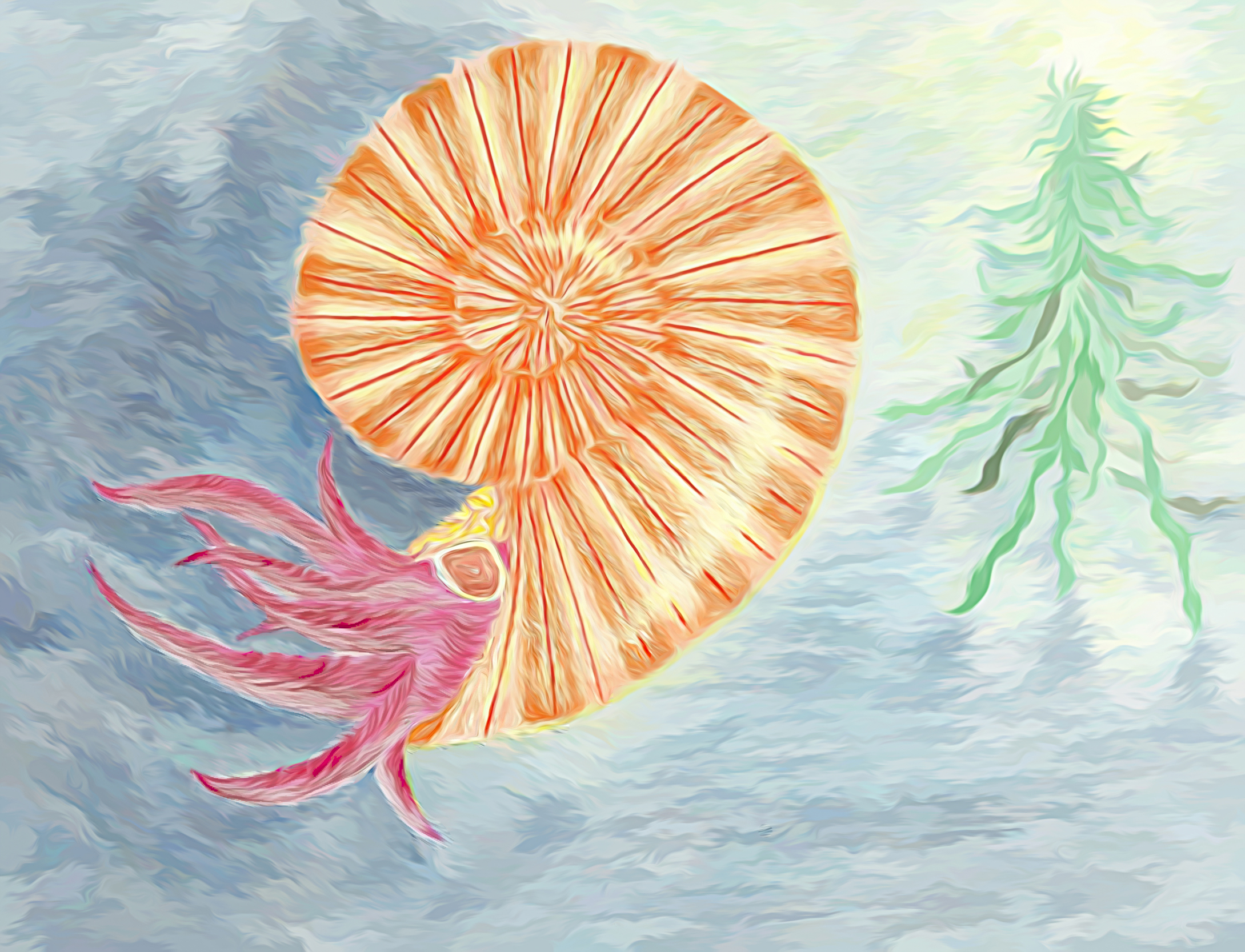
The drawing above is a rendition I drew with colored pencils of Araucarioxylon, arizonicum, an extinct conifer tree identified from the petrified wood from the infamous Petrified Forest National Park located in the U.S. State of Arizona. Originally, it was thought to be a distant relative of the Araucaria tree or the Norfolk Pine, which you often see for sale during the Christmas season as potted plants. Without detailed microscopic examination of the wood, its link to present day trees is only speculation at this point. Modern scientific discoveries indicates there were more species than originally thought lying on the dry Arizona plateau.
Triassic Beginnings
During the Triassic Period, around 225 million years ago, the present day continents were melded together as one supercontinent called Pangea. By the end of the era, around 200 million years ago, widespread volcanic activity began to break the continents apart. The first dinosaurs and mammals had evolved and there had been a boom in cycads (palm like trees), giant tree ferns and conifers . . . enter the Araucarioxylon of Arizona, a type of conifer or pine. It differs from modern day conifers with its sporadic branch growth pattern around the trunk rather than growing in level whorls. It grew up to 200 feet (60 meters) tall with a 9 foot (2.7 m) diameter. Compare that to the tallest current living conifers, the Sequoias, that grow up to 188 feet (57 meters). To help put that into perspective, maple trees reach up to about 50 feet (15 m) and oak trees top out at about 80 feet (24m) tall.

From Tree To Stone
The high and dry tableland in northern Arizona where the National Petrified Forest Park rests, was a vast flood plain during the Triassic Period overflowing with streams and widespread ponds. Prehistoric, extinct plants and trees concentrated along the spilling bodies of water. Dying or blown over trees were washed down the streams into the flood plains where they gathered and decayed. If they were buried under mud, silt or volcanic ash deep enough to cut off oxygen, it slowed the decaying process. Silica laden groundwater gradually seeped through the logs replacing the original wood tissue with silica deposits. As the process continued over the ages, the wood was replaced, atom by atom, with silica crystallized into mineral rich quartz, ultimately turning the wood into a rather attractive stone.
Petrified Wood Colors
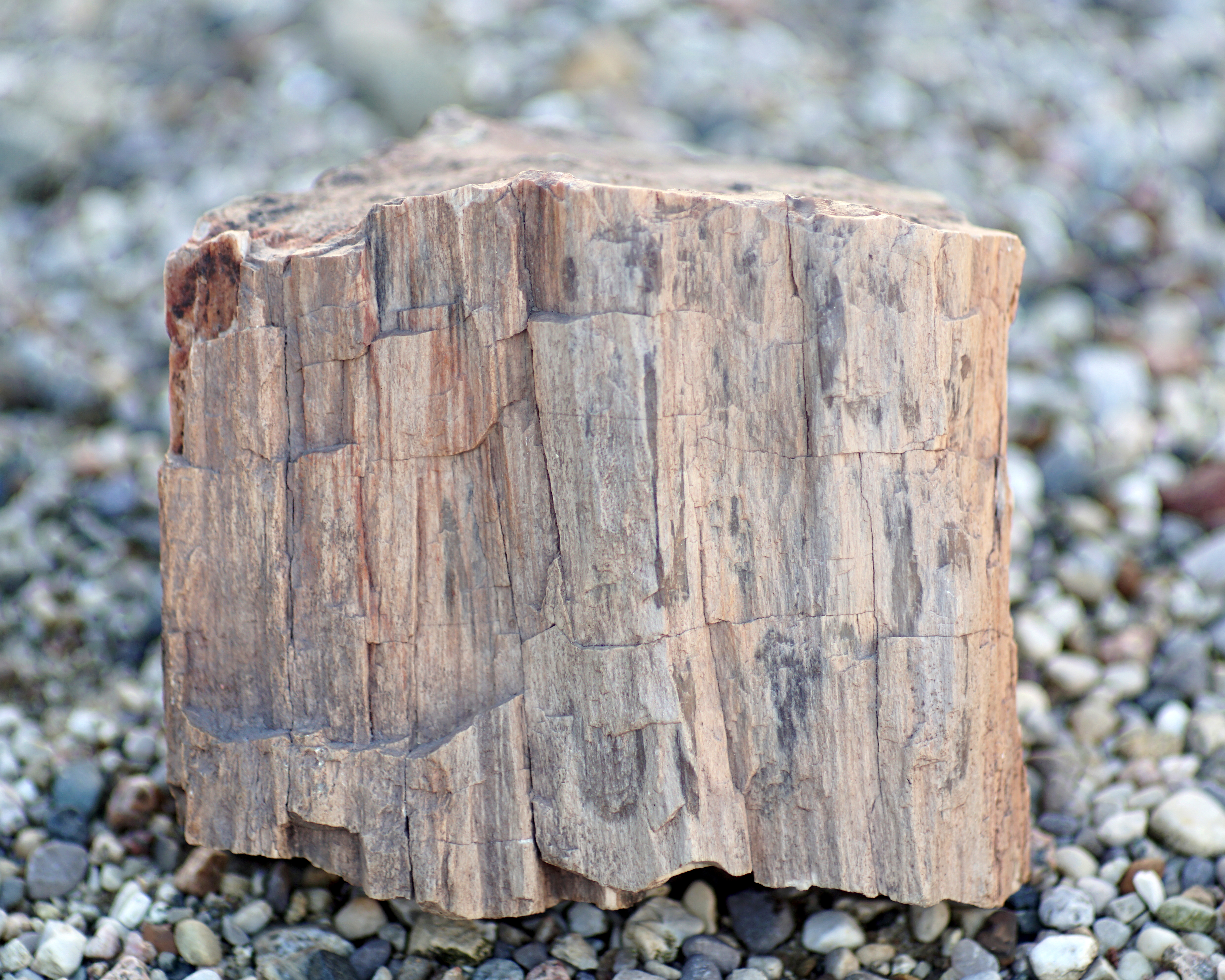
Various colors, often striking, are produced depending on the mineral contents in the stone:
PINK or RED – Hematite present – a form of oxidized iron – This interesting process is well explained from ScienceView.com. Iron dissolves in ground water when no oxygen is present. The ground water becomes re-oxygenated as it moves though the tree trunks causing oxygen to bond with the iron. The iron then precipitates to produce a solid form of iron called hematite. This hematite is incorporated into the log’s cell walls. The same process occurs when iron stains porcelain sinks. The soluble iron in ground water becomes oxidized into a solid form when it comes in contact with air, causing a reddish stain.
YELLOW BROWN or ORANGE – Goethite present- a weathered hydrated iron oxide that becomes crystallized
GREEN – Pure native iron present
WHITE – Pure Silica present – Silicon, Si, and oxygen, O, are the two most abundant elements in the earth’s crust which together form silica dioxide quartz
BLACK – Carbon or Pyrite or Iron Sulfide (the most wide spread sulfide) present – The wood was affected as hydrogen sulfide from decaying organic matter interacted with iron forming pyrite.
PURPLE or BLUE – Manganese present – This is a secondary material formed when water leaches manganese from igneous rock and re-deposits it as a concentration of manganese dioxide.
TAN – Silica Dioxide present – naturally found in water, plants, animals, and the earth
Uplift
How did the petrified wood of Arizona become uncovered? First, millions of years ago, the area sank to the point which completely flooded everything with freshwater sediments. It continued to sink deeper becoming completely buried. Millions of years later, the area was lifted far above sea level from westerly continental plate pressure. The uplift created stresses that cracked the giant logs. Over time, wind and water have worn away the layers of hardened sediments, exposing the fossilized wood.
Lake Michigan Petrified Driftwood
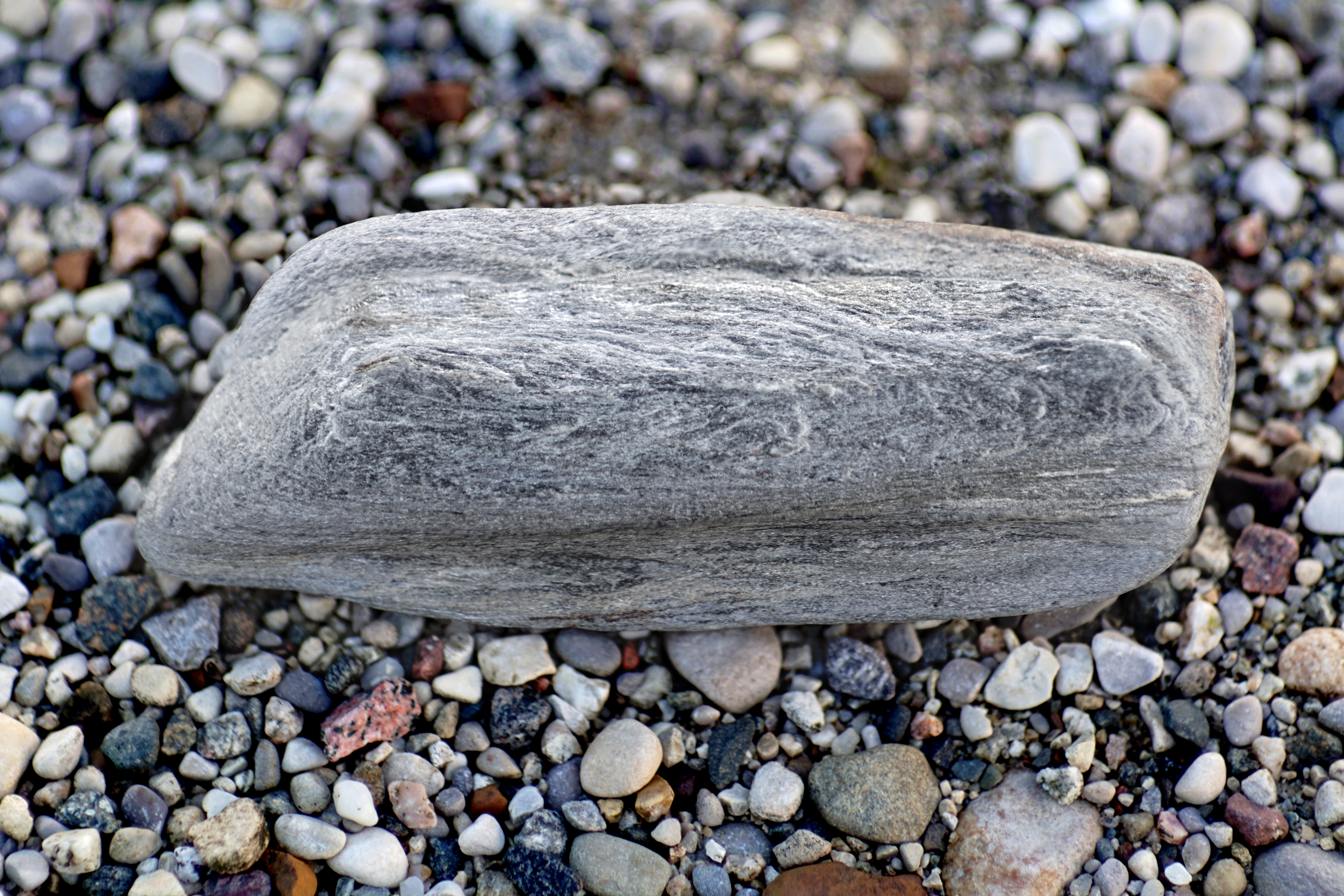
While the Petrified Forest of Arizona has the highest concentration of petrified wood in the world, it can be found in every US state and other countries around the world. I found this sample of petrified driftwood on a Southwest Michigan beach off Lake Michigan called Oval Beach. It’s predominantly gray with a slight bluish green cast and has a few streaks of rust. In certain light, it casts a very bright sheen or luster. It’s difficult to capture the sheen in a photograph, but you can get a better idea from its flip side in the photo below.

After researching the possible mineral contents of my sample, according to its dense property, color and luster, my best guess tells me that it’s hematite specularite. I have collected driftwood on the beach very often, but never before a piece that was petrified!
See a sample of petrified wood of extinct scale trees, from one of my previous posts.
All rights reserved © Fossillady 2022







 Fossil Lady