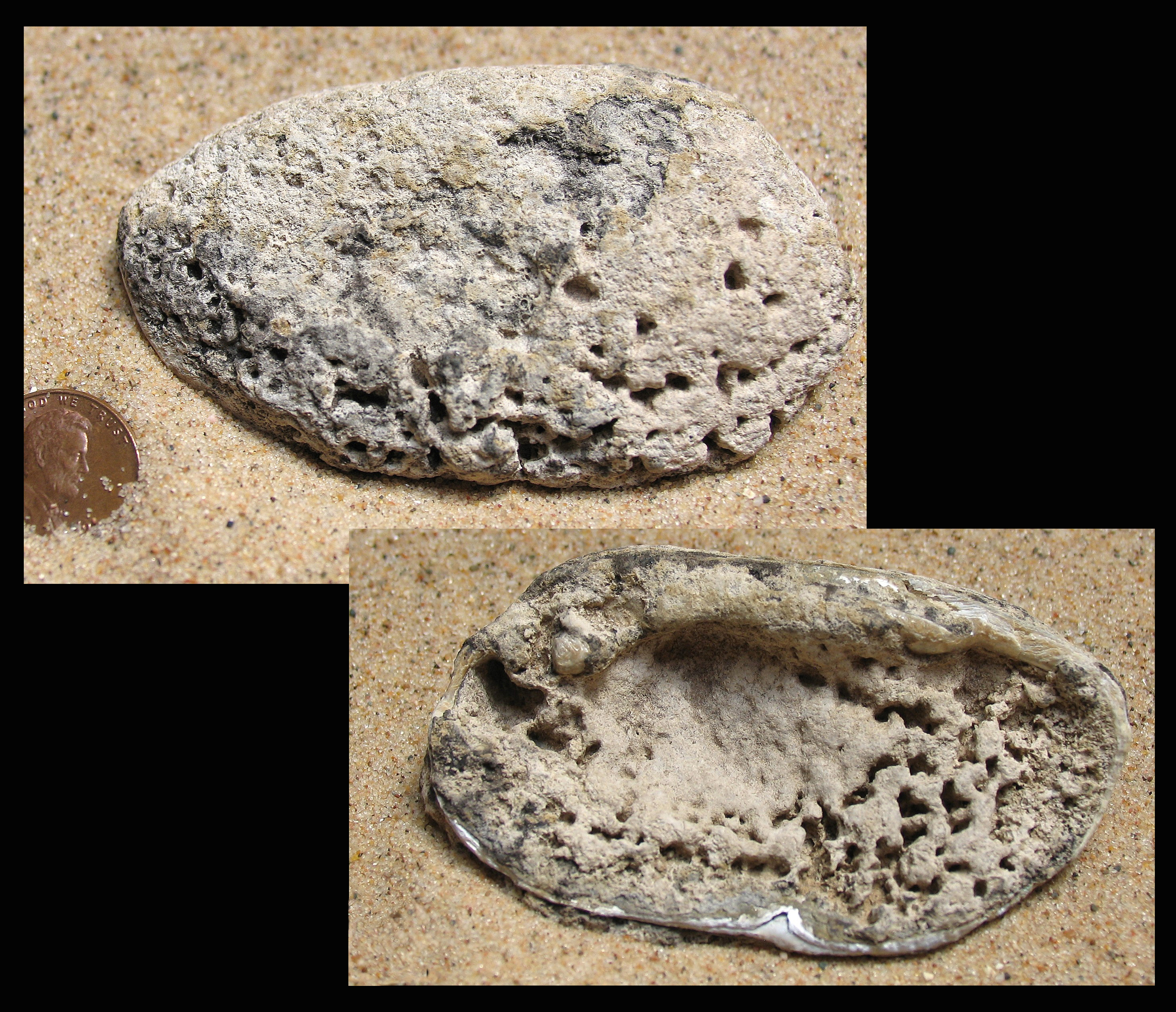
Recently, I found three interesting clam shell fossils on the shore of Lake Michigan, in Southwestern Michigan USA. The first sample shown, clearly reveals the hardened muddy sediment that has completely encrusted its shell.
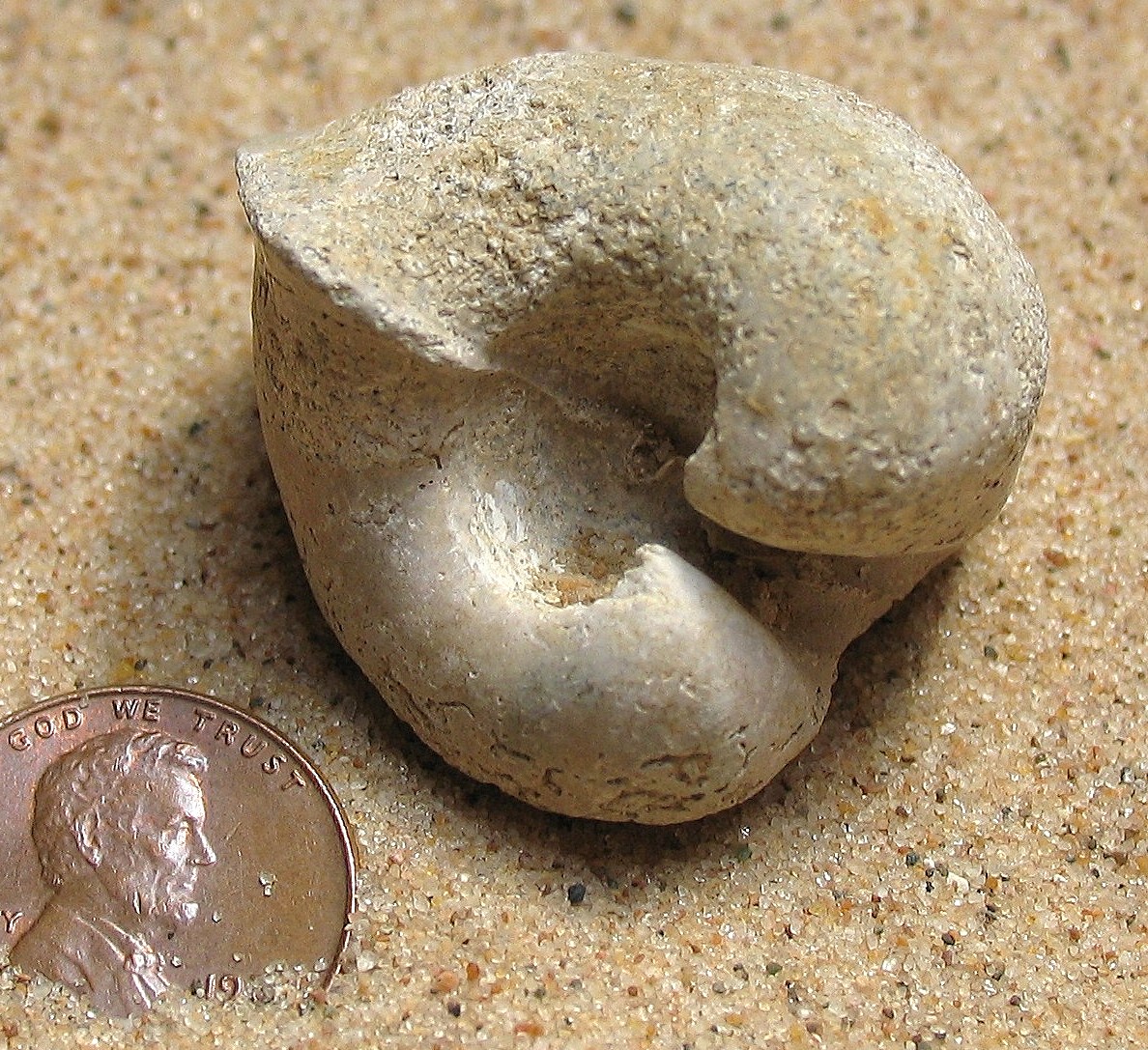
The clam fossil below has been completely replaced by minerals and is petrified to stone. It’s the mold of the original clam shell where sediment filled in the space where the animal’s soft body parts once lived. The smooth surface is a telltale demonstration of Lake Michigan’s sand and wave action.

With the use of two abductor muscles, bivalves or clams, can open and close their shells tightly. Very fittingly, the word “clam” gives rise to the metaphor “to clam up”, meaning to stop speaking or listening.
Clams are distinguished from other mollusks like oysters, mussels, and scallops because they typically bury themselves rather than attach themselves to substrates. Wikipedia
AGES: Clams have occupied Earth beginning as early as the Cambrian Period, 510 million years ago, and were quite abundant during the Devonian Period around 400 mya. According to a Smithsonian study, clams and other bivalves became highly abundant following the Permian-Triassic mass extinction (roughly 252 million years ago), with significant proliferation during the Mesozoic Era, specifically the Cretaceous Period (approx. 145–66 million years ago). During the Cretaceous, specialized bivalves called rudists dominated reef-building, replacing corals as the primary reef architects
- Clam Classification
- Kingdom: Animalia
- Phylum: Mollusk (Invertebrate animals with soft body encased in hard shell i.e. squid, snails, clams, chitons, octopus, nautilus)
- Class: Bivalve or Pelycopod (Animals possessing two uneven halves called valves which are mirror images of each other joined at one edge by a hinge (i..e. oysters, mussels, scallops, clams)
- Common Clam Classifications & Types:
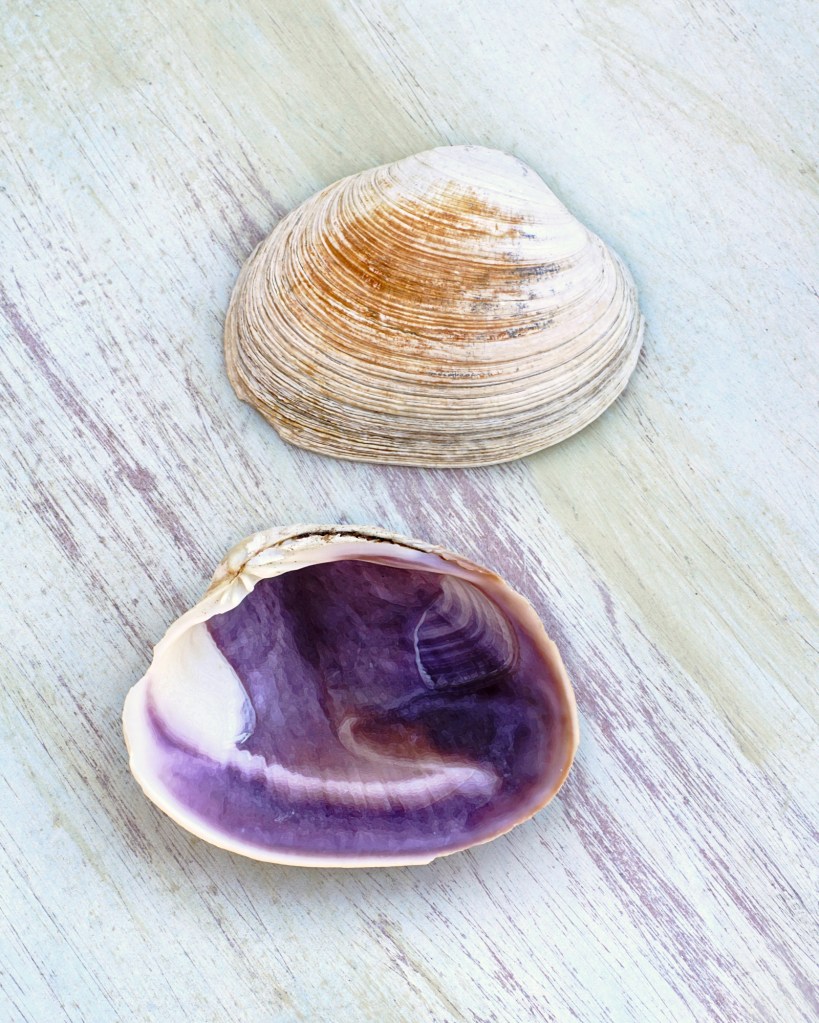
- Hard Shell Clams Quahogs (Mercenaria mercenaria) (See Photo Sample)
- Softshell Clams (Mya arenaria): Known for brittle, chalky-white shells.
- Razor Clams Elongated, narrow shells resembling an old-fashioned razor.
- Geoduck (Panopea generosa): Very large clams with a gaping shell.
Photo Above: Northern Quahog Hardshell Clamshells Mercenaria sp My Seashell Gallery
For more clam photos, drawings and information you can go to another fossillady article HERE.
All rights reserved © Fossillady 2026
 Fossil Lady