Straight-shelled nautiloids date back from the Cambrian Period roughly 500 million years ago and survived into the Late Triassic Period around 230 mya. That’s approximately 270 million years of living on earth . . . overwhelming and astounding! Their fossilized shells have been discovered all around the world in large assemblages commonly occurring in marine limestone rock.
During the 18th and 19th centuries, all the straight-shelled nautiloids were named orthoceras, creating a wastebasket taxon and confusion. To clarify, orthoceras is a specific genus of extinct nautiloids restricted to Middle Ordovician aged marine limestones of the Baltic States and Sweden. And more recently to add to the confusion, orthocone refers to just the straight shell.

The straight-shelled nautiloids were an abundant group of marine mollusk cephalopods that flourished during the Paleozoic timeslot and diminished by the end of the Triassic period into extinction. They are related to modern day cephalopods including octopus, squids, cuttlefish and the nautilus. They were also related to the extinct ammonites possessing coiled shells, which evolved after them. The straight-shelled nautiloids likely were not as agile as their cousin coiled-shelled ammonites. Both species possessed a siphuncle tube that ran through the entire lenght the animal’s inner chambers inside their shells. Each inner chamber was separated by a wall called, a septa wall. As the animal grew, it added another septa wall and a new septa chamber of a larger size.
To move throught the ocean water, the straight-shelled nautiloids and ammonites filled their inner chambers with water by using the siphuncle tube. They then forced the water out which propelled them backward with a kind of jet propulsion. The tube also served as a buoyancy device by releasing the water and leaving air space. This allowed the animal to raise and lower itself through various ocean depths.
The straight-shelled nautiloids possessed 8 to 10 powerful tentacles which protruded from the wide opened end of its shell and out its head. The tentacles detected and captured prey. The animal possessed well developed eyes, a beak and a well developed brain and head with a hood.
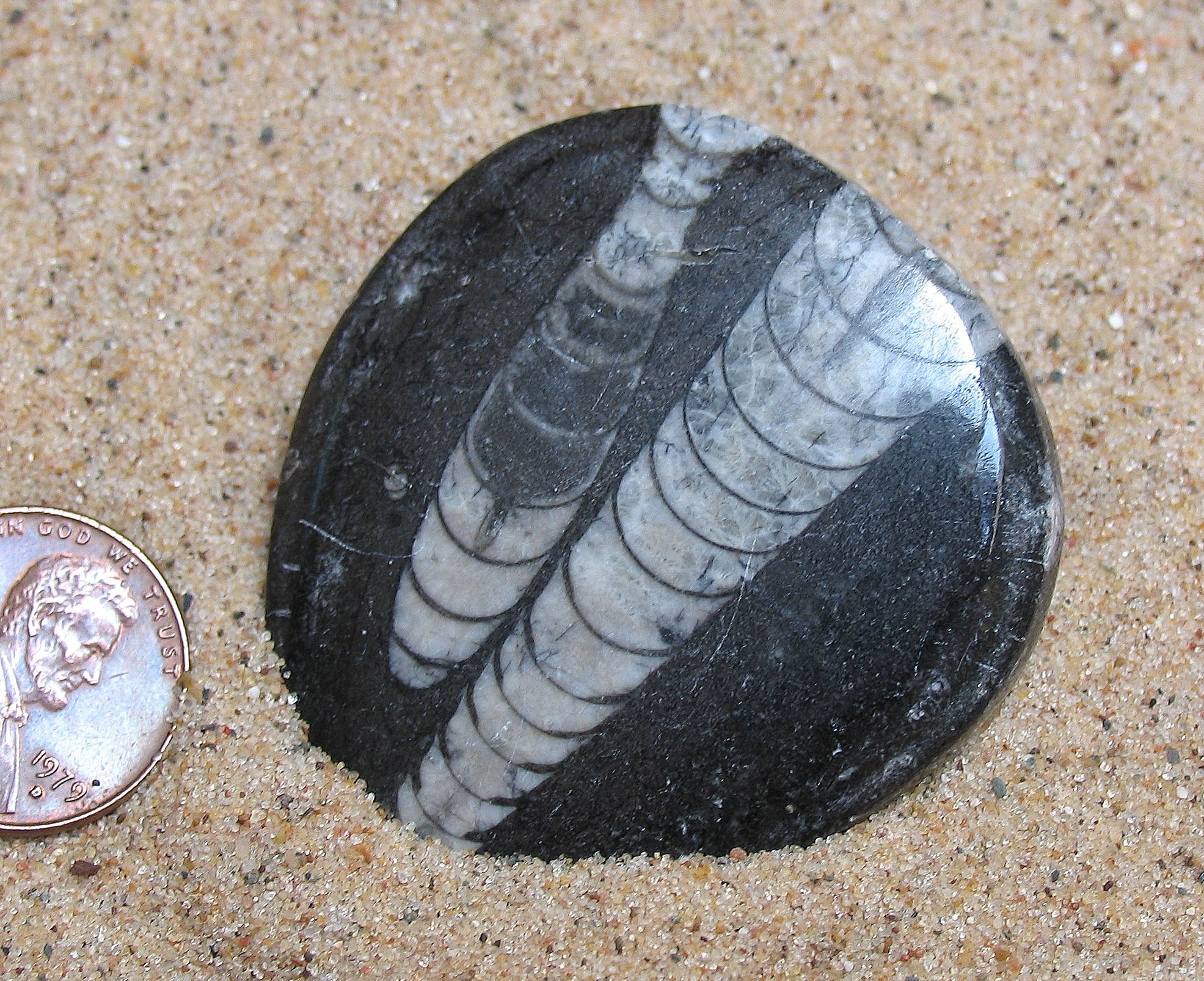
Their fossils have been quarried by Europeans for many years and adorn floors, stairs, jewelry, gravestones and more with their durable and desirable beauty.
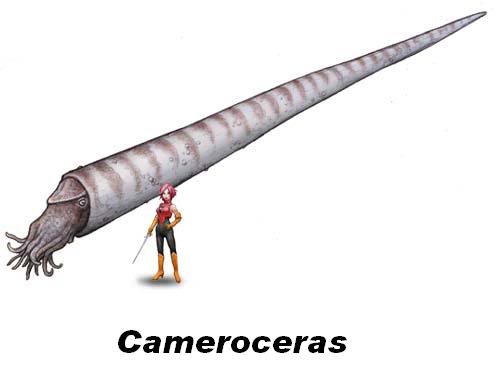
The straight-shelled nautiloids displayed extreme diversity in size from a few inches to 14 feet in length. One of the largest straight-shell giants from the earliest years, Cameroceras, reached approximately 30 feet ( 9 meters) in length.
CLASSIFICATION
Kingdom: Animalia
Phylum: Mollusk (large diverse group of invertebrates with soft bodies encased in a shell i.e. clams, snails, oysters )
Class: Cephalopoda (means prominent head and tentacles i.e. squid, octopus, nautilus, cuttlefish)
Subclass: Nautiloidea (series of chambers of increasing size connected by a central tube)
Order: Orthocerida (extinct group of cephalopods possessing long straight shells)
Family: Orthoceridae (early Ordovician to the Triassic period (approx. 490–200 million years ago) straight horn nautiloids)
Genus: Orthoceras (means straight horn)
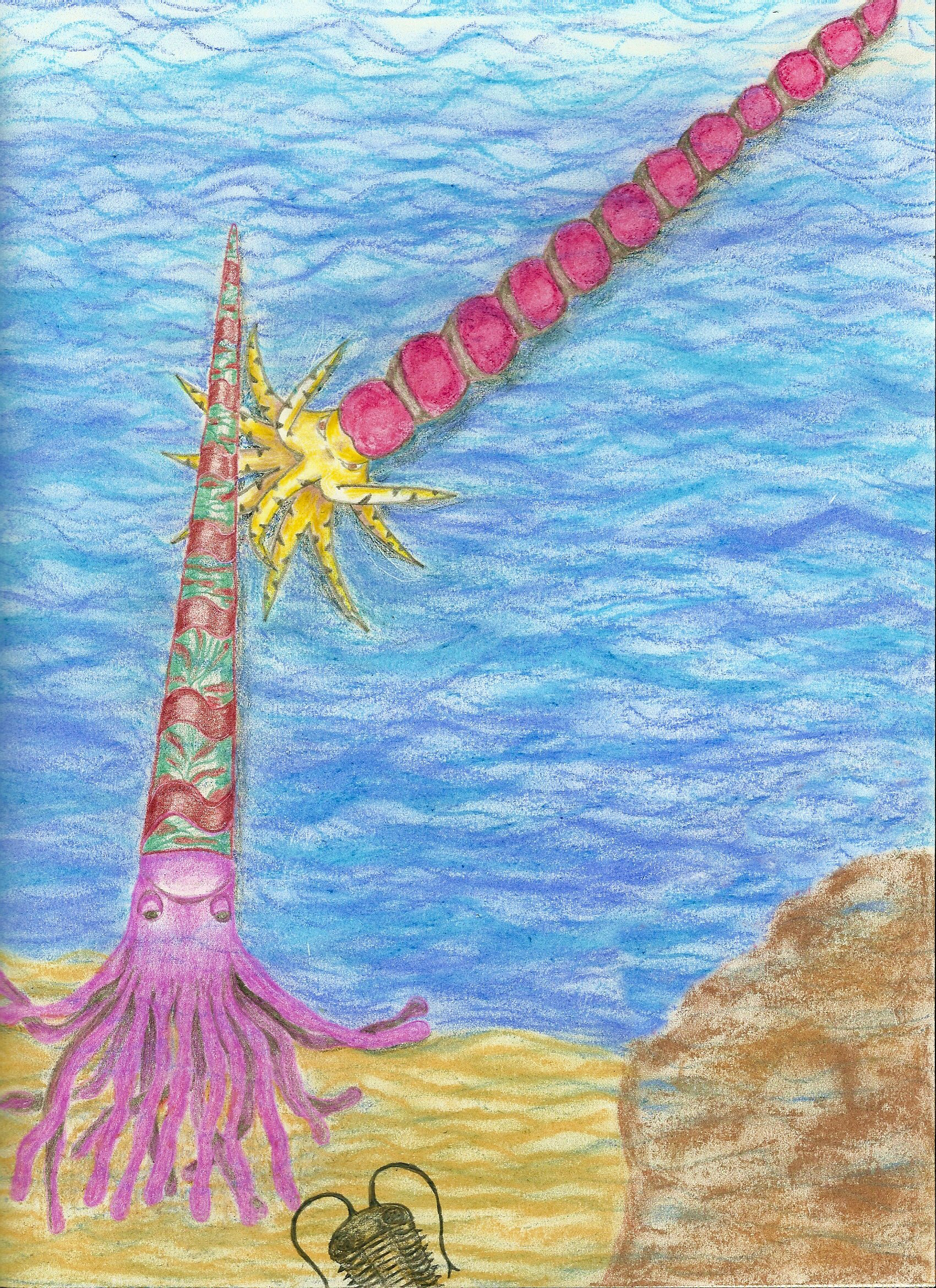
Check out my fiction book, one of two in a series, featuring factual prehistory insights blended with imaginative storytelling that educates as it entertains. Also availabale, a coloing/activity book featuring scenes from both books along with many of the plants and animals that lived during the amazing Devonian Time Period; fossil photos and descriptions included. Perfect for young explorers interested in fossils or young readers who simply like a good story. Ages 11-15+ available on a Amazon.com


All rights reserved © Fossillady 2026
 Fossil Lady