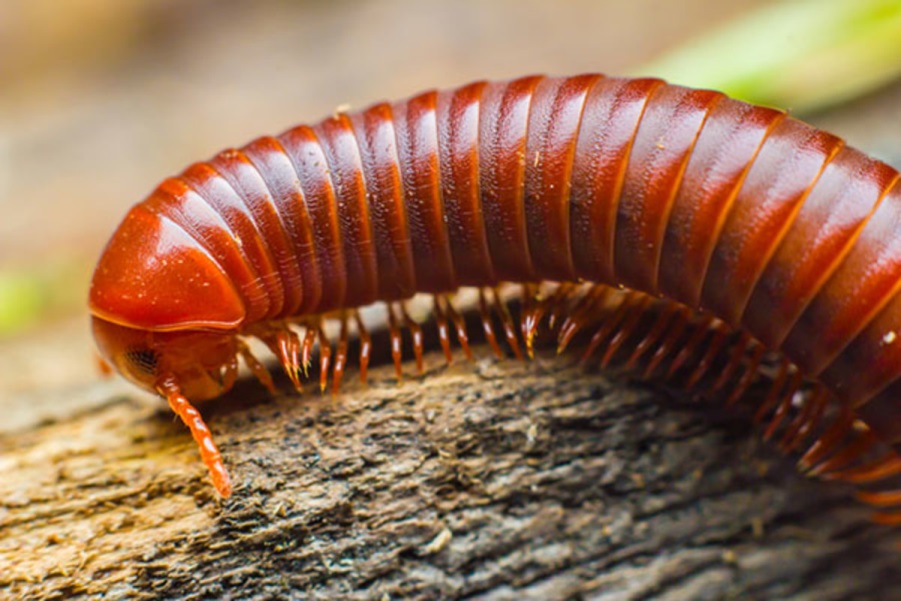
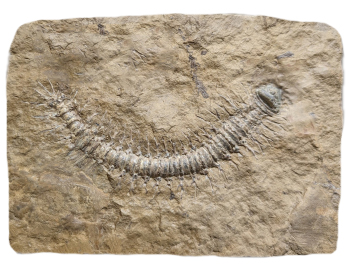
The following story is based on the first complex creature scientists believe to have ventured out from the oceans onto dry land. It happened around 400 million years ago during the Devonian Time Period. That animal is the millipede! As I wrote the story with the purpose of informing and inspiring based on my fossil collection, it evolved into something more meaningful that everyone can determine for themselves!
The Story of the Bravest Millipede
There once was an ancient millipede who was the bravest of them all. He lived during an amazing time period in Earth’s history known for its explosion of life called the Devonian (419-359 million years ago). The era was so full of new life forms that it has been called the “Age of Fish” “Age of Forests” “Age of Vertebrates” “Age of Amphibians,” plus a few more!
One day, the young brave millipede was feeling fed up and angry with the repeated predator attacks upon his kind. Countless weird and new types of ancient deep-sea predator animals began to take over his beloved ocean habitat. Being at the bottom of the food chain put the brave millipede and his millimates more and more at risk everyday! To you and me, their enemies would have been fascinating creatures to marvel at, but the meager millipedes thought of them as cold-blooded beasts.
Day after day, the bravest millipede’s sadness grew to the point where it became overwhelming, especially when he witnessed one of his millimates being attacked by one of their foes. Whenever that happened he was left feeling helpless and only able to scamper under the sandy seafloor to save himself. The millipedes were gentle creatures with few defenses. They would never have hurt even a floating embryo.
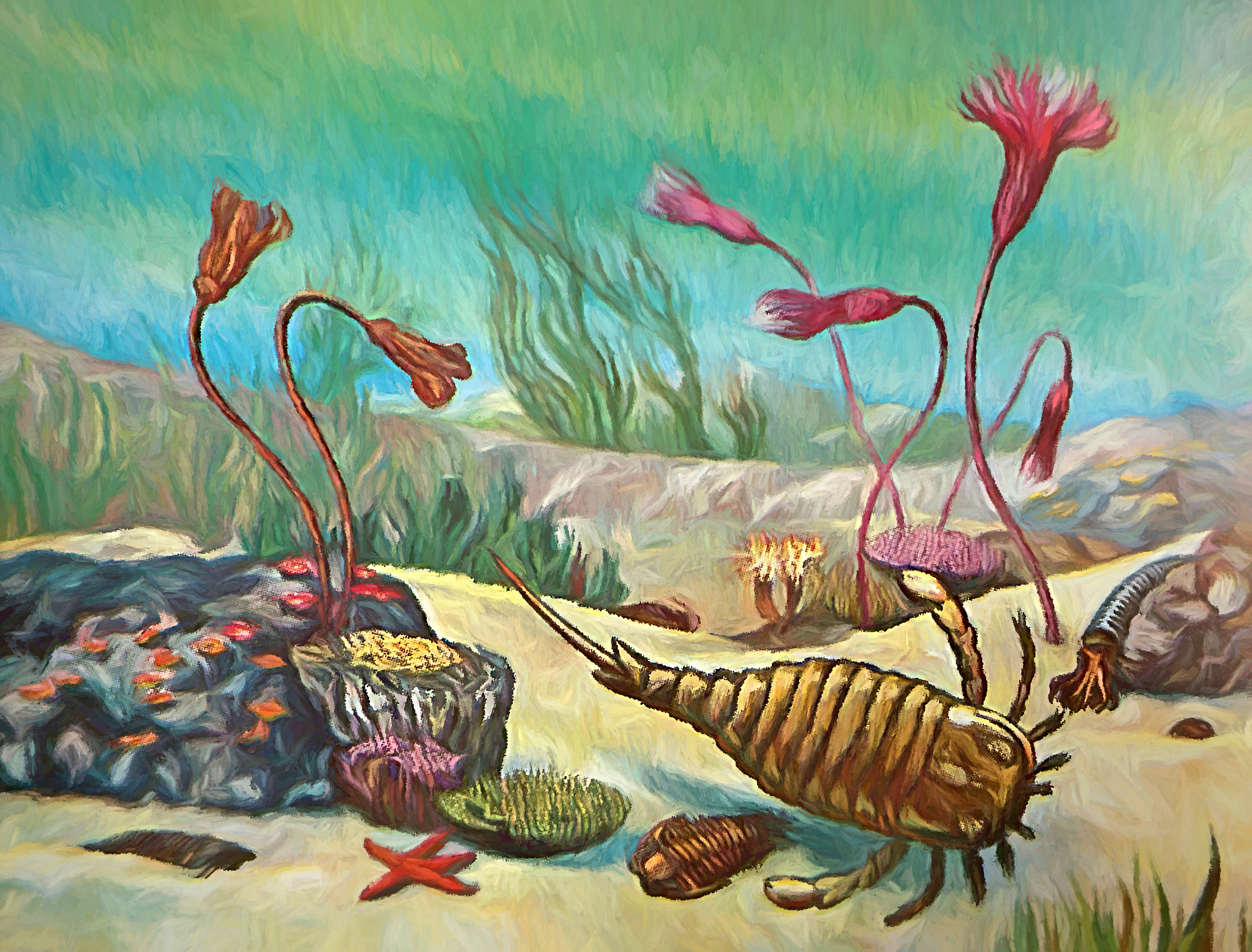
One of the most frightening creatures were the eurypterid sea scorpions with their clamping claws and whipping spiked tails. The sea scorpions were creatures with many alike ‘arthropod’ characteristics as with the millipedes, except they displayed much larger and more powerful segmented bodies. But worst of all, they had an appetite for millipedes.
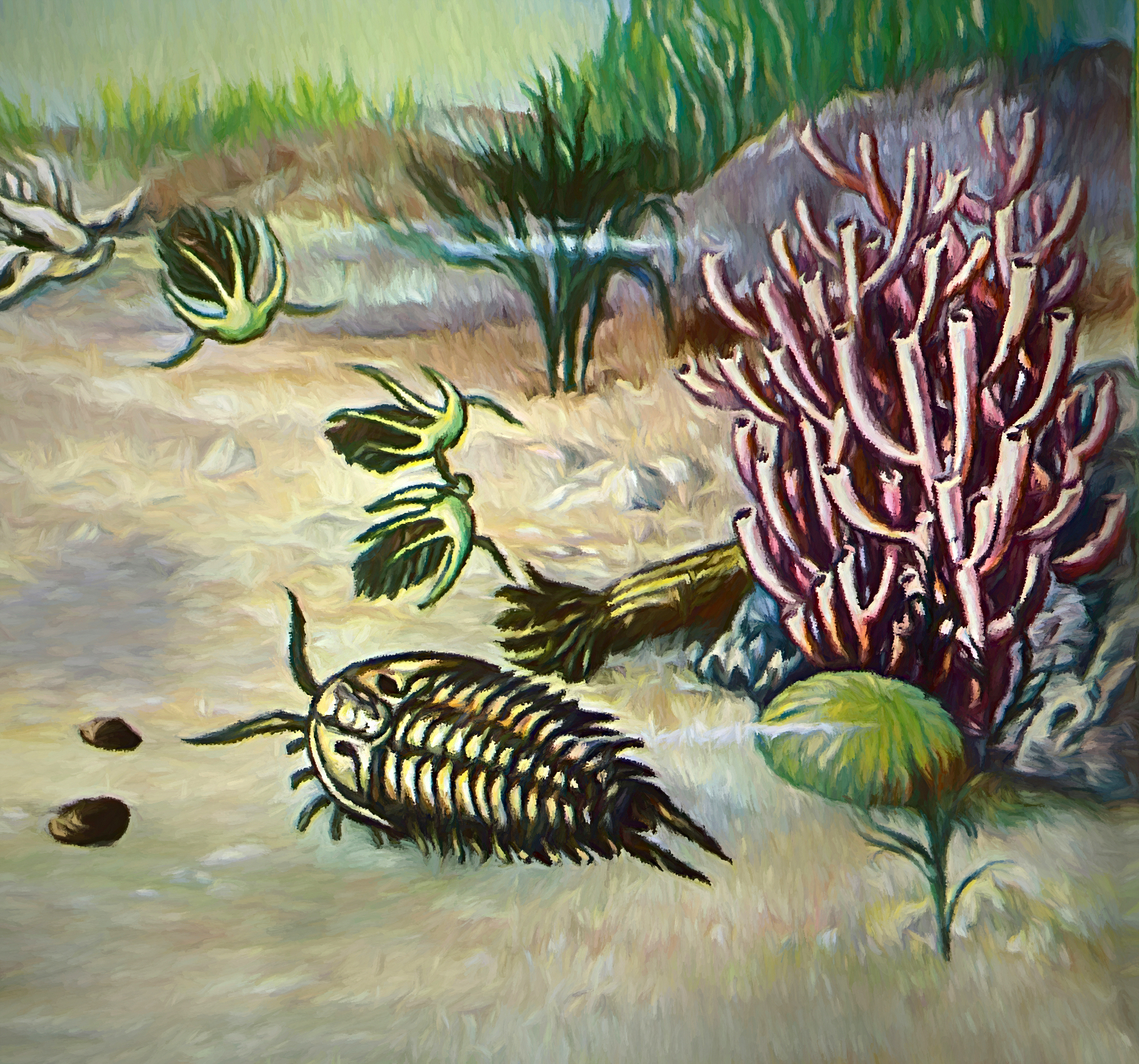
Even certain cousin arthropod trilobites unjustly preyed upon them. Most trilobites were gentle creatures, but a few of their species had adapted predatory skills like that of raptor birds equipped with speed and sharp vision. The harmless millipedes were most defenseless against those types. If one of them spotted an unsuspecting millipede, the innocent millipede seldom had ample time to escape the charge.
The millipedes were simple creatures that spent much of their days milling around on the seabed, feeding on plant matter and a variety of decayed matter which helped keep the ocean habitats clean.
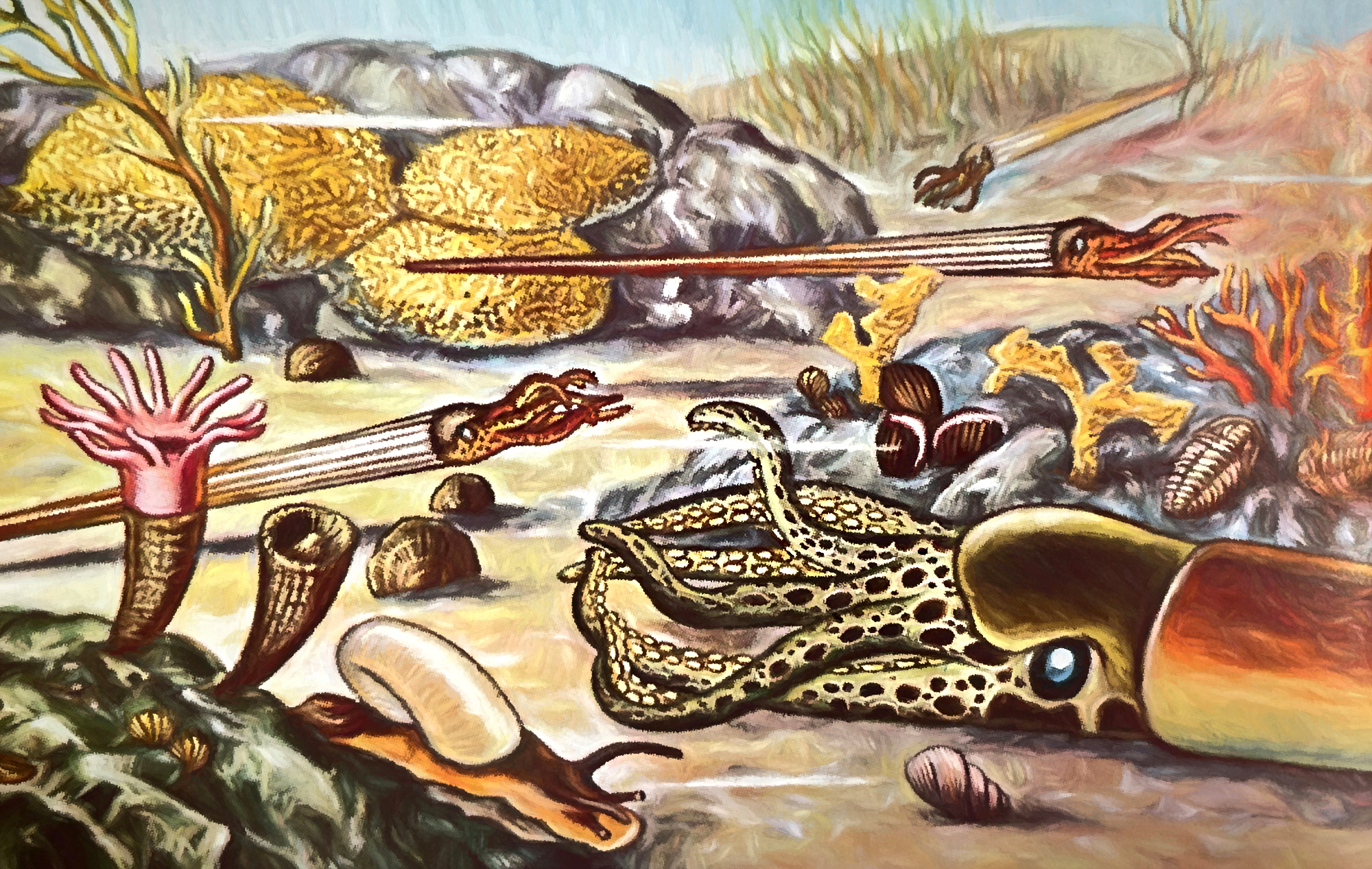
The only Devonian ocean friends that protected the millipedes were a type of cephalopod animals related to octopus’s and squids. They possessed long powerful tentacles and acquired the biggest brains of all the ocean creatures. They were the cephalopod nautiloids that possessed long straight shells. They could crush the hard exoskeleton shells of almost any other ancient sea creature of their time with their tentacles; and they could pluck just about anything into their grip with amazing accuracy. But luckily for the millipedes, they were not a threat and often helped them escape the threats from other creatures.
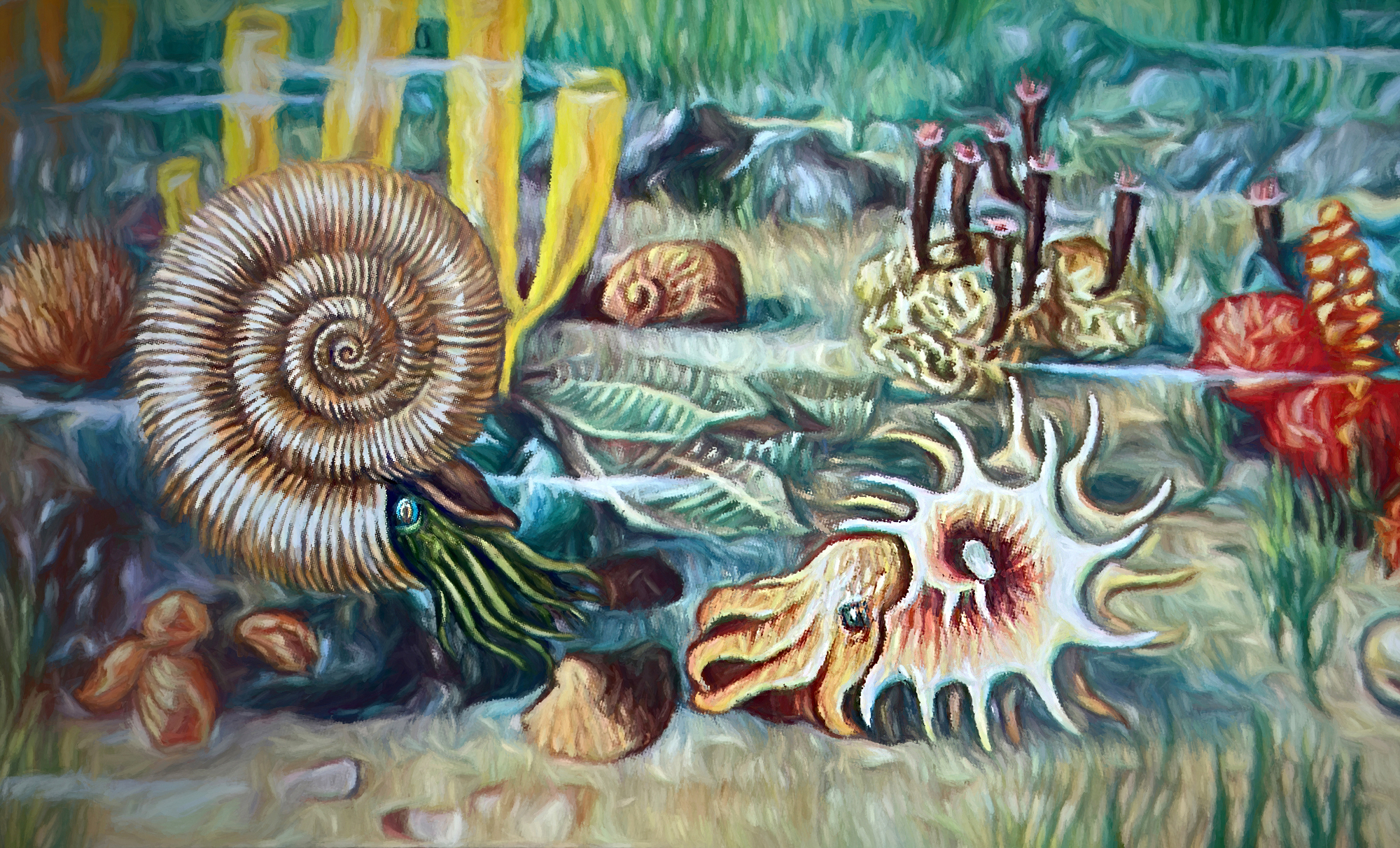
One day, the cousins of the cephalopod straight-shelled nautiloids came along—the cephalopod ammonites. The ammonites had adapted a coiled shell which provided an agility ease of movement superior to their straight-shelled relatives. In time, the ammonites dominated the ancient seas over their cousin cephalopods. From the little millipede’s perspective, the ammonites were a nasty sort. From a human’s perspective, the fossil shells of ammonites have been most intriguing. Their shells possessed inner chambers composed of beautiful patterns and their outer shells were even more interesting and diverse. Both cephalopod species fossils have been polished and worn as jewelry with symbolic meanings or used as decoration since the time of ancient Egypt.
All the brave millipede ever wanted to do was fulfill his role of keeping his ocean territory clean from decayed matter alongside with his millimates. Unfortunately, with the influx of more and more menacing organisms, he feared his kind would ultimately be extinguished unless something seriously changed. Ideas were beginning to stir inside his troubled mind, but he wasn’t ready to act upon them—not quite yet!
The bravest little millipede had never known of anything other than his marine world filled with numerous varieties of invertebrate creatures, all of which lacked a backbone. The final straw for him happened the day the vertebrate creatures showed up. The vertebrates were swift and nimble, but worst of all, many were hungry for millipedes.
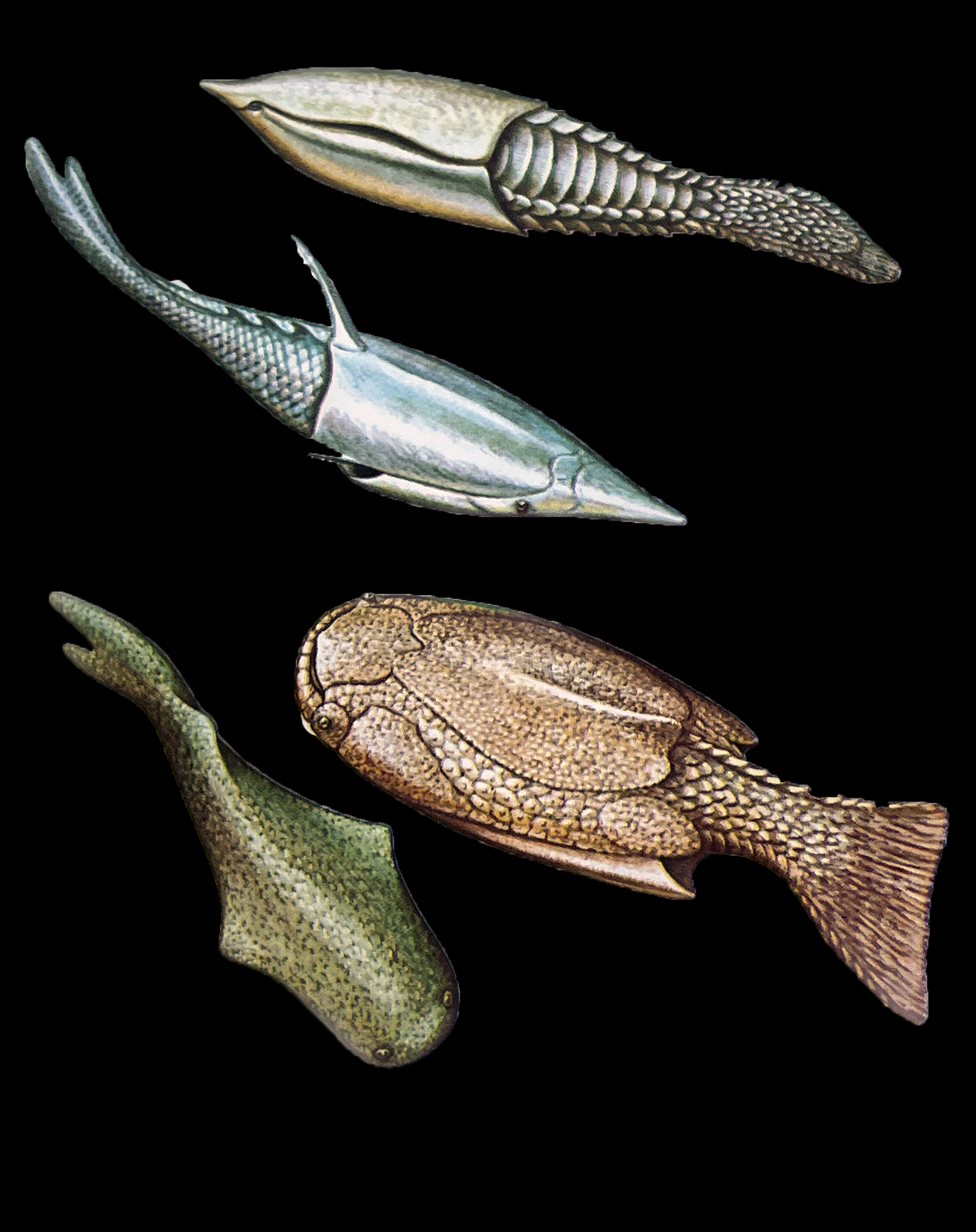
First, came the vertebrate ostracoderm fish with their sleek, slippery bodies layered with armored plates over their upper torsos. Thereafter, the magnificent placoderm fish evolved. Unlike the ostracoderm fish, the placoderms also flaunted a wide assortment of fins and some grew spikes for added protection.
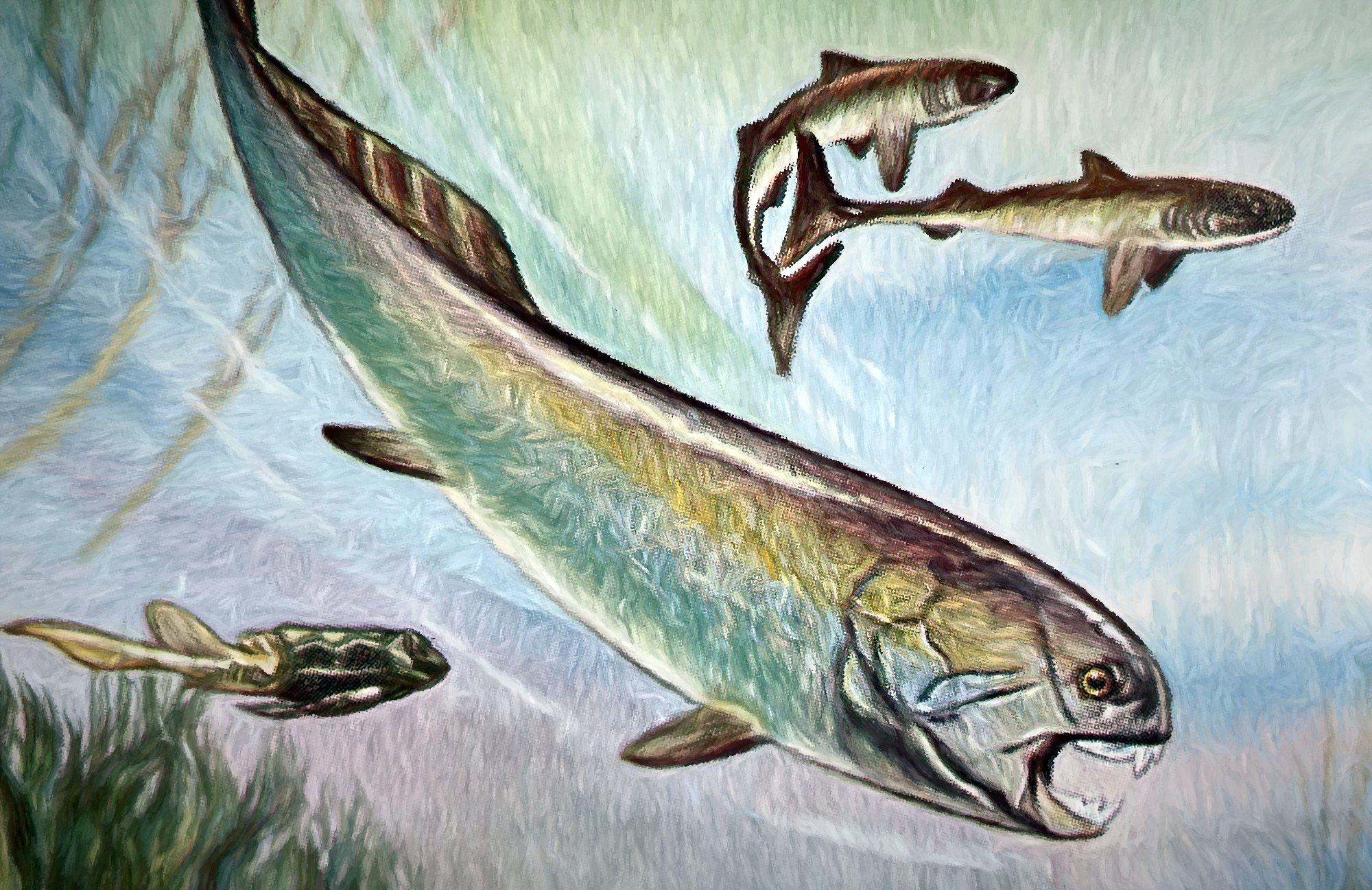
Not only were the placoderm fish yet another marvel of nature, but they were awesome predators with their progressive adaptations of jawbones and boney-blades for teeth, and some reached impressive sizes. Dunkleoteus placoderm was the T-Rex of the Devonian seas. They were another ornery bunch and were the top predators with the ability to chomp down on almost any living creature of their time! But worst of all, their young had an appetite for millipedes!
The little millipede was beside himself and searched deep inside his soul for a solution to his species’ troubles. He consulted with his millimates one by one. He arranged for a millimeeting of the milliminds. They brainstormed, discussed and debated for hours until finally, they all agreed on a split decision.
They agreed that half of the multiple millipedes would remain in the ocean trenches and protect one another by using a newly devised milli-buddy system. A surprising result of the system later became the beginning of milli-marriages! Secondly, it was decided that the bravest millipede along with other milli-leaders were to lead the other half out from the ocean waters to become the first creatures ever to explore the land. Such a prospect was unheard of, but the time had come to take drastic action in order to save their kind. Instinctively, the young and brave millipede’s followers believed in his braininess and knack for problem-solving regardless of his young age.
The day had finally arrived for the momentous march of the millipedes headed to the alien land place. After a long and sometimes treacherous ocean travel, the wise millipede team-leaders had chosen a landing location that curved inland, entering a cool, calm lagoon. Ideally, it avoided the turbulent breakwaters of the Rheic Ocean which bordered the great continent of Gondwana.
The bravest little millipede was the first one to pop his head out from the water’s surface and gaze his eyes upon a flourishing Devonian age landscape. His body automatically took in its first breath of air, applying the use of special tube openings. The air was untarnished and crisp, with an aroma of prolific leaves mixed with a marvelous scent of decaying organic material. It wet his appetite briefly until his eyes were steered higher and higher along the trunk of an ancient Archeopteris (ark ee op teris) tree.
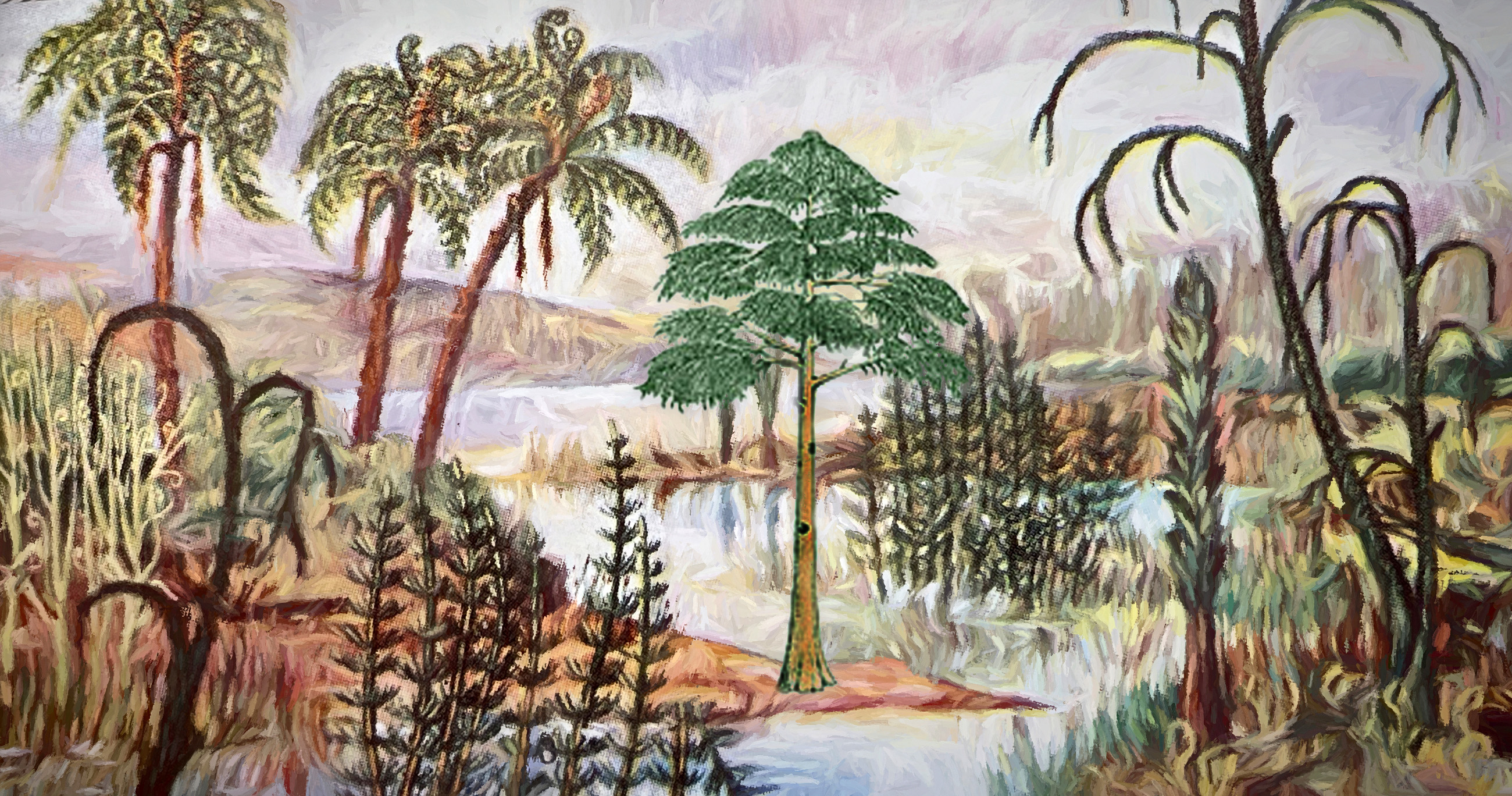
Through the treetop canopy, he witnessed a light more powerful and brighter than he ever knew possible. He was captured momentarily by the shimmering streaks of sunlight filtering through the tree branches and it gave him a comforting feeling that he and his millimates had chosen the right place to start a new life.
Soon, the brave little millipede snapped out of his daze and focused on his mission to crawl out from the temporary safety of the ocean water and onto the unknown world of land. After settling on solid ground, he turned around and provided encouragement for his millitroop friends to take their first-ever steps onto dry land. The millitroops were pleased and a bit surprised by how the ground was beneficially moist. It was due to the hothouse climate that recycled warm, moist air on a continual basis and dripped it back down to the earthen terrain.
The millipedes didn’t know it, but they had stepped into one of Earth’s first forests flourishing with spore-bearing fern-like trees, wispy shrubs, spreading mosses, and spiky herbaceous plants. And off in the distance beyond the lagoon, the bravest millipede admired another grouping of tree varieties that hovered nearest water pools called scale trees with interesting outer bark-like patterns.
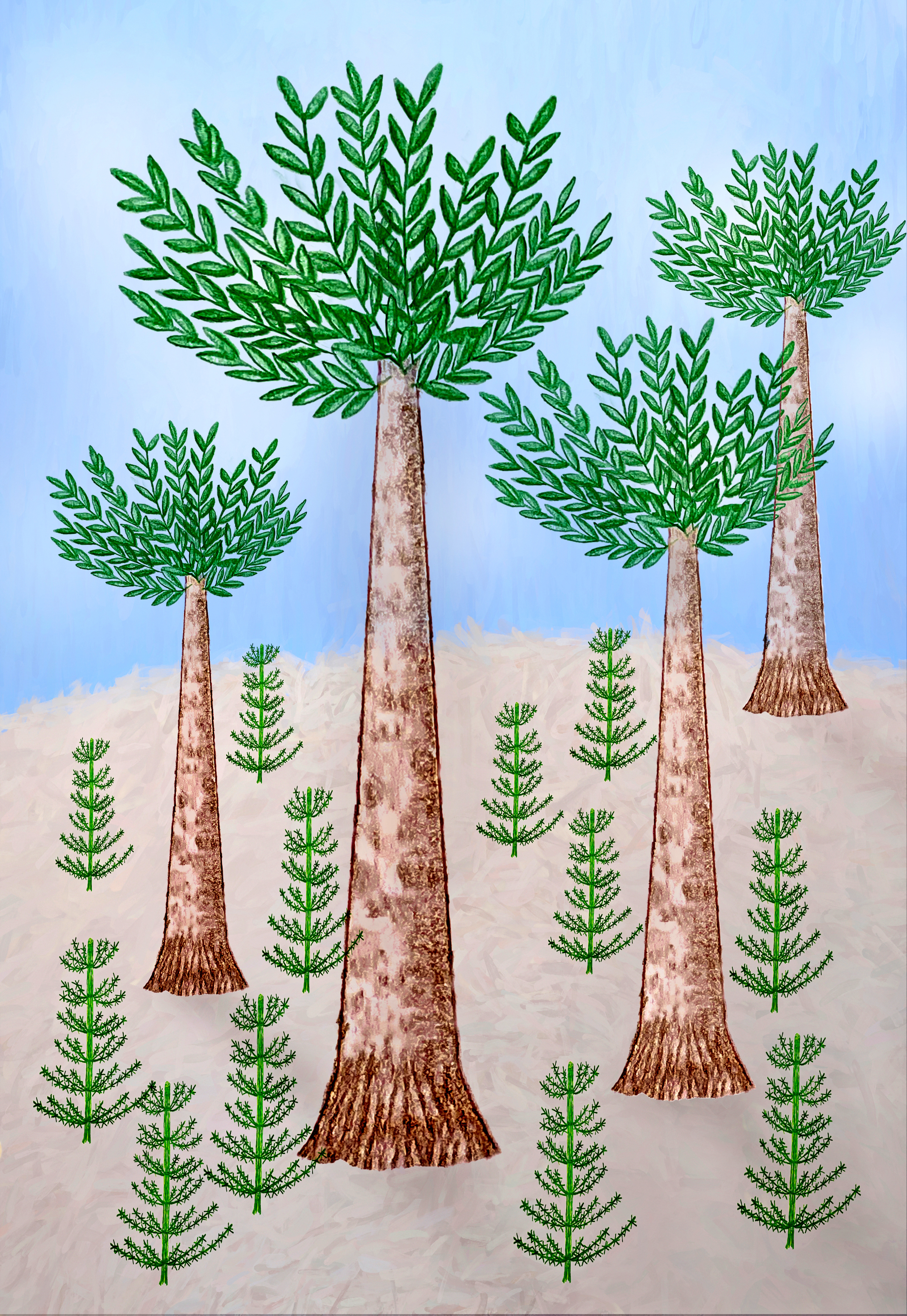
Suddenly, something spooked the troops and the peaceful scene drastically changed when the multitude of millitroops quickly scurried into the underbrush for protection—all but the bravest one. He had set his sights up above, fascinated by the giant trees, some of which reached 80 feet towards the sky. The Archeopteris trees dominated the forest and provided shade that protected the pioneer millipedes from the heat and intense ultraviolet rays of the sun. Other midsize fern-like trees sealed the shady environment.
As the millipedes settled into their new lives on land, the forest provided plenty of plants and decaying nourishment for all to eat and eat and eat, plus, there was plenty of oxygen in the air to breathe, even more than today. The brave millipede and his millimates eventually grew bigger and stronger. The efforts and risks they had taken rewarded them with the happy lives they so desperately and bravely had sought and fought for, but the absence of predators was the bonus they had especially so longed for!
Days passed by, weeks and months; life was good for the young millipede and his millimates. Everyday of the bravest one’s new life, he climbed his favorite tree and looked beyond at the peaceful scene to thank the powers that be. What began as his original thoughts to help save his kind, turned into words discussed with his millimates that transformed into action, teamwork and cooperation, which ultimately created a better life for him and his kind! Ironically, of all the creatures that threatened his species’ very existence, his species has survived the longest and that part is indisputable!
The End
All rights reserved © Fossillady 2026

