Get me outta here!

Fossil Lady

Eager to share my fascination with fossils, rocks and seashells!

Menu

Skip to content
  • Home

Author Archives

Fossilladyhttps://fossillady.wordpress.comThis is where I combine my photography and writing to share my fascination with fossils.
Fossillady's avatar

4. Low Relief Lettuce Coral

February 12, 2014 by Fossillady
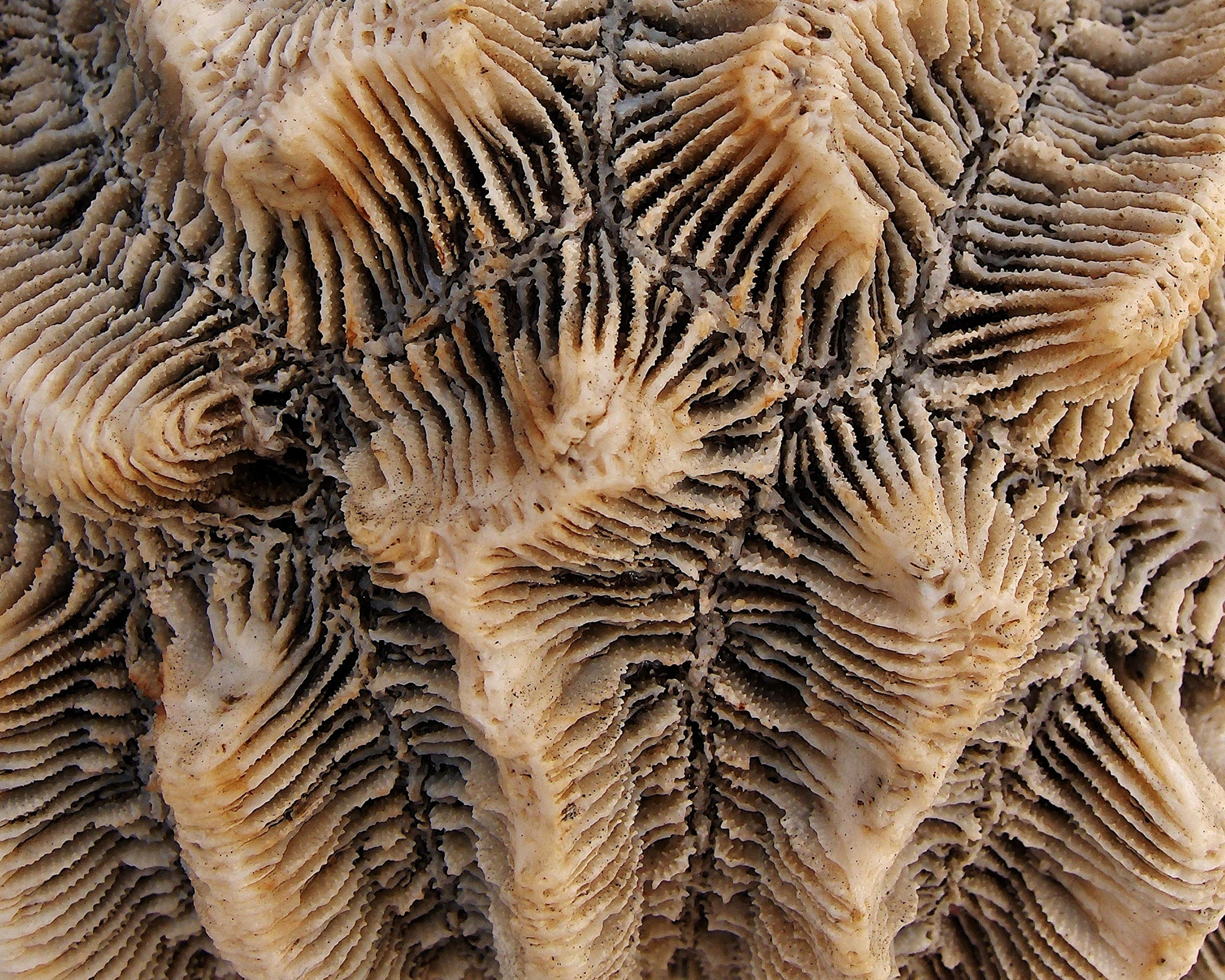
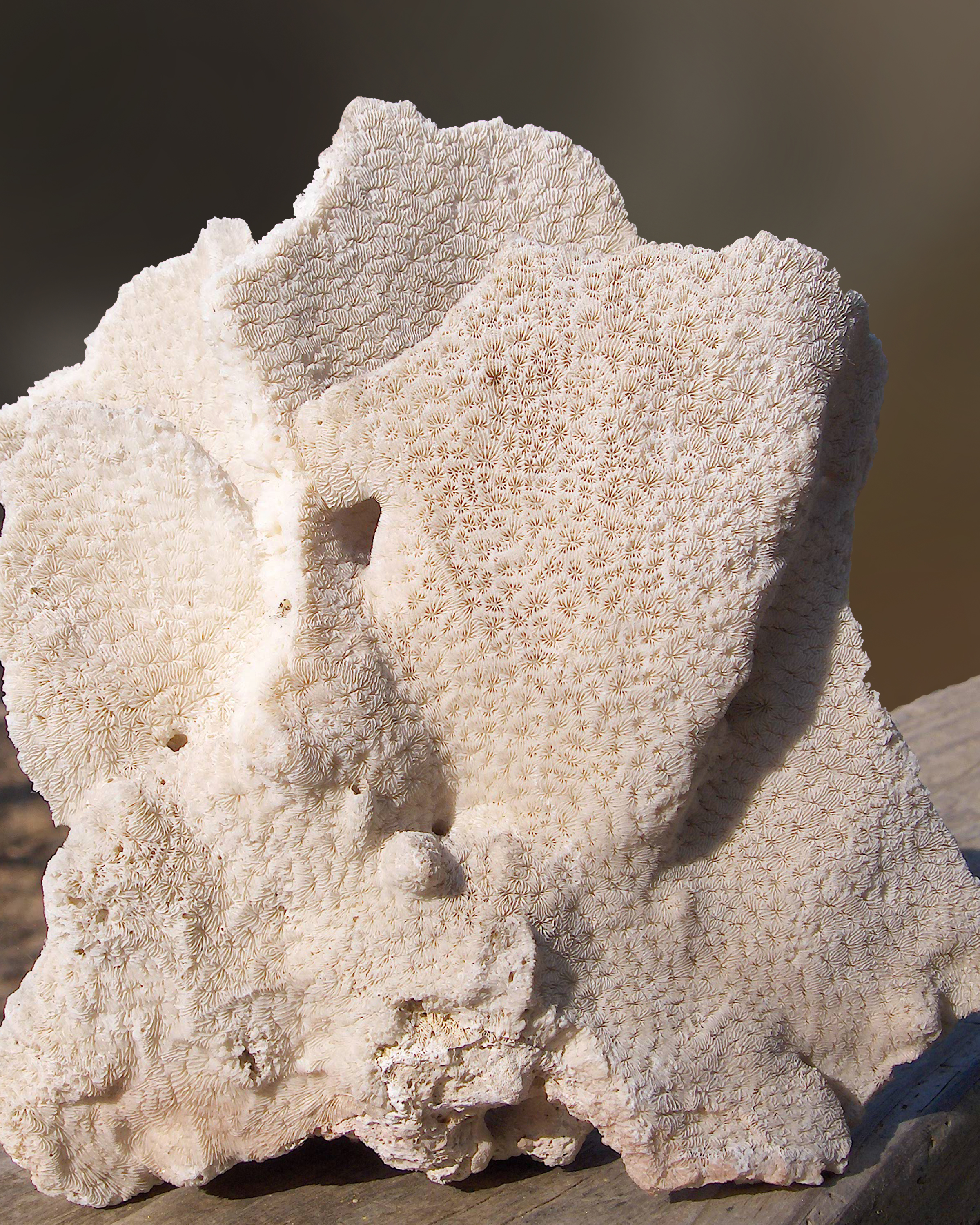
Low Relief Lettuce Coral Fossil (Agaricia, humilis)
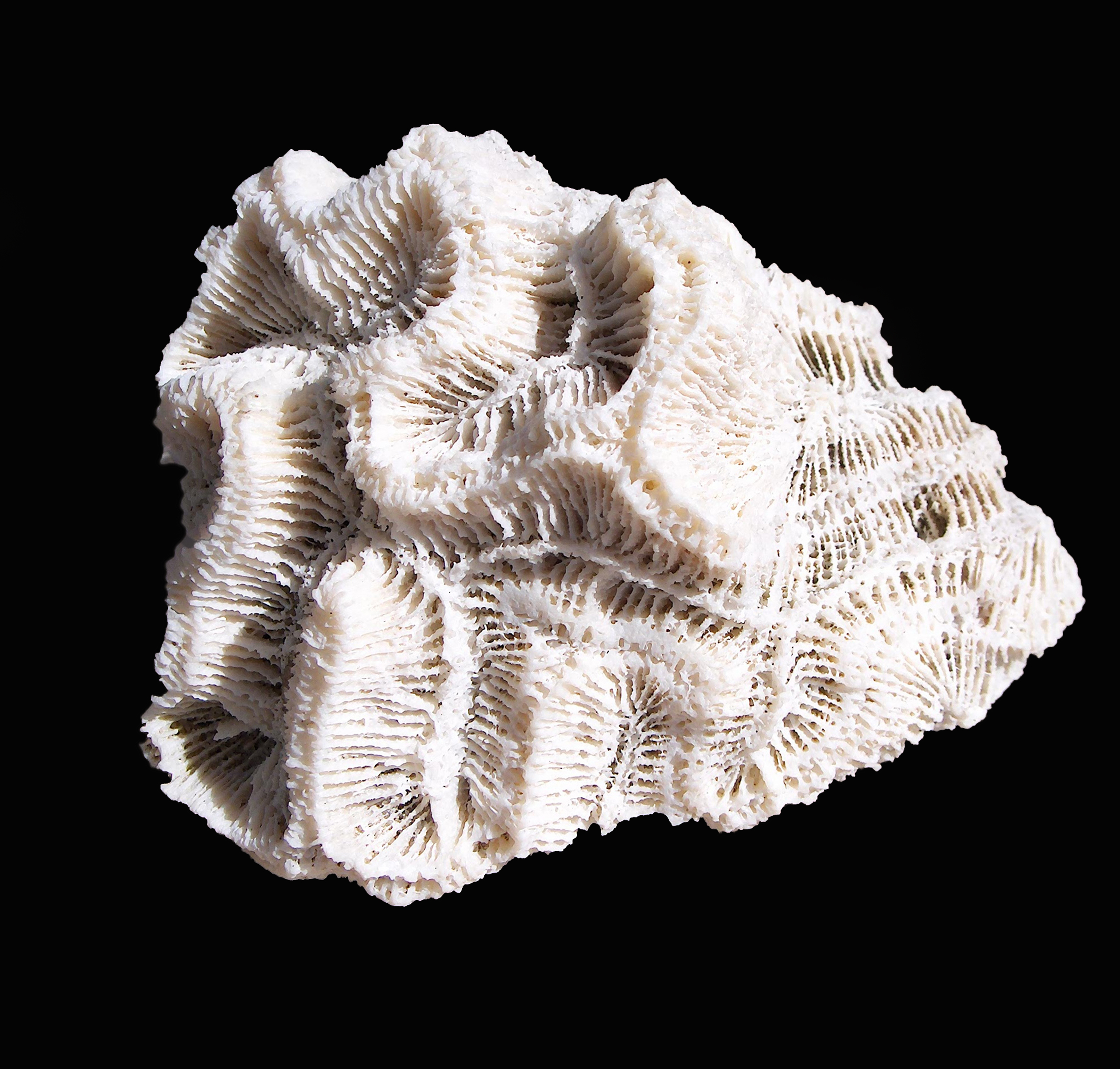
Low Relief Lettuce Coral Fossil (Agaricia, humilis) Fossil Skeleton

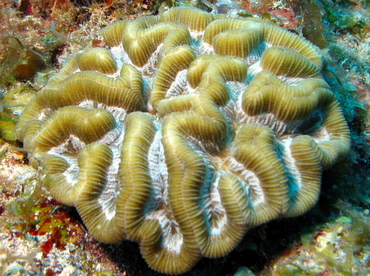
Low relief lettuce coral is fairly common with a widespread distribution in the open seas of the Caribbean, Bahamas and Florida, often scattered among other corals within inner bays and sometimes within mangrove roots. It can thrive from shallow sea levels to the lower depth limits of the reef, approximately 60 meters (200 feet) deep. It shows a number of growth forms, such as appearing saucer-like on cliff sides or small half-moon shaped in shallow depths. In depths deeper than 10  meters (3 feet), the coral forms broad vertical scales with corallites on one side only.

Low Relief Lettuce Coral
Low Relief Lettuce Coral (Agaricia, humilis) Living Sample
Source

CLASSIFICATION:

  • Kingdom: Animalia
  • Phylum: Cnidardia (C is silent) Marine group with stinging cells
  • Class: Anthozoa – Flower Animal
  • Order: Scleratinia – Reef building stony corals
  • Family: Agariciidae – includes cactus corals, elephant skin corals, plate corals and lettuce corals. Members of the family include symbiotic algae called Zooxanthellae in their tissues which help provide their energy
  • Genus: Agaricia – lettuce corals
  • Species: humilis – low relief
Winkie, Joe, Johnny and Joey
Winkie, Joe, Johnny and Joey, 1950’s


As I mentioned in previous posts, my mother in law, Winifred (Winkie) loved collecting coral during Florida vacations in the 70’s and 80’s. My late husband, Joseph III, came from a hard working family in the 50’s living in Detroit. His dad, Joseph II, was a designer for Chrysler Corporation and designed an amphibious vehicle used in WWII.    

I feel honored to have samples from her coral collection and am excited to share them with you. She would have been thrilled by this.  

All rights reserved © Fossillady 2025

Share this:

  • Share on Pinterest (Opens in new window) Pinterest
  • Share on Facebook (Opens in new window) Facebook
  • Print (Opens in new window) Print
  • Email a link to a friend (Opens in new window) Email
  • Share on LinkedIn (Opens in new window) LinkedIn
  • Share on Reddit (Opens in new window) Reddit
  • Share on X (Opens in new window) X
Like Loading...
Corals Florida Florida coral fossilLow Relief Lettuce CoralLow Relief Lettuce Coral classificaitonLow Relief Lettuce Coral Factslow relief lettuce coral fossil

5. Cactus Coral Pavona

February 9, 2014 by Fossillady
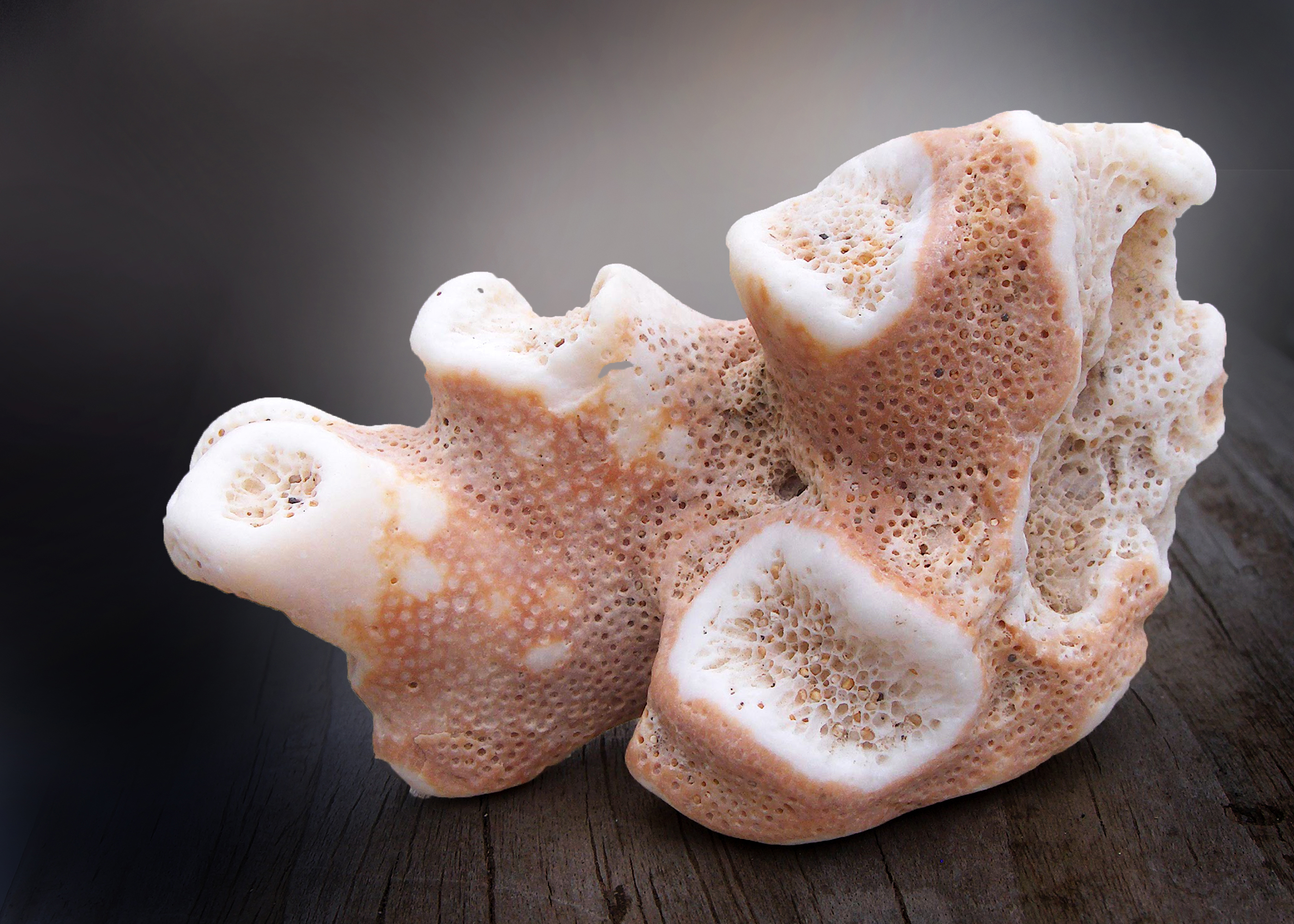
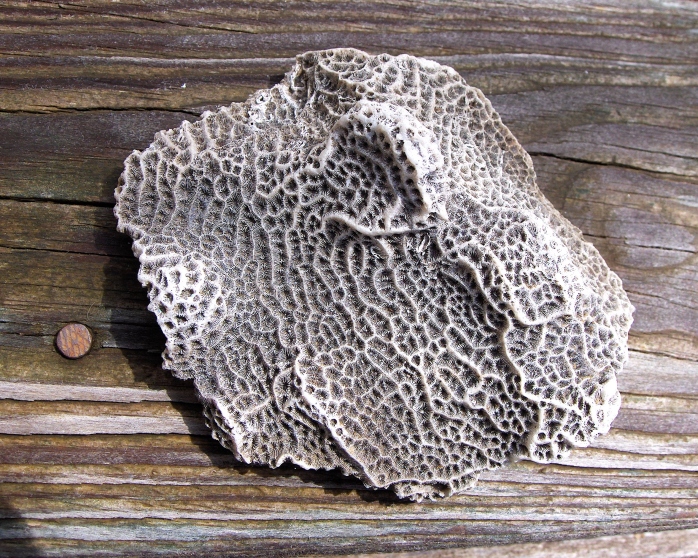
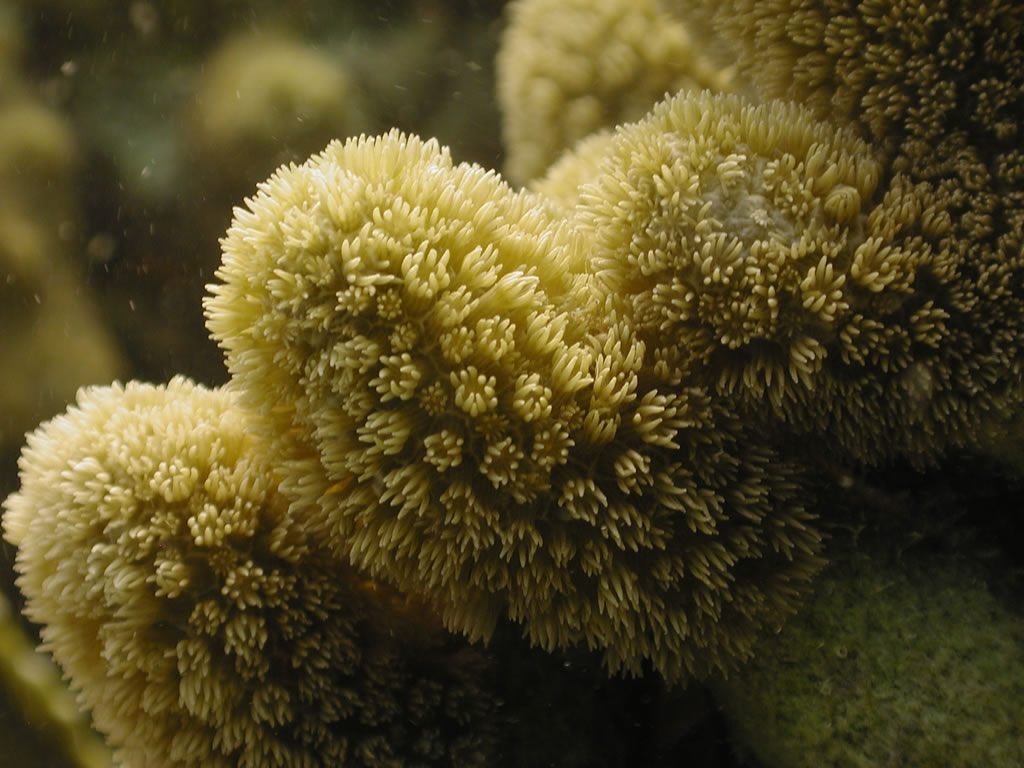
Fossil Skeleton Shows Closely Spaced Polyps of Cactus Coral (Pavona)

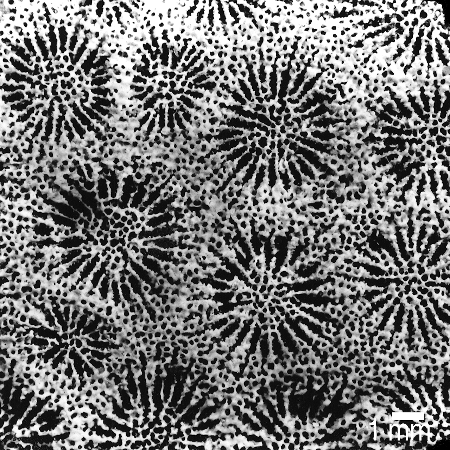
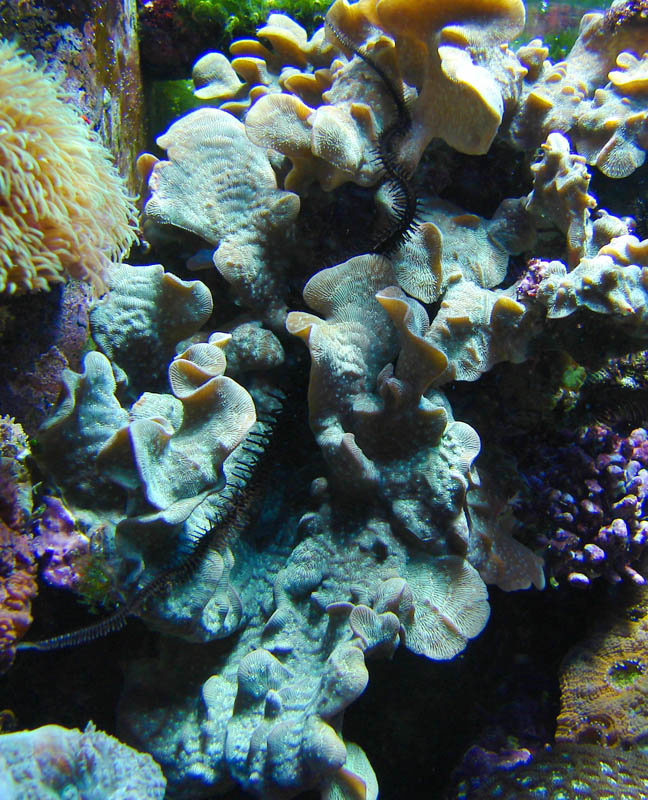
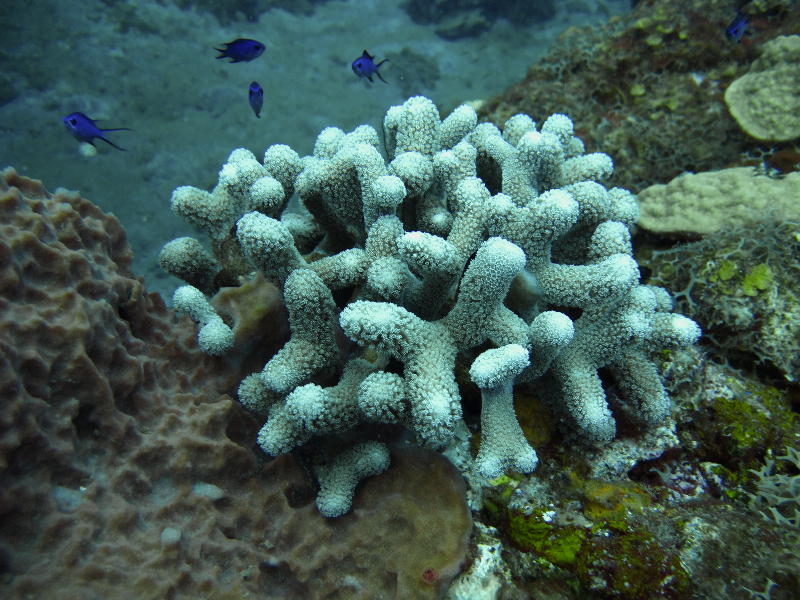
After much digging around I finally identified this amazing specimen as a cactus coral from the genus of Pavona. The small prickly pattern of polyp corallites was the best defining feature, as well as the folding plates that loosely resemble a cactus.

Cactus Coral Pavona
Cactus Coral (Pavona) Living Sample
Source

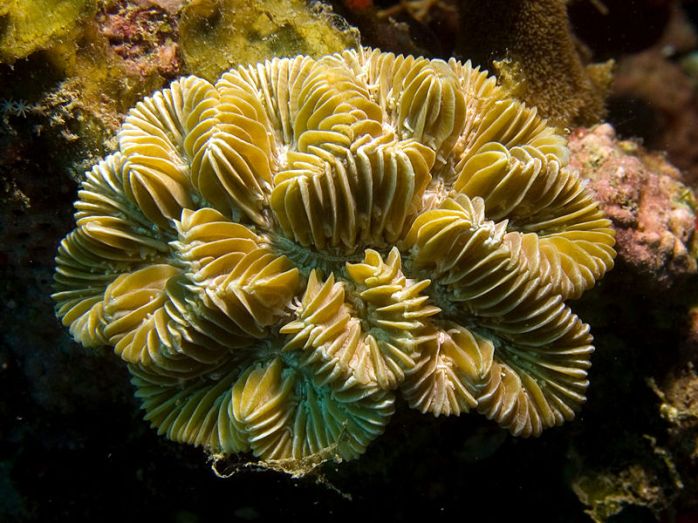
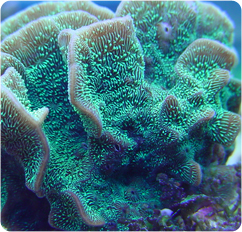
The Pavona, Cactus Coral is a small-polyp, stony coral which has been called, Cactus, Potato Chip, or Lettuce Coral.  A single species may vary in form according to the currents, wave action, lighting conditions and depth of its location. They can also vary in color from shades of light and dark brown to green with cream or white margins. Some have a fluorescent glow that can be seen beneath the polyps, giving these corals an interesting look. They are known to make a popular addition to the home aquarium.

Cactus Coral Pavona Source: "Douglas Illistration":http://www.freewebs.com/douglasillustration/reeftank.htm
Cactus Coral (Pavona) Living Sample
Source

CACTUS CORAL CLASSIFICATION

Kingdom: Animalia
Phylum: Cnidardia (A group containing over 10,000 species of animals found exclusively in aquatic and mostly marine environments. Their distinguishing feature is cnidocytes, specialized cells that they use mainly for capturing prey by shooting off a threadlike, often toxic, tubule from inside the cnidocyst.)
Class: Anthozoa (Flower Animal)
Order: Scleratinia (Stony corals which are marine corals that generate a hard skeleton. They first appeared in the Middle Triassic and descended from the tabulate and rugose corals that barely survived the end of the Permian. Much of the framework of today’s coral reefs is formed by scleractinians. Stony coral numbers are expected to decline due to the effects of global warning and increased acidity due to pollution.)
Family: Agariciidae (Reef building stony corals including cactus corals, elephant skin corals, plate corals and lettuce corals.)
Genus: Pavona (Coral colonies of this type have vertical, irregular, two-sided fronds.)
Species: Possibly minuta or duerdeni

All rights reserved © Fossillady 2025

Share this:

  • Share on Pinterest (Opens in new window) Pinterest
  • Share on Facebook (Opens in new window) Facebook
  • Print (Opens in new window) Print
  • Email a link to a friend (Opens in new window) Email
  • Share on LinkedIn (Opens in new window) LinkedIn
  • Share on Reddit (Opens in new window) Reddit
  • Share on X (Opens in new window) X
Like Loading...
Corals Florida Cactus Coral ClassificationCactus Coral FactsCactus Coral InformationCactus Coral PavonaCactus Coral Pavona FossilStony Coral

6. Pillar Coral

May 11, 2013 by Fossillady
Pillar Coral Fossil (Dendrogyra, cylindricus)
Pillar Coral (Dendrogyra, cylindricus) Fossil Skeleton

Pillar Coral is one of the most spectacular stony corals found in the Western Atlantic Ocean and Caribbean Sea. It derives its name for obvious reasons from its sizeable finger-like branches. They can reach a height of nearly 3 meters (9 feet).

Coral colonies were once more common along the Florida reefs, but commercial collections and coral bleaching has greatly reduced the occurrence of Pillar Corals.

Pillar Coral (Dendrogyra, cylindricus)  Source: en.wikipedia.org
Pillar Coral (Dendrogyra, cylindricus) Living Sample
Source

Pillar Corals extend their polyp tentacles during the daytime, unlike most other stony corals.  The  tentacles gently sway with the currents and if one of the polyps is touched by something foreign, it swiftly contracts causing a wave of shriveling polyps pass over the entire colony in a period of a few seconds.     

Check out this exceptional photo of Pillar Coral

CLASSIFICATION OF PILLAR CORAL

Kingdom: Animalia

Phylum: Cnidardia (Large marine group characterized with stinging cells, tentacles and no skeletons or organs)

Class: Anthozoa (Flower Animal)

Order: Scleratinia (Stony Coral)

Suborder: Faviidae (General Spherical Shape)

Family: Meandrinidae (Meandering valleys between corallites)

Genus: Dendrogyra

Species: Cylindricus

What’s being done to bring back threats to coral reefs? Coral farming; see video to find out about this effort to restore the reef along Florida Keys.

I hope you enjoyed this display of Pillar Corals and learned some new things along the way. I feel privileged to have inherited this sample as part of a collection from my beautiful mother-in-law, Winkie.

1983 Ft. Lauderdale Florida Winky and Joe
1983 Ft. Lauderdale Florida
Winkie and Father-in-Law, Joe

All rights reserved © Fossillady 2025

Share this:

  • Share on Pinterest (Opens in new window) Pinterest
  • Share on Facebook (Opens in new window) Facebook
  • Print (Opens in new window) Print
  • Email a link to a friend (Opens in new window) Email
  • Share on LinkedIn (Opens in new window) LinkedIn
  • Share on Reddit (Opens in new window) Reddit
  • Share on X (Opens in new window) X
Like Loading...
Corals Florida Atlantic Ocean CoralsCaribbean Sea CoralsCoral FossilscylindricusPillar coral classification Dendrogyrapillar coral fossilsPillar corals

7. Boulder Brain Coral

April 25, 2013 by Fossillady

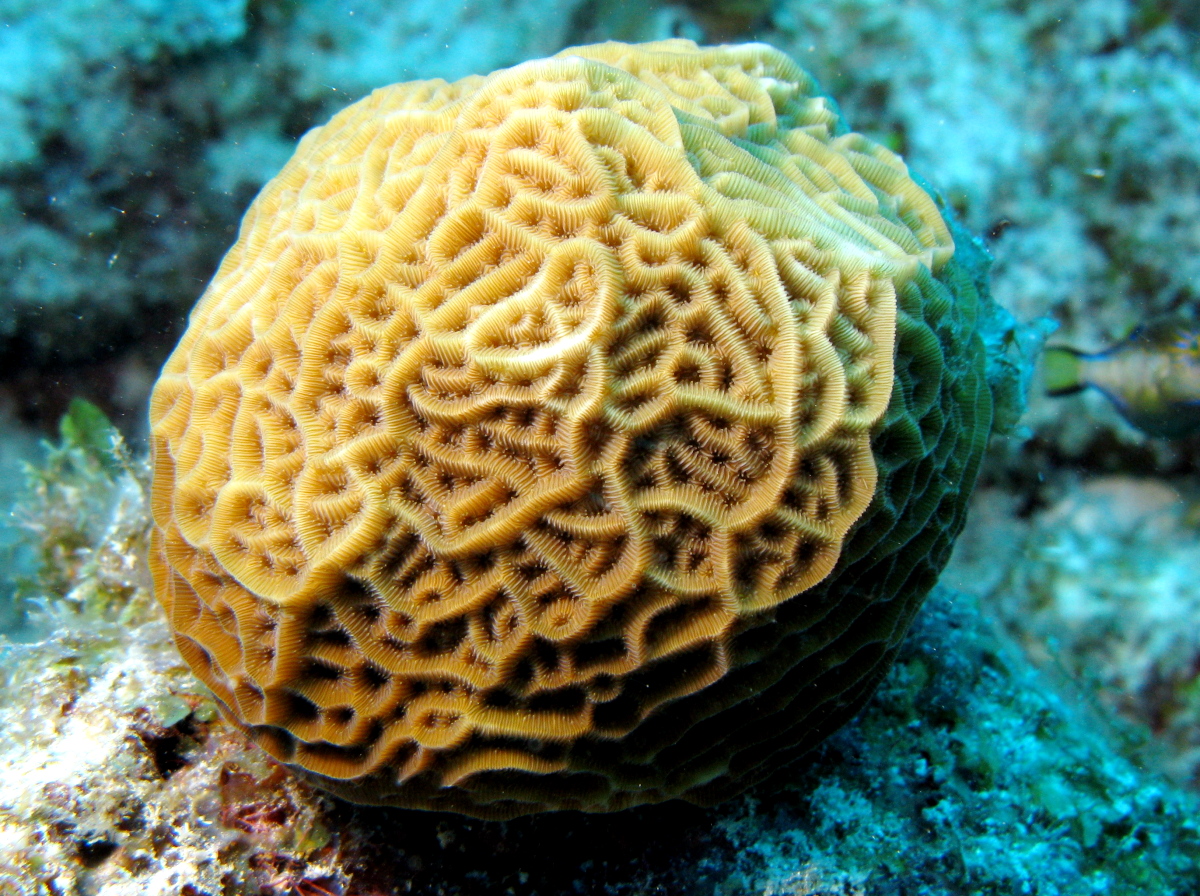
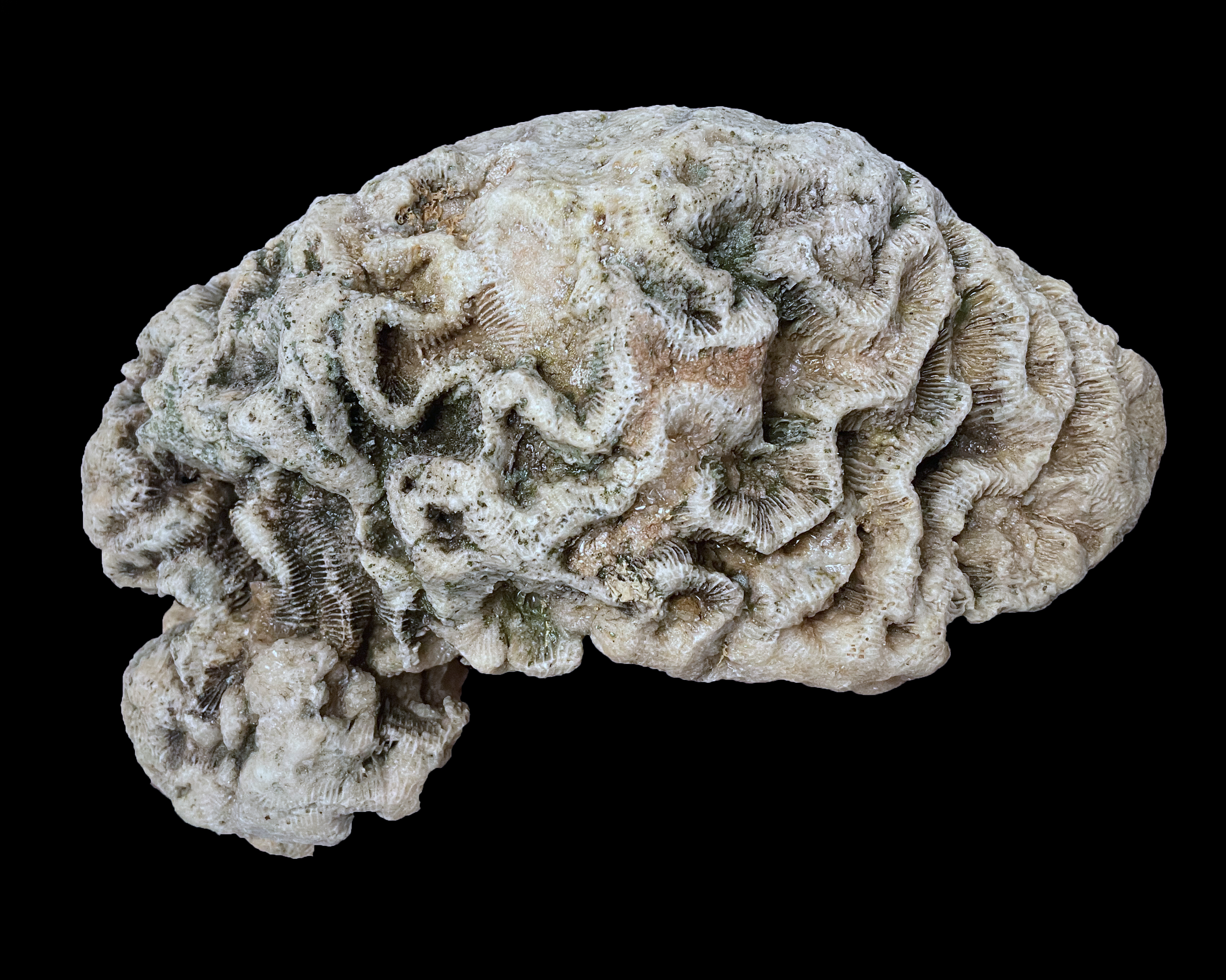
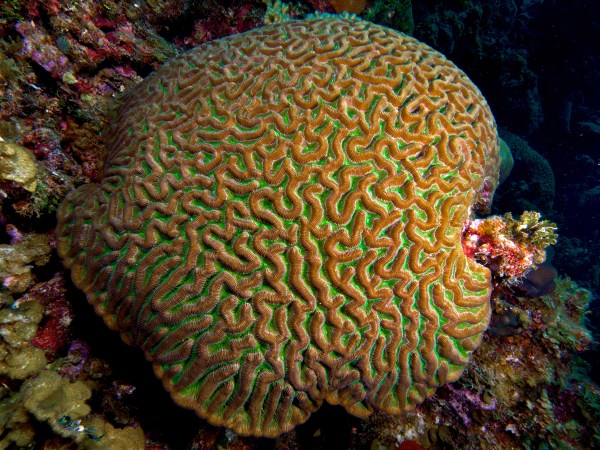
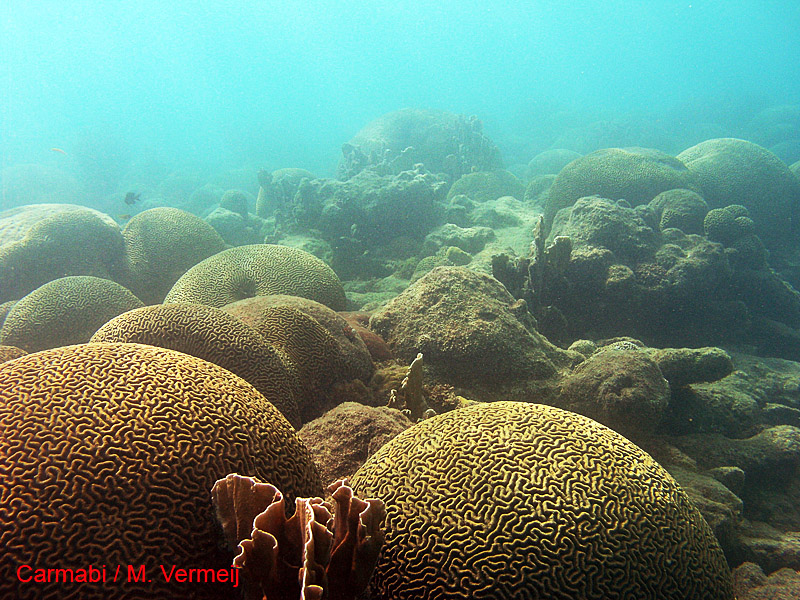
I have two species of coral from my collection that have earned the common name, Brain Corals, due to their convoluted surfaces, loosely resembling the physical brain and general spherical shapes. They are both slow growing, colony forms which may reach colossal sizes to a few meters in length and live for hundreds of years. The oldest know brain coral is 900 years old. Both species below grow in shallow parts of the Caribbean Sea, the Bahamas, Bermuda, Texas and Florida.

Boulder Brain Coral (Colpophyllia, natans) Fossil Skeleton

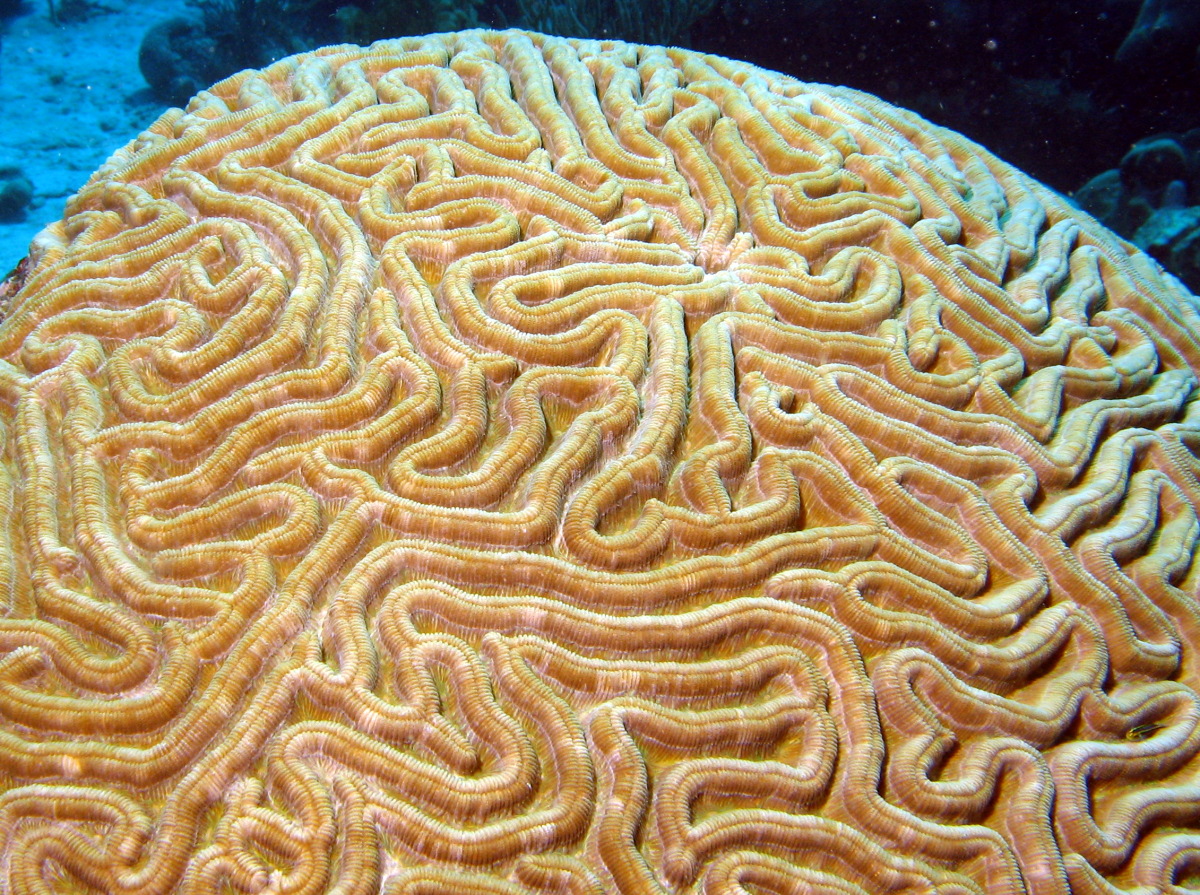
Boulder Brain Coral (Colpophyllia, natans) is a very large brain coral whose domed, hemispherical colonies may exceed one meter ( 3 feet) across, but smaller colonies may be flat topped discs depending on location. The polyp valleys on the surface may stretch the entire width, or be subdivided into shorter series. The valleys and walls may be two centimeters broad distinguishing it from my Symmetrical Brain Coral (shown below) which have narrower valleys and walls. Also, the walls of the Boulder Brain Coral commonly have a fine grooves running along the tops. There is a sharp break between the wall and the valley floor. The colors vary with ridges being various shades of brown, and the valleys either whitish, green, or tan.

OLYMPUS DIGITAL CAMERA
Boulder Brain Coral (Colpophyllia, natans) Living Sample Source

8. Symmetrical Brain Coral

HPIM1075
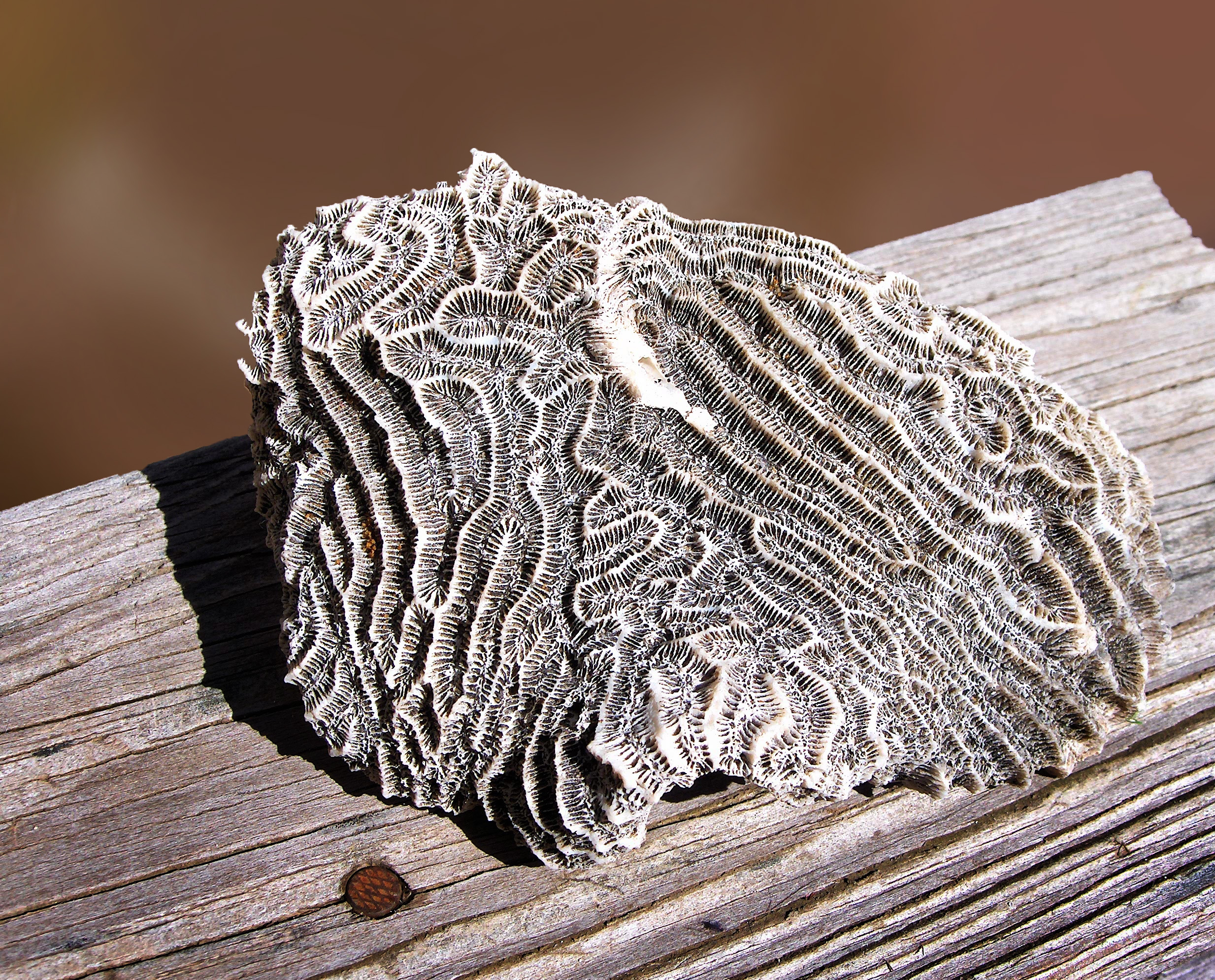
Symmetrical Brain Coral (Diploria, strigosa) Fossil Skeleton

Symmetrical Brain Coral (Diploria, strigosa) forms flat plates or massive hemispherical domes up to 2 meters, (6 feet) in diameters. Sometimes, they will show a very narrow groove along the tops of the walls, which have sloping or rounded sides. Valleys may run straight for considerable distances or be highly irregular in direction. They range in color from purplish brown to grey or green, often with the groove floors being a contrasting paler color. Diploria, strigosa is the most widespread of all the Diploria species, being more resistant to threats with the ability to thrive in muddy stretches of seabed where many other corals are not able to flourish.

Symmetrical Brain Coral (Diploria, strigosa) Source: http://reefguide.org/carib/pixhtml/symmetricalbrain2.html
Symmetrical Brain Coral (Diploria, strigosa) Living Sample

Brain Corals Habitat  Source: http://www.dcbiodata.net/explorer/results/detail/5260
Brain Coral Habitat

NOTE ABOUT SCLERACTINIA: The order, Scleractinia, in which all living corals belong today, means they develop a stony skeleton, which is a light, porous skeleton consisting of external sheathing forming a cup. Scleractinians were fairly rare in North America until the Cretaceous, about 100 million years ago, when they first built reefs in Texas and Mexico. It wasn’t until the Pleistocene Period, about 2.6 million years ago, that reefs flourished where they do today.

Brain Coral Open Polyps At Night

Night Time Activity : Coral polyps, the living breathing jelly-like part of the animal, are found in single file in the valleys of this brain coral’s convoluted ridges. They are normally contracted during daylight, but expand at night to catch micro-bits of food drifting by.

BRAIN CORAL CLASSIFICATION

  • Kingdom  –  Animalia
  • Phylum  –    Cnidaria (means stinging cells)
  • Class  –     Anthozoa (means flower animal)
  • Order  –  Scleratinia (stony skeleton)
  • Family  –  Faviidae (spherical group with grooved surfaces)
  • Genus  –  Diploria /  Colpophyllia
  • Species – strigosa /  natans

Identification and interesting facts about 7 species of Star Corals

© 2022 Kathi Mirto Fossillady

Share this:

  • Share on Pinterest (Opens in new window) Pinterest
  • Share on Facebook (Opens in new window) Facebook
  • Print (Opens in new window) Print
  • Email a link to a friend (Opens in new window) Email
  • Share on LinkedIn (Opens in new window) LinkedIn
  • Share on Reddit (Opens in new window) Reddit
  • Share on X (Opens in new window) X
Like Loading...
Corals Florida Boulder Brain CoralBoulder Brain Coral Fossilbrain coralbrain coral classificationColpophyllia natansColpophyllia natans classificationColpophyllia natans fossilDiploria strigosaDiploria strigosa classificationDiploria strigosa fossilFlorida coral identificationScleractinia coral fossilsSymmetrical Brain CoralSymmetrical Brain Coral Fossil

Fossilized Algae

March 11, 2013 by Fossillady

Did you know algae are the oldest fossils found on Earth that can be seen with the naked eye?

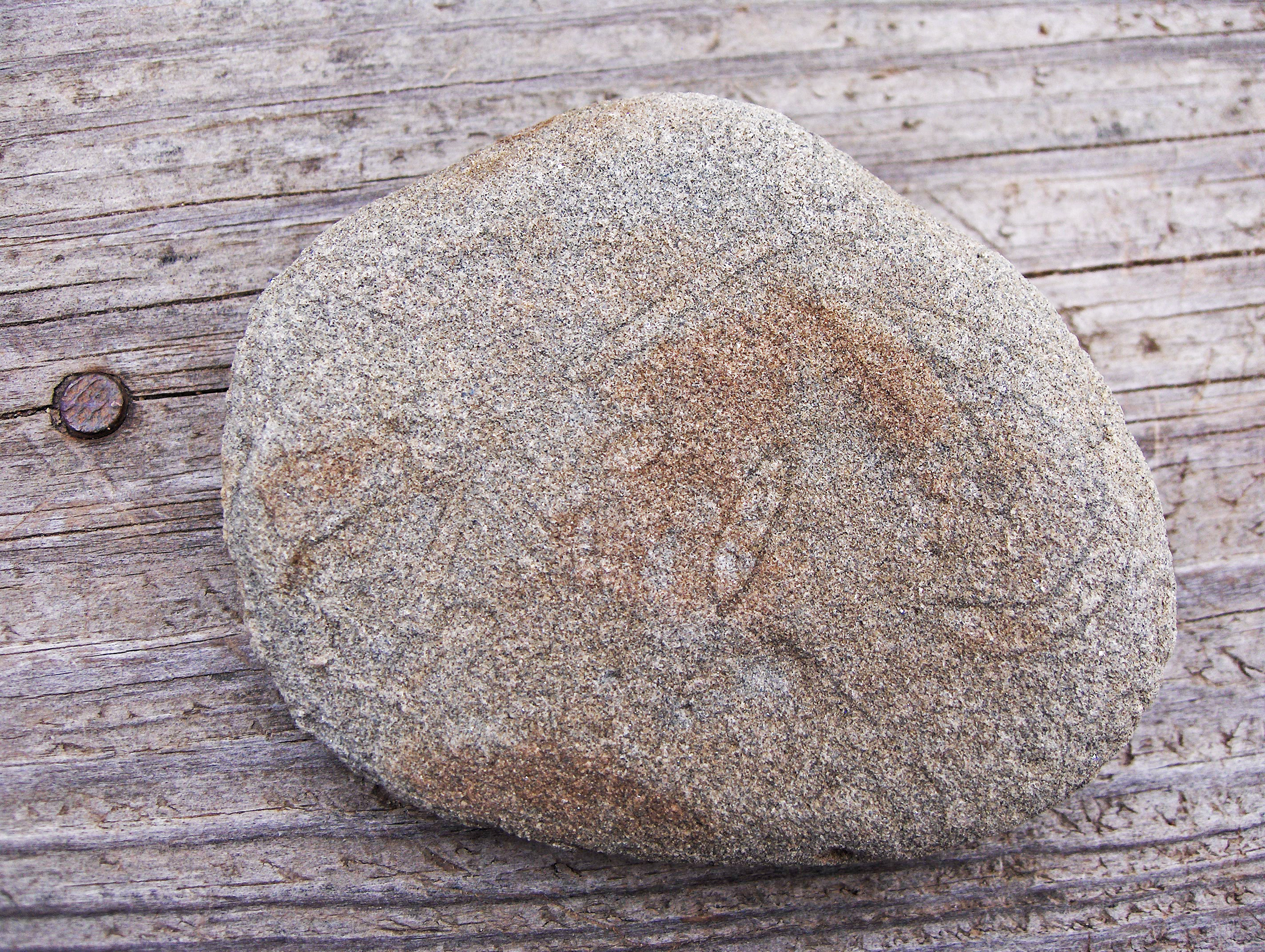
I have picked up several fossilized samples of algae from Lake Michigan’s Oval Beach in Southwestern Michigan (USA) shown below. Algae come in a variety of shapes and forms. They range from single-cell organisms, such as microscopic phytoplankton and diatoms, to multicellular bodies, such as in the case of giant kelp that can grow as tall as 65 meters (200 feet).

HPIM0969
Fossilized Algae found on Oval Beach, Saugatuck, Michigan, USA

Why is algae important to you and me?

The answer to the question is that algae are the most important photosynthesizing organisms on Earth! A byproduct of photosynthesis is oxygen. Algae produces more oxygen from the sun’s energy than all other plants combined.

They also form a beneficial partnership with other organisms such as with reef building coral, which over time, constructs limestone.

Fossilized algae has been dated as far back as 1.7 billion years ago.

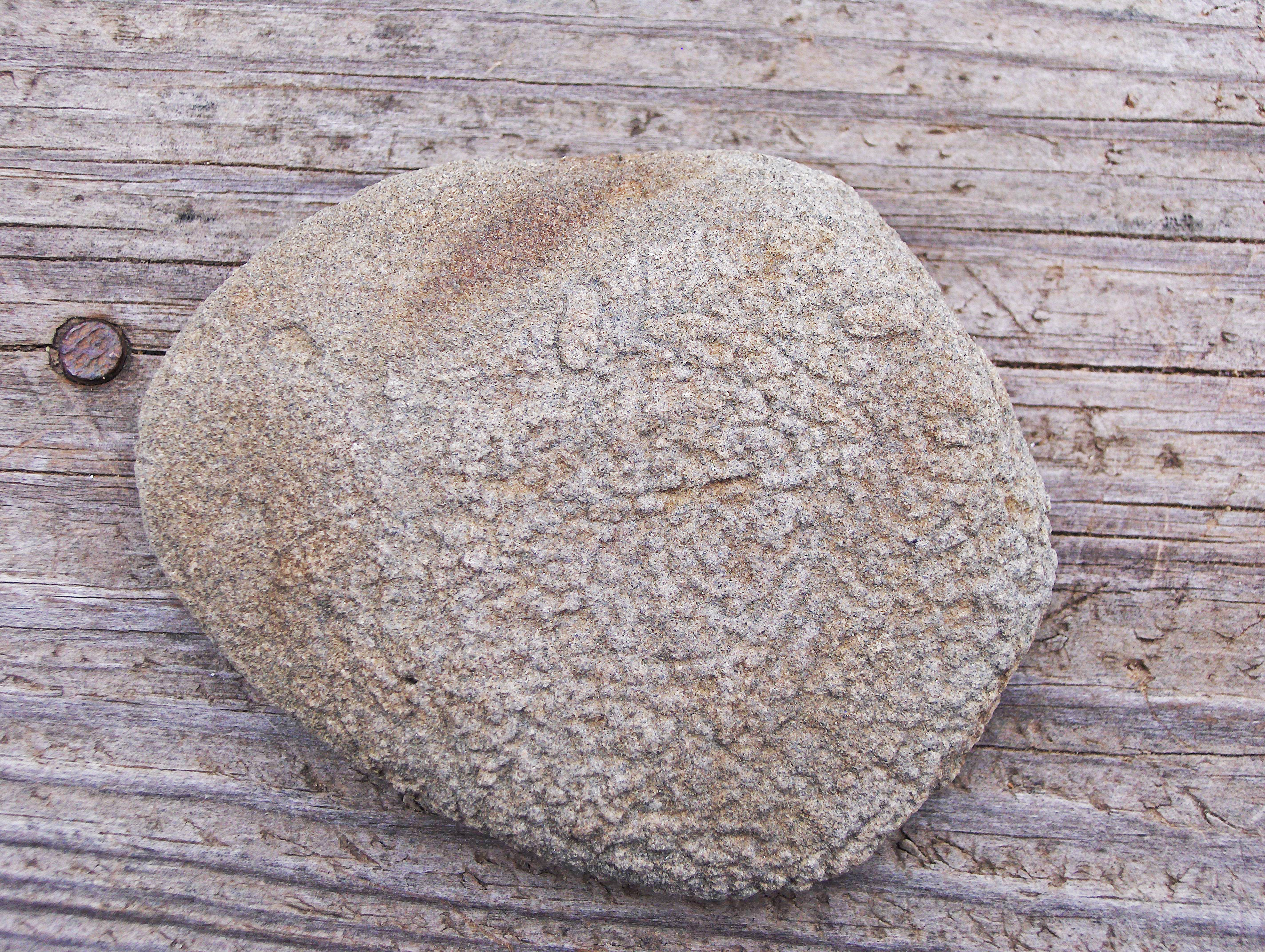
Flip side of algae fossil with unidentified patterns
Flip Side of Fossilized Algae Shown Above

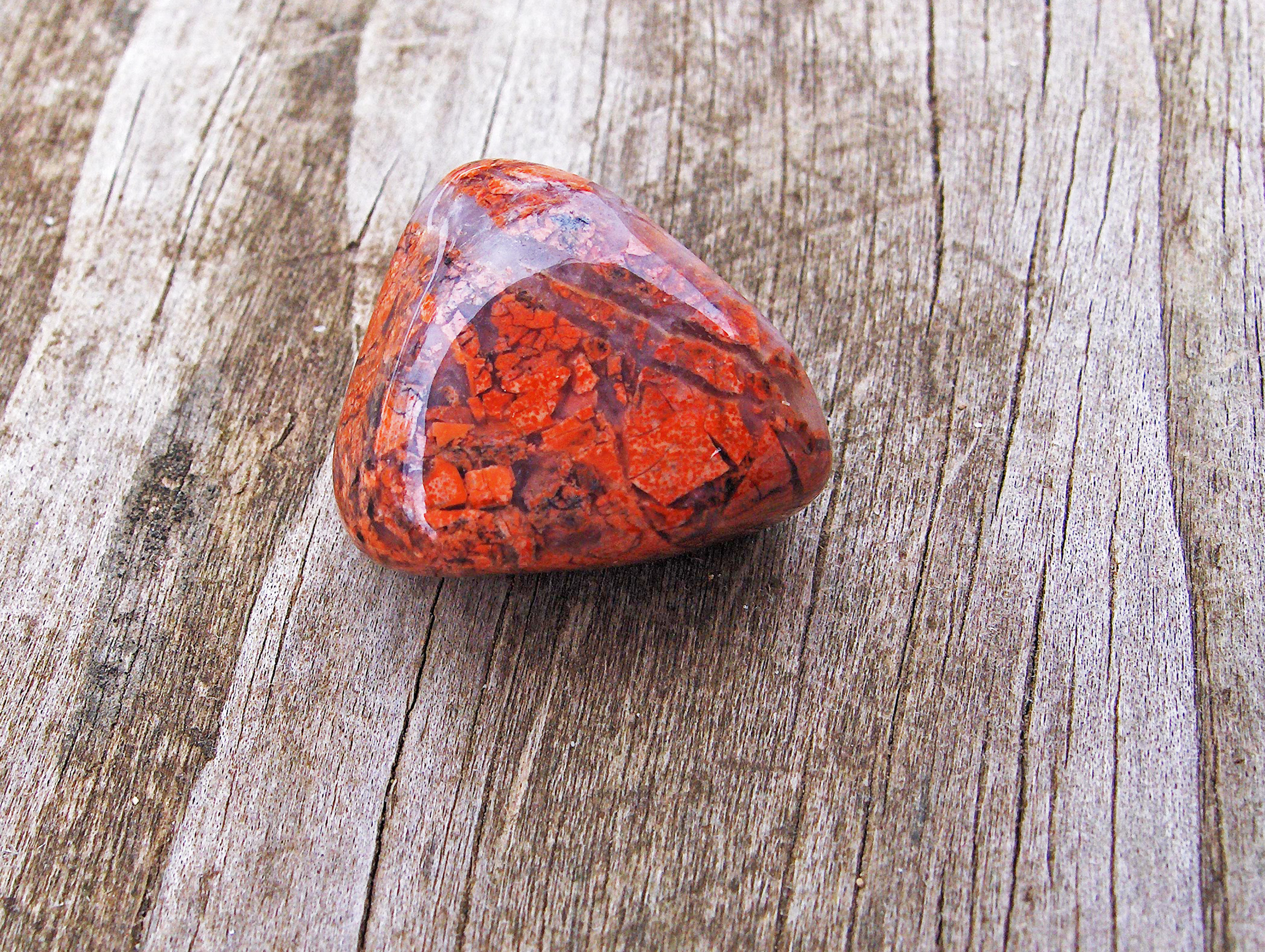
Shown below is a sample of petrified algae I purchased years ago that was tumbled and polished smooth. This algae once flourished in warm seas over what is now the US state of Minnesota. It is estimated to have lived nearly two billion years ago. The algae has been petrified or replaced with jasper. Jasper is a type of quartz that is dense and finely grained with up to 20% foreign materials that determines the color.

Petrified Algae replaced with Jasper

Algae are defined as a group of predominantly aquatic, photosynthetic, and nucleus-bearing organisms that lack the true roots, stems, leaves, and specialized multicellular reproductive structures of plants.

Fossilized Algae Found on Lake Michigan Beach

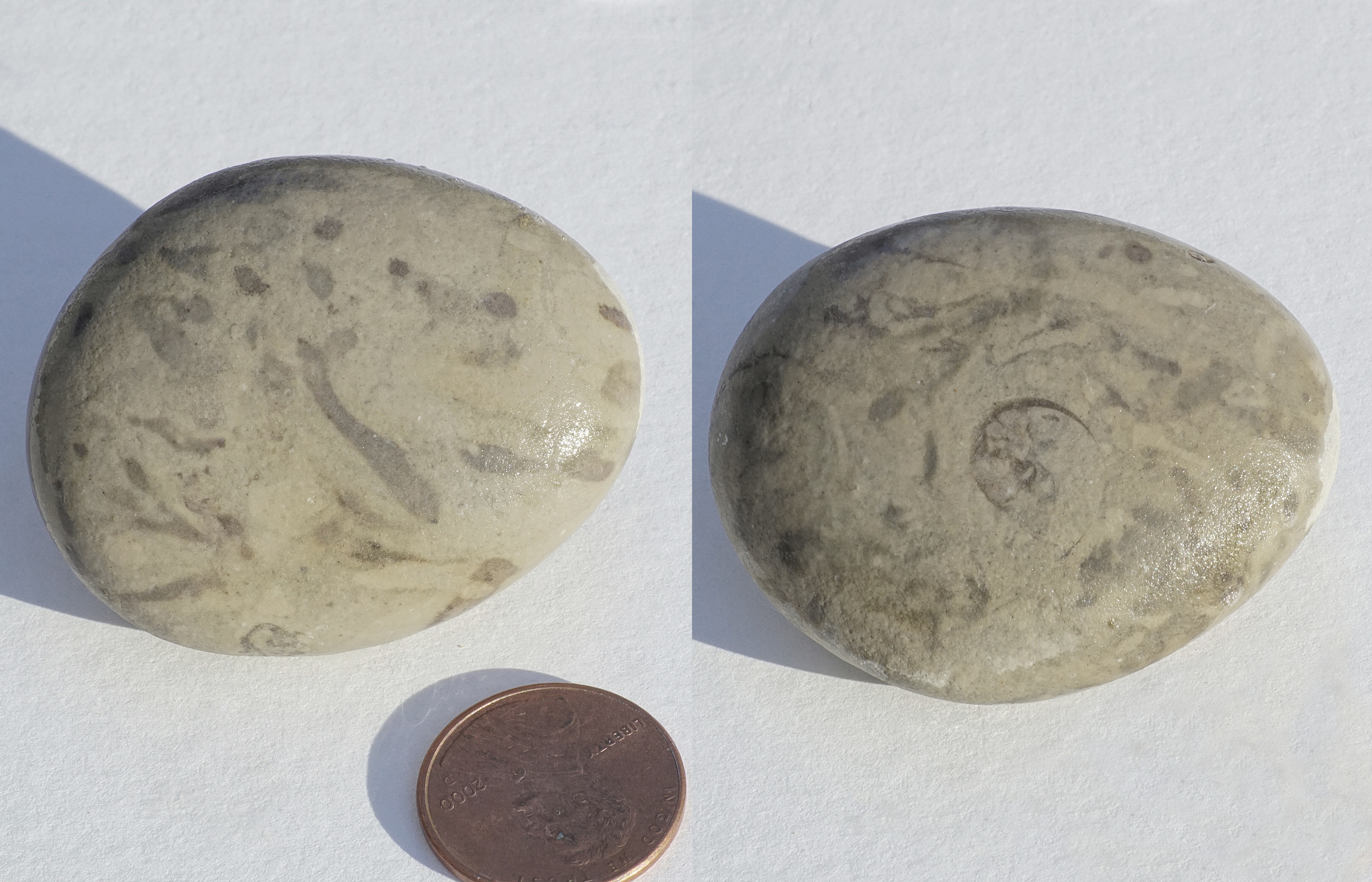
Ten thousand years ago, the glaciers scraped up Devonian aged seabed creating the Great Lakes. In the processes, they released thousands of unburied treasures, including fossilized algae, that continually wash ashore, and today, we humans enjoy the privilege of discovering the secrets of their past.

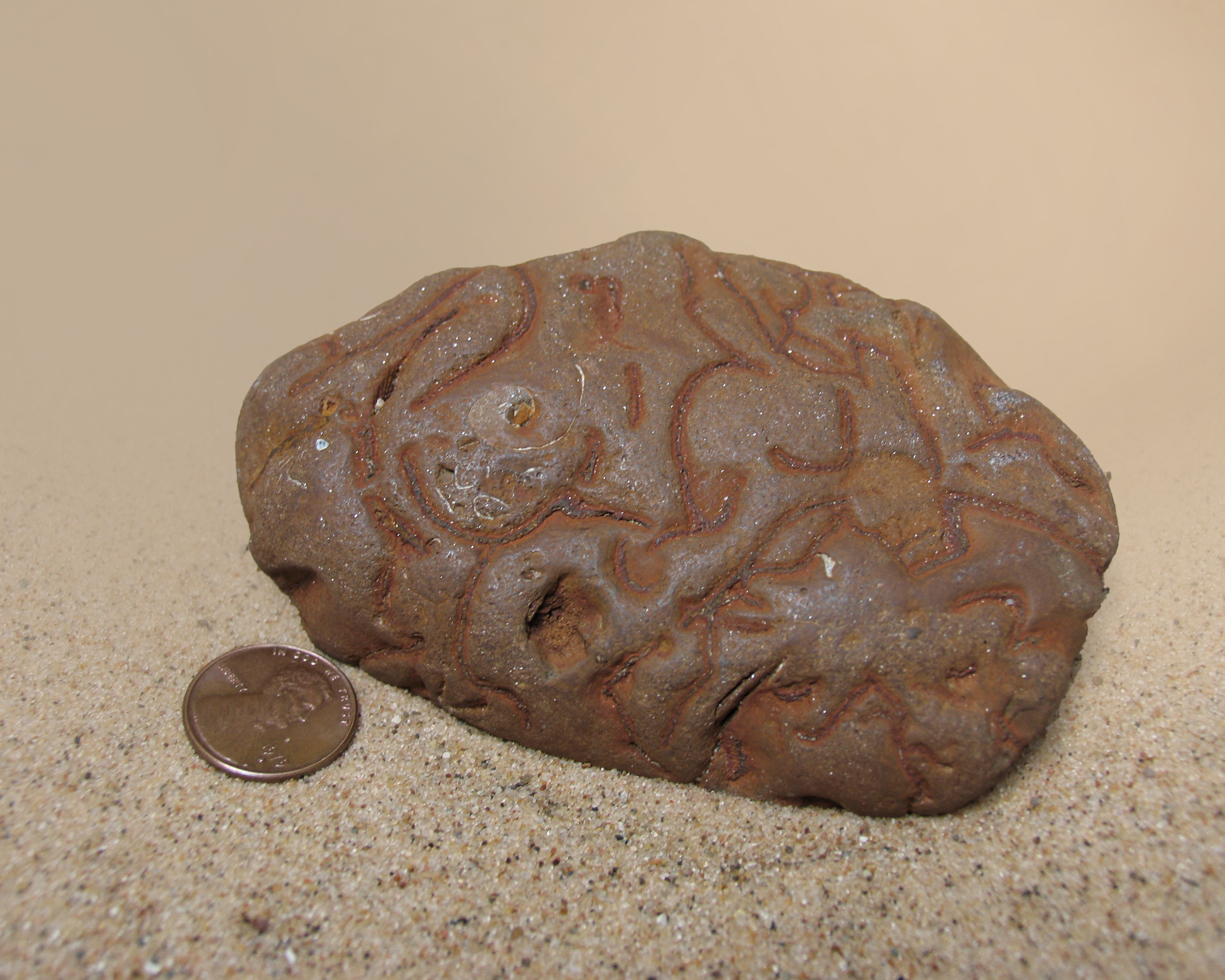
Fossilized algae molds found along Lake Michigan shores embedded in claystone infused with iron.

All rights reserved © Fossillady 2025

Share this:

  • Share on Pinterest (Opens in new window) Pinterest
  • Share on Facebook (Opens in new window) Facebook
  • Print (Opens in new window) Print
  • Email a link to a friend (Opens in new window) Email
  • Share on LinkedIn (Opens in new window) LinkedIn
  • Share on Reddit (Opens in new window) Reddit
  • Share on X (Opens in new window) X
Like Loading...
Algae Fossils algae fossilfossil huntingfossilsoriginal fossilsOval Beachpetrified algae

The Horseshoe Crab Plight and Interesting Facts

February 10, 2013 by Fossillady

The horseshoe crab holds a special place in many hearts around the world, including regions along the Atlantic Coast of the United States, such as The Delaware Bay. The map below reveals the horseshoe crab global distribution, including regions along the Indian Ocean and more. Every spring when these time-tested creatures show up by the thousands to spawn, it’s an amazing sight to behold. Even though I do not live in these regions, the famed yearly event has reached the interest and attention of my heart as well.

source: smithsonianmag.com
Horseshoe Crab Spawning Event
source: bioexpedition.com
Horseshoe Crab on the Beach

Modern Day Plight

During my research of the horseshoe crab, I found myself  feeling very sympathetic toward their modern day plight. An animal such as the horseshoe crab having survived millions of years through multiple mass extinctions deserves our respect. Because of over harvesting, abuse, habitat disappearance, pollution and their use as bait, the horseshoe crab is close to being on the threatened list. That would be a crime!

source: fossilmuseum .net
Horseshoe Crab Fossil

Because the animal dates back to the Paleozoic Era over 400 million years ago, I chose to include the horseshoe crab as one of the main characters in the upper-middle grade children’s book I completed recently titled It Happened Under the Devonian Moon. Her name is Breeva and she is a close cousin to another main character in the story since both creatures are arthropods possessing segmented bodies, jointed limbs and an external skeleton called an exoskeleton.

source: factzoo.com
Bi-functional Book Gills of Horseshoe Crab

Help to Humans

The horseshoe crab blood contains copper which gives it the blue color, but more important, their blood contains an ingredient used to test pharmaceutics for impurities. The industry claims this does not harm the animal, but some sources debate this.

source: pbs.org
Horseshoe Crab Blue Blood

 Horseshoe Crab Longevity and Interesting Facts

Horseshoe crabs are simple primitive creatures that haven’t changed much in over 400 million years. Science believes they have survived the eons for several reasons:

1) the size and shape of their exoskeleton shield

2) they can go a year without food

3) they adapt to high salt environments and extreme temperatures

4) their unique blood protects them from infection

* The Atlantic female species can grow 18 to 19 inches (46 to 48 cm) from head to tail, while the smaller males grow to approximately 14 to 15 inches (36 to 38 cm). 

* They are gentle animals, non-threatening to humans

* They can breathe in and out of water using bi-functional book gills that resemble pages of a book

* Their thousands of eggs are vital to the survival of migratory birds and other sea animals

Horseshoe Crab Global Distribution

Source

A special chapter in the book I previously mentioned depicts the horseshoe crab named Breeva and her adventure when she steps outside of the ocean for the first time in order to spawn while leaving behind her two closest companions, the spunky, little-cousin, trilobite and the unusually, friendly ammonite.

Horseshoe Crab Classification

  • Kingdom:        Animalia
  • Phylum:          Arthopoda     (Animal having an external skeleton, segmented body and jointed legs)
  • Subphylum:  Chelicerata     (Small appendages to form pincers used to feed)
  • Class:               Merostomato (Separates the Horseshoe crab from Eurypterids (extinct sea scorpions)
  • Order:              Xiphosura       (Includes extinct and modern Chelicerates)
  • Family:            Limulidae        (Modern  horseshoe crab)
  • Genera             Limulus            (Atlantic horseshoe crab)
  • Species            Polyphemus   (Atlantic horseshoe crab)

All rights reserved © Fossillady 2022

Check out my fiction books featuring factual prehistory insights blended with imaginative storytelling that entertain as they educate, ages 11-15+ available on Amazon.com. Also available, a coloring/activity book featuring scenes from both books and many of the plants and animals that lived during the amazing Devonian Time Period; fossil photos and descriptions included.

All rights reserved © Fossillady 2025

Share this:

  • Share on Pinterest (Opens in new window) Pinterest
  • Share on Facebook (Opens in new window) Facebook
  • Print (Opens in new window) Print
  • Email a link to a friend (Opens in new window) Email
  • Share on LinkedIn (Opens in new window) LinkedIn
  • Share on Reddit (Opens in new window) Reddit
  • Share on X (Opens in new window) X
Like Loading...
Horseshoe Crabs horseshoe crab classificationhorseshoe crab distributionhorseshoe crab factshorseshoe crab fossilhorseshoe crab pictureshorseshoe crab storyhorseshoe crab threatsLimulus Polyphemus

Halysites Chain Coral Uncovered

December 11, 2012 by Fossillady
Golden Beach grass dune
Oval Beach Saugatuck, Michigan  (Winter 2012)

I was super excited to discover several fossils on Oval Beach in Saugatuck, Michigan, USA that are highly unusual to find in winter. The fossil below was lying under deep layers of sand, but luckily, the mild weather with minimal snowfall allowed winter winds to push sand off the under layers. Also contributing to fossil hunting were the low water levels from a long dry spell during the summer of 2012 which produced more beach to explore.

Halysite Coral
Halysites Chain Coral Fossil Found on Lake Michigan Beach

These fossil samples are from the extinct order of “Tabulate” reef building colony-type corals and from the genus,”Halysites”, commonly called, Chain Corals. They are fairly easy to distinguish due to the chain-link raised impressions for which they are named.

Halysites “Chain Coral” Fossil found on Lake Michigan Beach

As living creatures, the extinct Halysites corals possessed small tubes where the jelly-like polyps resided. The coral polyps contained stinging cells for protection and also for siphoning plankton and organic matter passing by in the ocean currents. As the Chain Corals grew, they built up walls of tube-like chambers called theca which steadily multiplied while adding more links to the chain. In their heyday, they built large limestone reef structures on the seabed. Halysites survived from the Ordovician Period (starting around 480 Mya) through the Silurian Period (ending around 416 Mya).

Halysites Chain Coral Classification

Kingdom: Animal

Phylum: Cnidaria (means stinging animal)

Class: Anthozoa (means flower animal)

Order:  Tabulata (possess inner horizontal dividing walls from growth patterns)

Family: Halisitidae (means chain coral)

Genus: Halysites  Species: unknown

Halysites Chain Coral Rendering Showing Polyps Extended

All rights reserved © Fossillady 2026

Share this:

  • Share on Pinterest (Opens in new window) Pinterest
  • Share on Facebook (Opens in new window) Facebook
  • Print (Opens in new window) Print
  • Email a link to a friend (Opens in new window) Email
  • Share on LinkedIn (Opens in new window) LinkedIn
  • Share on Reddit (Opens in new window) Reddit
  • Share on X (Opens in new window) X
Like Loading...
Coral Fossils Extinct Chain CoralChain coral illustrationchain coral renditionextinct coralhalysite coal classificationhalysite coral factsHalysite coral fossilsLake Michigan coral fossilsLake Michigan fossilsMichigan FossilsOval Beach coral fossilsOval Beach FossilsPaleozoic coral fossilspaleozoic coral informationpaleozoic fossils

First Land Creature

January 27, 2011 by Fossillady
Millipede Trail Trace Fossil

The paleontology community agrees that around 425 million years ago during the Silurian Period, the first animal to show evidence of breathing oxygen from the air was a millipede. A millipede fossil was first discovered by an amateur collector from Scotland in 2004. It exhibited tiny openings not visible to the eye which taxonomists refer to as spiracles for oxygen intake.

Comparison to Centipedes

Millipedes are detrivores, feeding on decaying plant material, and most of them live in moist habitats. Unlike their cousin centipedes, most are not predators, they don’t bite or have a poison sting. They are slower moving  because their numerous legs are tiny in proportion to the rest of their bodies. Another difference is their bodies are rounded and not flat like that of centipedes. Also, centipedes have one leg per body segment, whereas millipedes have two per segment.

North American Type Millipede (photo from Wikipedia)

Although their name suggests that they have thousands of legs, the truth is, they most commonly have between 36 to 400, which is still a lot of legs! This (Narceus, americanus) millipede is a rather large species which grows up to four inches in length. I think its kinda cute. Anyway, the largest millipede today is the Giant African Millipede reaching up to 12 inches in length, but the largest ever discovered in the entire history of millipedes dwarfs the African Millipede. It lived during the Carboniferous Age and scientists estimate it grew two meters long and a meter wide. This age of lush tropical forests must have contributed to its gigantic stature!

Check out my short story, The Bravest Millipede who was enlightened after he led his tribe to dry land in order to escape the predators of his time which are described with illustrations.

DSC01444
Millipede Trace Fossil (Mold of Segmented Body)

MILLIPEDE CLASSIFICATION

Kingdom:  Animal

Phylum:    Arthopod (having segmented body, exoskeleton, jointed legs)

Class:        Myriapoda (means 10,000 legs)

Subclass:   Diplopoda (having two legs per segment)

Check out my fiction book, one of two in a series, with factual prehistory insights blended with imaginative storytelling that entertains as it educates. Perfect for young explorers interested in fossils or young readers who simply like a good story, ages 11-13+. Also available, a coloring/activity book featuring scenes from both fiction books and many of the plants and animals that lived during the amazing Devonian Time Period; fossil photos and descriptions included, available on Amazon.com

All rights reserved © Fossillady 2011

Share this:

  • Share on Pinterest (Opens in new window) Pinterest
  • Share on Facebook (Opens in new window) Facebook
  • Print (Opens in new window) Print
  • Email a link to a friend (Opens in new window) Email
  • Share on LinkedIn (Opens in new window) LinkedIn
  • Share on Reddit (Opens in new window) Reddit
  • Share on X (Opens in new window) X
Like Loading...
Millipede Fossils first land creaturemillipedemillipede fossilmillipede fossil factsmillipede fossil informationmillipede trace fossil

Simple as a Clam

December 16, 2010 by Fossillady
 
Did you know, in 2007 off the coast of Iceland, a clam was discovered to be at least 405 years old. It was declared the world’s oldest living creature by North Wales, Bangor University researchers. Hmm . . . maybe they’re not so simple after all!
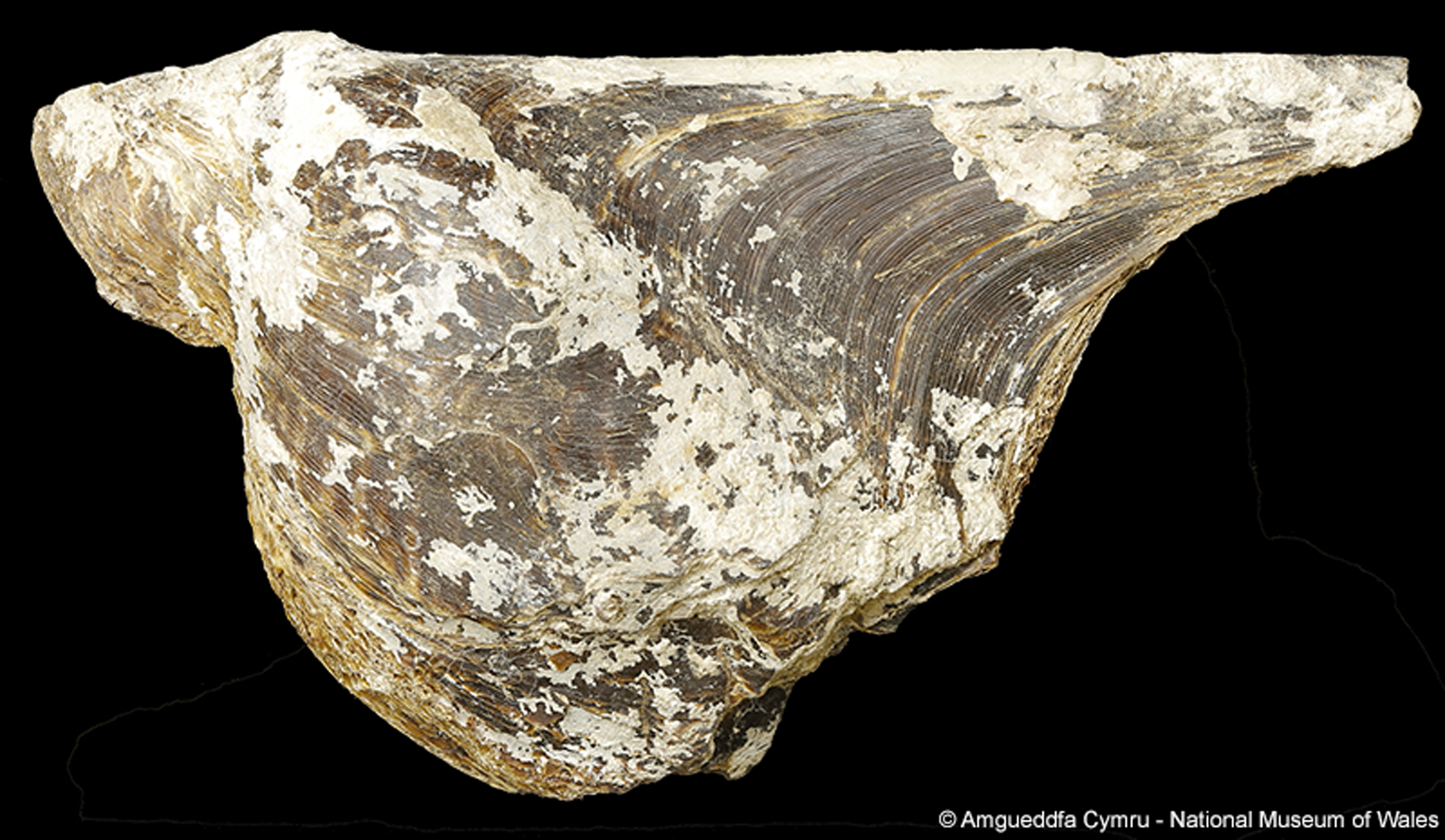
Fossilized Encrusted Clam Shell Found on Lake Michigan Beach

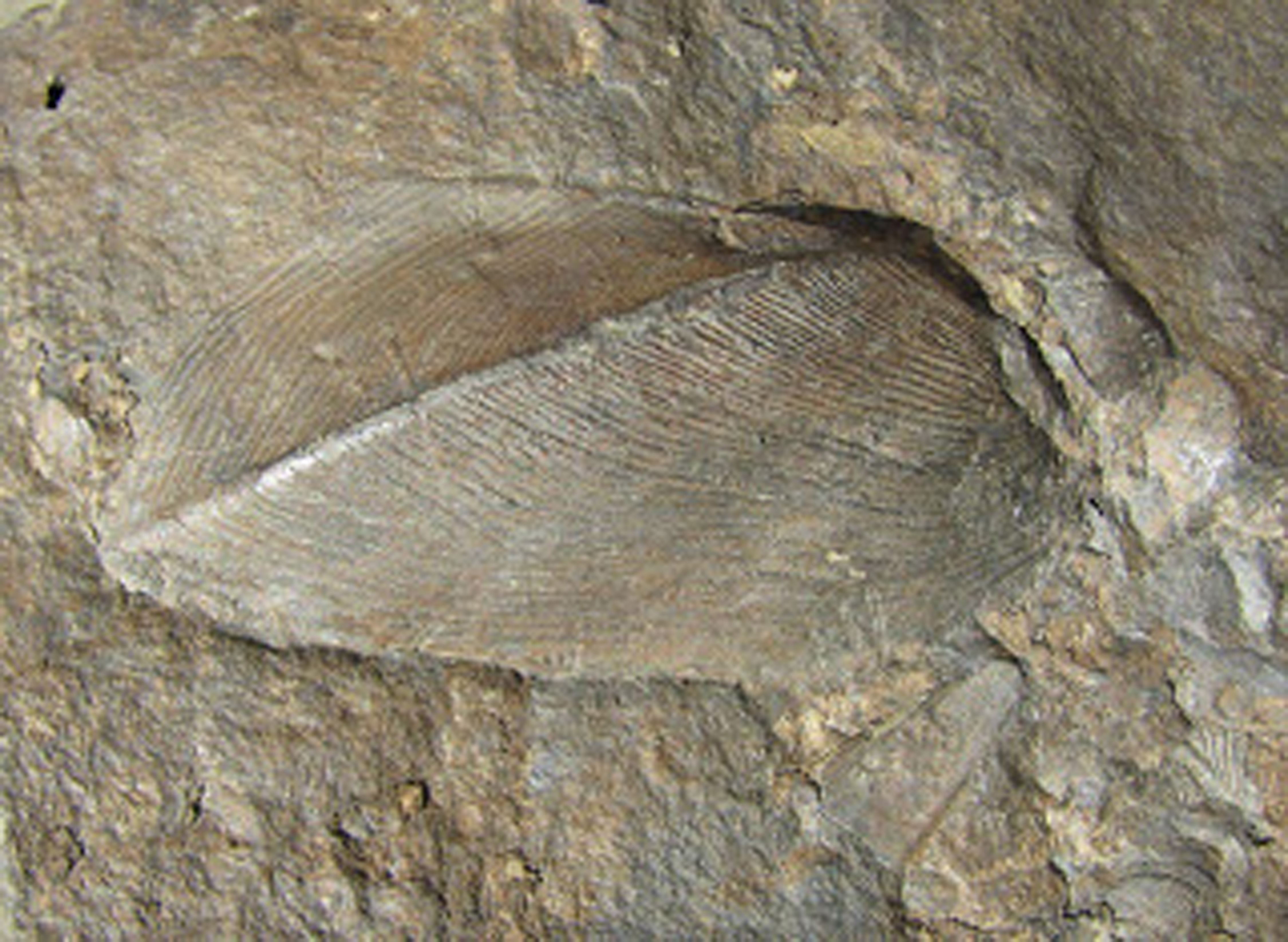
Recently, I found three interesting clam shell fossils on the shore of Lake Michigan, in Southwestern Michigan USA. The first sample shown, clearly reveals the hardened muddy sediment that has completely encrusted its shell.

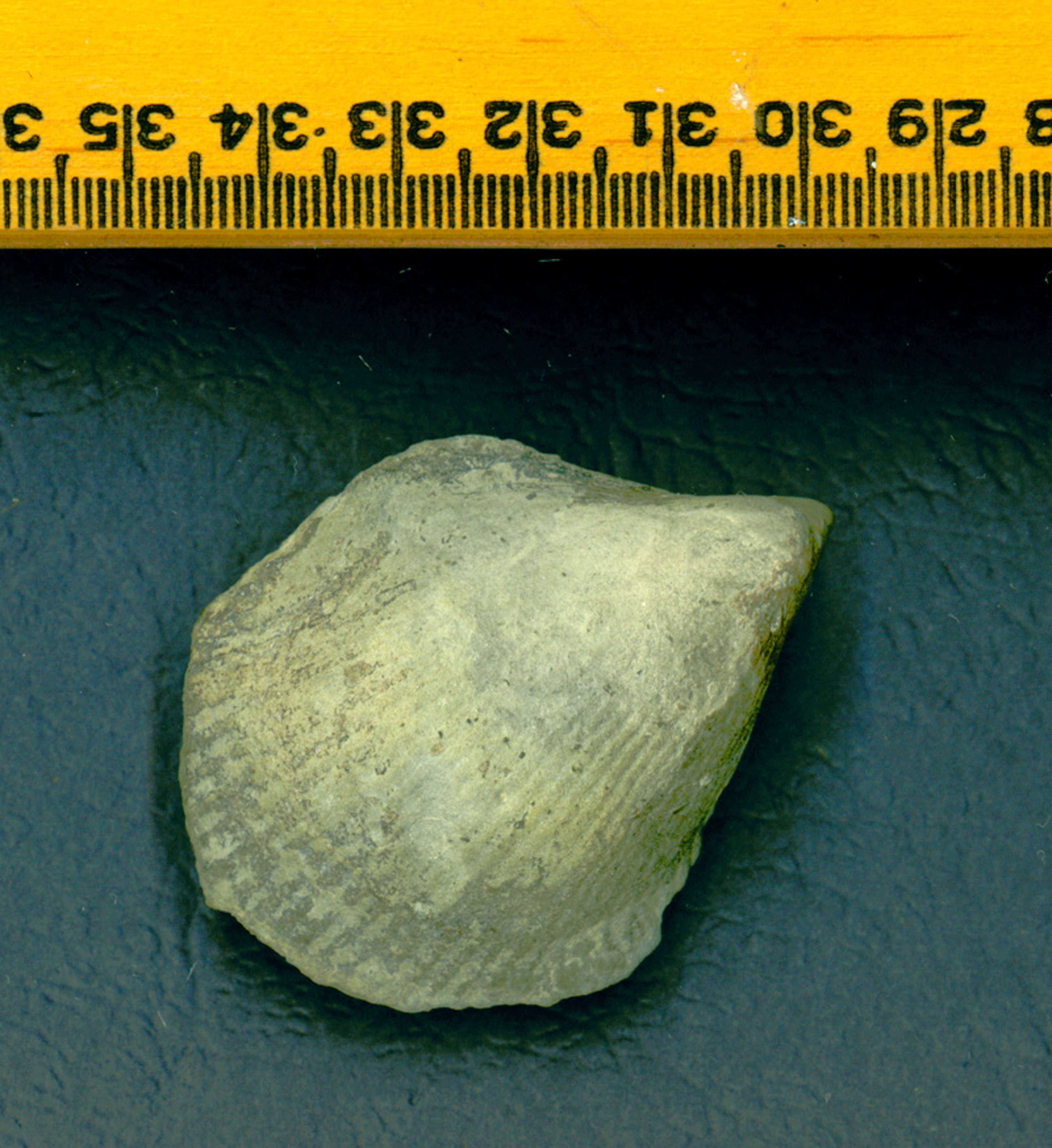
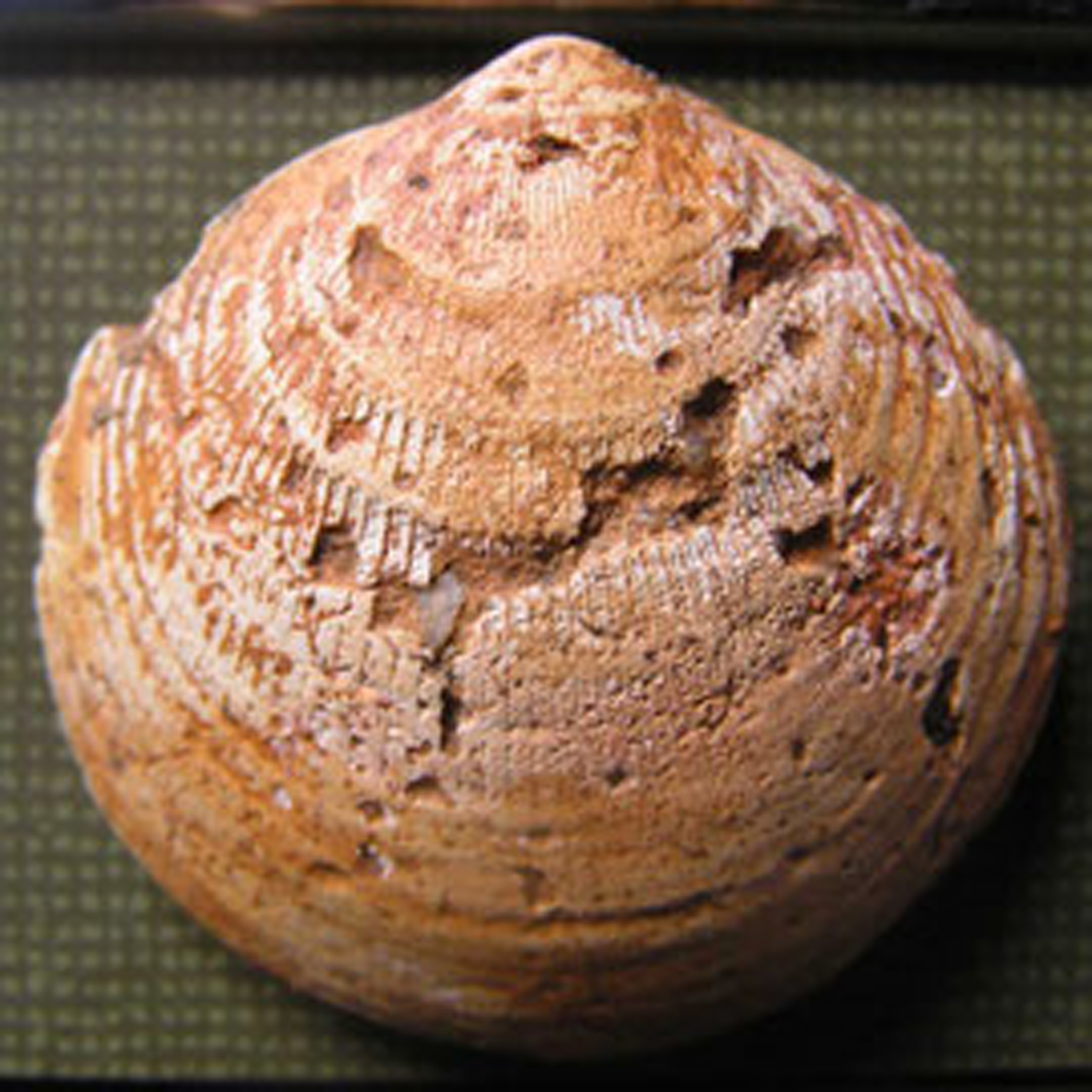
The clam fossil below has been completely replaced by minerals and is petrified to stone. It’s the mold of the original clam shell where sediment filled in the space where the animal’s soft body parts once lived. The smooth surface is a telltale demonstration of Lake Michigan’s sand and wave action.

HPIM1520
Fossilized Clam Shell Mold Found on Lake Michigan Beach

With the use of two abductor muscles, bivalves or clams, can open and close their shells tightly. Very fittingly, the word “clam” gives rise to the metaphor “to clam up”, meaning to stop speaking or listening.

Clam Fossil (Limestone Mold) Found on Lake Michigan Beach

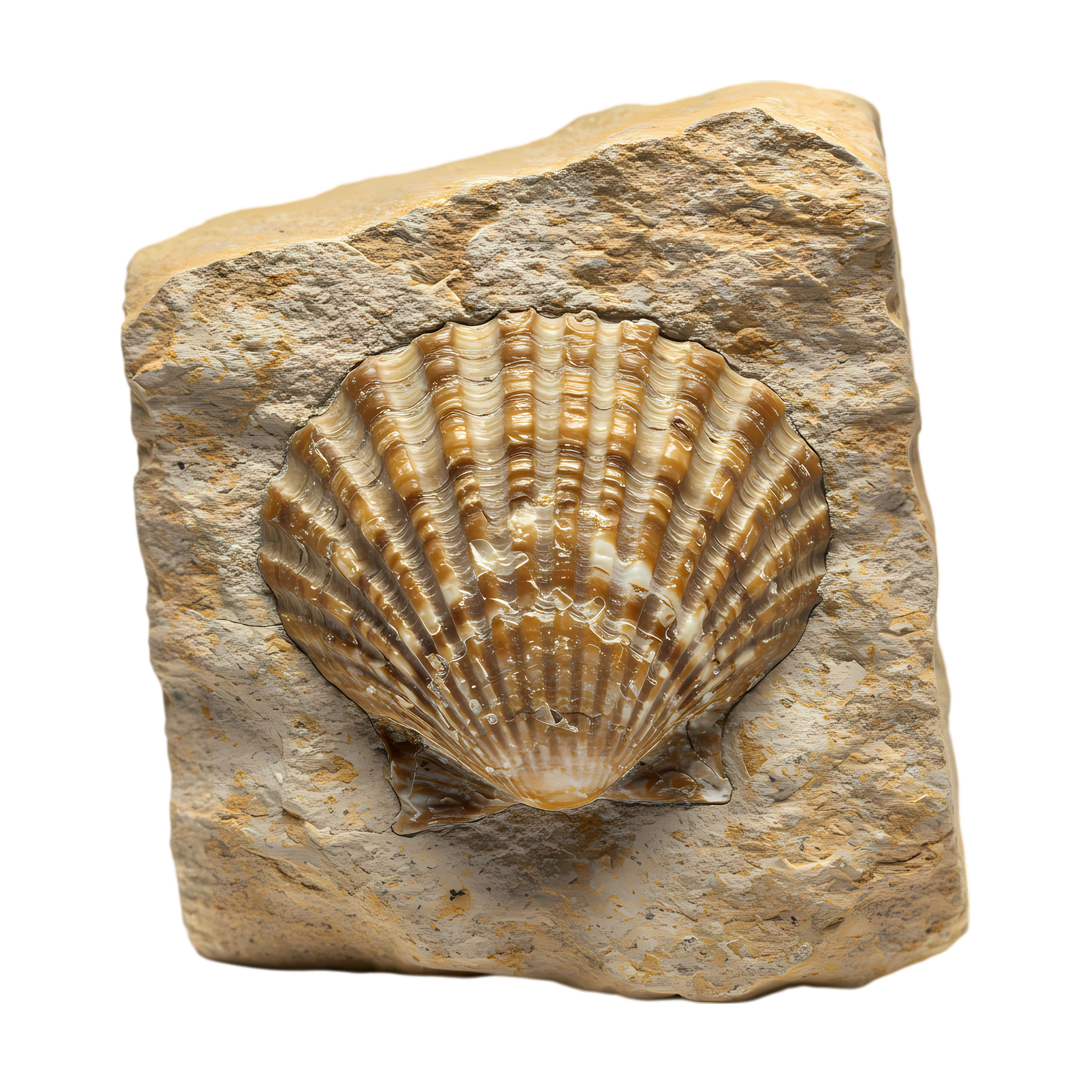
AGES: Clams have occupied Earth beginning as early as the Cambrian Period, 510 million years ago, but were especially abundant during the Devonian Period around 400 mya.

Clam Classification

Kingdom:    Animalia

Phylum:     Mollusk (Invertebrate animals with soft body encased in hard shell i.e. squid, snails, clams, chitons, octopus, nautilus)

Class:       Bivalve or Pelycopod (Animals possessing two uneven halves called valves which are mirror images of each other joined at one edge by a hinge (i..e. oysters, mussels, scallops, clams) 

For more clam photos, drawings and information you can go to another fossillady article HERE.

All rights reserved © Fossillady 2022


Share this:

  • Share on Pinterest (Opens in new window) Pinterest
  • Share on Facebook (Opens in new window) Facebook
  • Print (Opens in new window) Print
  • Email a link to a friend (Opens in new window) Email
  • Share on LinkedIn (Opens in new window) LinkedIn
  • Share on Reddit (Opens in new window) Reddit
  • Share on X (Opens in new window) X
Like Loading...
Clam Fossils Bivalve FossilsBivalvesclam drawingClam FossilsClamsclassroom demoDevonian Fossilsfossil clam factsfossil clam informationfossil clam rendering

Did you know a worm can be pretty?

November 19, 2010 by Fossillady
Scan_Pic0007nq
Fan Tubeworms or Feather Duster Tubeworm Rendering/Drawing (Prehistoric Ostracoderm Fish Observing Tubeworms)
fossils 125
Tubeworm remnants attached to an extinct ammonite fossil shell

These little segmented sea worms secrete calcium carbonate to build a permanent protective tube. They attach themselves to any available surface such as rocks, clams or even other tubes of worms. Their fossil record dates back as far as the Silurian Period, 443 million years ago, and today they are quite common worldwide. The worm that lives in the tube is commonly called a feather duster or fan worm with a crown of feathery tentacles that it uses to strain food out of the water. Therein lies the tubeworm beauty. Many seashells, living and fossilized, are encrusted with feather duster tubeworms and sometimes they completely over shadow their hosts with a large mass of crusty tubes.

HPIM1118
Tube Worms Encrusted On Clam Shell

Tube Worms Can Show Off an Attractive Crown of Feathers

It’s true; they can be real pretty as you’ll notice from the photo samples below and most likely true in the past as well. Today, there are at least of tubeworms that show off a colorful, attractive crown of feathery plumes. But if you think you can go outside and dig them up, you would be sadly mistaken because they are all salt-water marine varieties. A breakdown of their taxonomy explains a lot about them which you should find very interesting.

Feather Duster Tubeworm (photo by Wikipedia)

CLASSIFICATION BREAKDOWN DEMONSTRATES TWO FAMILIES 

Kingdom:  Animalia

Phylum:     Annelid (means ringed one) Large group of segmented worms from 17,000 species ranging in size from microscopic to 3 meters long

Class:       Polychaeta  Generally marine group of annelid worms from 10,000 species; Each segment of the creature possesses a pair of outgrowths with bristles which help them hold onto objects. They have a well developed head with two to four eyes and antennas. They can be found worldwide and withstand the coldest and hottest temperatures known on the  planet. From this group of annelids, they can be predators, herbivores, filter feeders, scavengers or parasites.

Order:         Canalipalpata  Bristle-footed or Fan-headed tube worms

Suborder:   Sabellida Sedentary marine worms that secrete calcium carbonate tubes

Peacock Tubeworm (photo by Wikipedia)
Peacock Tubeworm (Sabella, pavonina) (photo by Wikipedia)

Family 1:  Sabellidae (Two Photo Examples Shown Above) Sedentary marine tube worms where the head is mostly concealed by feathery branches. They reinforce their tubes with sand and bits of shell. They tend to be common in the ocean intertidal zones around the world.

Family 2:  Serpulidae (Two Photo Examples Shown Below) Differs Family 1 primarily by a specialized operculum, a cone shaped plug that often resembles a trumpet which blocks the tube entrance when the worms withdraw into their tubes (two examples shown below with trumpet-like operculum visible)

Serpula_vermicularis_2
Red Tubeworm, Plume worm or Calcareous Tubeworm (Serpula, vermicularus) (photo by Wikipedia)

The Red Tubeworm (Serpula, vermicularis) shown below can rapidly retract into its tube, is typically red, orange, or pink with transverse white strands. Can be found in shallow intertidal zones to deep depths up to 800 meters deep. The tube can be curved but not spiraled. 

The Christmas Tree Tubeworm (Spirobranchus, giganteus) shown below is named for its double spiraled plume of feathers and shape resembling a Christmas tree. They display a wide variety of colors.

Christmas Tree Tubeworm (photo by Wikipedia)
Christmas Tree Tubeworm (Spirobranchus, giganteus) (photo by Wikipedia)

Interesting Side Note:

According to a paper published in the February, 2000 issue of the journal, Nature, by a Penn State research team, tubeworms living in the cold, calm depths in the Gulf of Mexico have surprisingly long life spans, especially compared to their cousins living in hot, active environments. Apparently, the cold climate tubeworms they studied take from 170 to 250 years to grow two meters long, while the hydrothermal-vent hot climate tube worms grow well over a meter in just one year.

All rights reserved © Fossillady 2025

Share this:

  • Share on Pinterest (Opens in new window) Pinterest
  • Share on Facebook (Opens in new window) Facebook
  • Print (Opens in new window) Print
  • Email a link to a friend (Opens in new window) Email
  • Share on LinkedIn (Opens in new window) LinkedIn
  • Share on Reddit (Opens in new window) Reddit
  • Share on X (Opens in new window) X
Like Loading...
Tube Worms Fossils Christmas Tree WormFan Tube WormsFeather Duster WormPaleozoic Fossil Tube WormPeacock WormsPretty WormsSabellidaeSerpulaSerpula Tube WormsSerpulidaeTube Worm DrawingTube worm factsTube worm fossilstube worm informationTube Worm Rendering

Post navigation

← Older posts
Newer posts →

Category of Fossil Facts

  • Algae Fossils
  • Ammonite Fossils
  • Brachiopod Fossils
  • Bryozoan Fossils
  • Cenozoic Era Aquatic Fossils
  • Cephalopod Nautiloid Fossils
  • Clam Fossils
  • Clam Seashells
  • Coral Fossils Extinct
  • Corals Florida
  • Crinoids Fossils
  • General Comment
  • Horseshoe Crabs
  • Lake Michigan Fossil Finds
  • Millipede Fossils
  • Oysters Fossils
  • Plant/Tree Fossils
  • Rocks
  • Shark Teeth Fossils
  • Sponges Fossils
  • Stromatolite Fossils
  • Trilobite Fossils
  • Tube Worms Fossils
Advertisements

Fossillady Links

  • Kathi's Photography Site
Advertisements

Join 145 other subscribers
Advertisements
Blog at WordPress.com.
Fossil Lady
Blog at WordPress.com.
Privacy & Cookies: This site uses cookies. By continuing to use this website, you agree to their use.
To find out more, including how to control cookies, see here: Cookie Policy
  • Subscribe Subscribed
    • Fossil Lady
    • Join 145 other subscribers
    • Already have a WordPress.com account? Log in now.
    • Fossil Lady
    • Subscribe Subscribed
    • Sign up
    • Log in
    • Report this content
    • View site in Reader
    • Manage subscriptions
    • Collapse this bar
 

Loading Comments...
 

    %d